
#PSI & GPM Guides

PSI & GPM Guides

Understanding Pressure Washer Nozzles and Spray Angles

Understanding Pressure Washer Nozzles and Spray Angles Pressure washer nozzles control the shape and intensity of the water spray. Choosing the correct nozzle improves cleaning performance while preventing damage to delicate surfaces. Most pressure washers include five color-coded nozzles. Red Nozzle (0°) The red nozzle produces a very narrow, concentrated stream of water. Best For Tough stains Concrete Metal surfaces Avoid Using On Cars Wood Windows Vinyl siding Use with extreme caution. Yellow Nozzle (15°) The yellow nozzle provides strong cleaning power with a slightly wider spray. Best For Driveways Brick Concrete Heavy dirt It removes stubborn grime without being as aggressive as the red nozzle. Green Nozzle (25°) The green nozzle is the most commonly used for household cleaning. Best For Decks Fences Patios Outdoor furniture It offers an excellent balance between cleaning power and surface protection. White Nozzle (40°) The white nozzle produces a wide, gentle spray. Best For Cars Windows Painted surfaces Delicate cleaning This is the safest nozzle for routine household cleaning. Soap Nozzle (Black) The black nozzle has low pressure and is designed to apply detergent. Best For Foam cannon Car shampoo House washing Patio cleaning Always rinse with a higher-pressure nozzle after applying detergent. Which Nozzle Should You Use? Surface Recommended Nozzle Car White (40°) Patio Furniture White (40°) Fence Green (25°) Deck Green (25°) Vinyl Siding White (40°) Concrete Yellow (15°) Brick Yellow (15°) Oil Stains Red (0°)* Soap Application Black Note: Use the red (0°) nozzle only on very tough stains and durable surfaces. It can easily damage paint, wood, and other delicate materials. Nozzle Safety Tips Test the spray on a small area first. Keep the nozzle moving to avoid damaging the surface. Never point the spray at people or pets. Maintain a safe distance from the surface. Use the lowest pressure that effectively removes dirt. Conclusion Understanding pressure washer nozzles is just as important as choosing the right PSI. Each spray angle is designed for a specific cleaning task, and selecting the correct nozzle helps you achieve better results while protecting your surfaces. For most household jobs, the green (25°) and white (40°) nozzles are the safest and most versatile choices.
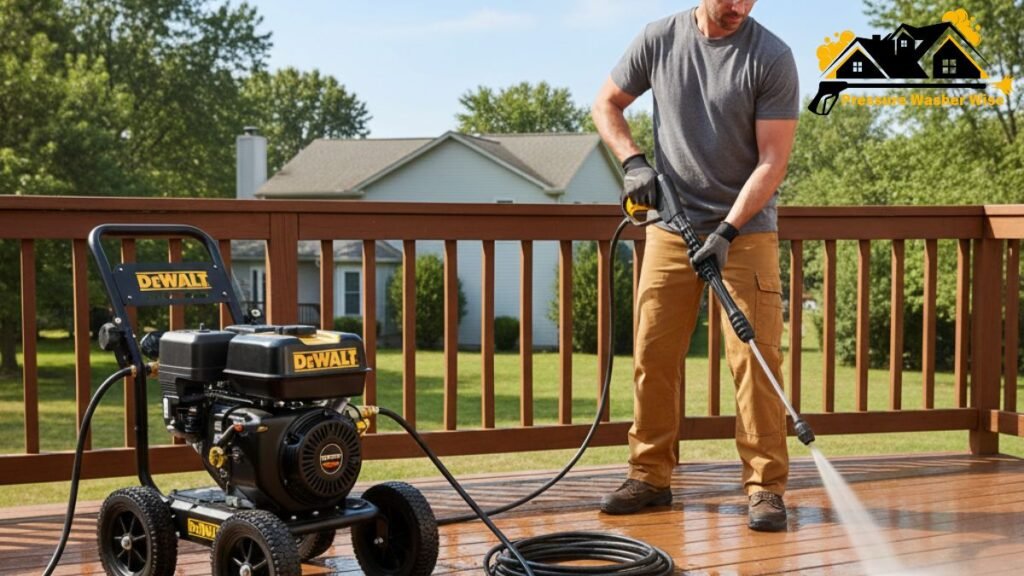

DEWALT pressure washer — cordless 20V/60V unit, 2100 PSI electric, and 3000 PSI gas model cleaning a driveway and car
PSI & GPM Guides

How Much PSI Do You Need for Different Cleaning Jobs?

How Much PSI Do You Need for Different Cleaning Jobs? Using the correct PSI is essential for effective cleaning and preventing damage. Too little pressure won’t remove dirt efficiently, while too much pressure can damage paint, wood, glass, or delicate surfaces. The table below provides recommended PSI ranges for common cleaning tasks. Recommended PSI Chart Surface Recommended PSI Car 1200–1900 PSI Patio Furniture 1300–1800 PSI Fence 1800–2200 PSI Deck 2000–2500 PSI Driveway 3000–4000 PSI Brick 2500–3000 PSI Heavy Equipment 3500–4000 PSI Car (1200–1900 PSI) Cars have delicate paint that can be scratched or chipped by excessive pressure. Why this range? Removes dirt safely Protects paint Safe for windows Works well with foam cannons Recommended Nozzle: 40° Patio Furniture (1300–1800 PSI) Plastic, wood, and metal furniture require gentle cleaning. Why this range? Removes dirt without cracking plastic Protects painted surfaces Prevents damage to cushions Recommended Nozzle: 25° or 40° Fence (1800–2200 PSI) Wood and vinyl fences collect mildew, algae, and dirt. Why this range? Cleans effectively Removes mold Reduces the risk of splintering wood Recommended Nozzle: 25° Deck (2000–2500 PSI) Wooden decks need enough pressure to remove grime without damaging the wood grain. Why this range? Removes weather stains Cleans algae Preserves wood surface Always test a small hidden area first. Driveway (3000–4000 PSI) Concrete is durable and can handle much higher pressure. Why this range? Removes oil stains Cleans tire marks Eliminates moss and dirt A surface cleaner attachment provides the best results. Brick (2500–3000 PSI) Brick surfaces are strong but mortar joints can be damaged. Why this range? Removes dirt effectively Preserves mortar Prevents surface erosion Keep the nozzle moving continuously. Heavy Equipment (3500–4000 PSI) Construction and farm equipment often accumulate grease and mud. Why this range? Removes heavy dirt Cuts through grease Suitable for industrial cleaning Wear proper safety equipment during operation. Final Tips Start with lower pressure and increase gradually. Use the correct nozzle for each surface. Maintain a safe spraying distance. Test an inconspicuous area before cleaning. Conclusion Choosing the correct PSI helps you clean efficiently while protecting your property. Always match the pressure washer to the surface you’re cleaning, and remember that using the right nozzle is just as important as selecting the correct PSI.

PSI & GPM Guides

PSI vs GPM Explained: What Really Matters?

PSI vs GPM Explained: What Really Matters? When shopping for a pressure washer, you’ll often see two specifications: PSI and GPM. Many buyers assume that a higher PSI automatically means better cleaning performance, but that’s only part of the story. Both PSI and GPM work together to determine how efficiently a pressure washer cleans different surfaces. Understanding these two terms will help you choose the right machine for your cleaning needs. What is PSI? PSI (Pounds per Square Inch) measures the amount of pressure the machine produces. Think of PSI as the force of the water hitting the surface. Higher PSI means stronger pressure, making it easier to remove stubborn dirt, mud, grease, and stains. Typical PSI Range PSI Best For 1200–1900 Cars, bikes, outdoor furniture 1800–2500 Decks, fences, patios 2500–3200 Brick, concrete, sidewalks 3200–4000+ Commercial and industrial cleaning What is GPM? GPM (Gallons Per Minute) measures how much water flows through the pressure washer every minute. More water flow means dirt is washed away faster. A pressure washer with a higher GPM usually cleans large surfaces more quickly. Typical GPM Range GPM Suitable For 1.2–1.6 Small household jobs 1.7–2.3 Residential cleaning 2.5–3.5 Heavy-duty residential 4.0+ Commercial cleaning What Are Cleaning Units? The best way to compare pressure washers is by calculating Cleaning Units (CU). Formula: Cleaning Units = PSI × GPM Example Pressure Washer PSI GPM Cleaning Units Model A 2000 1.5 3000 Model B 2000 2.2 4400 Model C 3000 2.5 7500 Although Model A and B have the same PSI, Model B cleans faster because it delivers more water. Which Is More Important? The answer depends on your cleaning task. Need to remove stubborn stains? → Higher PSI Cleaning large areas quickly? → Higher GPM For most homeowners, a balanced combination of both delivers the best results. Best PSI & GPM Combinations Cleaning Task Recommended PSI Recommended GPM Cars 1500 1.5–2.0 Patio 2000 2.0 Fence 2200 2.0 Deck 2400 2.2 Driveway 3000 2.5 Commercial 3500+ 4.0+ Conclusion PSI provides the cleaning force, while GPM determines how quickly water removes dirt. Instead of choosing the machine with the highest PSI, look for a balanced combination that matches your cleaning needs. Understanding both specifications will help you select a pressure washer that delivers efficient, reliable performance.

Scroll to Top