
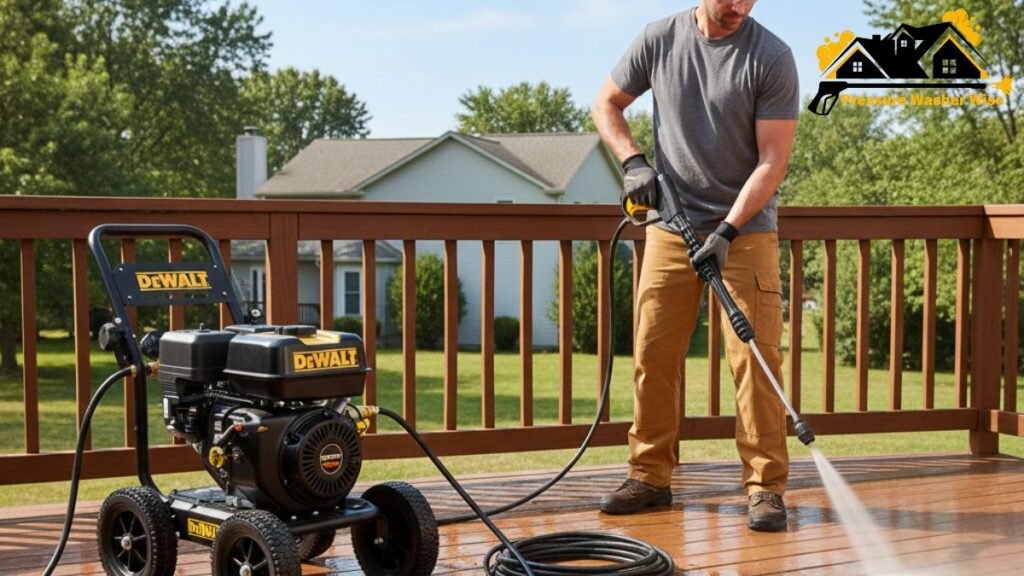
How Much PSI Do You Need? A Simple Guide for Every Cleaning Job
How much PSI do you need? For most home jobs, 1,500 to 2,800 PSI is enough. Cars and outdoor furniture need less, wood decks and fences need much less, and big concrete driveways can use more. The right number depends on the surface, the nozzle and your water flow, not just the biggest PSI on the box. I did not test pressure washers for this guide. The ranges below come from retailer and maker guides, and I show where they disagree. Sources do not agree on every surface, so treat each range as a starting point and test a small hidden spot first. The old version of this page was a Honda 4000 PSI review under the wrong title. I moved that content out, and our Honda GX390 guide covers those machines. How much PSI do you need: the short answer More PSI is not better. Too much pressure scars wood, strips paint, chips mortar and can push water behind siding. Start low, then step up only if the dirt does not move. PSI and GPM: what the numbers mean PSI is the force of the water. GPM is how much water flows each minute. PSI cleans the dirt off. GPM rinses it away and sets how fast you work. Retail guides often multiply the two to get a rough cleaning-power number. A 2,000 PSI washer at 1.4 GPM gives 2,800. A 1,700 PSI washer at 2.5 GPM gives 4,250 and will usually clean flat areas faster, even though its PSI is lower. This is why two washers with the same PSI can feel very different. Our Karcher K5 review shows a 2,000 PSI machine with a modest 1.4 GPM, which is great on a car and slow on a big driveway. How much PSI do you need for each job? A quick chart This table uses ranges from several retailer and maker guides. Where sources conflict, I give the cautious end first. Job Starting PSI range Nozzle Notes Car, truck, motorbike 900 to 1,900 40 degree or soap One source suggests 900 to 1,200 PSI at about 2 GPM for detailing. Keep a safe distance from paint. Outdoor furniture, grill, bikes Up to 1,900 25 to 40 degree Light-duty tier. Soft plastic needs the wide nozzle. Wood deck and fence 500 to 1,500 40 degree Soft woods like pine and cedar need the low end. One source says keep the tip at least 12 inches away from a stained fence. Vinyl siding, painted wood 1,300 to 2,500 25 to 40 degree Sources conflict. Some allow higher, so follow the siding maker’s guidance. Patios, walkways, steps 1,500 to 2,800 25 degree or surface cleaner Medium-duty tier. A surface cleaner avoids stripes. Concrete driveway, brick 2,000 to 3,000 Surface cleaner One guide says some brick and concrete can take 3,000 or more. Asphalt, paint removal, heavy build-up 3,000 to 4,000 15 to 25 degree Mostly pro work. Easy to damage a surface. Treat these as a map, not a rulebook. Your siding, your wood and your paint may be more delicate than the average. If the surface is old, soft or painted, start lower. Light, medium and heavy duty: PSI tiers explained Retailers group washers into tiers. The numbers vary a little between stores, but a common split looks like this: Tier PSI Typical flow Good for Light duty 1,500 to 1,900 Up to about 1.5 GPM Cars, furniture, grills, small patios Medium duty 2,000 to 2,800 About 1.4 to 2.5 GPM Decks, fences, siding, driveways Heavy duty 2,900 to 3,200 2.5 GPM and up Concrete, big driveways, tough stains Extra heavy 3,300 and up Often 4 GPM and up Professional work, paint removal Most homeowners land in light or medium duty. Heavy duty gas machines make sense if you clean large areas often. Our guide to the best commercial pressure washers shows what the top tier looks like. Electric or gas: which one gives you the PSI you need? Electric washers are quieter, lighter and need little upkeep. Most land between 1,500 and 3,000 PSI, which covers cars, patios, decks and standard driveways. They are limited by cord length and by how much flow a small motor can make. Gas washers give more power and move around freely, but they need fuel and care and they make exhaust, so you must run them outdoors. If you plan to clean large concrete areas every year, a gas model near 3,000 PSI is a good match. If your jobs are small, electric is simpler. Nozzles change how much pressure the surface feels The nozzle matters as much as the PSI on the label. A narrow tip focuses the water, and a wide tip spreads it out. Colors can differ by brand, but these angles are common: Distance changes force too. Keep the tip moving. If you see any marks on the surface, back off or switch to a wider tip right away. For a full chart, read our guide to pressure washer nozzles, and see the maker’s Alkota nozzle guide for an example of angles and sizes. How much PSI do you need for a car? Less than you think. Sources suggest about 900 to 1,200 PSI for detailing and up to 1,900 for general washing. A 2 GPM flow rinses well without hammering the paint. Use the white or soap nozzle, keep a safe distance, and never aim a hard jet at peeling paint, loose trim or rubber seals. How much PSI do you need for a deck or fence? Wood is easy to damage. Aim for about 500 to 1,500 PSI, and use the lower end for soft woods like pine and cedar. Use a wide tip and work with the grain. Test a spot first. One source suggests keeping the tip at least 12 inches from a stained fence, so you do not strip the stain. If the wood is gray and old, you may see fuzzy fibers after cleaning. That means the pressure was too high or