
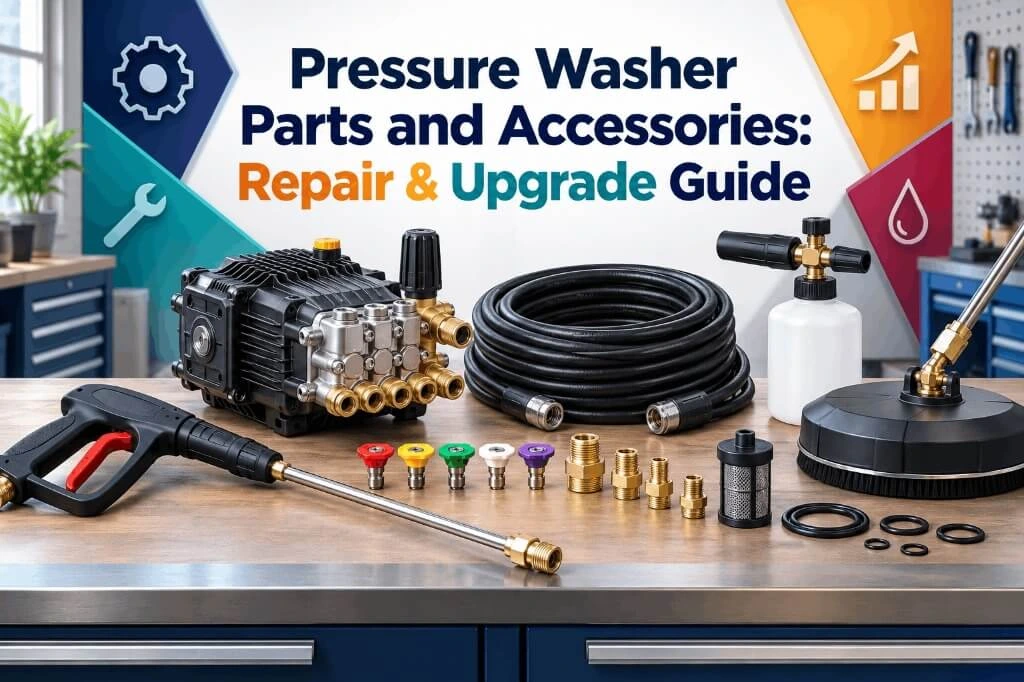
Pressure Washer Parts and Accessories: Repair & Upgrade Guide
A weak spray can send you shopping for a new pump when the real problem is a worn nozzle. A dripping connection can lead to a replacement hose when only the correct seal is needed. Buying before identifying the fault makes pressure washer ownership more expensive than necessary. Quick answer: Buy pressure washer parts and accessories only after identifying the complete machine model and the job the component must perform. For replacement parts, confirm the part number and revision. For external accessories, check the working PSI, GPM requirement, temperature limit, connector dimensions, and intended surface. This guide covers safe first checks, compatibility requirements, common replacement components, and useful upgrades. It is designed for homeowners maintaining an occasional-use washer and small businesses keeping equipment ready for work. The guidance is based on manufacturer information and recognized safety sources; it does not claim hands-on product testing. Pressure Washer Parts and Accessories: What Is the Difference? A replacement part restores an existing function. An accessory changes how you use the machine or expands the jobs it can handle. The distinction is not always strict. A hose replaces a failed component, while a more manageable approved hose can also improve reach and handling. What matters is knowing your reason for buying. Component or accessory Main purpose Typical buying reason Inlet screen and supply fittings Bring clean water into the machine Missing screen, damaged fitting, or supply connection problem Pump and internal seals Produce and contain pressurized flow Confirmed mechanical fault High-pressure hose Carry pressurized water to the gun Damage, leakage, or unsuitable reach Spray gun and wand Control and direct water Trigger fault, damaged connection, or handling need Nozzle tips Shape the spray and provide the specified outlet opening Wear, blockage damage, or another approved spray pattern Detergent pickup components Draw and deliver cleaning solution Split tube, blocked filter, or confirmed injector fault Surface cleaner or foam cannon Adapt the washer to a specific cleaning task More suitable coverage or detergent application Compatibility Checklist Before You Buy Use this checklist for every purchase instead of relying on appearance or a “universal fit” claim: Complete pressure washer model, revision, and serial range Exact current or superseded part number Maximum working pressure—not merely burst pressure Required water flow in GPM or L/min Cold-water or hot-water temperature rating Connector type, thread, insert, plug, socket, and sealing method Package contents, required adapters, and replacement seals Intended surface, detergent, and duty level Start with the original equipment in safe working order. Optional attachments should come after damaged hoses, faulty triggers, and unreliable water connections are addressed. Pressure Washer Replacement Parts: Identify Before Ordering Record the complete machine model Find the washer’s identification label and record the model, revision, and serial number where available. Take a photograph so you can check the information while shopping. A gas engine may have a separate model identification. That helps with engine parts, but it does not automatically identify the pump, gun, or hose supplied by the equipment maker. Use the illustrated parts list for the complete machine. It shows how assemblies relate and helps distinguish a small seal from a complete fitting or manifold. Match the diagram number to the orderable part A number beside an item in a diagram may be only its position in the drawing. Find the corresponding entry in the parts table to obtain the actual part number. Check any serial-number or revision restrictions. If an old part has been replaced by a newer number, ask the supplier to confirm the change against your model. Before ordering, also check what the package includes. A bare assembly may exclude seals, bolts, adapters, or other components shown nearby in the illustration. Inspect previous modifications Used equipment may have a replacement pump or aftermarket gun. Compare the actual assembly with the original diagram before relying on factory specifications alone. Keep photographs of both ends of a hose or fitting. A clear view of the sealing surface is often more useful to a supplier than a distant photograph of the whole washer. Diagnose the Symptom Before Buying a Part A symptom points to possible causes; it does not establish which component has failed. Begin with checks allowed by the operator’s manual, with the machine safely stopped whenever you inspect or disconnect anything. Symptom Beginner-safe first check When to seek help Weak or uneven spray Supply flow, hose kinks, inlet screen, and correct nozzle Problem remains after approved basic checks Leak at an external joint Correct connection and accessible seal condition Cracked housing, damaged threads, or uncertain sealing dimensions Detergent will not draw Required soap mode, pickup tube, and detergent filter Suspected internal injector fault Electric washer will not start Approved outlet and startup/reset checks in the manual Repeated tripping, damaged wiring, or burning smell Gun does not stop water correctly Stop using it Suspected trigger or valve fault Do not keep operating a pulsing or leaking machine while trying unrelated accessories. Write down when the fault occurs: only with one nozzle, only during detergent use, or with every approved attachment. That detail helps narrow the next check. Avoid adjusting a pressure regulator to disguise poor output. A worn tip or water-supply issue needs its own correction; turning a control without the proper procedure can create another problem. Pressure Washer Hose and Fittings The supply hose and high-pressure hose work on opposite sides of the pump. Their fittings are not interchangeable merely because an adapter can join them. Check pressure, temperature, and hose ends A replacement high-pressure hose must be rated for the washer’s specified maximum pressure and water temperature. Use the working-pressure rating, not a higher burst-pressure claim. For threaded connections, confirm the thread and sealing dimensions. M22 fittings can use different internal insert sizes even when the outer threads look similar. For quick connections, match the plug, socket, nominal size, profile, and intended location. Measure carefully or ask the manufacturer or supplier to verify the connection. A 3/4-inch garden-hose fitting belongs on the supply side. Do not place ordinary garden-hose couplers