
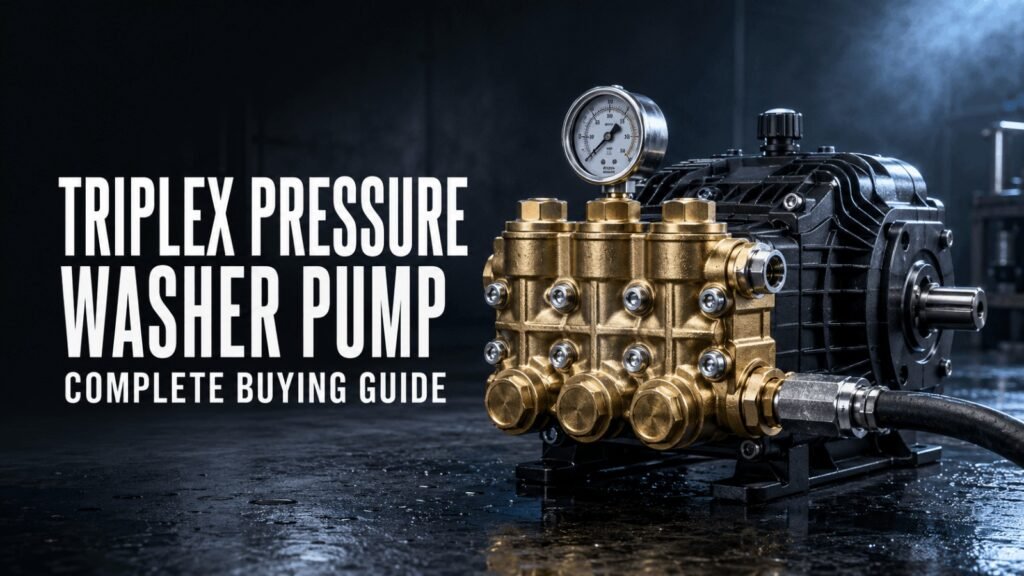
Triplex Pressure Washer Pump Buying Guide (2026): Types, Specs & Selection
A pressure washer may have a powerful engine, a durable frame, and a professional spray gun, but it cannot clean properly without the right pump. The pump is the core component that converts incoming water into a controlled, high-pressure flow. For demanding cleaning work, a Triplex Pressure Washer Pump is often the preferred choice. It is engineered to deliver steady pressure, handle longer operating sessions, and allow straightforward servicing when seals, valves, or other wear parts need replacement. However, choosing a triplex pump is not as simple as buying the model with the highest PSI. The pump must match your pressure washer’s engine, shaft, mounting pattern, operating speed, water supply, hose, unloader, and intended cleaning work. This comprehensive guide explains how triplex pumps work, how they compare with axial and wobble-plate pumps, what specifications matter most, and how to avoid expensive compatibility mistakes. Pressure Washer Pump: What It Does and Why It Matters A pressure washer pump receives water from a garden hose, tank, or other approved water source. It then moves that water through internal valves and sends it toward the high-pressure hose, spray gun, and nozzle. The pump does not simply “make water powerful.” Its job is to control two critical metrics of pressure washer performance: PSI (Pounds per Square Inch): Represents the force of the water hitting a surface. GPM (Gallons per Minute): Represents the volume of water passing through the system every minute. Both measurements matter. High PSI helps loosen stubborn dirt, while adequate GPM carries the broken dirt away and helps clean a larger area faster. Why the Pump Directly Affects Cleaning Performance A strong engine cannot compensate for a damaged, undersized, or incorrectly matched pump. Common symptoms of a pump-related problem include: Low or inconsistent operating pressure Pulsing flow at the spray gun Water leaking from the pump body Pump oil appearing milky or cloudy Excessive vibration or unusual mechanical noise Pressure dropping significantly after a few minutes of operation Water spraying from the thermal relief valve The engine struggling or stalling when the trigger is pulled Note: Not every pressure problem is caused by the pump. A clogged nozzle, restricted water inlet, leaking hose, dirty filter, trapped air, or incorrectly adjusted unloader can produce similar symptoms. The safer approach is to inspect the complete water path before deciding that the pump must be replaced. Main Pressure Washer Pump Types Compared Most pressure washers use one of three general pump designs depending on their intended application, price point, and serviceability. Pump Type Common Application Serviceability Expected Workload Wobble-Plate Pump Small, affordable electric washers Usually limited / Non-serviceable Occasional light home cleaning Axial-Cam Pump Residential electric and gas washers Varies by model Regular homeowner maintenance Triplex Plunger Pump Prosumer and professional machines Fully serviceable / Rebuildable Frequent or extended heavy cleaning This comparison does not mean every triplex pump will outlast every axial pump. Build quality, maintenance, water conditions, correct installation, and operating temperature all affect overall pump life. A well-built axial pump used correctly may be a better purchase for an occasional homeowner than a poorly matched triplex replacement. High Pressure Washer Pump: Understanding PSI, GPM, and Cleaning Output A High Pressure Washer Pump must deliver the right balance of pressure and water flow for the machine and cleaning job. Choosing only by maximum PSI is one of the most common buying mistakes in the pressure washing industry. PSI Measures Physical Cleaning Force PSI tells you how much pressure the pump can produce under its rated operating conditions. Higher pressure helps with: Cleaning durable concrete and masonry Removing thick, baked-on mud from heavy equipment Stripping loose paint from suitable surfaces Removing heavy environmental buildup from commercial areas However, more PSI is not automatically safer or more useful. Too much pressure can damage vehicle paint, wood fibers, vinyl siding, seals, outdoor furniture, grout, and soft stone. The nozzle angle, distance from the surface, cleaning chemical, water flow, and operator technique are often more important than using maximum pressure. GPM Affects Cleaning Speed and Rinsing Ability GPM measures water volume. A pump with higher GPM can usually rinse loosened debris faster and cover a larger area in less time. For example, two machines may both produce 3,000 PSI. If one delivers 2.3 GPM and the other delivers 4.0 GPM, the 4.0 GPM machine will generally clean large concrete areas twice as fast, provided the engine, nozzle, surface cleaner, and water supply are correctly matched. Higher GPM is especially useful for: Driveway and parking-area cleaning Large patios and building exteriors Commercial surface cleaning & fleet washing Farm and construction equipment Rinsing thick soap or chemical detergents Critical Supply Warning: The property must supply enough water. Installing a 4.0 GPM pump on a water source that only supplies 2.5 GPM can starve the pump. This causes pressure loss, overheating, vibration, and severe cavitation damage. What Are Cleaning Units (CU)? Cleaning units provide a simple way to compare theoretical cleaning output: $$text{Cleaning Units (CU)} = text{PSI} times text{GPM}$$ 3,000 PSI @ 2.5 GPM: $3,000 times 2.5 = 7,500 text{ CU}$ 4,000 PSI @ 4.0 GPM: $4,000 times 4.0 = 16,000 text{ CU}$ Cleaning units are useful for basic comparison, but they do not measure build quality, pump life, nozzle efficiency, chemical effectiveness, or surface safety. Before selecting a commercial setup, always compare the complete machine specifications. If you are looking for a heavy-duty commercial system, check out our detailed guide on the pressure washer honda 4000 psi to see how engine horsepower, pump flow, and structural durability work together. Rated Pressure vs. Maximum Pressure Some product listings emphasize maximum or peak pressure. This figure may only be reached briefly under specific ideal conditions. Rated (working) pressure is far more useful because it represents the continuous pressure the pump is designed to deliver during normal operation. When comparing pumps, always verify: Rated operating pressure & Rated GPM Maximum allowable pressure Maximum RPM Required engine or motor horsepower (HP) Recommended nozzle orifice size Triplex Pressure Washer Pump: How the Design