
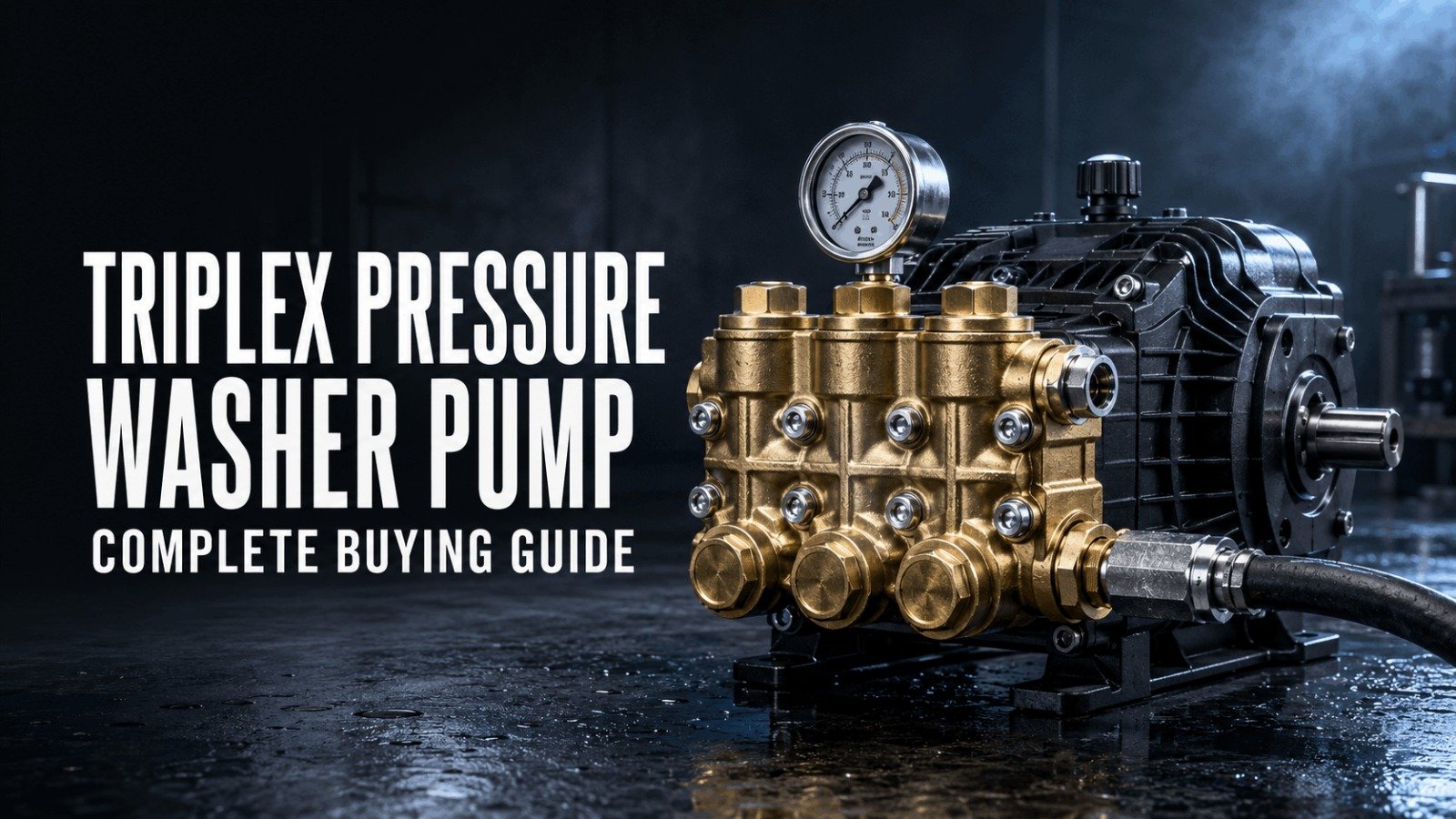
A pressure washer may have a powerful engine, a durable frame, and a professional spray gun, but it cannot clean properly without the right pump. The pump is the core component that converts incoming water into a controlled, high-pressure flow.
For demanding cleaning work, a Triplex Pressure Washer Pump is often the preferred choice. It is engineered to deliver steady pressure, handle longer operating sessions, and allow straightforward servicing when seals, valves, or other wear parts need replacement.
However, choosing a triplex pump is not as simple as buying the model with the highest PSI. The pump must match your pressure washer’s engine, shaft, mounting pattern, operating speed, water supply, hose, unloader, and intended cleaning work.
This comprehensive guide explains how triplex pumps work, how they compare with axial and wobble-plate pumps, what specifications matter most, and how to avoid expensive compatibility mistakes.
Pressure Washer Pump: What It Does and Why It Matters
A pressure washer pump receives water from a garden hose, tank, or other approved water source. It then moves that water through internal valves and sends it toward the high-pressure hose, spray gun, and nozzle.
The pump does not simply “make water powerful.” Its job is to control two critical metrics of pressure washer performance:
- PSI (Pounds per Square Inch): Represents the force of the water hitting a surface.
- GPM (Gallons per Minute): Represents the volume of water passing through the system every minute.
Both measurements matter. High PSI helps loosen stubborn dirt, while adequate GPM carries the broken dirt away and helps clean a larger area faster.
Why the Pump Directly Affects Cleaning Performance
A strong engine cannot compensate for a damaged, undersized, or incorrectly matched pump. Common symptoms of a pump-related problem include:
- Low or inconsistent operating pressure
- Pulsing flow at the spray gun
- Water leaking from the pump body
- Pump oil appearing milky or cloudy
- Excessive vibration or unusual mechanical noise
- Pressure dropping significantly after a few minutes of operation
- Water spraying from the thermal relief valve
- The engine struggling or stalling when the trigger is pulled
Note: Not every pressure problem is caused by the pump. A clogged nozzle, restricted water inlet, leaking hose, dirty filter, trapped air, or incorrectly adjusted unloader can produce similar symptoms. The safer approach is to inspect the complete water path before deciding that the pump must be replaced.
Main Pressure Washer Pump Types Compared
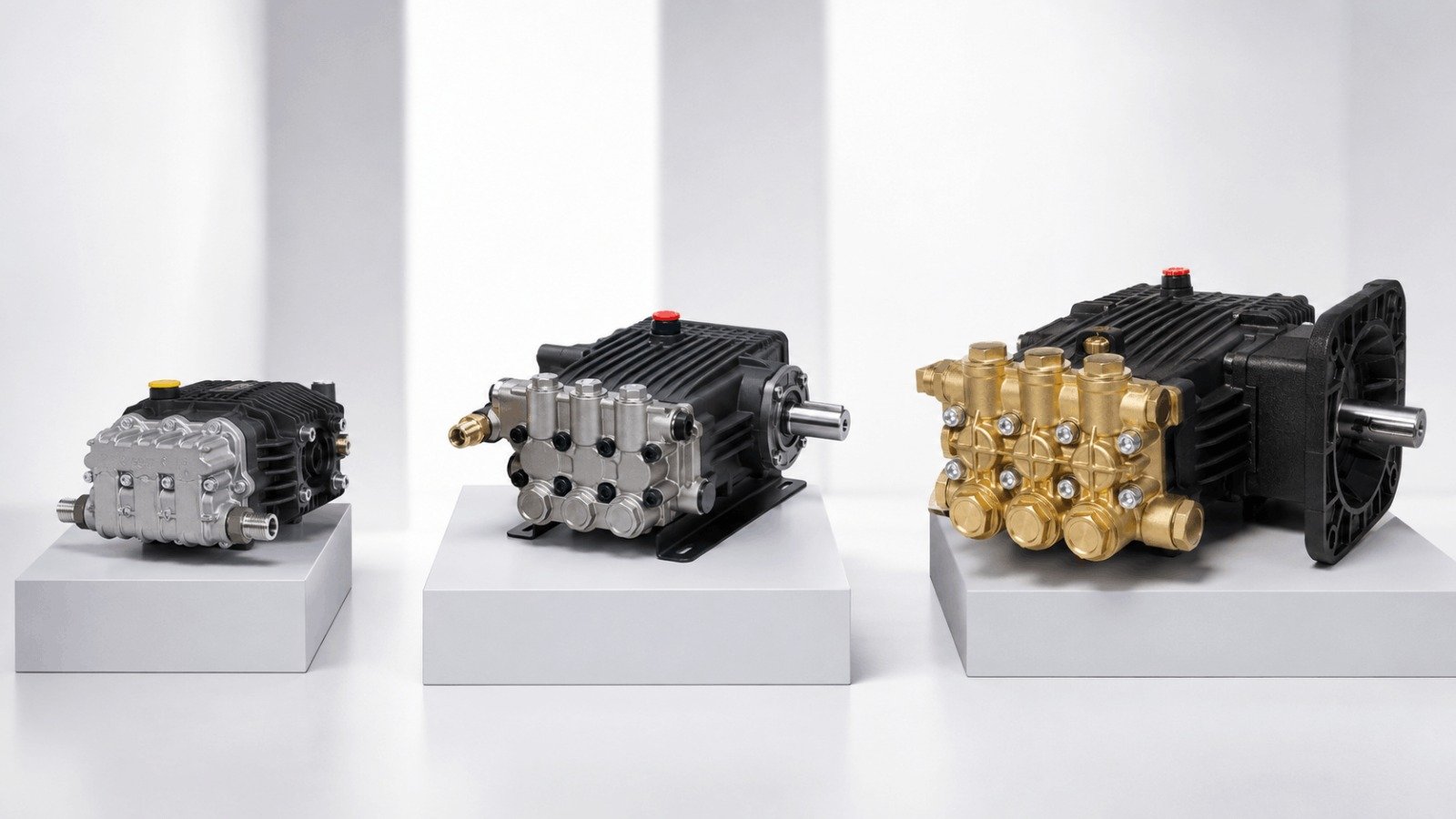
Most pressure washers use one of three general pump designs depending on their intended application, price point, and serviceability.
Pump Type | Common Application | Serviceability | Expected Workload |
Wobble-Plate Pump | Small, affordable electric washers | Usually limited / Non-serviceable | Occasional light home cleaning |
Axial-Cam Pump | Residential electric and gas washers | Varies by model | Regular homeowner maintenance |
Triplex Plunger Pump | Prosumer and professional machines | Fully serviceable / Rebuildable | Frequent or extended heavy cleaning |
This comparison does not mean every triplex pump will outlast every axial pump. Build quality, maintenance, water conditions, correct installation, and operating temperature all affect overall pump life. A well-built axial pump used correctly may be a better purchase for an occasional homeowner than a poorly matched triplex replacement.
High Pressure Washer Pump: Understanding PSI, GPM,
and Cleaning Output
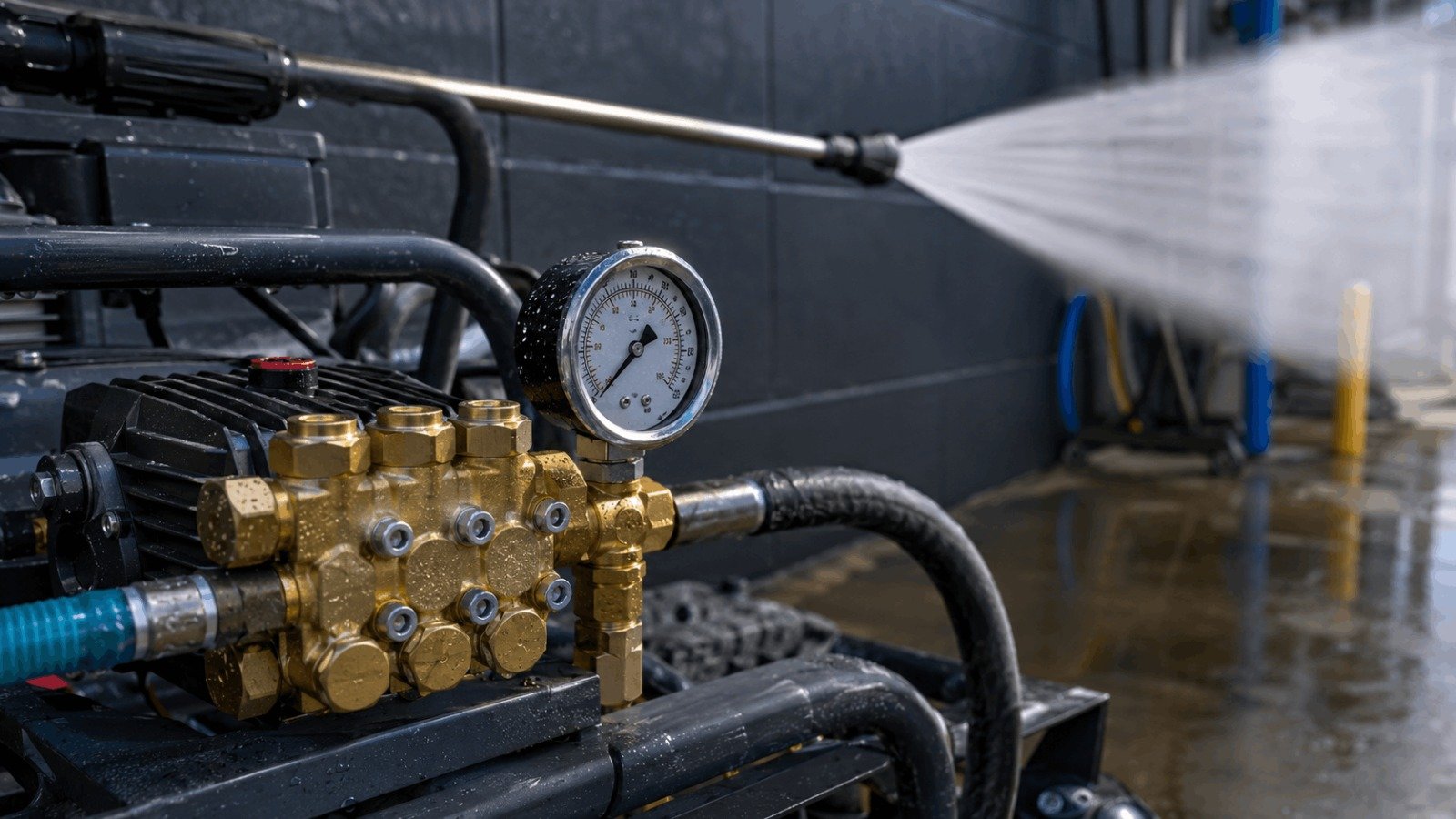
A High Pressure Washer Pump must deliver the right balance of pressure and water flow for the machine and cleaning job. Choosing only by maximum PSI is one of the most common buying mistakes in the pressure washing industry.
PSI Measures Physical Cleaning Force
PSI tells you how much pressure the pump can produce under its rated operating conditions. Higher pressure helps with:
- Cleaning durable concrete and masonry
- Removing thick, baked-on mud from heavy equipment
- Stripping loose paint from suitable surfaces
- Removing heavy environmental buildup from commercial areas
However, more PSI is not automatically safer or more useful. Too much pressure can damage vehicle paint, wood fibers, vinyl siding, seals, outdoor furniture, grout, and soft stone. The nozzle angle, distance from the surface, cleaning chemical, water flow, and operator technique are often more important than using maximum pressure.
GPM Affects Cleaning Speed and Rinsing Ability
GPM measures water volume. A pump with higher GPM can usually rinse loosened debris faster and cover a larger area in less time.
For example, two machines may both produce 3,000 PSI. If one delivers 2.3 GPM and the other delivers 4.0 GPM, the 4.0 GPM machine will generally clean large concrete areas twice as fast, provided the engine, nozzle, surface cleaner, and water supply are correctly matched.
Higher GPM is especially useful for:
- Driveway and parking-area cleaning
- Large patios and building exteriors
- Commercial surface cleaning & fleet washing
- Farm and construction equipment
- Rinsing thick soap or chemical detergents
Critical Supply Warning: The property must supply enough water. Installing a 4.0 GPM pump on a water source that only supplies 2.5 GPM can starve the pump. This causes pressure loss, overheating, vibration, and severe cavitation damage.
What Are Cleaning Units (CU)?
Cleaning units provide a simple way to compare theoretical cleaning output:
$$\text{Cleaning Units (CU)} = \text{PSI} \times \text{GPM}$$
- 3,000 PSI @ 2.5 GPM: $3,000 \times 2.5 = 7,500 \text{ CU}$
- 4,000 PSI @ 4.0 GPM: $4,000 \times 4.0 = 16,000 \text{ CU}$
Cleaning units are useful for basic comparison, but they do not measure build quality, pump life, nozzle efficiency, chemical effectiveness, or surface safety. Before selecting a commercial setup, always compare the complete machine specifications.
If you are looking for a heavy-duty commercial system, check out our detailed guide on the pressure washer honda 4000 psi to see how engine horsepower, pump flow, and structural durability work together.
Rated Pressure vs. Maximum Pressure
Some product listings emphasize maximum or peak pressure. This figure may only be reached briefly under specific ideal conditions.
Rated (working) pressure is far more useful because it represents the continuous pressure the pump is designed to deliver during normal operation. When comparing pumps, always verify:
- Rated operating pressure & Rated GPM
- Maximum allowable pressure
- Maximum RPM
- Required engine or motor horsepower (HP)
- Recommended nozzle orifice size
Triplex Pressure Washer Pump: How the Design Works
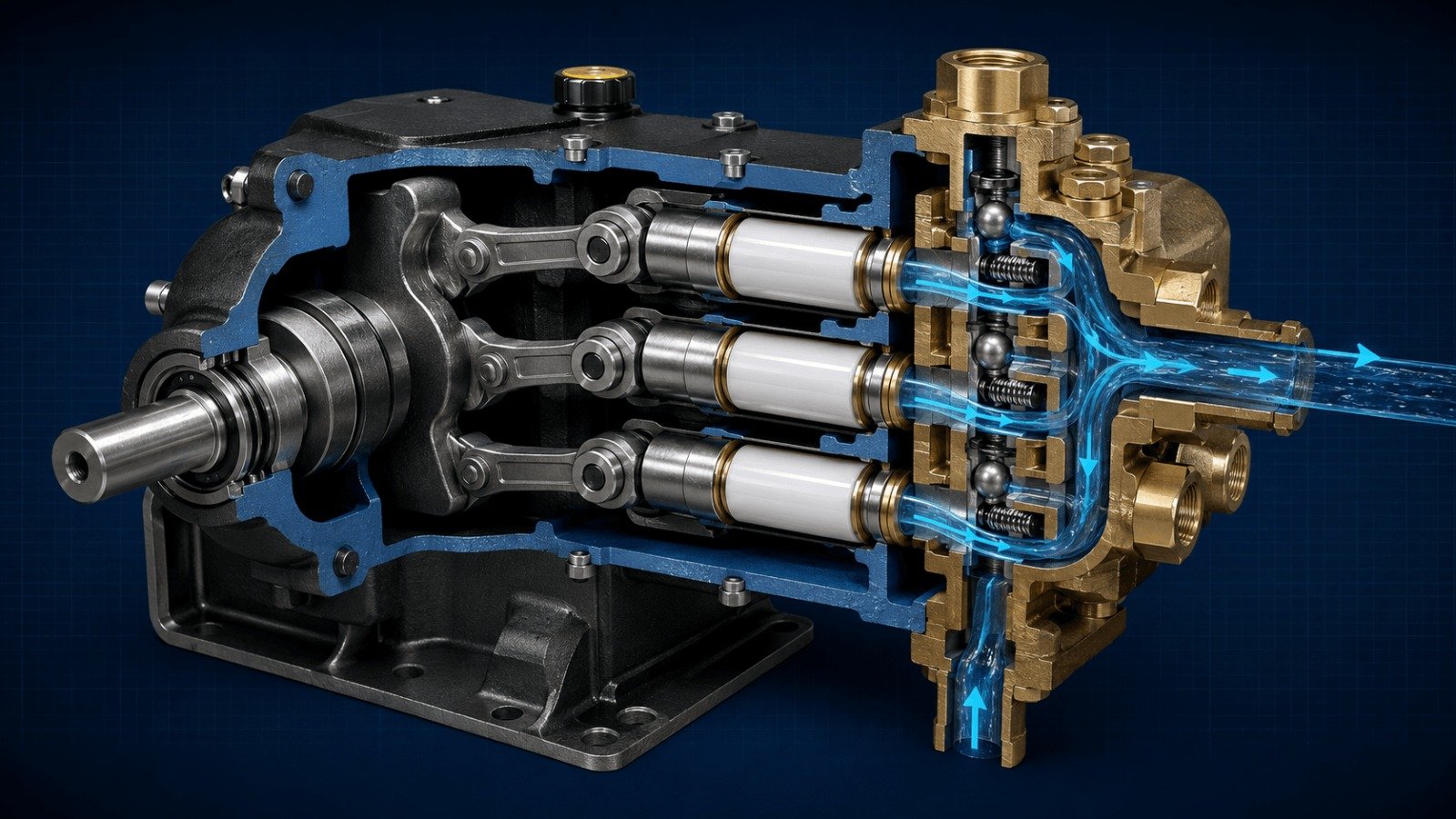
A Triplex Pressure Washer Pump uses three plungers arranged inside the pump crankcase. A crankshaft and connecting rods move these plungers back and forth in a synchronized, controlled sequence.
$$\text{[Water Inlet]} \longrightarrow \text{[Inlet Valve Opens]} \longrightarrow \text{[Plunger Stroke]} \longrightarrow \text{[Discharge Valve Opens]} \longrightarrow \text{[High-Pressure Outlet]}$$
Because three plungers operate in alternating sequence, water delivery is continuous and significantly smoother than single- or double-plunger designs.
Main Components Inside a Triplex Pump
- Crankshaft & Connecting Rods: Convert rotary motion from the engine into reciprocating linear plunger motion.
- Three Ceramic Plungers: Highly smooth, heat-resistant, and wear-resistant against seals.
- Plunger Seals / Packing: Retain fluid pressure inside the wet end.
- Inlet & Discharge Check Valves: Control fluid direction and prevent backflow.
- Brass or Stainless-Steel Manifold: Houses the high-pressure fluid chambers.
- Pump Crankcase & Pump Oil: Keeps internal bearings and connecting rods lubricated.
Some full pump packages also include an unloader valve, thermal relief valve, pressure adjustment knob, chemical injector, inlet filter, quick-connect fittings, and a pressure gauge. Do not assume every replacement pump includes these parts—bare pumps arrive without external plumbing hardware.
Why Ceramic Plungers are Used
Many quality triplex pumps use solid ceramic or ceramic-coated plungers. Ceramic provides a mirror-smooth, extremely hard surface that resists friction wear and handles repeated movement against high-pressure seals. However, ceramic can crack if the pump freezes, experiences severe thermal shock, or suffers physical impact.
Why a Brass Manifold Matters
The manifold directs pressurized water through the valves to the outlet. Forged brass is widely used because it offers excellent structural strength and corrosion resistance for standard cold-water pressure washing. Stainless steel manifolds are reserved for hot water, harsh chemicals, or industrial saltwater environments.
Triplex vs. Axial-Cam Pump
An axial-cam pump is common on residential pressure washers because it is compact and low-cost. A triplex pump is selected when serviceability, long continuous runtime, and commercial-style performance are priorities.
Feature | Axial-Cam Pump | Triplex Plunger Pump |
Purchase Price | Usually lower | Usually higher |
Physical Size | Compact / Lightweight | Larger and heavier |
Internal Design | Pistons driven by a swash/axial plate | Three plungers driven by a crankshaft |
Service Options | Limited / Often non-rebuildable | Designed for complete seal/valve rebuilds |
Best Use | Light homeowner maintenance | Frequent, heavy commercial work |
Oil Maintenance | Often sealed for life | Serviceable pump oil with sight glass |
Drive Options | Commonly direct drive | Direct, belt, gear, or coupler options |
Replacement Parts | Harder to source individually | Seal, packing, and valve kits widely available |
When an Axial Pump Makes Sense
An axial pump is the practical choice if you wash a car occasionally, clean outdoor patio furniture, wash a small deck a few times per year, or want an affordable machine that requires zero oil maintenance.
When a Triplex Pump is Worth Considering
A triplex pump is worth the investment if you clean large driveways or concrete surfaces regularly, operate a pressure washing business, use a surface cleaner frequently, run the machine for hours without stopping, or prefer maintaining equipment over throwing it away when seals wear out.
Direct-Drive vs. Belt-Drive Triplex Pumps
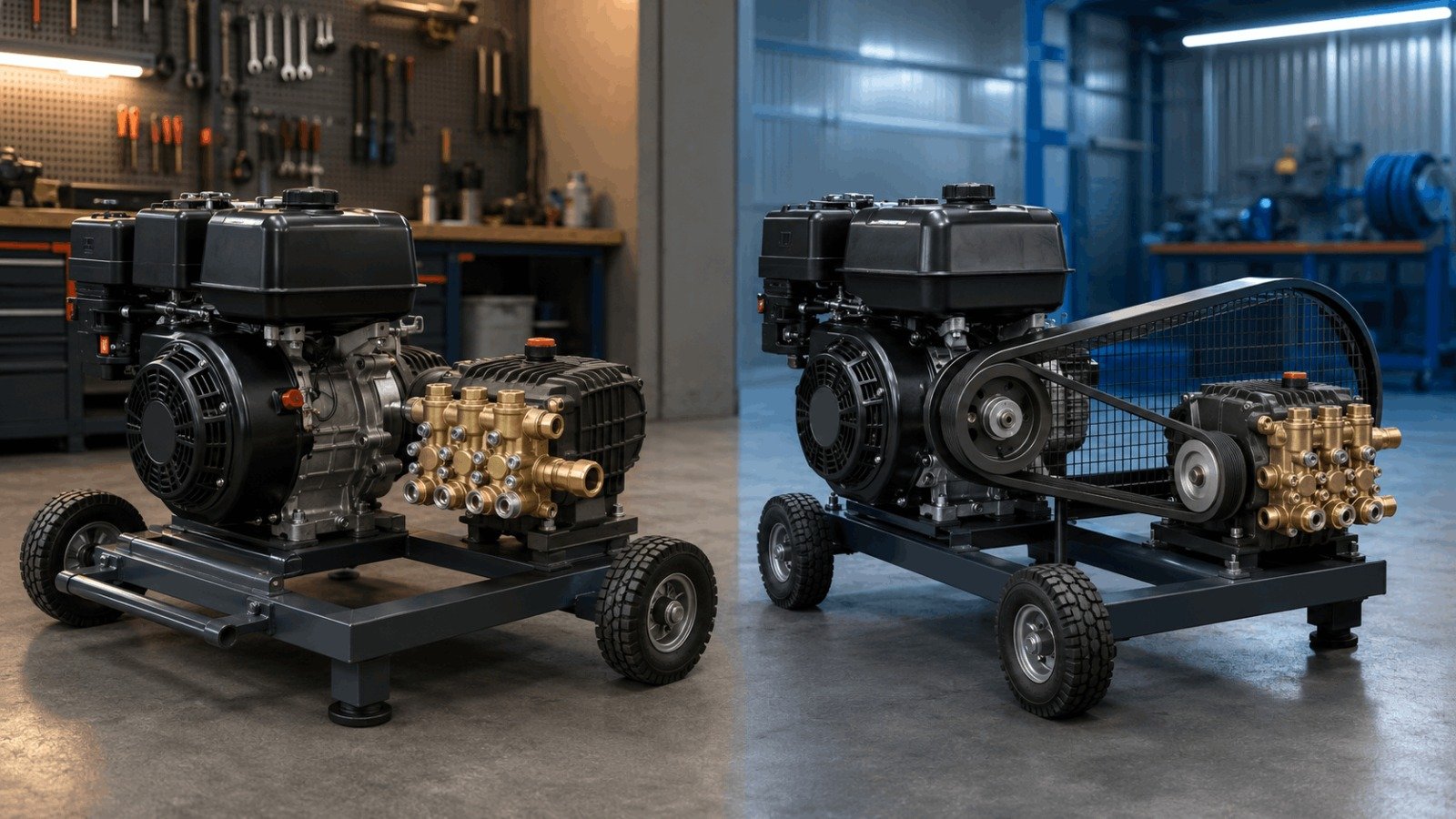
The drive system determines how power transfers from the engine or motor shaft to the pump crankshaft.
Direct-Drive Triplex Pump
A direct-drive pump mounts directly to the engine or motor shaft. It is common on portable gas pressure washers because the layout is compact and affordable.
- Advantages: Compact frame footprint, fewer drive components, lower initial cost, direct power transfer.
- Limitations: Pump turns at full engine speed (3400–3600 RPM), higher heat transfer from engine to pump, increased vibration, requires a highly dependable water supply.
Belt-Drive Triplex Pump
A belt-drive system uses pulleys and belts to connect the engine to the pump shaft, reducing pump operating speed (typically down to 1400–1750 RPM).
- Advantages: Lower pump operating RPM, runs significantly cooler, reduced vibration, flexible mounting positioning, longer seal and bearing lifespan.
- Limitations: Higher initial cost, larger overall frame, requires regular belt tension inspection and alignment checks.
Belt drive is the gold standard for long daily cleaning sessions, trailer-mounted rigs, commercial wash bays, and heavy contractor use.
Detailed Checklist: What to Check Before Buying a Replacement Triplex Pump
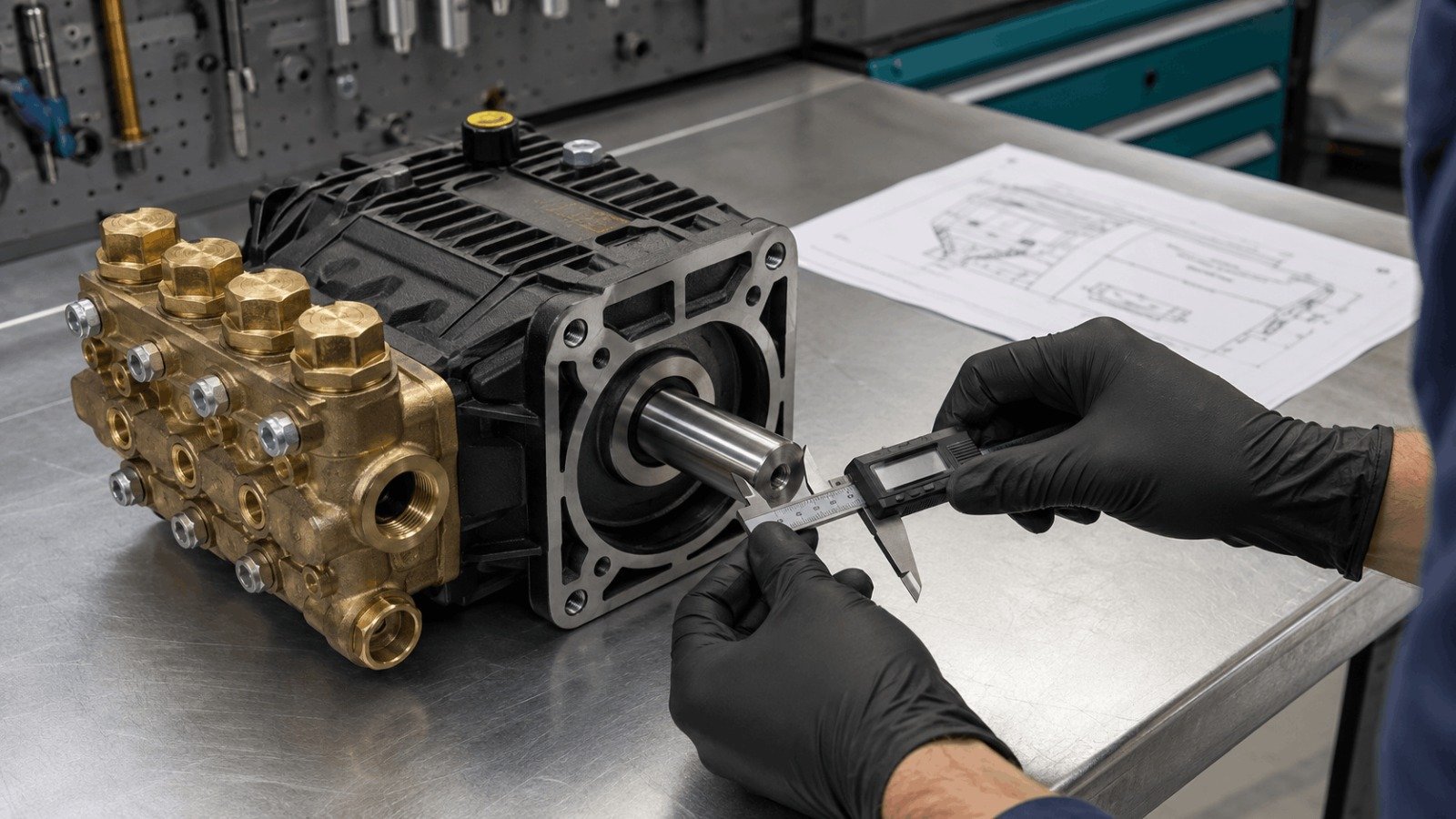
Never order a replacement pump based only on a similar product photo. Check these ten critical factors:
- PSI Rating: Match the pump to your system components (hose, gun, fittings, and unloader must be rated at or above this pressure).
- GPM Rating: Ensure your engine has the horsepower to drive the flow and your water supply can feed it continuously without starving the pump.
- Engine/Motor Horsepower: Verify required power using manufacturer charts. An undersized engine will stall when the gun trigger is pulled.
- Shaft Size & Orientation: Measure shaft diameter with a caliper (3/4″, 1″, or 1-1/8″), determine shaft type (solid vs. hollow), and confirm orientation (horizontal vs. vertical).
- Mounting Bolt Pattern: Measure bolt-hole spacing, pilot diameter, shaft depth, and keyway size.
- Maximum Operating RPM: Ensure the pump matches your engine speed (e.g., 3400 RPM direct drive vs. 1750 RPM belt drive).
- Unloader Valve Compatibility: Determine whether the pump requires an bolt-on integrated unloader or an external bypass unloader.
- Water Temperature Rating: Cold-water pumps cannot process hot water without thermal seal failure.
- Port Sizes & Threads: Check inlet (3/4″ GH or NPT) and high-pressure outlet thread types.
- Availability of Service Kits: Ensure replacement seal kits, valve kits, and O-rings are easily obtainable for that specific model.
- if you are performing a full setup overhaul on a Honda engine unit, make sure to source official Honda Pressure Washer Parts to prevent shaft misalignment, premature seal wear, or engine power drops.
Best Applications for a Triplex Pressure Washer Pump
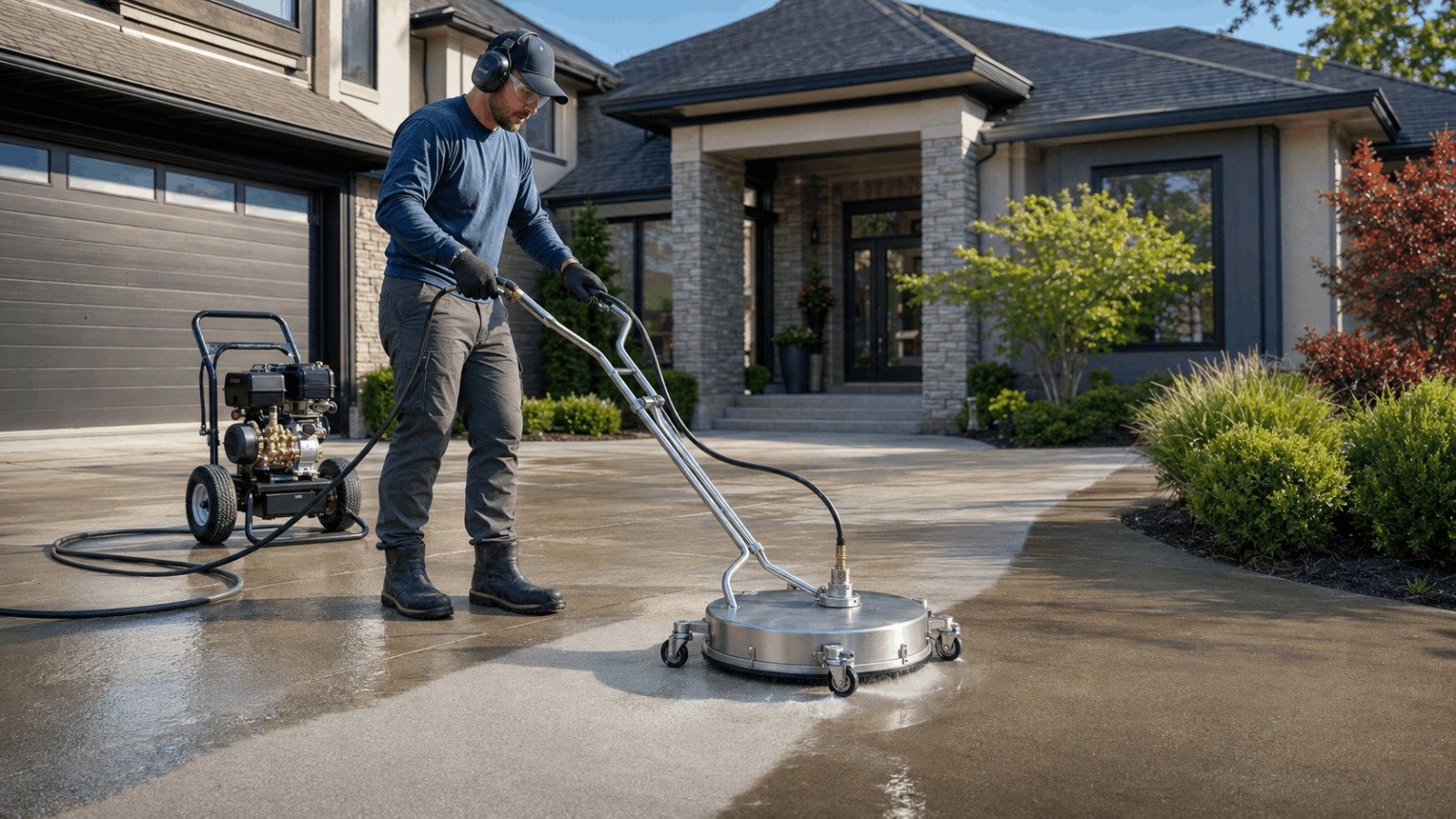
Triplex pumps excel in applications where downtime is costly and consistent output is required:
- Driveway & Concrete Surface Cleaning: High GPM drives flat surface cleaners efficiently, preventing striping and zebra patterns.
- Fleet & Equipment Maintenance: High water volume washes away thick mud, road grime, and heavy grease from trucks and farm equipment.
- Commercial Property Exterior Maintenance: Built to handle 4 to 8 hours of daily continuous operation without overheating.
- Auto Detailing: Smooth water delivery paired with adjustable pressure allows safe, efficient vehicle washing when tuned correctly.
Advantages and Limitations of Triplex Pumps
Advantages
- Continuous, ultra-smooth water delivery
- Available in higher commercial PSI and GPM configurations
- Superior durability during long continuous operating sessions
- Fully rebuildable wet end (replaceable seals, valves, and plungers)
- Multiple drive options (Direct, Belt, Gear-reducer)
- Oil-lubricated crankcase for cooler operation
Limitations
- Higher initial purchase price
- Heavier weight requires sturdier equipment frames
- Requires ongoing oil changes and maintenance
- Incorrect installation or unloader setup can damage the engine or pump
Common Buying & Operating Mistakes to Avoid
- Buying by PSI Alone: Ignoring GPM, required engine HP, and shaft dimensions lead to incompatibility.
- Assuming “Universal” Means Plug-and-Play: Always measure bolt circles, shaft length, and keyways before buying.
- Ignoring Water Supply Limits: Running a 4 GPM pump on a 2 GPM hose causes immediate pump cavitation.
- Adjusting the Unloader Valve Blindly: Tightening an unloader knob without a pressure gauge can spike pressure to dangerous levels, blowing out hoses or damaging engine shafts.
- Reusing Incorrect Nozzles: Using a nozzle orifice that is too small forces the pump into over-pressurization.
- Running the Pump Dry: Even 30 seconds of running without water can burn out plunger packing seals due to friction heat.
Step-by-Step Installation Guidance for Replacement Pumps
Follow this basic safety sequence when replacing a pump:
1.Safety & Disconnection:Prevent accidental engine startup.
Shut down the pressure washer, disconnect the spark plug wire (or electric power), turn off the water supply, and pull the spray gun trigger to release all trapped fluid pressure.
2.Remove Plumbing & Old Pump:Protect the engine shaft.
Disconnect water inlet, outlet, bypass, and chemical lines. Remove mounting bolts and slide the old pump straight off the engine shaft without striking or bending the keyway.
3.Inspect & Prepare Shaft:Prevent rust bonding.
Clean the engine shaft using fine emery cloth. Inspect keyway fitment and apply a thin coating of anti-seize lubricant to the shaft.
4.Mount & Align New Pump:Verify bolt torque.
Align keyway and key, slide new pump onto shaft, align mounting flange holes, and torque mounting bolts evenly to specification.
5.Plumbing & Oil Verification:Check oil sight glass.
Reattach inlet, outlet, and unloader fittings using fresh Teflon tape or thread sealant. Check pump crankcase oil level—fill with non-detergent ISO 68 / 30W pump oil if un-filled.
6.Purge Air & Initial Testing:Never start dry.
Connect garden hose, turn water on fully, squeeze gun trigger to purge air bubbles from the line for 60 seconds, then start engine at low throttle to check for leaks.
Triplex Pump Preventive Maintenance Schedule
To maximize service life, perform these simple maintenance tasks:
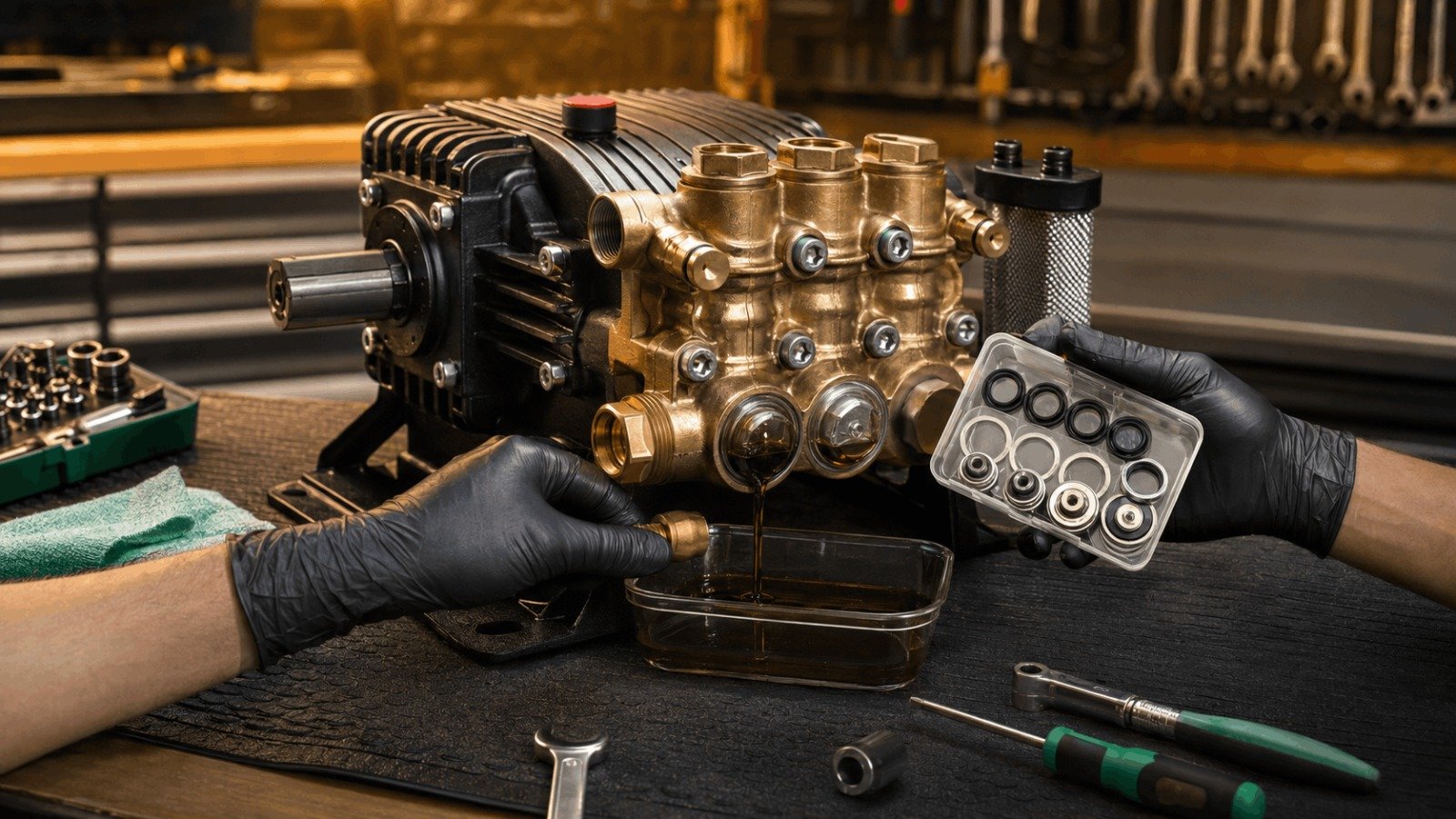
- Check Crankcase Oil Level: Inspect sight glass before every use. Change oil after the first 50 break-in hours, then every 300 hours or annually.
- Inspect Water Inlet Filter: Clean stainless steel inlet screen before every job to block abrasive sand and debris.
- Avoid Prolonged Bypass Mode: Do not leave the machine running with the spray gun trigger closed for more than 1 to 2 minutes. Recirculating water rapidly friction-heats inside the manifold, burning high-pressure seals.
- Flush Detergents: Always run fresh water through the chemical injector and pump lines after using soap.
- Winterization: Protect pump from freezing temperatures by drawing pump saver / antifreeze fluid into the wet end before winter storage.
Troubleshooting Common Triplex Pump Problems
1. Low Operating Pressure
- Causes: Worn or oversized nozzle orifice, clogged inlet filter, air leaking into inlet hose connection, worn pump seals, or improperly adjusted unloader valve.
- Fix: Check nozzle size, clean filters, tighten inlet fittings, test water supply flow rate.
2. Severe Pressure Pulsing
- Causes: Cavitation due to restricted water supply, stuck inlet check valve, trapped air in pump head, or clogged spray tip.
- Fix: Squeeze trigger with engine off to purge air, inspect internal check valves for debris or broken springs.
3. Milky Pump Crankcase Oil
- Causes: Water leaking past worn low-pressure water seals into the oil crankcase.
- Fix: Stop operating immediately. Replace plunger seals, packing, and oil seals, then flush and replace crankcase oil.
4. Excessive Pump Heat
- Causes: Machine left in bypass mode too long, restricted water supply, wrong oil viscosity, or overtightened unloader valve.
- Fix: Allow pump to cool, verify water supply volume, and replace heat-damaged seals if necessary.
Critical Safety Rules for High-Pressure Systems
- Never point spray guns at humans or animals: High pressure can cause severe subcutaneous injection injuries.
- Never search for leaks with your hands: Pressurized pinhole fluid leaks can penetrate skin easily.
- Wear appropriate PPE: Always wear safety goggles/glasses, steel-toe footwear, and hearing protection.
- Relieve pressure before servicing: Never unthread hoses or fittings without pulling the trigger with the machine turned off.
- Operate gas equipment outdoors only: Prevent carbon monoxide gas buildup.
Frequently Asked Questions (FAQs)
Is a triplex pump better than an axial pump?
Yes, for frequent, extended, or heavy-duty cleaning. Triplex pumps feature rebuildable components, run cooler, and handle far higher GPM and PSI loads than axial pumps.
Can I install a triplex pump on any pressure washer engine?
No. You must verify matching engine horsepower, shaft diameter, keyway orientation, mounting flange pattern, and engine RPM before purchasing.
Can a larger pump increase my pressure washer’s PSI?
Only if your engine has enough horsepower to drive it. Installing a larger pump on an underpowered engine will cause the engine to stall under load.
How long does a triplex pressure washer pump last?
A well-maintained commercial triplex pump can last between 1,500 to 3,000+ operating hours, whereas budget axial pumps typically last 100 to 300 hours.
Final Buying Recommendation
A Triplex Pressure Washer Pump is the ultimate choice for contractors, serious property owners, and detailing professionals who demand continuous reliability, high water flow, and rebuildability.
When replacing your pump, prioritize matching rated PSI/GPM, engine shaft dimensions, and mounting patterns over buying the highest numbers on the box. Matching components correctly ensures smooth operation, maximum cleaning power, and years of trouble-free performance.
Helpful Resources
For a technical explanation of triplex positive-displacement pump operation, see How Cat Pumps Work.