
A pressure washer can have a strong engine and a reliable pump, yet still perform poorly because of the hose connected to it. A hose that is too narrow, incorrectly rated, badly kinked, or fitted with incompatible connectors can restrict movement, interrupt water flow, and create a serious safety risk.
A commercial pressure washer hose is designed for higher pressure, longer working hours, frequent dragging, and demanding cleaning environments compared to a basic residential hose. It is essential for cleaning driveways, parking areas, commercial vehicles, heavy machinery, building exteriors, patios, and large workshops.
This comprehensive guide covers hose pressure ratings, inside diameters, construction materials, temperature limits, fittings, extension options, reels, maintenance, and replacement. Whether you are upgrading a homeowner machine or building a professional cleaning setup, this guide will help you choose a commercial pressure washer hose that safely matches your equipment and daily workload.
What Is a Commercial Pressure Washer Hose and Why Does It Matter?
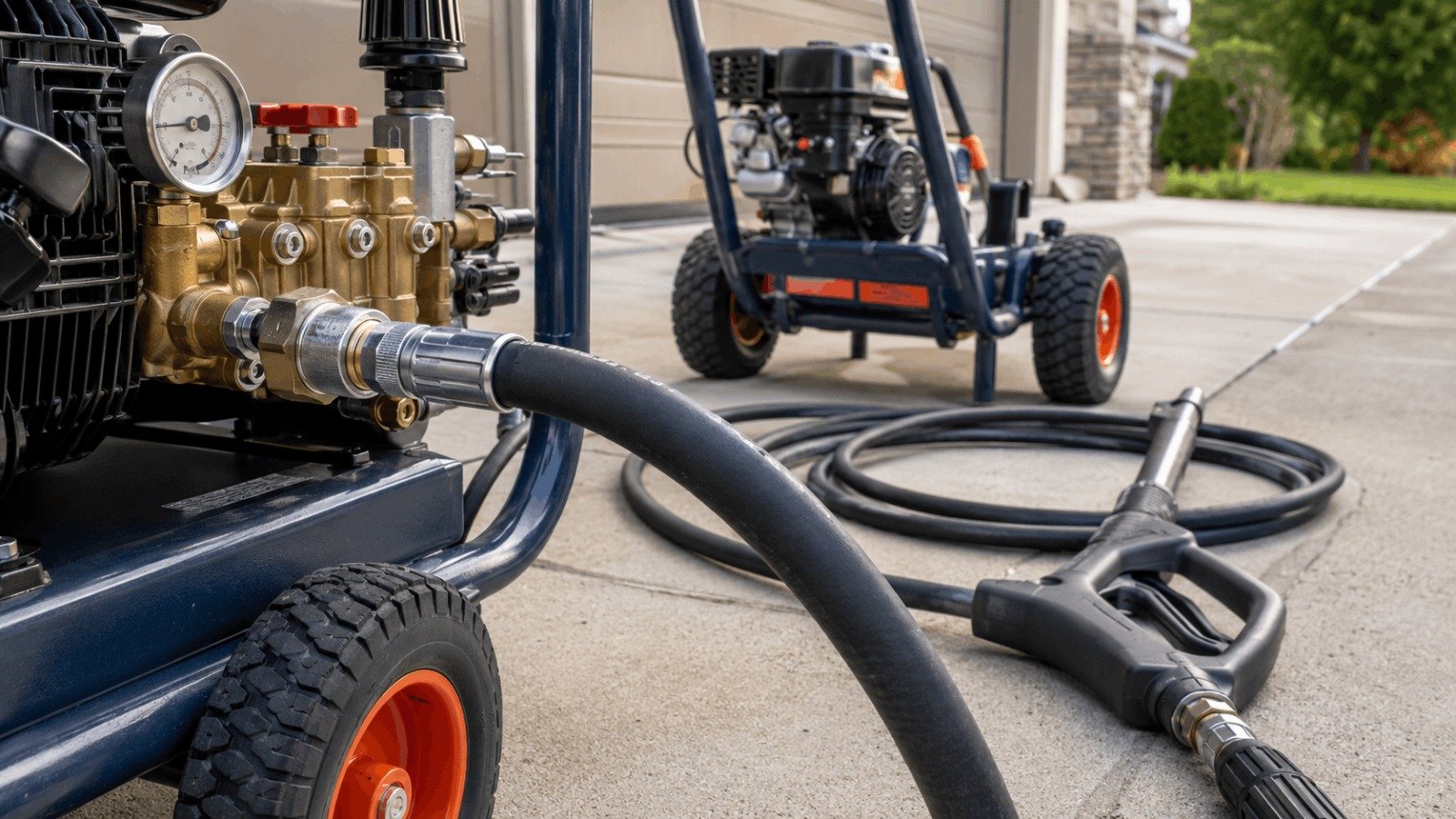
A commercial pressure washer hose carries pressurized water from the pump outlet directly to the spray gun or surface cleaner attachment. It must withstand high operational pressure and water flow while remaining flexible enough to maneuver around vehicles, buildings, and outdoor obstacles.
This high-pressure outlet line is fundamentally different from a standard garden hose. A garden hose operates on the low-pressure inlet side. Using an unsuitable hose on the high-pressure outlet side can result in severe leaks, line ruptures, or pressure-related injuries.
Because continuous high-pressure flow originates directly from a heavy-duty Triplex Pressure Washer Pump, your outlet hose must be structurally rated to handle that intense volume without failing.
Key Benefits of a Quality Commercial Hose
- Consistent Water Delivery: Maintains maximum flow rate directly to the spray nozzle.
- Enhanced Safety: Built with high burst thresholds to prevent high-pressure ruptures.
- Abrasion Resistance: Heavy-duty outer covers withstand rough asphalt and concrete dragging.
- Minimal Downtime: Reduces work interruptions caused by tangles, kinks, and structural twists.
- High Compatibility: Connects seamlessly with commercial surface cleaners, extension wands, and pro spray guns.
- Extended Reach: Allows long-distance setups without having to constantly move the pressure washer unit.
Note: The hose itself does not generate pressure—the pump creates the pressure and flow rate. However, a restricted, kinked, or undersized hose will prevent your entire pressure washer setup from reaching its full potential.
Commercial Grade Pressure Washer Hose vs. Residential Hose
Choosing between a commercial grade pressure washer hose and a standard residential model depends on your workload, machine specs, and usage frequency.
- Commercial Hoses feature multi-layer inner reinforcement (like steel wire braids), thicker outer covers, robust bend restrictors, and industrial quick-connect fittings made for continuous use.
- Residential Hoses are lighter and easy to coil. They work fine for washing cars, patio furniture, and small decks. However, their limitations quickly show when exposed to high GPM machines, hot engines, or rough concrete surfaces.
If you are servicing or upgrading a commercial gas unit, pairing the right hose with genuine Honda Pressure Washer Parts ensures maximum engine performance and long-term reliability.
Comparison Table: Residential vs. Commercial Pressure Washer Hose
| Feature | Residential Pressure Washer Hose | Commercial Pressure Washer Hose |
| Intended Use | Occasional home maintenance | Daily or regular commercial cleaning |
| Compatible Machines | Light electric / Small DIY gas units | Commercial gas / Industrial electric units |
| Common Hose Diameter | Typically 1/4 inch | Standard 3/8 inch |
| Internal Reinforcement | Light thermoplastic or textile braid | High-tensile textile or steel-wire braid |
| Abrasion Resistance | Basic to moderate | Heavy-duty / Industrial-grade |
| Temperature Rating | Cold-water only (up to 140°F) | Cold- or Hot-water options (up to 250°F+) |
| Standard Fittings | M22 screw threads or plastic snap-fits | 3/8-inch brass/stainless steel quick-connects |
Commercial does not automatically mean better for every situation. A heavy steel-braided hose can be awkward and unnecessarily bulky for a small electric pressure washer. Always pick a hose that fits your machine’s specs and job scope.
If you are currently evaluating pressure washing equipment, check out our detailed guide on commercial pressure washer options to pair the right unit with your hose.
Understanding High Pressure Washer Hose Ratings
Every high-pressure hose features a clearly defined working-pressure rating (measured in PSI). This number represents the maximum pressure level the manufacturer specifies for safe daily operation.
Always choose a working-pressure rating that meets or exceeds your washer’s maximum PSI output. For example, if your pressure washer generates 3,500 PSI, do not pair it with a 3,000 PSI hose.
Working Pressure vs. Burst Pressure
Do not confuse working pressure with burst pressure.
- Working Pressure: The safe, continuous operating pressure threshold.
- Burst Pressure: A laboratory stress-test rating at which a new hose will structurally rupture. Never run your machine based on the burst pressure rating.
Critical Specifications Checklist
When checking a high pressure washer hose rating, evaluate these factors together:
- Maximum Working Pressure (PSI)
- Inside Diameter (ID)
- Water Temperature Limits (°F / °C)
- Overall Hose Length
- Fitting Type & Material (M22 vs. Quick-Connect)
- Flow Rate Capacity (GPM)
Is a 4000 PSI Commercial Pressure Washer Hose Right for You?
A commercial pressure washer hose 4000 PSI is one of the most popular configurations for contractors, fleet cleaners, agricultural operations, and building maintenance teams.
When to Choose a 4,000 PSI Hose:
- Your pressure washer output is rated near or at 4,000 PSI.
- You operate a commercial-grade gas pressure washer.
- You regularly clean heavy machinery, commercial fleets, or large concrete areas.
- You use high-flow surface cleaners or dual-lance wands.
- You need long hose extension runs across large job sites.
Important: Buying a 4,000 PSI rated hose will not increase the pressure output of a 3,000 PSI machine. The hose simply tolerates higher pressure without failing.
3/8 Inch Pressure Washer Hose: The Commercial Standard
The inside diameter (ID) of a hose determines how easily water flows through it. A 3/8 inch pressure washer hose is considered the industry standard for professional cleaning operations because it handles high water volume with minimal flow restriction.
Choosing the Right Hose Diameter:
1/4″ ID 5/16″ ID 3/8″ ID
(Light & Flexible) (Mid-Range Balance) (Commercial Standard)
- Low GPM (< 2.5) • Mid GPM (2.5 – 3.5) • High GPM (3.5 – 10+)
- Short runs (< 50 ft) • Versatile use • Long runs (50-200+ ft)
- Compact Electric • Light Gas Units • Professional Gas Units
- 3/8 Inch Hose: Ideal for high-GPM gas machines, long hose extensions, industrial surface cleaners, and hot-water setups.
- 1/4 Inch Hose: Best suited for compact electric pressure washers, light vehicle detailing, and short lengths where flexibility and light weight matter most.
- 5/16 Inch Hose: Bridges the gap between 1/4″ and 3/8″. It offers better flow than a 1/4″ hose while staying lighter than a full 3/8″ steel-braided commercial line.
Why Hose Diameter Impacts Machine Performance
As water passes through a line, it encounters friction against the inner walls. The narrower and longer the hose, the higher the friction loss. At higher GPM flow rates, an undersized hose creates backpressure that strains your pump and reduces pressure at the spray nozzle.
Heavy Duty Pressure Washer Hose Materials and Construction
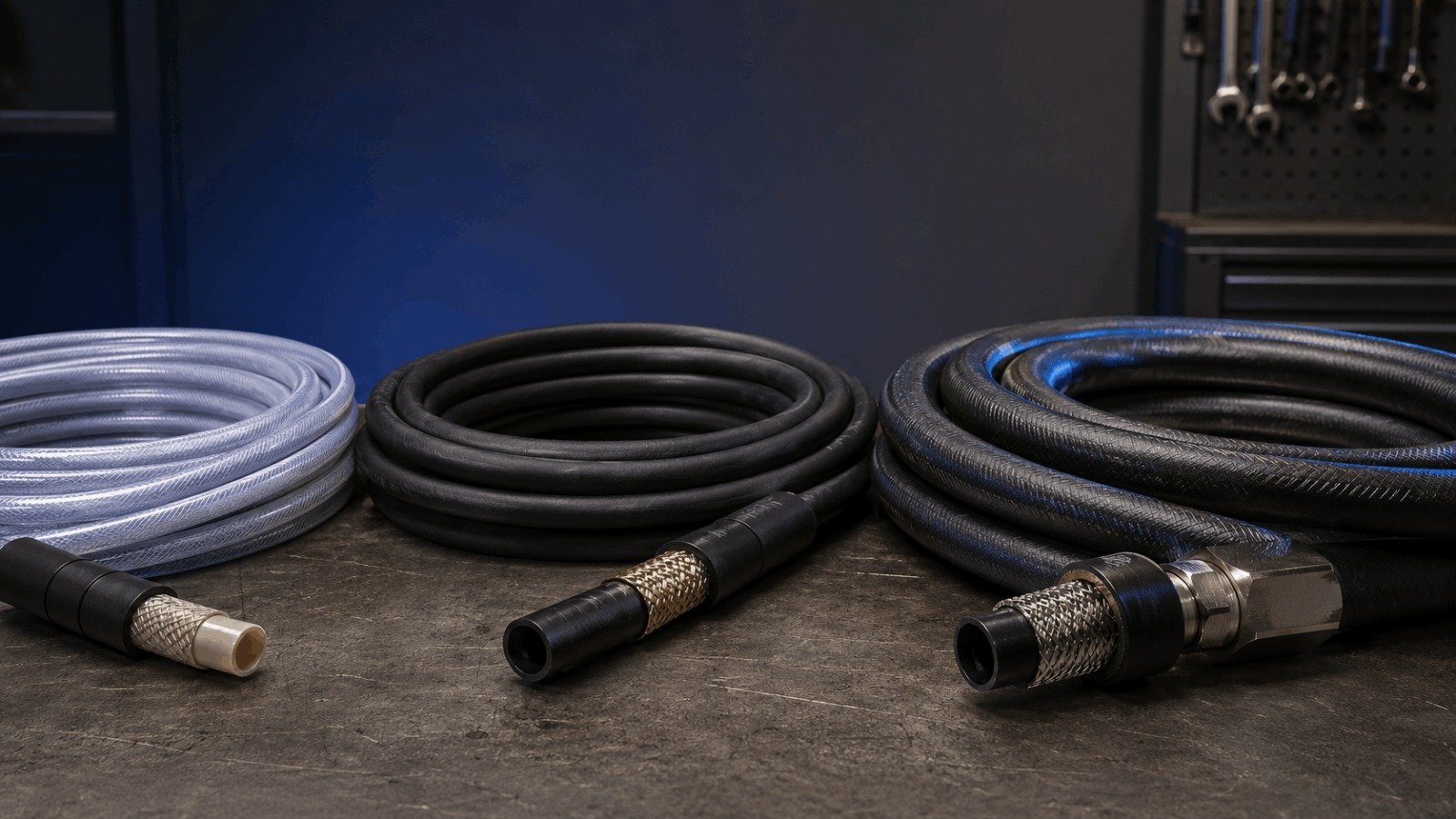
A heavy duty pressure washer hose consists of three core structural layers:
- Inner Tube: A smooth synthetic rubber or thermoplastic core that transports water.
- Reinforcement Layer: Braided synthetic textile yarns or high-tensile steel wire that withstands high internal pressure.
- Outer Cover: A tough jacket designed to shield the inner layers from abrasion, UV damage, weather, and chemicals.
Common Hose Materials & Their Pros/Cons
1. Thermoplastic Hoses
- Pros: Extremely lightweight, affordable, highly chemical resistant, easy to transport.
- Cons: Stiff in cold weather, prone to holding coil memory, less resistant to rough asphalt abrasion.
2. Rubber Hoses
- Pros: Highly flexible, lays flat on surfaces with zero coil memory, performs exceptionally well across extreme temperatures.
- Cons: Heavier to pull around; standard black rubber can leave scuff marks on light-colored concrete, pool decks, or painted floors.
3. Polyurethane & Hybrid Hoses
- Pros: Combines the flexibility of rubber with the lightweight durability of polyurethane. Often features non-marking outer covers—making them ideal for indoor commercial cleaning and auto detailing.
- Cons: Quality varies across brands. Always verify explicit PSI and heat ratings.
4. Steel-Wire Reinforced Hoses
- Pros: Exceptional durability and pressure handling. Steel-braided construction prevents line expanding under sudden pressure spikes.
- Cons: Heavy and less pliable. Safety Alert: If the outer cover wears down and exposes rusting or frayed steel wire, replace the hose immediately.
Features of a Kink Resistant Pressure Washer Hose
A kink resistant pressure washer hose helps prevent severe bends that choke off water supply or permanently weaken internal reinforcement layers. While no high-pressure hose is completely kink-proof, certain features dramatically improve line management:
- Low Coil Memory: Materials (like high-grade rubber or hybrid blends) that lay flat when unrolled.
- Heavy-Duty Bend Restrictors: Reinforced plastic or rubber sleeves placed near the crimped end fittings to prevent stress bends.
- Integrated Hose Swivels: Allows the gun to rotate freely without twisting the main line.
- Proper Hose Reels: Prevents tight structural loops during storage.
Hot Water vs. Cold Water Commercial Hoses
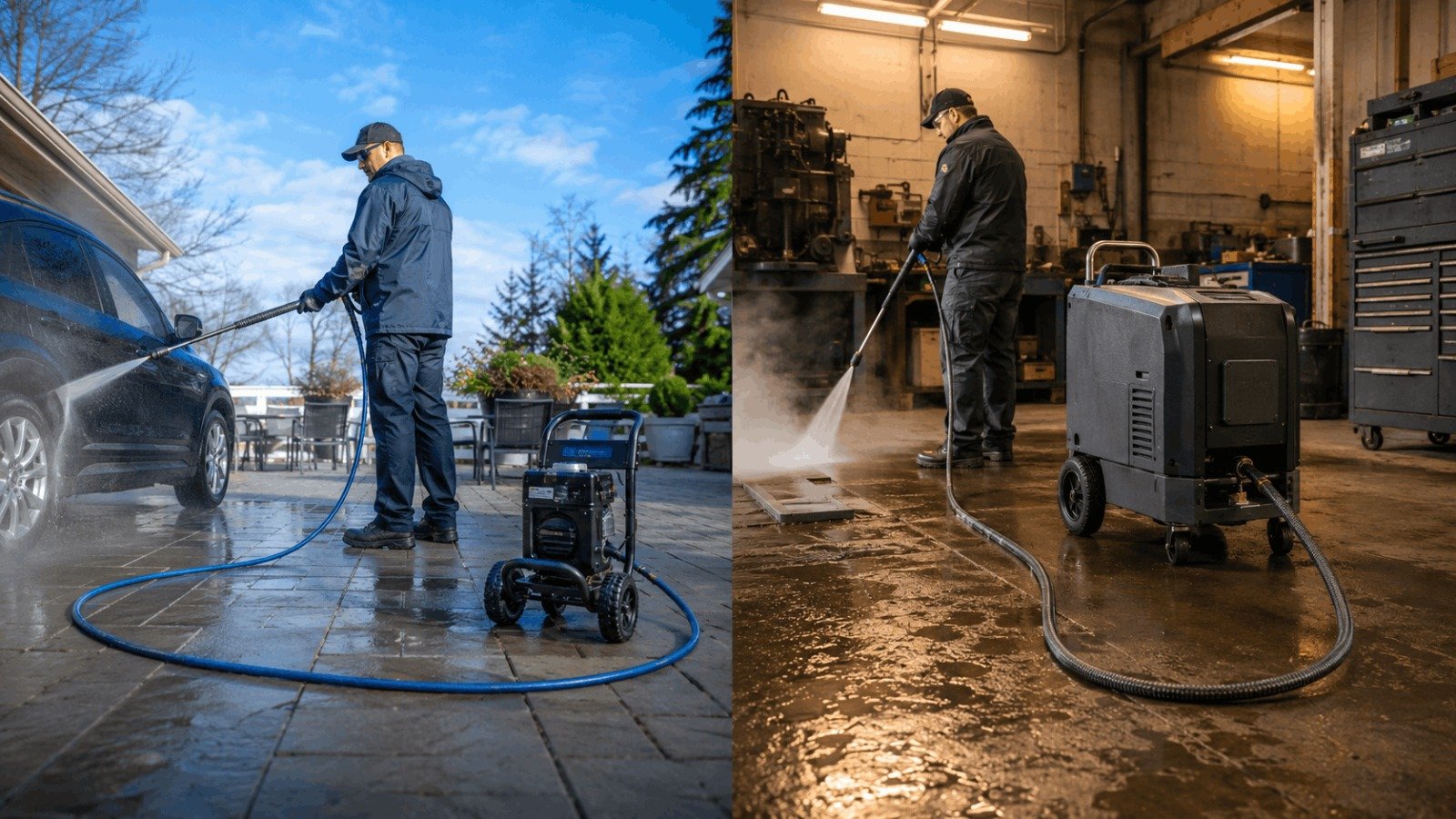
Using a cold-water line on a hot-water machine is a major safety hazard. Thermal breakdown can melt inner linings and lead to line ruptures.
Hot Water Pressure Washer Hose Features
- Rated for continuous temperatures between 180°F and 250°F+ (82°C – 121°C+).
- Constructed with heat-resistant synthetic rubber inner tubes and single or double steel-wire braids.
- Essential for cleaning grease, heavy oils, commercial kitchens, engine bays, industrial floors, and food processing plants.
Cold Water Pressure Washer Hose Features
- Rated for standard ambient water temperatures up to 140°F (60°C).
- Lighter, highly mobile, and cost-effective.
- Perfect for general driveway washing, house siding, deck cleaning, and fleet rinsing.
Pressure Washer Hose Fittings and Connection Types
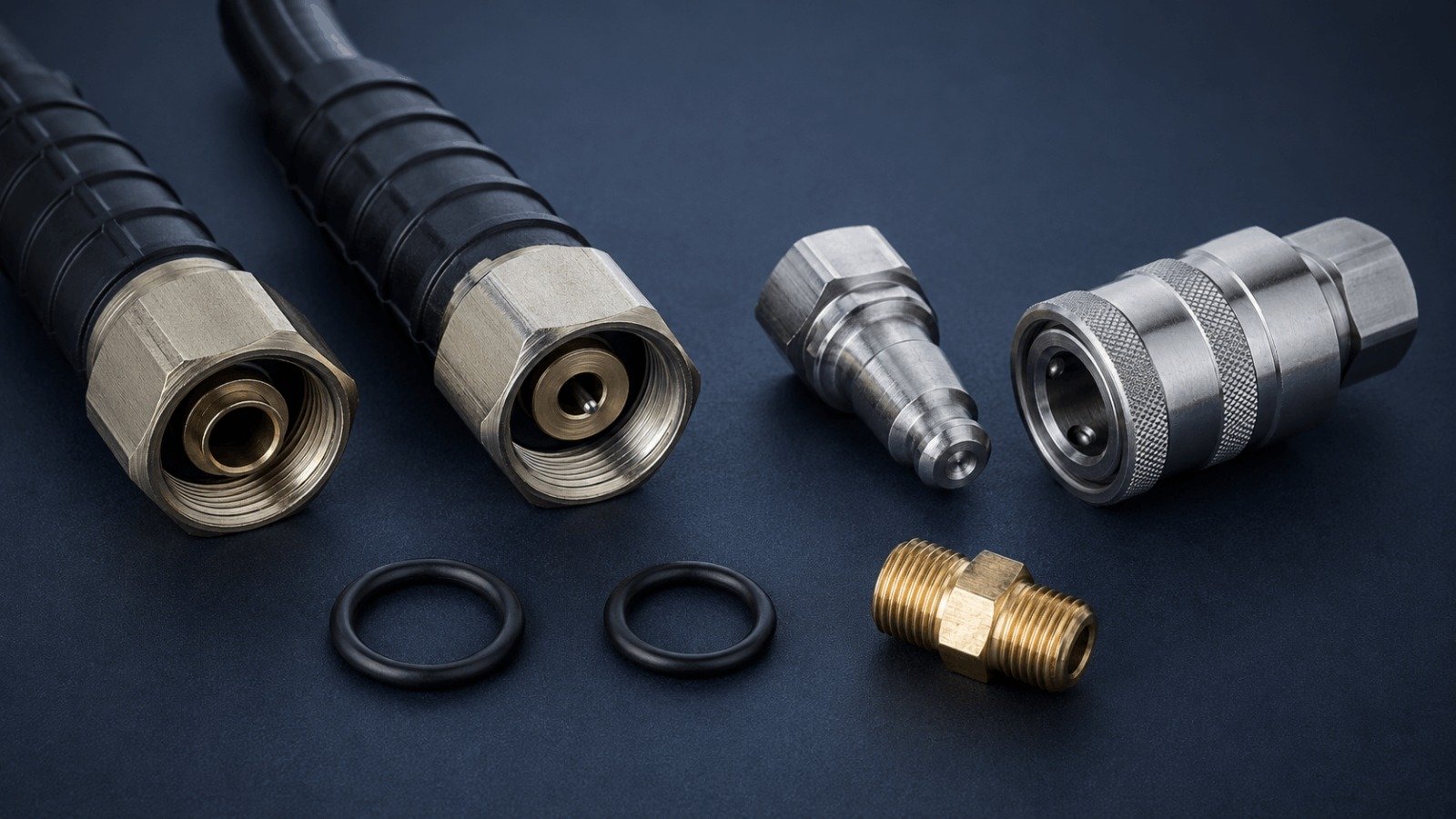
Connecting a new hose requires matching the thread style, internal stem diameter, and coupling mechanisms of your equipment.
+————————————————————————+
| FITTING TYPES |
| |
| M22 Threaded (14mm / 15mm) 3/8″ Quick-Connect |
| +————————–+ +———————-+ |
| | Twist-on screw collar | | Snap-in plug & socket| |
| | Common on DIY units | | Standard on Pro units| |
| +————————–+ +———————-+ |
+————————————————————————+
1. M22 Threaded Fittings
Commonly found on residential and entry-level commercial units. Be aware of internal pin diameters:
- M22-14mm: Used by most major commercial brands.
- M22-15mm: Used by select residential brands (e.g., Sun Joe, AR Blue Clean).
- Mixing 14mm and 15mm fittings will cause persistent leaking or prevent coupling.
2. 3/8-Inch Quick-Connect Fittings
The universal standard for commercial operations. A male plug snaps directly into a spring-loaded female socket, enabling rapid setup of guns, surface cleaners, and extension lines.
3. Proprietary Push-Click Connections
Common on small consumer units. They generally require an aftermarket brass adapter to convert the pump outlet to standard 3/8″ quick-connects.
Pro Tip on Thread Sealant & O-Rings: High-pressure quick-connect fittings rely on internal rubber O-rings (not Teflon tape) to create a watertight seal. Never wrap Teflon tape around quick-connect threads unless sealing NPT pipe threads.
Pressure Washer Hose Extensions: How Much Length Do You Need?
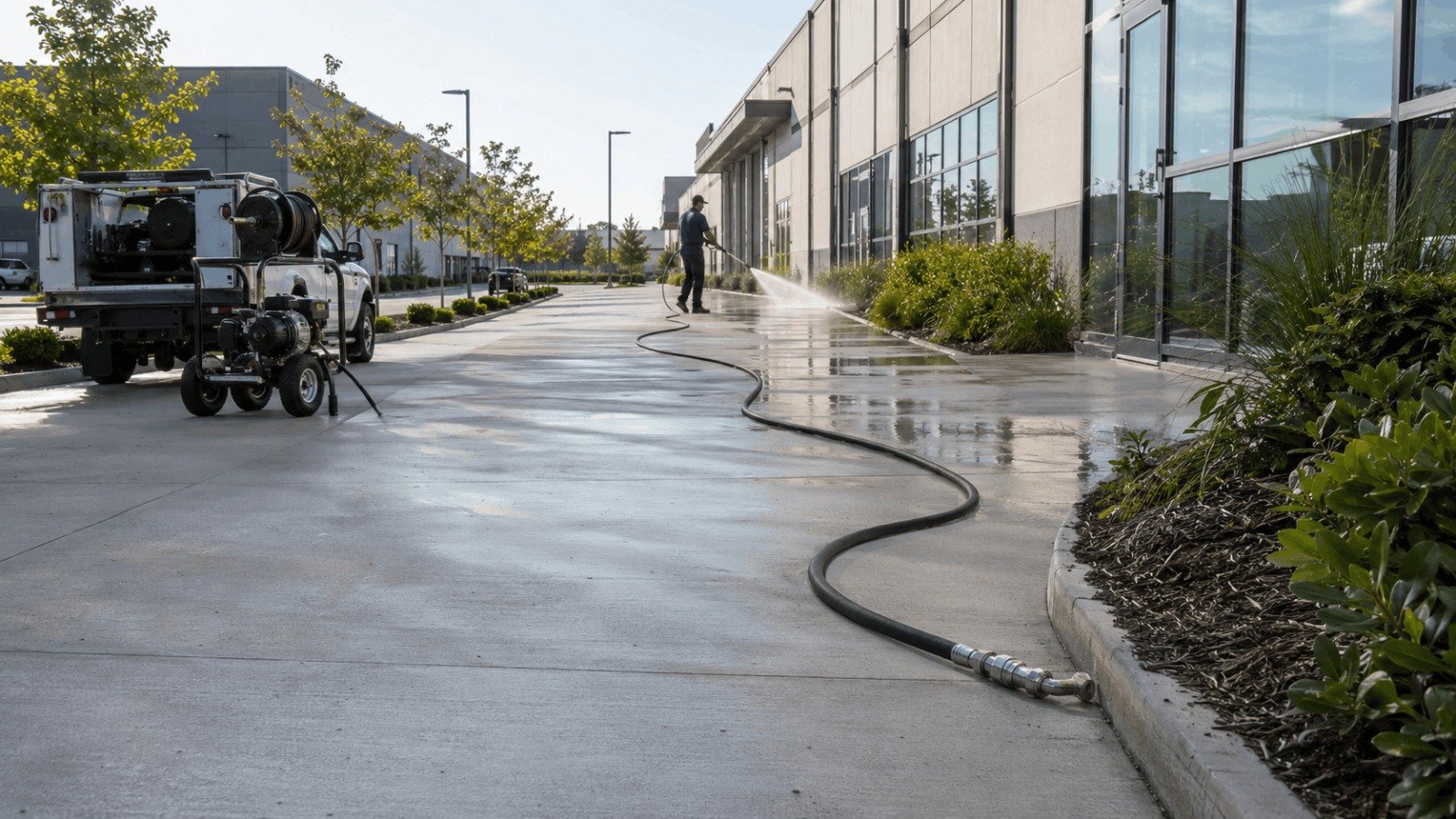
Adding a pressure washer hose extension lets you cover expansive work zones without constantly moving heavy machinery—keeping gas exhaust fumes far away from open doors and windows.
Pros & Cons of Extended Hose Runs (100–200+ Feet)
- Pros: Faster job setup, less machine repositioning, extended reach for multi-story buildings and large parking lots.
- Cons: Added overall weight, potential pressure drop from line friction, and higher risk of tangles or vehicular damage on site.
To minimize friction loss over long runs (75+ feet), always choose a 3/8-inch inside diameter hose paired with a machine producing at least 3.5 to 5 GPM.
Choosing a Pressure Washer Hose Reel
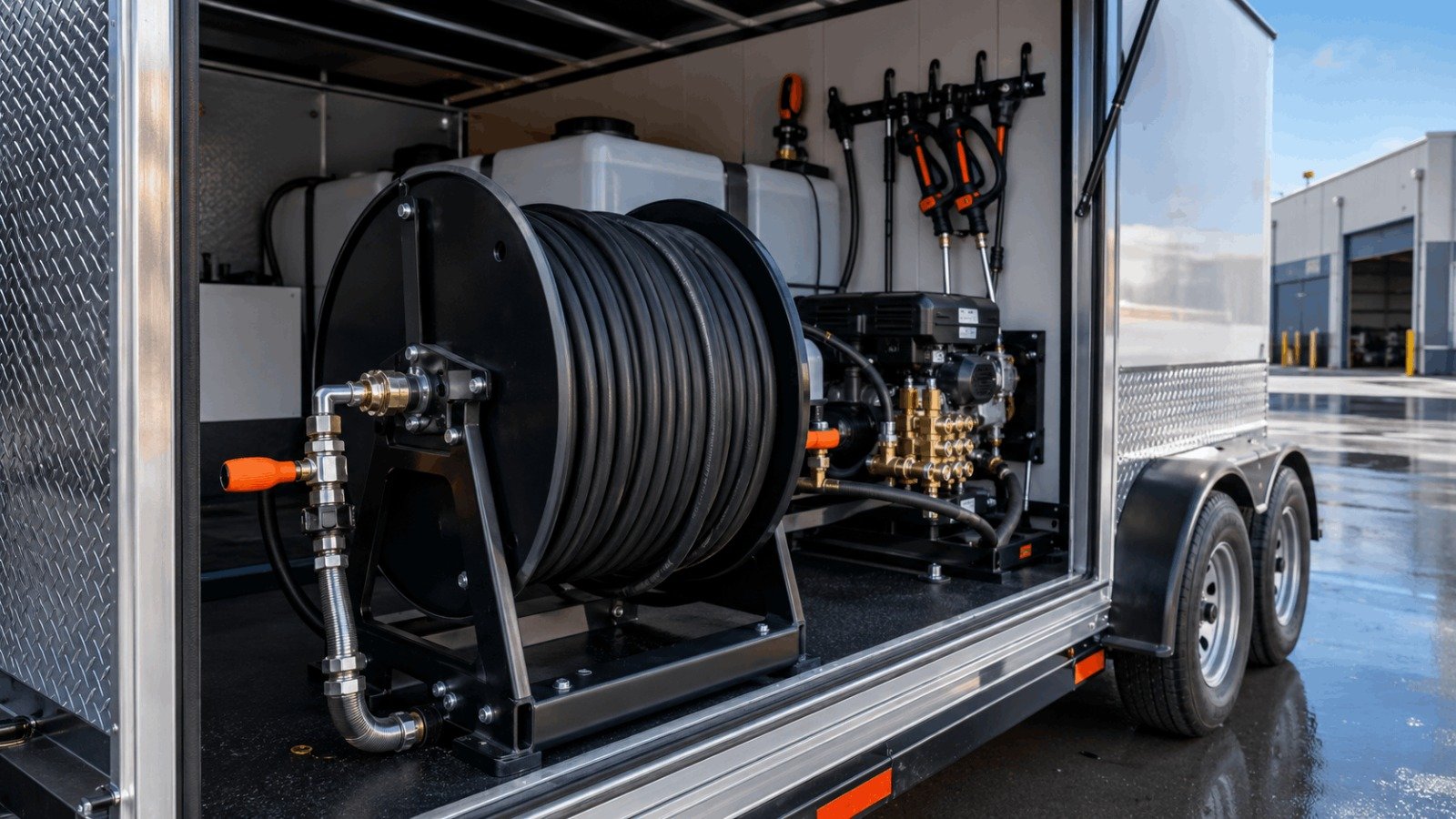
A heavy-duty hose reel protects your investment by keeping high-pressure lines organized, off the ground, and safe from being run over by vehicles.
What to Look for in a Commercial Hose Reel:
- Pressure & Heat Rating: The internal swivel mechanism must meet your pump’s max PSI and temperature specs.
- Drum Capacity: Select a reel rated for 20% to 25% more hose length than you currently use to prevent overcrowding.
- Mounting Versatility: Ensure it supports trailer, wall, skid, or cart mounting options.
- Construction: Solid steel or stainless steel frame with powder coating to resist harsh chemicals and rust.
When running commercial floor-cleaning attachments, keeping your line organized on a dedicated reel preserves water flow. For more details on matching flow parameters with attachments, explore our commercial surface cleaner guide.
Pressure Washer Hose Replacement: When Is It Necessary?
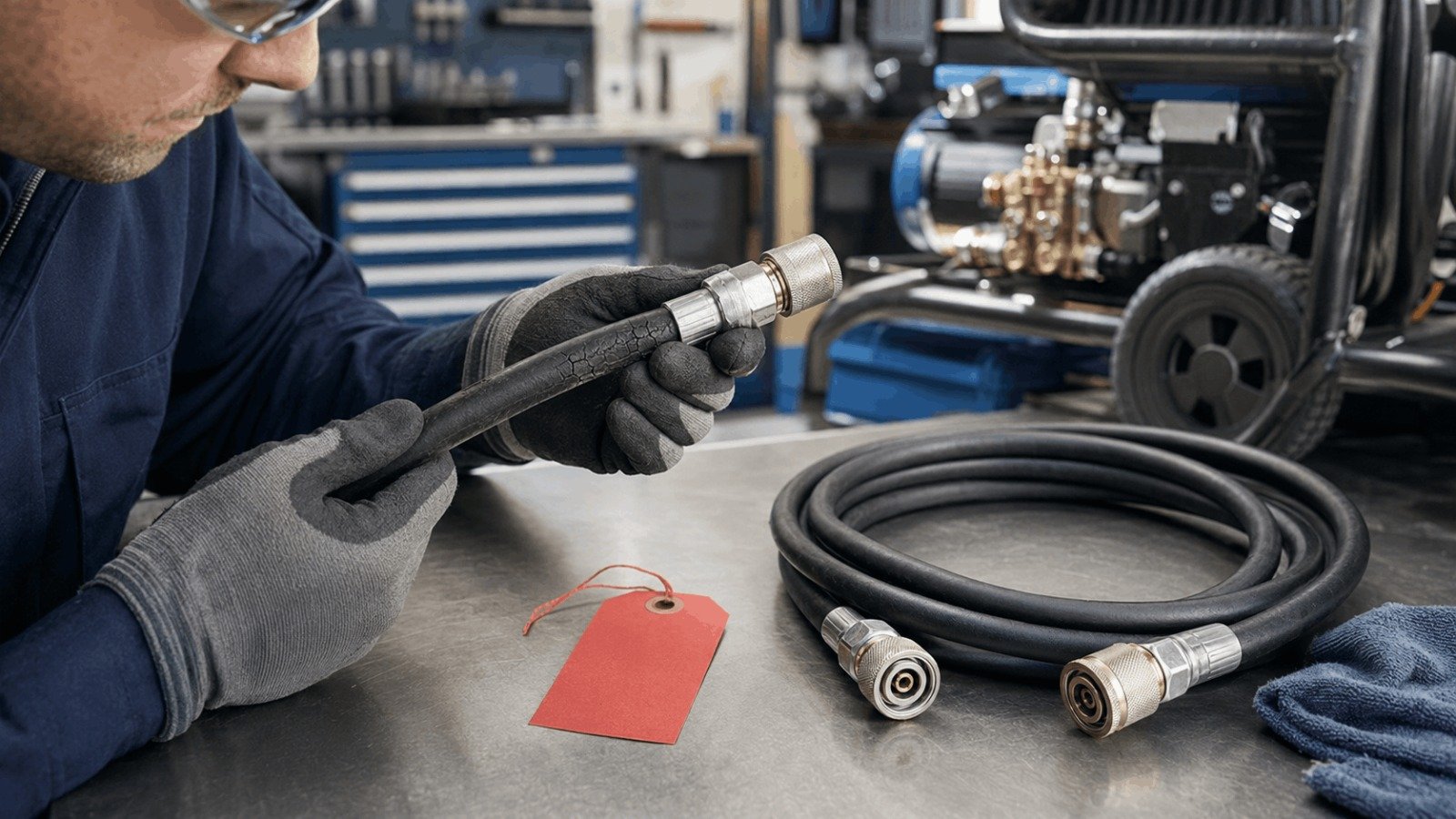
High-pressure hoses operate under extreme stress. Never attempt temporary DIY repairs with duct tape, hose clamps, or garden hose repair kits.
Immediate Replacement Triggers:
- Visible cracks, cuts, or gouges in the outer protective cover.
- Raised bubbles, blisters, or swollen spots along the outer jacket.
- Exposed, rusted, or frayed steel wire braiding.
- Pinhole leaks or weeping moisture around crimped end fittings.
- Severe, permanent crushing caused by vehicle traffic.
+——————————————————————-+
| SAFETY WARNING |
| |
| NEVER run your hand along a pressurized hose to check for leaks! |
| High-pressure fluid injection can pierce skin and tissue, |
| causing severe internal injuries that require immediate surgery.|
+——————————————————————-+
Buyer’s Checklist for a Commercial Pressure Washer Hose
Before making your purchase, review this quick 10-point checklist:
- [ ] 1. Match Working PSI: Verify working pressure meets or exceeds pump output.
- [ ] 2. Check Temperature Limits: Choose hot-water rated lines if running a burner.
- [ ] 3. Size Inside Diameter: 3/8″ ID for high GPM/long runs; 1/4″ for light units.
- [ ] 4. Verify End Fittings: Confirm connection sizes (M22 vs. 3/8″ QC) on both pump and gun ends.
- [ ] 5. Pick Practical Length: Buy enough reach without adding unnecessary weight.
- [ ] 6. Select Outer Jacket Type: Non-marking covers for decorative concrete and indoor jobs.
- [ ] 7. Verify Bend Protection: Look for sturdy rubber sleeves near crimped ends.
- [ ] 8. Evaluate Daily Handling Needs: Balance heavy-duty durability with line flexibility.
- [ ] 9. Check Hose Reel Capacity: Ensure your reel setup accommodates the total hose diameter.
- [ ] 10. Read Manufacturer Specs: Always defer to your pressure washer manual’s guidance.
Summary of Pros & Cons
Pros
- Exceptional durability for continuous commercial job sites.
- High PSI and flow capacities support advanced attachments.
- Available in non-marking, hot-water, and ultra-abrasion-resistant options.
- Extends operating distance to keep noise and exhaust isolated.
Cons
- Heavier and more rigid to move around compared to lightweight vinyl hoses.
- Higher upfront investment.
- Requires compatible brass quick-connect adapters for consumer-grade machines.
Essential Pressure Washer Hose Safety
Treat your high-pressure line as a live energy vessel during operation:
- Inspect Daily: Perform a full visual check from pump connection to spray gun before starting up.
- Avoid Heat Sources: Route lines clear of hot engine exhausts, mufflers, and burner stacks.
- Protect Line Paths: Never run over high-pressure lines with trucks, trailers, or heavy machinery.
- Relieve Pressure Before Uncoupling: Turn off the machine and squeeze the spray gun trigger to bleed trapped pressure before disconnecting fittings.
- Wear Protective Gear: Always wear safety glasses, work gloves, and steel-toe boots during operation.
Frequently Asked Questions
What size hose is best for a commercial pressure washer?
A 3/8-inch inside diameter is the commercial standard. It delivers high water volume (GPM) with low friction loss over long runs.
Can I use a 4,000 PSI hose on a 3,000 PSI machine?
Yes. Using a higher-rated hose is safe and provides an extra safety margin. However, it will not increase your 3,000 PSI washer’s pressure output.
Does a longer pressure washer hose lower working pressure?
Yes, long hose runs create friction loss. Using a wider 3/8-inch ID line helps maintain pressure and flow rate across lengths over 50 feet.
Are commercial pressure washer hoses universal?
No. Hoses vary by PSI ratings, thermal limits, internal diameters, and fitting connections (M22 screw threads vs. 3/8″ quick-connects).
Conclusion
A commercial pressure washer is only as reliable as the high-pressure hose feeding its spray gun. Selecting the right commercial pressure washer hose involves matching working PSI, GPM capacity, thermal limits, internal diameter, and fitting connections to your specific machine.
For most professional cleaning applications, a heavy-duty 3/8-inch steel-braided hose offers the best balance of flow volume, structural durability, and longevity. Prioritize regular line inspections, practice safe line management, and replace damaged hoses at the first sign of cover wear to keep your job site safe and productive.
Helpful Resources
- Pressure Washer Safety Guidance — Safety precautions and guidance for responding to high-pressure spray injuries.