
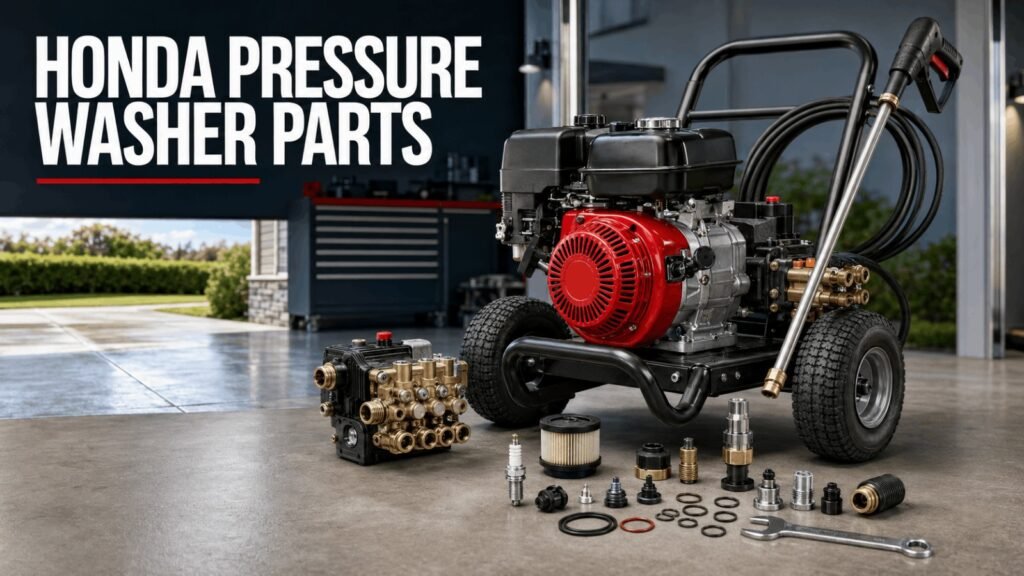
Honda Pressure Washer Parts: Complete Guide to GX390 Pumps, Repairs & Replacement (2026)
A pressure washer can lose pressure, leak water, run unevenly, or refuse to start even when its Honda engine is still in excellent condition. The difficult part is knowing whether you need Honda pressure washer parts, pump components, or a completely new pump. This distinction matters because Honda usually supplies the engine—not the complete pressure washer pump. A machine advertised as a “Honda GX390 pressure washer” may use a pump made by CAT Pumps, General Pump, AR, Comet, AAA, or another manufacturer. This guide explains how to identify the correct GX390 engine parts, diagnose pump problems, compare repair with replacement, and choose a compatible pump without relying on PSI alone. It is written for homeowners, DIY users, equipment owners, and cleaning professionals who want to avoid ordering the wrong component. Honda Pressure Washer Parts: Know Which System You Are Repairing A gas pressure washer has two major mechanical systems: the engine and the pump. They work together, but their parts normally come from different manufacturers. The Honda engine turns fuel into mechanical power. The pump uses that power to pressurize the incoming water. A problem in either system can make the machine appear weak or unusable. System Main function Common parts Honda engine Produces rotational power Air filter, spark plug, carburettor, fuel valve, recoil starter, ignition coil, gaskets and crankshaft Pressure washer pump Creates water pressure and flow Seals, check valves, plungers, unloader valve, manifold, thermal relief valve and oil seals Water delivery system Carries water to and from the pump Inlet filter, hose, spray gun, fittings, O-rings and nozzle Detergent system Draws and applies cleaning solution Chemical injector, siphon tube, filter and soap nozzle If the engine starts and runs smoothly but the spray is weak, the problem is more likely connected to water flow, the nozzle, unloader, valves, seals, or pump. If the engine will not start, surges without a water load, smokes, or stalls, begin with the Honda engine system. Before buying anything, find both identification labels: The engine model, type code, and serial number. The pump manufacturer and exact pump model. The pressure washer’s complete model and serial number. A photograph of each label is more useful than relying on the words “GX390 pressure washer.” Honda GX390 Pressure Washer Parts The Honda GX390 is a 389cc, air-cooled, four-stroke OHV engine. Current published specifications list net power at approximately 11.7 horsepower at 3,600 rpm. Older listings and advertisements may describe it as a 13-horsepower engine, but net output is the more useful figure when matching a pump. GX390-powered pressure washers are commonly used for concrete cleaning, equipment washing, fleet work, paint preparation, agricultural cleaning, and other demanding jobs. They are larger and more powerful than typical residential machines. Common GX390 Engine Replacement Parts Part Common signs of trouble What to check first Air filter Power loss, rich running or black exhaust Dirt, oil saturation and incorrect installation Spark plug Hard starting, misfiring or rough running Electrode wear, deposits and correct gap Carburetor Surging, fuel leaks or poor starting Old fuel, blocked jet, dirty bowl or damaged gasket Fuel valve and line Fuel starvation or leakage Cracks, blockage, loose clamps and valve operation Recoil starter Rope does not retract or engage Rope, spring, starter pawls and housing Ignition coil No spark or intermittent shutdown Wiring, stop-switch circuit and spark-plug condition Oil Alert system Engine stops or will not start Correct oil level and level ground Muffler and guard Excessive noise or damaged protection Loose fasteners, corrosion and cracks Engine gaskets and seals Oil or fuel leakage Source of leak before ordering a gasket Crankshaft or key Vibration or pump-coupling problems Shaft damage, worn keyway and incorrect pump fit Routine parts such as the air filter and spark plug are usually straightforward to replace. Internal engine repairs involving valve timing, crankshaft damage, low compression, or major oil leakage require more experience and may be better handled by a qualified small-engine technician. Why the GX390 Type Code Matters “GX390” identifies the engine family, but it does not describe every detail of your engine. GX390 versions may differ in: PTO shaft diameter, length, and design Keyway dimensions Recoil or electric starting system Charging coil and wiring Air-cleaner configuration Fuel tank arrangement Control-box design Emissions equipment Regional specifications Two engines can both carry the GX390 name while using different shafts, starter assemblies, carburetors, or electrical parts. Ordering from the full model and type code is safer than choosing a component because a marketplace listing says “fits GX390.” Genuine, OEM-Specification, or Aftermarket Parts? Genuine Honda parts are normally the safest choice when fit, calibration, and long-term reliability matter. They are particularly valuable for carburetors, ignition components, internal engine parts, and parts connected to the Oil Alert system. Good-quality aftermarket filters, starter ropes, gaskets, and routine service items can be practical when their measurements and specifications match. However, very cheap carburetors and ignition coils can produce difficult-to-diagnose problems, including surging, poor fuel control, or inconsistent spark. For commercial machines, saving a small amount on an uncertain part may not be worthwhile if it creates downtime during paid work. Honda GX390 Pressure Washer Pump: What You Need to Know The phrase “Honda GX390 pressure washer pump” can be misleading. It usually means a pump powered by a Honda GX390 engine, not a pump manufactured by Honda. The pump has its own brand, model, specifications, service requirements, and repair kits. A seal kit for one 4,000 PSI triplex pump will not necessarily fit another 4,000 PSI triplex pump. Main Parts Inside a Triplex Pump Commercial GX390 machines commonly use triplex plunger pumps. These pumps use three plungers moving in sequence to create consistent water flow. Important components include: Plungers: Move back and forth to pressurize water. Water seals or packings: Prevent high-pressure water from escaping around the plungers. Oil seals: Keep pump oil separate from the water section. Check valves: Control the direction of water through the pump. Manifold: Contains the high-pressure water passages, valves, and seals. Unloader valve: Redirects water when the spray-gun trigger