
A 20V / 40V / 60V cordless pressure washer search can lead to an easy-to-make buying mistake: assuming that the highest voltage automatically means the best washer. Voltage tells you something about the battery system, but it does not tell you how much pressure or water flow the machine delivers, how long it will run, or whether it suits your cleaning jobs.
A compact 20V power cleaner may be convenient for rinsing a car or outdoor furniture. A 40V or 60V label does not guarantee a particular level of cleaning performance. Current manufacturer examples include light-duty power cleaners as well as larger battery-powered pressure washers. Check the exact model, power setup, and published ratings.
This guide explains how to compare the three voltage labels, what PSI and GPM mean, how to think about runtime and total cost, and which type of washer may fit different jobs. The goal is to help you choose by the work you need to do—not by the biggest number printed on a battery.
What Does Voltage Mean on a Cordless Pressure Washer?
Voltage describes the electrical potential of a battery system. In simple terms, it is one part of how the battery supplies power to the motor. It is not a direct measurement of cleaning strength.
Voltage is one electrical specification, not a performance score. The pump, motor, flow rate, battery design, and tool controls also shape a washer’s output. DEWALT, for example, states that its 20V MAX battery has an 18V nominal voltage and that its 60V MAX system has a 54V nominal voltage. This is one brand’s naming convention; use the battery maker’s own documentation when comparing platforms. That is the key point when comparing any 20V / 40V / 60V cordless pressure washer.
Battery labels and product configurations vary between brands. Compare the manufacturer’s stated voltage, battery count, capacity, and exact model details rather than treating “20V,” “40V,” and “60V” as universal performance classes.
Compare PSI and GPM Before Comparing Voltage
Two ratings matter more directly to cleaning than the battery voltage label:
- PSI means pounds per square inch. It describes the pressure of the water.
- GPM means gallons per minute. It describes how much water flows through the machine.
PSI affects how forcefully water hits a surface. GPM affects how much water is available to rinse away loosened dirt. A high PSI number alone does not guarantee fast cleaning, and high pressure can damage delicate materials if the nozzle is too narrow or held too close. Keep this in mind while you shop for a 20V / 40V / 60V cordless pressure washer.
A headline PSI rating on its own does not show the whole picture. Compare pressure and flow on the same stated basis, then consider the surface, nozzle, water source, and cleaning method. This beginner’s guide to PSI and GPM explains the two ratings in more detail. It is one more reason a 20V / 40V / 60V cordless pressure washer should be judged by its full specifications.
Before buying, check whether the listed PSI and GPM are maximum or working figures and how the manufacturer defines them. Compare the figures on the same basis whenever possible.
20V, 40V, and 60V: Compare Real Models, Not Just Labels
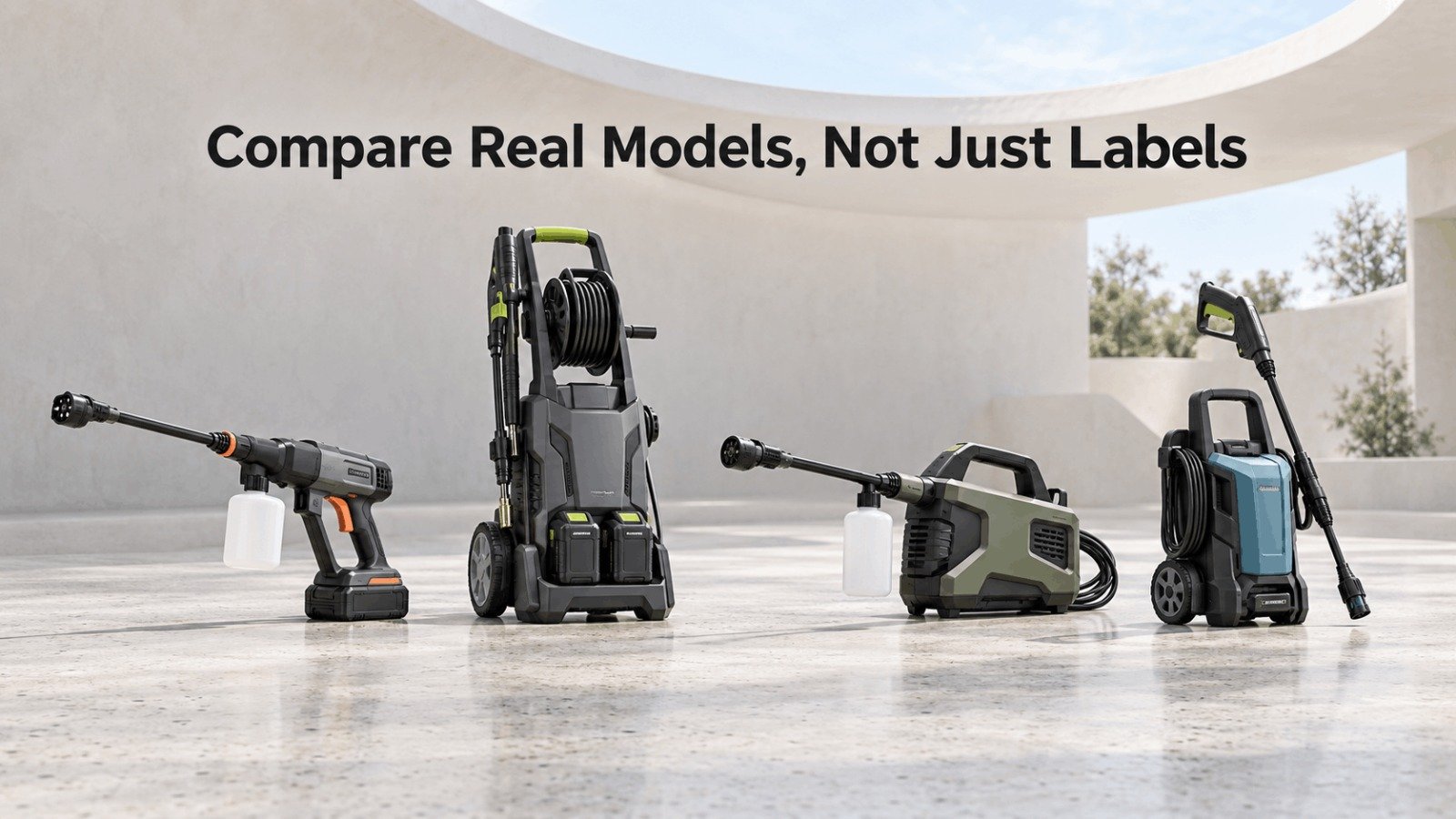
The examples below show why voltage alone is not a reliable way to rank cordless pressure washers. They are manufacturer-listed U.S. products checked on September 29, 2026; product availability and specifications can change. “Power cleaner” is the manufacturer’s product name and may indicate a different intended duty level from a larger pressure washer. This matters whichever 20V / 40V / 60V cordless pressure washer you are considering.
| Platform label | Manufacturer-listed example | Published pressure and flow | What the example tells you |
|---|---|---|---|
| 20V MAX | DEWALT DCPW550 power cleaner | 550 PSI maximum | Its listing identifies it as a power cleaner; check the manual for intended tasks. |
| Two 20V MAX batteries | DEWALT DCPW1600Y2 cordless pressure washer | 1,600 PSI maximum; 1.2 GPM | A “20V” search can include equipment designed around two batteries, so check the complete power arrangement. |
| 40V | RYOBI RY40HPPW12B pressure washer | 1,200 PSI; 1.0 GPM in high mode; 900 PSI and 0.8 GPM in ECO mode | One model’s output can change by operating mode; runtime and cleaning output may trade off. |
| 60V MAX | DEWALT DCPW1000 power cleaner | 1,000 PSI maximum | Its listing calls it a power cleaner; confirm intended tasks rather than assuming it is a full-size washer. |
The values above are the manufacturers’ stated ratings, not a direct performance test across brands. Model designs, nozzle conditions, test methods, and battery kits differ. Use the linked product page and manual for the exact configuration you are considering.
What to expect from a 20V model
The DEWALT DCPW550 is listed as a 20V MAX power cleaner with a 550 PSI maximum rating. Check its manual and stated applications before deciding which jobs it can handle. DEWALT also lists a separate cordless pressure washer kit powered by two 20V MAX batteries and rated at up to 1,600 PSI and 1.2 GPM. These examples show why “20V washer” is not a single product category. Use it as a checkpoint before choosing a 20V / 40V / 60V cordless pressure washer.
What to expect from a 40V model
The RYOBI RY40HPPW12B is listed at 1,200 PSI and 1.0 GPM in HIGH mode, or 900 PSI and 0.8 GPM in ECO mode. RYOBI states up to 40 minutes of runtime using a 40V 12Ah battery; the product page notes the battery is not included with the tool-only version. Treat runtime as tied to the specified battery and conditions, not as a promise for every cleaning session. It helps explain why no single 20V / 40V / 60V cordless pressure washer suits every household.
What to expect from a 60V model
DEWALT lists the DCPW1000 as a 60V MAX power cleaner with a maximum rating of 1,000 PSI. The listing calls it a power cleaner, so do not assume it is a full-size pressure washer. Check whether the manufacturer publishes a GPM rating, what battery is included, its operating modes, and the manual’s intended applications before deciding whether it fits your jobs. Apply this when you compare each 20V / 40V / 60V cordless pressure washer on your shortlist.
Why Runtime Is Hard to Compare
A runtime figure is useful only when you know the conditions behind it. The battery size, surface, spray setting, trigger use, temperature, and battery condition can all change how long a cordless washer operates.
A manufacturer may describe runtime as “up to” a certain amount. Treat it as a claim tied to stated conditions, not a promise for every cleaning session. A washer used continuously at a demanding setting may use battery power more quickly than one used in short bursts. This detail often separates a good 20V / 40V / 60V cordless pressure washer from a poor fit.
Battery capacity is often listed in amp-hours (Ah). A higher Ah figure can mean longer runtime within the same platform and tool, but it does not guarantee a fixed operating time. Ah figures from different voltage platforms are not directly comparable as total energy; check the manufacturer’s battery specifications and compare complete kits. Think about it before you buy a 20V / 40V / 60V cordless pressure washer.
Before buying, ask yourself:
- How long does a typical job take?
- Can you pause to recharge?
- Does the package include one battery or more?
- Is the charger included?
- Can you use an existing battery safely and officially?
- Will the battery also be needed for other tools?
A cheaper tool-only package may cost more once you add a compatible battery and charger. Compare the total purchase cost, not just the washer’s base price.
Match the Washer to the Cleaning Job
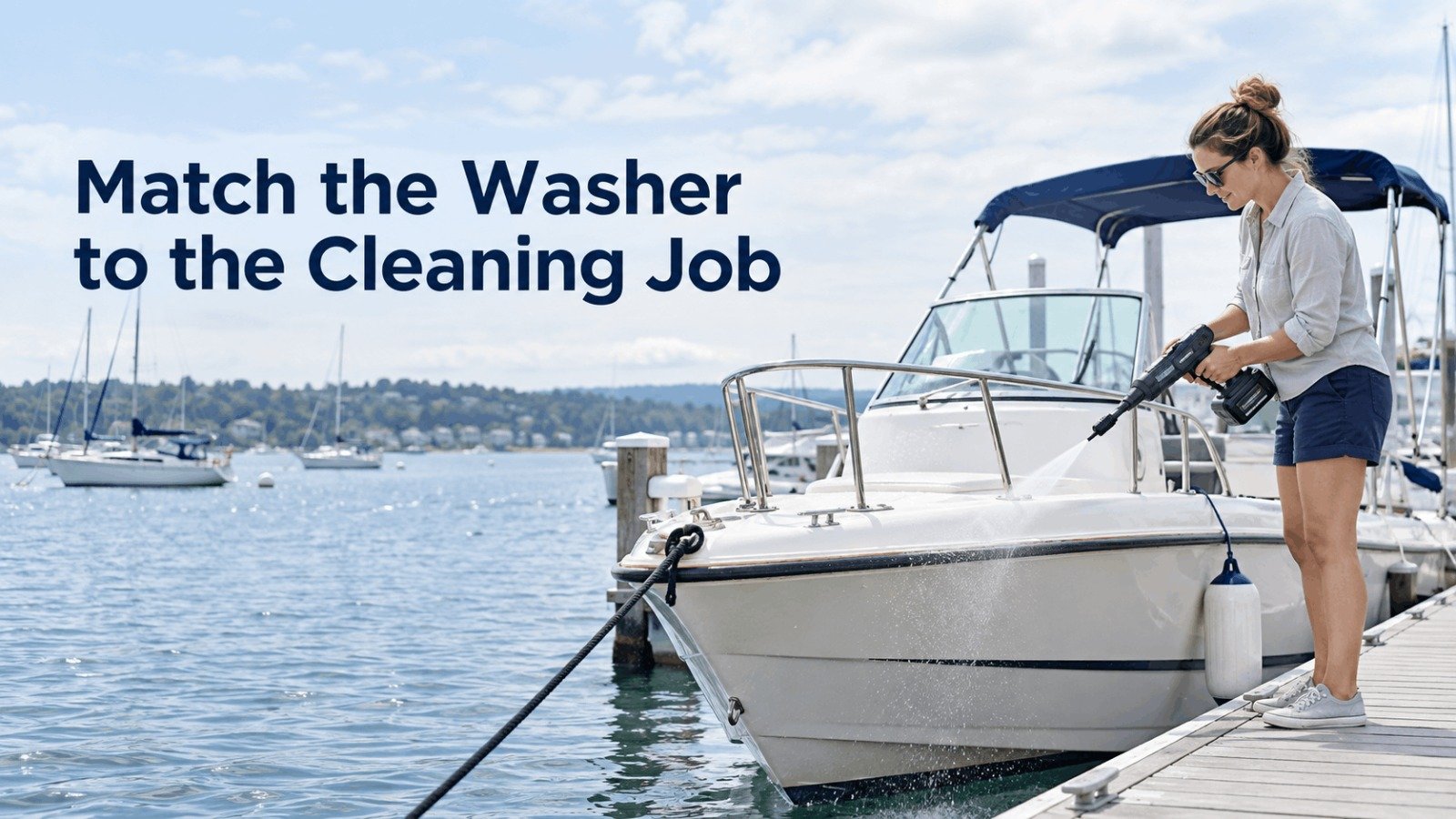
Car washing
For washing a car, control matters more than raw power. A wide spray pattern, safe distance, vehicle-approved soap, and careful hand washing help reduce the chance of damaging paint or forcing water into seals and openings.
A cordless cleaner may be convenient for rinsing loose dirt or soap. Check the machine’s manual before using detergent, and avoid spraying directly at sensors, connectors, damaged paint, tires, or weather seals.
Patios and outdoor furniture
For patio furniture and small outdoor areas, a portable washer can save setup time. Use a lower-risk spray pattern first, especially on painted wood, plastic, fabric, or surfaces with worn coatings.
On a large patio, battery runtime and water flow may matter more than voltage. If you need to stop frequently to recharge or make many slow passes, a corded electric model might be more practical.
Decks and house siding
Wood decks and siding can be damaged by too much pressure, a narrow nozzle, or spraying too close. Check the surface maker’s cleaning guidance before using any pressure washer. For these materials, detergent and a suitable low-pressure method may be more appropriate than trying to force dirt off with a concentrated jet. It is a practical rule for any 20V / 40V / 60V cordless pressure washer purchase.
Driveways and larger paved areas
A small cordless cleaner may be convenient for a quick rinse, but large or heavily stained concrete areas can take longer to clean. Flow rate, runtime, and surface-cleaner compatibility are important. If the job is large or repeated, compare a higher-capacity electric or gas washer instead of choosing a battery tool by voltage alone. If you choose a gas model, follow its manual and the CDC’s carbon-monoxide guidance for outdoor operation and safe distance from doors, windows, and vents. Remember it when reading the listing for a 20V / 40V / 60V cordless pressure washer.
Water Supply, Hose, and Accessory Checks
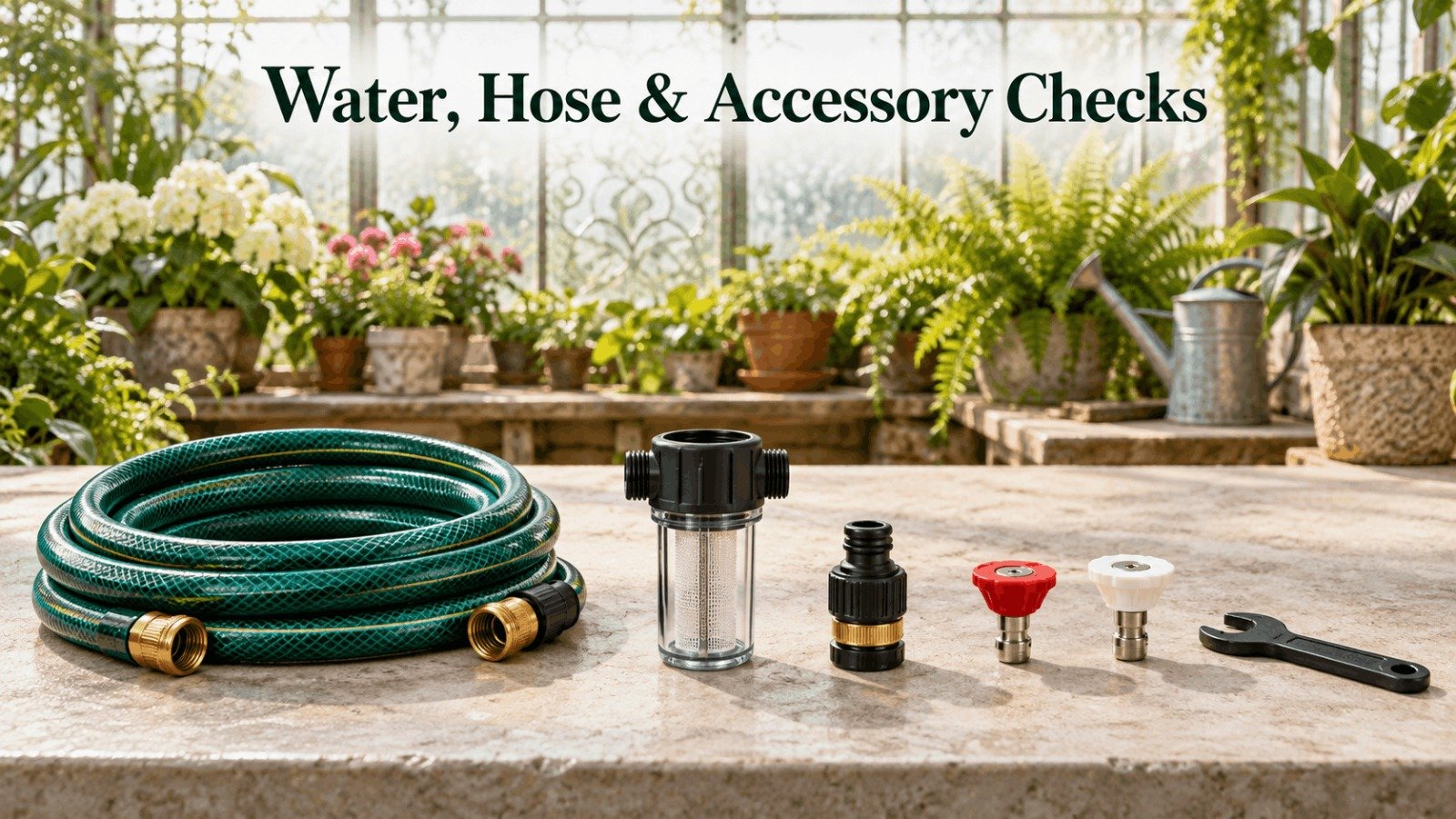
Cordless does not mean self-contained. Most pressure washers still need a continuous water source, usually a garden hose. Some portable cleaners may also allow water intake through a hose and filter from a suitable source. Always follow the manufacturer’s instructions for the approved water supply. That is why the right 20V / 40V / 60V cordless pressure washer depends on the job.
Check that the water source can keep up with the washer’s requirements. If the supply is restricted, the machine may sputter, lose pressure, or fail to operate correctly. Inspect the inlet filter, hose, and connections if the water flow changes. Factor it in when deciding on a 20V / 40V / 60V cordless pressure washer.
Accessories also need to match the model:
- Nozzles: Match the tip and spray pattern to the machine and surface.
- Hoses: Confirm the pressure rating, diameter, and connector type.
- Foam cannons: Check whether the washer’s pressure and flow are suitable.
- Surface cleaners: Verify the attachment’s approved pressure and flow range.
- Extension wands: Confirm that the wand and fittings are rated for the washer.
Do not assume that accessories fit just because the connector looks similar. A loose or mismatched fitting can leak, restrict flow, or come apart during use.
Buyer’s Checklist for a Cordless Pressure Washer
Before ordering a 20V, 40V, or 60V machine, confirm the following:
- Exact model number: Look up the product by model, not only by the voltage in its title.
- Working PSI and GPM: Check both ratings and how the manufacturer describes them.
- Battery requirements: Find out how many batteries it uses and their required platform and capacity.
- Runtime conditions: Read the fine print behind any runtime claim.
- Battery and charger inclusion: Confirm whether you are buying a kit or a tool-only version.
- Water intake method: Check whether it needs a garden hose, filter, or approved alternative source.
- Hose and fittings: Verify lengths, connector types, and pressure ratings.
- Nozzle options: Confirm that the included patterns are suitable for your surfaces.
- Accessory compatibility: Check surface cleaners, foam cannons, and extension wands before purchasing.
- Warranty and service: Review coverage for the washer, battery, and charger.
- Weight and storage: Consider whether you can comfortably move and store the complete setup.
- Availability and price: Both may change by retailer and region, so check current details before buying.
Safety and Maintenance
Pressure washers can cause serious wounds and electric shock if used improperly. The CDC recommends following the owner’s manual, never pointing the spray at yourself or others, and keeping children at a safe distance. Wear eye protection and closed-toe shoes, and keep pets and bystanders away from the spray area. Ultimately, the best 20V / 40V / 60V cordless pressure washer is the one that fits your work.
Keep water away from electrical connections and avoid direct spray at vehicle sensors, damaged surfaces, window seals, and openings in siding. Follow the manual for startup, shutdown, battery removal, and water connection.
Use only detergent approved for both the tool and the surface. Follow the detergent label and local guidance for runoff. After cleaning, rinse the soap system if the manual requires it, inspect the hose and inlet filter, and store the battery and washer as directed. This beginner guide to using a pressure washer safely covers basic precautions in more detail. Compare each 20V / 40V / 60V cordless pressure washer on the same basis.
FAQs
Is a 60V pressure washer always stronger than a 40V model?
No. Voltage alone does not tell you the washer’s pressure, flow, or cleaning performance. Compare the specifications for the exact models.
Is a 20V cordless pressure washer powerful enough for a car?
Some 20V cleaners can be useful for rinsing loose dirt and soap from a car. Use an appropriate nozzle and distance, and avoid sensitive areas. They may not be suitable for every kind of dirt or vehicle-cleaning routine.
What is more important, PSI or GPM?
Both matter. PSI describes water pressure, while GPM describes water flow. Consider them together with the nozzle, surface, and cleaning method.
How long can a cordless pressure washer run?
There is no single runtime for all models. Battery capacity, tool settings, battery condition, and how continuously you spray all affect operating time. Check the maker’s runtime conditions.
Can I use my existing battery with a pressure washer?
Only if the washer is designed for that exact battery platform and the manufacturer confirms compatibility. Similar-looking connectors or adapters are not enough to establish that a battery is safe to use.
Are cordless pressure washers good for driveways?
They may rinse small areas or loose dirt, depending on the model. Large driveways and heavy staining often require more flow and longer operating time than a compact cordless washer can provide.
Does a cordless pressure washer need a garden hose?
Most models need a water source. Some can draw from an approved source through an intake hose and filter, but the manual will state what is allowed.
Conclusion
The right cordless washer is the one that matches your cleaning jobs, water supply, battery needs, and budget. A 20V, 40V, or 60V label is a useful starting point, but PSI, GPM, runtime, and the exact power setup tell you much more. Compare the complete specifications, check the kit contents, and test a safe spray pattern before cleaning delicate surfaces. Check the exact model before you commit to a 20V / 40V / 60V cordless pressure washer.