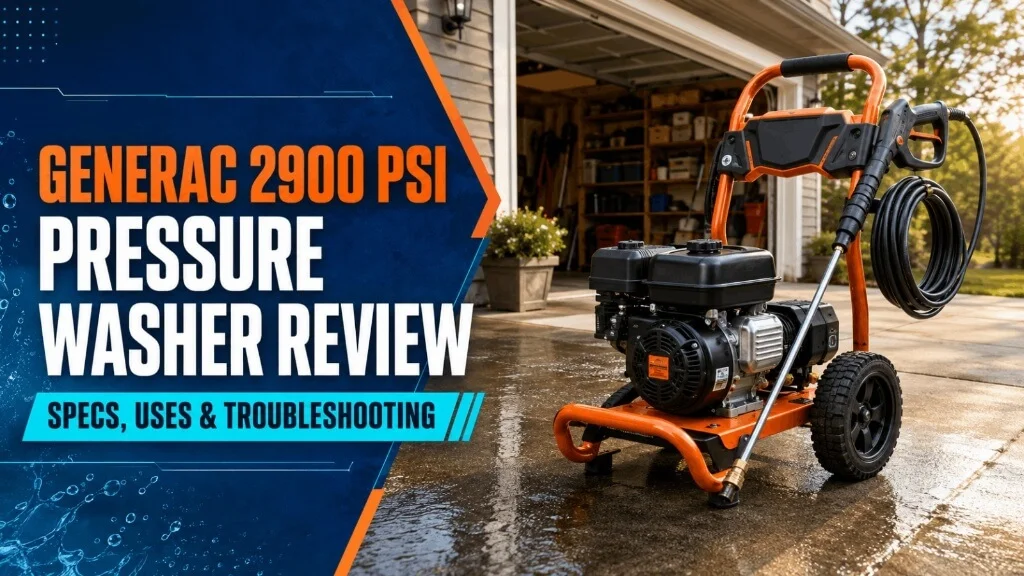
Generac 2900 PSI Pressure Washer Review: Specs, Uses, and Troubleshooting
The Generac 2900 PSI pressure washer is designed for homeowners who want more cleaning power and mobility than a small electric washer normally provides. Its 2,900 PSI maximum pressure, 2.4 GPM maximum flow, 196cc gas engine, and four included nozzle tips make it suitable for driveways, patios, decks, siding, vehicles, and outdoor equipment when used correctly. However, it is not the right machine for everyone. A gas pressure washer needs engine oil, fresh fuel, outdoor operation, seasonal storage, and more routine care than an electric model. It can also damage wood, paint, seals, and other delicate materials if the wrong nozzle or distance is used. Research note: This is a specification- and manual-based review, not a claim of hands-on product testing. Product details were checked against Generac’s official product page, specification sheet, and owner’s manual. Safety guidance was checked against the CDC. Specifications can change, so confirm the data plate and manual supplied with your machine. Fact-checked: August 27, 2026. Generac 2900 PSI Pressure Washer Review: Quick Verdict The standard 2,900 PSI model is a practical medium-duty choice for larger home cleaning jobs. Its 2.4 GPM flow helps rinse away loosened dirt, while the gas engine provides mobility. Its main compromises are noise, recoil starting, fuel care, and a residential-grade axial-cam pump. Best for: driveways, patios, fences, siding, decks, lawn equipment, and medium-size residential cleaning areas. Which Generac 2900 PSI Pressure Washer Model Do You Have? Several Generac machines share the same 2,900 PSI rating. Check the model and serial-number label before downloading a manual or buying a hose, gun, pump, or nozzle. Version Model Important difference Standard 2,900 PSI model G0088740 2.4 GPM, 25-foot hose, standard gun, and four nozzle tips Earlier standard model G0079540 Similar core output, but configuration and part numbers may differ SpeedWash 2,900 PSI G0078990 PowerDial gun, turbo nozzle, Soap Blaster, and SpeedWash accessories This review focuses on G0088740. Do not assume that a turbo nozzle, PowerDial gun, Soap Blaster, electric start, or a particular detergent tank comes with every 2,900 PSI package. Generac 2900 PSI Pressure Washer Specs Specification G0088740 details Maximum pressure 2,900 PSI Maximum flow 2.4 GPM Engine 196cc Generac four-cycle OHV Pump Axial-cam Starting system Recoil pull start High-pressure hose 25 feet, M22 connections Included nozzle tips 0°, 25°, 40°, and soap Maximum inlet-water temperature 100°F/38°C Unit weight Approximately 57 lb/25.9 kg Warranty listed on spec sheet Two-year limited warranty PSI describes the force used to loosen dirt, while GPM describes the water volume available to rinse it away. Both affect cleaning speed. These figures are maximum ratings; the actual result depends on the nozzle, water supply, hose condition, working distance, and equipment wear. Generac 2900 PSI Features That Matter in Daily Use 196cc Generac OHV Gas Engine The engine provides mobility for long driveways and larger yards. Owners must check oil, use fresh gasoline, control exhaust exposure, and maintain the filter and spark plug. Axial-Cam Pump With Accessible Connections The axial-cam pump keeps the machine compact, and its connections are easy to reach. Its pump-oil system is sealed, so owners do not change the pump oil. Long daily duty cycles are better suited to a professional triplex-pump model. Four Quick-Connect Nozzle Tips The red 0°, green 25°, white 40°, and black soap tips cover spot cleaning, general washing, gentle rinsing, and detergent. The red tip should not be the default choice. Hose Storage and Mobility The 25-foot hose covers many home jobs. Never-flat wheels and a balanced frame aid movement. Store the hose without tight bends that can damage it or restrict flow. Generac 2900 PSI Pressure Washer for Driveways, Decks, and Cars Driveways and Concrete Patios Concrete is one of the machine’s best uses. Begin with the 25° nozzle, test a small area, keep moving, and overlap passes. A correctly rated surface cleaner can improve consistency on broad flat areas. Use extra distance around cracked concrete, weak mortar, loose paint, and damaged edges. Maximum pressure is rarely the safest starting point. Decks, Fences, and Siding Start with the 40° nozzle from a generous distance. Excessive pressure can raise wood grain, cut boards, remove paint, or force water behind siding. Test a hidden spot first. Stay on the ground. Do not use a pressure-washer gun while standing on a ladder because trigger reaction and wet surfaces increase the risk of falling. Vehicles and Outdoor Furniture For vehicles, use the 40° nozzle from farther away and avoid paint chips, cameras, sensors, seals, connectors, tires, and trim. Use vehicle-safe detergent and do not let it dry. Test outdoor furniture underneath first. Avoid the red 0° nozzle for routine vehicle, painted-surface, or furniture cleaning. Generac 2900 PSI Nozzle Guide Nozzle Best role Safer starting use Red 0° Concentrated jet Small stubborn spots on hard, sound material only Green 25° General cleaning Concrete, brick, masonry, and other durable surfaces White 40° Wider, gentler spray Cars, siding, wood, paint, and furniture after testing Black soap Low-pressure detergent Applying approved pressure-washer detergent Shut down the machine and release trapped pressure before changing a nozzle. Pull back the quick-connect collar, insert the tip, release the collar, and confirm the nozzle is locked. Begin with the widest suitable pattern and move closer only when necessary. If you want to learn more about selecting the right tips for different surfaces, check out our detailed guide on the best pressure washer nozzles. How to Start a Generac 2900 PSI Pressure Washer 1. Check and Add Engine Oil The manual states that the engine ships without oil. On level ground, add the recommended oil and check the dipstick before starting. 2. Add the Correct Gasoline Use fresh unleaded gasoline rated at least 87 octane/87 AKI or 91 RON. Up to 10% ethanol is permitted; E85 and gasoline-oil mixtures are not. Refuel only after the engine cools. 3. Connect an Adequate Water Supply Flush the hose before connecting it. The manual requires water below 100°F, more than 3.8 GPM at no less than 30 PSI, and a supply