Honda GX390 pressure washer

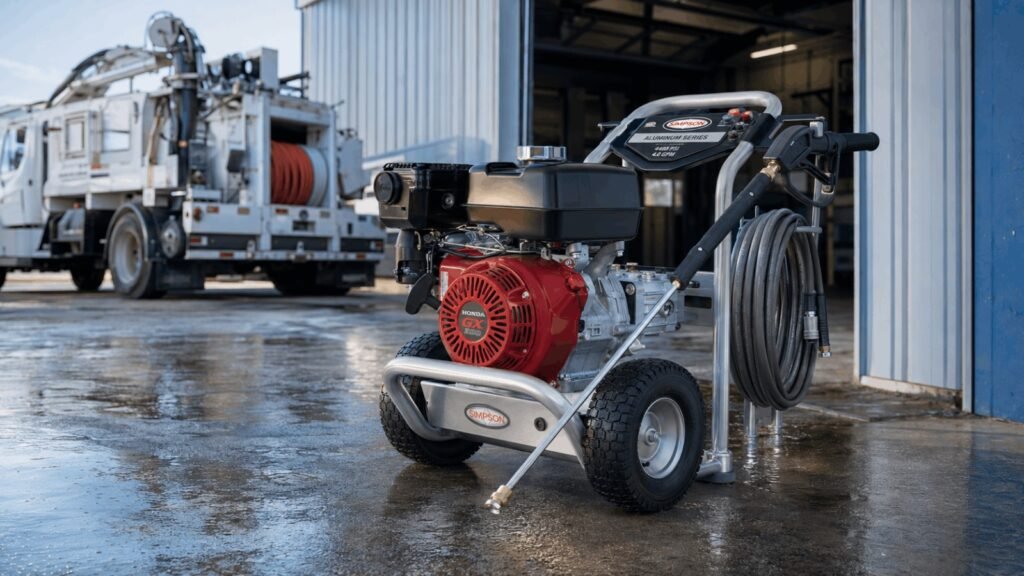
Best Honda GX390 Pressure Washers of 2026 Commercial Guide 2 honda feuture.jpg simpson-aluminum-4400-psi-honda-gx390.jpg Simpson Aluminum
Pressure Washers > Reviews

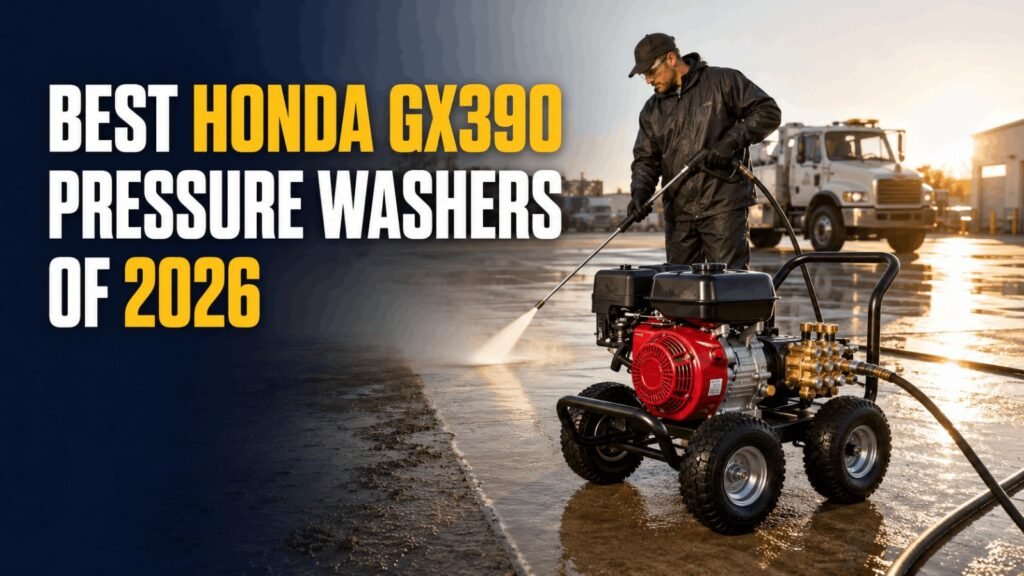
Best Honda GX390 Pressure Washers of 2026 (4000 PSI Powerhouse)

In the professional cleaning industry, one engine stands out above all others: the Honda GX390. Rated at 13.0 horsepower with 389cc displacement, this commercial-grade engine is considered the gold standard for heavy-duty surface cleaning, fleet washing, and job site preparation. When contractors look for maximum productivity, pairing a Honda GX390 engine pressure washer with a high-grade triplex pump is the ultimate combination. Delivering up to 4400 PSI and 4.0 GPM, these machines are built to run continuously for hours without overheating or dropping output. In this comprehensive guide, we review the top commercial models powered by the iconic Honda GX390 engine, break down key mechanical features, and explain how to choose the right unit for your business. Why the Honda GX390 Engine Leads the Commercial Industry The Honda GX Series (commercial grade) differs significantly from residential engine series. The Honda GX390 13.0 pressure washer motor is engineered specifically for demanding rental and contractor environments. Quick Comparison: Top Honda GX390 Models Model Pressure (PSI) Water Flow (GPM) Drive Type Pump Type Primary Use Simpson Aluminum 4400 4400 PSI 4.0 GPM Direct Drive AAA Industrial Triplex Mobile Contractors Dewalt DXPW60605 4200 PSI 4.0 GPM Direct Drive CAT Industrial Triplex Rugged Jobsite Use Pressure Pro E4040HC 4000 PSI 4.0 GPM Belt Drive General Pump Triplex Daily Continuous Use BE Power B4013HTB 4000 PSI 4.0 GPM Direct Drive General TS2021 Triplex Industrial Sites Simpson Heavy Duty PS60843-S 4400 PSI 4.0 GPM Direct Drive Triplex Plunger High PSI Cleaning Detailed Reviews of Top Honda GX390 Pressure Washers 1. Simpson Aluminum Series 4400 PSI – Best Overall The Simpson Aluminum Series is a primary choice for fleet managers and commercial surface cleaners. Powered by the reliable GX390 Honda power washer engine, this unit delivers up to 4400 PSI at 4.0 GPM, making quick work of concrete stripping and paint preparation. Pros: Cons: 2. Dewalt DXPW60605 – Most Durable Frame Dewalt engineered the DXPW60605 specifically for jobsite abuse. Combining the reliable 389cc engine block with a world-renowned CAT triplex pump, this pressure washer Honda 4000 PSI class unit is built like a tank. Pros: Cons: 3. Pressure Pro E4040HC – Best Belt-Drive System For commercial operators running equipment 6 to 8 hours a day, direct-drive pumps can overheat. The Pressure Pro E4040HC utilizes a belt-reduction pulley system paired with the Honda 390 pressure washer engine to minimize wear and heat buildup. Pros: Cons: 4. BE Power Equipment B4013HTB – Industrial Grade Reliability BE Power Equipment constructs machinery built for agricultural, mining, and plant operations. Their Honda GX390 engine pressure washer model focuses on serviceability and structural strength. Pros: Cons: Key Mechanical Specifications to Consider When purchasing a gx390 Honda power washer, pay attention to how the motor power is utilized across output parameters: Understanding PSI and GPM Metrics Pro Tip: If you want to expand your service capabilities, make sure to read our comprehensive Best Commercial Pressure Washer Roundup (Internal Link Placeholder) to see how different drive systems stack up. Belt Drive vs Direct Drive on Honda GX390 Models 1. Direct Drive Configuration The pump connects directly to the engine crankshaft, spinning at 3400 RPM. 2. Belt Drive Configuration Pulleys and belts transfer power, allowing the pump to spin at a lower 1500–1750 RPM while the engine runs at full governed speed. Preventive Maintenance Guide for Honda GX390 Engines To ensure your honda power washer gx390 reaches its 3,000+ hour service life potential, follow this routine maintenance schedule: Engine Maintenance Checklist Pump Maintenance Checklist Frequently Asked Questions (FAQs) What is the exact horsepower of a Honda GX390 engine? The Honda GX390 engine produces a net power output of 11.7 HP to 13.0 HP (389cc) at 3,600 RPM, depending on environmental conditions and testing standards. How much pressure can a Honda GX390 pressure washer produce? A Honda GX390 engine generates enough torque to drive industrial pumps producing between 3500 PSI and 4400 PSI at a full 4.0 GPM flow rate. What gas should I use in a Honda GX390 power washer? Use unleaded gasoline with a pump octane rating of 86 or higher. Avoid using E15 or E85 ethanol blends, as high ethanol content damages small engine carburetors and fuel lines. Can a Honda GX390 run a commercial surface cleaner? Yes! Thanks to its high 4.0 GPM flow capability, a GX390-powered machine easily supports 16-inch to 20-inch commercial rotary surface cleaners for fast driveway and parking lot cleaning. Final Verdict The Honda GX390 pressure washer remains the undisputed workhorse for commercial washing businesses due to its unbeatable reliability, easy parts availability, and high performance.  Pair your new washer with the right accessories by reading our guide on Essential Pressure Washer Nozzles and Attachments

Top rated commercial pressure washer with Honda engine for heavy duty cleaning
Pressure Washers > Reviews

7 Best Commercial Pressure Washers in 2026 (Heavy-Duty Performance)

When tackling massive cleaning jobs—like removing stubborn oil stains from driveways, cleaning heavy construction equipment, or restoring commercial building exteriors—a standard residential unit won’t cut it. You need a heavy-duty machine built for continuous daily use, high water volume (GPM), and maximum cleaning power (PSI). Choosing the right commercial pressure washer requires looking beyond basic specs to evaluate real-world durability, engine quality, and pump design. In this guide, we review the top-performing commercial models on the market to help you make an informed investment for your business. Quick Comparison: Top Commercial Pressure Washers Model Engine / Power Pressure (PSI) Water Flow (GPM) Primary Use Simpson Aluminum 4400 Honda GX390 4400 PSI 4.0 GPM Commercial Fleet & Machinery Dewalt DXPW60605 Honda GX390 4200 PSI 4.0 GPM Construction & Job sites Simpson PowerShot PS60843 CRX 420cc 4400 PSI 4.0 GPM Medium-to-Heavy Cleaning Pressure Pro E4040HC Honda GX390 4000 PSI 4.0 GPM Continuous Daily Professional Use BE Power Equipment B4013HTB Honda GX390 4000 PSI 4.0 GPM Industrial Site Cleaning Kärcher HD 3.0/27 PB Honda GX200 2700 PSI 3.0 GPM Mobile Detailing & Small Work AR AR630-HOT Hot Water / Electric 1900 PSI 2.1 GPM Kitchens, Grease & Oil Cleaners Commercial vs Residential Pressure Washers: Key Differences Understanding the difference between homeowner equipment and industrial units helps prevent buying a machine that wears out prematurely. Feature Residential Models Commercial-Grade Units PSI & GPM Range 1800–3000 PSI / 1.2–2.3 GPM 3000–4400+ PSI / 3.0–4.0+ GPM Pump Type Axial Cam (Non-serviceable) Industrial Triplex Plunger Pump Engine Quality Small Residential Blocks Heavy-Duty (e.g., Honda GX Series) Weekly Runtime 2–5 Hours per week 20–40+ Hours per week Expected Lifespan 60–100 Hours 1,000–3,000+ Operating Hours Detailed Reviews: Best Commercial Pressure Washers 1. Simpson Aluminum Series 4400 PSI – Best Overall The Simpson Aluminum Series is widely considered a benchmark for cleaning contractors and facility managers. Powered by a commercial Honda GX390 engine, this unit delivers consistent high-volume performance. Pros: Cons: 2. Dewalt DXPW60605 – Most Durable Jobsite Build Built for rugged jobsites, the Dewalt DXPW60605 pairs industrial mechanical components with a steel cage frame for maximum component protection. Pros: Cons: 3. Simpson PowerShot PS60843 – Best Value Heavy-Duty For growing businesses that need high cleaning capacity without paying a premium price, this PowerShot model delivers contractor-grade output. Pros: Cons: 4. Pressure Pro E4040HC – Best Belt-Drive System Unlike direct-drive models, the Pressure Pro E4040HC features a belt-drive system engineered to reduce thermal stress and vibration on internal pump components. Pros: Cons: 5. BE Power Equipment B4013HTB – Excellent Industrial Build BE Power Equipment produces heavy-duty machinery tailored for fleet maintenance, agriculture, and industrial sites requiring continuous daily operation. Pros: Cons: 6. Kärcher HD 3.0/27 PB – Best Compact Unit Not every job requires 4000+ PSI. For mobile auto detailers, surface prep, and lighter commercial work, Kärcher offers top build quality in a mobile footprint. Pros: Cons: 7. AR Annovi Reverberi AR630-HOT – Best for Grease & Oil Cold water pushes dirt away, but hot water dissolves grease and organic film. The AR630-HOT is engineered specifically for commercial kitchens, drive-thrus, and garage floors. Pros: Cons: Commercial Pressure Washer Buying Guide When evaluating commercial cleaning equipment, keep these technical factors in mind: 1. PSI vs. GPM (Measuring Output) 2. Direct Drive vs. Belt Drive Maintenance Tips for Maximum Pump Life Frequently Asked Questions (FAQs) What PSI is considered standard for commercial pressure washing? A rating of 3000 PSI to 4400 PSI with a water flow of 3.0 to 4.0 GPM or higher is considered standard for commercial-grade pressure washers. Is a Honda GX engine necessary for a commercial unit? While not mandatory, the Honda GX Series (like the GX200 and GX390) is the industry benchmark for commercial reliability, featuring cast-iron cylinder sleeves and low-oil shutdown sensors for long term endurance. Which pump type is best for heavy-duty commercial use? An Industrial Triplex Plunger Pump is the best choice. Unlike residential axial pumps, triplex pumps run cooler, are fully rebuildable, and last thousands of operating hours. Is belt drive better than direct drive for commercial cleaning? Yes, for heavy daily use. Belt-drive pressure washers run at lower engine RPMs, generating far less heat and vibration, which extends pump life compared to direct drive models. Final Verdict Selecting the best commercial pressure washer depends on your specific business requirements:

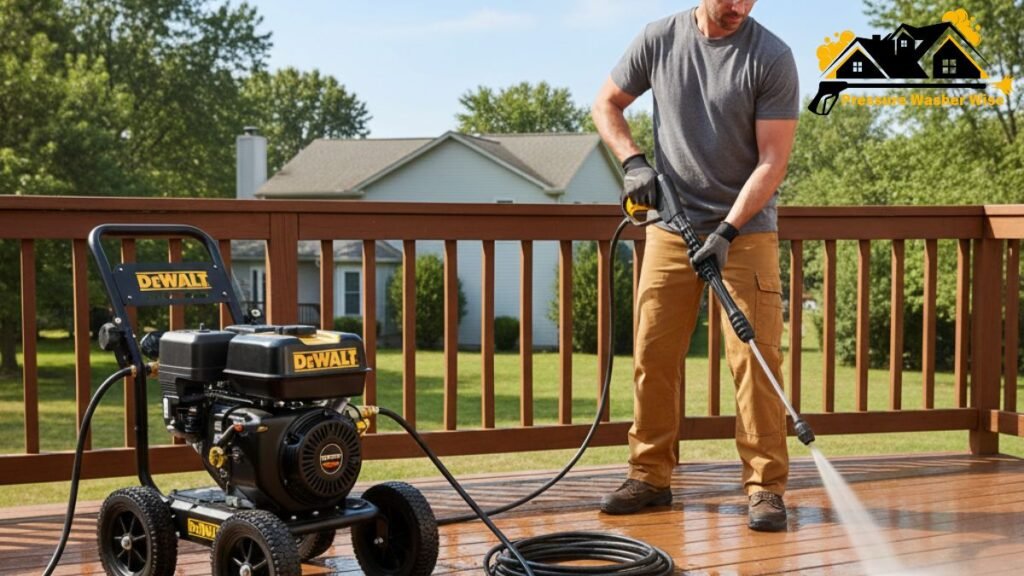
DEWALT pressure washer — cordless 20V/60V unit, 2100 PSI electric, and 3000 PSI gas model cleaning a driveway and car
Commercial Pressure Washers, Gas Pressure Washers

Best Honda 4000 PSI Pressure Washer Review: Power, Performance & Buying Guide

Finding a reliable commercial-grade cleaning rig can be tough, but a pressure washer honda 4000 psi setup remains the industry standard for contractors and commercial operators. Combining Honda’s legendary GX-series engines with heavy-duty triplex plunger pumps, these machines deliver high-volume cleaning power built to last thousands of hours. Whether you are removing oil stains from driveway concrete, stripping paint, or running a professional fleet-washing business, this complete guide breaks down the best models, technical pump architecture, buying factors, and operational safety. Quick Summary & Best Models at a Glance If you are looking to purchase a commercial pressure washer honda 4000 psi machine, here is how the top market options compare in terms of specs, drive type, and direct purchase availability: Model Engine GPM Drive Type Best For   Commercial 4000 PSI Pro-Rig A Honda GX390 4.0 Direct Drive Mobile contractors & flatwork   Heavy-Duty Commercial Rig B Honda GX390 4.0 Direct Drive Jobsite equipment cleaning   Belt-Drive Commercial Unit Honda GX390 3.5 – 4.0 Belt Drive / Direct Long daily hours, static tank pulling   Industrial Heavy-Duty Skid Honda GX390 4.0 Belt Drive Industrial fleet maintenance & severe use   Pros & Cons of a 4000 PSI Honda Pressure Washer Before making an investment, consider the main trade-offs of running a 4000 PSI unit: Pros Unrivaled Reliability: Honda GX390 engine starts easily, runs efficiently, and lasts for years with basic maintenance. Extreme Cleaning Units (CU): 4000 PSI paired with 4.0 GPM yields up to 16,000 Cleaning Units for rapid job completion. Commercial Triplex Pump: Features solid ceramic pistons, forged brass manifolds, and replaceable packings. High Versatility: Works with 20-inch surface cleaners, turbo nozzles, and downstream chemical injectors. Cons Heavy Weight: Weighs 130–220 lbs, making ramp or truck loading a 2-person job. Risk of Surface Damage: High pressure can instantly gouge soft wood, delicate siding, or automotive paint if misused. Initial Investment: Professional commercial setups require a higher upfront investment compared to basic consumer models. Engine & Pump Architecture: What Powers a 4000 PSI Rig? While the engine provides raw rotational energy, the pump converts that power into high-velocity water flow. Understanding pump architecture ensures you avoid catastrophic failures and expensive jobsite downtime. Triplex Plunger Pump vs. Axial Cam Pump A commercial pressure washer honda 4000 psi machine should always feature a Triplex Plunger Pump. Axial Cam Pumps: Common on lower-cost home consumer units (2000–3000 PSI). The pistons move in a wobble plate motion, generating high friction and running at ~3450 RPM. They usually fail after 60 to 150 operating hours and cannot sustain 4000 PSI safely over time. Triplex Plunger Pumps: Built with three solid ceramic pistons driven by a heavy-duty crankshaft immersed in an oil bath. They run cooler, feature replaceable packings/valves, and endure 1,000 to 3,000+ operating hours with routine maintenance. AXIAL CAM PUMP:    Direct Wobble Drive —> High RPM —> Short Lifespan (100 hrs) TRIPLEX PLUNGER:   Crankshaft Drive    —> Lower Temp —> Long Lifespan (2000+ hrs) Unloader Valves: Trapped Pressure vs. Flow-Actuated The unloader valve diverts high-pressure water flow back into the pump inlet or bypass loop when you release the spray trigger, preventing pressure spikes from bursting the pump head: Trapped Pressure Unloaders: Standard on most factory commercial setups. Traps inline pressure in the high-pressure hose when the trigger is released. Budget-friendly and simple to calibrate. Flow-Actuated Unloaders: Senses water movement rather than pure pressure buildup. When the trigger is released, inline pressure in the hose drops instantly, drastically reducing “trigger kickback” when you start spraying again. PSI vs. GPM: Why Flow Rate Dictates Your Work Speed A common misunderstanding among buyers is focusing solely on PSI (Pounds per Square Inch) while ignoring GPM (Gallons Per Minute). PSI (Pressure): The stripping force. Breaks the chemical bond between dirt, oil, or paint and the surface substrate. GPM (Flow Rate): The washing and flushing force. Rinses debris away and spins surface cleaner arms faster. Cleaning Power (Cleaning Units)=PSI×GPM Comparing 3.5 GPM vs. 4.0 GPM at 4000 PSI 4000 PSI @ 3.5 GPM = 14,000 Cleaning UnitsBest for: Spot cleaning, heavy paint stripping, masonry cleaning, and residential driveways. 4000 PSI @ 4.0 GPM = 16,000 Cleaning UnitsBest for: Large-scale commercial flatwork, driving 18″–20″ surface cleaners efficiently, and commercial fleet washing. Pro Tip: For maximum productivity on concrete surfaces, a 4.0 GPM unit paired with a Honda GX390 engine provides the necessary water volume to push slurry off flat ground effortlessly. Buying Guide: How to Choose the Right Honda 4000 PSI Pressure Washer When selecting your ideal pressure washer honda 4000 psi rig, evaluate these core buying factors: Direct Drive vs. Belt Drive Direct Drive: Pump is mounted directly to the engine shaft (3,400 RPM). Compact, lightweight, and lower cost. Best for contractors who transport rigs easily and connect directly to pressurized city water lines. Belt Drive: Belt pulley system reduces pump speed to ~1,500–1,750 RPM. Reduces heat, absorbs engine vibration, and allows the unit to draw water directly from a mobile water tank/buffer tote. Engine Model (Honda GX390 vs. GX270) A true 4000 PSI @ 4.0 GPM setup requires a Honda GX390 (13 HP) engine. Smaller engines (like the GX270) generally cap performance around 3500 PSI or 3.0 GPM. Purchasing & Price Verification Before purchasing, verify real-time price discounts, warranty details, and current stock status on Amazon.👉 [Check Current Price & Deals on Amazon] Key Applications for a 4000 PSI Honda Machine A pressure washer honda 4000 psi machine is built for aggressive commercial environments: Commercial Flatwork & Driveway Cleaning: Paired with a dual-nozzle flat surface cleaner, it slices through years of tire marks, moss, lichen, and dirt build-up without leaving zebra stripes. Concrete Oil & Grease Stain Removal: Combined with hot water or downstream chemical degreasers, 4000 PSI draws ground-in oil out of porous concrete surfaces. Surface Prep & Paint Stripping: Using a 0° or 15° nozzle (or a rotating turbo nozzle), operators can lift peeling paint off wood decks, retaining walls, or metal structures prior to repainting. Heavy Construction Machinery: Excavators, tractors,

Scroll to Top