Pressure Washers > Reviews

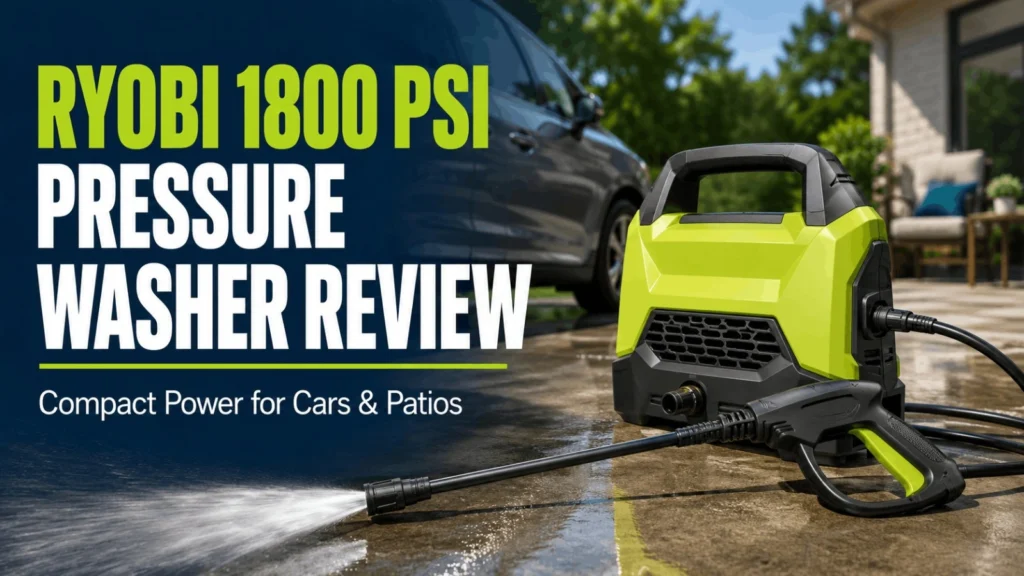
Ryobi 1800 PSI pressure washer compact power for cars and patios review
Pressure Washers > Reviews

Ryobi Pressure Washer 1800 PSI Review: Compact Power for Cars and Patios

A large pressure washer can be unnecessary when you only need to clean a car, grill, garden chairs, windows, or a small patio. The Ryobi pressure washer 1800 PSI is designed for these lighter household jobs. It offers corded-electric convenience in a compact machine that is easier to carry and store than a full-size cart model. This review focuses on the current Ryobi RY141802. It also explains the related RY141803 and discontinued RY141820 because all three may appear in search results under the same 1,800 PSI name. How we reviewed it: This is an independent, specification-based review. We checked Ryobi’s current product information, model differences, support pages, and public safety guidance. We did not perform instrumented PSI or GPM testing, so performance comments are practical suitability judgments rather than laboratory results. Maximum output figures are manufacturer ratings. Quick Verdict: Is the Ryobi 1800 PSI Pressure Washer Any Good? The Ryobi 1800 PSI pressure washer is a sensible light-duty choice for buyers who value portability, simple electric starting, and compact storage. Its rated 1,800 PSI and 1.2 GPM output is suitable for routine cleaning of cars, patio furniture, grills, windows, fencing, and small hard surfaces when the correct nozzle and distance are used. Its main limitation is cleaning speed. The 1.2 GPM flow and 20-foot pressure hose can make large driveways, heavily stained concrete, and frequent demanding work slow. It should be viewed as a maintenance cleaner, not a professional restoration machine. Buying decision Assessment Best for: Cars, grills, windows, outdoor furniture, small patios and walkways Less suitable for: Large driveways, deep stains, heavy equipment and commercial work Power type: Corded electric Main strength: Compact 16-pound design and easy starting Main limitation: Modest flow and limited working reach Overall verdict: Good value when matched to light, occasional cleaning  Ryobi RY141802 vs RY141803 vs RY141820 The model number is important because not every Ryobi 1800 pressure washer includes the same body design, hose, storage, or accessories. Model Status and main difference RY141802: Current compact carry-style model reviewed here. Ryobi lists a 15-degree nozzle, turbo nozzle, separate soap applicator, and 16-pound weight. RY141803: Related current model with the same rated pressure and flow. It adds onboard accessory storage and a 20-foot Ultra Flex high-pressure hose. RY141820: Older model that Ryobi marks as discontinued. Used units and remaining stock may still appear online. Do not order a hose, nozzle, gun, or replacement part from the pressure rating alone. Check the rating label and match the complete model number to the seller’s listing, manual, and compatible-parts information.  Ryobi 1800 PSI Pressure Washer Specifications The following table covers the RY141802. Confirm the current package before buying because retailer bundles can change. Specification Ryobi RY141802 Maximum pressure: 1,800 PSI Maximum water flow: 1.2 GPM Power supply: 120V, 60Hz AC Motor: 13 amp electric High-pressure hose: 20 feet Included spray options: 15-degree nozzle and turbo nozzle Detergent system: Separate soap applicator Nozzle connection: 1/4-inch quick-connect coupler Approximate weight: 16 pounds Electrical protection: GFCI-equipped plug Water type: Cold household water supply PSI describes spray pressure, while GPM describes water flow. Pressure helps loosen dirt; flow helps carry it away. That is why a 1.2 GPM washer may remove normal dirt but still take longer than a higher-flow machine on broad surfaces. Ryobi’s official RY141802 page describes it as a light-duty residential cleaner and identifies cars, grills, windows, patio furniture, and similar outdoor uses. It also confirms the 1/4-inch quick-connect wand, two included nozzles, soap applicator, and 16-pound design.  Ryobi Electric Pressure Washer 1800 PSI: Key Features Compact 16-Pound Carry Design The small body is the main reason to choose this model. It can fit on a garage shelf and is easy to move between short jobs. However, it is a carry-style unit rather than a tall wheeled cart. A buyer who cannot comfortably lift the machine may prefer a larger model with wheels and a telescoping handle.  1,800 PSI and 1.2 GPM Cleaning Output This output is appropriate for regular surface dirt, dust, light mud, pollen, and outdoor buildup. It is not designed for rapid removal of deeply embedded stains across a large driveway. Actual results depend on water supply, nozzle choice, spray distance, surface condition, and cleaning method.  15-Degree and Turbo Nozzles The 15-degree nozzle creates a focused fan for general cleaning. The turbo nozzle uses a rotating concentrated spray for stubborn dirt on durable surfaces. It can also damage paint, weathered wood, soft materials, seals, and weak masonry. Always test a hidden area and begin farther from the surface. Separate Soap Applicator The included applicator connects to the trigger handle and applies approved pressure-washer detergent at low pressure. It is simple, but switching from soap to rinsing requires changing the attachment. Use only detergent approved for pressure washers and follow both the cleaner and surface manufacturer’s directions.  20-Foot High-Pressure Hose The hose is adequate for small jobs but may require you to move the machine around a vehicle or patio. Before purchasing, consider the positions of your outdoor outlet and water connection as well as the total working reach.  Ryobi 1800 PSI Pressure Washer for Cars, Patios, and Home Cleaning  Cars, Bikes, Boats, and Recreational Vehicles The machine can handle vehicle rinsing when used carefully. Select the less aggressive spray, begin at a safe distance, and avoid close pressure on damaged paint, decals, badges, sensors, cameras, tires, seals, and electrical parts. Follow the vehicle manufacturer’s cleaning instructions. Pressure washing may loosen surface dirt, but bonded road film can still require a gentle hand wash.  Patio Furniture, Grills, Bins, and Garden Tools These short jobs suit a portable electric pressure washer. Let hot grill surfaces cool, disconnect powered equipment, protect openings, and use a mild spray on painted or plastic items. Test older furniture because sun-damaged plastic, loose coatings, and weakened wood can be harmed even by a compact washer. Small Patios, Decks, and Walkways The RY141802 can clean a small concrete, paver, or suitable deck area with ordinary dirt. The turbo nozzle should be tested cautiously
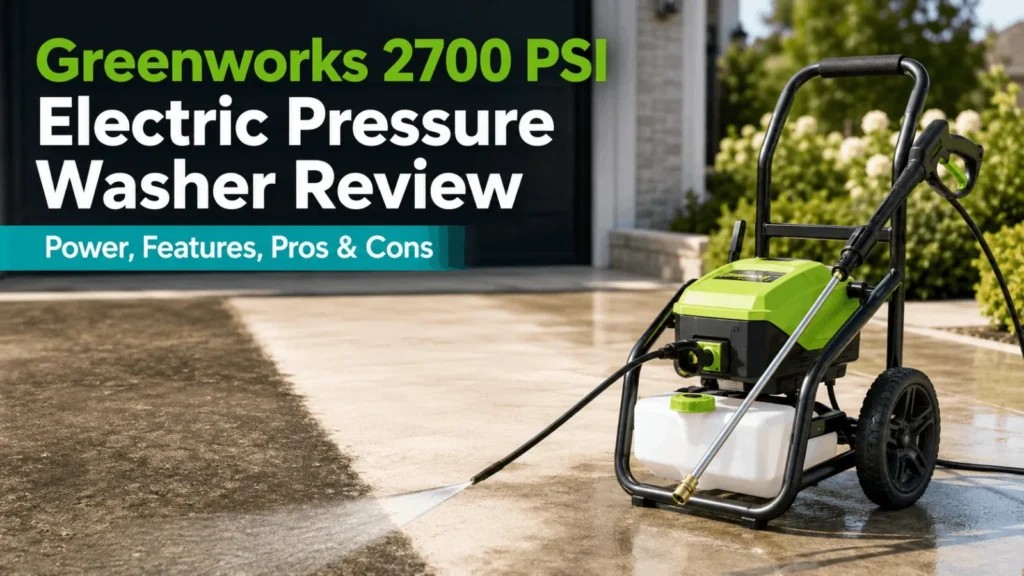
Greenworks 2700 PSI electric pressure washer review banner showing features, pros and cons
Pressure Washers > Reviews

Greenworks 2700 PSI Electric Pressure Washer Review: Is the GPW2702A Worth It?

The Greenworks 2700 PSI electric pressure washer is made for homeowners who want more cleaning force than a small electric unit but do not want the fuel, noise or engine care of a gas model. The GPW2702A combines a brushless motor, five quick-connect nozzles, a one-gallon detergent tank, a 25-foot pressure hose and a 35-foot GFCI power cord. Its headline numbers need a little explanation. The machine provides 2,700 PSI at a rated flow of 1.2 GPM. It can reach 2.3 GPM only in its low-pressure, 100 PSI mode. Those are two different operating points, so buyers should not assume it produces 2,700 PSI and 2.3 GPM at the same time. This research-based review covers the GPW2702A, SKU 5128402. It explains the published specifications, likely performance, useful features, limitations and buying considerations. It is based on the current Greenworks product page, the official operator manual and manufacturer warranty information. We have not claimed hands-on testing or created an unsupported performance score. Quick Verdict The Greenworks GPW2702A is a capable medium-duty residential pressure washer. It should work well for routine cleaning of small and medium driveways, patios, walkways, fences, siding, vehicles and outdoor equipment. Its wide nozzle selection and low-pressure high-flow mode make it more flexible than many entry-level electric models. The main limitation is water flow. At full pressure, 1.2 GPM is enough for home cleaning but may rinse large concrete areas more slowly than a higher-flow gas machine. The open frame is also larger to store than a compact upright washer, and its continuous-run motor should be switched off during long pauses. Best for: Homeowners who want strong electric cleaning for several outdoor jobs near a suitable outlet. Skip it if: You need a machine for daily paid work, very large properties, remote areas without electricity or frequent heavy stain removal. Greenworks GPW2702A Specifications Confirm the model number before buying because Greenworks has sold more than one 2,700 PSI pressure washer. This review covers GPW2702A, SKU 5128402, not the older GWP2700 or a retailer-specific package. Specification GPW2702A Published Information Maximum pressure 2,700 PSI Rated flow at maximum pressure 1.2 GPM at 2,700 PSI Maximum low-pressure flow 2.3 GPM at 100 PSI Motor Smart-sensing brushless motor with JETTFlow technology Power source 120-volt corded electric Power cord 35 feet with inline GFCI High-pressure hose 25 feet, kink-resistant Spray nozzles 15°, 25°, 40°, soap and turbo Detergent tank One gallon, onboard Wheels 10-inch never-flat wheels Nozzle connection 1/4-inch quick connect Certification PWMA certified Published warranty Three years for the tool and ten years for the motor, subject to current terms There is one specification conflict worth noting. The current Greenworks page describes the motor as 14 amps in one section and 15 amps in another. Check the rating label on the machine and the manual supplied with your exact unit before choosing a circuit or extension cord. How Powerful Is This 2700 PSI Electric Pressure Washer? Pressure and water flow perform different jobs. PSI helps loosen bonded dirt, while GPM carries the loosened material away. The GPW2702A delivers its highest pressure with 1.2 GPM and its highest flow with only 100 PSI. That split rating is not automatically a weakness. High pressure helps with marks on durable surfaces, while the higher-flow low-pressure mode is useful for rinsing and detergent work. However, it is misleading to multiply 2,700 PSI by 2.3 GPM because the machine does not reach both figures together. When comparing high-pressure performance, use the rated 2,700 PSI at 1.2 GPM. The pressure is strong for a corded residential unit, but cleaning speed depends on more than the largest PSI number. Surface condition, nozzle choice, detergent, water supply and technique all affect the result. Old oil, paint, rust and stains absorbed deep into concrete may still need special treatment. Performance by Cleaning Job Driveways, Patios and Walkways The machine has enough rated pressure for routine residential concrete cleaning. The 25° nozzle is the safest general starting point. The 15° or turbo nozzle can help on stubborn areas, but both should be tested first and kept moving to avoid visible lines or surface damage. A compatible 15-inch surface cleaner may produce a more even finish and reduce splash. Still, the 1.2 GPM high-pressure flow means a long driveway will take more time than it would with a higher-flow gas washer. Decks, Fences and House Siding Begin with the 40° nozzle from a generous distance. Too much pressure can raise wood grain, remove stain, mark soft material or push water behind siding. Test a hidden area before cleaning the full surface. Do not use a pressure-washer gun while standing on a ladder. A jet can create sudden kickback. Use approved ground-level extensions for high work and follow the surface manufacturer’s cleaning instructions. Cars, Boats and Outdoor Furniture The 40° nozzle or low-pressure rinse mode is the sensible choice for vehicle washing. Keep a safe distance and avoid direct close spray on damaged paint, seals, tires, cameras, electrical connectors, bearings and decals. Apply only detergent approved for pressure washers. Test painted or delicate furniture underneath before washing the visible area. Soft brushes and a garden hose may be safer for fragile materials. Lawn and Outdoor Equipment The washer can remove mud from mowers, carts and garden tools. Allow hot engines to cool first, and avoid air intakes, bearings, electrical parts, seals and warning labels. More pressure is not always better around moving components. Key Greenworks GPW2702A Features Brushless Motor and JETTFlow Technology Greenworks says its smart-sensing motor recognizes the selected nozzle and adjusts water flow for the task. A brushless design removes motor-brush wear and can support efficient operation. It does not make the whole machine maintenance-free; hoses, filters, nozzles, seals and the pump still need inspection and proper storage. Continuous-Run Motor Unlike some compact electric washers that stop the motor when the trigger is released, the GPW2702A uses a continuous-run design. This provides immediate pressure when you pull the trigger. During a long break, turn off the washer instead of leaving water

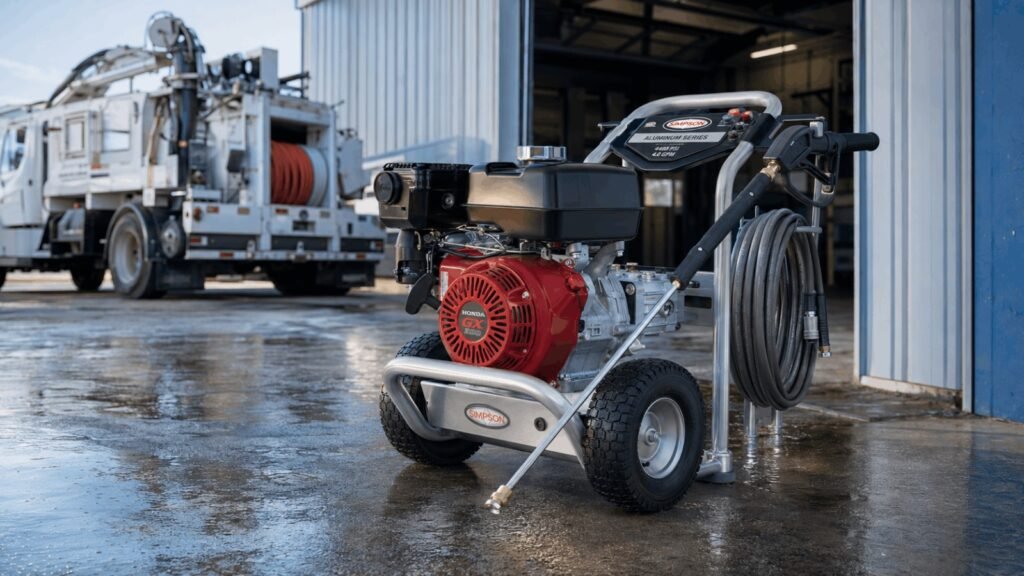
Best Honda GX390 Pressure Washers of 2026 Commercial Guide 2 honda feuture.jpg simpson-aluminum-4400-psi-honda-gx390.jpg Simpson Aluminum
Pressure Washers > Reviews

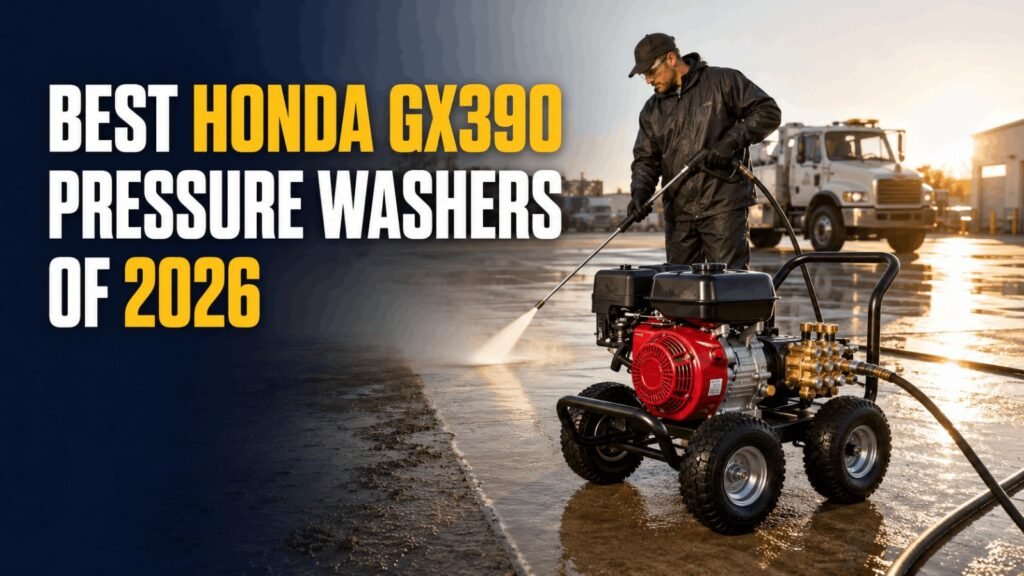
Best Honda GX390 Pressure Washers of 2026 (4000 PSI Powerhouse)

In the professional cleaning industry, one engine stands out above all others: the Honda GX390. Rated at 13.0 horsepower with 389cc displacement, this commercial-grade engine is considered the gold standard for heavy-duty surface cleaning, fleet washing, and job site preparation. When contractors look for maximum productivity, pairing a Honda GX390 engine pressure washer with a high-grade triplex pump is the ultimate combination. Delivering up to 4400 PSI and 4.0 GPM, these machines are built to run continuously for hours without overheating or dropping output. In this comprehensive guide, we review the top commercial models powered by the iconic Honda GX390 engine, break down key mechanical features, and explain how to choose the right unit for your business. Why the Honda GX390 Engine Leads the Commercial Industry The Honda GX Series (commercial grade) differs significantly from residential engine series. The Honda GX390 13.0 pressure washer motor is engineered specifically for demanding rental and contractor environments. Quick Comparison: Top Honda GX390 Models Model Pressure (PSI) Water Flow (GPM) Drive Type Pump Type Primary Use Simpson Aluminum 4400 4400 PSI 4.0 GPM Direct Drive AAA Industrial Triplex Mobile Contractors Dewalt DXPW60605 4200 PSI 4.0 GPM Direct Drive CAT Industrial Triplex Rugged Jobsite Use Pressure Pro E4040HC 4000 PSI 4.0 GPM Belt Drive General Pump Triplex Daily Continuous Use BE Power B4013HTB 4000 PSI 4.0 GPM Direct Drive General TS2021 Triplex Industrial Sites Simpson Heavy Duty PS60843-S 4400 PSI 4.0 GPM Direct Drive Triplex Plunger High PSI Cleaning Detailed Reviews of Top Honda GX390 Pressure Washers 1. Simpson Aluminum Series 4400 PSI – Best Overall The Simpson Aluminum Series is a primary choice for fleet managers and commercial surface cleaners. Powered by the reliable GX390 Honda power washer engine, this unit delivers up to 4400 PSI at 4.0 GPM, making quick work of concrete stripping and paint preparation. Pros: Cons: 2. Dewalt DXPW60605 – Most Durable Frame Dewalt engineered the DXPW60605 specifically for jobsite abuse. Combining the reliable 389cc engine block with a world-renowned CAT triplex pump, this pressure washer Honda 4000 PSI class unit is built like a tank. Pros: Cons: 3. Pressure Pro E4040HC – Best Belt-Drive System For commercial operators running equipment 6 to 8 hours a day, direct-drive pumps can overheat. The Pressure Pro E4040HC utilizes a belt-reduction pulley system paired with the Honda 390 pressure washer engine to minimize wear and heat buildup. Pros: Cons: 4. BE Power Equipment B4013HTB – Industrial Grade Reliability BE Power Equipment constructs machinery built for agricultural, mining, and plant operations. Their Honda GX390 engine pressure washer model focuses on serviceability and structural strength. Pros: Cons: Key Mechanical Specifications to Consider When purchasing a gx390 Honda power washer, pay attention to how the motor power is utilized across output parameters: Understanding PSI and GPM Metrics Pro Tip: If you want to expand your service capabilities, make sure to read our comprehensive Best Commercial Pressure Washer Roundup (Internal Link Placeholder) to see how different drive systems stack up. Belt Drive vs Direct Drive on Honda GX390 Models 1. Direct Drive Configuration The pump connects directly to the engine crankshaft, spinning at 3400 RPM. 2. Belt Drive Configuration Pulleys and belts transfer power, allowing the pump to spin at a lower 1500–1750 RPM while the engine runs at full governed speed. Preventive Maintenance Guide for Honda GX390 Engines To ensure your honda power washer gx390 reaches its 3,000+ hour service life potential, follow this routine maintenance schedule: Engine Maintenance Checklist Pump Maintenance Checklist Frequently Asked Questions (FAQs) What is the exact horsepower of a Honda GX390 engine? The Honda GX390 engine produces a net power output of 11.7 HP to 13.0 HP (389cc) at 3,600 RPM, depending on environmental conditions and testing standards. How much pressure can a Honda GX390 pressure washer produce? A Honda GX390 engine generates enough torque to drive industrial pumps producing between 3500 PSI and 4400 PSI at a full 4.0 GPM flow rate. What gas should I use in a Honda GX390 power washer? Use unleaded gasoline with a pump octane rating of 86 or higher. Avoid using E15 or E85 ethanol blends, as high ethanol content damages small engine carburetors and fuel lines. Can a Honda GX390 run a commercial surface cleaner? Yes! Thanks to its high 4.0 GPM flow capability, a GX390-powered machine easily supports 16-inch to 20-inch commercial rotary surface cleaners for fast driveway and parking lot cleaning. Final Verdict The Honda GX390 pressure washer remains the undisputed workhorse for commercial washing businesses due to its unbeatable reliability, easy parts availability, and high performance.  Pair your new washer with the right accessories by reading our guide on Essential Pressure Washer Nozzles and Attachments

Top rated commercial pressure washer with Honda engine for heavy duty cleaning
Pressure Washers > Reviews

7 Best Commercial Pressure Washers in 2026 (Heavy-Duty Performance)

When tackling massive cleaning jobs—like removing stubborn oil stains from driveways, cleaning heavy construction equipment, or restoring commercial building exteriors—a standard residential unit won’t cut it. You need a heavy-duty machine built for continuous daily use, high water volume (GPM), and maximum cleaning power (PSI). Choosing the right commercial pressure washer requires looking beyond basic specs to evaluate real-world durability, engine quality, and pump design. In this guide, we review the top-performing commercial models on the market to help you make an informed investment for your business. Quick Comparison: Top Commercial Pressure Washers Model Engine / Power Pressure (PSI) Water Flow (GPM) Primary Use Simpson Aluminum 4400 Honda GX390 4400 PSI 4.0 GPM Commercial Fleet & Machinery Dewalt DXPW60605 Honda GX390 4200 PSI 4.0 GPM Construction & Job sites Simpson PowerShot PS60843 CRX 420cc 4400 PSI 4.0 GPM Medium-to-Heavy Cleaning Pressure Pro E4040HC Honda GX390 4000 PSI 4.0 GPM Continuous Daily Professional Use BE Power Equipment B4013HTB Honda GX390 4000 PSI 4.0 GPM Industrial Site Cleaning Kärcher HD 3.0/27 PB Honda GX200 2700 PSI 3.0 GPM Mobile Detailing & Small Work AR AR630-HOT Hot Water / Electric 1900 PSI 2.1 GPM Kitchens, Grease & Oil Cleaners Commercial vs Residential Pressure Washers: Key Differences Understanding the difference between homeowner equipment and industrial units helps prevent buying a machine that wears out prematurely. Feature Residential Models Commercial-Grade Units PSI & GPM Range 1800–3000 PSI / 1.2–2.3 GPM 3000–4400+ PSI / 3.0–4.0+ GPM Pump Type Axial Cam (Non-serviceable) Industrial Triplex Plunger Pump Engine Quality Small Residential Blocks Heavy-Duty (e.g., Honda GX Series) Weekly Runtime 2–5 Hours per week 20–40+ Hours per week Expected Lifespan 60–100 Hours 1,000–3,000+ Operating Hours Detailed Reviews: Best Commercial Pressure Washers 1. Simpson Aluminum Series 4400 PSI – Best Overall The Simpson Aluminum Series is widely considered a benchmark for cleaning contractors and facility managers. Powered by a commercial Honda GX390 engine, this unit delivers consistent high-volume performance. Pros: Cons: 2. Dewalt DXPW60605 – Most Durable Jobsite Build Built for rugged jobsites, the Dewalt DXPW60605 pairs industrial mechanical components with a steel cage frame for maximum component protection. Pros: Cons: 3. Simpson PowerShot PS60843 – Best Value Heavy-Duty For growing businesses that need high cleaning capacity without paying a premium price, this PowerShot model delivers contractor-grade output. Pros: Cons: 4. Pressure Pro E4040HC – Best Belt-Drive System Unlike direct-drive models, the Pressure Pro E4040HC features a belt-drive system engineered to reduce thermal stress and vibration on internal pump components. Pros: Cons: 5. BE Power Equipment B4013HTB – Excellent Industrial Build BE Power Equipment produces heavy-duty machinery tailored for fleet maintenance, agriculture, and industrial sites requiring continuous daily operation. Pros: Cons: 6. Kärcher HD 3.0/27 PB – Best Compact Unit Not every job requires 4000+ PSI. For mobile auto detailers, surface prep, and lighter commercial work, Kärcher offers top build quality in a mobile footprint. Pros: Cons: 7. AR Annovi Reverberi AR630-HOT – Best for Grease & Oil Cold water pushes dirt away, but hot water dissolves grease and organic film. The AR630-HOT is engineered specifically for commercial kitchens, drive-thrus, and garage floors. Pros: Cons: Commercial Pressure Washer Buying Guide When evaluating commercial cleaning equipment, keep these technical factors in mind: 1. PSI vs. GPM (Measuring Output) 2. Direct Drive vs. Belt Drive Maintenance Tips for Maximum Pump Life Frequently Asked Questions (FAQs) What PSI is considered standard for commercial pressure washing? A rating of 3000 PSI to 4400 PSI with a water flow of 3.0 to 4.0 GPM or higher is considered standard for commercial-grade pressure washers. Is a Honda GX engine necessary for a commercial unit? While not mandatory, the Honda GX Series (like the GX200 and GX390) is the industry benchmark for commercial reliability, featuring cast-iron cylinder sleeves and low-oil shutdown sensors for long term endurance. Which pump type is best for heavy-duty commercial use? An Industrial Triplex Plunger Pump is the best choice. Unlike residential axial pumps, triplex pumps run cooler, are fully rebuildable, and last thousands of operating hours. Is belt drive better than direct drive for commercial cleaning? Yes, for heavy daily use. Belt-drive pressure washers run at lower engine RPMs, generating far less heat and vibration, which extends pump life compared to direct drive models. Final Verdict Selecting the best commercial pressure washer depends on your specific business requirements:

Scroll to Top