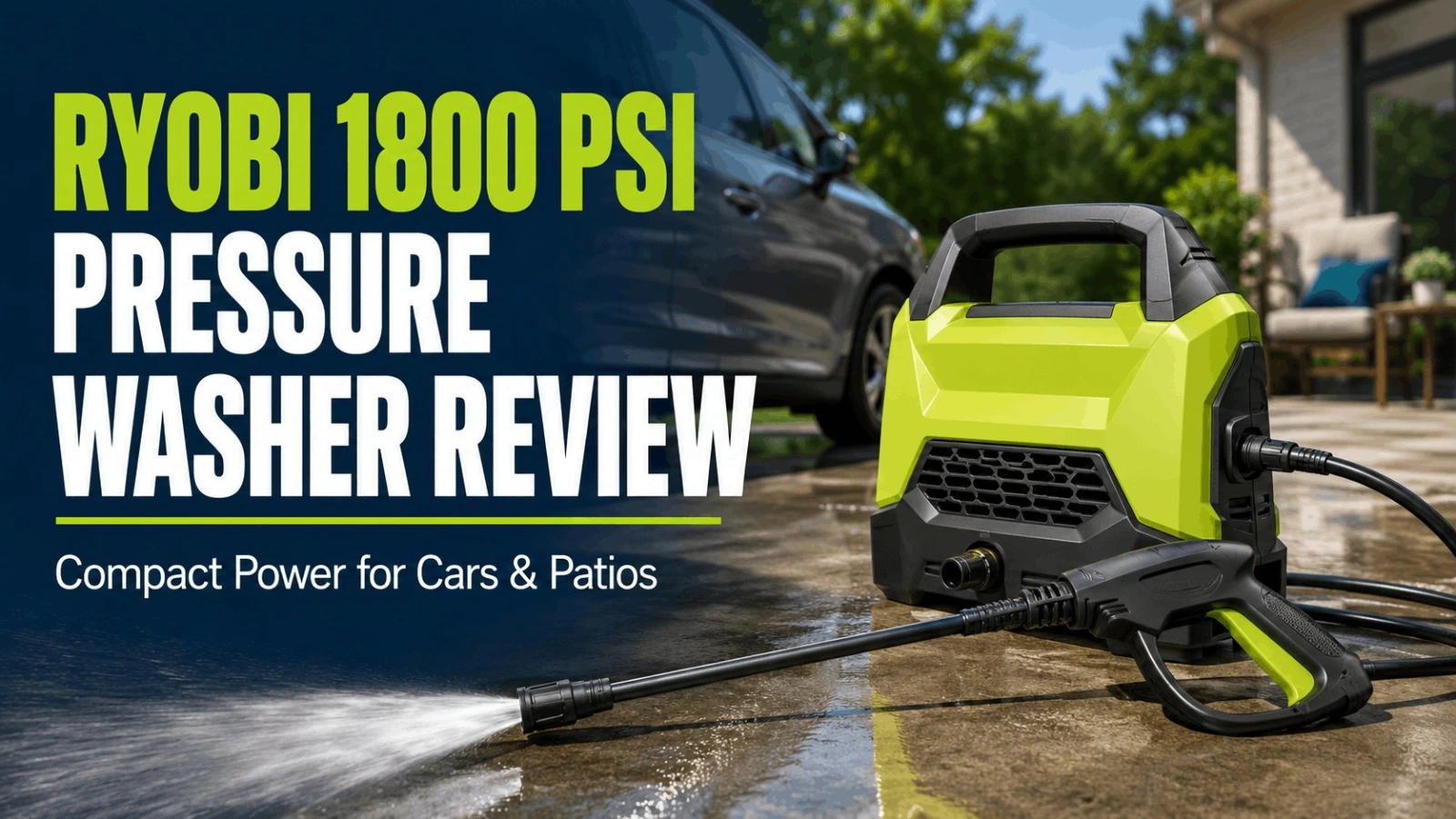
A large pressure washer can be unnecessary when you only need to clean a car, grill, garden chairs, windows, or a small patio. The Ryobi pressure washer 1800 PSI is designed for these lighter household jobs. It offers corded-electric convenience in a compact machine that is easier to carry and store than a full-size cart model.
This review focuses on the current Ryobi RY141802. It also explains the related RY141803 and discontinued RY141820 because all three may appear in search results under the same 1,800 PSI name.
How we reviewed it: This is an independent, specification-based review. We checked Ryobi’s current product information, model differences, support pages, and public safety guidance. We did not perform instrumented PSI or GPM testing, so performance comments are practical suitability judgments rather than laboratory results. Maximum output figures are manufacturer ratings.
Quick Verdict: Is the Ryobi 1800 PSI Pressure Washer Any Good?
The Ryobi 1800 PSI pressure washer is a sensible light-duty choice for buyers who value portability, simple electric starting, and compact storage. Its rated 1,800 PSI and 1.2 GPM output is suitable for routine cleaning of cars, patio furniture, grills, windows, fencing, and small hard surfaces when the correct nozzle and distance are used.
Its main limitation is cleaning speed. The 1.2 GPM flow and 20-foot pressure hose can make large driveways, heavily stained concrete, and frequent demanding work slow. It should be viewed as a maintenance cleaner, not a professional restoration machine.
Buying decision Assessment Best for: Cars, grills, windows, outdoor furniture, small patios and walkways Less suitable for: Large driveways, deep stains, heavy equipment and commercial work Power type: Corded electric Main strength: Compact 16-pound design and easy starting Main limitation: Modest flow and limited working reach Overall verdict: Good value when matched to light, occasional cleaning
Ryobi RY141802 vs RY141803 vs RY141820

The model number is important because not every Ryobi 1800 pressure washer includes the same body design, hose, storage, or accessories.
Model Status and main difference RY141802: Current compact carry-style model reviewed here. Ryobi lists a 15-degree nozzle, turbo nozzle, separate soap applicator, and 16-pound weight. RY141803: Related current model with the same rated pressure and flow. It adds onboard accessory storage and a 20-foot Ultra Flex high-pressure hose. RY141820: Older model that Ryobi marks as discontinued. Used units and remaining stock may still appear online.
Do not order a hose, nozzle, gun, or replacement part from the pressure rating alone. Check the rating label and match the complete model number to the seller’s listing, manual, and compatible-parts information.
Ryobi 1800 PSI Pressure Washer Specifications

The following table covers the RY141802. Confirm the current package before buying because retailer bundles can change.
Specification Ryobi RY141802 Maximum pressure: 1,800 PSI Maximum water flow: 1.2 GPM Power supply: 120V, 60Hz AC Motor: 13 amp electric High-pressure hose: 20 feet Included spray options: 15-degree nozzle and turbo nozzle Detergent system: Separate soap applicator Nozzle connection: 1/4-inch quick-connect coupler Approximate weight: 16 pounds Electrical protection: GFCI-equipped plug Water type: Cold household water supply
PSI describes spray pressure, while GPM describes water flow. Pressure helps loosen dirt; flow helps carry it away. That is why a 1.2 GPM washer may remove normal dirt but still take longer than a higher-flow machine on broad surfaces.
Ryobi’s official RY141802 page describes it as a light-duty residential cleaner and identifies cars, grills, windows, patio furniture, and similar outdoor uses. It also confirms the 1/4-inch quick-connect wand, two included nozzles, soap applicator, and 16-pound design.
Ryobi Electric Pressure Washer 1800 PSI: Key Features
Compact 16-Pound Carry Design
The small body is the main reason to choose this model. It can fit on a garage shelf and is easy to move between short jobs. However, it is a carry-style unit rather than a tall wheeled cart. A buyer who cannot comfortably lift the machine may prefer a larger model with wheels and a telescoping handle.
1,800 PSI and 1.2 GPM Cleaning Output
This output is appropriate for regular surface dirt, dust, light mud, pollen, and outdoor buildup. It is not designed for rapid removal of deeply embedded stains across a large driveway. Actual results depend on water supply, nozzle choice, spray distance, surface condition, and cleaning method.
15-Degree and Turbo Nozzles
The 15-degree nozzle creates a focused fan for general cleaning. The turbo nozzle uses a rotating concentrated spray for stubborn dirt on durable surfaces. It can also damage paint, weathered wood, soft materials, seals, and weak masonry. Always test a hidden area and begin farther from the surface.
Separate Soap Applicator
The included applicator connects to the trigger handle and applies approved pressure-washer detergent at low pressure. It is simple, but switching from soap to rinsing requires changing the attachment. Use only detergent approved for pressure washers and follow both the cleaner and surface manufacturer’s directions.
20-Foot High-Pressure Hose
The hose is adequate for small jobs but may require you to move the machine around a vehicle or patio. Before purchasing, consider the positions of your outdoor outlet and water connection as well as the total working reach.
Ryobi 1800 PSI Pressure Washer for Cars, Patios, and Home Cleaning

Cars, Bikes, Boats, and Recreational Vehicles
The machine can handle vehicle rinsing when used carefully. Select the less aggressive spray, begin at a safe distance, and avoid close pressure on damaged paint, decals, badges, sensors, cameras, tires, seals, and electrical parts. Follow the vehicle manufacturer’s cleaning instructions. Pressure washing may loosen surface dirt, but bonded road film can still require a gentle hand wash.
Patio Furniture, Grills, Bins, and Garden Tools
These short jobs suit a portable electric pressure washer. Let hot grill surfaces cool, disconnect powered equipment, protect openings, and use a mild spray on painted or plastic items. Test older furniture because sun-damaged plastic, loose coatings, and weakened wood can be harmed even by a compact washer.
Small Patios, Decks, and Walkways
The RY141802 can clean a small concrete, paver, or suitable deck area with ordinary dirt. The turbo nozzle should be tested cautiously because concentrated pressure can remove paint, mark soft wood, loosen old mortar, or disturb jointing material. For a long driveway or severe staining, a higher-flow washer and suitable surface cleaner will usually work faster.
Fences, Siding, and Windows
Use the gentler spray, start well back, and direct water downward where appropriate. Do not force water behind siding or into window seals, vents, soffits, outlets, light fixtures, or wall openings. Weathered wood and loose paint need especially careful treatment.
Ryobi 1800 PSI Pressure Washer Pros and Cons

Pros
• Compact and easy to store. • Approximately 16 pounds, making it portable for most users. • Corded-electric motor starts without fuel, oil changes, or exhaust. • Useful pressure for many light residential cleaning jobs. • Standard 1/4-inch quick-connect nozzle coupler. • Includes a general nozzle, turbo nozzle, and soap applicator. • GFCI-equipped plug supports safer outdoor electrical use.
Cons
• A 1.2 GPM flow rate can make large areas slow to clean. • The 20-foot pressure hose limits reach. • Only two pressure nozzles are included. • The separate soap bottle is less convenient than an onboard detergent tank for some users. • Carry-style body may not suit people who prefer wheels. • Similar 1,800 PSI model names can cause parts and package confusion.
Common Ryobi Pressure Washer 1800 PSI Problems

Motor Will Not Start
Check the outlet, power switch, GFCI reset, and household breaker. Turn the machine off and release stored pressure by squeezing the trigger before trying again. Stop using it if the cord, plug, or GFCI is damaged.
Low or Pulsing Pressure
Common causes include trapped air, a restricted water supply, a kinked garden hose, a blocked nozzle, or a dirty inlet screen. Fully open the tap, straighten the hoses, and purge air through the trigger handle before starting the motor.
Water Leaks at a Connection
Switch off the unit, unplug it, close the tap, and release pressure. Inspect the fitting for cross-threading, a poor connection, damage, or a worn washer or O-ring. Replace damaged pressure-rated parts rather than attempting an unsafe temporary repair.
Soap Does Not Dispense
Confirm that the separate soap applicator is installed correctly and filled with compatible detergent. Thick, dried, or unsuitable cleaner can block the system. Detergent is applied at low pressure, not through the high-pressure nozzles.
Nozzle Is Blocked
Turn the washer off, unplug it, close the water supply, and squeeze the trigger to release pressure before removing a nozzle. Clean it only as directed in the manual. Never look into a nozzle or pressurized opening.
How to Use the Ryobi RY141802 Safely
The CDC’s pressure-washer safety guidance warns that high-pressure spray can cause serious wounds that initially look minor. Never point the wand at people or animals. Wear eye protection and closed footwear, keep others away, and seek prompt medical care for any pressure-washer injury.
Before Cleaning
Inspect the cord, GFCI, hoses, wand, nozzles, and connections.
Place the machine on a stable, dry surface and keep electrical connections away from water.
Connect a suitable garden hose to a cold household water supply and fully open the tap.
With the motor off, squeeze the trigger until the water stream is steady and trapped air is gone.
Fit the gentlest suitable nozzle and test a hidden area from a safe distance.
During and After Cleaning
Keep the spray moving and avoid electrical fixtures, openings, fragile surfaces, and other people. Stop if pressure pulses, a fitting leaks, or the cord becomes wet or damaged. When finished, switch off, unplug, close the tap, release pressure, drain the hoses, remove detergent residue, and store the equipment without sharp bends. Use pump protector and cold-weather storage steps recommended by Ryobi.
Who Should Buy the Ryobi 1800 Pressure Washer?
Buy it if you need an easy-to-store electric machine for occasional vehicle washing and small household cleaning tasks. Its strongest advantages are portability, simple starting, and enough power for ordinary maintenance.
Choose a larger model like the Ryobi 2500 PSI Pressure Washer if your main jobs involve a long driveway, extensive masonry, heavy equipment, deep staining, commercial use, or cleaning far from an outlet . In those situations, higher GPM, a longer hose, wheels, and a larger accessory range matter more than compact size.
Before ordering, confirm the exact model, included equipment, return policy, warranty terms, and compatible replacement parts. Also check Ryobi’s current recall page by model number. As of this fact-check, Ryobi’s posted pressure-washer recall names RY142300 and RY142711VNM—not the 1,800 PSI models discussed here—but recall information can change.
Frequently Asked Questions
Is 1,800 PSI safe for washing a car?
It can be suitable with a less aggressive spray, adequate distance, and careful technique. Test first and avoid damaged paint, decals, sensors, seals, tires, and electrical parts. Follow the vehicle manufacturer’s advice.
Can the Ryobi 1800 PSI clean a driveway?
It can clean a small concrete section with normal dirt. Its 1.2 GPM flow makes a large driveway or deep staining slow, so a higher-flow model is usually more practical.
Can the RY141802 draw water from a bucket?
The operating instructions call for connection to a household water main. Do not assume it can siphon from a bucket, pool, lake, or other standing-water source.
Can I use hot water?
No. Use cold water only. Hot water can damage a cold-water pressure washer and create unsafe conditions.
What is the difference between RY141802 and RY141803?
Both are rated at 1,800 PSI and 1.2 GPM. The RY141803 product page highlights onboard storage and a 20-foot Ultra Flex hose. Check the exact retailer bundle before purchase.
Final Verdict: Is the Ryobi 1800 Pressure Washer Worth It?

The Ryobi pressure washer 1800 PSI is worth considering for cars, grills, windows, outdoor furniture, garden equipment, fences, and small patios. Its compact 16-pound body, electric operation, quick-connect wand, and included soap applicator make routine cleaning straightforward.
The trade-off is speed and reach. A 1.2 GPM flow and 20-foot hose are not ideal for large concrete areas or demanding work. Buyers must also distinguish between the RY141802, RY141803, and discontinued RY141820.
For light-duty cleaning and limited storage space, the RY141802 offers a practical balance of portability and power. For large or frequent jobs, a higher-flow wheeled model is the better investment.