Driveway Cleaning

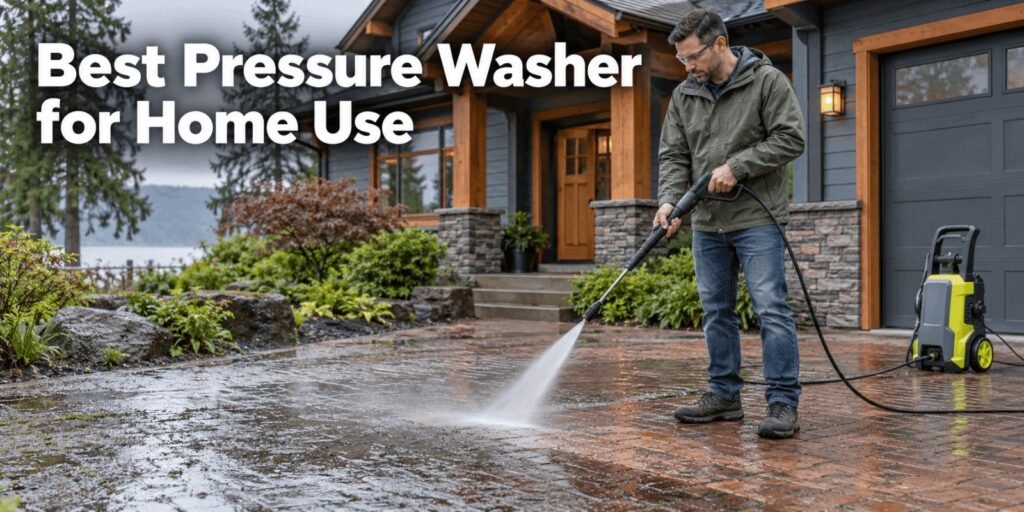
Best pressure washer for home use: homeowner cleaning a brick driveway with an electric pressure washer
Beginner Guides, Guides & Tips

Best Pressure Washer for Home Use: 2026 Picks and Practical Buying Guide

Choosing the Best Pressure Washer for Home Use can be confusing when product pages lead with PSI, GPM, motor type, pump design, hose length, and a bundle of colored nozzles. The biggest number on the box is not automatically the best choice. A concentrated spray can damage paint, wood, siding, and even some concrete. Quick answer: For most routine home jobs, begin with a corded electric model. In its 2026 hands-on roundup, Popular Mechanics named the Greenworks 2,700-PSI electric washer its best overall electric pick and the Sun Joe SPX3000 its best value. The Sun Joe’s manufacturer lists 2,030 rated PSI and 1.2 rated GPM; Greenworks lists its model’s maximum 2,700 PSI at 1.2 GPM and a maximum flow of 2.3 GPM at 100 PSI. Those figures show why it is important to compare operating conditions, not headline numbers alone. See the publication’s electric washer testing and picks and the Greenworks specifications and Sun Joe specifications. These are third-party picks, not tests performed by PressureWasherWise. The right choice for your home still depends on the surfaces you clean, the size of the area, storage, available power and water, and how often you expect to use the washer. That context matters when choosing the best pressure washer for home use. Best Pressure Washer for Home Use: Shortlist by Type Option Best suited to What to know Greenworks Pro 2,700-PSI electric washer Homeowners who want stronger corded electric performance for larger or tougher regular jobs Popular Mechanics selected it as its best overall electric model after hands-on testing. Greenworks specifies 2,700 max PSI at 1.2 GPM, with 2.3 GPM at 100 PSI. It may be more machine than needed for occasional light rinsing. Sun Joe SPX3000 Value-focused buyers doing common patio, car, furniture, and walkway jobs Popular Mechanics named it best value. Sun Joe lists 2,030 rated PSI and 1.2 rated GPM, plus two detergent tanks. Use a gentle nozzle and technique on delicate surfaces. Gas pressure washer Larger properties or frequent heavy cleaning where higher flow and freedom from a power cord matter Compare the exact model’s rated PSI and GPM. Gas adds engine care, fuel handling, noise, and carbon-monoxide risk; it is not automatically a better fit for a typical home. Cordless pressure washer Portable rinsing of bikes, tools, outdoor items, and small messes away from an outlet Battery runtime and water supply limit the work it can do. It is usually not a replacement for a corded or gas washer on a large driveway. Model prices and availability change. Before buying, verify the model number, specifications, warranty, accessories, and current seller details. If you want a wider comparison, see our 2026 top-rated pressure washer roundup. That page should also identify how its models were selected and whether they were independently tested. Keep it in mind while you shop for the best pressure washer for home use. Which Type Is Right for Your Home? Electric pressure washer for home use A corded electric washer is a practical starting point for routine jobs such as rinsing a car, cleaning outdoor furniture, washing bins, and refreshing a small patio or walkway. It starts without a gas engine, is often lighter and quieter than gas equipment, and usually requires less engine maintenance. It is one more factor in finding the best pressure washer for home use. Its limits are reach and workload. A corded model needs a suitable outdoor outlet and a water supply that meets the washer’s requirements. A low-flow faucet, kinked inlet hose, or clogged filter can reduce performance. A small unit can also take longer on a wide driveway or heavily soiled surfaces. For most households, the best pressure washer for home use is the one that matches the actual job. Check the electrical rating, cord length, required ground-fault protection, hose connections, warranty, and manual before choosing. Do not assume that any extension cord is safe; use one only if the manufacturer permits it and specifies the required type and rating. This is why the best pressure washer for home use is rarely the most powerful one. Gas pressure washer A gas washer may fit a large driveway, long fence, or repeated heavy cleaning where faster coverage and freedom from a power cord are useful. Some gas models offer higher flow, which can help rinse broad areas. Check the pressure and flow ratings for the exact model and task. Use this as a checkpoint before settling on the best pressure washer for home use. Gas equipment is usually heavier and louder. It also needs fuel and engine maintenance, and it produces carbon monoxide. It must be operated outdoors, away from doors, windows, and vents. For occasional light cleaning, the extra output may not justify its maintenance and storage needs. It helps explain what makes the best pressure washer for home use practical rather than flashy. For a fuller side-by-side discussion, read our electric vs. gas pressure washer guide. Cordless pressure washer Battery-powered washers are useful as portable cleaning tools. They can rinse a bicycle, muddy tools, outdoor cushions, or camping equipment when a hose or outlet is not nearby. Some draw water from a bucket or container, which can be helpful where no tap is available. Think about this whenever you compare options for the best pressure washer for home use. Check the battery runtime, charging time, water-source options, rated pressure, and flow. A short portable rinse is a different job from cleaning a full driveway. For larger areas, a cordless model may run out of battery or water before the work is done. This detail often separates the best pressure washer for home use from a poor fit. Pressure Washer PSI and GPM Explained PSI means pounds per square inch. It describes water pressure, which helps loosen dirt. GPM means gallons per minute. It describes water flow, which carries loosened grime away and rinses the surface. Both matter, but the right combination depends on the work and the surface. Apply this idea to any shortlist for the best pressure washer for home use. Compare rated working
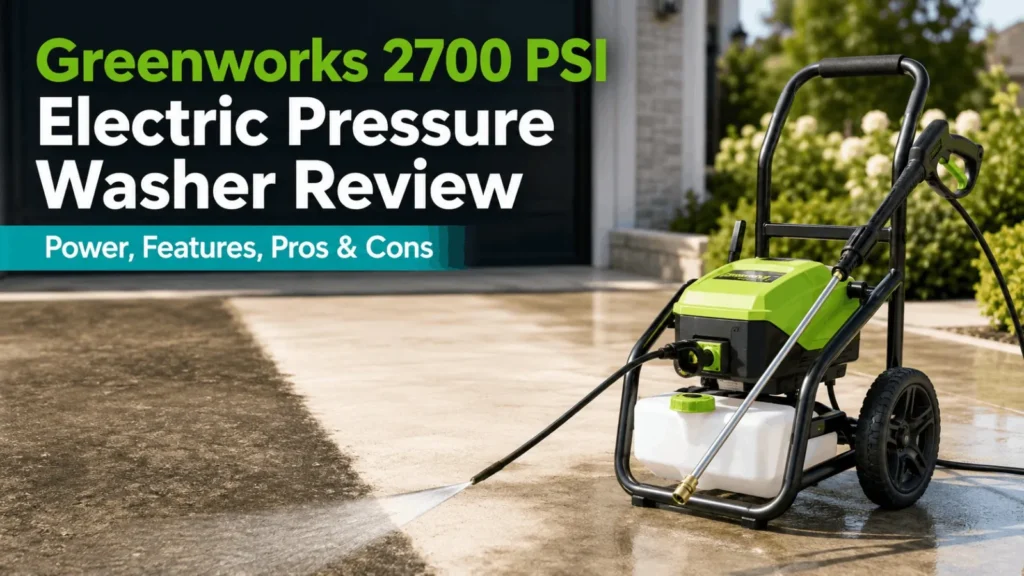
Greenworks 2700 PSI electric pressure washer review banner showing features, pros and cons
Pressure Washers > Reviews

Greenworks 2700 PSI Electric Pressure Washer Review: Is the GPW2702A Worth It?

The Greenworks 2700 PSI electric pressure washer is made for homeowners who want more cleaning force than a small electric unit but do not want the fuel, noise or engine care of a gas model. The GPW2702A combines a brushless motor, five quick-connect nozzles, a one-gallon detergent tank, a 25-foot pressure hose and a 35-foot GFCI power cord. Its headline numbers need a little explanation. The machine provides 2,700 PSI at a rated flow of 1.2 GPM. It can reach 2.3 GPM only in its low-pressure, 100 PSI mode. Those are two different operating points, so buyers should not assume it produces 2,700 PSI and 2.3 GPM at the same time. This research-based review covers the GPW2702A, SKU 5128402. It explains the published specifications, likely performance, useful features, limitations and buying considerations. It is based on the current Greenworks product page, the official operator manual and manufacturer warranty information. We have not claimed hands-on testing or created an unsupported performance score. Quick Verdict The Greenworks GPW2702A is a capable medium-duty residential pressure washer. It should work well for routine cleaning of small and medium driveways, patios, walkways, fences, siding, vehicles and outdoor equipment. Its wide nozzle selection and low-pressure high-flow mode make it more flexible than many entry-level electric models. The main limitation is water flow. At full pressure, 1.2 GPM is enough for home cleaning but may rinse large concrete areas more slowly than a higher-flow gas machine. The open frame is also larger to store than a compact upright washer, and its continuous-run motor should be switched off during long pauses. Best for: Homeowners who want strong electric cleaning for several outdoor jobs near a suitable outlet. Skip it if: You need a machine for daily paid work, very large properties, remote areas without electricity or frequent heavy stain removal. Greenworks GPW2702A Specifications Confirm the model number before buying because Greenworks has sold more than one 2,700 PSI pressure washer. This review covers GPW2702A, SKU 5128402, not the older GWP2700 or a retailer-specific package. Specification GPW2702A Published Information Maximum pressure 2,700 PSI Rated flow at maximum pressure 1.2 GPM at 2,700 PSI Maximum low-pressure flow 2.3 GPM at 100 PSI Motor Smart-sensing brushless motor with JETTFlow technology Power source 120-volt corded electric Power cord 35 feet with inline GFCI High-pressure hose 25 feet, kink-resistant Spray nozzles 15°, 25°, 40°, soap and turbo Detergent tank One gallon, onboard Wheels 10-inch never-flat wheels Nozzle connection 1/4-inch quick connect Certification PWMA certified Published warranty Three years for the tool and ten years for the motor, subject to current terms There is one specification conflict worth noting. The current Greenworks page describes the motor as 14 amps in one section and 15 amps in another. Check the rating label on the machine and the manual supplied with your exact unit before choosing a circuit or extension cord. How Powerful Is This 2700 PSI Electric Pressure Washer? Pressure and water flow perform different jobs. PSI helps loosen bonded dirt, while GPM carries the loosened material away. The GPW2702A delivers its highest pressure with 1.2 GPM and its highest flow with only 100 PSI. That split rating is not automatically a weakness. High pressure helps with marks on durable surfaces, while the higher-flow low-pressure mode is useful for rinsing and detergent work. However, it is misleading to multiply 2,700 PSI by 2.3 GPM because the machine does not reach both figures together. When comparing high-pressure performance, use the rated 2,700 PSI at 1.2 GPM. The pressure is strong for a corded residential unit, but cleaning speed depends on more than the largest PSI number. Surface condition, nozzle choice, detergent, water supply and technique all affect the result. Old oil, paint, rust and stains absorbed deep into concrete may still need special treatment. Performance by Cleaning Job Driveways, Patios and Walkways The machine has enough rated pressure for routine residential concrete cleaning. The 25° nozzle is the safest general starting point. The 15° or turbo nozzle can help on stubborn areas, but both should be tested first and kept moving to avoid visible lines or surface damage. A compatible 15-inch surface cleaner may produce a more even finish and reduce splash. Still, the 1.2 GPM high-pressure flow means a long driveway will take more time than it would with a higher-flow gas washer. Decks, Fences and House Siding Begin with the 40° nozzle from a generous distance. Too much pressure can raise wood grain, remove stain, mark soft material or push water behind siding. Test a hidden area before cleaning the full surface. Do not use a pressure-washer gun while standing on a ladder. A jet can create sudden kickback. Use approved ground-level extensions for high work and follow the surface manufacturer’s cleaning instructions. Cars, Boats and Outdoor Furniture The 40° nozzle or low-pressure rinse mode is the sensible choice for vehicle washing. Keep a safe distance and avoid direct close spray on damaged paint, seals, tires, cameras, electrical connectors, bearings and decals. Apply only detergent approved for pressure washers. Test painted or delicate furniture underneath before washing the visible area. Soft brushes and a garden hose may be safer for fragile materials. Lawn and Outdoor Equipment The washer can remove mud from mowers, carts and garden tools. Allow hot engines to cool first, and avoid air intakes, bearings, electrical parts, seals and warning labels. More pressure is not always better around moving components. Key Greenworks GPW2702A Features Brushless Motor and JETTFlow Technology Greenworks says its smart-sensing motor recognizes the selected nozzle and adjusts water flow for the task. A brushless design removes motor-brush wear and can support efficient operation. It does not make the whole machine maintenance-free; hoses, filters, nozzles, seals and the pump still need inspection and proper storage. Continuous-Run Motor Unlike some compact electric washers that stop the motor when the trigger is released, the GPW2702A uses a continuous-run design. This provides immediate pressure when you pull the trigger. During a long break, turn off the washer instead of leaving water

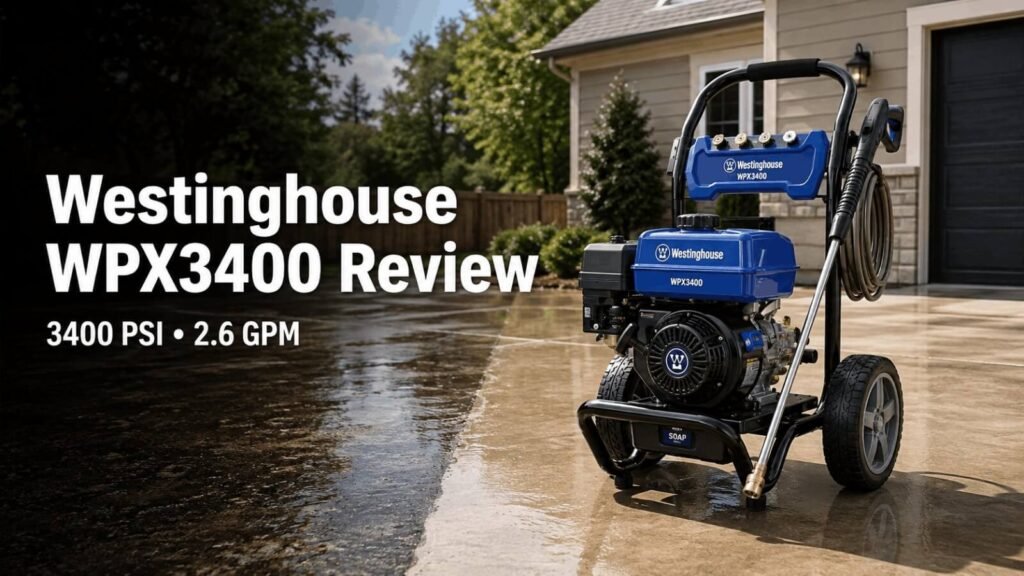
Westinghouse WPX3400 gas pressure washer product review featuring 3400 PSI and 2.6 GPM performance specs.
Buying Guides, Safety Tips

Westinghouse WPX3400 Gas Pressure Washer Review: The Ultimate Heavy-Duty Cleaning Powerhouse

If you are struggling with stubborn oil stains on driveways, weathered wooden decks, moss-covered patios, or peeling exterior paint, entry-level electric pressure washers simply lack the necessary force. The Westinghouse WPX3400 Gas Pressure Washer steps in as a commercial-grade, heavy-duty cleaning solution engineered for homeowners, contractors, and DIY enthusiasts who demand unyielding cleaning power. Delivering an impressive 3,400 PSI (Pounds per Square Inch) at 2.6 GPM (Gallons per Minute), the WPX3400 produces a total cleaning power score of 8,840 Cleaning Units (CU). Driven by a robust 212cc 4-stroke OHV engine, an axial cam brass-head pump, and a heavy-duty steel cart with 12-inch never-flat wheels, this machine blends durability, mobility, and sheer cleaning efficiency. In this comprehensive, data-backed review, we examine every aspect of the Westinghouse WPX3400—from unboxing and assembly to real-world cleaning tests, maintenance practices, and head-to-head comparisons. Key Technical Specifications at a Glance Feature / Spec Westinghouse WPX3400 Specification Model Name Westinghouse WPX3400 Gas Pressure Washer Maximum Pressure 3,400 PSI Maximum Flow Rate 2.6 GPM Total Cleaning Power 8,840 Cleaning Units (PSI × GPM) Engine Type 212cc 4-Stroke Westinghouse OHV (Horizontal Shaft) Starting Mechanism Manual Recoil Pull Start with Choke & Fuel Valve Pump Type Maintenance-Free Axial Cam Pump Fuel Tank Capacity 1.0 Gallon (3.8 Liters) Unleaded Gasoline Onboard Soap / Detergent Tank 0.5 Gallon (1.9 Liters) Built-in Reservoir High-Pressure Hose 25-Foot Super-Flex Abrasion-Resistant Hose (M22 Fittings) Included Nozzles 5 Quick-Connect Tips (0°, 15°, 25°, 40°, & Soap Applicator) Wheel Diameter & Type 12-Inch High-Profile, Never-Flat Solid Rubber Wheels Frame Construction Heavy-Duty Tubular Steel with Corrosion-Resistant Coating Unit Weight 28.6 kg (Approx. 63 lbs) Product Dimensions 19″ L x 18.5″ W x 21.7″ H Warranty 3-Year Limited Manufacturer Warranty (Service, Labor & Parts) 1. Engine & Pump Architecture: The Heart of the WPX3400 At the core of the Westinghouse WPX3400 lies a commercial-grade 212cc 4-Stroke OHV (Overhead Valve) horizontal shaft engine. Unlike underpowered consumer models that rely on vertical-shaft engines prone to heat buildup, horizontal shaft configurations offer superior heat dissipation, smoother torque delivery, and significantly longer operational lifespans. +——————————————————————-+ |               Westinghouse WPX3400 Power Train                    | |                                                                   | |   [212cc 4-Stroke OHV Engine] ───> [Maintenance-Free Axial Pump]  | |               │                                    │              | |        (Recoil Start)                     (3,400 PSI @ 2.6 GPM)   | |               │                                    │              | |   [1.0 Gallon Fuel Tank]             [Thermal Relief Protection]  | +——————————————————————-+ Axial Cam Pump Performance Coupled directly to the 212cc engine is an axial cam pump. This pump design is factory-sealed and engineered to be 100% maintenance-free—meaning you do not need to constantly change pump oil or grease internal bearings under normal residential use. Key advantages of this engine and pump synergy include: Consistent Pressure Output: The axial cam mechanism delivers a steady 3,400 PSI without pulsing or sudden drops in water pressure. Thermal Relief Valve: Protects the pump from overheating if the trigger is released while the engine continues to idle. Optimized Fuel Economy: The 1-gallon fuel tank provides up to 1.5 to 2 hours of continuous run time depending on the nozzle tip and throttle level. 2. Real-World Cleaning Applications & Versatility With 8,840 Cleaning Units, the Westinghouse WPX3400 is not limited to light chores. It effortlessly handles the toughest residential and semi-commercial tasks: A. Concrete Driveways, Sidewalks, and Garage Floors Oil drips, tire marks, embedded moss, and years of baked-on dirt lift off instantly under 3,400 PSI. When paired with an optional 15-inch or 16.5-inch surface cleaner attachment, cleaning times on expansive driveways are cut by up to 60%. B. Wooden Decks, Fences, and Composite Railings Using the wider 25° or 40° nozzle tips, the WPX3400 strips away weathered grey oxidation, mildew, and failing stain without gouging soft cedar or pine wood grain when maintained at a safe 12-to-18-inch distance. C. Home Siding, Stucco, and Brick Facades Algae and mildew clinging to vinyl siding or porous brick mortar vanish quickly. The onboard half-gallon detergent tank allows you to pre-treat walls with specialized siding cleaner before switching to the rinse nozzles. D. Vehicle, Boat, and RV Detailing While 3,400 PSI is too intense for direct car paint, the 40° white tip combined with the onboard soap reservoir (or an aftermarket M22 foam cannon) provides a rich foam lather followed by a gentle, broad rinse that leaves clear coats spotless. 3. Included Nozzle Tips & How to Use Them The Westinghouse WPX3400 comes standard with 5 color-coded quick-connect spray nozzles that dock neatly into the integrated dashboard holder on the handle: [0° Red Tip]     ──> Extreme Pinpoint Jet (Concrete cracks, paint stripping, metal rust) [15° Yellow Tip] ──> Heavy-Duty Chiseling (Brickwork, masonry, unpainted concrete) [25° Green Tip]  ──> General Cleaning (Wood decks, stone patios, vinyl siding, fences) [40° White Tip]  ──> Wide Gentle Wash (Cars, RVs, outdoor glass, painted surfaces) [Black Soap Tip] ──> Low-Pressure Detergent Dispenser (Activates onboard soap siphon) 0° Red (Pinpoint Blast): Produces a razor-sharp, concentrated jet of water. Reserved exclusively for heavy rust removal, hard stain eradication in concrete joints, or peeling paint. (Never use on wood or vehicles!) 15° Yellow (Chisel Fan): Excellent for aggressive surface stripping, concrete preparation, and removing stubborn biological growth. 25° Green (All-Around Workhorse): The most versatile nozzle for washing decks, walkways, aluminum siding, and garden furniture. 40° White (Wide Fan):

Scroll to Top