
Safety Tips

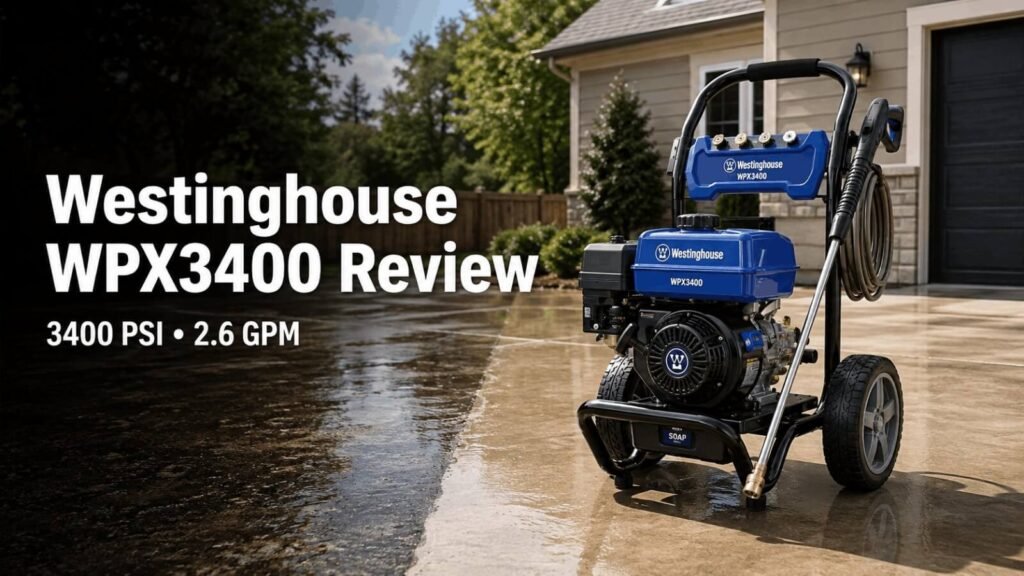
Westinghouse WPX3400 gas pressure washer product review featuring 3400 PSI and 2.6 GPM performance specs.
Buying Guides, Safety Tips

Westinghouse WPX3400 Gas Pressure Washer Review: The Ultimate Heavy-Duty Cleaning Powerhouse

If you are struggling with stubborn oil stains on driveways, weathered wooden decks, moss-covered patios, or peeling exterior paint, entry-level electric pressure washers simply lack the necessary force. The Westinghouse WPX3400 Gas Pressure Washer steps in as a commercial-grade, heavy-duty cleaning solution engineered for homeowners, contractors, and DIY enthusiasts who demand unyielding cleaning power. Delivering an impressive 3,400 PSI (Pounds per Square Inch) at 2.6 GPM (Gallons per Minute), the WPX3400 produces a total cleaning power score of 8,840 Cleaning Units (CU). Driven by a robust 212cc 4-stroke OHV engine, an axial cam brass-head pump, and a heavy-duty steel cart with 12-inch never-flat wheels, this machine blends durability, mobility, and sheer cleaning efficiency. In this comprehensive, data-backed review, we examine every aspect of the Westinghouse WPX3400—from unboxing and assembly to real-world cleaning tests, maintenance practices, and head-to-head comparisons. Key Technical Specifications at a Glance Feature / Spec Westinghouse WPX3400 Specification Model Name Westinghouse WPX3400 Gas Pressure Washer Maximum Pressure 3,400 PSI Maximum Flow Rate 2.6 GPM Total Cleaning Power 8,840 Cleaning Units (PSI × GPM) Engine Type 212cc 4-Stroke Westinghouse OHV (Horizontal Shaft) Starting Mechanism Manual Recoil Pull Start with Choke & Fuel Valve Pump Type Maintenance-Free Axial Cam Pump Fuel Tank Capacity 1.0 Gallon (3.8 Liters) Unleaded Gasoline Onboard Soap / Detergent Tank 0.5 Gallon (1.9 Liters) Built-in Reservoir High-Pressure Hose 25-Foot Super-Flex Abrasion-Resistant Hose (M22 Fittings) Included Nozzles 5 Quick-Connect Tips (0°, 15°, 25°, 40°, & Soap Applicator) Wheel Diameter & Type 12-Inch High-Profile, Never-Flat Solid Rubber Wheels Frame Construction Heavy-Duty Tubular Steel with Corrosion-Resistant Coating Unit Weight 28.6 kg (Approx. 63 lbs) Product Dimensions 19″ L x 18.5″ W x 21.7″ H Warranty 3-Year Limited Manufacturer Warranty (Service, Labor & Parts) 1. Engine & Pump Architecture: The Heart of the WPX3400 At the core of the Westinghouse WPX3400 lies a commercial-grade 212cc 4-Stroke OHV (Overhead Valve) horizontal shaft engine. Unlike underpowered consumer models that rely on vertical-shaft engines prone to heat buildup, horizontal shaft configurations offer superior heat dissipation, smoother torque delivery, and significantly longer operational lifespans. +——————————————————————-+ |               Westinghouse WPX3400 Power Train                    | |                                                                   | |   [212cc 4-Stroke OHV Engine] ───> [Maintenance-Free Axial Pump]  | |               │                                    │              | |        (Recoil Start)                     (3,400 PSI @ 2.6 GPM)   | |               │                                    │              | |   [1.0 Gallon Fuel Tank]             [Thermal Relief Protection]  | +——————————————————————-+ Axial Cam Pump Performance Coupled directly to the 212cc engine is an axial cam pump. This pump design is factory-sealed and engineered to be 100% maintenance-free—meaning you do not need to constantly change pump oil or grease internal bearings under normal residential use. Key advantages of this engine and pump synergy include: Consistent Pressure Output: The axial cam mechanism delivers a steady 3,400 PSI without pulsing or sudden drops in water pressure. Thermal Relief Valve: Protects the pump from overheating if the trigger is released while the engine continues to idle. Optimized Fuel Economy: The 1-gallon fuel tank provides up to 1.5 to 2 hours of continuous run time depending on the nozzle tip and throttle level. 2. Real-World Cleaning Applications & Versatility With 8,840 Cleaning Units, the Westinghouse WPX3400 is not limited to light chores. It effortlessly handles the toughest residential and semi-commercial tasks: A. Concrete Driveways, Sidewalks, and Garage Floors Oil drips, tire marks, embedded moss, and years of baked-on dirt lift off instantly under 3,400 PSI. When paired with an optional 15-inch or 16.5-inch surface cleaner attachment, cleaning times on expansive driveways are cut by up to 60%. B. Wooden Decks, Fences, and Composite Railings Using the wider 25° or 40° nozzle tips, the WPX3400 strips away weathered grey oxidation, mildew, and failing stain without gouging soft cedar or pine wood grain when maintained at a safe 12-to-18-inch distance. C. Home Siding, Stucco, and Brick Facades Algae and mildew clinging to vinyl siding or porous brick mortar vanish quickly. The onboard half-gallon detergent tank allows you to pre-treat walls with specialized siding cleaner before switching to the rinse nozzles. D. Vehicle, Boat, and RV Detailing While 3,400 PSI is too intense for direct car paint, the 40° white tip combined with the onboard soap reservoir (or an aftermarket M22 foam cannon) provides a rich foam lather followed by a gentle, broad rinse that leaves clear coats spotless. 3. Included Nozzle Tips & How to Use Them The Westinghouse WPX3400 comes standard with 5 color-coded quick-connect spray nozzles that dock neatly into the integrated dashboard holder on the handle: [0° Red Tip]     ──> Extreme Pinpoint Jet (Concrete cracks, paint stripping, metal rust) [15° Yellow Tip] ──> Heavy-Duty Chiseling (Brickwork, masonry, unpainted concrete) [25° Green Tip]  ──> General Cleaning (Wood decks, stone patios, vinyl siding, fences) [40° White Tip]  ──> Wide Gentle Wash (Cars, RVs, outdoor glass, painted surfaces) [Black Soap Tip] ──> Low-Pressure Detergent Dispenser (Activates onboard soap siphon) 0° Red (Pinpoint Blast): Produces a razor-sharp, concentrated jet of water. Reserved exclusively for heavy rust removal, hard stain eradication in concrete joints, or peeling paint. (Never use on wood or vehicles!) 15° Yellow (Chisel Fan): Excellent for aggressive surface stripping, concrete preparation, and removing stubborn biological growth. 25° Green (All-Around Workhorse): The most versatile nozzle for washing decks, walkways, aluminum siding, and garden furniture. 40° White (Wide Fan):
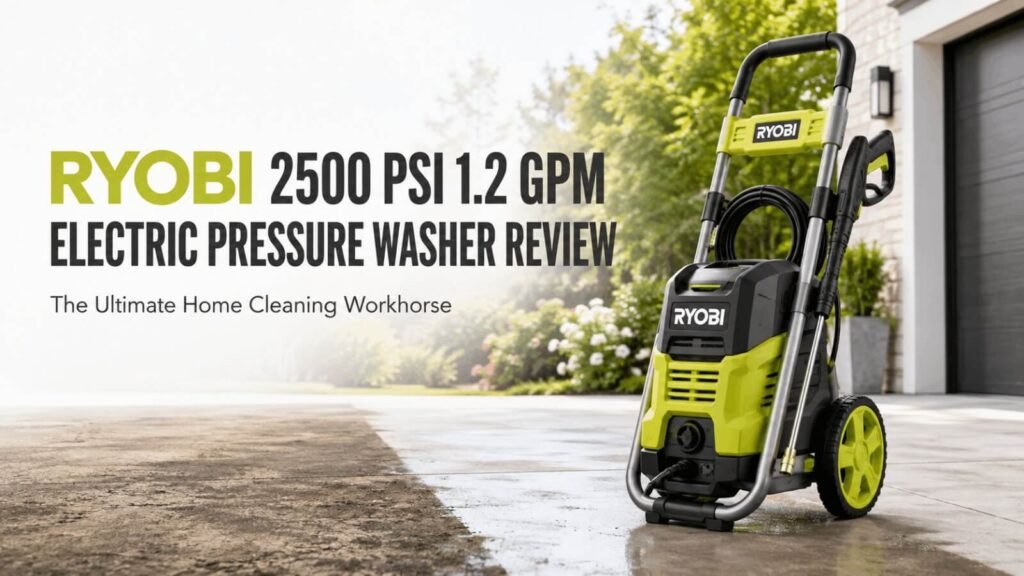
RYOBI 2500 PSI 1.2 GPM electric pressure washer review cover image on outdoor driveway
Buying Guides, Safety Tips

RYOBI 2500 PSI 1.2 GPM Electric Pressure Washer Review

The RYOBI 2500 PSI 1.2 GPM electric pressure washer (model RY142500) is a sensible pick for a typical house and yard: decks, fences, siding, patio furniture, the odd car. It plugs into a normal 120-volt outlet, weighs about 43 pounds, and costs $329 at Ryobi’s own store. What it is not is a fast machine for big concrete jobs. Its flow rate of 1.2 gallons per minute is on the low side, and that matters more than the 2,500 PSI number on the box. A quick note on how this review was put together. We have not spent our own hours on this unit, so you will not find “I tested it for a month” claims here. The page is built from Ryobi’s published specifications, retailer listings and what owners say in public reviews. Where those disagree, I say so. RYOBI 2500 PSI 1.2 GPM specs at a glance Most of these figures come from Ryobi’s product page and a spec sheet on Toolstash. Where sources disagree, the next sections say so. Spec RY142500 Pressure / flow 2,500 PSI / 1.2 GPM Motor Brushless, 120 V, 60 Hz, 13 A Pump Aluminum axial cam Power cord 35 ft, with GFCI protection High-pressure hose 25 ft, non-marring Wheels 12-inch flat-free Weight 43.36 lb (per Toolstash’s spec sheet) Nozzles 15-degree, turbo, soap Soap system On-board tank Warranty 3-year limited Listed price $329 on ryobitools.com What comes in the box You get the washer, a trigger gun, a metal wand with a quick-connect coupler, the 25-foot hose and three nozzles. There’s a built-in tank for detergent, and the frame has places to hang the wand, hose, cord and nozzles when you’re done. Two things are not included. A foam cannon is sold separately; Ryobi lists its Foam Blaster at $38.47. A surface cleaner is also extra, although Home Depot sells a bundle that pairs this washer with a 12-inch surface cleaner. If you plan to clean a driveway or a patio, price that bundle against buying the parts one by one. Is the RYOBI 2500 PSI 1.2 GPM powerful enough? PSI tells you how hard the water hits. GPM tells you how much water arrives to carry the dirt away. Pressure washer makers often multiply the two into “cleaning units”: 2,500 × 1.2 gives this washer 3,000. A Westinghouse ePX3500 listed beside it on Toolstash is rated 2,500 max PSI and 1.76 max GPM, which works out to about 4,400. The PSI figures match; the flow doesn’t. On a wide, flat surface the higher-flow machine should finish sooner. That’s the main trade-off here. For jobs where you work a small area at a time, such as a fence panel, a set of steps or a chair, 1.2 GPM is fine. For a 600-square-foot driveway, expect to spend longer than you would with a gas washer or a stronger electric one. One more thing about the numbers. Ryobi’s manual references the PWMA PW101 standard for its pressure rating, and these are maximum ratings at the pump. The spray that reaches the surface changes with the nozzle, the length of hose and how close you hold the wand. Another published review quotes a measured flow near 1.8 GPM, well above Ryobi’s rating, and a Canadian Home Depot listing shows 1.1 GPM for the same model number. Neither figure is the official one, and the manufacturer says 1.2. If flow matters for your job, check the label on the machine you actually receive. What it cleans well at home Ryobi positions the washer for fencing, decking, siding, sidewalks and patio furniture, and that matches what the spec supports. Wood decks and fences are where the turbo and 15-degree tips earn their keep, as long as you don’t hold them close to soft wood. Vinyl siding does well with the soap nozzle and a rinse from top to bottom. Patio furniture and grills are quick work. Cars are fine with the wide fan tip and the soap nozzle, kept at a distance. Never use the turbo tip on paint, glass seals or plastic trim. Concrete is the weak spot. It works, but slowly, and a surface cleaner attachment helps more than any nozzle swap. Heavy oil stains and ground-in rust will need a degreaser and patience. Weight, cart and reach At roughly 43 pounds, the washer is easy enough to tip onto its wheels and roll. The 12-inch flat-free wheels are a good detail, since you can’t get a flat from a nail in the driveway. Weight figures vary by source: Product Review Crew lists 57 pounds, which is probably the shipping weight with packaging, while Ryobi-linked specs and Toolstash show 43.36 pounds. Your working reach is the 25-foot high-pressure hose plus however far your garden hose stretches, and the 35-foot cord lets you place the washer near an outlet. The cord has a GFCI plug, so you can use it outdoors, but you should avoid adding long extension cords. If you must, use a heavy-gauge outdoor-rated cord and keep the connection off wet ground. Those numbers make the RYOBI 2500 PSI 1.2 GPM one of the easier electric washers to move around a yard. Check your water supply first An electric pressure washer can only spray as much water as your hose delivers. The RY142500 is rated at 1.2 GPM, so your outdoor tap needs to supply at least that much. There’s an easy way to find out. Turn the tap on fully with nothing attached but the garden hose, and time how long it takes to fill a 5-gallon bucket. Anything under about four minutes means you’re delivering 1.25 GPM or more. If it takes longer, the pump may starve for water, which causes pulsing spray and extra wear. Use a standard 5/8-inch garden hose, keep it straight, and don’t use a long, thin or kinked hose between the tap and the washer. Flush the hose for a few seconds before you connect it so that grit doesn’t end up in the inlet screen.

Scroll to Top