Buying Guides

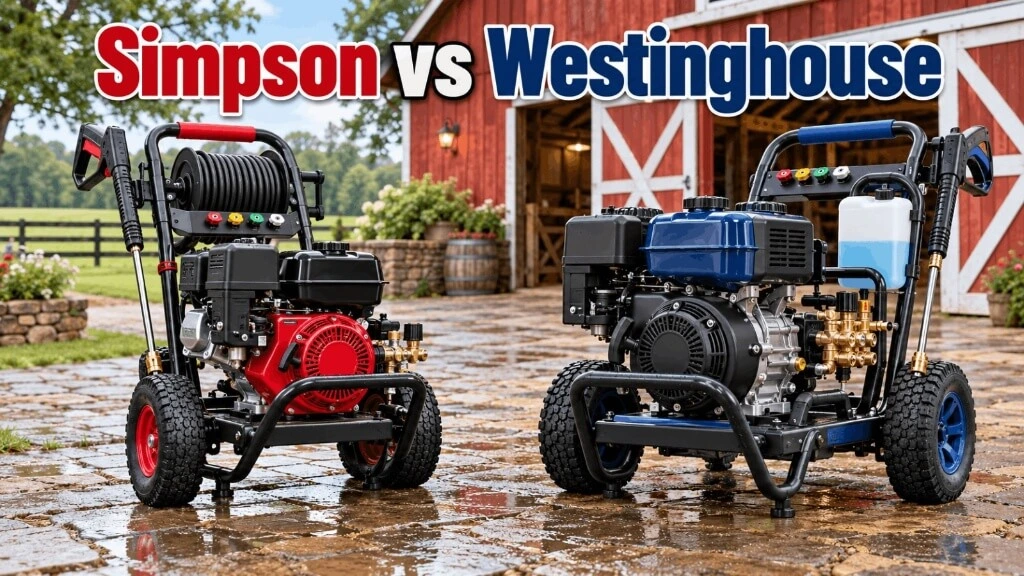
Simpson vs Westinghouse gas pressure washers comparison side by side
Buying Guides

Simpson vs Westinghouse: Which Pressure Washer Is Right for You?

A driveway covered in tire marks can turn a weekend clean-up into a long job. In a Simpson vs Westinghouse comparison, PSI is only one part of the choice. Flow, engine and pump design, hose reach, service support, and the surfaces you clean matter too. This guide compares two U.S. homeowner gas models: the Simpson MegaShot MS61039 and Westinghouse WPX3400. It is a specification-based comparison using manufacturer product pages and manuals, not a hands-on test. Product availability and warranty terms vary by country, so confirm the exact local model before buying. Quick answer: Simpson vs Westinghouse The Simpson MegaShot MS61039 suits homeowners who want a gas washer with a Honda GCV160 engine and 3,000 PSI at 2.4 GPM. The Westinghouse WPX3400 lists 3,400 PSI and 2.6 GPM, plus a 212cc engine, five nozzle tips, detergent tank, and three-year limited warranty. Its higher output can help on suitable hard surfaces, but needs careful technique on paint, wood, and siding. Either model may be more machine than needed for a quick car rinse; neither is a professional hot-water washer. Simpson vs Westinghouse: Model comparison table Factor Simpson MegaShot MS61039 Westinghouse WPX3400 Power type Gas, cold water Gas, cold water Published pressure and flow 3,000 PSI at 2.4 GPM 3,400 PSI and 2.6 GPM Engine Honda GCV160, 160cc Westinghouse four-cycle OHV, 212cc Pump OEM Technologies axial cam pump Axial cam pump Hose 25-foot high-pressure hose 25-foot high-pressure hose Included nozzles 0°, 15°, 40°, and soap 0°, 15°, 25°, 40°, and soap Warranty example 2-year engine, 1-year pump, 5-year frame, 90-day accessories 3-year limited warranty and lifetime technical service, per U.S. listing Best fit Homeowners wanting a compact gas model for routine outdoor work Buyers needing more listed output for larger or dirtier surfaces These are U.S. model specifications, not brand-wide scores. Bundles, model numbers, and warranty terms vary by region; check the manual for the exact unit. Use the table to shortlist, not to decide from numbers alone. Both examples are gas machines, but nozzle, pump condition, water supply, and operator pace can change the result. A homeowner who cleans a patio twice a year may value easy starting and local service more than a small increase in published output. Simpson gas pressure washer: MegaShot MS61039 The MS61039 is a cold-water gas washer with a Honda GCV160 engine, axial cam pump, 25-foot hose, steel frame, and never-flat wheels. It includes four nozzle tips for soap and different spray widths. Simpson positions the MegaShot for home jobs such as patios, outdoor furniture, siding, and paint preparation. Its lower output than the WPX3400 can mean more time on a large concrete area. The product listing calls its pump maintenance-free, but the manual’s water-supply and storage instructions still matter. The U.S. warranty separates coverage for engine, pump, frame, and accessories; check the local model’s terms. Westinghouse gas pressure washer: WPX3400 The WPX3400 pairs a 212cc four-cycle engine with an axial cam pump, 25-foot hose, detergent tank, and five quick-connect nozzles. Its 3,400 PSI and 2.6 GPM rating can help with concrete and masonry, but more output is not automatically better for every surface. Keep the spray away from paint, soft wood, and gaps in siding. Westinghouse lists a three-year limited warranty and lifetime technical service in the U.S.; check full terms and local parts access before purchase. Pressure washer PSI and GPM: Which ratings matter? PSI describes spray force; GPM describes water flow. Pressure loosens dirt and water carries it away. A higher GPM can help rinse a broad suitable surface, while extra pressure may help with stubborn soil. For the basics, read our guide to pressure washer ratings The Simpson listing gives 3,000 PSI at 2.4 GPM; the Westinghouse lists 3,400 PSI and 2.6 GPM. Maximum figures may not describe output in every setup. Nozzle, hose, water supply, and pump condition affect the spray. Cleaning units (PSI × GPM) offer only a rough comparison, not a promise of cleaning speed. For cars and wood, a wide fan and careful control matter more than maximum pressure. Using the listed figures, the simple products would be 7,200 for the Simpson and 8,840 for the Westinghouse. That does not mean the Westinghouse cleans 23% faster. Actual pace depends on soil, nozzle, surface-cleaner use, and how evenly the operator works. Treat the calculation as one clue, not a performance test. Best pressure washer for driveway cleaning, siding, and cars Driveways: Westinghouse’s higher listed flow may help on broad concrete. A matching surface cleaner can even out passes; use detergent for oil or rust rather than moving closer with a narrow jet. Decks and fences: Start with a wide spray and test patch. Soft wood can groove under a concentrated stream. Keep moving and follow the wood or stain maker’s guidance. Cars and furniture: Either washer can rinse a vehicle from a safe distance with a wide nozzle and vehicle-safe soap. Rinse grit first; keep the spray away from sensors, seals, and damaged paint. Siding: Work from stable ground and avoid spraying upward under siding, into vents, or behind trim. Remove loose dirt without cutting into sound wood or coatings. Small jobs: A gas washer may be cumbersome for a bicycle or garden chair. A smaller electric model may be easier if portability and quiet operation matter most. For a broad concrete surface, a surface cleaner can reduce stripes by holding its spray jets at a steady height and spacing. Match the attachment to the washer’s pressure, flow, and connector. Moving too quickly can still leave dirt behind; slow overlapping passes and a final rinse help. A nozzle remains useful for corners and edges the round attachment cannot reach. Engine, pump, hose, and nozzle differences Both examples use axial cam pumps and 25-foot high-pressure hoses. “Maintenance-free” pump wording does not mean you can ignore water supply, storage, or freezing precautions. Check hose and fitting ratings before buying an extension; never replace a high-pressure hose with an ordinary garden hose. The nozzle sets differ: Simpson includes 0°, 15°, 40°, and
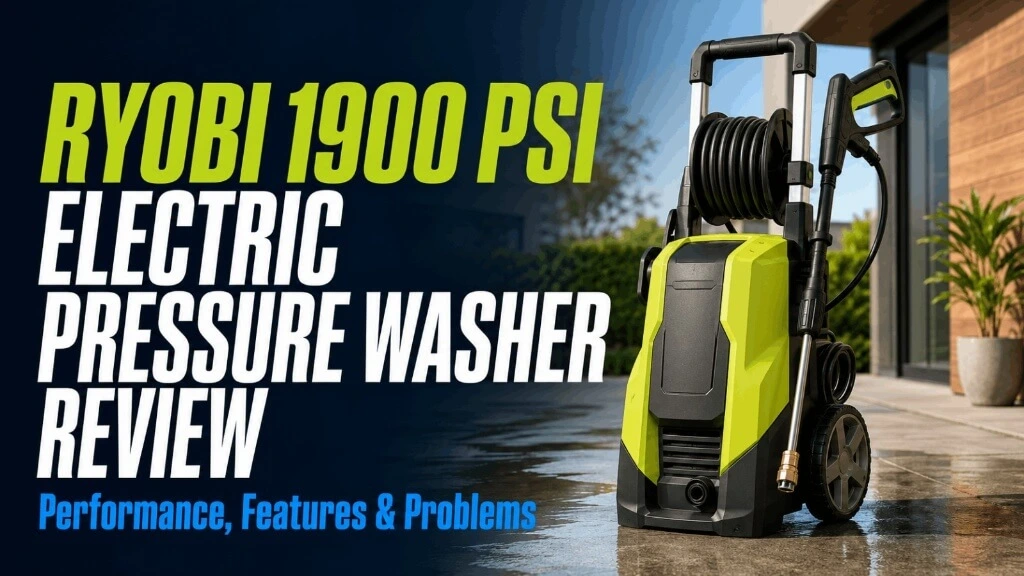
Ryobi 1900 PSI electric pressure washer review banner showing performance features and problems overview.
Buying Guides

Ryobi 1900 PSI Electric Pressure Washer Review: Performance, Features, and Problems

The Ryobi 1900 PSI electric pressure washer offers an easy alternative to a gas machine for routine jobs around the home. There is no fuel, oil change, choke, or pull cord. Connect the water and power correctly, purge the air, and it starts with a switch. Its 1.2 GPM water flow also sets a clear limit. It can clean furniture, vehicles, boats, fences, garden tools, and small patios, but it will take longer on large driveways or deeply stained concrete. This review covers model RY1419MT and the RY1419MTVNM designation shown in its operator manual. It explains the specifications, realistic cleaning ability, setup, common problems, and who should—or should not—buy it. How this review was prepared: This is a specification- and manual-based evaluation, not a claim of long-term hands-on testing. Product details were checked against the official Ryobi RY1419MT page and the RY1419MTVNM operator’s manual. Performance conclusions are based on the verified 1,900 PSI and 1.2 GPM ratings and the machine’s included equipment. Ryobi 1900 PSI Pressure Washer: Quick Verdict The Ryobi 1900 PSI pressure washer is best viewed as a light-duty home cleaner. Its main advantages are push-button starting, a wheeled frame, telescoping handle, onboard storage, built-in soap tank, 25-foot hose, and three useful nozzles. Its main drawback is rinsing speed. A 1.2 GPM machine can remove normal dirt, but it moves less water than a larger electric or gas washer. The turbo nozzle improves cleaning on small areas of sound concrete, yet it does not turn this model into a fast driveway machine. Practical Assessment Summary Review Area Practical Assessment Best for Furniture, vehicles, boats, RVs, tools, fences and small patios Suitable with care Siding, decks and small areas of sound concrete Less suitable for Large driveways, deep oil stains and frequent commercial work Main advantage Simple electric operation and compact storage Main limitation Modest 1.2 GPM flow Ryobi Pressure Washer 1900 PSI Specifications The retail model is RY1419MT, while the manual uses RY1419MTVNM. Check the data plate before ordering parts because the model, manufacturing, and serial numbers are more reliable than a shortened online title. Specification Verified Detail Maximum pressure 1,900 PSI Maximum water flow 1.2 GPM Motor 13-amp corded electric Electrical supply 120V AC, 60 Hz High-pressure hose 25 feet Nozzle connection 1/4-inch quick connect Included nozzles 15-degree, turbo and soap Detergent system Integrated tank with downstream injection Machine soap setting 20:1; also follow detergent instructions Mobility Wheels and telescoping handle Storage Onboard hose, cord, wand and nozzle storage Household warranty Three years stated in the manual Commercial-use warranty 90 days stated in the manual Multiplying 1,900 PSI by 1.2 GPM gives 2,280 cleaning units. This is useful for rough comparison, but it does not predict every result. Water supply, voltage, nozzle choice, surface condition, hose restrictions, and working distance also matter. What Comes With the Ryobi 1900 PSI Electric Pressure Washer? The standard listed package contains the washer, trigger handle, spray wand, 25-foot non-marring hose, soap tank, 15-degree nozzle, turbo nozzle, soap nozzle, and manual. Retailer bundles may add accessories, so check the exact package before buying. A foam cannon, wider vehicle nozzle, longer hose, or surface cleaner may require a separate purchase. Confirm the connector and pressure-flow requirements before ordering an accessory. Ryobi 1900 PSI Electric Pressure Washer Performance Cars, Boats, Campers, and RVs This Ryobi can wash vehicles when used with careful nozzle control. Apply suitable cleaner at low pressure, keep the wand moving, and begin from a generous distance. The supplied 15-degree nozzle is concentrated, so a compatible wider nozzle may provide a gentler rinse. Do not spray closely at damaged paint, badges, soft trim, tires, window seals, vents, electrical connectors, or decals. A foam cannon can improve soap coverage, but it must work with a 1/4-inch quick-connect wand and the machine’s 1.2 GPM flow. Patio Furniture and Garden Equipment Furniture, planters, wheelbarrows, bicycles, and garden tools are a good match for this machine. Begin at a safe distance and move closer only when the material tolerates the pressure. Avoid spraying directly into bearings, switches, engine air intakes, seals, or fragile joints. High-pressure water can enter areas that would remain dry during normal garden-hose rinsing. Siding, Fences, and Decks The 1,900 PSI rating can damage soft wood, lift loose paint, or drive water behind siding. Start 1–2 feet away, use the least aggressive effective nozzle, and test a hidden area. Spray siding across or downward rather than upward into laps, vents, and openings. Detergent and dwell time are often safer than moving the nozzle very close. Follow the surface or coating manufacturer’s cleaning instructions. Patios, Walkways, and Driveways The turbo nozzle can help with small patches of sound concrete, brick, or masonry. Test first because its rotating concentrated stream may mark weak mortar, old concrete, coatings, or decorative finishes. The machine is practical for small areas. A long driveway exposes the 1.2 GPM limitation because rinsing takes time. A small compatible surface cleaner may improve consistency, while an oversized attachment may spin poorly or leave stripes. Ryobi 1900 PSI Features That Matter Three Quick-Connect Nozzles The 15-degree tip produces a focused fan for controlled cleaning. The turbo nozzle creates a rotating concentrated spray for suitable hard surfaces. The low-pressure soap nozzle activates detergent draw. The built-in system normally will not apply soap through the high-pressure nozzles. Integrated Detergent Tank The tank removes the need for a loose suction hose. Use only detergent designed for pressure washers and prepare it according to the product label. The manual states that the machine setting is 20:1. Do not add bleach, acids, alkaline chemicals, solvents, flammable liquids, household detergents, or industrial solutions. Flush the soap system with clean water after use. Wheels, Telescoping Handle, and Storage The vertical wheeled frame is easier to move than a carry-only washer. The retractable handle reduces storage height, while dedicated spaces keep the cord, hose, wand, and nozzles together. Coil the high-pressure hose loosely; sharp bends and tight wrapping can damage its outer covering. How to Set Up the Ryobi

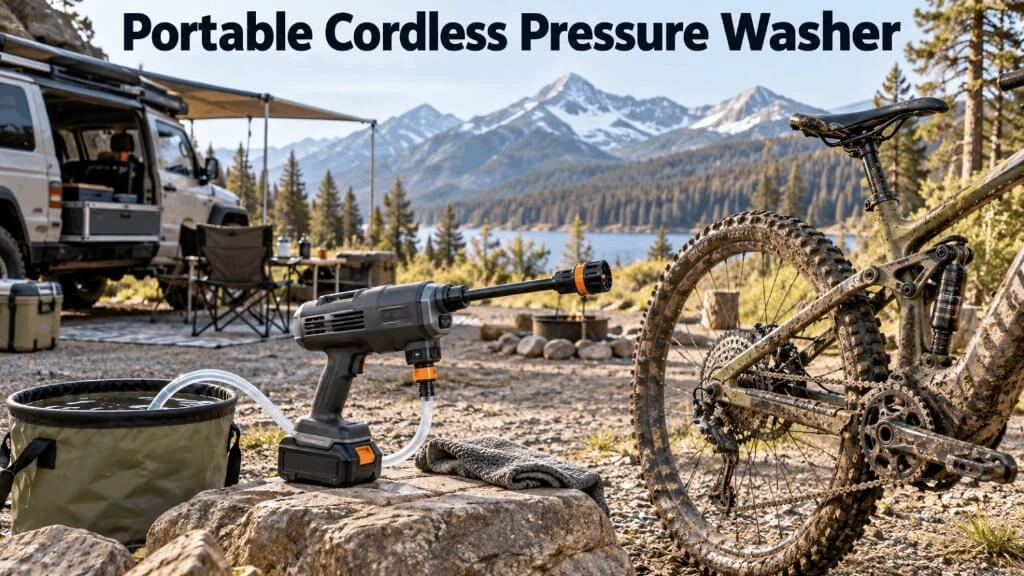
Portable cordless pressure washer drawing water from a bucket to clean a muddy mountain bike at a campsite.
Buying Guides

Portable Cordless Pressure Washer for Camping, Bikes and Outdoor Gear

A portable cordless pressure washer can make a muddy campsite, dusty mountain bike, or dirty RV easier to rinse when a faucet and wall outlet are not nearby. The value is not simply that the tool runs on a battery. A genuinely portable setup must also be easy to carry, able to draw water from a practical source, and gentle enough for the equipment you plan to clean. This U.S.-focused guide covers short, mobile cleaning jobs. It does not present a compact battery washer as a replacement for a full-size pressure washer on a large driveway, long fence, or heavily stained patio. Instead, it explains how to compare water access, PSI, GPM, battery runtime, carry weight, accessories, and safety. The recommendations below are based on category research, manufacturer documentation, and official safety information. No hands-on testing or universal product ranking is claimed. Always confirm the exact requirements in the manual for the model you buy. What Makes a Portable Cordless Pressure Washer Different? Most cordless pressure washers use a rechargeable battery to power a compact motor and pump. Water enters through an intake hose and exits through a spray gun and nozzle. Because the tool is not tied to an electrical outlet, it can be useful beside a trail, campsite, vehicle, boat, or storage area. Portability has four parts: The machine: Compare the bare tool, battery, charger, spray gun, and hose together. A light tool can feel much heavier after the battery and water are added. The water plan: Some models connect to a spigot. Others draw from a bucket, collapsible tank, or onboard reservoir. A model that cannot self-prime may need a specific hose arrangement. The carrying system: A strong handle, hose storage, case, and protected nozzle holder can make the difference between an easy trip and a frustrating one. The job size: Portable washers are strongest at spot cleaning and rinsing. They are usually less suitable for long passes over large concrete surfaces. Think of the tool as a mobile rinse-and-cleaning kit. The best model is not necessarily the one with the highest advertised PSI; it is the one that fits your water source, carrying distance, battery plan, and cleaning surface. Who Should Consider One? A portable cordless pressure washer is worth considering when a full-size machine is inconvenient or when a garden hose and outdoor outlet are not close to the work area. Campers and overlanders After a wet trail, you may want to rinse boots, camp chairs, storage bins, floor mats, or a vehicle’s lower panels. A bucket-fed model can be useful at a permitted campsite without a spigot. Check campground rules before using water, soap, or a battery-powered washer. Cyclists and outdoor athletes Mud can dry on a mountain bike and carry grit into moving parts. A controlled rinse can remove loose dirt before you wipe, inspect, and lubricate the bike. The same approach can work for strollers, wagons, coolers, and sports equipment. RV and boat owners Portable equipment can handle spot rinsing around a campsite, marina, or storage lot. It may suit steps, mats, wheel wells, and salt or dust. A compact battery washer may not have enough water or runtime to clean a large RV from roof to wheels in one session. Apartment dwellers and small-property owners If you do not have an outdoor outlet or hose bib, a bucket-fed tool may handle permitted balcony furniture, small patios, pet items, and car wheels. Check building rules and avoid directing runoff toward neighbors, public walkways, or electrical equipment. Portable Jobs: Match the Tool to the Task Cleaning job Portable setup that makes sense What to watch Muddy bike or stroller Bucket or tank, filter, wide spray pattern, short hose Keep spray away from bearings, seals, sensors, and electrical parts Camp chairs, bins, and mats Small intake container and approved detergent method Follow campground rules for soap and runoff Car wheels and lower panels Clean water source, gentle fan spray, enough hose reach Rinse loose grit first; do not force dirt across paint RV steps or boat deck Larger water reserve and spare battery if needed Plan runoff and keep spray away from people nearby Patio spot cleaning Spigot connection if available A full-size washer may be more efficient for a broad area   This table is a planning guide, not a promise that every model can perform every task. Read the manual for allowed water temperature, intake height, detergent use, filter requirements, and duty cycle. PSI and GPM: Read the Numbers in Context Pressure is measured in PSI, or pounds per square inch. Flow is measured in GPM, or gallons per minute. PSI describes pressure at the nozzle; GPM describes how much water moves across the surface. Cleaning results also depend on the nozzle, spray distance, detergent, surface, and time spent on each area. For portable work, a high headline PSI can be misleading. A compact unit with limited flow may rinse a bike well but take much longer on a broad, dirty patio. A narrow nozzle held too close can damage paint, decals, soft plastics, or seals even when the washer is marketed as compact. Before choosing, estimate the actual job. A bicycle frame, camping table, or muddy boot usually needs less force than embedded grime on unsealed concrete. Start with the widest suitable spray pattern, hold the gun farther away, and move closer only if the surface remains unharmed. For a plain explanation of pressure and water flow, read this beginner PSI and GPM guide. A practical rule for portable cleaning Prioritize control and enough flow for the job. For bikes and camping equipment, a manageable spray pattern and clean water may matter more than maximum PSI. For a larger RV step area or patio spot, compare flow, battery endurance, hose reach, and water capacity together. Water Source: The Most Important Portability Check Water logistics often decide whether a portable cordless pressure washer feels convenient or frustrating. The tool may be easy to carry, but water is heavy and cannot be

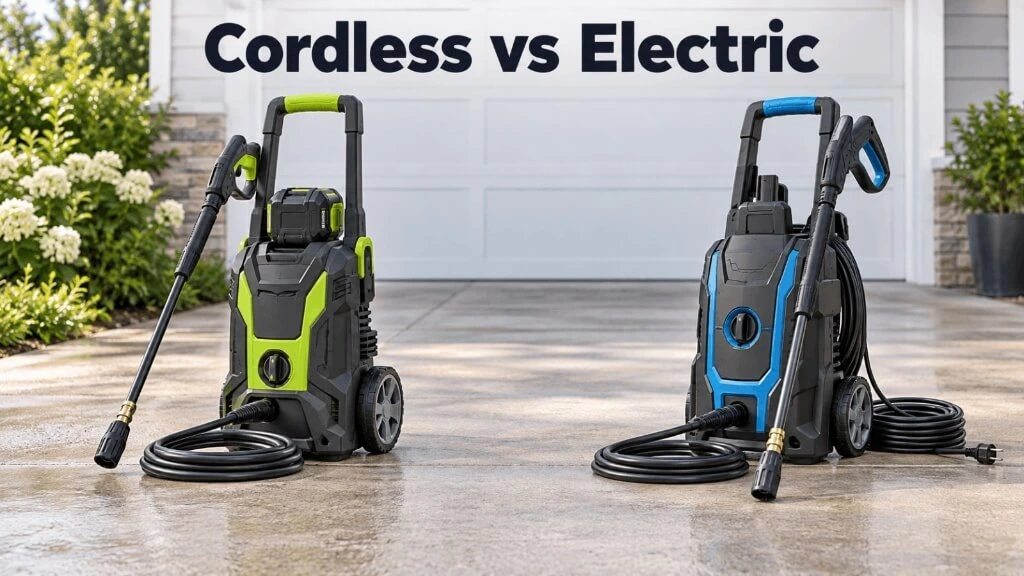
cordless vs electric pressure washer side by side comparison on a concrete driveway
Buying Guides

Cordless vs Electric Pressure Washer: Which Should You Buy?

The phrase “electric pressure washer” includes both cordless and corded machines. In this guide, cordless vs electric pressure washer means a battery-powered pressure washer versus a corded electric pressure washer that plugs into an outdoor outlet. Both types can clean cars, patios, outdoor furniture, bins, steps, bicycles, decks, and some concrete surfaces. The better choice depends on where you clean, how long the job takes, whether a water tap is available, and how much you value continuous power. Cordless models are convenient when you need to move away from an outlet. Corded electric models are usually more practical for longer jobs near a safe electrical connection and a garden hose. Neither category wins every comparison, and the exact model matters more than the label on the box. This article explains the differences using published category information, manufacturer instructions, and official safety guidance. It does not claim laboratory testing, field testing, or a universal performance ranking. Cordless vs Electric Pressure Washer at a Glance Decision Area Cordless Pressure Washer Corded Electric Pressure Washer Power source Rechargeable battery Outdoor electrical outlet Main advantage Mobility and quick setup Continuous operation Good fit Cars, bicycles, bins, furniture, and remote spot cleaning Patios, decks, siding, steps, and longer home jobs Main limitation Battery runtime and model-dependent water flow Needs safe power access and cable management Water options Some models draw from a bucket or tank; confirm in the manual Usually uses a garden hose; alternatives vary by model Ownership concern Charging, battery replacement, and platform compatibility Cord, GFCI protection, hose care, and storage This table is a category guide, not a promise about every product. A strong cordless machine may outperform a small corded unit, while a compact corded model may be designed only for light cleaning. What Is the Difference Between Cordless and Corded Electric? A cordless pressure washer uses a rechargeable battery to run its motor and pump. You can carry it to a vehicle, garden, boat, bicycle, or other location without routing a power cable from an outlet. Some models include a suction hose and allow water to be drawn from a bucket or tank. That feature is not universal, so the product manual must confirm it. A corded electric pressure washer uses mains electricity through a power cord. It normally connects to a garden hose and can continue operating while the outlet, water source, and machine remain suitable. Its cable must be protected from damage, and electrical connections must be kept away from standing water. The practical difference is simple: cordless removes the outlet from the setup, while corded electric removes battery runtime from the main limitation. Both still need a suitable water supply, safe handling, and correct maintenance. PSI and GPM: Which Type Cleans Better? PSI means pounds per square inch and describes water pressure. GPM means gallons per minute and describes water flow. Pressure helps loosen dirt; flow helps carry that loosened dirt away. Looking at PSI alone can give an incomplete view of cleaning performance. Cordless models often focus on portability and may provide lower sustained flow than a larger corded machine. That can be suitable for rinsing a car, bicycle, bin, or outdoor chair. It may take longer on a large driveway or heavily soiled patio because the cleaning path and rinsing speed are affected by flow. Corded electric models can draw power continuously, but that does not make every corded unit powerful. Pump design, motor size, nozzle choice, water supply, and the manufacturer’s rated specifications still control the result. When comparing products, record both the stated pressure and flow. Also check whether the figures are working, rated, or maximum values. Use this pressure washer PSI guide for different cleaning jobs to match output to the surface rather than choosing the biggest number. A Practical Rule For small, mobile jobs, usable handling and adequate flow may matter more than maximum PSI. For larger surfaces, look closely at GPM, hose reach, surface-cleaner compatibility, and the time the machine can operate without interruption. Battery Runtime vs Continuous Electricity Runtime is the main limit in a cordless pressure washer comparison. Actual battery life depends on battery capacity, spray pressure, water flow, temperature, battery age, and how often the trigger is held. Short bursts and pauses can cover more area than continuous spraying. Before buying, check whether the package includes the battery and charger. Some products are sold as bare tools for people who already own a compatible battery platform. A second battery may be more useful for a longer job than a small increase in advertised pressure. Corded electric models avoid charging pauses. They can be useful for repeated patio, driveway, or vehicle cleaning when a safe outlet and water tap are nearby. They are not automatically easier, however. A distant outlet may require careful planning, and unsuitable extension-cord use can create electrical hazards. How to Estimate Your Real Runtime Need Write down the largest job you normally complete. A quick car rinse may need only short bursts. A full vehicle wash, long patio, or driveway requires more continuous operation. If the job is likely to exceed one battery’s practical runtime, include the cost of a second approved battery or choose a corded model. Mobility and Setup Time Cordless equipment is strongest when access is difficult. You can move around a parked vehicle, garden, side path, or remote area without dragging a cable. A bucket-compatible machine may also work where a tap is unavailable, provided the pump supports that water source and the water is clean. Corded electric machines require an outlet and usually a hose connection. You must position the washer, route the cord safely, and keep plugs and connectors away from wet areas. Once connected, a corded model may need fewer pauses than a battery machine. Compare the complete setup weight, not just the bare tool. A cordless package may include a battery, suction hose, filter, spray gun, and water container. A corded machine may be heavier to roll but easier to use for a long session

best cordless pressure washer for car cleaning
Buying Guides

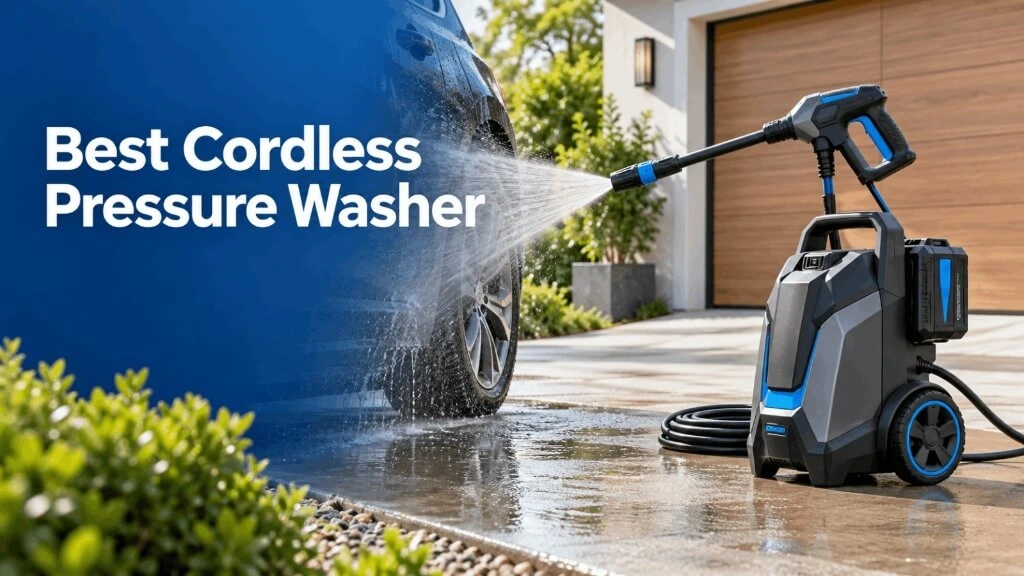
Best Cordless Pressure Washer: How to Choose the Right Model

Finding the best cordless pressure washer is not just a matter of choosing the highest PSI number. The right model must match your cleaning job, water source, battery plan, spray control, runtime, and expectations. A compact battery pressure washer may be excellent for rinsing a car, bicycle, patio furniture, bins, or muddy tools. It may be frustrating on a large driveway or a long commercial cleaning session. This buyer guide explains what to compare before you order, including cordless pressure washer PSI, GPM, battery runtime, self-priming water intake, nozzles, safety, and total cost. Quick Answer: What Is the Best Cordless Pressure Washer? For most homeowners, the best cordless pressure washer is a model with: honest working-pressure and rated-flow information; adjustable spray control or useful nozzle choices; a battery and charger that are included or affordable on your existing platform; a hose, filter, and water inlet that suit your cleaning location; enough runtime for the largest job you actually plan to do; available replacement batteries, fittings, and pump-related support; and clear safety instructions and a useful warranty. Choose cordless when portability and quick setup solve a real problem. Choose a corded electric or gas machine when the main job requires longer continuous operation, higher flow, or large-area cleaning. This is a practical buyer guide, not a permanent ranking of specific models. Product packages, prices, batteries, and specifications change. Check the current manufacturer page and instruction manual before purchase. What Is a Cordless Pressure Washer? A cordless pressure washer uses a rechargeable battery to power its motor or pump. Some models connect to a normal garden hose. Others can draw clean water from a bucket, tank, or open container through a supplied suction hose. A few support both options. The main benefit is freedom from a wall outlet during use. You can rinse a bicycle at the end of a driveway, clean outdoor furniture on a balcony, wash muddy boots near a trail, or tidy a vehicle in a parking area without dragging a power cable across wet ground. The trade-off is limited stored energy and, on many compact models, lower water flow than a full-size machine. A cordless washer is best understood as a portable light- or medium-duty cleaning tool. Its advantage is access, speed, and control—not maximum force in every situation. Best Cordless Pressure Washer by Cleaning Job Match the tool to the job before comparing brands or battery voltage. Cleaning job Features to prioritize Main limitation to expect Car, bicycle, or motorcycle rinsing Wide spray, adjustable pressure, clean water filter, soap option, easy handling May be slow on thick mud or large vehicles Patio furniture, bins, and garden tools Gentle spray control, compact body, washable inlet filter, simple storage Battery may run down during a large batch of items Steps and small walkways Better rated flow, longer hose, spare battery, stable grip Embedded dirt may require repeated passes Remote or off-grid cleaning Self-priming inlet, suction hose, filter, tank compatibility, spare battery Depends on clean water and container size Small business spot cleaning Durable fittings, service support, battery-platform availability, predictable runtime Not a substitute for a high-flow commercial washer Large driveway or patio Higher sustained flow, longer runtime, efficient surface-cleaning attachment A cordless machine may take too long or require several batteries For a cordless pressure washer for a car, spray control and safe technique usually matter more than the highest advertised pressure. For a best portable pressure washer for home use, water access and battery availability may matter more than a small difference in PSI. PSI, GPM, and Cleaning Power PSI means pounds per square inch and describes water pressure. GPM means gallons per minute and describes water volume. Pressure helps loosen dirt; water flow helps rinse that dirt away. A machine with a high PSI figure but very low flow may feel forceful while taking a long time to clear a surface. A model with better flow may rinse more efficiently even if its peak PSI looks less impressive. Cleaning performance also changes with the nozzle, spray angle, hose, water supply, and trigger setting. Do not compare peak PSI alone Many product pages show a maximum or “MAX PSI” figure. That number may be measured with a particular nozzle, setting, or test condition. Manufacturer specifications can also list GPM under a different attachment. Read the footnotes and look for working or rated pressure and rated flow where available. An official cordless pressure-cleaner listing, for example, separates maximum PSI from GPM and identifies the nozzle used for those figures. That is why two products should not be compared from headline numbers alone. Review the manufacturer’s cordless pressure-cleaner specifications as an example of the details to check. Match power to the surface Vehicles and bicycles: Start with a wide spray and safe distance. Avoid forcing water into seals, sensors, bearings, and electrical connectors. Plastic furniture and bins: Use controlled pressure and test a hidden area before cleaning the full surface. Wood and painted surfaces: A narrow, close spray can remove paint, fibers, or protective coating. Concrete and pavers: Stubborn dirt needs more sustained flow, so a compact battery unit may be slower than a full-size washer. For a simple surface-by-surface explanation, see this pressure washer PSI guide for different cleaning jobs. Start gently and increase cleaning power only when the surface can tolerate it. Battery Voltage, Capacity, and Runtime Battery voltage is not a complete measure of cleaning performance. Pump design, battery capacity, flow rate, nozzle choice, trigger use, temperature, and battery age all affect the result. Two models with similar voltage can provide very different cleaning experiences. Runtime is also difficult to compare unless the test conditions are clear. Short bursts may cover several small jobs, while continuous spraying uses power much faster. Before buying, check: whether the battery and charger are included; the battery capacity and compatible platform; the stated runtime and how it was measured; charging time and the cost of a spare battery; whether replacement batteries remain available; and the complete working weight with the

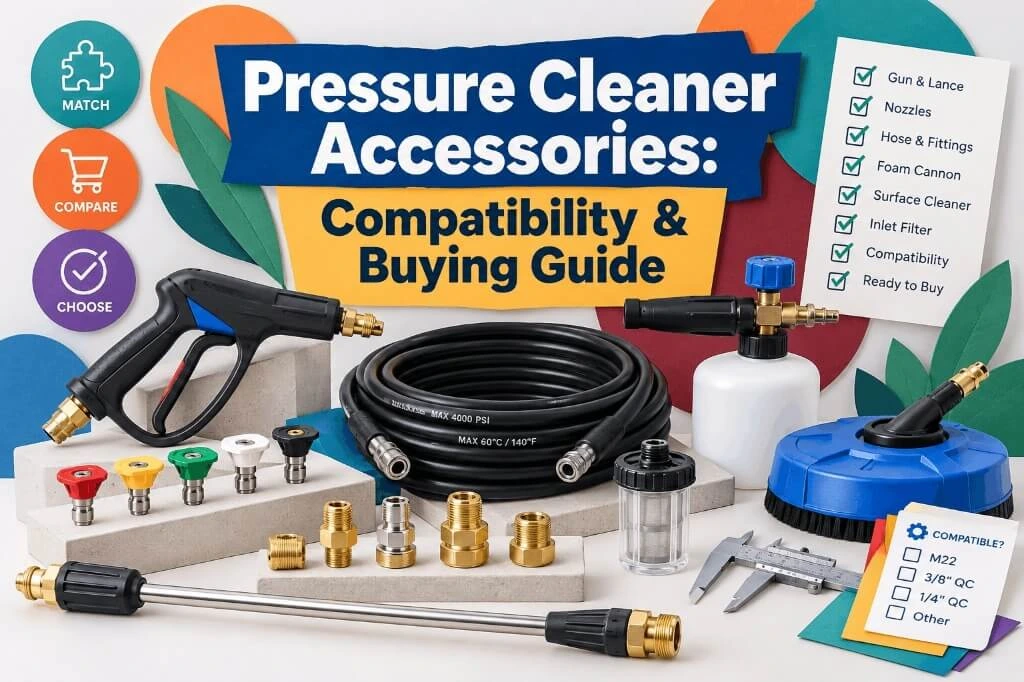
Overview of essential pressure cleaner accessories including spray guns, hoses, nozzles, and surface cleaners.
Buying Guides

Pressure Cleaner Accessories: A Practical Buying Guide

The right pressure cleaner accessories can make car washing, patio rinsing, and driveway cleaning faster and easier. The wrong ones can cause leaks, poor performance, awkward handling, wasted money, or surface damage. This guide explains which attachments are useful, how to confirm compatibility, and what to buy first. It is for homeowners, DIY users, and small cleaning businesses. Recommendations are based on equipment requirements and practical use cases—not claimed hands-on testing. Quick answer: Choose an accessory for a specific job, then match its connector, working-pressure rating, water-flow requirement, temperature limit, and nozzle size to your exact pressure washer. A high PSI number or “universal” label does not prove compatibility. Which Pressure Cleaner Accessories Do You Actually Need? Accessories change how water reaches the surface, how detergent is applied, or how comfortably you work. They do not increase the pump’s rated capacity. Start with the problem you want to solve. A stiff hose needs a handling upgrade. A large concrete area may benefit from a suitable surface cleaner. A car wash setup needs controlled rinsing and compatible detergent more than an aggressive nozzle. Main job Useful starting accessories Main limitation to check Car washing Wide fan tip, manageable hose, optional foam cannon Paint condition, nozzle suitability, cannon flow requirement Concrete driveway Matched surface cleaner and rinsing tip Minimum flow, pressure range, concrete condition Patio furniture Gentle spray and suitable detergent Material or finish may require hand washing Wood or composite deck Approved solution and controlled rinse Surface maker may restrict pressure washing House siding Detergent application and controlled-reach wand Water entry, height, and recoil Frequent paid work Serviceable gun, durable hose, spare seals Working ratings, parts availability, handling   A small set that you use regularly is better value than a large kit containing several unsuitable attachments. Pressure Washer Attachments: Check Compatibility First PSI, GPM, and working ratings When shopping for pressure cleaner accessories, checking compatibility is your most important step. PSI means pounds per square inch and describes pressure. GPM means gallons per minute and describes water flow. Attachments need the right combination. A surface cleaner can tolerate the pressure yet require more flow than the pump delivers; a foam cannon can fit but work poorly outside its operating range. Every high-pressure component must have a suitable working-pressure rating for the machine. A burst-pressure figure is not a working rating. A 5,000 PSI fitting does not turn a 2,000 PSI washer into a more powerful machine. Check temperature limits too. Cold-water accessories are not automatically suitable for hot-water equipment. “Cleaning units,” calculated as PSI multiplied by GPM, provide only a rough comparison. They do not confirm fit or cleaning quality, especially when separate maximum PSI and GPM figures do not occur together. Electric, gas, and cordless compatibility Power type alone does not determine whether an attachment works. Connections, operating output, and manufacturer approval matter more. Electric and gas models may use proprietary fittings, while small cordless cleaners may lack the flow for conventional surface cleaners. If you are choosing the machine as well, our guide to electric and gas pressure washers explains the broader buying decision. Read the connector description carefully “Universal” should prompt a closer check, not replace one. Record the machine model, gun inlet, hose ends, and wand outlet before ordering. An M22 threaded connection may use a 14 mm or 15 mm sealing insert. Those versions are not interchangeable simply because the outer threads engage. Likewise, a 1/4-inch nozzle connector and a 3/8-inch hose connector serve different positions in a setup. For proprietary twist-lock fittings, use an adapter specifically listed for that connection. Avoid building a long stack of adapters that makes the gun bulky and strains its inlet. Pressure Washer Nozzle Tips: Control the Spray A nozzle sets the spray pattern and contains an opening sized for water flow. Both features matter when replacing the original tip. Fan angle and nozzle opening are different A wider fan spreads the stream; a narrower fan concentrates it. A wide fan is still not automatically safe on peeling paint, soft wood, damaged seals, or delicate trim. The opening, often called the orifice, must match the intended pressure and flow. An undersized opening can cause excessive restriction or unstable operation; an oversized one can reduce working pressure. Use the machine’s specified tip size or an approved nozzle-sizing chart. Color coding commonly identifies spray angle, but check the markings and manual. Color alone does not establish flow size or surface suitability. A practical first spray Choose the gentlest approved setting, begin at the manual’s recommended distance, and test a hidden area. Inspect it before moving closer. Wet wood and concrete can temporarily hide marks. Where a turbo nozzle makes sense A turbo nozzle rotates a concentrated stream to cover more area. It can help on suitable durable masonry, but its movement does not make the jet gentle. Avoid treating it as a general-purpose car, siding, or deck attachment. It can damage finishes, dislodge weak mortar, and mark surfaces. Even on concrete, check condition and surface guidance first. Pressure Washer Hose and Fittings: Improve Handling Upgrading your hose is one of the most effective pressure cleaner accessories to improve overall handling and reach. A hose that catches around every wheel can make a simple wash frustrating. Length, flexibility, and routing may matter more to daily use than another spray attachment. Choose useful length, not maximum length Measure the route around your cleaning area. Include corners and the distance needed to keep the washer in a safe position. A longer hose reduces repositioning but adds weight, storage needs, and friction loss. Follow approved hose length and diameter specifications instead of joining several narrow extensions. Professionals should also compare abrasion resistance, flexibility, temperature rating, and replacement availability. Separate garden-hose fittings from high-pressure fittings Garden-hose couplers belong on the water-supply side. They must not be used as substitutes between the pump outlet and spray gun. Some mixed adapter kits include both types. Read the rating and intended position of each piece; do not assume

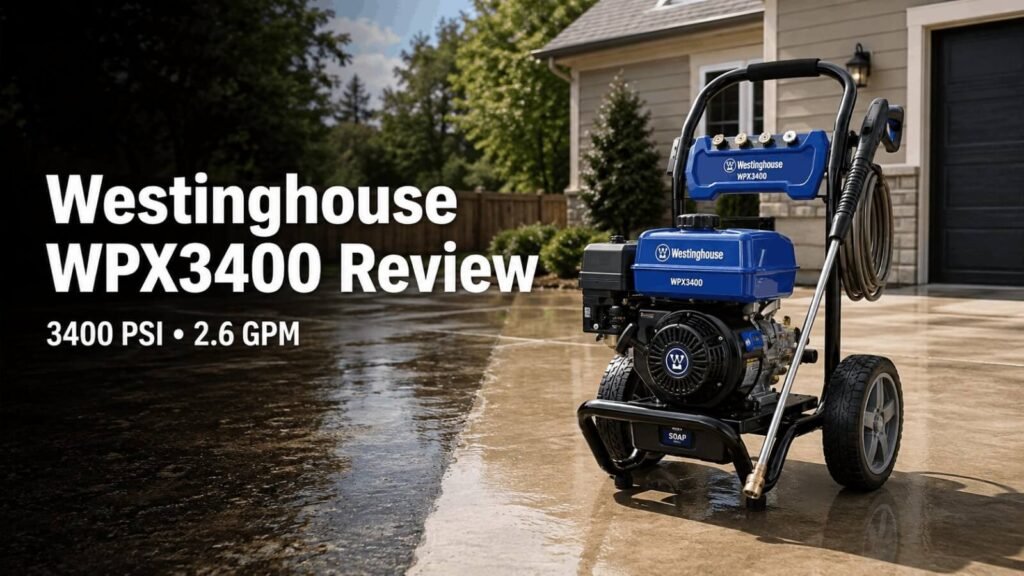
Westinghouse WPX3400 gas pressure washer product review featuring 3400 PSI and 2.6 GPM performance specs.
Buying Guides, Safety Tips

Westinghouse WPX3400 Gas Pressure Washer Review: The Ultimate Heavy-Duty Cleaning Powerhouse

If you are struggling with stubborn oil stains on driveways, weathered wooden decks, moss-covered patios, or peeling exterior paint, entry-level electric pressure washers simply lack the necessary force. The Westinghouse WPX3400 Gas Pressure Washer steps in as a commercial-grade, heavy-duty cleaning solution engineered for homeowners, contractors, and DIY enthusiasts who demand unyielding cleaning power. Delivering an impressive 3,400 PSI (Pounds per Square Inch) at 2.6 GPM (Gallons per Minute), the WPX3400 produces a total cleaning power score of 8,840 Cleaning Units (CU). Driven by a robust 212cc 4-stroke OHV engine, an axial cam brass-head pump, and a heavy-duty steel cart with 12-inch never-flat wheels, this machine blends durability, mobility, and sheer cleaning efficiency. In this comprehensive, data-backed review, we examine every aspect of the Westinghouse WPX3400—from unboxing and assembly to real-world cleaning tests, maintenance practices, and head-to-head comparisons. Key Technical Specifications at a Glance Feature / Spec Westinghouse WPX3400 Specification Model Name Westinghouse WPX3400 Gas Pressure Washer Maximum Pressure 3,400 PSI Maximum Flow Rate 2.6 GPM Total Cleaning Power 8,840 Cleaning Units (PSI × GPM) Engine Type 212cc 4-Stroke Westinghouse OHV (Horizontal Shaft) Starting Mechanism Manual Recoil Pull Start with Choke & Fuel Valve Pump Type Maintenance-Free Axial Cam Pump Fuel Tank Capacity 1.0 Gallon (3.8 Liters) Unleaded Gasoline Onboard Soap / Detergent Tank 0.5 Gallon (1.9 Liters) Built-in Reservoir High-Pressure Hose 25-Foot Super-Flex Abrasion-Resistant Hose (M22 Fittings) Included Nozzles 5 Quick-Connect Tips (0°, 15°, 25°, 40°, & Soap Applicator) Wheel Diameter & Type 12-Inch High-Profile, Never-Flat Solid Rubber Wheels Frame Construction Heavy-Duty Tubular Steel with Corrosion-Resistant Coating Unit Weight 28.6 kg (Approx. 63 lbs) Product Dimensions 19″ L x 18.5″ W x 21.7″ H Warranty 3-Year Limited Manufacturer Warranty (Service, Labor & Parts) 1. Engine & Pump Architecture: The Heart of the WPX3400 At the core of the Westinghouse WPX3400 lies a commercial-grade 212cc 4-Stroke OHV (Overhead Valve) horizontal shaft engine. Unlike underpowered consumer models that rely on vertical-shaft engines prone to heat buildup, horizontal shaft configurations offer superior heat dissipation, smoother torque delivery, and significantly longer operational lifespans. +——————————————————————-+ |               Westinghouse WPX3400 Power Train                    | |                                                                   | |   [212cc 4-Stroke OHV Engine] ───> [Maintenance-Free Axial Pump]  | |               │                                    │              | |        (Recoil Start)                     (3,400 PSI @ 2.6 GPM)   | |               │                                    │              | |   [1.0 Gallon Fuel Tank]             [Thermal Relief Protection]  | +——————————————————————-+ Axial Cam Pump Performance Coupled directly to the 212cc engine is an axial cam pump. This pump design is factory-sealed and engineered to be 100% maintenance-free—meaning you do not need to constantly change pump oil or grease internal bearings under normal residential use. Key advantages of this engine and pump synergy include: Consistent Pressure Output: The axial cam mechanism delivers a steady 3,400 PSI without pulsing or sudden drops in water pressure. Thermal Relief Valve: Protects the pump from overheating if the trigger is released while the engine continues to idle. Optimized Fuel Economy: The 1-gallon fuel tank provides up to 1.5 to 2 hours of continuous run time depending on the nozzle tip and throttle level. 2. Real-World Cleaning Applications & Versatility With 8,840 Cleaning Units, the Westinghouse WPX3400 is not limited to light chores. It effortlessly handles the toughest residential and semi-commercial tasks: A. Concrete Driveways, Sidewalks, and Garage Floors Oil drips, tire marks, embedded moss, and years of baked-on dirt lift off instantly under 3,400 PSI. When paired with an optional 15-inch or 16.5-inch surface cleaner attachment, cleaning times on expansive driveways are cut by up to 60%. B. Wooden Decks, Fences, and Composite Railings Using the wider 25° or 40° nozzle tips, the WPX3400 strips away weathered grey oxidation, mildew, and failing stain without gouging soft cedar or pine wood grain when maintained at a safe 12-to-18-inch distance. C. Home Siding, Stucco, and Brick Facades Algae and mildew clinging to vinyl siding or porous brick mortar vanish quickly. The onboard half-gallon detergent tank allows you to pre-treat walls with specialized siding cleaner before switching to the rinse nozzles. D. Vehicle, Boat, and RV Detailing While 3,400 PSI is too intense for direct car paint, the 40° white tip combined with the onboard soap reservoir (or an aftermarket M22 foam cannon) provides a rich foam lather followed by a gentle, broad rinse that leaves clear coats spotless. 3. Included Nozzle Tips & How to Use Them The Westinghouse WPX3400 comes standard with 5 color-coded quick-connect spray nozzles that dock neatly into the integrated dashboard holder on the handle: [0° Red Tip]     ──> Extreme Pinpoint Jet (Concrete cracks, paint stripping, metal rust) [15° Yellow Tip] ──> Heavy-Duty Chiseling (Brickwork, masonry, unpainted concrete) [25° Green Tip]  ──> General Cleaning (Wood decks, stone patios, vinyl siding, fences) [40° White Tip]  ──> Wide Gentle Wash (Cars, RVs, outdoor glass, painted surfaces) [Black Soap Tip] ──> Low-Pressure Detergent Dispenser (Activates onboard soap siphon) 0° Red (Pinpoint Blast): Produces a razor-sharp, concentrated jet of water. Reserved exclusively for heavy rust removal, hard stain eradication in concrete joints, or peeling paint. (Never use on wood or vehicles!) 15° Yellow (Chisel Fan): Excellent for aggressive surface stripping, concrete preparation, and removing stubborn biological growth. 25° Green (All-Around Workhorse): The most versatile nozzle for washing decks, walkways, aluminum siding, and garden furniture. 40° White (Wide Fan):

RYOBI 2500 PSI 1.2 GPM electric pressure washer review cover image on outdoor driveway
Buying Guides, Safety Tips

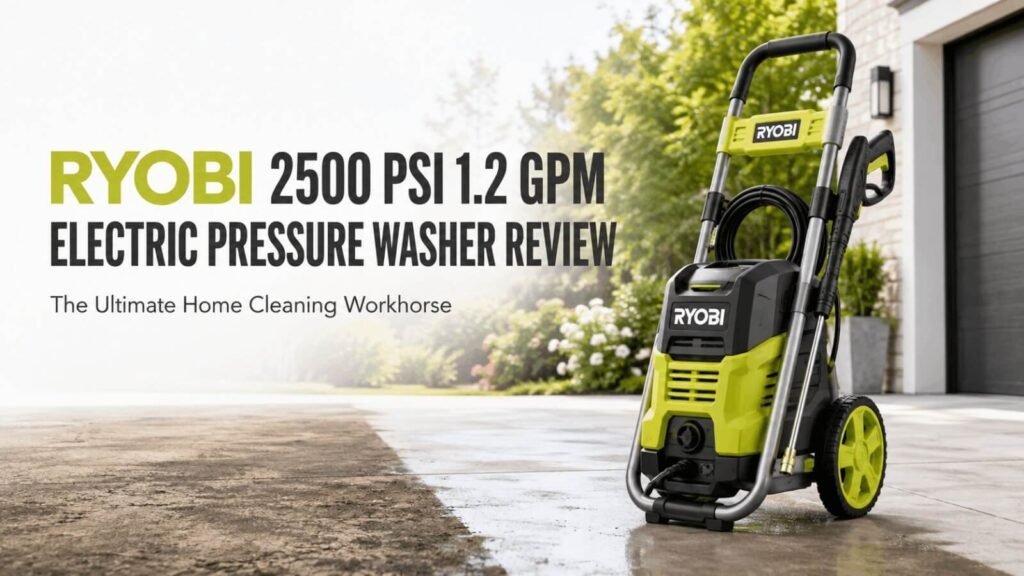
RYOBI 2500 PSI 1.2 GPM Electric Pressure Washer Review: The Ultimate Home Cleaning Workhorse

Maintaining a clean, spotless home exterior often feels like an endless battle against stubborn dirt, grime, mildew, oil leaks, and seasonal weathering. While residential garden hoses lack the force needed to dislodge deeply set contaminants, commercial gas pressure washers can be overly loud, cumbersome, fume-heavy, and aggressive enough to damage delicate finishes. Enter the RYOBI 2500 PSI 1.2 GPM Electric Pressure Washer. Engineered to bridge the gap between lightweight domestic sprayers and heavy industrial machines, this high-performance unit promises professional-grade electric cleaning power without the maintenance headaches of gas engines. In this comprehensive review, we will break down its technical specifications, core features, practical real-world applications, maintenance needs, and how it stacks up against top competitors. Technical Specifications Overview Feature / Specification Details Brand & Model RYOBI 2500 PSI Electric Pressure Washer Max Pressure Output 2500 PSI (Pounds per Square Inch) Water Flow Rate 1.2 GPM (Gallons per Minute) Cleaning Power Index 3,000 Cleaning Units (PSI × GPM) Onboard Soap Tank Volume 1 Gallon High-Pressure Hose 25 ft. Reach Hose Power Source Corded Electric Standards Met EPA Compliant Item Weight 40 lbs Included Accessories 15° Nozzle, Soap Nozzle, Turbo Nozzle Why Choose the RYOBI 2500 PSI Electric Pressure Washer? The electric pressure washer segment is crowded with entry-level machines delivering lower pressure. The RYOBI 2500 PSI 1.2 GPM model stands out by offering genuine medium-to-heavy residential cleaning capability powered purely by electricity. It eliminates common pain points associated with gas equipment: Instant Push-Button Start: No pull cords, chokes, or stubborn cold-weather engine starts. Zero Emissions & Quiet Operation: Ideal for enclosed patios, townhomes, and garages without exhaust fumes or excessive noise. Minimal Maintenance: No oil changes, spark plug replacements, fuel stabilizers, or carburetor rebuilds required. Key Features & Product Performance 1. 2500 PSI Output with 1.2 GPM Flow Rate Cleaning effectiveness relies on the combination of pressure (PSI) and water volume (GPM). Generating 3,000 Total Cleaning Units, this machine delivers ample impact force to dislodge compacted grime while remaining far more water-efficient than a standard outdoor spigot. 2. Integrated 1-Gallon Soap Tank The built-in 1-gallon detergent tank lets you quickly apply foam cleaners, vehicle soaps, and surface degreasers without hauling external buckets around the yard. 3. Quick-Connect Pro-Grade Nozzles The included quick-connect nozzle set covers a variety of cleaning tasks: Turbo Nozzle: Employs an oscillating pinpoint stream for maximum circular cleaning impact—ideal for deep concrete stains and weathered brick. 15° Fan Nozzle: Provides a balanced spray pattern ideal for general surface stripping and house siding cleanup. Soap Applicator Nozzle: Siphons detergent directly from the onboard 1-gallon tank at low pressure. Practical Applications: What Can You Clean? Automotive Care & Car Detailing Electric pressure washers offer smooth, consistent pressure delivery. Paired with the low-pressure soap nozzle or an optional 40° wide-angle nozzle (sold separately), it applies cleaning foam evenly across paintwork. Safety Tip: Maintain a distance of at least 2 to 3 feet from painted automotive panels and avoid targeting delicate trim pieces with narrow spray angles. Concrete Driveways, Sidewalks, & Slabs Porous concrete easily absorbs motor fluids, dirt, and algae. Utilizing the included Turbo Nozzle allows you to lift deep-seated grime and restore discolored walkways quickly. Wood Decks, Fences, & Composite Surfaces Softwoods can splinter easily under direct pressure. Always test an inconspicuous area first, starting at a conservative distance and moving closer only as needed to clean without damaging delicate wood grain. House Siding & Soffits With its combined cord-and-hose reach, this unit lets you easily maneuver around the property perimeter to strip pollen, bug nests, and mildew from vinyl siding and brick foundations. RYOBI 2500 PSI vs. Market Competitors Feature RYOBI 2500 PSI Greenworks Pro 2300–2500 Typical Gas 2500 PSI Power Source Electric Electric Gas Engine (4-Stroke) Max Pressure 2500 PSI 2300–2500 PSI 2500 PSI Flow Rate 1.2 GPM 1.2 GPM 2.3 GPM Maintenance Minimal Minimal Oil, Filters, Fuel Prep Total Weight 40 lbs ~45 lbs 65–75 lbs Best Used For Home & Auto Care Residential DIY Heavy Commercial Work Operating Instructions & Winterization Guide 1.Connect Water Source:Check for leak-free connections. Attach a standard 5/8-inch garden hose securely to the water inlet on the unit and turn on the water spigot fully. 2.Purge Trapped Air:Prevents pump cavitation. Before connecting to electrical power, squeeze the spray gun trigger for 30–45 seconds until a steady, continuous stream of water flows out of the wand. 3.Power On:Direct wall outlet recommended. Plug the power cord directly into a grounded outdoor receptacle and turn the power dial to the ON position. 4.Winterization & Storage:Protect internal seals from freezing. Flush the detergent system with fresh water for 60 seconds after using soap. Disconnect hoses, squeeze the trigger to drain remaining internal water, and apply an aerosol pump protector before cold-weather storage. Pros and Cons Pros: Zero Gas Maintenance: No fuel mixing, oil checks, or spark plug replacements. Lightweight Frame: At only 40 lbs, it is easy to transport around yards and up deck stairs. Versatile Soap System: Integrated 1-gallon onboard tank streamlines foam application. Included Turbo Tip: Accelerates deep cleaning on hard concrete surfaces. Cons: 1.2 GPM Flow Rate: Slower rinsing speed compared to high-volume commercial gas models. Electrical Outlet Bound: Requires proximity to a functional outdoor power source. Frequently Asked Questions (FAQs) Q1. Can I use an extension cord with the RYOBI 2500 PSI pressure washer? The official manual recommends plugging the power cord directly into a wall outlet. If an extension cord is strictly unavoidable, use only a heavy-duty 12-AWG outdoor-rated cord no longer than 25 feet. Extension cords measuring 50 feet or longer are not permitted due to severe risk of voltage drop and motor damage. Q2. Is 2500 PSI safe for washing cars? Yes, when used with the low-pressure soap nozzle or an optional compatible 40° wide fan nozzle at a safe distance (2–3 feet). Never use the 0° red tip or Turbo Nozzle on vehicle paint or glass. Q3. Can I feed hot water into this unit? No. The RYOBI 2500 PSI pressure washer is designed strictly for

Simpson 3500 PSI pressure washer review title banner with heavy-duty cleaning unit on driveway
Buying Guides

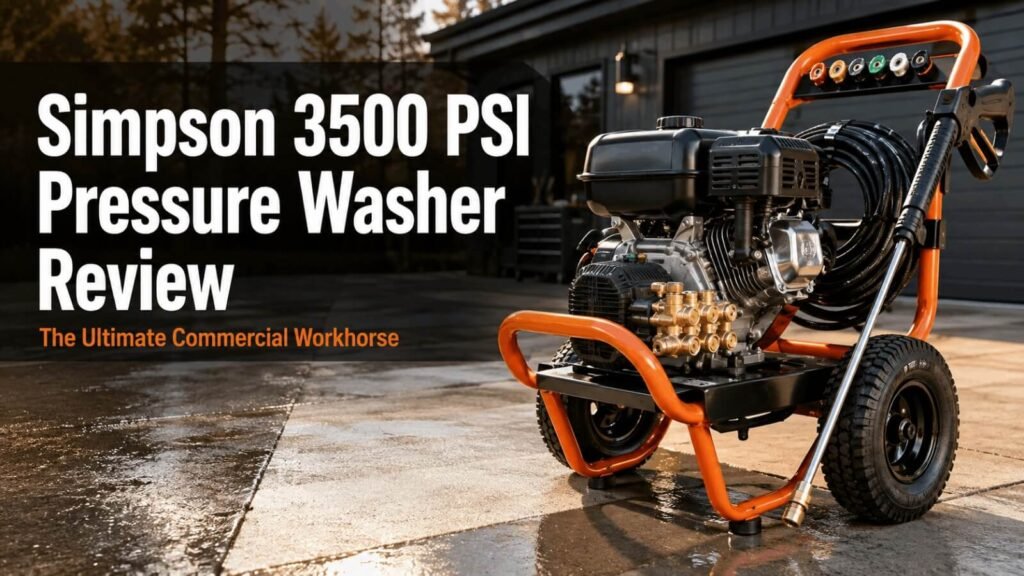
Simpson 3500 PSI Pressure Washer Review: The Ultimate Commercial Workhorse

If you are looking for a heavy-duty cleaning machine that effortlessly strips away years of grime, paint, oil stains, and commercial dirt, you have likely come across the Simpson 3500 PSI pressure washer. Known for its rugged construction and commercial-grade power, this gas-powered pressure washer is a top choice for contractors, professional detailers, and demanding homeowners alike. In this comprehensive Simpson PowerShot 3500 PSI review, we will dive deep into its core features, engine performance, build quality, real-world applications, pros and cons, and whether it is worth your investment. Quick Specs Overview: Simpson 3500 PSI Specification Feature Details Model Name Simpson PowerShot PS3228 / PS61002 Pressure Output 3500 PSI (Pounds per Square Inch) Water Flow Rate 2.5 GPM (Gallons per Minute) Engine Brand Honda GX200 Commercial Series Pump Type AAA Industrial Triplex Plunger Pump Hose 25 ft. Steel-Braided Monster Hose Frame Welded Steel Construction Tires 10-inch Premium Pneumatic Tires Weight 72.8 lbs What Makes the Simpson 3500 PSI Pressure Washer Stand Out? The market is flooded with gas-powered cleaning machines, but the Simpson 3500 PSI gas pressure washer consistently ranks at the top. The secret lies in its premium component pairing: a legendary commercial Honda engine combined with an industrial-grade triplex plunger pump. Unlike residential electric pressure washers that cap out around 1500–2000 PSI, this commercial machine delivers relentless hydraulic force that cuts cleaning time in half. Key Features & In-Depth Breakdown 1. Honda GX200 Engine: Unmatched Power & Reliability At the heart of the Simpson 3500 PSI pressure washer is the world-renowned Honda GX200 engine. Honda’s GX series is widely regarded as the gold standard for industrial equipment. 2. AAA Triplex Plunger Pump vs. Axial Cam Pumps Most residential washers use cheaper Axial Cam pumps, which have a limited lifespan. The Simpson 3500 PSI 2.5 GPM unit features a high-end AAA Industrial Triplex Plunger Pump. 3. Rugged Welded Steel Frame & Heavy-Duty Wheels Commercial jobs require equipment that can withstand rough transportation and harsh job sites. 4. Professional Accessories Included Out of the box, the Simpson PS3228 review wouldn’t be complete without mentioning its premium attachments: Performance in Action: What Can You Clean with 3500 PSI? With 3500 PSI at 2.5 GPM, this pressure washer generates 8,750 Cleaning Units (PSI × GPM). This places it firmly in the heavy-duty commercial category. Commercial & Heavy-Duty Applications: Pros and Cons of the Simpson 3500 PSI To give you an honest perspective, here is a quick summary of what we love and where there is room for improvement: Pros Cons How to Properly Maintain Your Simpson 3500 PSI Gas Pressure Washer Proper maintenance ensures your Simpson 3500 PSI Honda engine runs smoothly for a decade or more. Follow these simple guidelines: Simpson 3500 PSI vs. Other Models: How Does It Compare? Simpson 3500 PSI vs. Simpson MegaShot 3200 PSI While the MegaShot 3200 PSI uses an axial pump and a Honda GC engine (consumer series), the Simpson PowerShot 3500 PSI uses the Honda GX engine (commercial series) and a Triplex pump. The PowerShot is built for daily commercial use, whereas the MegaShot is for weekend DIY homeowners. Simpson 3500 PSI vs. Electric Pressure Washers Electric pressure washers top out around 2000 PSI and 1.2 GPM. The Simpson 3500 PSI offers more than four times the total cleaning power, making it significantly faster for large surface areas like concrete driveways. Frequently Asked Questions (FAQs) Q1. Is the Simpson 3500 PSI good for commercial use? Yes, absolutely. Featuring a Honda GX200 commercial engine and an AAA Triplex pump, the Simpson 3500 PSI is specifically designed for daily commercial demands, property maintenance, and heavy contractor work. Q2. What oil type does the Simpson 3500 PSI Honda GX200 use? The Honda GX200 engine uses standard SAE 10W-30 motor oil for general temperatures. Always check your engine manual for extreme cold or warm climate recommendations. Q3. Can I use the Simpson 3500 PSI to wash my car? Yes, but with extreme caution. Never use the 0° or 15° nozzles on vehicle paint. Use the 40° wide spray nozzle or a dedicated foam cannon from a distance of at least 2 to 3 feet to avoid damaging clear coat or paint. Q4. What is the difference between Simpson PS3228 and other 3500 PSI models? The PS3228 is part of Simpson’s signature PowerShot lineup featuring the Honda GX200 engine and AAA Triplex pump combination, representing their most popular mid-size commercial configuration. Final Verdict: Is the Simpson 3500 PSI Worth Buying? If you need serious cleaning power that won’t stall under pressure, the Simpson 3500 PSI pressure washer is undoubtedly one of the best investments you can make. Its commercial-grade Honda GX200 engine, combined with the AAA Triplex pump and heavy-duty steel frame, ensures that it delivers professional performance for years to come. Whether you are expanding a pressure washing business or maintaining a large residential property, this machine delivers unbeatable value, raw power, and long-term durability. Helpful Resources Use the exact owner’s manual supplied with your specific SIMPSON model for maintenance intervals, oil requirements, replacement parts, and warranty instructions.

Best commercial electric pressure washer heavy duty unit spraying water outdoors
Buying Guides

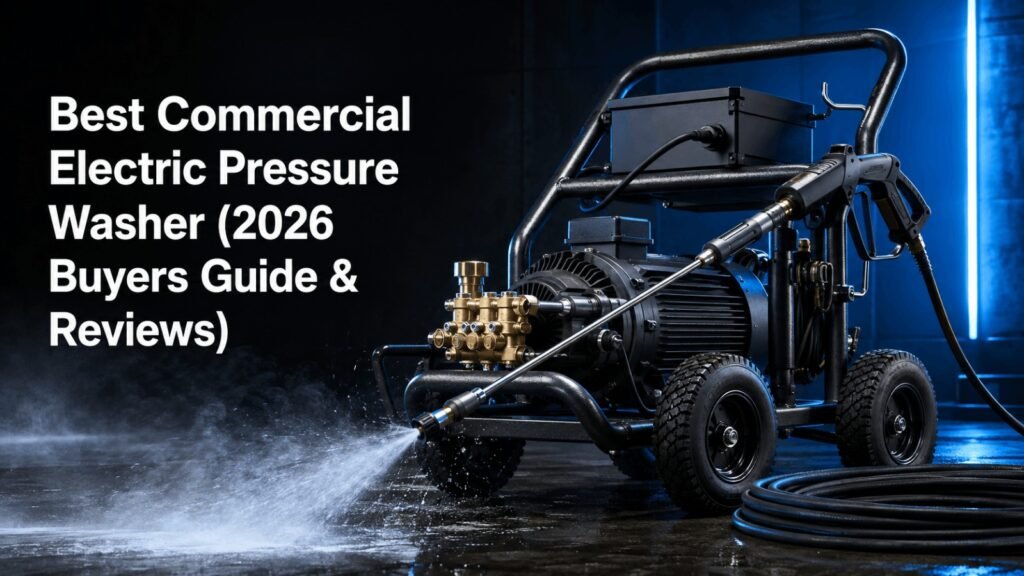
Best Commercial Electric Pressure Washer (2026 Buyers Guide & Reviews)

When cleaning tough grease, heavy oil, grime, and industrial dirt, commercial spaces require power, reliability, and efficiency. While gas-powered units have traditionally dominated heavy-duty cleaning, modern electric power washers designed for commercial use have completely revolutionized the market. Electric models operate without direct exhaust emissions, produce minimal noise, require significantly less maintenance, and can be safely used both indoors and outdoors. Whether you manage a food processing plant, a commercial auto detailing shop, a farm, or a property management firm, finding the best commercial electric pressure washer is vital to maintaining operational standards and keeping your facility spotless. In this comprehensive guide, we review top-rated commercial models, break down key performance metrics like PSI and GPM, and provide a complete buying guide to help you choose the ideal system for your business. Quick Comparison: Top Commercial Electric Pressure Washers Model Max Pressure (PSI) Water Flow (GPM) Voltage / Power Best For AR Annovi Reverberi AR630-TSS 1,900 PSI 2.1 GPM 120V / 20 Amp Daily Shop & Detailer Use Kärcher HD 3.0/20-4 M Cage 2,000 PSI 3.0 GPM 230V / 1-Phase Heavy Industrial & Job Sites Canpump Industrial Electric Washer 3,000 PSI 3.5 GPM 230V / Single or 3-Phase Heavy-Duty Fleet & Agriculture Epps Industrial Electric Hot Water 2,500 PSI 3.5 GPM 230V / Oil Heated Grease, Oil & Sanitation 1. Why Invest in a Commercial Grade Electric Pressure Washer? For years, commercial operators assumed that only gas pressure washers could deliver true heavy-duty cleaning power. However, advances in electric motor technology and high-pressure triplex pumps have closed that gap significantly. Zero Exhaust Fumes (Indoor Safety) Gas engines produce dangerous carbon monoxide, making them unsafe for indoor applications. A commercial grade electric pressure washer produces zero emissions, allowing you to clean inside warehouses, commercial kitchens, food processing facilities, and enclosed garages safely.  Choosing the best commercial pressure washer depends on your specific needs, whether you require high PSI for tough grease or high GPM for quick surface coverage.”  Low Maintenance & Operating Costs Gas engines require regular oil changes, spark plug replacements, fuel stabilizer, and carburetor maintenance. Electric power washers run on induction motors that require virtually zero engine maintenance—simply plug them in, connect your water supply, and start washing. Quiet Operation Commercial electric pressure washers operate at a fraction of the decibel level of gas engines. This makes them ideal for residential property management, hotel maintenance, hospital grounds, or night cleaning crews where noise ordinances apply. 2. In-Depth Reviews: The Best Commercial Electric Pressure Washer Models 1. AR Annovi Reverberi AR630-TSS – Best Heavy Duty Electric Pressure Washer for Detailing The AR Annovi Reverberi AR630-TSS is a high-performance heavy duty electric pressure washer designed specifically for auto detailers, facility managers, and small business operators who need reliable daily performance in a compact footprint. Key Specifications: PSI: 1,900 PSI GPM: 2.1 GPM Motor: 2.0 HP Induction Motor (120V, 20 Amp) Pump: Triplex Plunger Pump with Ceramic Pistons Features & Benefits The AR630-TSS features a professional-grade ceramic triplex pump that outperforms consumer axial pumps by thousands of operational hours. Its Total Stop System (TSS) shuts down the motor when the trigger is released, reducing internal pump wear and saving power. Pros: Forged brass pump head withstands heavy daily usage. Operates on standard 120V circuits (requires a 20A dedicated outlet). Highly portable compact frame. Cons: Requires a true 20-amp electrical circuit to prevent breaker tripping. 2. Kärcher HD 3.0/20-4 M Cage – Best Industrial Electric Pressure Washer When searching for the best industrial electric pressure washer built to withstand rough job site environments, the Kärcher HD 3.0/20-4 M Cage stands out. Protected by a heavy-duty steel tubular roll cage, this machine is engineered for construction, machinery maintenance, and agriculture. Key Specifications: PSI: 2,000 PSI GPM: 3.0 GPM Motor: 4.3 HP 4-Pole Slow-Speed Electric Motor (230V, 1-Phase) Pump: Direct-Drive Crankshaft Pump Features & Benefits Equipped with a slow-revving 4-pole motor (running at 1,740 RPM instead of the standard 3,450 RPM), the Kärcher HD cage washer runs significantly cooler, dramatically extending seal and pump life. The 3.0 GPM flow rate provides exceptional cleaning volume to wash away mud and heavy debris rapidly. Pros: Full steel roll-cage protection for demanding environments. Slow-speed motor ensures long component lifespan. High water flow (3.0 GPM) speeds up large surface cleaning. Cons: Requires a 230V single-phase electrical setup. 3. Canpump Industrial Unit – Best Electric Pressure Washer 3000 PSI Commercial Grade If your cleaning tasks demand extreme pressure alongside high water volume, choosing an electric pressure washer 3000 PSI commercial unit like the Canpump Industrial system is an ideal solution. Key Specifications: PSI: 3,000 PSI GPM: 3.5 GPM Motor: 7.5 HP Commercial Electric Motor (230V) Pump: Industrial Heavy-Duty Commercial Triplex Pump Features & Benefits Canpump builds industrial systems meant for heavy manufacturing, transport fleet washing, and concrete preparation. The combination of 3,000 PSI and 3.5 GPM yields exceptional cleaning force firmly in true industrial territory. Pros: Massive cleaning force capable of stripping paint and thick concrete buildup. Adjustable pressure unloader valve for fine-tuning output. Commercial-grade thermo-siphon protection prevents pump overheating. Cons: Heavy unit; best suited for wall mounting or dedicated wash bay carts. 4. Epps Industrial Unit – Best Hot Water Commercial Electric Pressure Washer Cold water can displace dirt, but it cannot dissolve heavy grease or oil. For commercial kitchens, food processing plants, and equipment maintenance shops, a hot water commercial electric pressure washer is essential. Key Specifications: PSI: 2,500 PSI GPM: 3.5 GPM Motor: Electric Motor Drive (230V) with Diesel/Oil-Fired Burner Temperature: Water heating up to 200°F (93°C) Features & Benefits While the pump is driven by an electric motor to ensure steady, reliable pressure, the heating coil utilizes an integrated fuel burner to heat incoming water to near-boiling temperatures instantly. This heat breaks down grease, oil, fat, and wax without needing excessive chemical detergents.  “To get the most out of your setup, make sure to upgrade to a durable Commercial Pressure Washer Gun that can handle high pressure without causing hand fatigue  Pros: Unmatched grease-cutting performance.

Scroll to Top