A driveway covered in tire marks can turn a weekend clean-up into a long job. In a Simpson vs Westinghouse comparison, PSI is only one part of the choice. Flow, engine and pump design, hose reach, service support, and the surfaces you clean matter too.
This guide compares two U.S. homeowner gas models: the Simpson MegaShot MS61039 and Westinghouse WPX3400. It is a specification-based comparison using manufacturer product pages and manuals, not a hands-on test. Product availability and warranty terms vary by country, so confirm the exact local model before buying.
Quick answer: Simpson vs Westinghouse
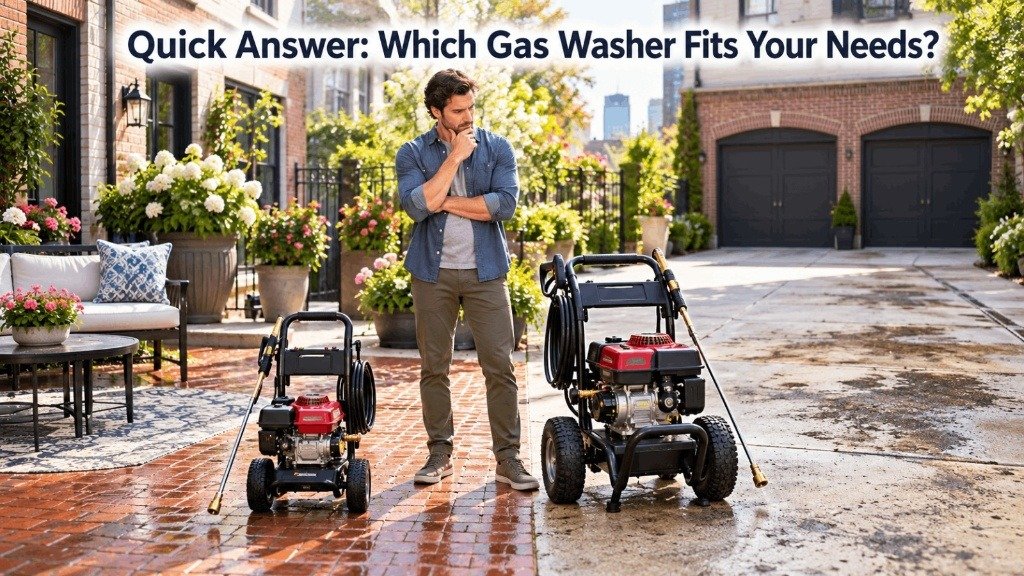
The Simpson MegaShot MS61039 suits homeowners who want a gas washer with a Honda GCV160 engine and 3,000 PSI at 2.4 GPM. The Westinghouse WPX3400 lists 3,400 PSI and 2.6 GPM, plus a 212cc engine, five nozzle tips, detergent tank, and three-year limited warranty. Its higher output can help on suitable hard surfaces, but needs careful technique on paint, wood, and siding. Either model may be more machine than needed for a quick car rinse; neither is a professional hot-water washer.
Simpson vs Westinghouse: Model comparison table
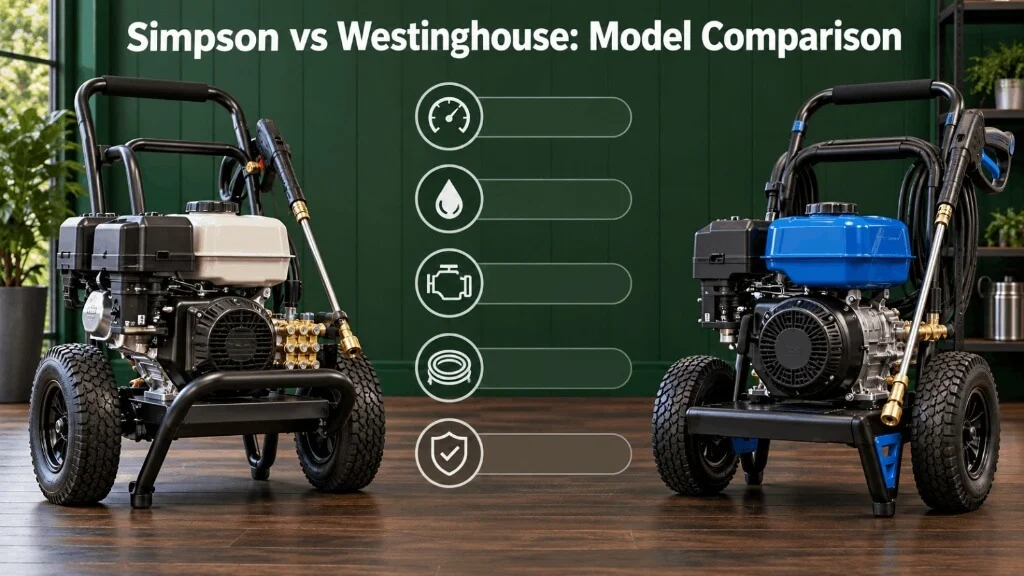
These are U.S. model specifications, not brand-wide scores. Bundles, model numbers, and warranty terms vary by region; check the manual for the exact unit.
Use the table to shortlist, not to decide from numbers alone. Both examples are gas machines, but nozzle, pump condition, water supply, and operator pace can change the result. A homeowner who cleans a patio twice a year may value easy starting and local service more than a small increase in published output.
Simpson gas pressure washer: MegaShot MS61039
The MS61039 is a cold-water gas washer with a Honda GCV160 engine, axial cam pump, 25-foot hose, steel frame, and never-flat wheels. It includes four nozzle tips for soap and different spray widths. Simpson positions the MegaShot for home jobs such as patios, outdoor furniture, siding, and paint preparation. Its lower output than the WPX3400 can mean more time on a large concrete area. The product listing calls its pump maintenance-free, but the manual’s water-supply and storage instructions still matter. The U.S. warranty separates coverage for engine, pump, frame, and accessories; check the local model’s terms.
Westinghouse gas pressure washer: WPX3400
The WPX3400 pairs a 212cc four-cycle engine with an axial cam pump, 25-foot hose, detergent tank, and five quick-connect nozzles. Its 3,400 PSI and 2.6 GPM rating can help with concrete and masonry, but more output is not automatically better for every surface. Keep the spray away from paint, soft wood, and gaps in siding. Westinghouse lists a three-year limited warranty and lifetime technical service in the U.S.; check full terms and local parts access before purchase.
Pressure washer PSI and GPM: Which ratings matter?
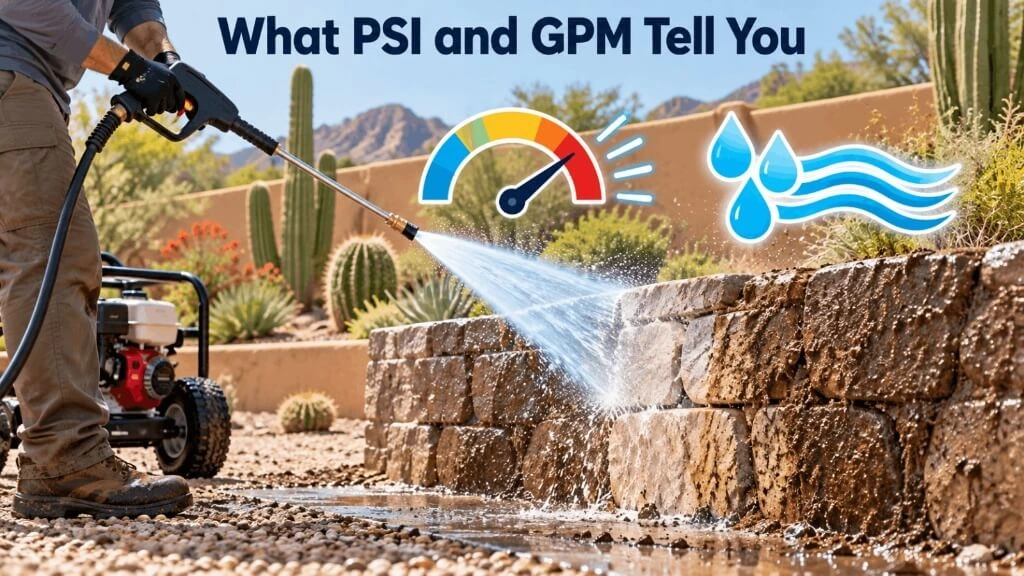
PSI describes spray force; GPM describes water flow. Pressure loosens dirt and water carries it away. A higher GPM can help rinse a broad suitable surface, while extra pressure may help with stubborn soil. For the basics, read our guide to pressure washer ratings
The Simpson listing gives 3,000 PSI at 2.4 GPM; the Westinghouse lists 3,400 PSI and 2.6 GPM. Maximum figures may not describe output in every setup. Nozzle, hose, water supply, and pump condition affect the spray. Cleaning units (PSI × GPM) offer only a rough comparison, not a promise of cleaning speed. For cars and wood, a wide fan and careful control matter more than maximum pressure.
Using the listed figures, the simple products would be 7,200 for the Simpson and 8,840 for the Westinghouse. That does not mean the Westinghouse cleans 23% faster. Actual pace depends on soil, nozzle, surface-cleaner use, and how evenly the operator works. Treat the calculation as one clue, not a performance test.
Best pressure washer for driveway cleaning, siding, and cars

Driveways: Westinghouse’s higher listed flow may help on broad concrete. A matching surface cleaner can even out passes; use detergent for oil or rust rather than moving closer with a narrow jet.
Decks and fences: Start with a wide spray and test patch. Soft wood can groove under a concentrated stream. Keep moving and follow the wood or stain maker’s guidance.
Cars and furniture: Either washer can rinse a vehicle from a safe distance with a wide nozzle and vehicle-safe soap. Rinse grit first; keep the spray away from sensors, seals, and damaged paint.
Siding: Work from stable ground and avoid spraying upward under siding, into vents, or behind trim. Remove loose dirt without cutting into sound wood or coatings.
Small jobs: A gas washer may be cumbersome for a bicycle or garden chair. A smaller electric model may be easier if portability and quiet operation matter most.
For a broad concrete surface, a surface cleaner can reduce stripes by holding its spray jets at a steady height and spacing. Match the attachment to the washer’s pressure, flow, and connector. Moving too quickly can still leave dirt behind; slow overlapping passes and a final rinse help. A nozzle remains useful for corners and edges the round attachment cannot reach.
Engine, pump, hose, and nozzle differences
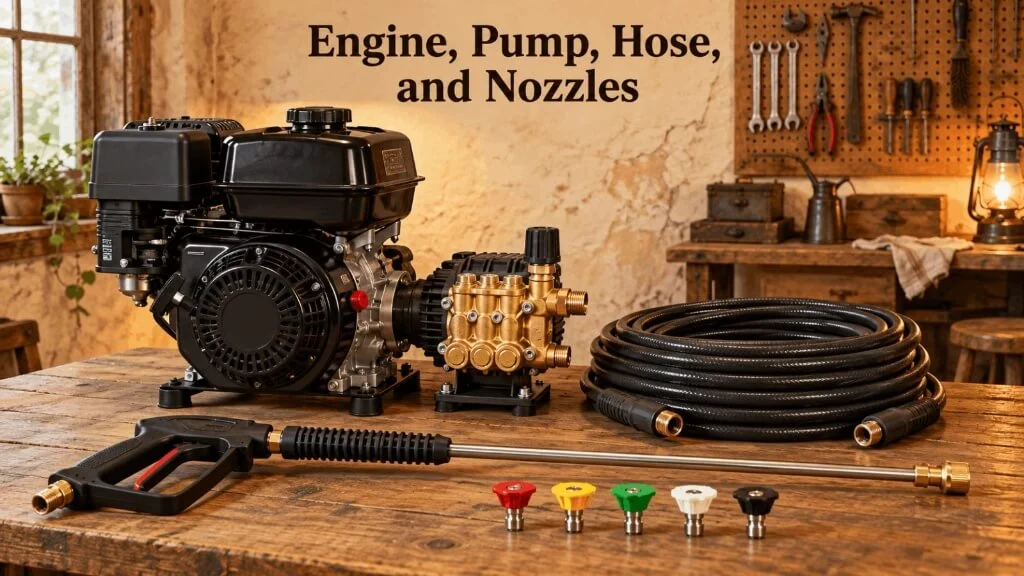
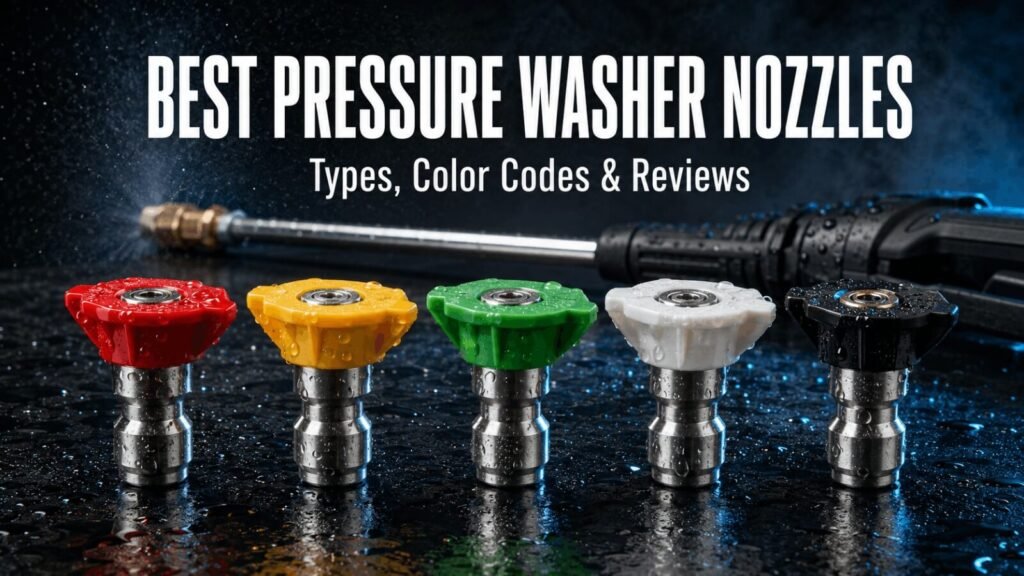
Both examples use axial cam pumps and 25-foot high-pressure hoses. “Maintenance-free” pump wording does not mean you can ignore water supply, storage, or freezing precautions. Check hose and fitting ratings before buying an extension; never replace a high-pressure hose with an ordinary garden hose. The nozzle sets differ: Simpson includes 0°, 15°, 40°, and soap tips, while Westinghouse adds a 25° tip. A 0° jet is highly concentrated and unsuitable for general cleaning. Start with a wide fan, test an inconspicuous area, and use only approved detergent at the manual’s dilution.
Gas pressure washer maintenance: What ownership involves
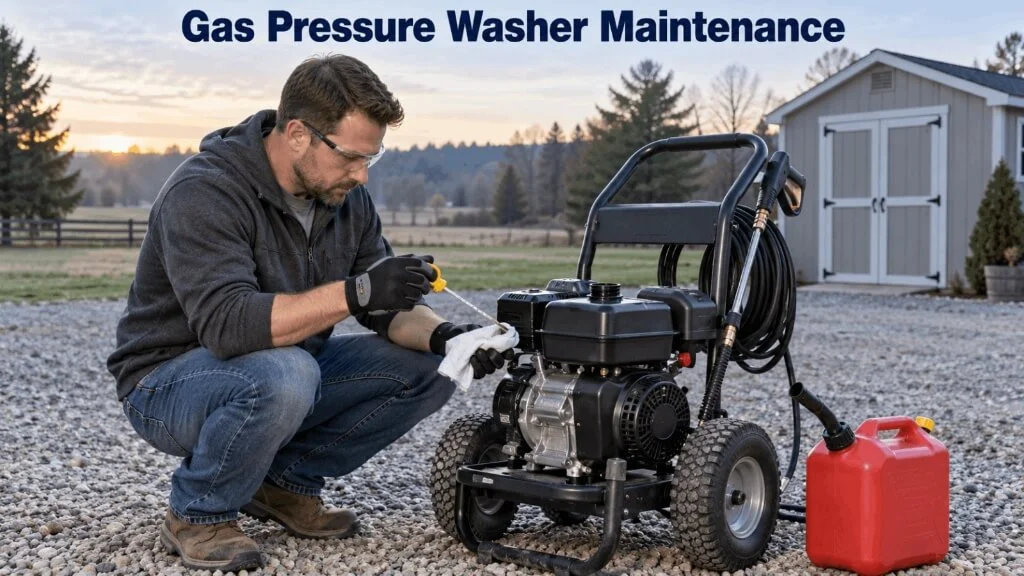
Before starting, check fuel and oil, inspect the hose, and clear the inlet screen. Connect water and purge trapped air before starting the engine; never run the pump dry. If pressure pulses, check the tap, kinks, filter, fittings, and nozzle before assuming the pump has failed.
After cleaning, follow the shutdown sequence, depressurize the hose, and let the engine cool. Use the specified oil and fuel-storage steps. Drain or protect the pump and hose before freezing weather. Nozzles, seals, hoses, and engine parts can wear, so check local dealer and replacement-part access before buying.
Power source and gas washer practicality
A gas washer avoids extension-cord limits but still needs water and outdoor space. Keep it away from doors, windows, and vents: carbon monoxide can build up in garages and sheds. Gas power can suit remote properties or long sessions; electric models may be quieter and simpler for a small yard.Our guide to washer power requirements comparesgas and electric setups.
Best for: Which brand should you choose?
Best for a Honda-powered homeowner setup: Simpson MS61039, if 3,000 PSI and 2.4 GPM meet your needs and local warranty support is available.
Best for more listed output: Westinghouse WPX3400 for larger hard surfaces, if you can manage a gas engine and stronger spray.
Best for siding: Either can suit; start with a wide nozzle and gentle technique.
Best for commercial work: Compare duty rating, serviceable pump, engine warranty, and parts; these residential examples are not automatically commercial machines.
Best for occasional car washing: A small electric washer may be easier. If using either gas model, keep a safe distance and choose a wide fan.
Buyer’s checklist
Before ordering, match the model to your work and confirm:
Model number, PSI, GPM, engine size, pump type, and cold-water or hot-water use.
Hose length, nozzle set, detergent method, and fitting compatibility.
Warranty terms for engine, pump, frame, accessories, and service in your region.
Fuel and oil requirements, long-term storage steps, and access to replacement parts.
Whether a surface cleaner fits the washer’s pressure, GPM, and connector.
Safe outdoor work space, water supply, noise limits, and storage location.
Prices and packages change. Compare the complete package and ask for the exact model number and manual before paying.
Safety Before You Wash
High-pressure water can inject debris under the skin even when a wound looks small. Never point the spray at people or pets or test it on your hand. Wear eye protection and closed-toe shoes; keep bystanders away and avoid ladders. Run gas engines outdoors at least 20 feet from doors, windows, and vents, following CDC guidance and the owner’s manual. Let the engine cool before refuelling. Follow the washer manual, surface guidance, and detergent label. Seek urgent medical care for any high-pressure injection injury.
FAQs
Is Simpson or Westinghouse better for a driveway?
For a large, dirty driveway, the Westinghouse WPX3400 lists more pressure and flow than the Simpson MS61039. A surface cleaner can improve coverage if its specifications match the washer. For small areas, either may work.
Is the Westinghouse WPX3400 more powerful than the Simpson MS61039?
Its listed figures are higher: 3,400 PSI and 2.6 GPM compared with Simpson’s 3,000 PSI and 2.4 GPM. That does not mean it is the better choice for every surface or user.
Can I use either washer on my car?
Yes, with a wide spray, safe distance, and vehicle-safe detergent. Rinse off grit first and avoid spraying directly at seals, tires, sensors, and damaged paint.
Are Simpson and Westinghouse pressure washer accessories interchangeable?
Not always. Check each tool’s quick-connect size and pressure rating. A fitting that looks similar may not lock securely or handle the machine’s pressure.
Do both models need engine maintenance?
Yes. Gas engines need the checks and storage described in their manuals, including fuel and oil care. Follow the pump instructions as well; pump care is separate from engine care.
Can I use a zero-degree nozzle on concrete?
A zero-degree nozzle concentrates pressure into a narrow point and can etch or mark concrete. Use a wider nozzle or properly matched surface cleaner unless the manual and surface guidance say otherwise.
Can I run a gas pressure washer in my garage with the door open?
No. A garage can trap carbon monoxide even with the door open. Operate a gas washer outdoors, well away from doors, windows, and vents.
Conclusion
The better fit depends on your workload. Simpson’s MS61039 offers a Honda-powered home setup with 3,000 PSI and 2.4 GPM; Westinghouse’s WPX3400 lists more output, a 212cc engine, and five nozzles. Choose the stronger model only if your surfaces need it. Check warranty and parts support, then begin with a wide spray at a safe distance.
Sources and verification
Model specifications and warranty details were checked against manufacturer product listings and manuals on September 30, 2026. Figures and coverage can change; confirm the current details for your exact SKU and country. This article does not report first-hand testing.