A portable cordless pressure washer can make a muddy campsite, dusty mountain bike, or dirty RV easier to rinse when a faucet and wall outlet are not nearby. The value is not simply that the tool runs on a battery. A genuinely portable setup must also be easy to carry, able to draw water from a practical source, and gentle enough for the equipment you plan to clean.
This U.S.-focused guide covers short, mobile cleaning jobs. It does not present a compact battery washer as a replacement for a full-size pressure washer on a large driveway, long fence, or heavily stained patio. Instead, it explains how to compare water access, PSI, GPM, battery runtime, carry weight, accessories, and safety.
The recommendations below are based on category research, manufacturer documentation, and official safety information. No hands-on testing or universal product ranking is claimed. Always confirm the exact requirements in the manual for the model you buy.
What Makes a Portable Cordless Pressure Washer Different?
Most cordless pressure washers use a rechargeable battery to power a compact motor and pump. Water enters through an intake hose and exits through a spray gun and nozzle. Because the tool is not tied to an electrical outlet, it can be useful beside a trail, campsite, vehicle, boat, or storage area.
Portability has four parts:
The machine: Compare the bare tool, battery, charger, spray gun, and hose together. A light tool can feel much heavier after the battery and water are added.
The water plan: Some models connect to a spigot. Others draw from a bucket, collapsible tank, or onboard reservoir. A model that cannot self-prime may need a specific hose arrangement.
The carrying system: A strong handle, hose storage, case, and protected nozzle holder can make the difference between an easy trip and a frustrating one.
The job size: Portable washers are strongest at spot cleaning and rinsing. They are usually less suitable for long passes over large concrete surfaces.
Think of the tool as a mobile rinse-and-cleaning kit. The best model is not necessarily the one with the highest advertised PSI; it is the one that fits your water source, carrying distance, battery plan, and cleaning surface.
Who Should Consider One?
A portable cordless pressure washer is worth considering when a full-size machine is inconvenient or when a garden hose and outdoor outlet are not close to the work area.
Campers and overlanders
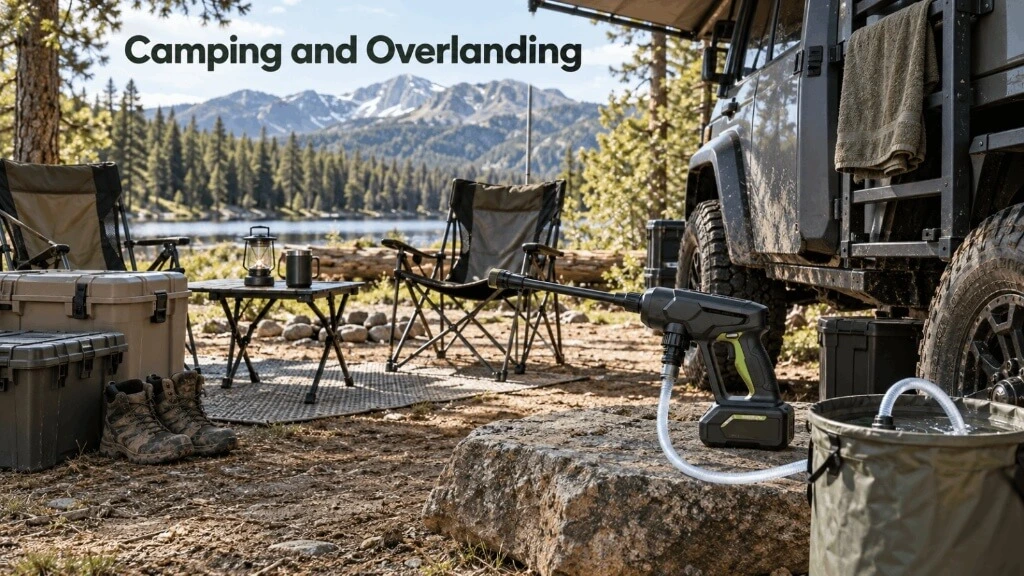
After a wet trail, you may want to rinse boots, camp chairs, storage bins, floor mats, or a vehicle’s lower panels. A bucket-fed model can be useful at a permitted campsite without a spigot. Check campground rules before using water, soap, or a battery-powered washer.
Cyclists and outdoor athletes
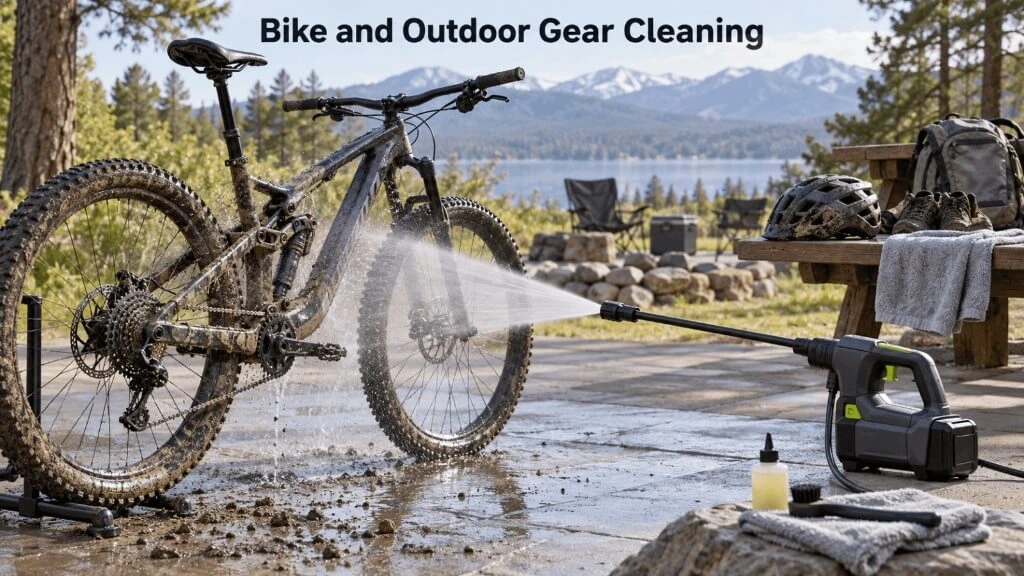
Mud can dry on a mountain bike and carry grit into moving parts. A controlled rinse can remove loose dirt before you wipe, inspect, and lubricate the bike. The same approach can work for strollers, wagons, coolers, and sports equipment.
RV and boat owners
Portable equipment can handle spot rinsing around a campsite, marina, or storage lot. It may suit steps, mats, wheel wells, and salt or dust. A compact battery washer may not have enough water or runtime to clean a large RV from roof to wheels in one session.
Apartment dwellers and small-property owners
If you do not have an outdoor outlet or hose bib, a bucket-fed tool may handle permitted balcony furniture, small patios, pet items, and car wheels. Check building rules and avoid directing runoff toward neighbors, public walkways, or electrical equipment.
Portable Jobs: Match the Tool to the Task
This table is a planning guide, not a promise that every model can perform every task. Read the manual for allowed water temperature, intake height, detergent use, filter requirements, and duty cycle.
PSI and GPM: Read the Numbers in Context
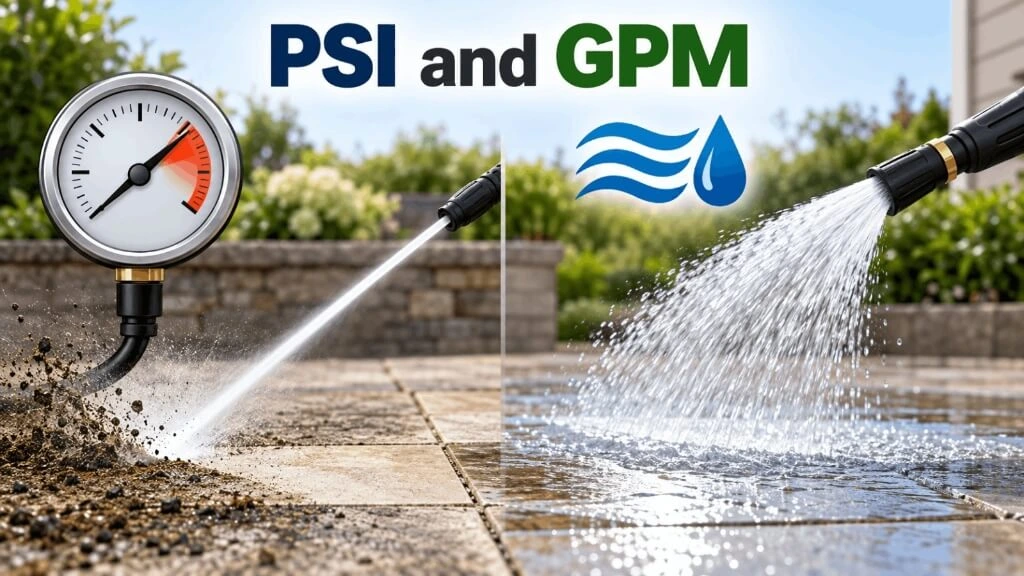
Pressure is measured in PSI, or pounds per square inch. Flow is measured in GPM, or gallons per minute. PSI describes pressure at the nozzle; GPM describes how much water moves across the surface. Cleaning results also depend on the nozzle, spray distance, detergent, surface, and time spent on each area.
For portable work, a high headline PSI can be misleading. A compact unit with limited flow may rinse a bike well but take much longer on a broad, dirty patio. A narrow nozzle held too close can damage paint, decals, soft plastics, or seals even when the washer is marketed as compact.
Before choosing, estimate the actual job. A bicycle frame, camping table, or muddy boot usually needs less force than embedded grime on unsealed concrete. Start with the widest suitable spray pattern, hold the gun farther away, and move closer only if the surface remains unharmed.
For a plain explanation of pressure and water flow, read this beginner PSI and GPM guide.
A practical rule for portable cleaning
Prioritize control and enough flow for the job. For bikes and camping equipment, a manageable spray pattern and clean water may matter more than maximum PSI. For a larger RV step area or patio spot, compare flow, battery endurance, hose reach, and water capacity together.
Water Source: The Most Important Portability Check
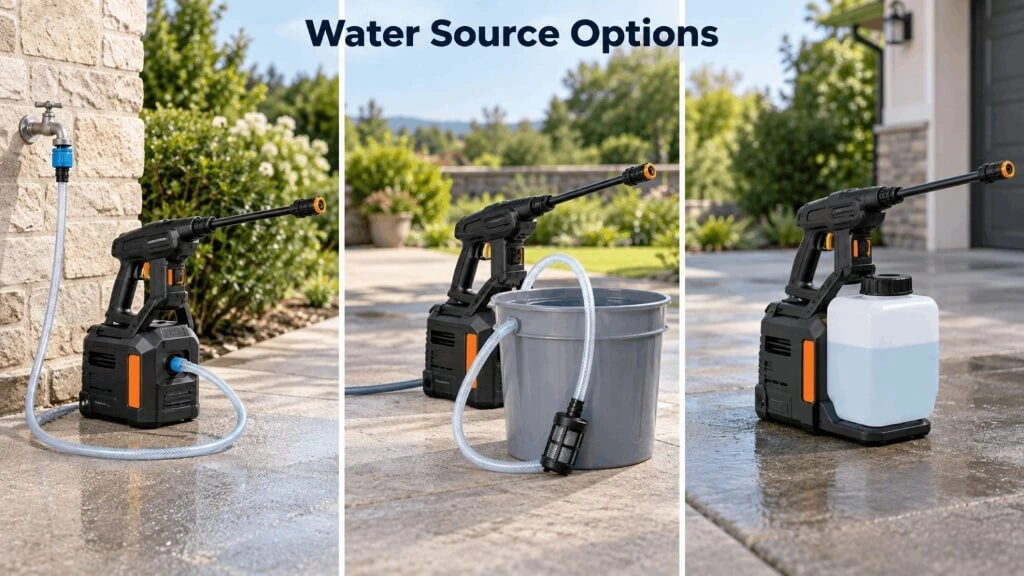
Water logistics often decide whether a portable cordless pressure washer feels convenient or frustrating. The tool may be easy to carry, but water is heavy and cannot be ignored.
Spigot connection
A standard outdoor faucet provides a continuous supply. You still need a supply hose, compatible connector, and a safe route that will not become a trip hazard. A spigot is usually the simplest option at home, an RV site, or a serviced campground.
Bucket or collapsible container
Bucket feeding is useful off-grid, but confirm that the model is designed for it. Check whether the intake hose must remain fully submerged, whether a filter is required, and how high the water can sit below the pump. Keep the container stable so the hose does not pull it over.
Integrated tank
An onboard tank can speed setup, but its capacity adds weight. Water weighs about 8.3 pounds per U.S. gallon before the container, battery, hose, and tool are counted. A large tank may reduce refill trips while making the washer less comfortable to carry.
For short jobs, a smaller reserve and a refill plan may be a better compromise. Use clean water whenever possible. Fine grit can restrict the inlet filter or damage the pump. If you draw from a natural source, follow local rules and use the filtration method specified by the manufacturer.
How to plan your water load
Start with a short test rinse before carrying a large container to a remote location. Note how much water you use for one bike, set of mats, or group of camp chairs. Then add a sensible reserve rather than assuming the tank rating will cover every job.
Battery, Runtime, and Carry Weight
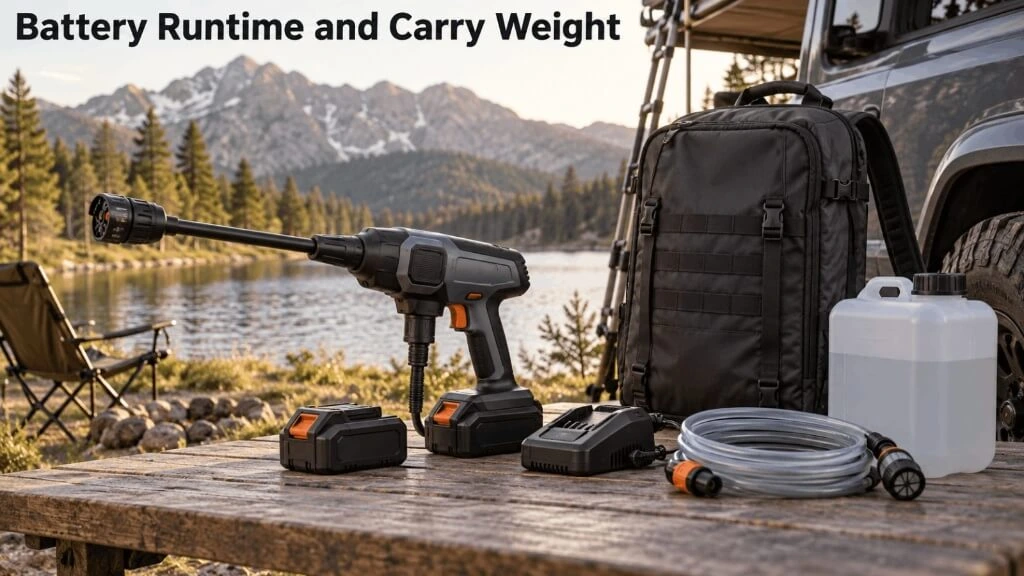
Battery capacity affects pump time, but pressure washing is usually intermittent: spray, release the trigger, reposition, and spray again. Runtime changes with trigger use, pressure, nozzle, water resistance, temperature, and battery age. Treat a manufacturer’s runtime figure as an estimate, not a guarantee for your exact job.
Plan the whole load instead of comparing the bare tool. Add the battery, charger, intake hose, spray gun, nozzles, water container, soap, towels, and safety equipment. If you are hiking to a campsite, a lighter water container may be more useful than a spare battery.
A spare battery makes sense when charging is difficult and several items must be cleaned. It may not solve the problem if your real limit is water weight, walking distance, or runoff. Choose the battery platform only after confirming that the charger, replacement battery, and storage method suit your trip.
Keep batteries protected from standing water, direct sun inside a hot vehicle, impact, and extreme temperatures. Charge and store them according to the product manual. CPSC identifies battery hazards that can include overheating, fire, electric shock from chargers, and thermal burns.
See the CPSC battery safety information.
Hose, Nozzle, and Pump Details That Matter
Portability does not remove the need for compatibility.
Intake hose: Check length, stiffness, filter position, and whether the connector seals against air leaks.
High-pressure hose: A short hose reduces bulk, but a longer hose can keep the machine away from mud and splash. Never exceed the hose rating.
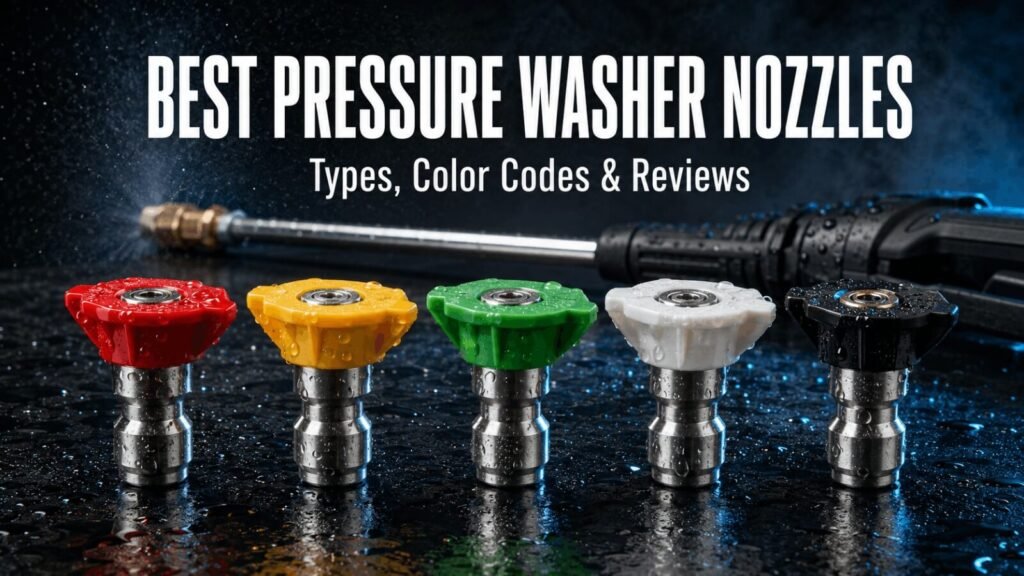
Nozzles: Use the widest safe pattern first. A narrow or turbo-style tip can mark paint, wood, plastic, or soft aluminum.
Spray gun: A comfortable trigger and trigger lock can help during repeated stop-and-start cleaning.
Pump protection: Confirm whether the pump must be primed, whether dry running is prohibited, and how pressure should be released after use.
Do not assume that every quick-connect fitting is interchangeable. Match the thread type, seal, nozzle orifice, and flow requirement stated in the manual. Keep accessory shopping secondary to selecting a compatible core system.
Before a trip, use this pressure washer maintenance checklist to inspect the filter, hoses, fittings, and storage steps.
Best-For Guidance and Tradeoffs
Best portable cordless pressure washer setup for trail bikes
Choose a light unit with a compatible bucket intake, washable inlet filter, comfortable spray gun, and fan nozzle. Control matters more than maximum advertised pressure. Keep the spray away from hubs, bottom brackets, headset seals, suspension components, bearings, and electrical parts.
Best setup for car wheels and lower panels
Prioritize a clean water source, enough hose to reach around the vehicle, and a nozzle that allows a wide rinse pattern. Bring microfiber towels and a separate wash solution; pressure alone does not replace safe hand washing.
Best setup for RV trips and longer sessions
Look for a larger approved battery option, a practical charging plan, and a water container that can be moved safely. A compact washer can be a useful spot cleaner, but a full-size electric machine may be a better fit for long siding or broad surface work at a serviced site.
Best setup for occasional emergency rinses
Choose a simple kit with fewer proprietary parts. A readily available replacement filter, hose, and battery can matter more than an extra spray mode you rarely use.
Main advantages
Quick setup away from an electrical outlet
Easier access to trails, campsites, vehicles, and remote areas
Useful bucket-fed operation on compatible models
Lower transport burden than a gas pressure washer
Good fit for short rinsing and spot-cleaning jobs
Main limitations
Finite battery runtime
Often slower on broad surfaces
Water-container weight can reduce portability
Intake restrictions and air leaks can affect performance
Replacement batteries and proprietary accessories can increase cost
Prices, bundles, and availability change. Compare the complete kit and replacement-part support when you buy.
Safety for Mobile Pressure Washing
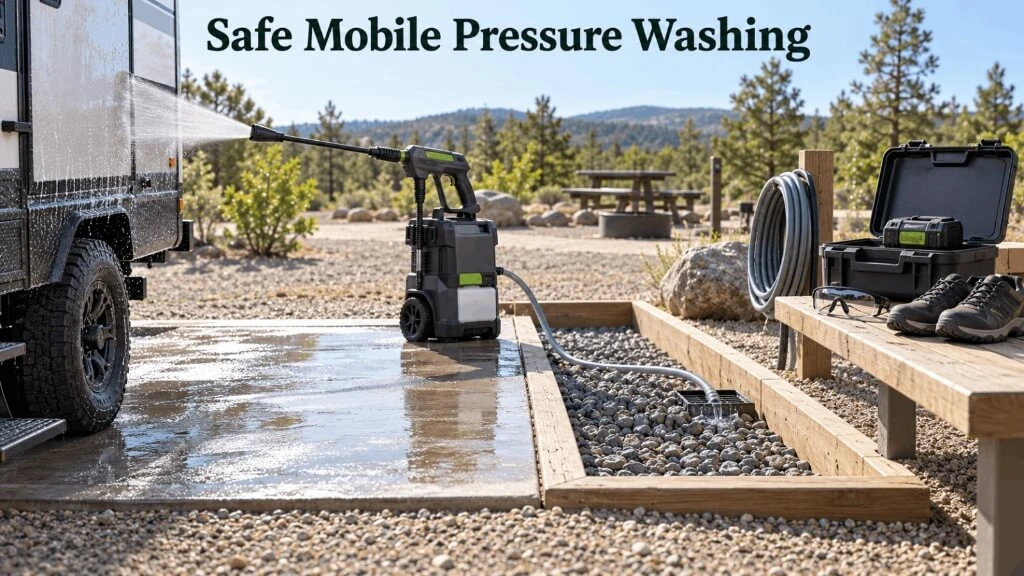
Read the pressure washer manual, surface guidance, detergent instructions, and battery instructions before use. Wear eye protection and closed-toe, slip-resistant footwear. Keep spray away from people, animals, electrical connections, vehicle sensors, wheel bearings, and damaged surfaces.
Do not use the washer from a moving vehicle, on an unstable ladder, or in a position where you cannot control the spray. Relieve pressure before changing nozzles or disconnecting a hose. Never point the stream at skin. High-pressure water can cause serious injection injuries; OSHA safety materials identify high-pressure water as a hazard requiring suitable protection and safe work practices. See OSHA guidance on high-pressure water hazards.
Near water, follow local environmental rules. Do not send detergent or dirty runoff into streams, lakes, storm drains, or another campsite. Use only approved detergents and keep the cleaning area away from people and wildlife.
Common Mistakes People Make
Choosing PSI alone
Why it fails: PSI does not tell you how quickly water will rinse or how safely it can be applied.
Correction: Check GPM, nozzle options, spray distance, and the surface.
Treating a bucket as an unlimited supply
Why it fails: Water weight and refill trips change the real workload.
Correction: Estimate the water needed for the job and place the container close to the work area before spraying.
Ignoring air leaks on the intake side
Why it fails: A loose fitting or uncovered filter can cause pulsing, poor priming, or pump strain.
Correction: Inspect seals, submerge the intake correctly, and follow the manufacturer’s priming sequence.
Washing delicate gear like concrete
Why it fails: Bearings, decals, seals, soft plastics, and finishes can be damaged by concentrated spray.
Correction: Use a wider pattern, greater distance, and a gentle hand-cleaning step.
Carrying too much water and too little battery
Why it fails: A heavy container can make a “portable” setup unpleasant, while a dead battery ends the job.
Correction: Divide the work into short stages and carry only the water you can move safely.
Storing the unit wet
Why it fails: Standing water can freeze, leave residue, or keep connectors damp.
Correction: Flush as directed, drain the intake and high-pressure sides, dry removable parts, and store the battery separately.
Simple Buying and Use Plan
Before you buy
List the exact mobile jobs: bikes, camp gear, car wheels, RV steps, or something else.
Identify the nearest legal water source and decide whether you can carry the required container.
Add the weight of the tool, battery, hose, gun, nozzles, water, and safety gear.
Confirm self-priming, filter, connector, battery, and warranty details in the manual or manufacturer documentation.
Before each cleaning session
Inspect the hose, filter, seals, nozzle, and battery for damage.
Set the machine on stable ground and place the water container where it cannot tip.
Prime the pump exactly as instructed, then test the widest spray pattern on an inconspicuous area.
Keep a towel, approved detergent, and a safe place for wet gear nearby.
After cleaning
Release pressure before disconnecting any line.
Flush or drain the system according to the manual, especially after detergent or questionable water.
Rinse and dry filters, hoses, and nozzles; do not pack them wet in a sealed case.
Recharge and store the battery within the recommended temperature range, ready for the next trip.
Frequently Asked Questions
Can a portable cordless pressure washer draw from a bucket?
Some can, but not all. Confirm that the model supports gravity-fed or self-priming intake, check the maximum lift, and use the specified filter and hose arrangement. Never let the pump run dry.
Is a portable cordless pressure washer safe for a bicycle?
It can be when used conservatively. Keep the spray away from hubs, bottom brackets, headset seals, suspension components, bearings, and electrical parts. Rinse from a distance and finish with a gentle wipe and lubrication where appropriate.
How much water do I need for a camping cleaning job?
It depends on the number of items, soil level, nozzle, and trigger time. Perform a short test rinse first, then add a refill reserve rather than assuming the tank rating equals usable water for the whole trip.
Can I use car soap in a cordless washer?
Only if the washer and soap label allow it. Some portable units require a separate foam bottle or hand-application method. Use the correct dilution and follow local runoff rules.
Will a portable unit clean a large driveway?
It may handle a small spot, but a full driveway can consume considerable battery time and water. For broad concrete, compare the complete job time with a corded or gas machine before buying.
Should I carry a spare battery?
Consider one if replacement charging is difficult and your jobs are spread across several items. If your main limitation is water weight or hiking distance, a lighter load and refill plan may help more than another battery.
Do portable pressure washers need winter storage care?
Yes. Drain water, follow the manual’s pump-protection instructions, keep the battery indoors at the recommended charge level, and prevent freezing. Check the intake filter before the first use in spring.
Conclusion
The best portable cordless pressure washer is not necessarily the one with the largest PSI number. It is the model whose water source, battery plan, carry weight, hose, and spray control fit the trip you actually take.
For camping, bikes, and outdoor gear, a light bucket-capable setup with a reliable filter and gentle nozzle can be more useful than an oversized kit. Start by measuring the job, the water you can move, and the distance from your vehicle or campsite. Then confirm the intake method, battery support, replacement parts, and safety instructions before ordering.
A realistic loadout and careful spray technique can give you cleaner gear without turning a quick rinse into a difficult hauling project.