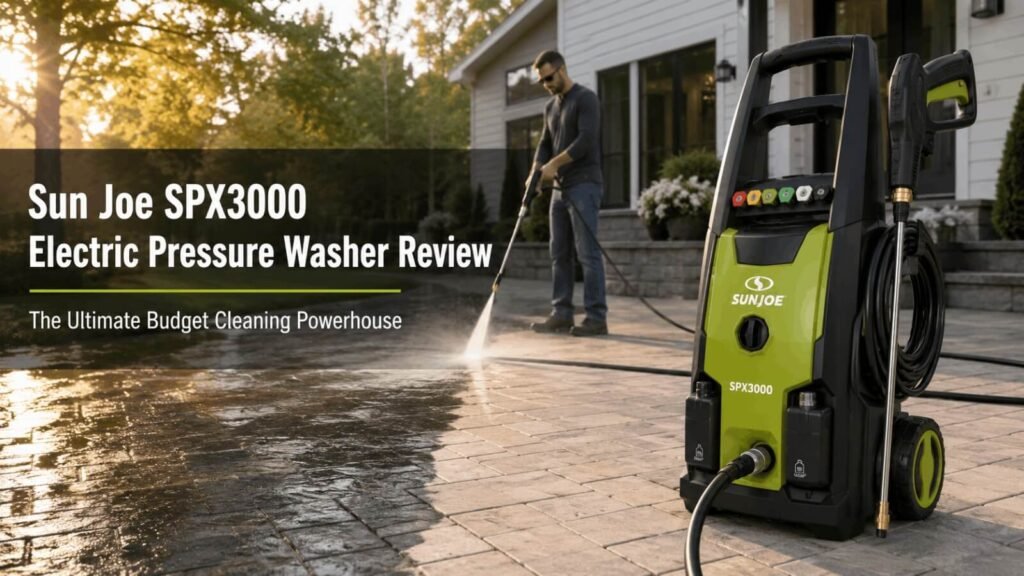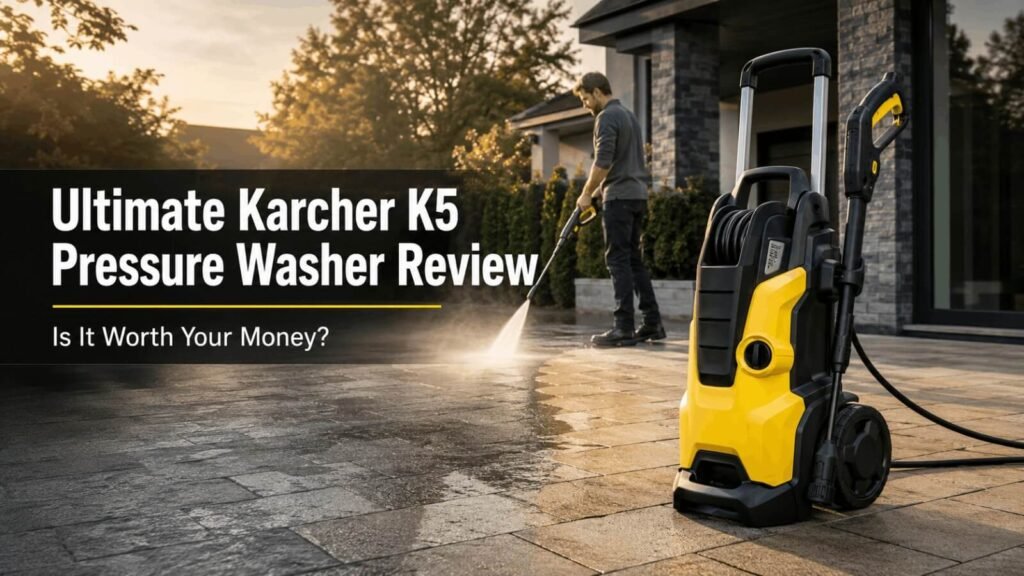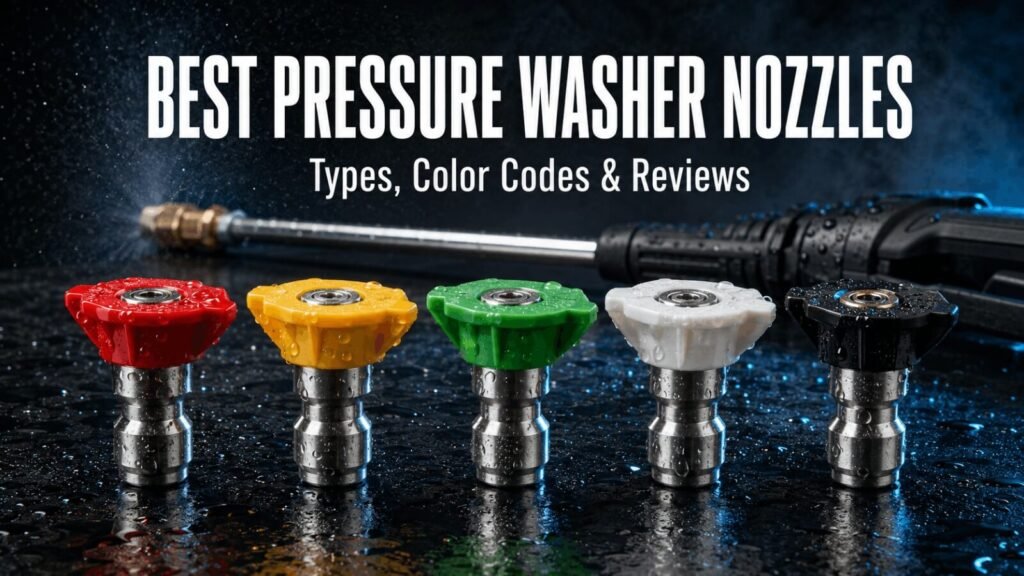
When cleaning tough grease, heavy oil, grime, and industrial dirt, commercial spaces require power, reliability, and efficiency. While gas-powered units have traditionally dominated heavy-duty cleaning, modern electric power washers designed for commercial use have completely revolutionized the market.
Electric models operate without direct exhaust emissions, produce minimal noise, require significantly less maintenance, and can be safely used both indoors and outdoors. Whether you manage a food processing plant, a commercial auto detailing shop, a farm, or a property management firm, finding the best commercial electric pressure washer is vital to maintaining operational standards and keeping your facility spotless.
In this comprehensive guide, we review top-rated commercial models, break down key performance metrics like PSI and GPM, and provide a complete buying guide to help you choose the ideal system for your business.
Quick Comparison: Top Commercial Electric Pressure Washers
Model | Max Pressure (PSI) | Water Flow (GPM) | Voltage / Power | Best For |
AR Annovi Reverberi AR630-TSS | 1,900 PSI | 2.1 GPM | 120V / 20 Amp | Daily Shop & Detailer Use |
Kärcher HD 3.0/20-4 M Cage | 2,000 PSI | 3.0 GPM | 230V / 1-Phase | Heavy Industrial & Job Sites |
Canpump Industrial Electric Washer | 3,000 PSI | 3.5 GPM | 230V / Single or 3-Phase | Heavy-Duty Fleet & Agriculture |
Epps Industrial Electric Hot Water | 2,500 PSI | 3.5 GPM | 230V / Oil Heated | Grease, Oil & Sanitation |
1. Why Invest in a Commercial Grade Electric Pressure Washer?
For years, commercial operators assumed that only gas pressure washers could deliver true heavy-duty cleaning power. However, advances in electric motor technology and high-pressure triplex pumps have closed that gap significantly.
Zero Exhaust Fumes (Indoor Safety)
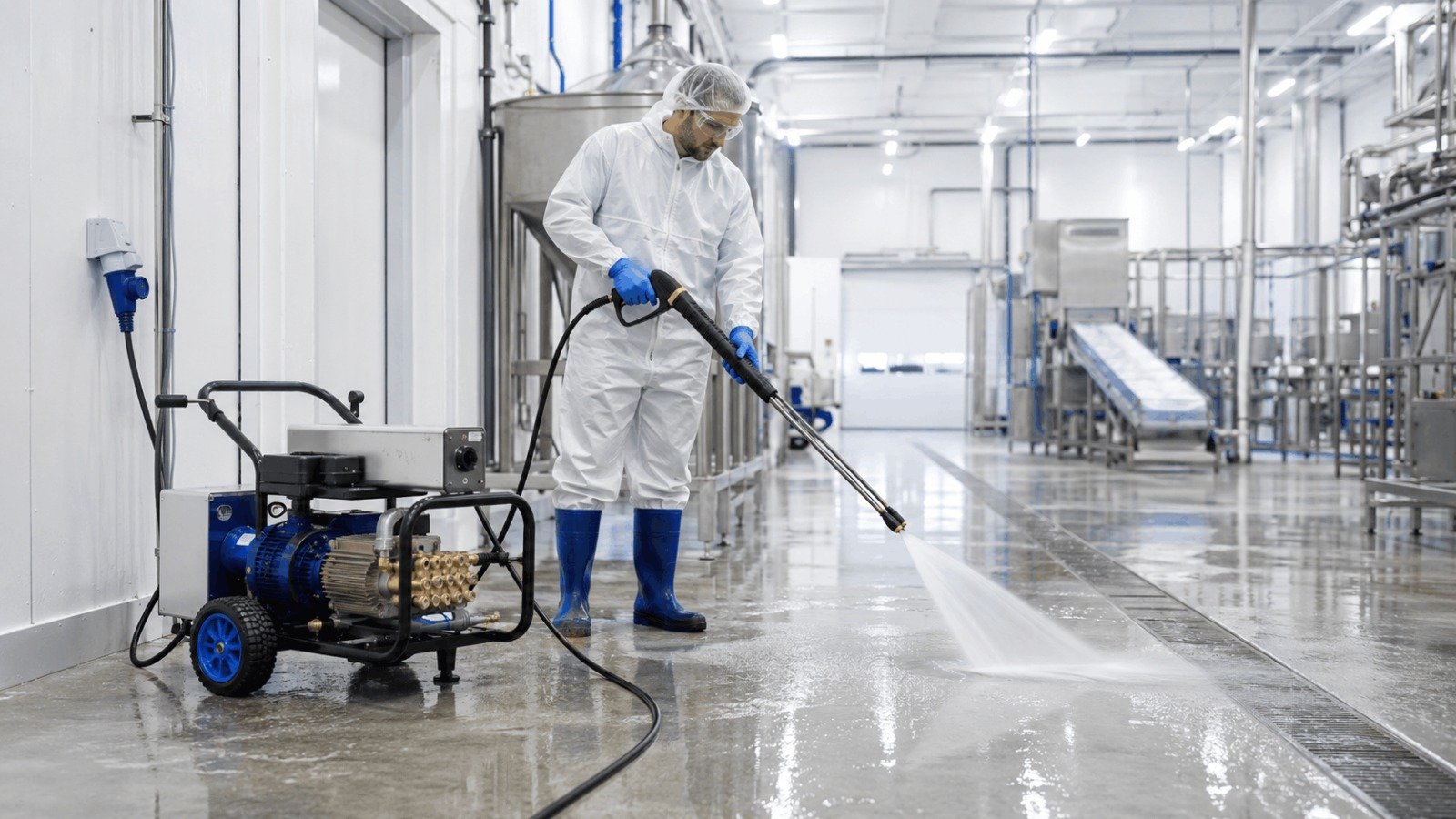
Gas engines produce dangerous carbon monoxide, making them unsafe for indoor applications. A commercial grade electric pressure washer produces zero emissions, allowing you to clean inside warehouses, commercial kitchens, food processing facilities, and enclosed garages safely.
Choosing the best commercial pressure washer depends on your specific needs, whether you require high PSI for tough grease or high GPM for quick surface coverage.”
Low Maintenance & Operating Costs
Gas engines require regular oil changes, spark plug replacements, fuel stabilizer, and carburetor maintenance. Electric power washers run on induction motors that require virtually zero engine maintenance—simply plug them in, connect your water supply, and start washing.
Quiet Operation
Commercial electric pressure washers operate at a fraction of the decibel level of gas engines. This makes them ideal for residential property management, hotel maintenance, hospital grounds, or night cleaning crews where noise ordinances apply.
2. In-Depth Reviews: The Best Commercial Electric Pressure Washer Models
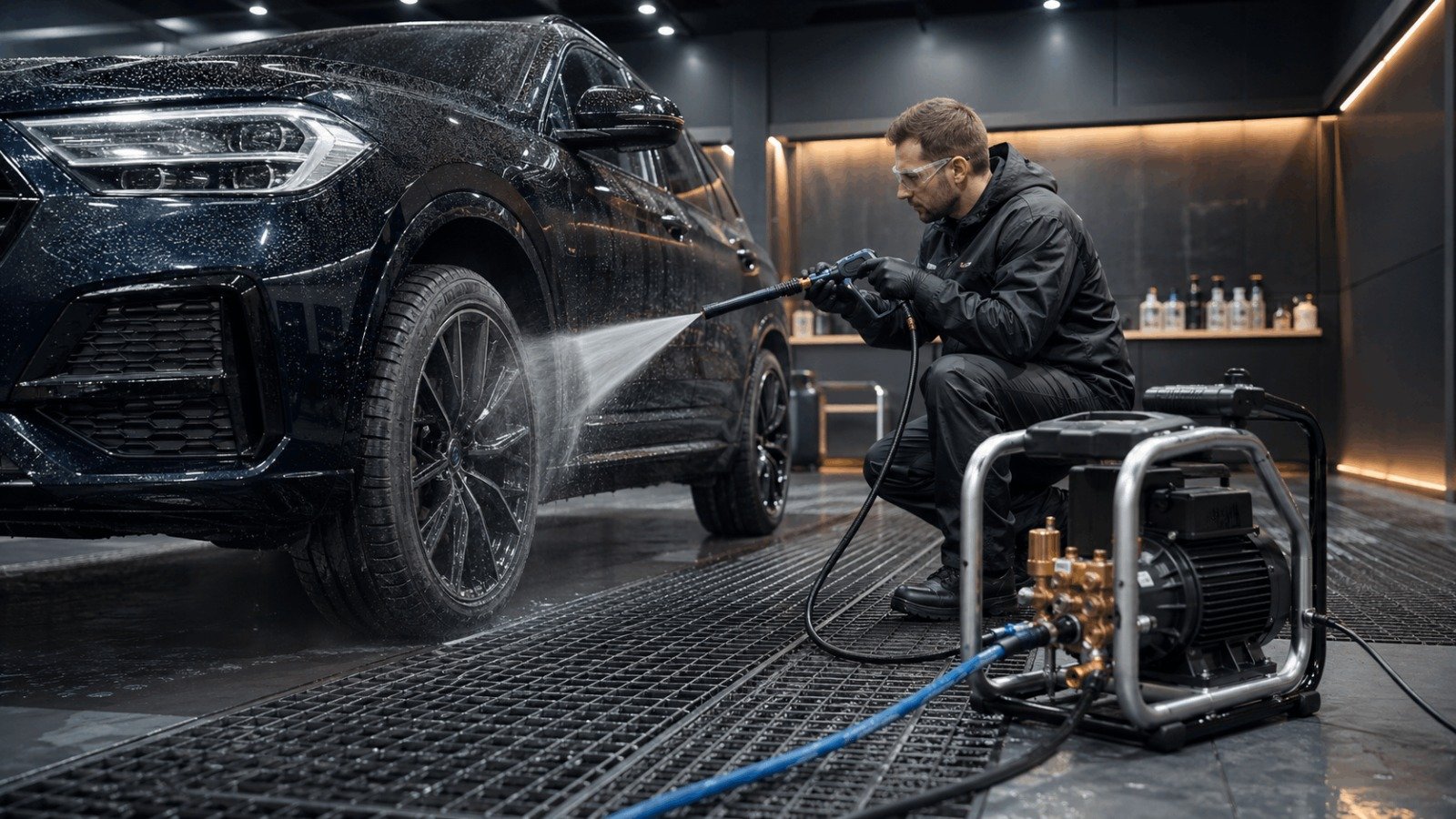
1. AR Annovi Reverberi AR630-TSS – Best Heavy Duty Electric Pressure Washer for Detailing
The AR Annovi Reverberi AR630-TSS is a high-performance heavy duty electric pressure washer designed specifically for auto detailers, facility managers, and small business operators who need reliable daily performance in a compact footprint.
- Key Specifications:
- PSI: 1,900 PSI
- GPM: 2.1 GPM
- Motor: 2.0 HP Induction Motor (120V, 20 Amp)
- Pump: Triplex Plunger Pump with Ceramic Pistons
Features & Benefits
The AR630-TSS features a professional-grade ceramic triplex pump that outperforms consumer axial pumps by thousands of operational hours. Its Total Stop System (TSS) shuts down the motor when the trigger is released, reducing internal pump wear and saving power.
- Pros:
- Forged brass pump head withstands heavy daily usage.
- Operates on standard 120V circuits (requires a 20A dedicated outlet).
- Highly portable compact frame.
- Cons:
- Requires a true 20-amp electrical circuit to prevent breaker tripping.
2. Kärcher HD 3.0/20-4 M Cage – Best Industrial Electric Pressure Washer
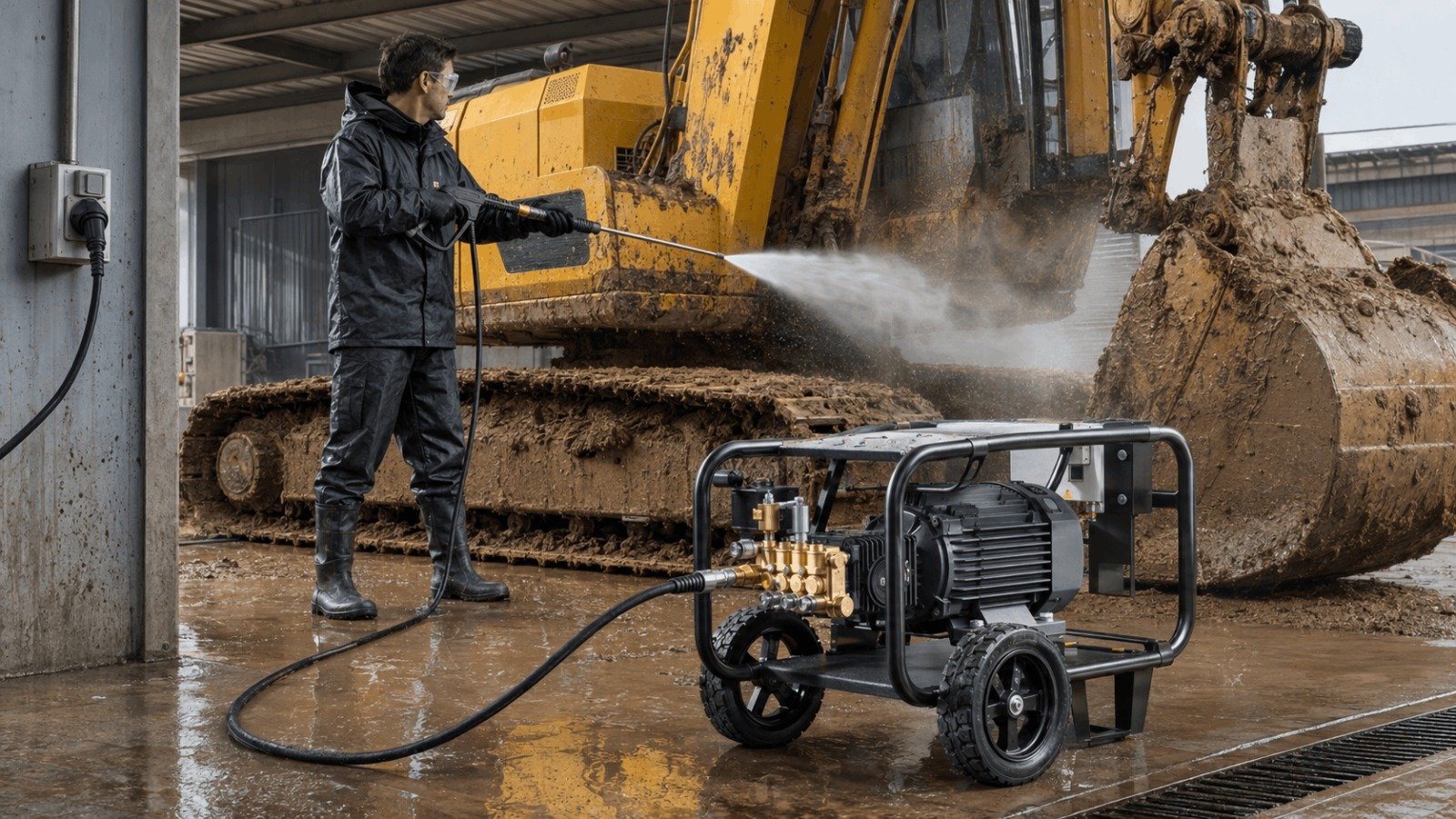
When searching for the best industrial electric pressure washer built to withstand rough job site environments, the Kärcher HD 3.0/20-4 M Cage stands out. Protected by a heavy-duty steel tubular roll cage, this machine is engineered for construction, machinery maintenance, and agriculture.
- Key Specifications:
- PSI: 2,000 PSI
- GPM: 3.0 GPM
- Motor: 4.3 HP 4-Pole Slow-Speed Electric Motor (230V, 1-Phase)
- Pump: Direct-Drive Crankshaft Pump
Features & Benefits
Equipped with a slow-revving 4-pole motor (running at 1,740 RPM instead of the standard 3,450 RPM), the Kärcher HD cage washer runs significantly cooler, dramatically extending seal and pump life. The 3.0 GPM flow rate provides exceptional cleaning volume to wash away mud and heavy debris rapidly.
- Pros:
- Full steel roll-cage protection for demanding environments.
- Slow-speed motor ensures long component lifespan.
- High water flow (3.0 GPM) speeds up large surface cleaning.
- Cons:
- Requires a 230V single-phase electrical setup.
3. Canpump Industrial Unit – Best Electric Pressure Washer 3000 PSI Commercial Grade
If your cleaning tasks demand extreme pressure alongside high water volume, choosing an electric pressure washer 3000 PSI commercial unit like the Canpump Industrial system is an ideal solution.
- Key Specifications:
- PSI: 3,000 PSI
- GPM: 3.5 GPM
- Motor: 7.5 HP Commercial Electric Motor (230V)
- Pump: Industrial Heavy-Duty Commercial Triplex Pump
Features & Benefits
Canpump builds industrial systems meant for heavy manufacturing, transport fleet washing, and concrete preparation. The combination of 3,000 PSI and 3.5 GPM yields exceptional cleaning force firmly in true industrial territory.
- Pros:
- Massive cleaning force capable of stripping paint and thick concrete buildup.
- Adjustable pressure unloader valve for fine-tuning output.
- Commercial-grade thermo-siphon protection prevents pump overheating.
- Cons:
- Heavy unit; best suited for wall mounting or dedicated wash bay carts.
4. Epps Industrial Unit – Best Hot Water Commercial Electric Pressure Washer
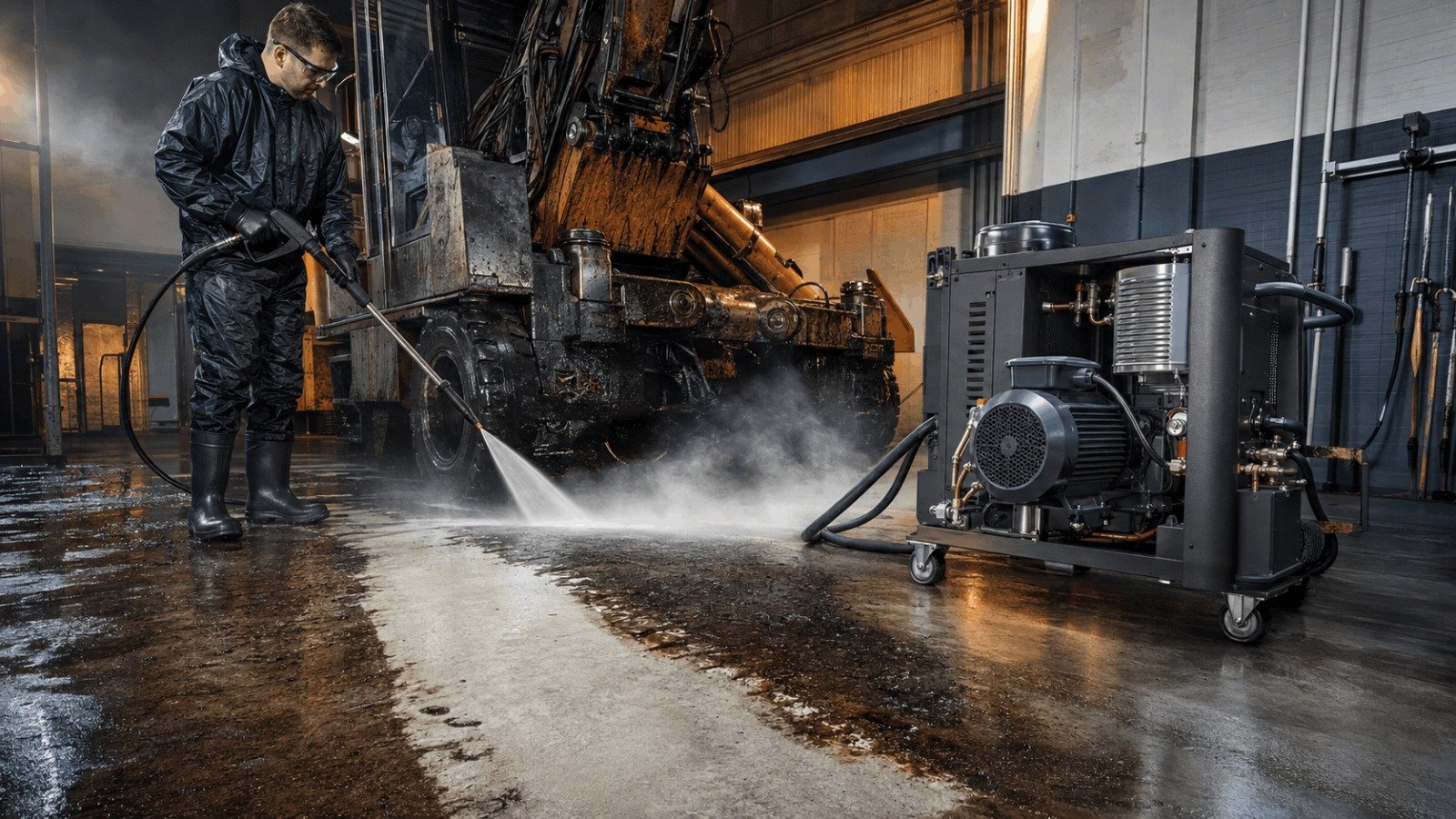
Cold water can displace dirt, but it cannot dissolve heavy grease or oil. For commercial kitchens, food processing plants, and equipment maintenance shops, a hot water commercial electric pressure washer is essential.
- Key Specifications:
- PSI: 2,500 PSI
- GPM: 3.5 GPM
- Motor: Electric Motor Drive (230V) with Diesel/Oil-Fired Burner
- Temperature: Water heating up to 200°F (93°C)
Features & Benefits
While the pump is driven by an electric motor to ensure steady, reliable pressure, the heating coil utilizes an integrated fuel burner to heat incoming water to near-boiling temperatures instantly. This heat breaks down grease, oil, fat, and wax without needing excessive chemical detergents.
“To get the most out of your setup, make sure to upgrade to a durable Commercial Pressure Washer Gun that can handle high pressure without causing hand fatigue
- Pros:
- Unmatched grease-cutting performance.
- Sanitizes surfaces rapidly due to high water temperature.
- Heavy-duty heating coil wrapped in structural steel.
- Cons:
- Requires both electrical connection and burner fuel source.
- Higher initial investment costs.
3. Commercial vs Residential Electric Pressure Washer
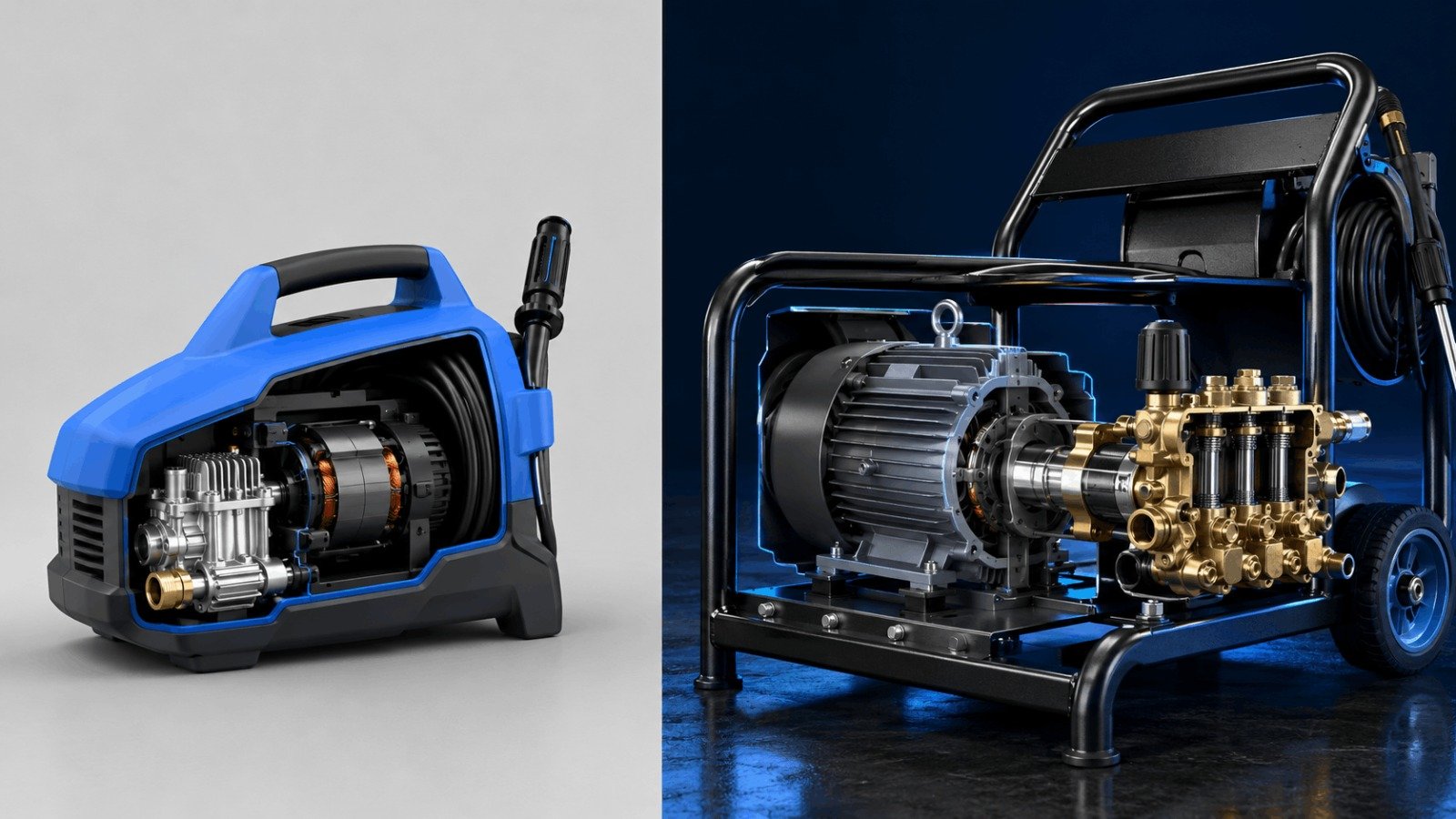
Understanding the key differences when comparing a commercial vs residential electric pressure washer prevents costly purchasing mistakes:
Plaintext
Residential Electric Washer Commercial Electric Washer
┌───────────────────────────┐ ┌───────────────────────────┐
│ • Consumer Axial Pump │ │ • Heavy Triplex Plunger │
│ • Universal High-RPM Motor│ VS │ • Low-RPM Induction Motor │
│ • Plastic / Thin Fittings │ │ • Forged Brass & Ceramic │
│ • Lifespan: 50–100 Hours │ │ • Lifespan: 1500+ Hours │
└───────────────────────────┘ └───────────────────────────┘
- Pump Architecture: Consumer electric power washers use aluminum or composite axial wobble pumps that cannot be rebuilt. Commercial units utilize forged brass headers with solid ceramic plunger triplex pumps designed to be fully serviced and rebuilt.
- Motor Design: Residential machines use loud universal brush motors that overheat quickly. Commercial machines feature continuous-duty induction motors that run cooler and last for thousands of operating hours.
- Duty Cycle: A residential unit is built for 30–60 minutes of weekend driveway cleaning. A commercial unit is rated for 4 to 8 hours of continuous daily operation.
4. Key Factors to Consider Before Buying
Before investing in a machine, evaluate these critical operational factors:
A. Pressure (PSI) vs. Water Flow (GPM)
- PSI (Pounds per Square Inch): Measures the stripping force applied to the surface. Higher PSI strips paint, cuts through hardened dirt, and breaks up concrete deposits.
- GPM (Gallons per Minute): Measures the volume of water delivered. GPM dictates how quickly the machine rinses dissolved dirt away.
Pro Tip: In commercial applications, GPM is often more important than PSI. High water volume cleans surfaces much faster than high pressure alone. Calculate your machine’s total cleaning power using Cleaning Units (CU):
$$\text{Cleaning Units (CU)} = \text{PSI} \times \text{GPM}$$
B. Electrical Power Requirements
Commercial electric power washers require specific power supply considerations:
- 120V / 15-20 Amp: Suitable for light commercial units (up to 1,900 PSI / 2.1 GPM).
- 230V / Single Phase: Required for mid-to-high capacity commercial machines (2,000–3,000 PSI / 3.0+ GPM).
- 460V / Three Phase: Ideal for permanent wash bay installations and continuous heavy manufacturing facilities.
Ensure your facility has the appropriate electrical outlets and dedicated breakers before selecting a high-voltage unit.
C. Triplex Plunger Pump Construction
Always verify that the pressure washer utilizes a triplex plunger pump. Look for features such as:
- Forged brass manifolds
- Ceramic-coated solid pistons
- Sight glasses for quick oil level inspection
- Adjustable unloader valves to regulate pressure safely
D. Cold Water vs. Hot Water Units
- Choose Cold Water if your main tasks involve removing general dirt, mud, algae, moss, loose paint, or surface debris.
- Choose Hot Water if you routinely tackle engine oil, hydraulic fluid, animal fats, food grease, or require surface sanitation.
5. Maintenance Tips for Commercial Electric Power Washers
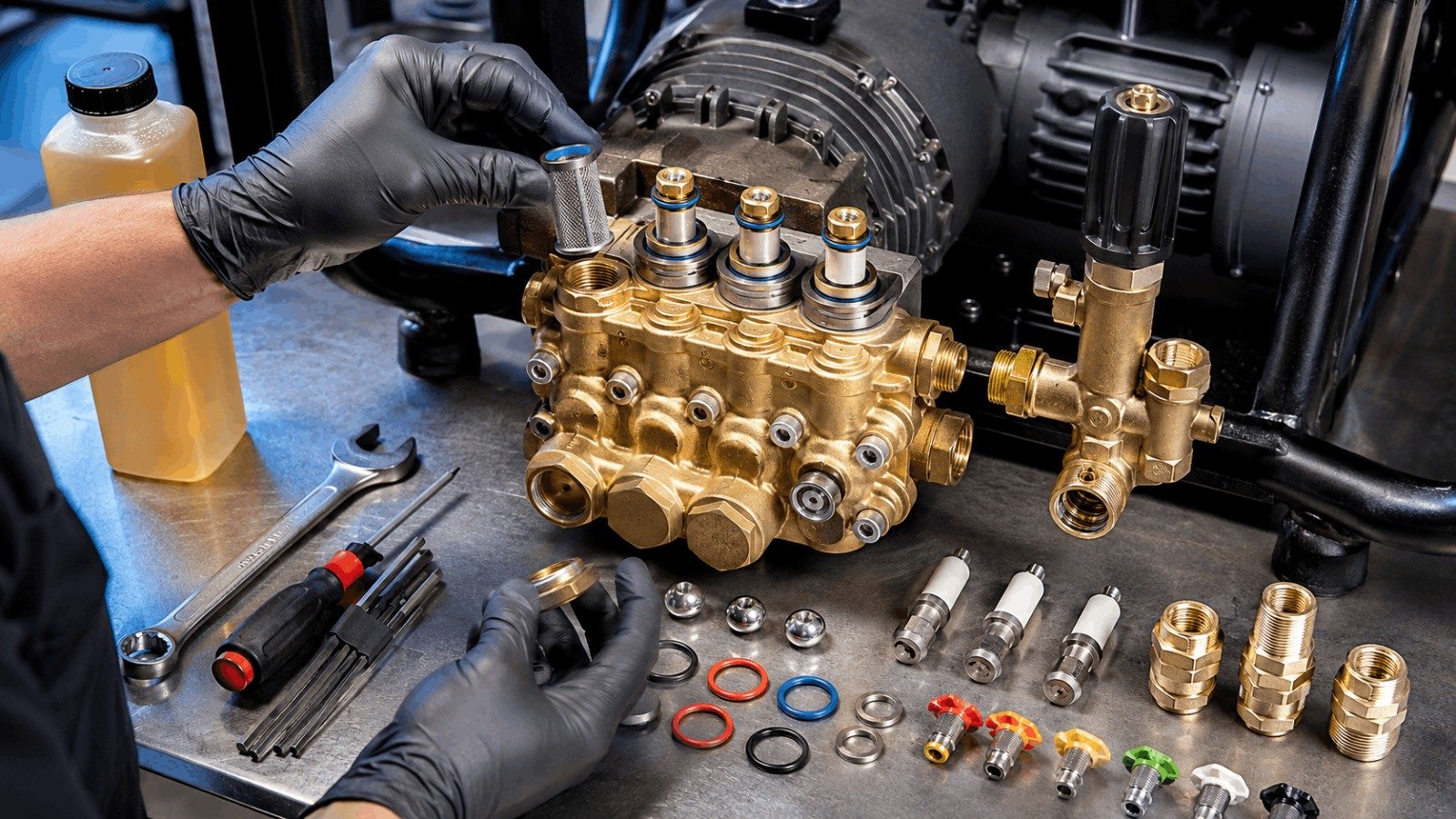
To maximize the service life of your investment, implement this routine maintenance schedule:
Daily Checklist
- Check Pump Oil: Inspect the sight glass on your triplex pump to ensure the oil level is centered and free of milky discoloration (which indicates water contamination).
- Inspect Water Filters: Clean the inlet water screen filter to prevent sand or sediment from damaging the internal check valves.
- Flush Pressure Hose: Purge air from the system before turning the electric motor on to avoid dry running.
Monthly / Seasonal Maintenance
- Change Pump Oil: Perform the first oil change after 50 break-in hours, and every 300–500 operational hours thereafter using non-detergent pump oil.
- Check Spray Nozzles: Replace worn brass or stainless steel nozzle tips. Worn nozzles drop system pressure, while clogged nozzles create dangerous pressure spikes.
- Winterization: If storing the unit in freezing environments, pump anti-freeze through the system to prevent internal brass manifold cracking.
Conclusion: Which Model Should You Choose?
Selecting the best commercial electric pressure washer comes down to your specific operational environment:
- For mobile detailers, auto shops, and property managers, the AR Annovi Reverberi AR630-TSS offers unmatched portability and 120V compatibility.
- For industrial job sites, machinery maintenance, and rugged outdoor use, the Kärcher HD 3.0/20-4 M Cage provides maximum frame protection and reliable water flow.
- For heavy wash bays, fleet maintenance, and high-volume tasks, invest in a 3,000 PSI high-GPM system like the Canpump Industrial Unit.
Investing in commercial-grade equipment guarantees lower long-term downtime, cheaper operational costs, and consistent performance for years to come.
Helpful Resources and Safety Information
For additional guidance about pressure washer safety, electrical protection and responsible commercial cleaning, explore these trusted resources:
- CDC Pressure Washer Safety Guide – Important precautions for preventing high-pressure injection injuries, electric shock and unsafe equipment operation.
- OSHA Guidance for High-Pressure Water and Steam Cleaning – Information about protective clothing, eye protection and other PPE required when working with pressurized water or steam.
- OSHA Ground-Fault Circuit Interrupter Guidance – Explains how GFCI protection reduces electric-shock risks when electrical equipment is operated around water.
- CPSC Pressure Washer Recalls – Check current pressure washer safety notices and product recalls before purchasing or operating equipment.
- EPA Industrial Stormwater Guidance – Guidance for controlling contaminated wastewater and stormwater runoff from industrial cleaning activities.
- Power Washers of North America – Professional pressure-washing education, industry certification and contractor safety resources.
Regulations covering electrical installations, wastewater disposal and commercial cleaning vary by location. Always follow the manufacturer’s manual and consult your local safety and environmental authorities.