
How much PSI do you need? For most home jobs, 1,500 to 2,800 PSI is enough. Cars and outdoor furniture need less, wood decks and fences need much less, and big concrete driveways can use more. The right number depends on the surface, the nozzle and your water flow, not just the biggest PSI on the box.
I did not test pressure washers for this guide. The ranges below come from retailer and maker guides, and I show where they disagree. Sources do not agree on every surface, so treat each range as a starting point and test a small hidden spot first. The old version of this page was a Honda 4000 PSI review under the wrong title. I moved that content out, and our Honda GX390 guide covers those machines.
How much PSI do you need: the short answer
- Cars, bikes and outdoor furniture: about 900 to 1,900 PSI.
- Wood decks and fences: about 500 to 1,500 PSI, and less for soft woods.
- Vinyl siding and painted wood: start near 1,500 PSI and follow the siding maker’s advice.
- Patios and walkways: about 1,500 to 2,800 PSI.
- Concrete driveways and brick: about 2,000 to 3,000 PSI, with a surface cleaner.
- Asphalt, heavy stains and paint removal: 3,000 PSI and up, often a job for pros.
More PSI is not better. Too much pressure scars wood, strips paint, chips mortar and can push water behind siding. Start low, then step up only if the dirt does not move.
PSI and GPM: what the numbers mean
PSI is the force of the water. GPM is how much water flows each minute. PSI cleans the dirt off. GPM rinses it away and sets how fast you work. Retail guides often multiply the two to get a rough cleaning-power number. A 2,000 PSI washer at 1.4 GPM gives 2,800. A 1,700 PSI washer at 2.5 GPM gives 4,250 and will usually clean flat areas faster, even though its PSI is lower.
This is why two washers with the same PSI can feel very different. Our Karcher K5 review shows a 2,000 PSI machine with a modest 1.4 GPM, which is great on a car and slow on a big driveway.
How much PSI do you need for each job? A quick chart
This table uses ranges from several retailer and maker guides. Where sources conflict, I give the cautious end first.
| Job | Starting PSI range | Nozzle | Notes |
|---|---|---|---|
| Car, truck, motorbike | 900 to 1,900 | 40 degree or soap | One source suggests 900 to 1,200 PSI at about 2 GPM for detailing. Keep a safe distance from paint. |
| Outdoor furniture, grill, bikes | Up to 1,900 | 25 to 40 degree | Light-duty tier. Soft plastic needs the wide nozzle. |
| Wood deck and fence | 500 to 1,500 | 40 degree | Soft woods like pine and cedar need the low end. One source says keep the tip at least 12 inches away from a stained fence. |
| Vinyl siding, painted wood | 1,300 to 2,500 | 25 to 40 degree | Sources conflict. Some allow higher, so follow the siding maker’s guidance. |
| Patios, walkways, steps | 1,500 to 2,800 | 25 degree or surface cleaner | Medium-duty tier. A surface cleaner avoids stripes. |
| Concrete driveway, brick | 2,000 to 3,000 | Surface cleaner | One guide says some brick and concrete can take 3,000 or more. |
| Asphalt, paint removal, heavy build-up | 3,000 to 4,000 | 15 to 25 degree | Mostly pro work. Easy to damage a surface. |
Treat these as a map, not a rulebook. Your siding, your wood and your paint may be more delicate than the average. If the surface is old, soft or painted, start lower.
Light, medium and heavy duty: PSI tiers explained
Retailers group washers into tiers. The numbers vary a little between stores, but a common split looks like this:
| Tier | PSI | Typical flow | Good for |
|---|---|---|---|
| Light duty | 1,500 to 1,900 | Up to about 1.5 GPM | Cars, furniture, grills, small patios |
| Medium duty | 2,000 to 2,800 | About 1.4 to 2.5 GPM | Decks, fences, siding, driveways |
| Heavy duty | 2,900 to 3,200 | 2.5 GPM and up | Concrete, big driveways, tough stains |
| Extra heavy | 3,300 and up | Often 4 GPM and up | Professional work, paint removal |
Most homeowners land in light or medium duty. Heavy duty gas machines make sense if you clean large areas often. Our guide to the best commercial pressure washers shows what the top tier looks like.
Electric or gas: which one gives you the PSI you need?
Electric washers are quieter, lighter and need little upkeep. Most land between 1,500 and 3,000 PSI, which covers cars, patios, decks and standard driveways. They are limited by cord length and by how much flow a small motor can make.
Gas washers give more power and move around freely, but they need fuel and care and they make exhaust, so you must run them outdoors. If you plan to clean large concrete areas every year, a gas model near 3,000 PSI is a good match. If your jobs are small, electric is simpler.
Nozzles change how much pressure the surface feels
The nozzle matters as much as the PSI on the label. A narrow tip focuses the water, and a wide tip spreads it out. Colors can differ by brand, but these angles are common:
- Red, 0 degrees: a pencil jet. Do not use it on wood, siding or other soft surfaces.
- Yellow, 15 degrees: for stubborn dirt on hard surfaces.
- Green, 25 degrees: the all-purpose tip for siding, decks, walkways and driveways.
- White, 40 degrees: the gentlest tip, good for cars and delicate surfaces.
- Black, soap: a low-pressure tip that draws in detergent. One guide says these run at about 500 PSI with a wide spray.
Distance changes force too. Keep the tip moving. If you see any marks on the surface, back off or switch to a wider tip right away. For a full chart, read our guide to pressure washer nozzles, and see the maker’s Alkota nozzle guide for an example of angles and sizes.
How much PSI do you need for a car?
Less than you think. Sources suggest about 900 to 1,200 PSI for detailing and up to 1,900 for general washing. A 2 GPM flow rinses well without hammering the paint. Use the white or soap nozzle, keep a safe distance, and never aim a hard jet at peeling paint, loose trim or rubber seals.
How much PSI do you need for a deck or fence?
Wood is easy to damage. Aim for about 500 to 1,500 PSI, and use the lower end for soft woods like pine and cedar. Use a wide tip and work with the grain. Test a spot first. One source suggests keeping the tip at least 12 inches from a stained fence, so you do not strip the stain.
If the wood is gray and old, you may see fuzzy fibers after cleaning. That means the pressure was too high or the tip too close. Next time, back off.
How much PSI do you need for siding?
This is where sources disagree the most. Some say 1,300 to 2,000 PSI. Some guides allow 2,500 PSI, and a few say much higher. Vinyl siding can crack or take on water if you aim upward, so the safest plan is low pressure, a wide tip and spraying downward. Check the siding maker’s cleaning advice first, since it should win over any general chart.
How much PSI do you need for a driveway or patio?
Concrete and brick are tougher, so 2,000 to 3,000 PSI is the common range. A wand leaves stripes, which is why a surface cleaner helps. Match its size to your flow, about 4 to 5 inches of width per 1 GPM, as we explain in our guide to the best commercial pressure washer surface cleaner.
If your washer is a small electric model near 1.2 to 1.4 GPM, it can clean a driveway but it will take time. Do it in sections and let the soap sit for a few minutes before you rinse.
Rated PSI versus the pressure you really get
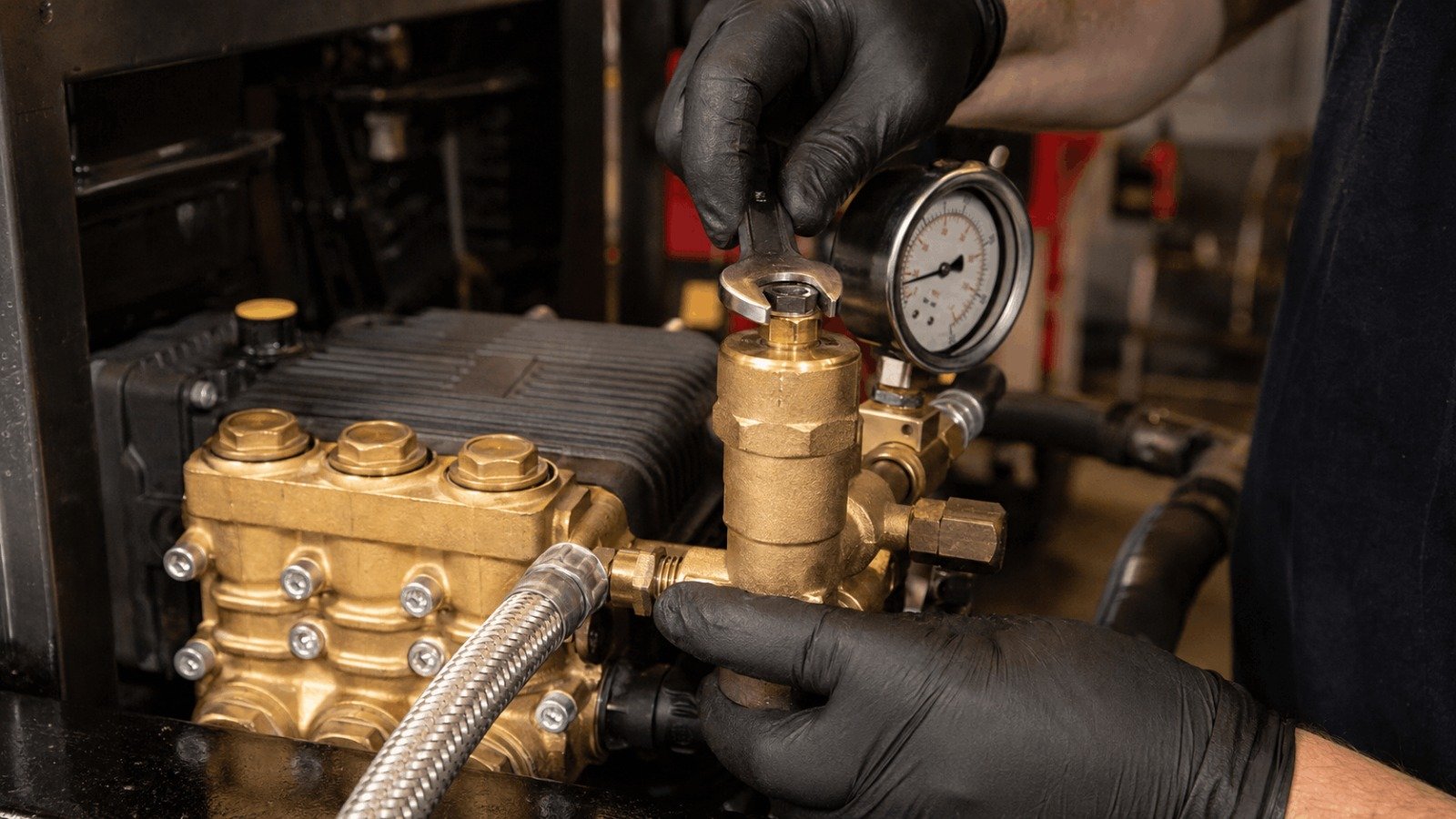
The number on the box is a rating. Listings for some electric washers say the PSI is a peak value measured at the start of the spray. One review of the Sun Joe SPX3000, which is listed at 2,030 PSI, reports about 1,450 PSI at the nozzle during normal use. That does not mean the box is lying. It means the rating and real working pressure are not the same thing.
So when you ask how much PSI you need, add a margin. If your job calls for 1,500 PSI, a 2,000 PSI rated washer is a sensible match. If you aim for 2,500 PSI of real pressure, look at 3,000 PSI ratings. Our Sun Joe SPX3000 review shows how that works on a popular electric model.
How to choose between two washers
When two models look alike, compare these points before you pay:
- PSI and GPM together. Multiply them for a rough comparison.
- Nozzle set. A washer with four quick-connect tips and a soap tip saves money later.
- Hose length and quality. A 25 foot hose is the minimum for most yards.
- Pump and motor type. Cheaper pumps wear faster. Check the warranty.
- Weight and wheels. You will carry it more than you think.
- Your biggest job. Buy for the hardest thing you clean every year, not the average day.
Do you ever need more than 3,000 PSI?
For normal home cleaning, rarely. When people ask how much PSI do you need, 3,000 is the top of the home range. Pressure above 3,000 PSI is for pros, paint removal and tough build-up on hard surfaces. It also raises the risk of damage and injury. If you are unsure, buy a medium-duty washer and add a surface cleaner and a good set of nozzles. That often beats a higher-PSI machine used badly.
If you do need a heavy machine, read up on pump types and flow first. Our guide to what a pressure washer is explains the parts, and our pump maintenance guide helps you look after it.
How to test your PSI choice safely
Before you decide how much PSI do you need for your own jobs, run a quick test on a hidden spot.
- Start with the widest nozzle and the lowest pressure setting if your washer has one.
- Stand back about two to three feet and spray a small hidden area.
- Move closer or switch to a narrower tip only if the dirt does not lift.
- Keep the wand moving and spray at a slight angle, not straight on.
- Rinse from top to bottom so dirty water does not stain clean areas.
- Stop if you see gouges, raised grain, peeling paint or loose caulk.
Common PSI mistakes
- Buying the highest PSI and ignoring GPM.
- Using a 0 degree tip on wood or siding.
- Holding the tip too close to a soft surface.
- Skipping the soap and trying to fix dirt with pressure alone.
- Spraying siding upward so water gets behind it.
- Not checking the siding or deck maker’s cleaning advice.
Why you can trust this guide
- I did not test pressure washers for this guide. It combines retailer and maker guides and shows where they disagree.
- Source order: maker nozzle guide first, then retailer buying guides, then general advice articles. Some PSI numbers vary a lot, so I give ranges and the cautious end first.
- Corrections to the old version: the old page was a Honda 4000 PSI review under this title. It is now a PSI guide, and the Honda content lives in the Honda GX390 article.
- Limits: I could not confirm Consumer Reports or Lowe’s figures. Always follow your washer manual and the surface maker’s advice.
- Last checked: 30 October 2026.
Questions people ask: how much PSI do you need
How much PSI do you need to wash a car?
About 900 to 1,900 PSI, with a wide or soap nozzle. A flow near 2 GPM rinses well without hitting the paint hard.
How much PSI do you need for a concrete driveway?
Most guides say 2,000 to 3,000 PSI. A surface cleaner helps you finish faster and without stripes.
Is 3,000 PSI too much for home use?
For most home jobs, yes. It is useful for large concrete areas and stubborn stains, but it can damage wood, siding and paint.
Is 1,500 PSI enough?
It is enough for cars, furniture, small patios and light cleaning. It is slow on big driveways or old stains.
Does GPM matter more than PSI?
They work together. PSI loosens dirt and GPM rinses it away. A machine with more GPM often cleans a flat area faster even at lower PSI.