Editorial note: This beginner guide is based on established pressure-washer operating principles and safety information from NIOSH, OSHA, and the EPA. Always follow the instructions for your exact machine, detergent, and cleaning surface.
A garden hose can rinse loose dust, but it often struggles with dirt settled into concrete, brick, siding, or outdoor furniture. A pressure washer speeds up these jobs by turning tap water into a focused spray.
What is a pressure washer? It is a powered machine that raises water pressure with a pump and sends the water through a reinforced hose and nozzle. The spray can loosen mud, algae, road film, and other buildup, but incorrect pressure or technique can damage surfaces or cause injury. This guide explains how pressure washers work and how beginners can use them safely.
How Does a Pressure Washer Work?
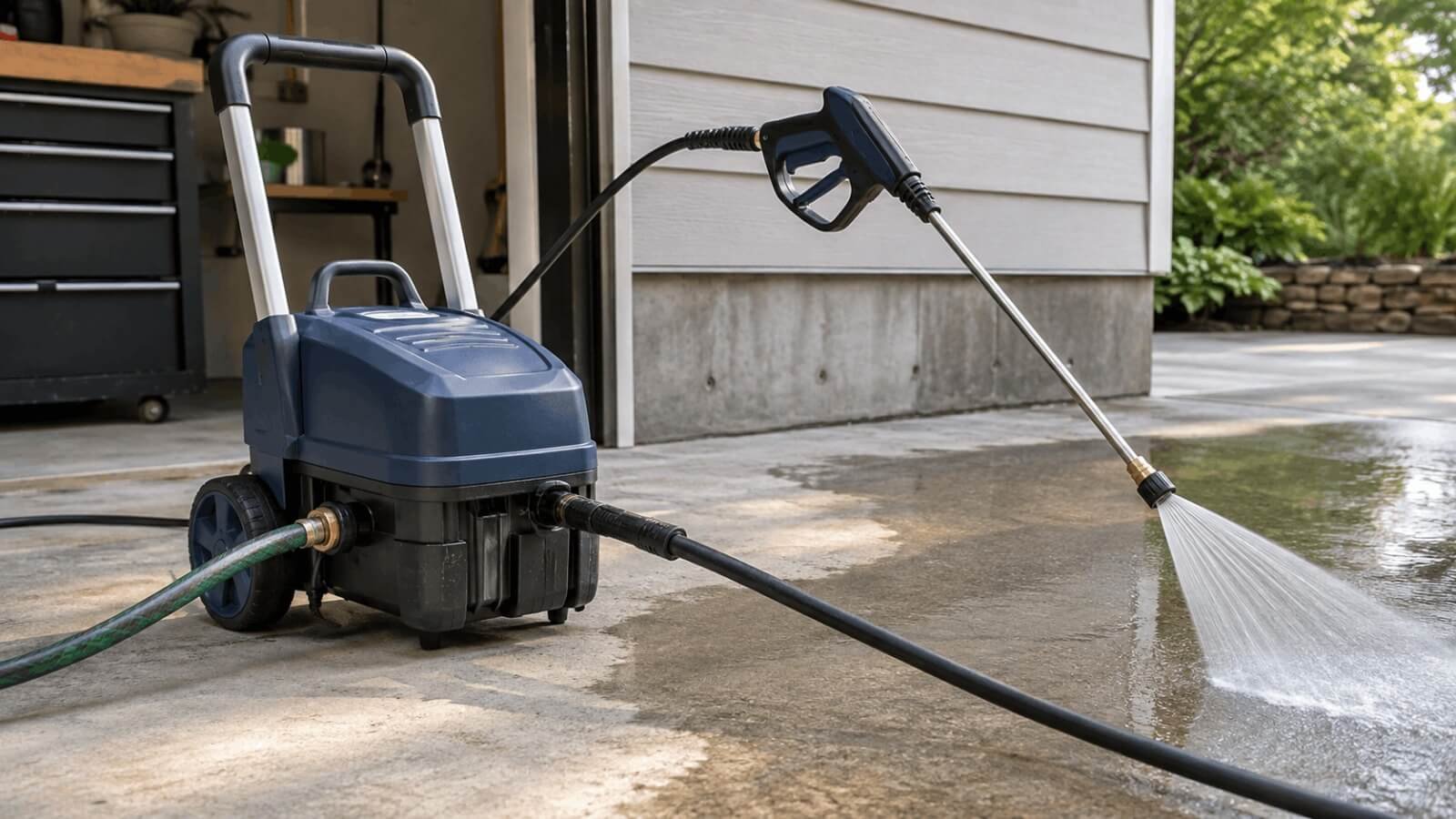
A pressure washer does not create water. It receives water from a hose and uses a motor-driven pump to increase its pressure.
The 6 Stages of the Pressure Washing Process
Water Entry: A garden hose supplies water through the inlet. A small filter helps keep grit away from the pump.
Power Source Activation: Depending on the model, an electric motor, gasoline engine, or battery runs the pump.
Pressure Boost: The pump raises the pressure and moves water into the high-pressure outlet.
High-Pressure Delivery: A reinforced hose, designed to handle the machine’s rated pressure, carries the water.
Flow Control: Pulling the spray gun trigger releases water. An unloader or control system manages pressure when the trigger is released.
Spray Shaping: The nozzle shapes the spray. A narrow spray concentrates force; a wide fan spreads it over a larger, gentler cleaning path.
Changing the nozzle can make the same machine feel much stronger or milder. This is why good cleaning depends on control—not simply choosing the highest pressure.
Key Parts of a Pressure Washer
Understanding the basic parts makes setup, buying, and troubleshooting easier:
Motor or Engine: Powers the pump.
Pump: Increases water pressure.
Inlet and Filter: Connect the supply and keep debris away from the pump.
High-Pressure Hose: Carries water to the gun.
Spray Gun and Wand: Control the spray and add reach.
Nozzle: Controls the spray angle and intensity.
Detergent System: Applies approved soap.
All hoses, guns, fittings, and accessories must be rated for the machine’s pressure, flow, and water temperature.
Key Performance Specs: Understanding PSI, GPM, and CU
What Does PSI Mean? (Pounds Per Square Inch)
PSI describes water pressure and gives a general idea of how strongly the spray can break the bond between dirt and a surface. Higher PSI is not automatically better. A car, painted fence, or softwood deck may need low pressure, a wide nozzle, and more distance. For more help, see our guide to how much PSI you need for different cleaning jobs.
. For more help, see our guide to how much PSI you need for different cleaning jobs.
What Does GPM Mean? (Gallons Per Minute)
GPM measures water flow. Once pressure loosens the dirt, water flow helps carry it away. A higher-GPM machine may clean large, suitable areas faster, but the water supply must provide enough flow for the pump.
What Are Cleaning Units (CU)?
Cleaning units provide a simple comparison formula:
For example:
A 2,000 PSI machine at 1.2 GPM = 2,400 Cleaning Units
A 2,000 PSI machine at 2.0 GPM = 4,000 Cleaning Units
This figure does not measure build quality, pump life, usable working pressure, or surface safety. Compare PSI and GPM, but also consider the pump, hose, fittings, warranty, and intended job.
Comparing Types of Pressure Washers
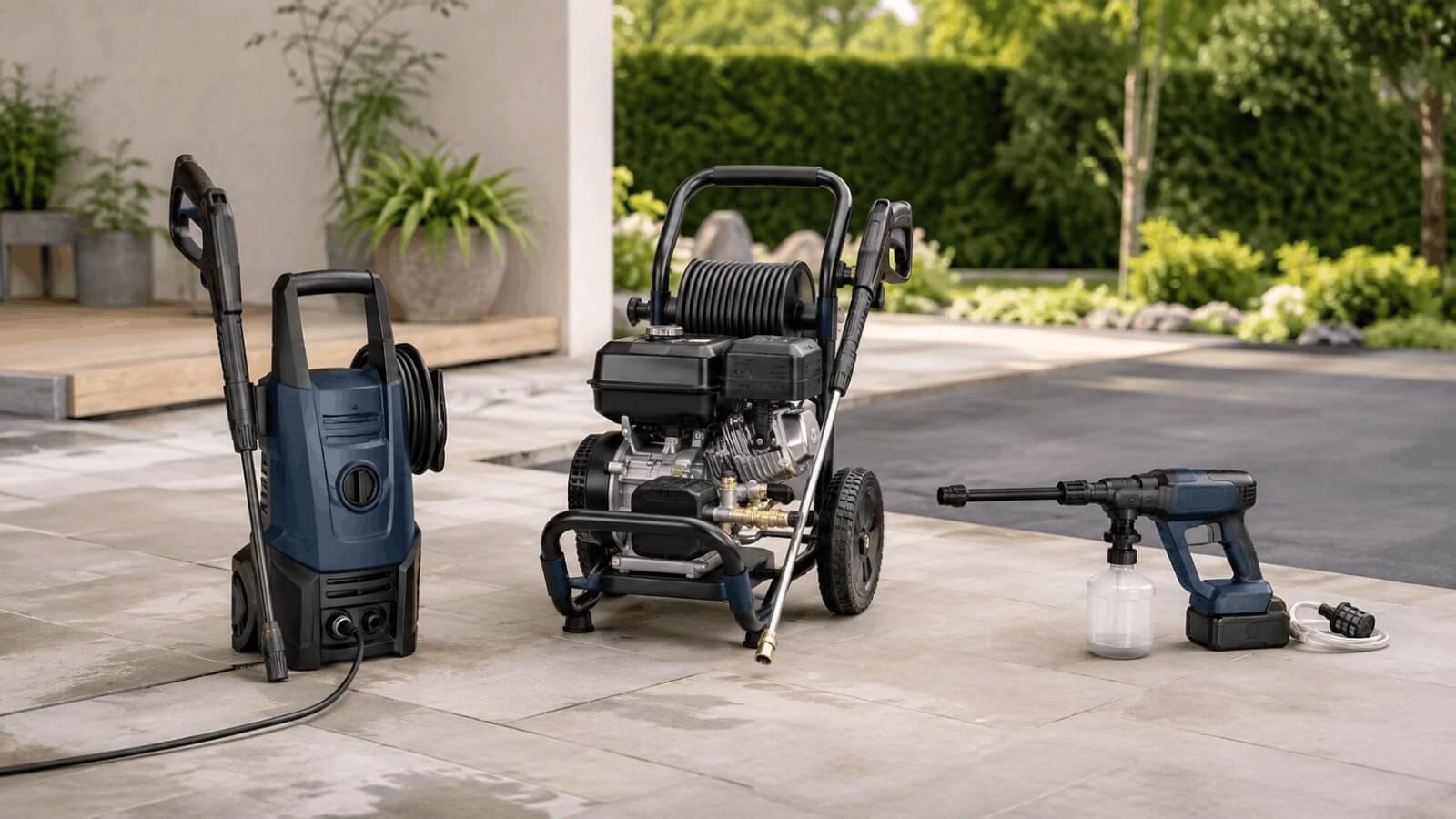
| Type | Main Advantage | Main Limitation | Best For |
| Electric | Quiet, compact, easy to start, low maintenance | Needs suitable outlet; modest flow | Cars, furniture, small patios, routine home cleaning |
| Gas | Higher output, no power cord | Heavy, noisy, produces exhaust, needs engine care | Large driveways, fences, equipment, frequent heavy work |
| Cordless | Portable and quick to set up | Limited pressure, flow, and battery runtime | Bikes, camping gear, balconies, spot cleaning |
Electric Pressure Washers
An electric pressure washer is often the easiest choice for a homeowner. It needs no fuel or engine service, and its smaller size makes storage easier. Use a properly grounded, protected outdoor outlet. Avoid an extension cord unless the manufacturer permits one and gives the correct outdoor rating and wire size.
Gas Pressure Washers
Gas models offer more mobility and often more flow for large areas, but they require fuel, maintenance, and safe storage. Never operate a gasoline pressure washer indoors, in a garage, or in a partly enclosed space. NIOSH warns that carbon monoxide from gasoline-powered pressure washers can quickly reach dangerous levels indoors—even where doors, windows, or fans are used. For help comparing engines, frames, pumps, and hoses, read our gas pressure washer guide. See the CDC/NIOSH carbon monoxide warning
For help comparing engines, frames, pumps, and hoses, read our gas pressure washer guide.
Cordless Pressure Washers
Cordless cleaners favor convenience over power. Some draw clean water from a bucket. Check actual PSI, GPM, battery runtime, and water-source requirements; most cannot replace a full-size machine for a large driveway or deck.
What Can You Clean With a Pressure Washer?
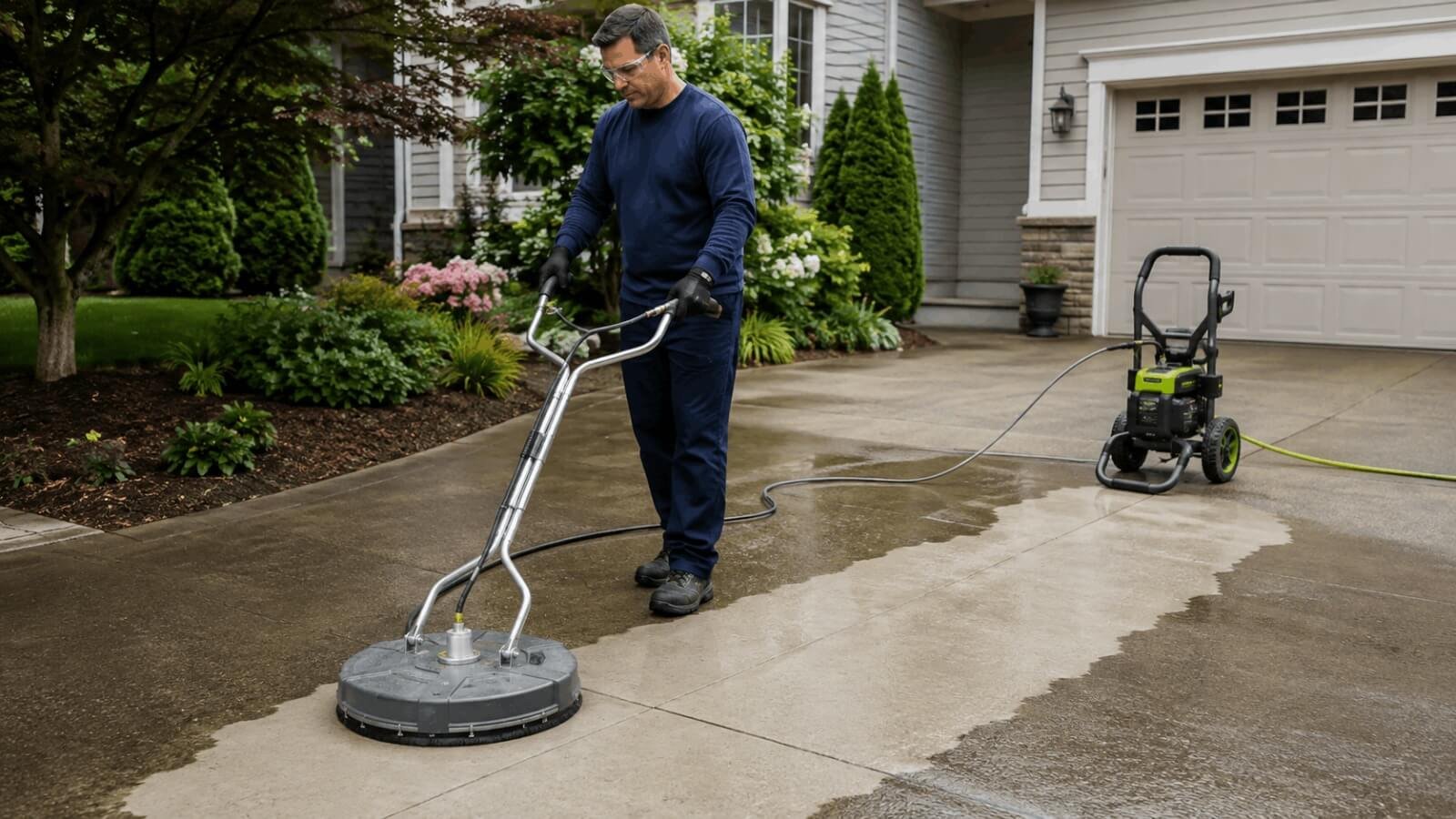
Start with low pressure, a wide fan nozzle, and extra distance. Test a hidden area before cleaning the full surface.
| Surface | Safer Starting Approach | Main Risk |
| Sound Concrete | Moderate pressure; increase only if needed | Etching, stripes, flying debris |
| Car or Motorcycle | Low pressure, wide fan, generous distance | Paint, seal, sensor, or tire damage |
| Wood Deck / Fence | Low pressure; move with the grain | Cut fibers, raised grain, permanent lines |
| Vinyl Siding | Low-pressure wash at level/downward angle | Water forced behind panels/openings |
| Brick or Pavers | Moderate pressure after checking condition | Loose mortar, chipped brick, sand loss |
| Outdoor Furniture | Low pressure and a test spot | Peeling finishes, torn fabric, joint damage |
Note: Oil, rust, and deep stains may need a suitable pre-treatment. Pressure alone may lighten a stain without removing it. Avoid spraying electrical equipment, fragile surfaces, asbestos-containing material, damaged masonry, loose paint, people, or animals.
Pressure Washer Nozzle Color Guide
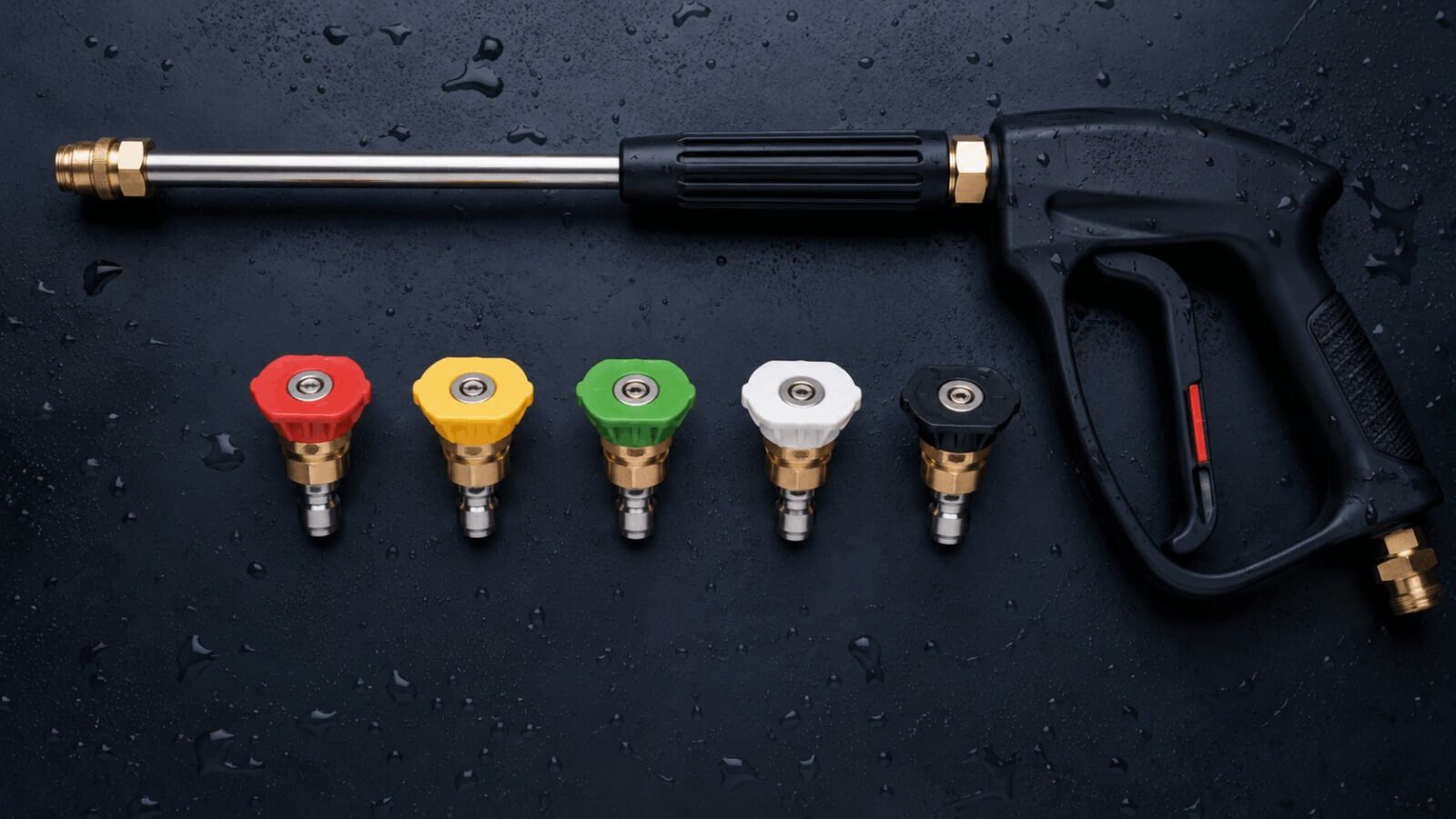
Many quick-connect tips use a common color-coded system:
Red (0°): Concentrated jet with a high risk of injury and surface damage. Rarely needed for home cleaning.
Yellow (15°): Narrow fan for stubborn dirt on durable surfaces.
Green (25°): General cleaning on suitable hard surfaces.
White (40°): Wider, gentler fan for rinsing and delicate work.
Black (Low Pressure): Often used to apply detergent.
Colors and nozzle sizes can vary, so check markings and the manual. The replacement nozzle’s orifice must also match the machine’s flow.
Essential Pressure Washer Safety Rules
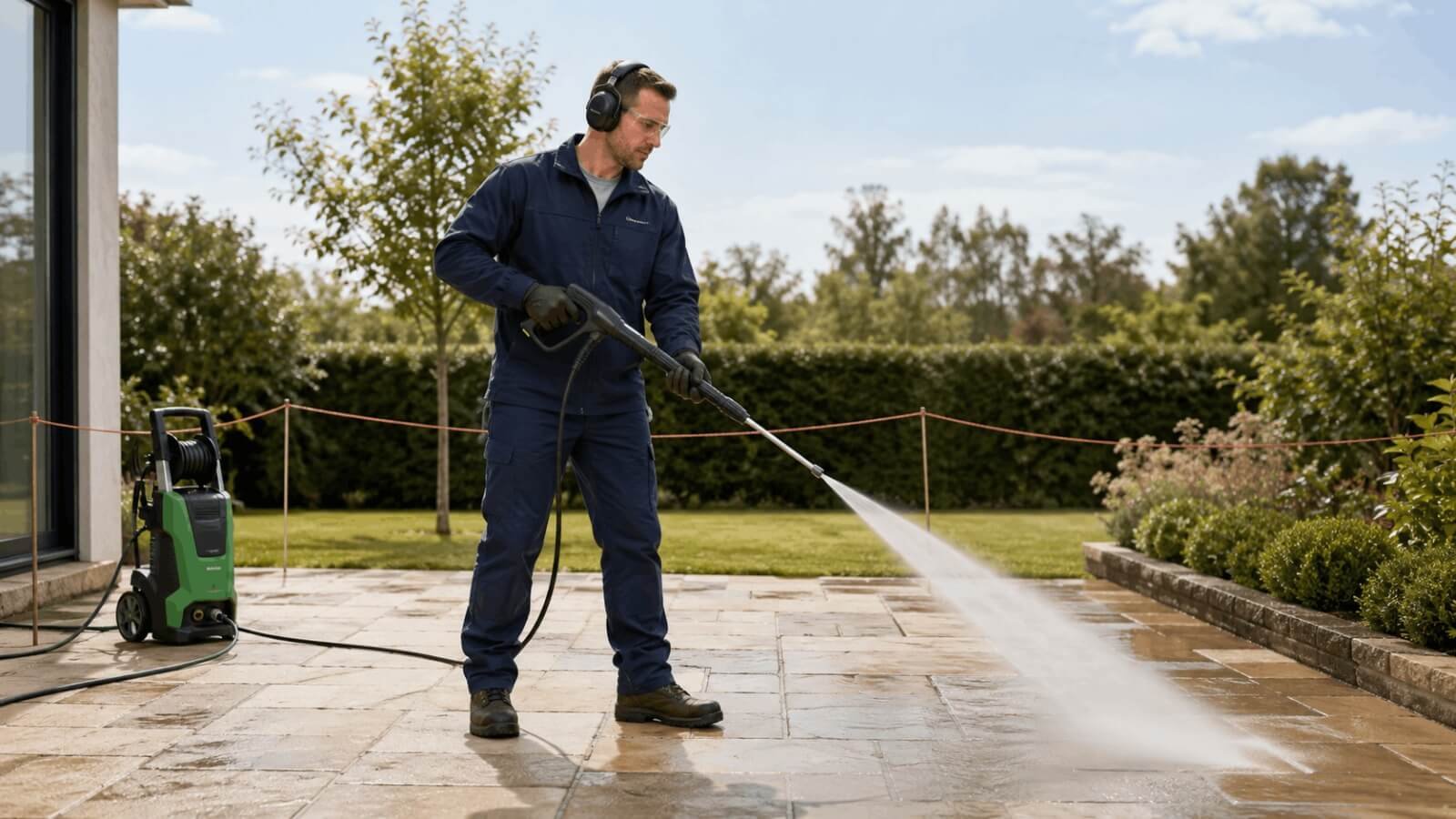
High-pressure water can break the skin and push water or dirt deep into tissue. An OSHA incident report shows that a 3,000 PSI stream penetrated protective footwear and caused an injection wound. Seek prompt medical care after any high-pressure spray injury, even if the wound looks small.
Preparation: Read the manual. Keep children, pets, and bystanders away.
Protective Gear: Wear eye protection, closed-toe slip-resistant shoes, and hearing protection when needed.
Operational Safety: Never point the gun at people/animals. Avoid working on ladders—spray reaction can throw off balance.
Electrical Safety: Keep plugs, cords, and power units away from standing water. Never spray outlets, meters, or wires.
Equipment Checks: Inspect hoses, guns, and fittings before each use. Never patch a high-pressure hose.
Pressure Relief: Turn off the machine and water, then squeeze the trigger to release trapped pressure before changing attachments.
Gas Safety: Keep gas engines outdoors and away from doors, windows, and vents.
Environmental Safety: Control dirty runoff. Sweeping debris first and preventing polluted water from entering storm drains helps protect local waterways.
Step-by-Step: How to Use a Pressure Washer Safely
Prepare the Area: Remove loose stones, toys, and cords. Close nearby doors and windows. Protect delicate plants.
Inspect and Connect: Check hoses, O-rings, fittings, and nozzles. Connect according to the manual and lock quick-connect fittings fully.
. Learn more from the EPA’s stormwater runoff guidance.
Purge Air from the System: Open the water tap. With the machine OFF, hold the spray gun trigger until water flows steadily to clear trapped air.
Start With a Wide Spray: Select a wide fan nozzle (e.g., 40°) and test a hidden area from a generous distance.
Clean in Sections: Use smooth, overlapping passes. Keep the nozzle moving at a steady angle and distance.
Apply Detergent Correctly: Use pressure-washer-approved soap. Allow the stated dwell time, but do not let it dry on the surface.
Rinse and Shut Down: Rinse from clean areas toward the drainage point. Turn off the machine and tap, squeeze the trigger to release pressure, and disconnect hoses.
How to Choose the Right Pressure Washer
Do not buy on PSI alone. Consider these parameters:
Largest Regular Job: A compact electric model handles vehicles and small patios; large driveways justify more GPM.
Water Supply Flow: Ensure your tap flow matches or exceeds the machine’s required GPM.
Working Reach: Measure distances from water and power sources to the furthest cleaning spots.
Fittings and Quality: Quick-connect fittings allow easier attachment matching.
Portability and Storage: Consider wheel size, frame style, and hose storage features.
Service and Specifications: Review warranty, replacement part availability, and actual working ratings vs. advertised peak figures.
Common Beginner Mistakes to Avoid
Choosing maximum PSI while ignoring GPM and surface safety.
Holding the spray tip too close or using an excessively narrow nozzle angle.
Running the pump without turning on the water and purging trapped air first.
Using household bleach, solvents, or unapproved chemical cleaners.
Leaving the pump running in bypass mode for extended periods.
Operating a gasoline pressure washer inside an enclosed space like a garage.
Basic Pressure Washer Maintenance & Storage
After each use, flush detergent lines, release trapped pressure, and inspect hose fittings. Clean the water inlet filter and store hoses in wide loops.
Electric Models: Inspect power cords, plugs, GFCI units, and motor vents.
Gas Models: Perform routine oil changes, air filter checks, spark plug inspections, and fuel system care.
Winterization: Freezing water will crack pumps and spray guns. Drain the system completely and use an approved pump protector before storing in a frost-free space.
Frequently Asked Questions (FAQs)
Is a pressure washer the same as a power washer?
The terms are often used interchangeably. Strictly speaking, a power washer includes a water heating element, while standard residential pressure washers use unheated tap water.
How much PSI does a beginner need?
There is no single ideal number. Choose based on your most demanding regular task. Moderate output paired with the right nozzle and soap is usually better than excessive pressure.
Can a pressure washer damage concrete?
Yes. Zero-degree nozzles, excessive PSI, or holding the wand stationary can etch concrete. New, cracked, or decorative concrete requires extra caution.
Can I use a pressure washer on my car?
Yes. Use a low-pressure setting, a wide fan nozzle (40° or soap nozzle), and maintain a safe distance. Avoid spraying damaged paint, electrical components, seals, and sensors closely.
Can I use any soap in a pressure washer?
No. Use only soaps labeled as pressure-washer safe. Unapproved household detergents can damage pump seals, strip vehicle coatings, or kill plants.
Why does my pressure washer keep losing pressure?
Common causes include restricted water supply, a clogged inlet filter screen, blocked nozzle tips, air trapped in the line, kinked supply hoses, or worn pump seals.
Helpful Resources
- CDC/NIOSH: Carbon monoxide risks from indoor pressure-washer use
- OSHA: High-pressure injection injury example
- EPA: Urbanization and stormwater runoff
Conclusion
A pressure washer uses a motor-driven pump to raise water pressure, a high-pressure hose to carry the water, and a nozzle to control the spray. PSI helps loosen dirt, while GPM helps wash it away.
Electric models are convenient for routine home cleaning, gas units suit larger jobs, and cordless cleaners are useful for small tasks away from a tap. Whichever type you choose, begin with a wide spray and low cleaning intensity. Test first, keep the wand moving, protect yourself and the surface, and follow the manual. The best result comes from control—not maximum pressure.