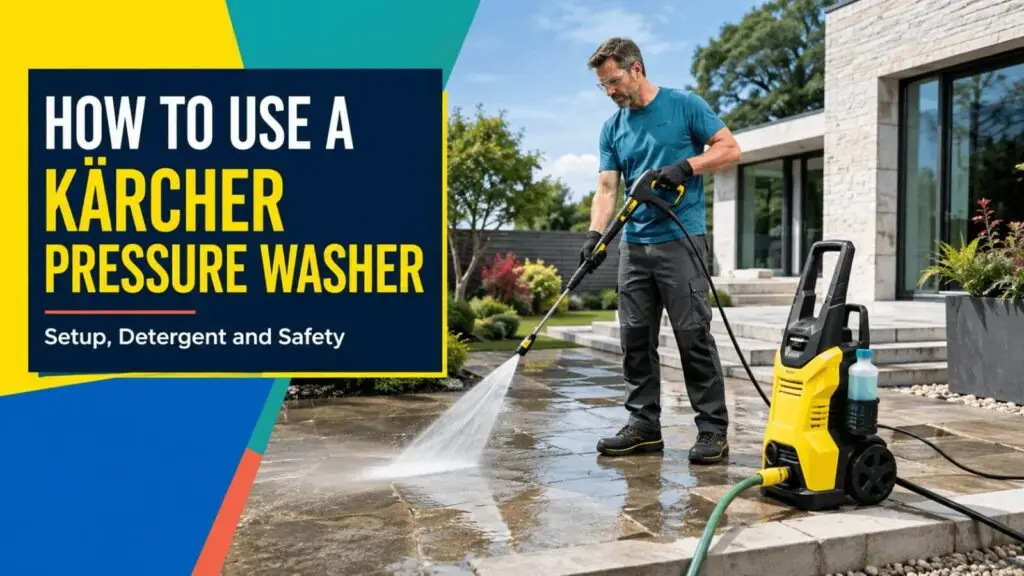
How to Use a Kärcher Pressure Washer: Setup, Detergent and Safety
Learning how to use a Kärcher pressure washer is simple, but detergent systems and controls vary by model. The basic sequence is the same: connect the hoses, open the water, remove trapped air, connect power safely, select a gentle pressure and test the spray. This guide covers those steps and explains the main Kärcher detergent systems. Quick answer: Set the washer on level ground, connect the high-pressure hose and spray gun, attach the garden hose, turn on the water, and squeeze the trigger until the flow is steady. Connect the washer to a protected electrical supply, switch it on and begin with the Vario Power lance at a low setting. Apply detergent only through the system designed for your model and only in its low-pressure or MIX setting. Check Your Kärcher Model Before Starting K2 through K7 identify performance classes, but machines within one class can have different hoses, guns and controls. Find the full model and part number on the machine’s rating plate. Then check the supplied manual or download the correct version from Kärcher’s official operating-manual finder. The model manual must take priority if one of its instructions differs from this general guide. Common Kärcher detergent and control systems System or range What you may see How detergent is normally selected K2/K3 and some Classic models Small suction hose with filter Put the filtered end in approved detergent and turn the Vario lance to its lowest-pressure setting K4/K5 Power Control and selected models Plug ’n’ Clean bottle inlet Insert the compatible bottle as directed and select the detergent position on the lance Smart Control models 3-in-1 Multi Jet lance and gun display Turn the lance to MIX; confirm the Plug ’n’ Clean bottle is seated correctly Newer Comfort models 2Way!Wash detergent system Follow the model guide for bottle or foam-nozzle delivery and dosage control Foam-nozzle kits Bottle attached to a separate foam jet Fit the foam jet to the trigger gun and adjust the detergent control on the attachment Do not force a bottle into a machine that uses a suction tube or assume every K5 works identically. The official Kärcher range page explains newer features. What You Need Before Setup Prepare everything before connecting the power: Your Kärcher pressure washer and the correct manual Kärcher-compatible trigger gun and high-pressure hose Vario Power, Multi Jet or another suitable spray lance A clean garden hose with the correct inlet connector A reliable cold-water supply Pressure-washer detergent suitable for the surface, if required Safety glasses, gloves and closed-toe, nonslip footwear An outdoor electrical outlet protected by an RCD or GFCI, as applicable in your country Inspect the cord, plug, pressure hose, gun, lance and couplings. Do not operate the washer with a damaged cord, bulging hose, cracked gun or connector that will not lock. Stop and contact support if the cord becomes unusually warm or the hose swells. How to Use a Kärcher Pressure Washer Step by Step 1. Place the washer on stable ground Position the machine on firm, level ground, away from direct spray and standing water. Uncoil the hose and cable to prevent twists and trip hazards. Keep the cable away from the wet work area, separate it from the water hose and prevent children or pets from entering. Use the operating position shown in your manual. 2. Connect the high-pressure hose With the machine switched off and unplugged, connect the high-pressure hose to the washer’s high-pressure outlet. On a Quick Connect model, push the hose end in until it locks. Attach the other end to the trigger gun if it is not already fitted. Give each connection a gentle pull. Do not force plastic couplings or use a hose or gun rated below the machine’s requirement. 3. Fit the correct spray lance Insert the lance into the trigger gun and turn or click it into its locked position, depending on the connector. Start with the Vario Power or adjustable flat-spray lance. It gives more control and is safer for testing an unfamiliar surface. The Dirt Blaster’s concentrated rotating jet is for stubborn dirt on hard materials. It can strip paint or damage wood, vehicle finishes and soft stone, so begin with the Vario lance. 4. Connect the cold-water supply Check that the small inlet filter is clean and correctly installed. Attach the hose connector to the washer’s water inlet, then connect the garden hose. Avoid a kinked, crushed or leaking supply hose. Turn the tap on fully. Domestic Kärcher pressure washers are normally cold-water machines. Kärcher states that the inlet temperature for its residential electric models should not exceed 40°C/104°F. Hot water can damage a pump that was not designed for it. If your model can draw from a tank, use the specified filtered suction hose and priming method. Not every model supports this feature. 5. Purge trapped air before switching on Leave the machine switched off. With the water supply open, release the trigger safety lock and squeeze the trigger. Water may cough or pulse at first as air leaves the hose, pump and gun. Keep holding the trigger until a smooth, steady stream comes from the lance. This step gives the pump a proper water supply before the motor starts. Running the unit without water, even briefly, can damage the pump. If no water appears, switch nothing on. Recheck the tap, inlet connector, hose kinks and inlet filter. 6. Connect electrical power safely Dry your hands and confirm that the switch is in the OFF or 0 position. Connect the plug directly to a suitable outdoor outlet protected by a working residual-current device. North American versions may have a GFCI built into the plug; Kärcher advises testing it as part of startup and not using the washer if the test fails. Avoid an extension lead. If the manual permits one, it must be outdoor-rated, correctly grounded where required, heavy enough for the load and within the stated length. Never join several leads or remove a grounding pin. Keep the plug, outlet and cable