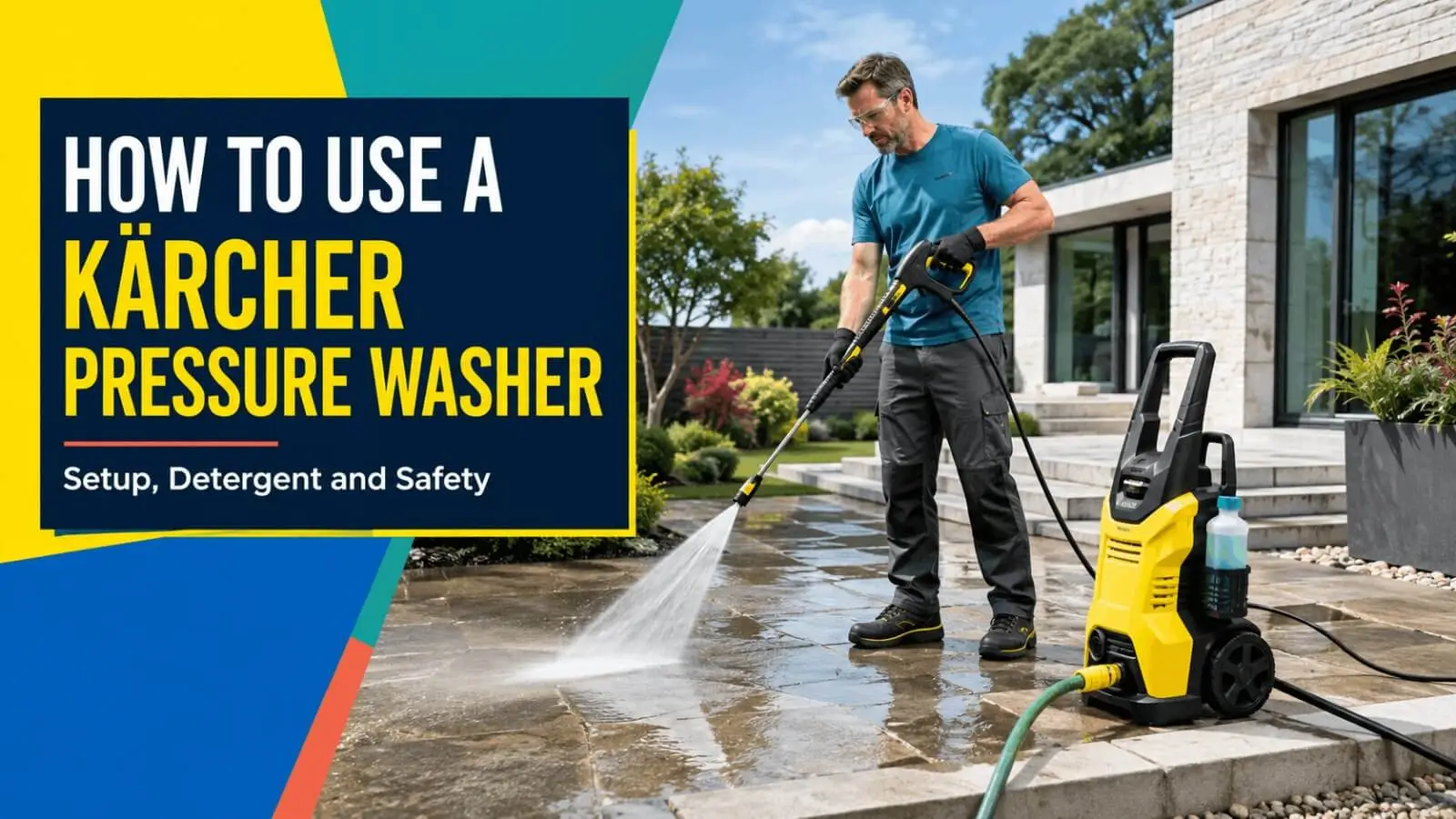
Learning how to use a Kärcher pressure washer is simple, but detergent systems and controls vary by model. The basic sequence is the same: connect the hoses, open the water, remove trapped air, connect power safely, select a gentle pressure and test the spray. This guide covers those steps and explains the main Kärcher detergent systems.
Quick answer: Set the washer on level ground, connect the high-pressure hose and spray gun, attach the garden hose, turn on the water, and squeeze the trigger until the flow is steady. Connect the washer to a protected electrical supply, switch it on and begin with the Vario Power lance at a low setting. Apply detergent only through the system designed for your model and only in its low-pressure or MIX setting.
Check Your Kärcher Model Before Starting

K2 through K7 identify performance classes, but machines within one class can have different hoses, guns and controls.
Find the full model and part number on the machine’s rating plate. Then check the supplied manual or download the correct version from Kärcher’s official operating-manual finder. The model manual must take priority if one of its instructions differs from this general guide.
Common Kärcher detergent and control systems
| System or range | What you may see | How detergent is normally selected |
| K2/K3 and some Classic models | Small suction hose with filter | Put the filtered end in approved detergent and turn the Vario lance to its lowest-pressure setting |
| K4/K5 Power Control and selected models | Plug ’n’ Clean bottle inlet | Insert the compatible bottle as directed and select the detergent position on the lance |
| Smart Control models | 3-in-1 Multi Jet lance and gun display | Turn the lance to MIX; confirm the Plug ’n’ Clean bottle is seated correctly |
| Newer Comfort models | 2Way!Wash detergent system | Follow the model guide for bottle or foam-nozzle delivery and dosage control |
| Foam-nozzle kits | Bottle attached to a separate foam jet | Fit the foam jet to the trigger gun and adjust the detergent control on the attachment |
Do not force a bottle into a machine that uses a suction tube or assume every K5 works identically. The official Kärcher range page explains newer features.
What You Need Before Setup
Prepare everything before connecting the power:
Your Kärcher pressure washer and the correct manual
Kärcher-compatible trigger gun and high-pressure hose
Vario Power, Multi Jet or another suitable spray lance
A clean garden hose with the correct inlet connector
A reliable cold-water supply
Pressure-washer detergent suitable for the surface, if required
Safety glasses, gloves and closed-toe, nonslip footwear
An outdoor electrical outlet protected by an RCD or GFCI, as applicable in your country
Inspect the cord, plug, pressure hose, gun, lance and couplings. Do not operate the washer with a damaged cord, bulging hose, cracked gun or connector that will not lock. Stop and contact support if the cord becomes unusually warm or the hose swells.
How to Use a Kärcher Pressure Washer Step by Step

1. Place the washer on stable ground
Position the machine on firm, level ground, away from direct spray and standing water. Uncoil the hose and cable to prevent twists and trip hazards.
Keep the cable away from the wet work area, separate it from the water hose and prevent children or pets from entering. Use the operating position shown in your manual.
2. Connect the high-pressure hose
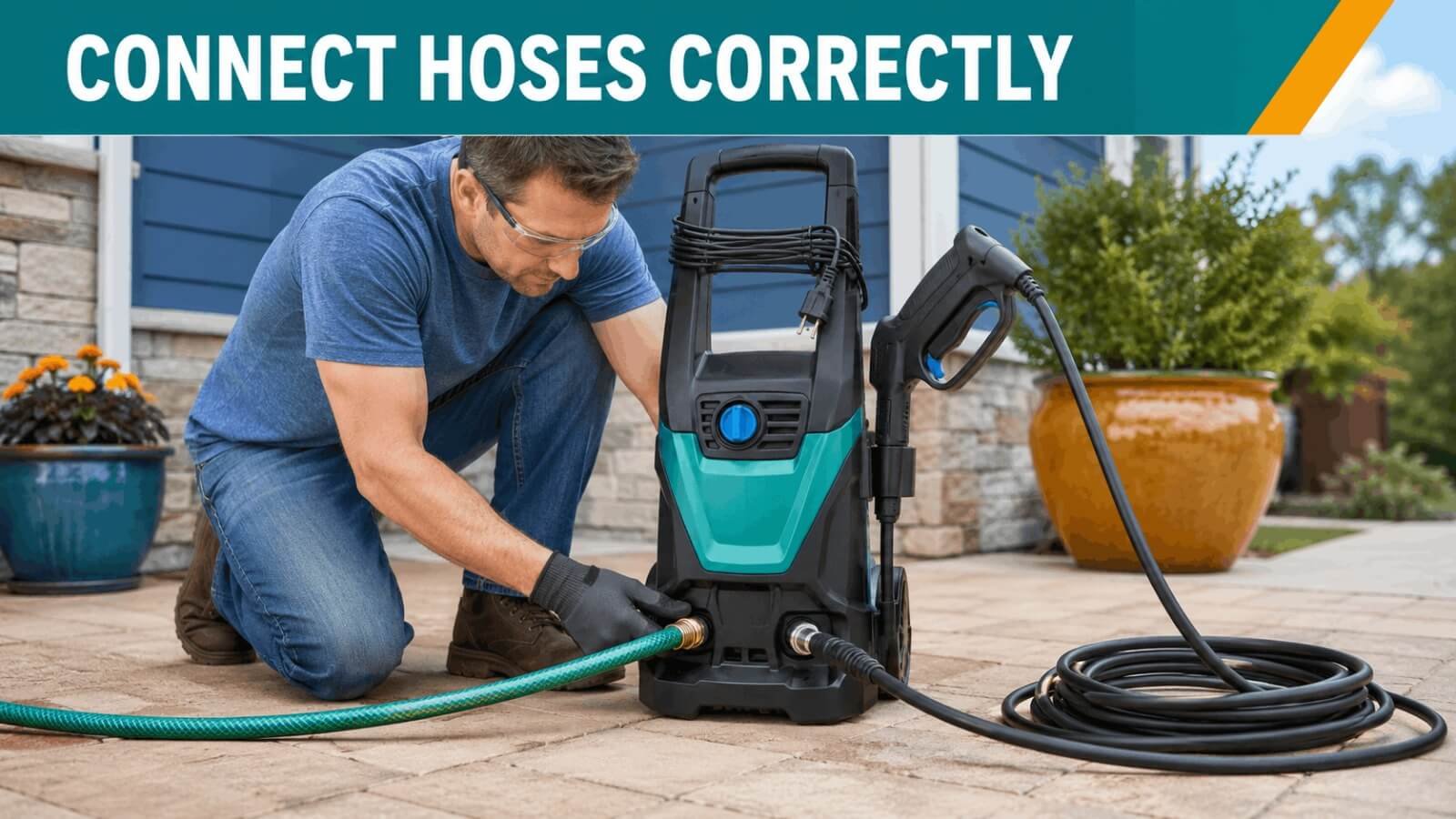
With the machine switched off and unplugged, connect the high-pressure hose to the washer’s high-pressure outlet. On a Quick Connect model, push the hose end in until it locks. Attach the other end to the trigger gun if it is not already fitted.
Give each connection a gentle pull. Do not force plastic couplings or use a hose or gun rated below the machine’s requirement.
3. Fit the correct spray lance
Insert the lance into the trigger gun and turn or click it into its locked position, depending on the connector. Start with the Vario Power or adjustable flat-spray lance. It gives more control and is safer for testing an unfamiliar surface.
The Dirt Blaster’s concentrated rotating jet is for stubborn dirt on hard materials. It can strip paint or damage wood, vehicle finishes and soft stone, so begin with the Vario lance.
4. Connect the cold-water supply
Check that the small inlet filter is clean and correctly installed. Attach the hose connector to the washer’s water inlet, then connect the garden hose. Avoid a kinked, crushed or leaking supply hose.
Turn the tap on fully. Domestic Kärcher pressure washers are normally cold-water machines. Kärcher states that the inlet temperature for its residential electric models should not exceed 40°C/104°F. Hot water can damage a pump that was not designed for it.
If your model can draw from a tank, use the specified filtered suction hose and priming method. Not every model supports this feature.
5. Purge trapped air before switching on
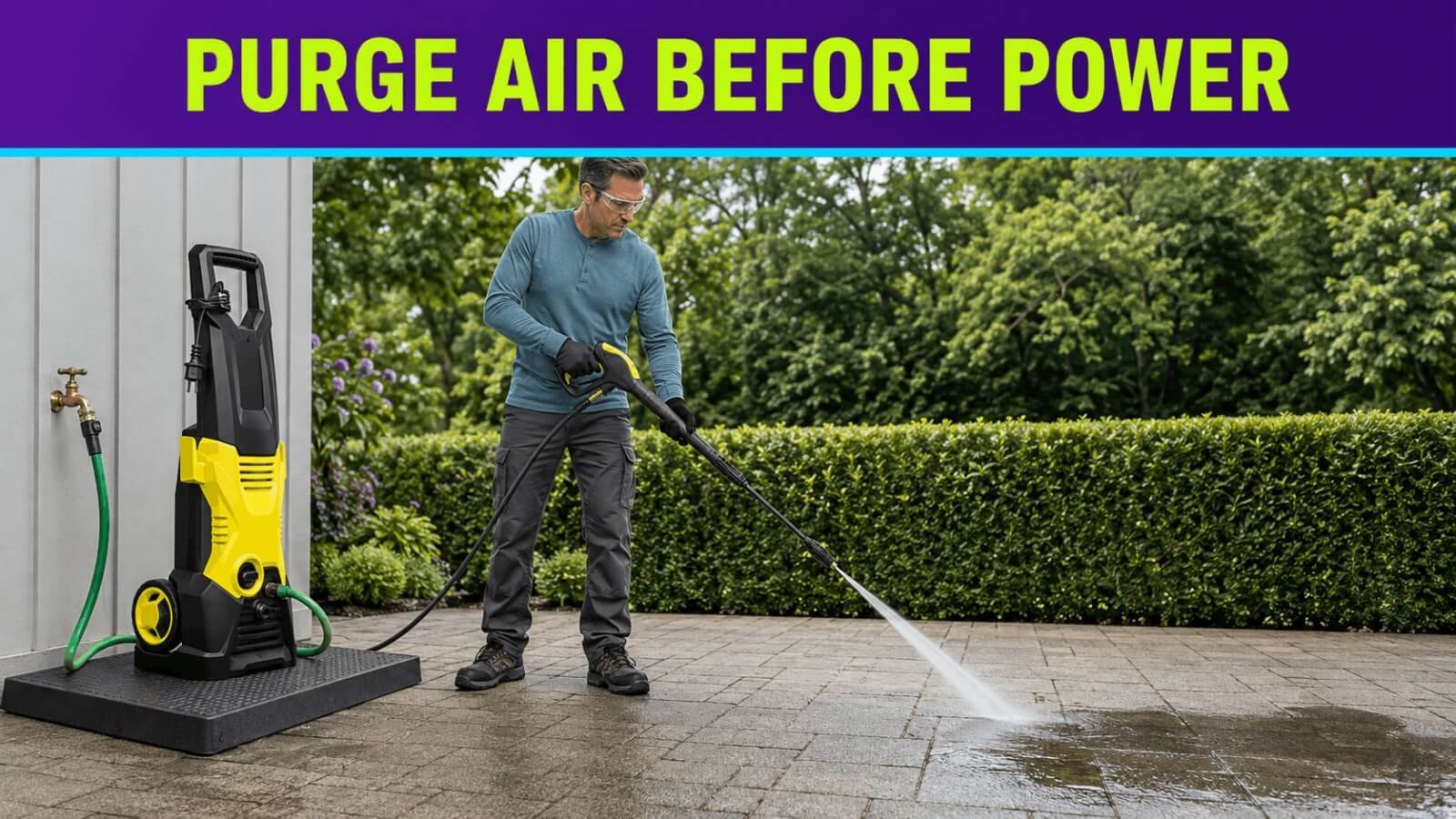
Leave the machine switched off. With the water supply open, release the trigger safety lock and squeeze the trigger. Water may cough or pulse at first as air leaves the hose, pump and gun.
Keep holding the trigger until a smooth, steady stream comes from the lance. This step gives the pump a proper water supply before the motor starts. Running the unit without water, even briefly, can damage the pump.
If no water appears, switch nothing on. Recheck the tap, inlet connector, hose kinks and inlet filter.
6. Connect electrical power safely
Dry your hands and confirm that the switch is in the OFF or 0 position. Connect the plug directly to a suitable outdoor outlet protected by a working residual-current device. North American versions may have a GFCI built into the plug; Kärcher advises testing it as part of startup and not using the washer if the test fails.
Avoid an extension lead. If the manual permits one, it must be outdoor-rated, correctly grounded where required, heavy enough for the load and within the stated length. Never join several leads or remove a grounding pin.
Keep the plug, outlet and cable connections dry and away from the spray. Never direct water at electrical equipment, wiring, outdoor sockets, lighting or the pressure washer itself.
7. Select a low starting pressure

Turn a Vario Power lance toward SOFT or the lowest suitable setting. On a Power Control model, check the pressure indicator on the trigger gun. On a Smart Control unit, select the surface or pressure level through the gun and app as described in the model instructions.
Maximum pressure is not always better. It can etch concrete, raise wood grain, loosen mortar, push water behind siding or mark car paint.
8. Start the machine and test the spray
Hold the gun with both hands, point the lance at an empty area and switch the washer to ON or I. On many electric Kärcher units, the motor runs when you pull the trigger and stops when you release it.
Test a hidden section first. Begin farther away and move closer only when necessary; delicate surfaces need more distance and lower pressure.
9. Clean with controlled, overlapping passes
Stand securely and sweep the lance in overlapping passes. Do not hold the jet in one spot. Work in small sections and rinse before detergent dries. Keep the nozzle away from people, animals, skin and footwear; a pressure-washer jet can cause a serious injection injury.
How to Use Detergent in a Kärcher Pressure
 Washer
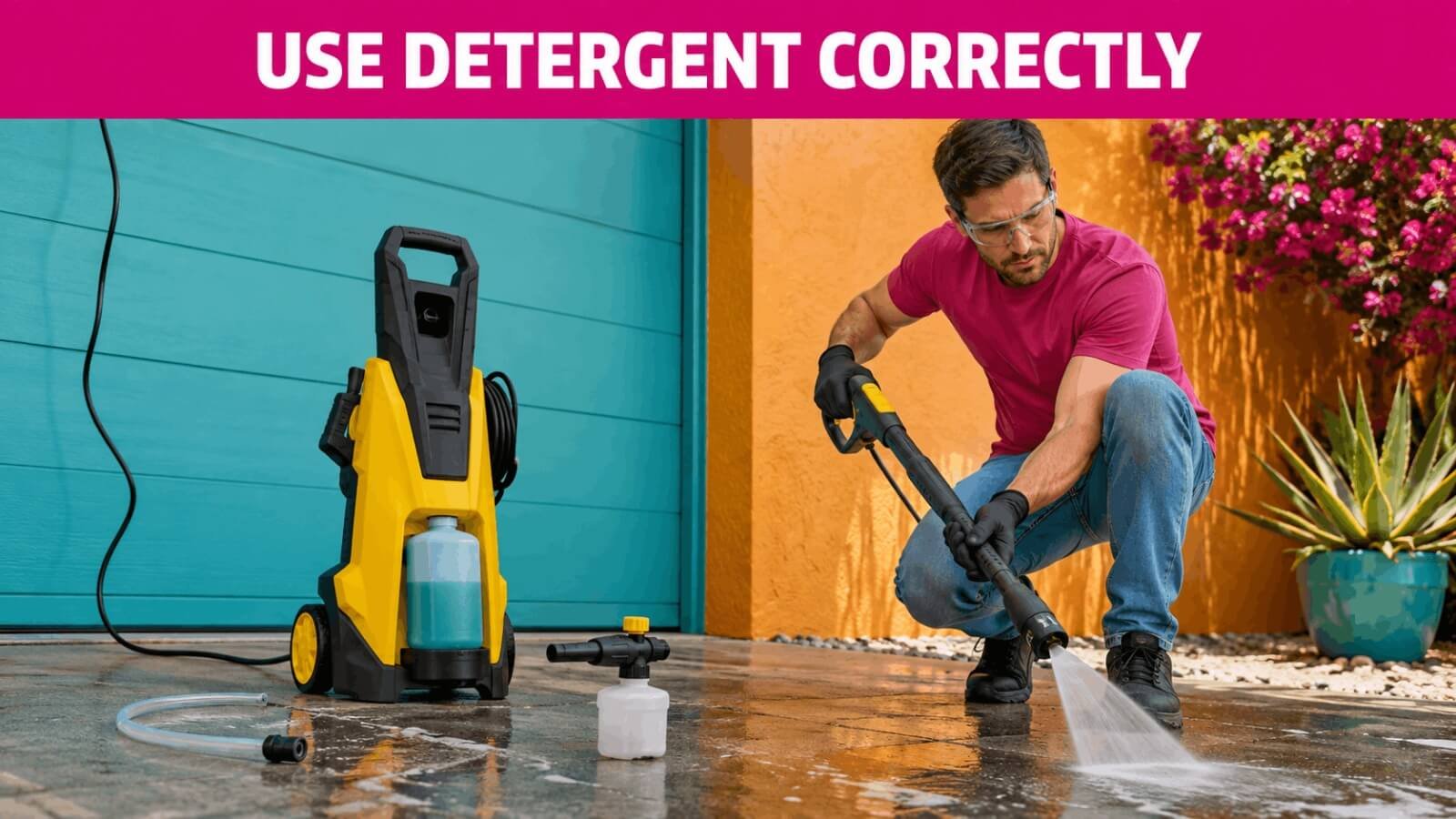
Detergent normally enters the washer only at low pressure. Use a pressure-washer formula suitable for the surface. Kärcher warns against bleach, chlorine, acids, ammonia, solvents, petrol, oil and other corrosive chemicals because they can harm the pump and surface.
Using a detergent suction hose
Set the Vario Power lance fully toward SOFT, or select the detergent setting shown in the manual.
Place the filtered end of the suction tube into the approved detergent container.
Start the washer and squeeze the trigger.
Allow several seconds for detergent to travel through the tube.
Apply an even coat without letting the product dry.
When finished, place the tube in clean water and run fresh water through the detergent circuit.
Using Plug ’n’ Clean
Insert the compatible bottle into the Plug ’n’ Clean opening as shown in the manual and select detergent or MIX on the lance. Apply an even coat, follow the label’s contact time and do not let the cleaner dry.
Using a Smart Control or Multi Jet model
On compatible Smart Control machines, turn the 3-in-1 Multi Jet lance to MIX. If the detergent is not drawn, Kärcher recommends checking both the MIX setting and whether the Plug ’n’ Clean bottle is correctly positioned with its opening facing down.
Using a foam nozzle or 2Way!Wash system
Fit the foam bottle with compatible detergent and begin with low dosage. Flush the attachment with clean water afterward. Newer Comfort machines may use 2Way!Wash; follow that model’s instructions instead of adapting a Plug ’n’ Clean tutorial.
Recommended Starting Settings by Surface
| Surface | Safer starting choice | Important caution |
| Car paint | Low pressure, wide fan, generous distance | Avoid seals, damaged paint and close-range spraying |
| Painted fence or siding | Low pressure and hidden-area test | Do not force water behind panels or lift loose paint |
| Wood deck | Soft setting and wide passes | High pressure can raise grain and leave lines |
| Concrete driveway | Medium setting; increase only if needed | A concentrated jet can etch weak or fresh concrete |
| Brick or stone | Low-to-medium pressure | Avoid loose mortar and delicate natural stone |
| Garden furniture | Low pressure | Check material, paint and joints before cleaning |
| Durable paving | Vario lance first; surface cleaner if suitable | Reserve the Dirt Blaster for sound, hard material |
These are starting points, not universal settings. The correct option depends on your Kärcher model, attachment, distance and the condition of the surface.
Essential Kärcher Pressure Washer Safety Rules
Wear eye protection and closed-toe, nonslip footwear.
Hold the gun securely with both hands before pulling the trigger.
Engage the trigger safety lock whenever you pause or change an accessory.
Never point the lance at a person, animal or any part of your body.
Never spray power outlets, wiring, lights or electrical equipment.
Do not use the machine near flammable liquids or draw solvents through the pump.
Keep the washer stable and remain on the ground; do not pressure wash from a ladder.
Release stored pressure before removing a hose, lance or nozzle.
Stop immediately if the power cable becomes hot or the high-pressure hose swells.
Keep bystanders away from flying dirt, paint chips and stones.
Common Problems and Quick Checks
The washer pulses or loses pressure
Open the tap fully, remove hose kinks, clean the inlet filter and nozzle, check for leaks and purge the air again.
The motor does not start
Check the supply, plug protection device, switch and trigger. Confirm the correct voltage, remove an unsuitable extension lead and let an overheated motor cool. Contact support if the problem continues.
Detergent is not being drawn
Select SOFT, low pressure or MIX. Submerge the suction filter or reseat the Plug ’n’ Clean bottle, remove tube kinks and flush dried cleaner.
The hose or connector leaks
Switch off, unplug, close the tap and release pressure. Check the connection and O-ring, replacing damaged parts with compatible components.
Correct Shutdown and Storage
Stop applying detergent and flush the detergent path with clean water.
Release the trigger, engage its safety lock and turn the machine to OFF or 0.
Unplug the power cord with dry hands.
Close the water tap.
Point the gun safely and squeeze the trigger to release stored pressure.
Lock the trigger again.
Disconnect the garden hose, followed by the high-pressure hose if required for storage.
Drain water from the hoses and accessories without sharply bending them.
Coil the dry cable and hoses loosely in their storage positions.
Store the machine upright in a dry, frost-free area.
Rinse a removable detergent tank after use. If the washer may experience freezing temperatures, follow Kärcher’s winter-storage instructions and use an approved pump protector where recommended. Water freezing inside the pump can cause expensive damage.
Frequently Asked Questions
Why does my Kärcher only take detergent on low pressure?
The detergent injector depends on the lower-pressure setting to draw cleaner into the water flow. Turn a Vario lance fully toward SOFT or select MIX/detergent mode on a compatible Multi Jet system.
Can I use a Dirt Blaster on a car or wood deck?
It is not a safe first choice. The concentrated rotating jet can damage paint, seals, soft wood and other delicate materials. Start with the Vario Power lance at low pressure.
Do I need the Kärcher app?
No. Most models can be operated without it. On supported Power Control and Smart Control products, the app provides setup help and setting suggestions, while some smart functions use Bluetooth.
Final Thoughts
To use a Kärcher pressure washer safely, match the instructions to the exact model. Connect water before power, purge the air, begin gently and test every surface. Apply detergent only through the system designed for the machine. Afterward, flush the detergent path, release pressure, drain the system and protect it from freezing.