pressure washer safety

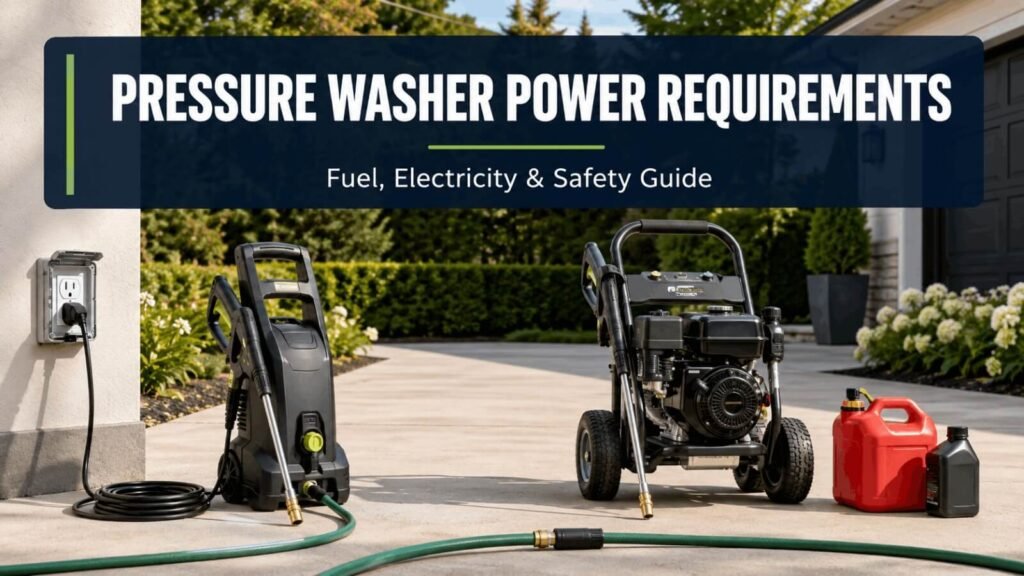
Pressure washer power requirements guide featuring electric and gas pressure washers side by side outdoors
How to Guides

Pressure Washer Power Requirements: Fuel, Electricity, and Safety Guide

Editorial note: This educational guide explains common power and fuel requirements; it is not a substitute for the manual, rating plate, local electrical rules, or advice from a qualified electrician. Safety information was checked against CDC and CPSC guidance. Fuel requirements must always come from the exact engine manual. A pressure washer can have enough PSI for a driveway yet still perform poorly because its power supply is wrong. An electric model may trip the breaker when connected to an overloaded circuit. A gas machine may surge or refuse to start after sitting with old fuel. In both cases, the pump may be fine—the problem begins before water is pressurized. Understanding pressure washer power requirements means checking more than whether a machine is electric or gas. Electric units need the correct voltage, amperage, grounding, and circuit protection. Gas machines need the fuel and engine oil specified in their manuals. Cordless units need compatible charged batteries, and every pressure washer needs an adequate water supply. This guide explains those requirements in simple terms so homeowners, DIY users, and cleaning professionals can choose, set up, and store their equipment safely. Pressure Washer Power Requirements at a Glance Residential corded electric: Commonly a grounded 120V outdoor circuit in the U.S. Needs nameplate amps, GFCI, cord condition, and circuit capacity checks. Main limitation is outlet and cord reach. Commercial electric: Model-specific 120V, 208V, 230V, 460V, single- or three-phase supply. Requires checking voltage, phase, amperage, plug, breaker, and professional installation. Wrong supply can prevent operation or damage equipment. Gas: Fresh approved gasoline plus correct engine oil. Must check fuel grade, ethanol limit, oil level, and safe storage. Main limitations are exhaust, noise, and fuel maintenance. Battery-powered: Compatible charged battery and charger. Check voltage platform, amp-hours, and charging conditions. Limited by runtime and generally lower output. These are general patterns. The rating plate and owner’s manual for the exact model always take priority. Electricity Requirements for Electric Pressure Washers Most U.S. homeowner electric pressure washers use a 120-volt, 60-hertz supply and draw about 13 to 15 amps. This is a substantial household load, so avoid sharing the circuit with another heavy appliance or tool. Do not assume an outlet is suitable because the plug fits. Before use, confirm voltage, frequency, rated amperage, grounding, GFCI protection, circuit capacity, and cord restrictions. Voltage Must Match the Machine Voltage is the electrical pressure supplied to the motor. Larger commercial machines may require 208V, 230V, or 460V and single- or three-phase power. Changing only the plug does not make an incompatible supply safe. If voltage, phase, breaker, or receptacle compatibility is unclear, consult the manufacturer or a qualified electrician. Commercial equipment may need a dedicated circuit, starter, or disconnect. Readers considering larger fixed or mobile equipment can review our commercial electric pressure washer guide for practical information about voltage, flow, and use cases. Amps Tell You the Circuit Load Amperage is the current drawn by the motor. A 14-amp machine on a 15-amp circuit leaves little room for another load. Repeated breaker trips are a warning. Never install a larger breaker simply to stop tripping. First disconnect other loads, inspect the equipment, and follow the manual. Use qualified service if the problem continues. Watts Help With Generator Planning Electrical input can be estimated with a simple formula: Watts = Volts × Amps. For example, 120 Volts × 14 Amps equals 1,680 watts of input at full rated current. This calculation is useful, but it does not include every real operating condition. Electric motors can demand extra current while starting, and generator output quality also matters. Do Electric Pressure Washers Need a Dedicated Circuit? A dedicated circuit can reduce overload risk for a high-draw machine, but whether one is required depends on the model, existing circuit, and local electrical rules. If lights dim, a breaker trips, the motor sounds weak, or a cord becomes warm, stop. Possible causes include overload, voltage drop, damaged wiring, an undersized cord, or equipment failure. Never bypass the breaker or GFCI. These protective devices are there to interrupt dangerous conditions. GFCI and Outdoor Electrical Safety A ground-fault circuit interrupter, or GFCI, cuts power when it detects current flowing through an unintended path. Many machines include an inline GFCI, but the complete setup must still meet the manual and local rules. The CPSC recommends GFCI protection and outdoor-rated cords when using electrical tools outdoors. Before starting, test the GFCI as instructed, keep plugs and connections dry and away from runoff, use a grounded outdoor receptacle, and never alter a cord or remove its grounding pin. Stop using damaged equipment or a machine that repeatedly trips protection. Can You Use an Extension Cord With a Pressure Washer? Follow the exact manual. Some manufacturers prohibit extension cords; others specify a maximum length and minimum wire gauge. When an extension cord is permitted, it should be outdoor and wet-location rated, grounded, undamaged, and heavy enough for the amperage and length. Keep it short, fully uncoiled, and connected in a dry elevated location. American Wire Gauge numbers work in reverse: a lower AWG number means thicker wire. Longer runs need thicker conductors because voltage drop can cause poor starting, overheating, or motor damage. Do not guess the gauge from the cord’s appearance; read its printed rating and compare it with the pressure washer manual. Can You Run an Electric Pressure Washer on a Generator? Both manufacturers must allow the setup. The generator needs correct voltage and frequency, sufficient continuous and starting wattage, the right receptacle, and the required grounding or bonding arrangement. Calculate running watts from the pressure washer nameplate, then confirm starting demand instead of relying on a generic multiplier. A generator near maximum load may produce unstable voltage. Keep the generator outdoors and at least 20 feet from doors, windows, and vents, following CDC generator safety guidance. Never place it in a garage or enclosed work area simply to keep it dry. Follow both manuals, and ask a qualified electrician when grounding or GFCI requirements are unclear. Fuel

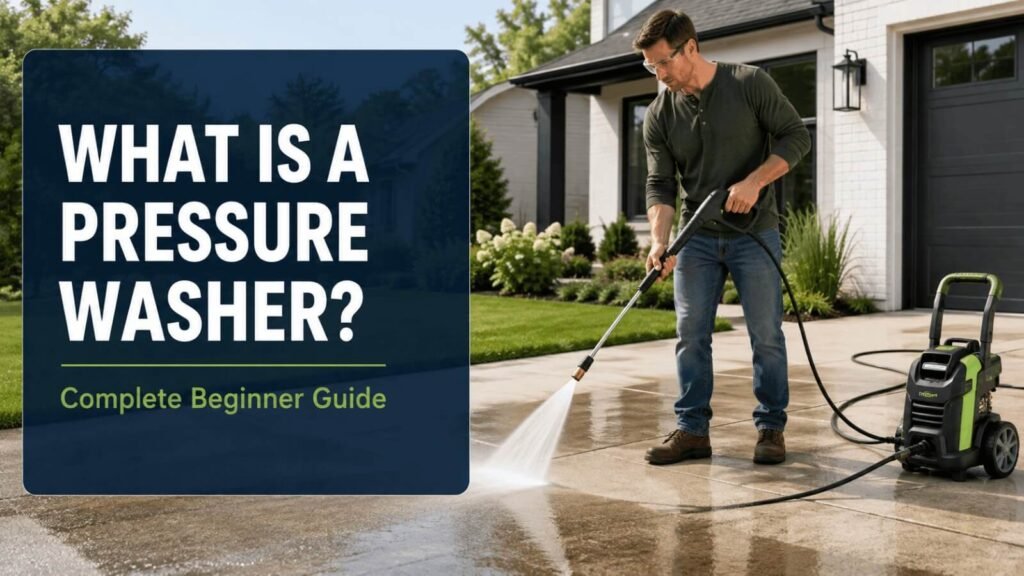
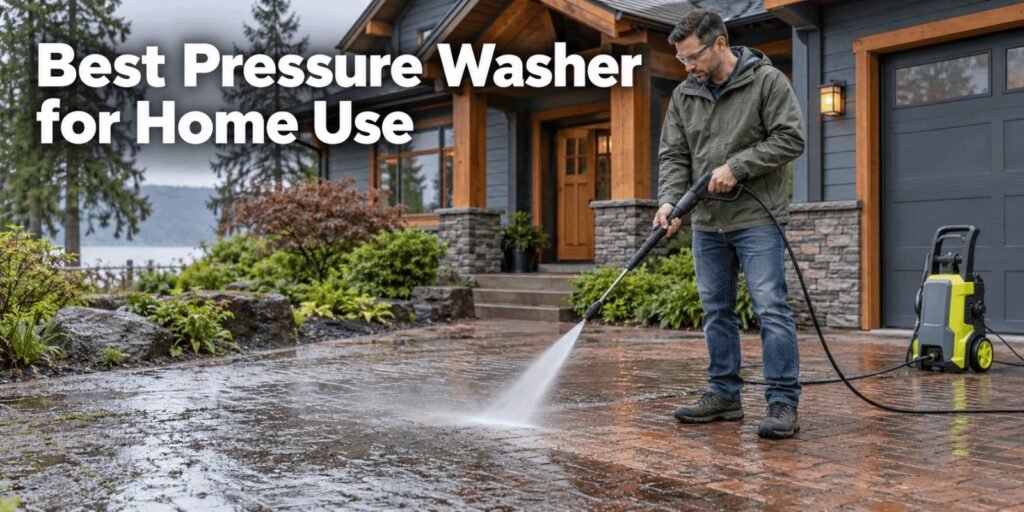
What is a pressure washer complete beginner guide showing a man cleaning a driveway
How to Guides

What Is a Pressure Washer? How It Works and How to Use One Safely

Editorial note: This beginner guide is based on established pressure-washer operating principles and safety information from NIOSH, OSHA, and the EPA. Always follow the instructions for your exact machine, detergent, and cleaning surface. A garden hose can rinse loose dust, but it often struggles with dirt settled into concrete, brick, siding, or outdoor furniture. A pressure washer speeds up these jobs by turning tap water into a focused spray. What is a pressure washer? It is a powered machine that raises water pressure with a pump and sends the water through a reinforced hose and nozzle. The spray can loosen mud, algae, road film, and other buildup, but incorrect pressure or technique can damage surfaces or cause injury. This guide explains how pressure washers work and how beginners can use them safely. How Does a Pressure Washer Work? A pressure washer does not create water. It receives water from a hose and uses a motor-driven pump to increase its pressure. The 6 Stages of the Pressure Washing Process Water Entry: A garden hose supplies water through the inlet. A small filter helps keep grit away from the pump. Power Source Activation: Depending on the model, an electric motor, gasoline engine, or battery runs the pump. Pressure Boost: The pump raises the pressure and moves water into the high-pressure outlet. High-Pressure Delivery: A reinforced hose, designed to handle the machine’s rated pressure, carries the water. Flow Control: Pulling the spray gun trigger releases water. An unloader or control system manages pressure when the trigger is released. Spray Shaping: The nozzle shapes the spray. A narrow spray concentrates force; a wide fan spreads it over a larger, gentler cleaning path. Changing the nozzle can make the same machine feel much stronger or milder. This is why good cleaning depends on control—not simply choosing the highest pressure. Key Parts of a Pressure Washer Understanding the basic parts makes setup, buying, and troubleshooting easier: Motor or Engine: Powers the pump. Pump: Increases water pressure. Inlet and Filter: Connect the supply and keep debris away from the pump. High-Pressure Hose: Carries water to the gun. Spray Gun and Wand: Control the spray and add reach. Nozzle: Controls the spray angle and intensity. Detergent System: Applies approved soap. All hoses, guns, fittings, and accessories must be rated for the machine’s pressure, flow, and water temperature. Key Performance Specs: Understanding PSI, GPM, and CU What Does PSI Mean? (Pounds Per Square Inch) PSI describes water pressure and gives a general idea of how strongly the spray can break the bond between dirt and a surface. Higher PSI is not automatically better. A car, painted fence, or softwood deck may need low pressure, a wide nozzle, and more distance. For more help, see our guide to how much PSI you need for different cleaning jobs. . For more help, see our guide to how much PSI you need for different cleaning jobs. What Does GPM Mean? (Gallons Per Minute) GPM measures water flow. Once pressure loosens the dirt, water flow helps carry it away. A higher-GPM machine may clean large, suitable areas faster, but the water supply must provide enough flow for the pump. What Are Cleaning Units (CU)? Cleaning units provide a simple comparison formula: $$text{Cleaning Units} = text{PSI} times text{GPM}$$ For example: A 2,000 PSI machine at 1.2 GPM = 2,400 Cleaning Units A 2,000 PSI machine at 2.0 GPM = 4,000 Cleaning Units This figure does not measure build quality, pump life, usable working pressure, or surface safety. Compare PSI and GPM, but also consider the pump, hose, fittings, warranty, and intended job. Comparing Types of Pressure Washers Type Main Advantage Main Limitation Best For Electric Quiet, compact, easy to start, low maintenance Needs suitable outlet; modest flow Cars, furniture, small patios, routine home cleaning Gas Higher output, no power cord Heavy, noisy, produces exhaust, needs engine care Large driveways, fences, equipment, frequent heavy work Cordless Portable and quick to set up Limited pressure, flow, and battery runtime Bikes, camping gear, balconies, spot cleaning Electric Pressure Washers An electric pressure washer is often the easiest choice for a homeowner. It needs no fuel or engine service, and its smaller size makes storage easier. Use a properly grounded, protected outdoor outlet. Avoid an extension cord unless the manufacturer permits one and gives the correct outdoor rating and wire size. Gas Pressure Washers Gas models offer more mobility and often more flow for large areas, but they require fuel, maintenance, and safe storage. Never operate a gasoline pressure washer indoors, in a garage, or in a partly enclosed space. NIOSH warns that carbon monoxide from gasoline-powered pressure washers can quickly reach dangerous levels indoors—even where doors, windows, or fans are used. For help comparing engines, frames, pumps, and hoses, read our gas pressure washer guide. See the CDC/NIOSH carbon monoxide warning For help comparing engines, frames, pumps, and hoses, read our gas pressure washer guide. Cordless Pressure Washers Cordless cleaners favor convenience over power. Some draw clean water from a bucket. Check actual PSI, GPM, battery runtime, and water-source requirements; most cannot replace a full-size machine for a large driveway or deck. What Can You Clean With a Pressure Washer? Start with low pressure, a wide fan nozzle, and extra distance. Test a hidden area before cleaning the full surface. Surface Safer Starting Approach Main Risk Sound Concrete Moderate pressure; increase only if needed Etching, stripes, flying debris Car or Motorcycle Low pressure, wide fan, generous distance Paint, seal, sensor, or tire damage Wood Deck / Fence Low pressure; move with the grain Cut fibers, raised grain, permanent lines Vinyl Siding Low-pressure wash at level/downward angle Water forced behind panels/openings Brick or Pavers Moderate pressure after checking condition Loose mortar, chipped brick, sand loss Outdoor Furniture Low pressure and a test spot Peeling finishes, torn fabric, joint damage Note: Oil, rust, and deep stains may need a suitable pre-treatment. Pressure alone may lighten a stain without removing it. Avoid spraying electrical equipment, fragile surfaces, asbestos-containing material, damaged

Scroll to Top