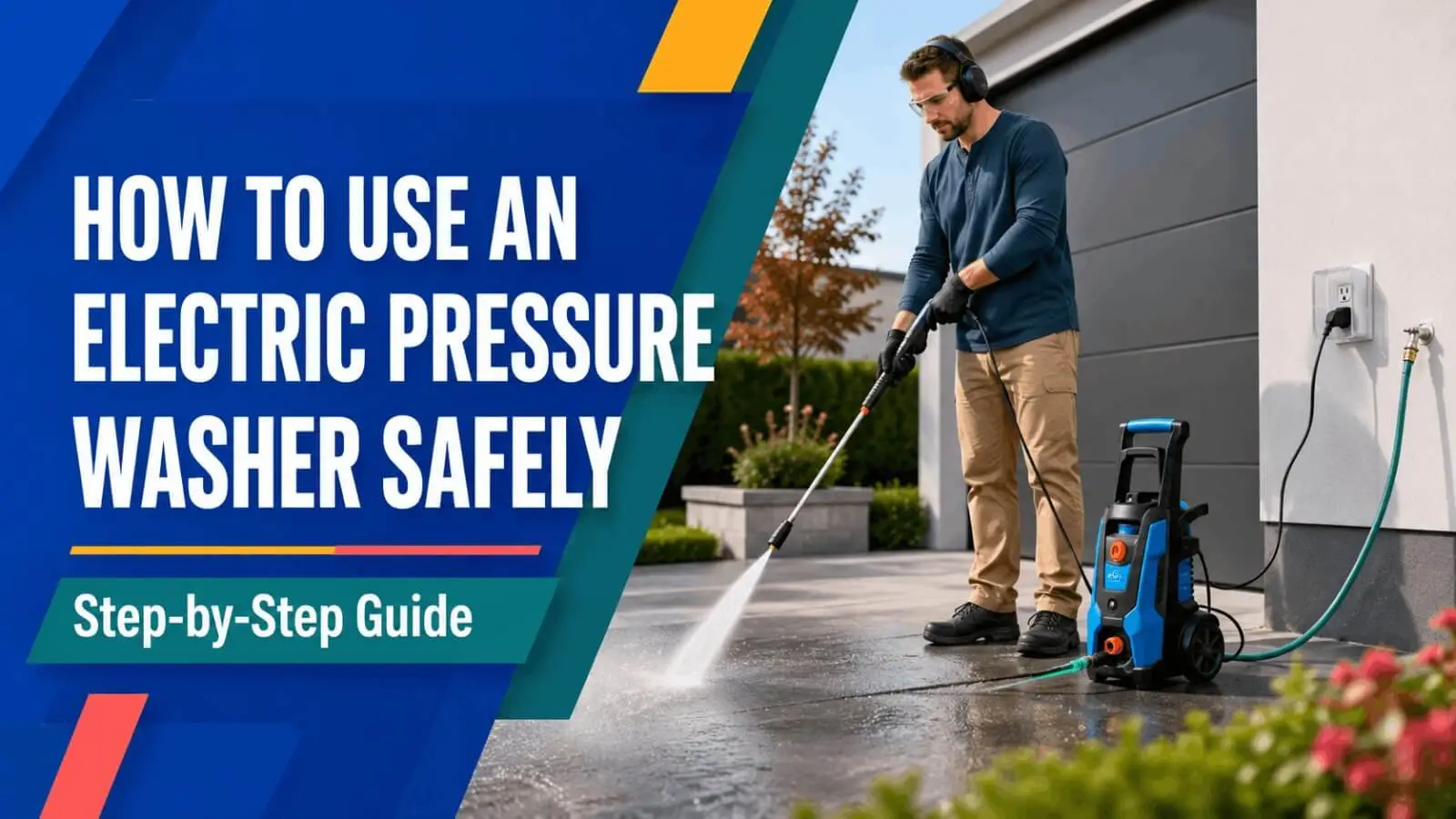
An electric pressure washer looks simple: connect a hose, plug it in, and pull the trigger. That shortcut is also how beginners end up with a pulsing pump, a tripped GFCI, damaged paint, or a machine that runs without enough water.
Learning how to use an electric pressure washer safely means following the correct order. Connect the water system first, remove trapped air, establish a dry protected power connection, select a surface-safe nozzle, and test before cleaning the full area.
This guide covers common residential corded machines from inspection through storage. Your model’s manual always takes priority.
How this guide was prepared: This guide uses manufacturer instructions and recognized electrical-safety guidance. Always follow the manual supplied with your model.
What an Electric Pressure Washer Does
An electric motor drives a pump that increases the pressure of water supplied by a garden hose. The spray gun controls the flow, while the wand and nozzle shape the water into a narrow or wide pattern.
Two ratings help describe cleaning performance:
PSI (pounds per square inch) indicates water pressure.
GPM (gallons per minute) indicates water flow.
PSI loosens dirt, while GPM helps carry it away. More pressure is not automatically better; paint, wood, siding, vehicles, and furniture need more care than concrete.
Most residential electric models also use a total-stop system that switches the motor off when the trigger is released. Not every machine behaves identically, so become familiar with its switch, trigger lock, nozzle system, detergent method, and shutdown procedure before starting.
What You Need Before Starting
Gather and inspect the equipment before connecting power:
Electric pressure washer and its manual
Garden hose capable of supplying the required water flow
High-pressure hose, spray gun, and wand
Correct nozzles or adjustable lance
Clean water-inlet filter
Pressure-washer-approved detergent when needed
Safety glasses, closed-toe non-slip footwear, gloves, and hearing protection
Grounded outdoor outlet with required GFCI protection
Move children, pets, vehicles, fragile decorations, and loose objects away. Avoid sensitive outlets and fixtures without trapping water against electrical equipment.
Inspect the cleaning surface for cracks, loose paint, damaged mortar, soft wood, open windows, and areas where water could enter. Sweep away stones and loose debris that the spray could throw.
How to Use an Electric Pressure Washer Step by Step
Step 1: Inspect the Machine and Work Area
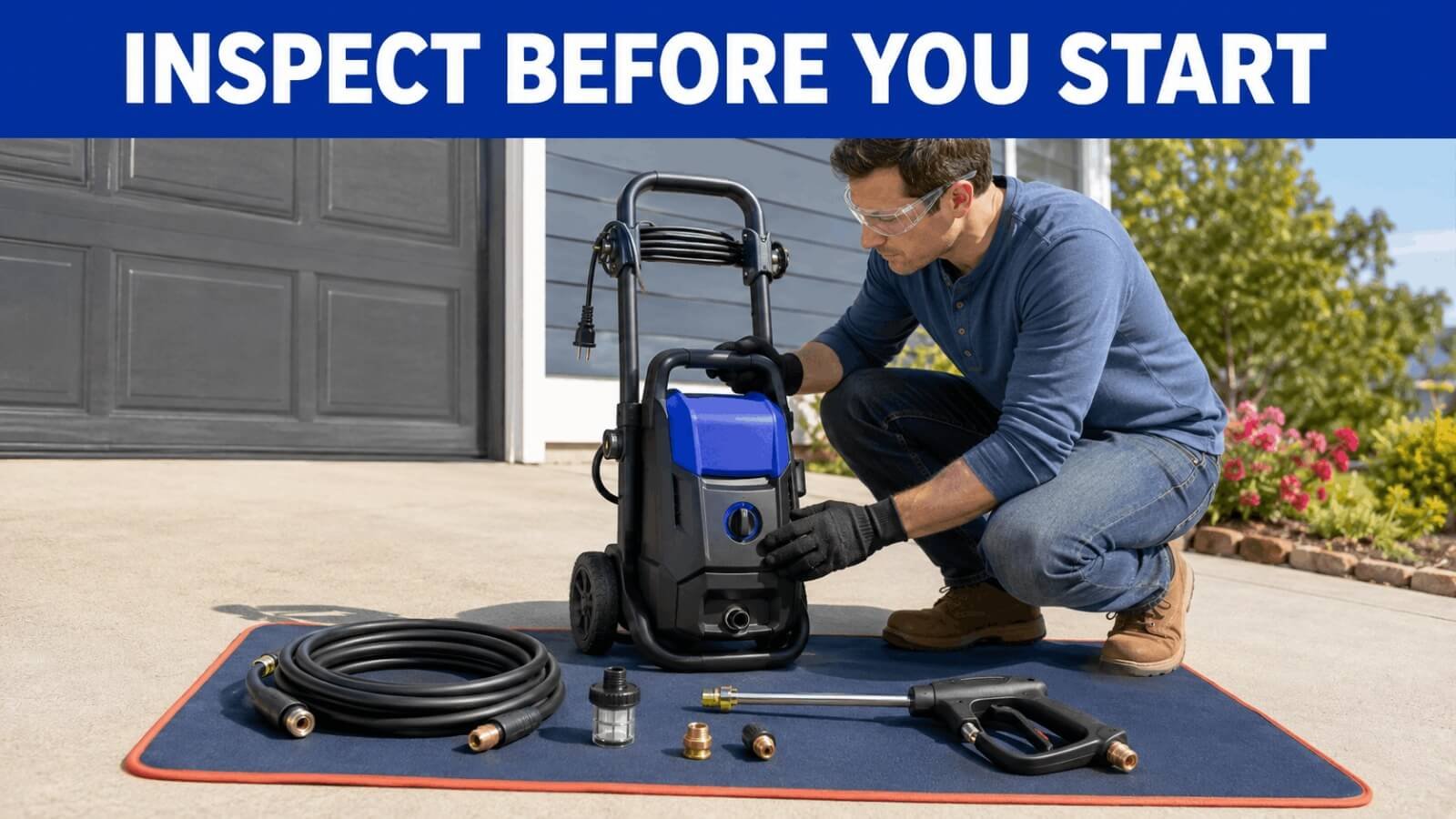
Place the pressure washer upright on stable, level ground. Check the power cord, plug, GFCI module, high-pressure hose, spray gun, couplings, and machine housing. Do not use equipment with exposed wire, a missing ground pin, hose bubbles, cuts, leaks, or broken guards.
Plan separate routes for the electrical cord and garden hose. Keep the plug, outlet, and all cord connections away from runoff and the direction of spray.
Step 2: Connect the High-Pressure Hose
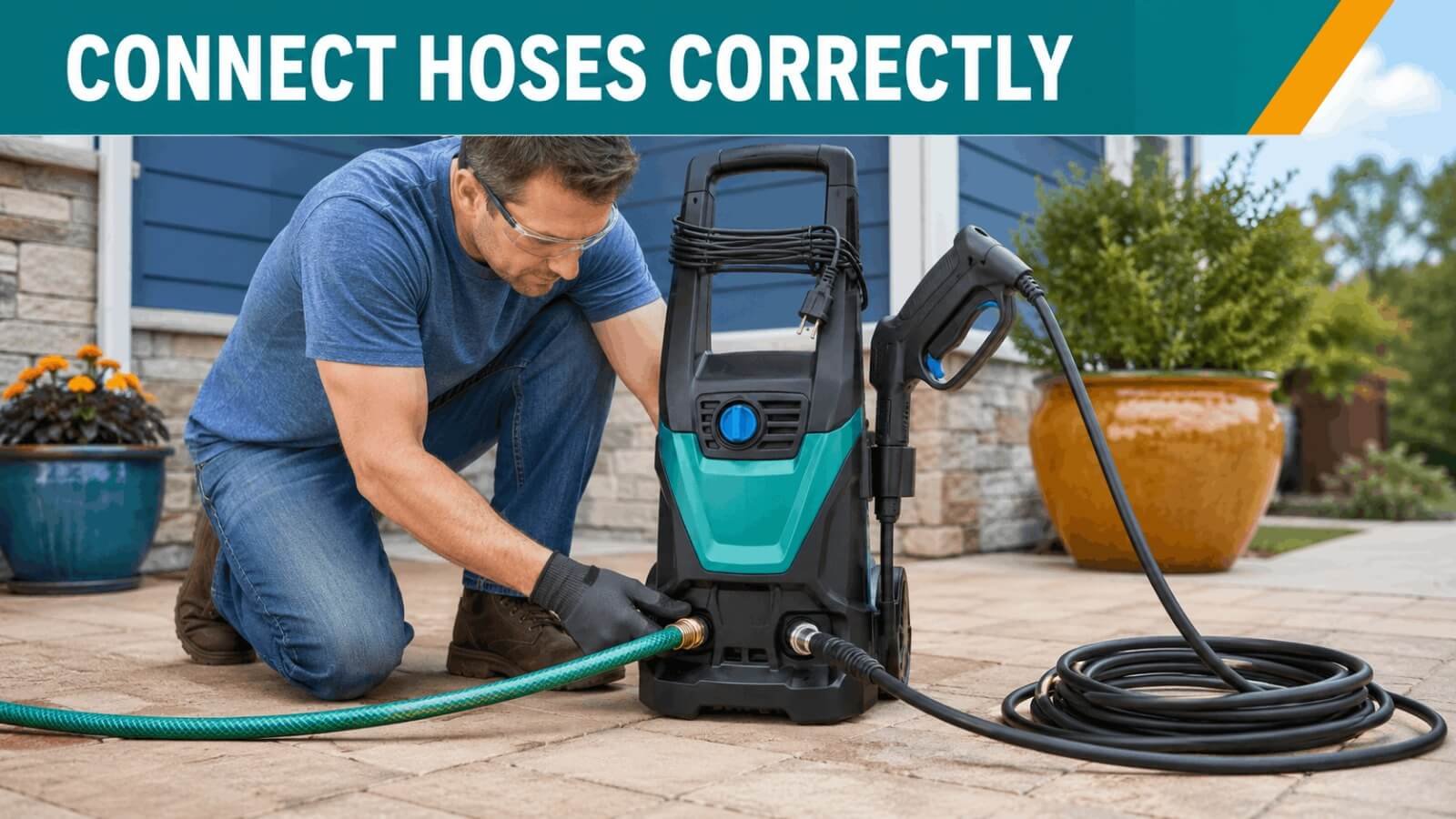
With the machine switched off and unplugged, connect one end of the high-pressure hose to the pump outlet and the other to the spray gun. Push or thread each fitting fully according to the manual. Tug gently on quick-connect fittings to confirm they have locked.
Straighten the hose before pressure builds. Tight loops and kinks can restrict movement, make the hose difficult to handle, and place stress on fittings.
Step 3: Attach the Spray Wand
Connect the wand to the trigger gun using the model’s twist-lock, threaded, or quick-connect system. Engage the trigger safety lock while assembling accessories.
Inspect the nozzle opening for debris. Never look into the nozzle or point the gun toward your hand while checking it. Use the cleaning tool recommended by the manufacturer if a nozzle is clogged.
Step 4: Connect and Turn On the Water Supply
Check that the inlet screen is clean and correctly seated. Attach the garden hose to the water inlet and tighten it by hand without damaging plastic threads. Open the tap fully unless the manual specifies otherwise.
The water source must provide the required flow. A partly closed tap, narrow hose, kink, blocked filter, or leaking connector can cause low pressure, pulsing, overheating, or pump damage.
Do not start the motor without water flowing through the pump. Some specialty machines can draw from a tank, but a normal garden-hose model should not be assumed to have that ability.
Step 5: Purge Air With the Motor Off
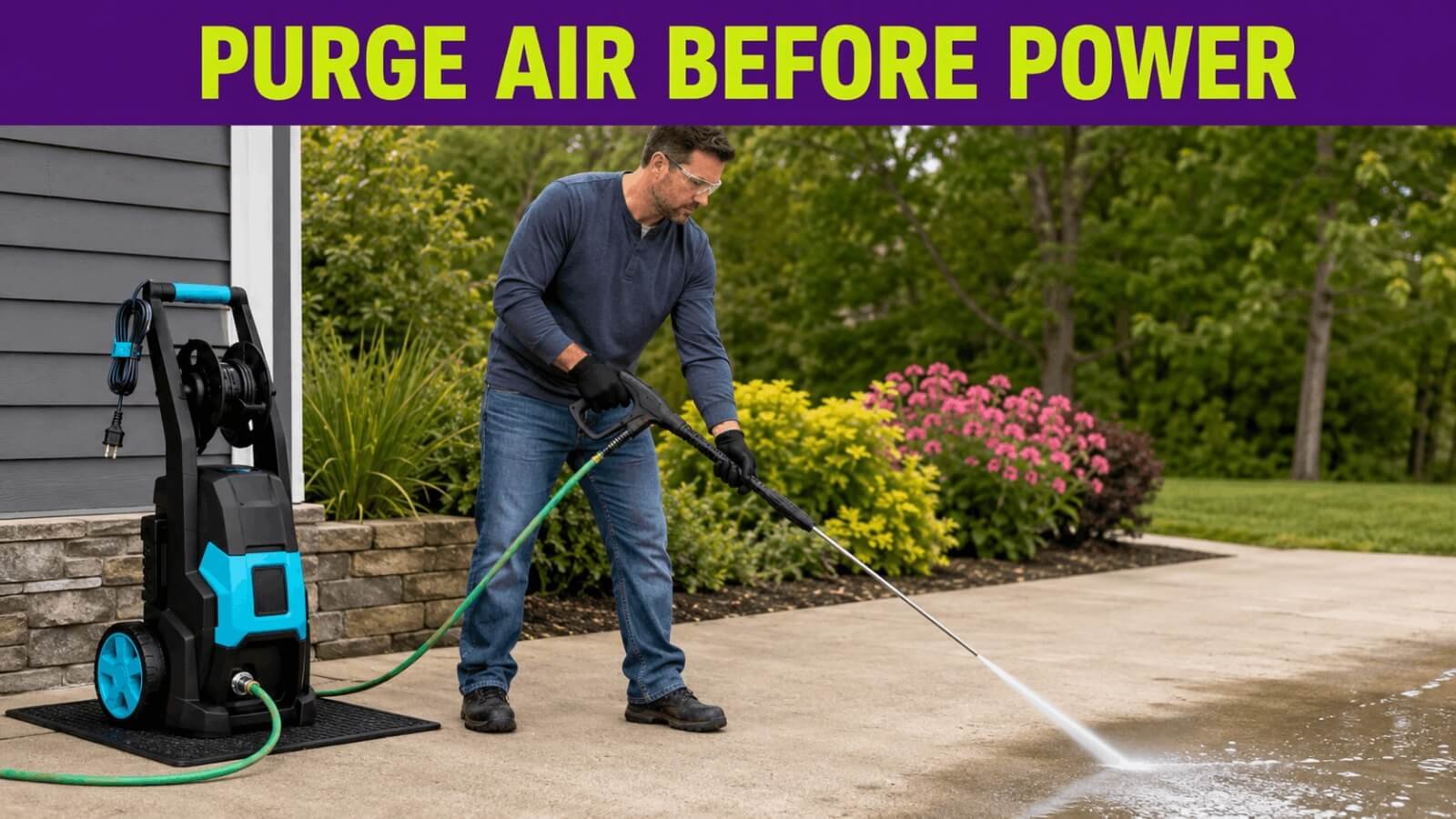
Keep the pressure washer unplugged and switched off. Point the spray gun in a safe direction, release the trigger lock, and squeeze the trigger. Let low-pressure water flow until the stream becomes steady and free from sputtering.
Some manuals instruct users to purge the system without a nozzle or lance attached. Follow the procedure for your model. Once purging is complete, release the trigger, engage the safety lock, and install the appropriate nozzle if it was removed.
Purging matters because trapped air can make the spray pulse and place unnecessary stress on the pump and hose.
Step 6: Select the Safest Nozzle
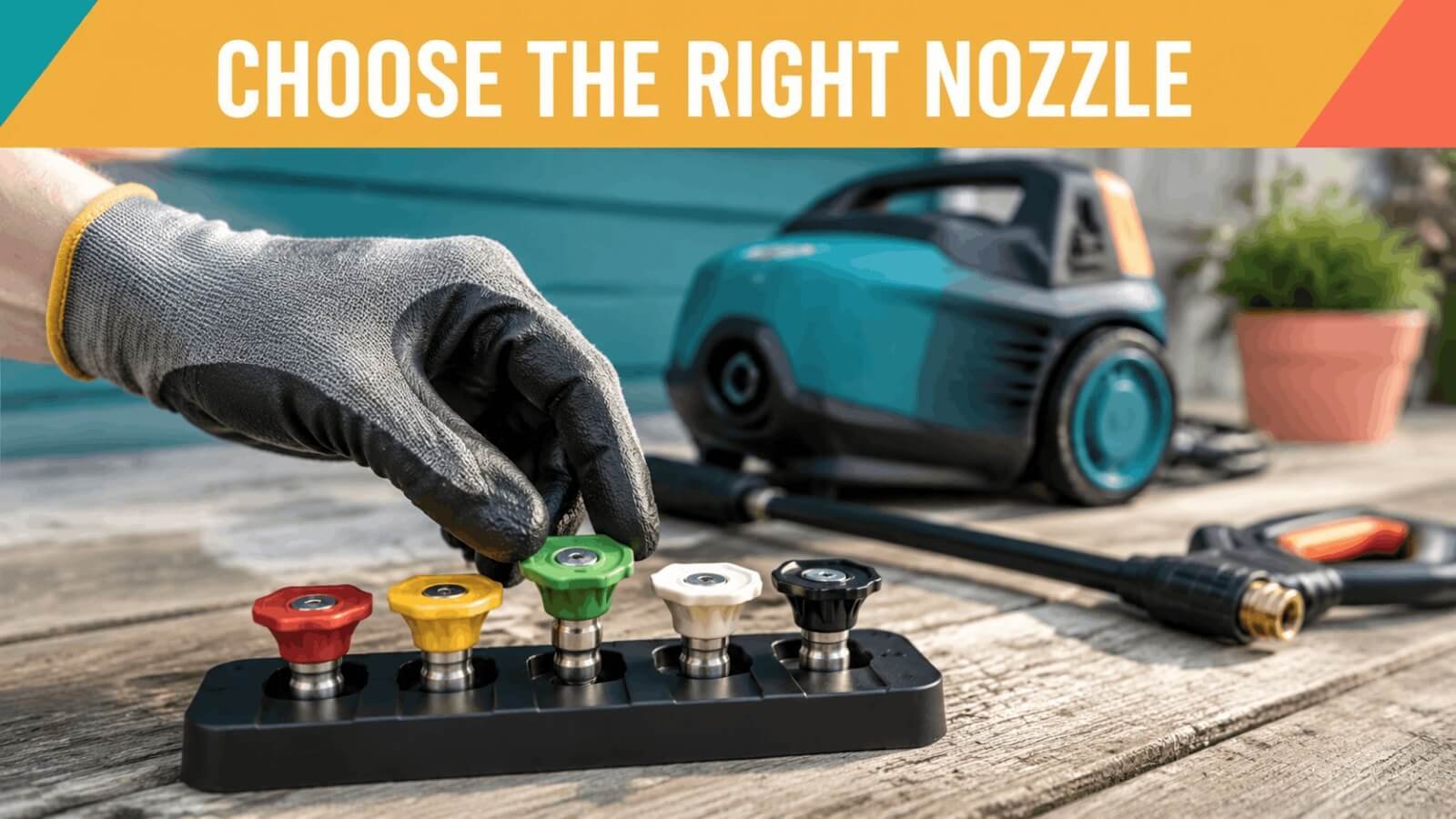
Start with a wide fan nozzle or the lowest adjustable-pressure setting. A narrow spray concentrates force into a small area and increases the chance of etching concrete, cutting wood fibers, lifting paint, or damaging vehicle trim.
Common color coding may include white for a wider fan, green for general cleaning, yellow for a narrower pattern, red for a concentrated jet, and black for low-pressure detergent. Color conventions are common but not universal. Confirm the angle and purpose marked in your manual.
For surface-specific guidance, see how much pressure different cleaning jobs require. Use the gentlest setup that completes the job.
Step 7: Connect to Safe Electrical Power
Dry your hands and confirm the machine switch is off. Plug the washer into a properly grounded outdoor outlet with the GFCI protection specified by the manufacturer. Test and reset the GFCI exactly as directed. The U.S. Consumer Product Safety Commission recommends GFCI protection outdoors, keeping cord-connected equipment away from water, and using only outdoor-rated extension cords.
Keep the outlet and plug area dry, raised, and away from runoff. Do not remove the grounding pin, use an adapter, or defeat a GFCI that trips.
Extension-Cord Warning Use an extension cord only if the manual permits one and specifies its outdoor rating, wire gauge, and maximum length. Our guide to pressure-washer power requirements explains voltage, amperage, GFCI protection, extension cords, and generator considerations without repeating them here.
Step 8: Start the Washer and Test the Spray
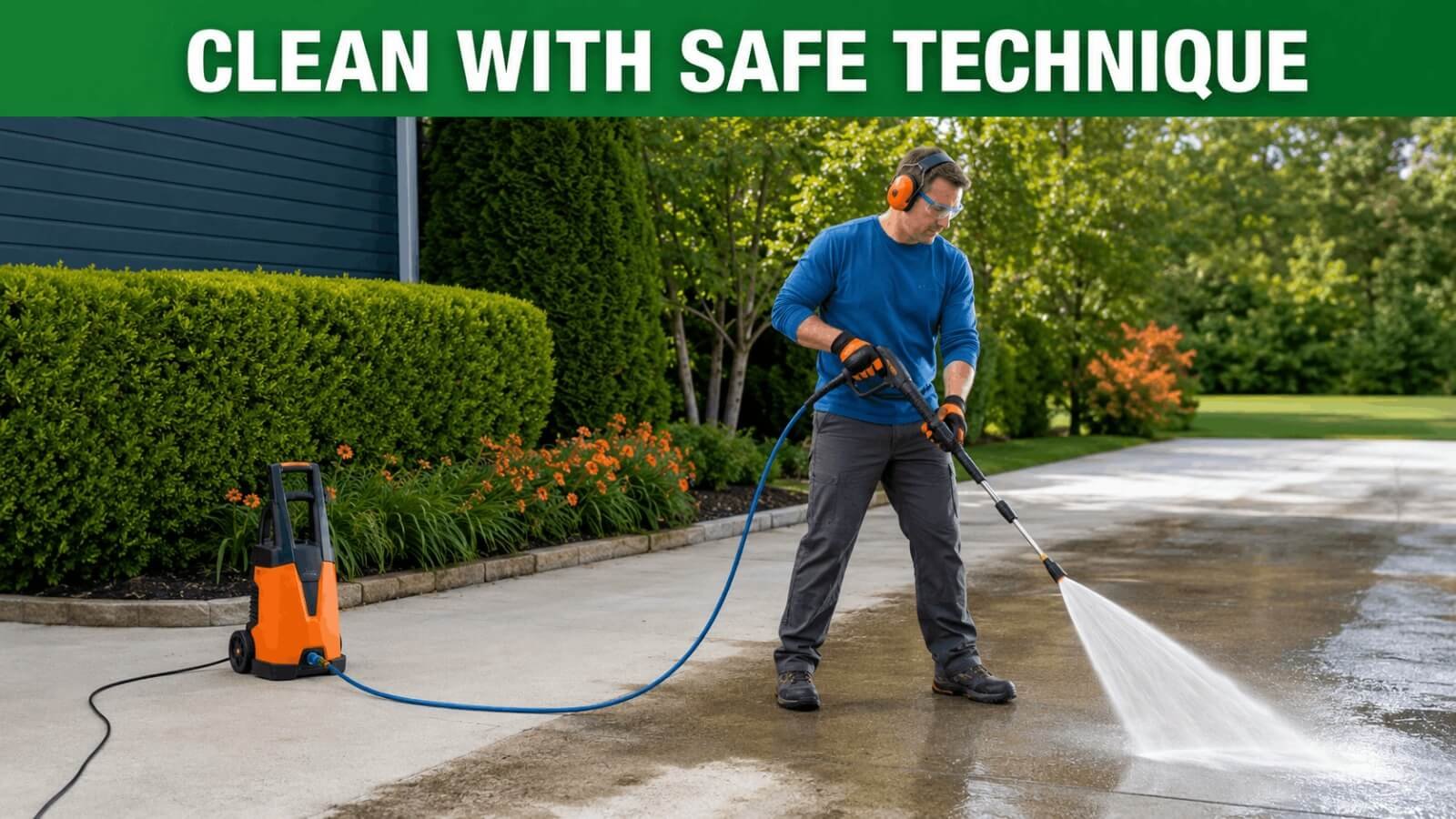
Stand with stable footing and hold the gun with both hands. Point the wand away from people, animals, windows, outlets, and the machine. Unlock the trigger, brace for kickback, squeeze the trigger if the manual directs, and switch on the motor.
Begin farther from the surface than you expect to work. Test a small hidden area, then move closer gradually only if the material tolerates the spray. Stop if paint lifts, wood fibers become rough, mortar loosens, or the surface changes color.
Step 9: Clean With Controlled Passes
Keep the nozzle moving at a consistent distance. Use smooth, overlapping passes instead of holding the jet on one spot. Angle the spray so loosened dirt moves away from the uncleaned area rather than being forced deeper into joints.
Work in manageable sections. On vertical surfaces, prevent water from being driven upward behind siding, vents, flashing, or window seals.
Do not use a ladder; spray reaction can affect balance. Use a manufacturer-approved extension solution from the ground or hire a professional for unsafe heights.
Step 10: Use Detergent Correctly
Use only detergent approved for pressure washers and suitable for the surface. Household bleach, solvents, acids, and thick cleaners can harm seals, pumps, landscaping, or finishes unless the equipment and chemical instructions specifically allow them.
Many machines draw detergent only in low-pressure mode through a soap nozzle, onboard tank, or siphon tube. Apply an even layer, allow the instructed dwell time, and do not let it dry. Keep the solution off plants and nearby materials when required by the product label.
After cleaning, draw fresh water through the detergent system to flush it according to the manual.
Technique for Common Cleaning Jobs
Cars and Motorcycles
Use a wide fan, modest pressure, and safe distance. Avoid concentrated spray on paint chips, sensors, bearings, electrical connectors, tires, and seals. Pre-rinse loose grit first.
Concrete and Pavers
Concrete tolerates more force than paint or wood, but a narrow jet can leave lines or expose aggregate. Use overlapping passes and protect damaged joints or loose paver sand.
Decks and Fences
Start low and wide, move with the grain, and keep the wand moving. Excess pressure can raise fibers, cut soft timber, and leave stripes.
Siding
Direct controlled spray across or downward, never upward behind panels. Avoid vents, electrical fixtures, damaged caulk, and window edges.
How to Shut Down an Electric Pressure Washer
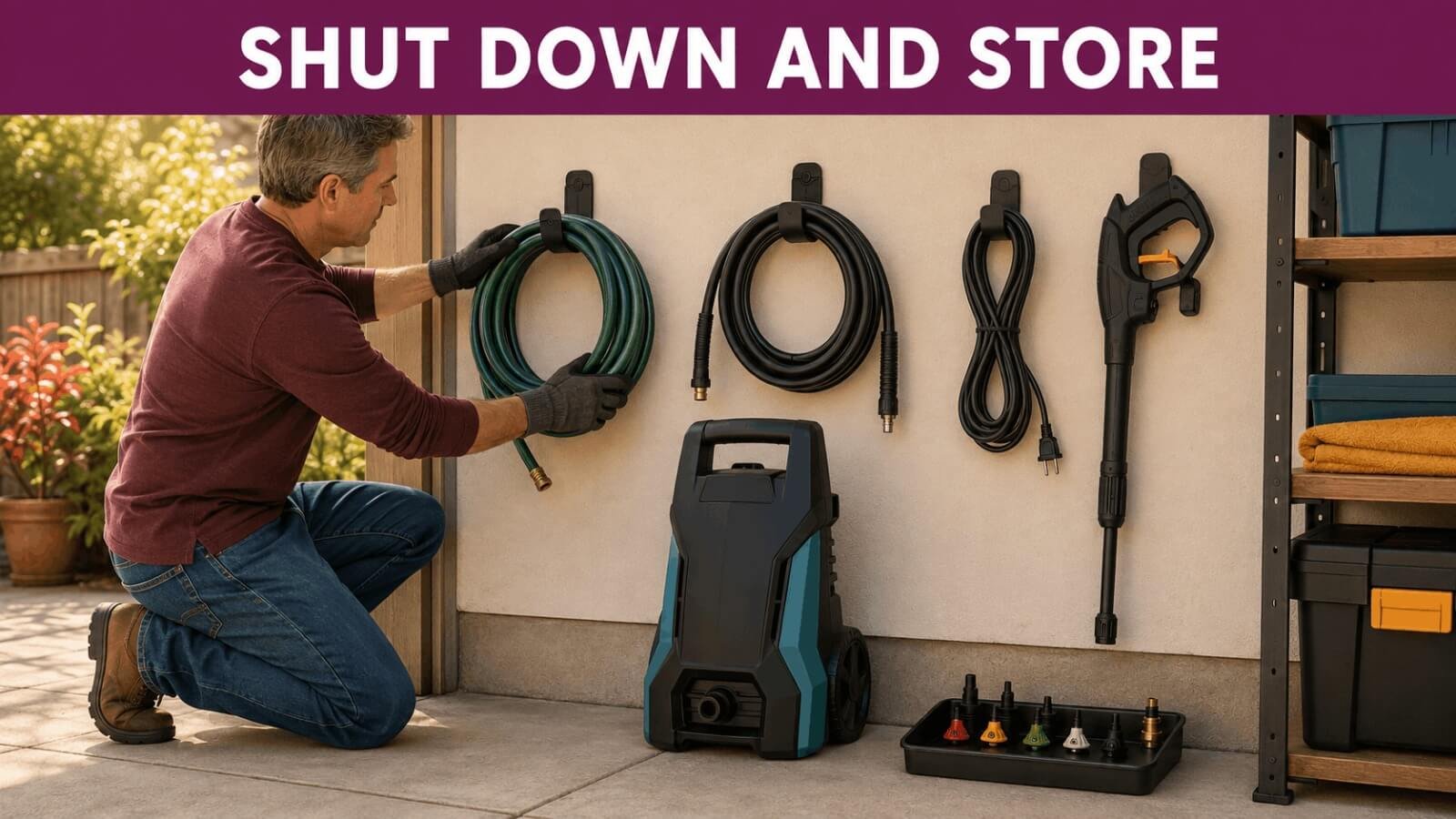
Correct shutdown protects the user, pump, hose, and fittings:
Release the trigger and engage its safety lock.
Switch the pressure washer off.
Unplug it with dry hands from a dry connection.
Turn off the water supply.
Point the gun safely and squeeze the trigger to release trapped pressure.
Engage the trigger lock again.
Disconnect the garden hose and high-pressure hose as directed.
Drain the gun, wand, hoses, and accessories.
Flush the detergent system and clean the inlet filter if needed.
Coil cords and hoses loosely and store everything dry.
Never disconnect a pressurized high-pressure hose. In freezing conditions, follow the approved pump-protector or winterization procedure. Water left inside the pump can freeze, expand, and crack components.
Essential Safety Rules
High-pressure water can cut skin and drive contaminated water or detergent into tissue. Never spray yourself or another person to test the pressure. OSHA has documented hospitalization following a pressure-washer injection injury. If high-pressure spray penetrates the skin, seek urgent medical care even if the wound appears small.
Follow these rules during every cleaning session:
Wear eye protection and non-slip closed-toe footwear.
Keep both hands on the gun when pressure is high.
Keep bystanders and pets outside the spray and debris zone.
Never spray outlets, wiring, lights, the pressure washer, or its cord.
Do not lock the trigger in the open position.
Do not leave a powered machine unattended.
Do not use the washer during rain or in standing water.
Follow the machine manual, nozzle directions, detergent label, and surface manufacturer’s guidance.
Beginner-Safe Troubleshooting
The Motor Does Not Start
Confirm the switch, plug, outlet, breaker, and GFCI reset. Check that the trigger is being squeezed if the model uses trigger-activated starting. Stop if the plug becomes hot or the breaker trips again.
Pressure Pulses or Feels Weak
Turn off and unplug the machine. Check the tap, garden hose, inlet screen, nozzle, connectors, and water-supply flow. Purge trapped air again. Persistent pulsing may require manufacturer support.
Detergent Does Not Draw
Confirm the correct low-pressure soap setting, tube position, detergent dilution, and injector connection. High-pressure nozzles commonly prevent detergent draw.
Water Leaks From a Connection
Depressurize the system before touching fittings. Inspect the connector and O-ring for incorrect seating, damage, or incompatibility. Never tighten or disconnect a live pressurized joint.
Frequently Asked Questions
Should I turn on the water before the electric pressure washer?
Yes. Connect and open the water supply, then purge trapped air with the motor off before starting. Never run the pump dry.
Can I use an extension cord?
Only if the manufacturer permits it. Use the specified outdoor-rated grounded cord, gauge, and maximum length, with connections protected from water.
Why does the motor stop when I release the trigger?
Many residential models have a total-stop system that switches off the motor to reduce unnecessary running. Check the manual to confirm normal behavior.
Does an electric pressure washer need oil?
Many residential electric motors and pumps are sealed and require no user oil change. Some serviceable pumps differ, so follow the maintenance section of the manual.
Can I use hot water?
Only if the pressure washer is rated for that inlet temperature. Hotter-than-approved water can damage seals and pump components.
Can an electric pressure washer draw water from a tank?
Some models can self-prime with the correct hose and filter, while many require pressurized tap water. Do not assume tank compatibility.
How long can I run an electric pressure washer?
Follow the model’s duty cycle and temperature guidance. Stop if the machine overheats, loses pressure, sounds abnormal, or repeatedly trips protection.
Why does my pressure washer pulse after startup?
Common causes include trapped air, restricted water flow, a clogged inlet screen or nozzle, leaks, or an unsuitable hose. Start with the safe checks described above.
Final Thoughts
Knowing how to use an electric pressure washer is mainly about following the correct sequence. Establish water flow, purge the system, connect safely to protected power, start with a wide nozzle, and test before increasing cleaning force.
Take extra care around paint, wood, vehicles, siding, electrical equipment, and damaged surfaces. Once cleaning is finished, switch off, unplug, release pressure, flush detergent, and store the equipment dry. These habits improve results while reducing the risk of shock, surface damage, pump problems, and personal injury.
Helpful Resources
- Mi-T-M: Starting an Electric Pressure Washer — Manufacturer guidance covering water connection, air purging, grounded power, GFCI checks, startup, and shutdown.
- U.S. Consumer Product Safety Commission: Electrical Safety — Guidance on outdoor GFCI protection, extension cords, damaged cables, and wet-area safety.
- CPSC Home Electrical Safety Checklist — A practical checklist for grounded tools and working GFCI outlets.
- OSHA Pressure-Washer Injection-Injury Record — A documented example showing why high-pressure skin injuries require medical attention.