
nozzles

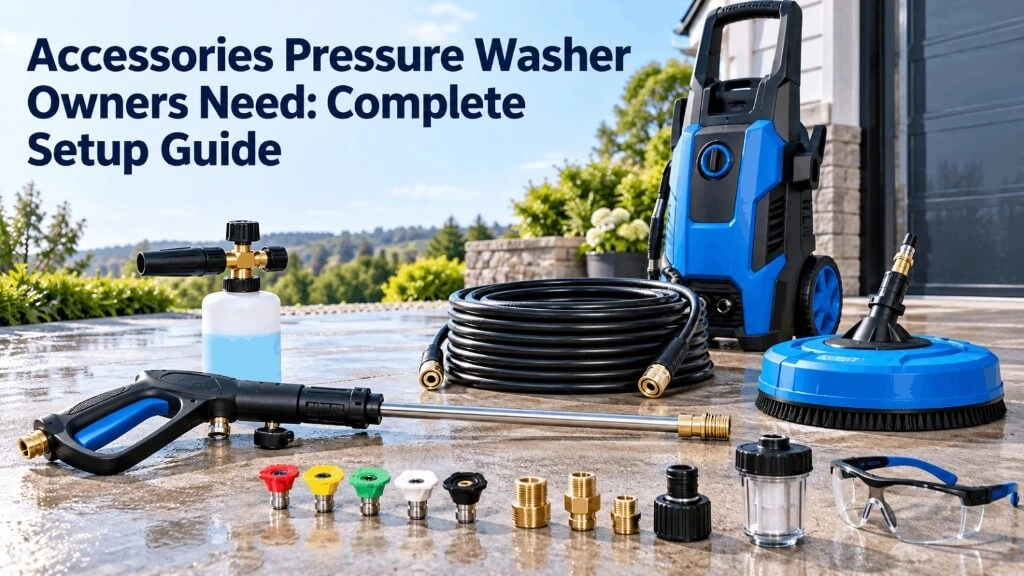
Complete accessories pressure washer setup guide including spray gun, high-pressure hose, surface cleaner, foam cannon, and nozzle tips.
Guides & Tips

Accessories Pressure Washer Owners Need: Complete Setup Guide

A pressure washer can arrive with a gun, wand, hose, and nozzle tips, yet still feel difficult to use. The hose may be too short, the detergent bottle unsuitable, or the surface cleaner may require more water than the machine provides. The right pressure washer accessories should solve a specific cleaning problem and match the machine’s limits. This guide explains how to build an accessories pressure washer setup around your cleaning jobs, which components work together, and which purchases can wait. It is based on equipment principles and published specifications; it does not claim hands-on testing of any particular product. Quick answer: Start with a correctly rated high-pressure hose, spray gun, suitable nozzle, and clean inlet screen. Add a surface cleaner, foam cannon, extension wand, or water filter only after confirming its connector, working PSI, required GPM, temperature limit, and intended surface. What Makes a Good Pressure Washer Accessory Setup? A complete setup has four connected parts: the machine, the water supply, the high-pressure path, and the tool at the surface. An attachment is useful only when all four work together. For example, a foam cannon may have the correct connector but produce weak foam if the washer does not meet its flow requirement. A surface cleaner may tolerate the machine’s PSI but still move slowly because its required GPM is higher. A long hose may improve reach but add weight and pressure loss. The best starting point is the job you perform most often. Build around that job, then add accessories for less frequent tasks. This avoids a drawer full of duplicate nozzles and adapters that do not match your equipment. Cleaning need First accessory to consider What to confirm Regular car washing Gentle nozzle, manageable hose, optional foam cannon Paint-safe method, connector, detergent, and flow requirements Driveway cleaning Compatible surface cleaner and edge-rinsing nozzle Minimum GPM, pressure range, and paving condition Patio and deck work Controlled fan tip and approved detergent system Surface guidance, working distance, and chemical compatibility House siding Detergent applicator or controlled extension Reach, water-entry risk, and stable footing Occasional mixed jobs Spare seals, correct nozzle, and basic quick connector Actual machine fittings and storage space Paid or frequent cleaning Serviceable hose, gun, spare tips, and maintenance items Duty cycle, parts supply, and handling comfort Specifications Every Pressure Washer Accessory Must Match PSI and GPM work together PSI means pounds per square inch and describes pressure. GPM means gallons per minute and describes flow. PSI helps loosen dirt; flow carries loosened soil away. An attachment needs a suitable range for both. Do not select a tool using the highest number printed on a package. A working-pressure rating is different from a burst-pressure rating. The accessory must be rated for the washer’s operating conditions, including water temperature where applicable. Cleaning units, calculated by multiplying PSI by GPM, can compare machines roughly. They do not confirm that an attachment fits or that a surface is safe. A larger number can still be wrong for painted walls, vehicle trim, or old decks. Power type does not determine fit Electric, gas, and cordless washers can use different hose ends, guns, detergent systems, and proprietary connectors. A tool advertised for “electric washers” may fit only certain models. If you are deciding between machine types, our guide to electric and gas pressure washer ownership explains the broader differences. For the startup sequence, see our electric pressure washer setup guide. Then return to the individual model manual for accessory compatibility. Temperature and chemical limits matter An accessory designed for cold water is not automatically suitable for hot-water cleaning. The bottle, hose, seals, and connector materials must also tolerate the detergent you intend to use. Use the washer manual and detergent label together. Avoid feeding household chemicals, solvents, or mixed cleaners through a pump or injector unless the manufacturer specifically approves them. Map the Water and Pressure Paths Before Buying Many mistakes happen because buyers confuse the supply side with the high-pressure side. The normal path is: Tap or tank to garden hose. Garden hose to the washer inlet. Pump outlet to high-pressure hose. High-pressure hose to spray gun. Gun to wand, nozzle, or attachment. Garden-hose couplers belong at the water-supply end. High-pressure fittings belong after the pump. A connector that fits the thread may still be unsafe in the wrong position. Measure every connection Record the fittings at both ends of the hose, the gun, wand, and attachment. Check thread type, sealing dimensions, and quick-connect size. M22-14mm and M22-15mm versions are different even when their outer threads engage. Use one correctly specified adapter for a known mismatch. Adapter chains add leak points and flow restriction. Keep the machine depressurized while measuring or changing fittings. Pressure Washer Hose and Fittings for Daily Use The hose influences how the machine feels. A stiff or short hose can make a capable washer frustrating. Select length by route Measure around the vehicle, garden beds, furniture, and corners. A hose that reaches the far side directly may be too short once routed safely around obstacles. More length reduces machine repositioning, but it adds weight and friction loss. Follow the machine’s approved hose length and internal-diameter guidance. Do not join narrow extensions simply to gain reach. For frequent work, compare flexibility, abrasion resistance, bend radius, connector strain relief, temperature rating, and replacement availability. “Heavy duty” means little without working specifications. Keep supply and high-pressure fittings separate The garden hose should deliver enough water to the pump without kinks or a blocked screen. The high-pressure hose must carry the washer’s specified pressure safely. They are not interchangeable. Inspect seals and quick connectors regularly. Replace a hose with bulges, exposed reinforcement, deep cuts, or a high-pressure leak. Tape and ordinary hose clamps are not suitable repairs. Pressure Washer Nozzle Selection by Surface A nozzle changes how water reaches the surface. It does not change the pump’s rated capacity. Pattern, orifice, and distance The spray angle controls coverage width. The orifice must suit the washer’s pressure and flow. A nozzle
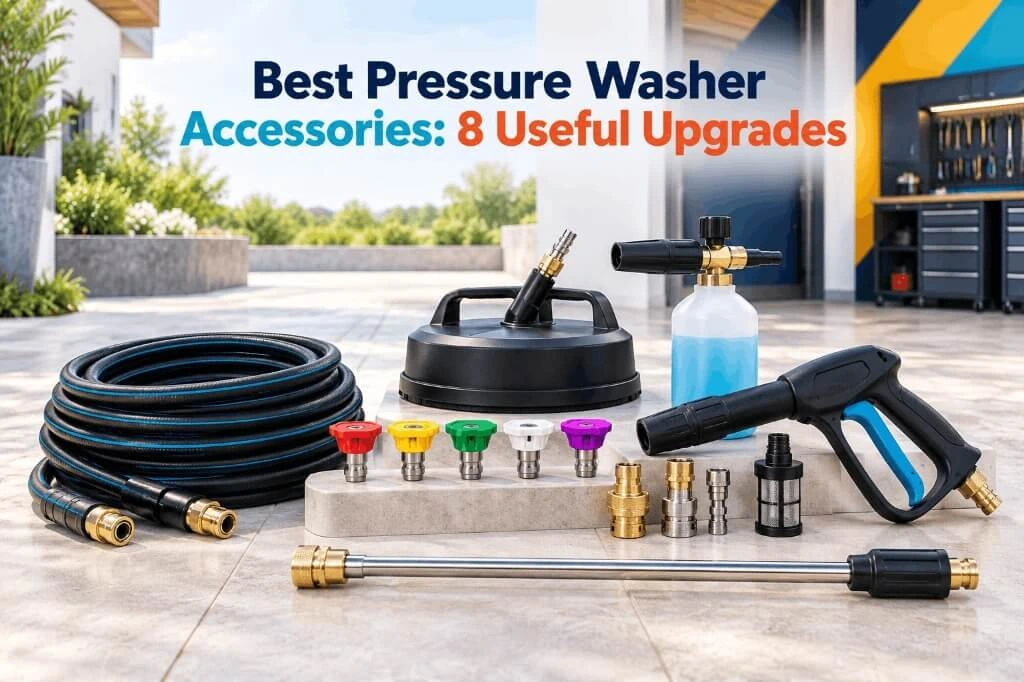
A complete set of pressure washer accessories including hose, surface cleaner, spray gun, foam cannon, nozzles, and fittings displayed outdoors.
Guides & Tips

Best Pressure Washer Accessories: 8 Useful Upgrades

If you could improve one part of your pressure-washing routine, what would it be? You might want to reach around a car without moving the machine, clean a driveway with fewer uneven passes, or connect the hose faster. Quick answer: The best pressure washer accessories are the ones that solve a frequent problem and match your machine. A flexible high-pressure hose is a useful general upgrade, a properly matched surface cleaner suits repeated driveway work, and a foam cannon is mainly valuable for regular vehicle washing. Always verify the connection, working PSI, required GPM, temperature rating, and intended surface before buying. This guide compares eight accessory types for homeowners, car owners, DIY cleaners, and small cleaning businesses. It explains who each upgrade suits, when to skip it, and what to check before purchase. The recommendations are based on use cases and documented equipment principles—not unsupported star ratings, hands-on testing claims, or paid product rankings. Best Pressure Washer Accessories at a Glance For an otherwise sound setup, our first upgrade to consider is a more manageable hose if the supplied one restricts movement. For repeated driveway work, a correctly matched surface cleaner may offer more value. If your equipment already meets your needs, buying nothing is a reasonable choice. Accessory type Best for Main benefit Reason to skip or delay Flexible high-pressure hose Awkward reach and frequent repositioning Easier movement around the job Existing hose already reaches comfortably Correctly sized nozzle set Missing or unsuitable spray options More appropriate spray patterns Supplied tips already cover your work Matched surface cleaner Broad, suitable flat paving More consistent coverage Washer cannot meet its operating requirements Compatible foam cannon Regular vehicle washing Controlled shampoo application Vehicle washing is only occasional Quick-connect fittings Frequent setup and pack-down Faster compatible connections Fit or pressure ratings are unclear Comfortable spray gun Long sessions or awkward handling Better grip and control Original gun is comfortable and sound Approved extension wand Limited extra reach from ground level Access without moving closer Recoil or overhead hazards make use unsafe Correct inlet filter or screen Protecting the water-supply path Catches debris before the pump An added filter would restrict flow unnecessarily The order is a practical starting point, not a universal ranking. Replace unsafe or failed components before spending on optional improvements. How We Choose Useful Upgrades A worthwhile accessory should solve a repeated problem, suit the cleaning surface, and remain practical to handle, store, and maintain. We also consider replacement-part support, warranty terms, and the complete installed cost—including required adapters. This guide recommends accessory categories rather than declaring one product the winner for every washer. A compact electric model and a higher-flow gas machine may need very different versions of the same attachment. Detailed compatibility checks are provided in the buyer’s checklist below. If you are choosing the machine too, read our comparison of electric and gas pressure washers before building an accessory setup around it. 1. Pressure Washer Hose Upgrade: Best for Easier Movement A hose that keeps catching under tires or pulling against your wrist can interrupt every stage of a wash. Replacing it with a suitable, more flexible assembly may improve the whole routine. What to look for Choose a hose with the correct working-pressure and temperature ratings, compatible ends, and enough usable length for your cleaning area. Measure the route around obstacles rather than only the distance from the washer. Compare flexibility, abrasion resistance, connector strain relief, and storage requirements. “Heavy duty” does not tell you how comfortably the hose handles. A longer hose can reduce repositioning, but it also adds weight and friction loss. Follow the washer manufacturer’s limits for length and internal diameter. Benefits and limitations The main benefit is convenience across several jobs, from washing a vehicle to moving around patio furniture. The limitation is that a longer or heavier hose can become harder to carry and coil. Keep the assembly away from hot exhaust parts, sharp edges, and vehicle traffic. Buy a handling upgrade when reach is the problem; do not expect it to increase the pump’s rated output. 2. Pressure Washer Nozzle Set: Best for Spray Control A suitable nozzle set gives you options for approved rinsing, washing, and detergent application. It is especially useful when the original tips are missing or worn. Check more than nozzle colors The spray angle determines how widely the stream spreads. The orifice—the small opening inside the tip—must suit the intended pressure and flow. Color coding commonly identifies the spray pattern, but it does not establish the correct opening size. Buy the specified tips or use a manufacturer-approved sizing chart. A wide fan still needs sensible distance and a surface test. It can damage loose paint or weathered timber when used incorrectly. When a turbo nozzle belongs in the kit A turbo nozzle rotates a concentrated stream and may help on compatible durable masonry. It is not a gentle general-purpose attachment. Avoid using it on car paint, delicate trim, or decking unless the relevant surface guidance specifically allows the method. When to skip the upgrade If your supplied nozzle set already covers the approved tasks, another set may duplicate what you own. Spend first on replacing a missing or damaged tip with the correct specification. 3. Surface Cleaner for Driveways: Best for Broad Flat Areas A surface cleaner holds rotating spray jets beneath a housing. On suitable paving, it can make coverage more consistent than repeated narrow passes with a wand. Match operating requirements, not just diameter Check minimum flow, pressure range, nozzle sizing, connection, and surface suitability. A large head will not automatically clean faster on a small washer. If the pump cannot supply enough water, the attachment may require slow movement or leave uneven results. Choose a cleaner explicitly suited to the machine’s output rather than relying on diameter alone. For example, a homeowner cleaning a small concrete parking area may be better served by a compact compatible head than a wide contractor-style unit. What it does not solve You still need

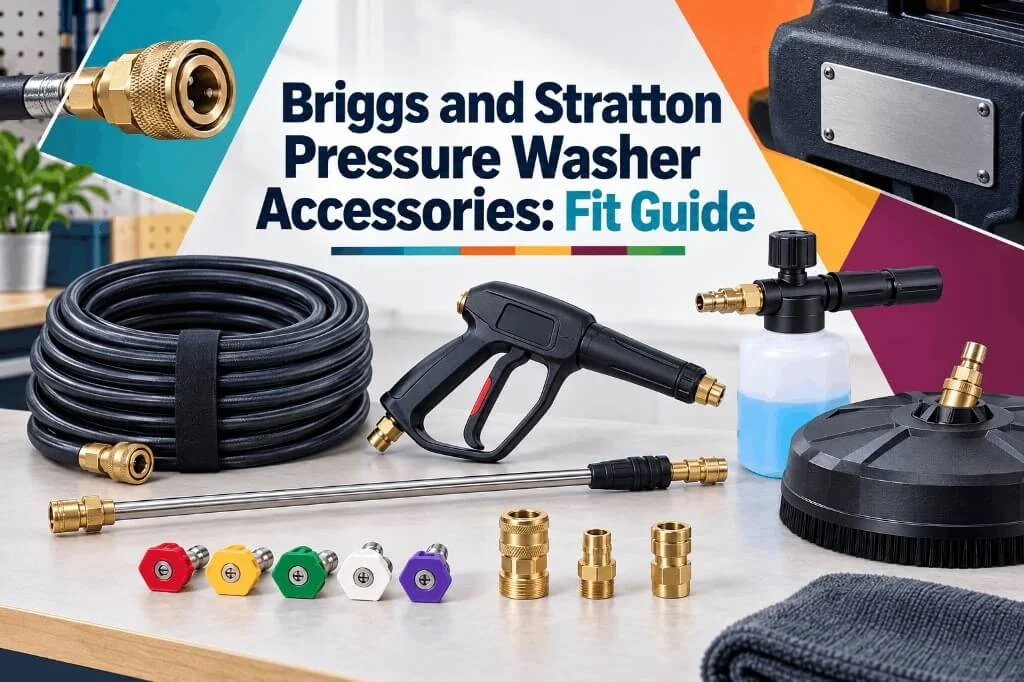
Complete collection of Briggs and Stratton pressure washer accessories including hoses, spray guns, and nozzles
Guides & Tips

Briggs and Stratton Pressure Washer Accessories: Fit Guide

The engine starts normally, but the hose has split near its connector. You search using the name on the engine cover and find dozens of replacements that look almost identical. Which one belongs on your machine? Quick answer: Choose Briggs and Stratton pressure washer accessories by the complete pressure washer model—not only the engine name. Before buying, verify the part number, connector type, working PSI, required GPM, water-temperature rating, and intended cleaning surface. This guide explains how to choose replacement hoses, spray guns, nozzle tips, fittings, surface cleaners, and detergent accessories for car washing, driveway cleaning, and general outdoor work. It uses manufacturer catalog information and established safety guidance. It is an independent, research-based guide and does not claim hands-on testing. Briggs and Stratton Accessory Compatibility Checklist Record these details before you shop: What to verify Where to find it Why it matters Complete washer model and revision Product identification label Identifies the correct manual and factory parts list Current part number Parts diagram or component label Helps locate an exact replacement or confirmed successor Maximum working pressure Washer manual and accessory label Prevents use of an underrated hose, gun, wand, or fitting Water flow in GPM Washer specifications Helps match surface cleaners and foam cannons Connector at both ends Existing hose, pump, gun, and wand Confirms thread, insert, plug, and socket dimensions Water-temperature limit Manual and accessory specifications Separates cold-water components from hot-water-rated parts Intended surface and task Attachment instructions Reduces the risk of surface damage or poor results Start With the Briggs and Stratton Pressure Washer Model Number A pressure washer combines several systems: the power source, pump, high-pressure hose, gun, and cleaning attachment. Their parts are related, but they are not identified by the same information. Identify the washer and engine separately For a gas machine, photograph both the washer’s identification label and the engine’s identification markings. Label positions vary, so use the identification instructions for your equipment. The engine details help identify engine service parts. The complete washer model and revision help locate its operator’s manual and illustrated parts list. Use the official Briggs & Stratton manual and parts lookup when the washer is a Briggs & Stratton product. If another equipment brand built the washer around a Briggs & Stratton engine, start with that equipment maker for the hose, gun, and pump assembly. Do not search only by horsepower, engine series, or advertised PSI. Different machines can share those details while using different parts. Check whether the equipment is still original On a used washer, a previous owner may have replaced the gun, pump, or hose. The original parts diagram then describes the factory setup, which may differ from what is attached today. Compare the current connections with the diagram before ordering. If they differ, send a supplier clear photographs and the identification details rather than guessing from a product thumbnail. Keep the information in a short equipment note on your phone. This makes future seal, nozzle, and hose purchases much easier. How to Match Briggs and Stratton Pressure Washer Accessories Pressure rating and water flow PSI describes pressure; GPM describes gallons of water delivered per minute. Both matter when choosing attachments. A hose, gun, wand, or high-pressure connector must have a working-pressure rating suitable for the washer’s maximum specified pressure. A higher burst rating is not permission to exceed the working rating. Flow matters especially for rotating surface cleaners and foam cannons. An attachment may tolerate the pressure while needing more water than the machine supplies. Also check temperature limits. A replacement listed for cold-water washing is not automatically suitable for hot water. An accessory cannot increase the rated capacity of the existing pump. Connector shape, size, and sealing method M22 threaded fittings and quick connectors appear on many setups, but do not assume every machine uses identical dimensions. For M22 connections, confirm the sealing insert size as well as the thread. M22-14mm and M22-15mm are different. For quick connectors, verify the plug and socket size and profile at the exact connection point. An adapter can solve a confirmed connection mismatch. It cannot correct an inadequate pressure rating or flow requirement. Long chains of adapters also add weight and potential leak points. Your power source does not establish accessory fit Electric and gas washers can have different hose systems, detergent arrangements, and operating requirements. The presence of an engine does not mean every “gas washer” accessory fits. If you are also considering replacing the machine, our guide to electric versus gas pressure washers can help separate machine selection from accessory selection. Briggs and Stratton Pressure Washer Hose: What to Check A replacement hose should restore safe operation and give you enough room to move without constantly pulling the washer around. A verified example: part 6188 The official Briggs & Stratton 6188 product listing identifies it as a 30-foot, 1/4-inch pressure washer hose for up to 3,000 PSI, with connections for male M22 threaded pump and gun fittings. It is intended for cold-water pressure washers. That makes it a candidate for a matching setup, not a blanket recommendation for every Briggs & Stratton washer. Confirm the sealing dimensions and model suitability before ordering. A machine rated above 3,000 PSI needs a different hose with the appropriate rating. The hose’s 1/4-inch size describes the hose bore, not a promise that its ends are 1/4-inch nozzle quick connectors. Product size descriptions often refer to different parts of the assembly. Length, flexibility, and routing Measure the route around your car or patio, including corners. More length can reduce machine movement, but it also increases storage bulk and friction loss. Choose a length and internal diameter permitted for your washer. For frequent use, look beyond the advertised length. Consider flexibility, abrasion resistance, connector strain relief, and how easily the hose coils. Keep it away from a hot muffler, sharp edges, and vehicle traffic. Replace hoses with bulges, exposed reinforcement, serious cuts, or high-pressure leaks. Tape and ordinary hose clamps are not suitable repairs. Replacement Spray Gun and Wand

Scroll to Top