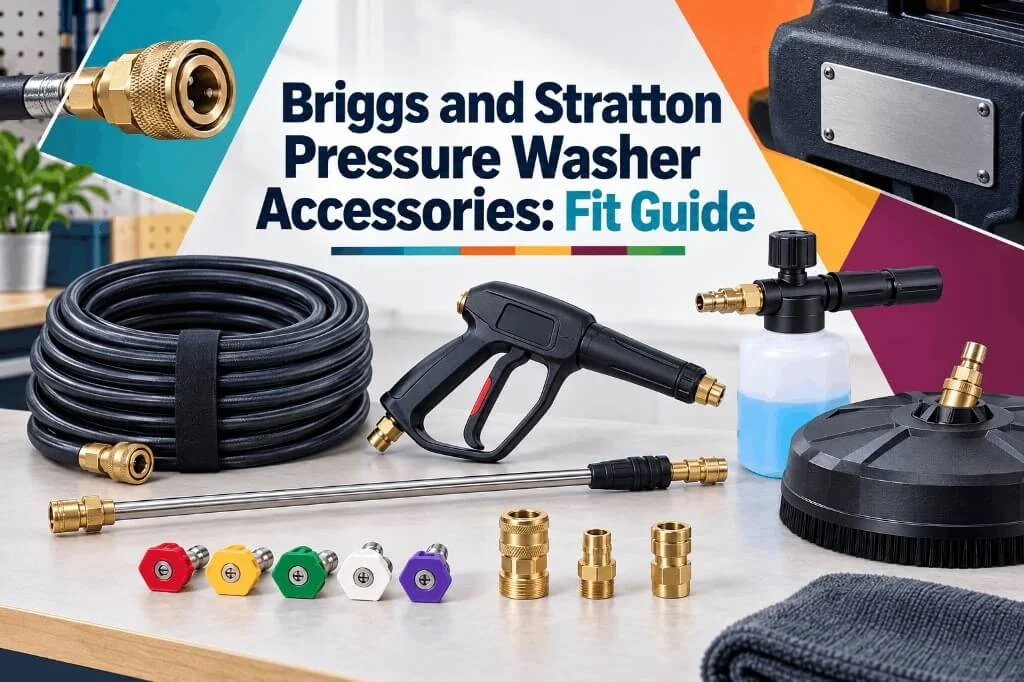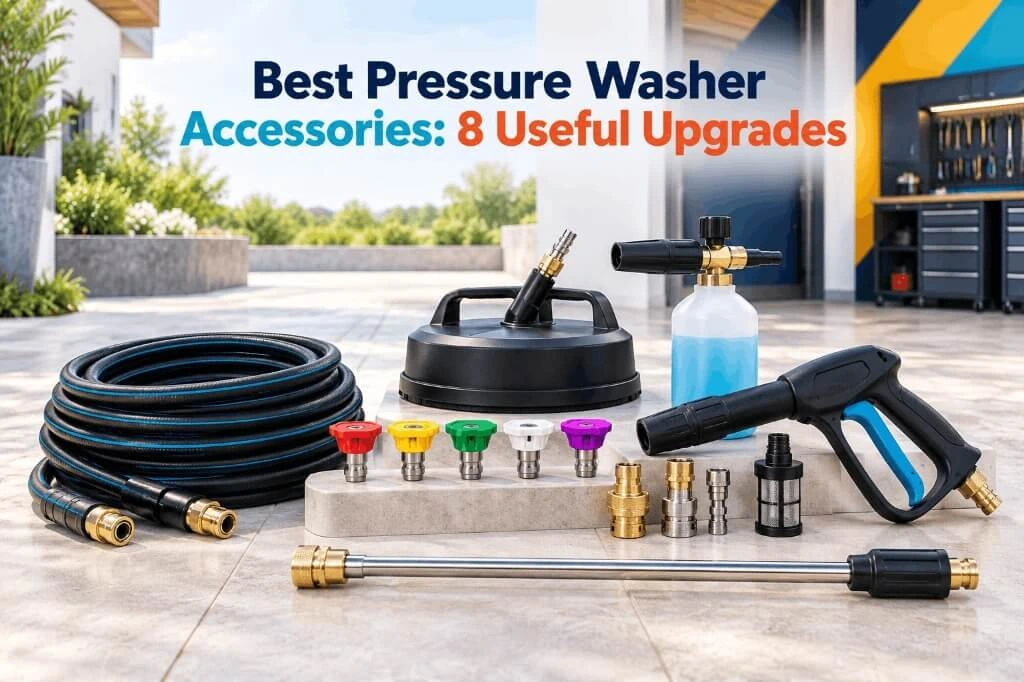
A pressure washer can arrive with a gun, wand, hose, and nozzle tips, yet still feel difficult to use. The hose may be too short, the detergent bottle unsuitable, or the surface cleaner may require more water than the machine provides. The right pressure washer accessories should solve a specific cleaning problem and match the machine’s limits.
This guide explains how to build an accessories pressure washer setup around your cleaning jobs, which components work together, and which purchases can wait. It is based on equipment principles and published specifications; it does not claim hands-on testing of any particular product.
Quick answer: Start with a correctly rated high-pressure hose, spray gun, suitable nozzle, and clean inlet screen. Add a surface cleaner, foam cannon, extension wand, or water filter only after confirming its connector, working PSI, required GPM, temperature limit, and intended surface.
What Makes a Good Pressure Washer Accessory Setup?
A complete setup has four connected parts: the machine, the water supply, the high-pressure path, and the tool at the surface. An attachment is useful only when all four work together.
For example, a foam cannon may have the correct connector but produce weak foam if the washer does not meet its flow requirement. A surface cleaner may tolerate the machine’s PSI but still move slowly because its required GPM is higher. A long hose may improve reach but add weight and pressure loss.
The best starting point is the job you perform most often. Build around that job, then add accessories for less frequent tasks. This avoids a drawer full of duplicate nozzles and adapters that do not match your equipment.
| Cleaning need | First accessory to consider | What to confirm |
| Regular car washing | Gentle nozzle, manageable hose, optional foam cannon | Paint-safe method, connector, detergent, and flow requirements |
| Driveway cleaning | Compatible surface cleaner and edge-rinsing nozzle | Minimum GPM, pressure range, and paving condition |
| Patio and deck work | Controlled fan tip and approved detergent system | Surface guidance, working distance, and chemical compatibility |
| House siding | Detergent applicator or controlled extension | Reach, water-entry risk, and stable footing |
| Occasional mixed jobs | Spare seals, correct nozzle, and basic quick connector | Actual machine fittings and storage space |
| Paid or frequent cleaning | Serviceable hose, gun, spare tips, and maintenance items | Duty cycle, parts supply, and handling comfort |
Specifications Every Pressure Washer Accessory Must Match
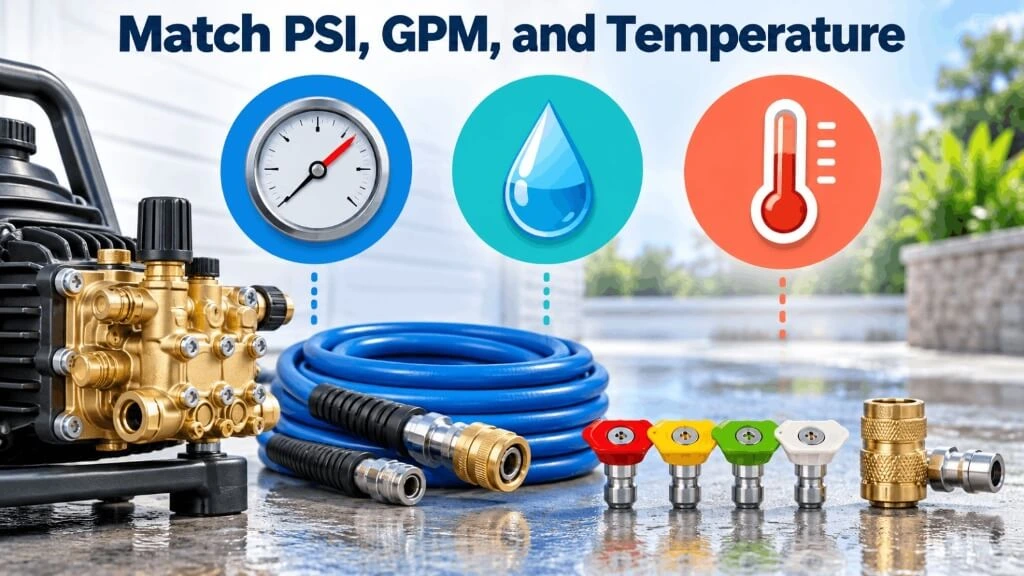
PSI and GPM work together
PSI means pounds per square inch and describes pressure. GPM means gallons per minute and describes flow. PSI helps loosen dirt; flow carries loosened soil away. An attachment needs a suitable range for both.
Do not select a tool using the highest number printed on a package. A working-pressure rating is different from a burst-pressure rating. The accessory must be rated for the washer’s operating conditions, including water temperature where applicable.
Cleaning units, calculated by multiplying PSI by GPM, can compare machines roughly. They do not confirm that an attachment fits or that a surface is safe. A larger number can still be wrong for painted walls, vehicle trim, or old decks.
Power type does not determine fit
Electric, gas, and cordless washers can use different hose ends, guns, detergent systems, and proprietary connectors. A tool advertised for “electric washers” may fit only certain models.
If you are deciding between machine types, our guide to electric and gas pressure washer ownership explains the broader differences. For the startup sequence, see our electric pressure washer setup guide. Then return to the individual model manual for accessory compatibility.
Temperature and chemical limits matter
An accessory designed for cold water is not automatically suitable for hot-water cleaning. The bottle, hose, seals, and connector materials must also tolerate the detergent you intend to use.
Use the washer manual and detergent label together. Avoid feeding household chemicals, solvents, or mixed cleaners through a pump or injector unless the manufacturer specifically approves them.
Map the Water and Pressure Paths Before Buying
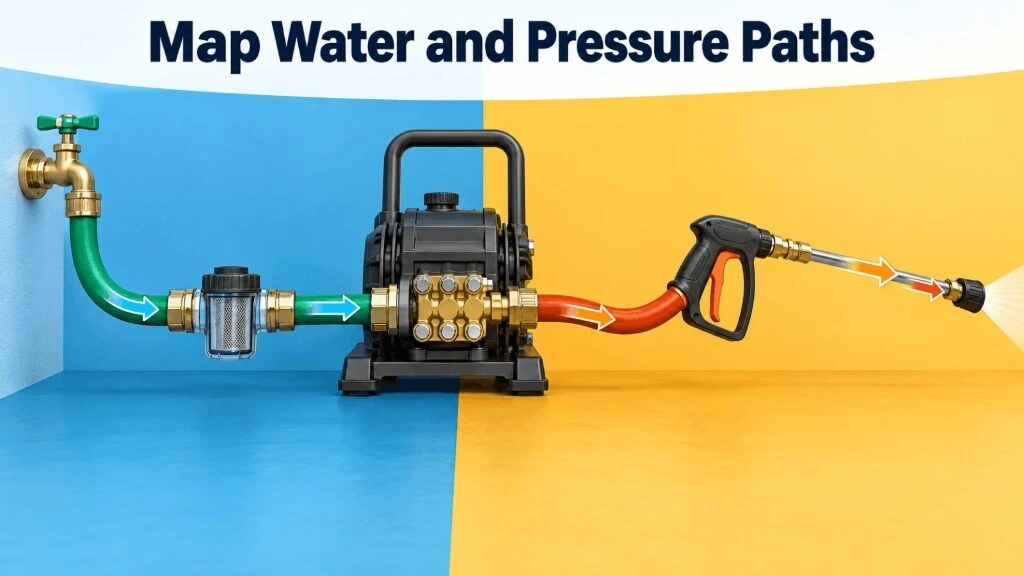
Many mistakes happen because buyers confuse the supply side with the high-pressure side.
The normal path is:
Tap or tank to garden hose.
Garden hose to the washer inlet.
Pump outlet to high-pressure hose.
High-pressure hose to spray gun.
Gun to wand, nozzle, or attachment.
Garden-hose couplers belong at the water-supply end. High-pressure fittings belong after the pump. A connector that fits the thread may still be unsafe in the wrong position.
Measure every connection
Record the fittings at both ends of the hose, the gun, wand, and attachment. Check thread type, sealing dimensions, and quick-connect size. M22-14mm and M22-15mm versions are different even when their outer threads engage.
Use one correctly specified adapter for a known mismatch. Adapter chains add leak points and flow restriction. Keep the machine depressurized while measuring or changing fittings.
Pressure Washer Hose and Fittings for Daily Use
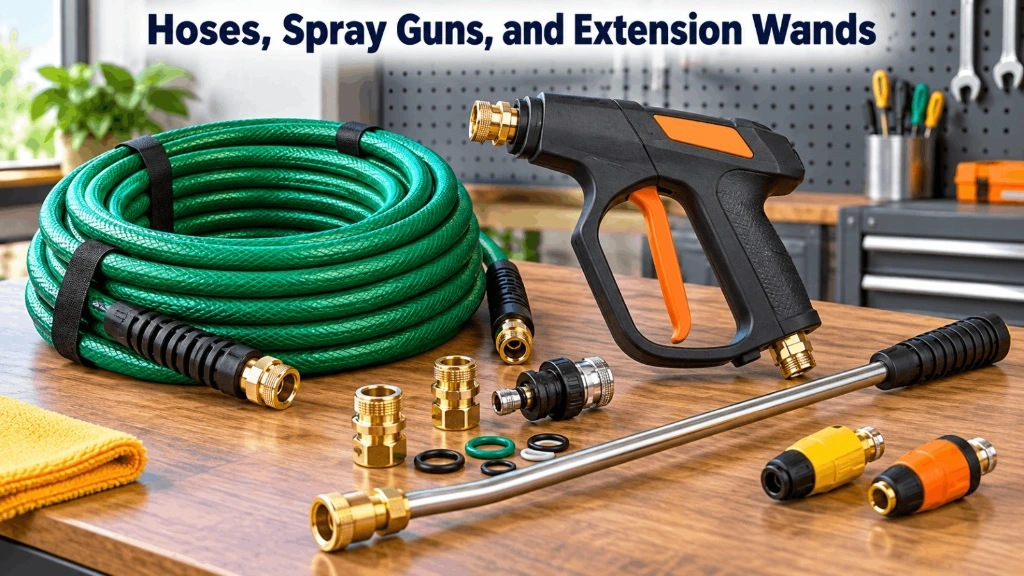
The hose influences how the machine feels. A stiff or short hose can make a capable washer frustrating.
Select length by route
Measure around the vehicle, garden beds, furniture, and corners. A hose that reaches the far side directly may be too short once routed safely around obstacles.
More length reduces machine repositioning, but it adds weight and friction loss. Follow the machine’s approved hose length and internal-diameter guidance. Do not join narrow extensions simply to gain reach.
For frequent work, compare flexibility, abrasion resistance, bend radius, connector strain relief, temperature rating, and replacement availability. “Heavy duty” means little without working specifications.
Keep supply and high-pressure fittings separate
The garden hose should deliver enough water to the pump without kinks or a blocked screen. The high-pressure hose must carry the washer’s specified pressure safely. They are not interchangeable.
Inspect seals and quick connectors regularly. Replace a hose with bulges, exposed reinforcement, deep cuts, or a high-pressure leak. Tape and ordinary hose clamps are not suitable repairs.
Pressure Washer Nozzle Selection by Surface
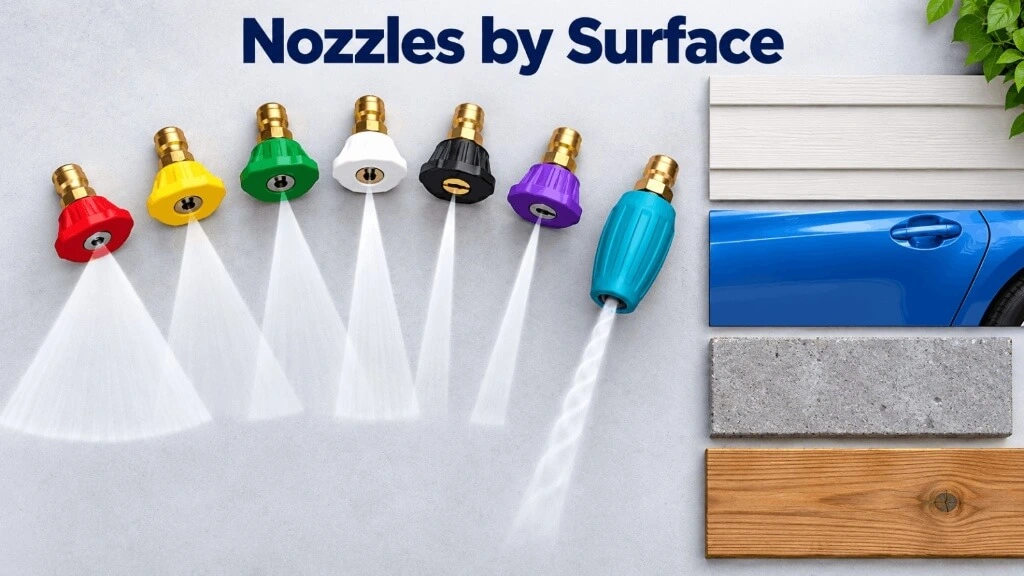
A nozzle changes how water reaches the surface. It does not change the pump’s rated capacity.
Pattern, orifice, and distance
The spray angle controls coverage width. The orifice must suit the washer’s pressure and flow. A nozzle that clips into the wand can still be the wrong size.
Color coding often indicates spray pattern, but colors do not establish the complete specification. Use the size listed for your machine or an approved nozzle chart.
Start with the widest suitable fan and the recommended distance. Test an inconspicuous area and inspect it after drying. Wet wood and concrete can hide etching or raised fibers.
Use specialty tips carefully
A turbo nozzle rotates a concentrated stream and can help on suitable durable masonry. Rotation does not make it safe for vehicle paint, siding, soft timber, or damaged coatings.
A low-pressure soap tip may be required for detergent pickup on some machines. If soap stops drawing after you change tips, check whether the washer must be in a particular low-pressure mode.
Surface Cleaner Setup for Driveways and Patios
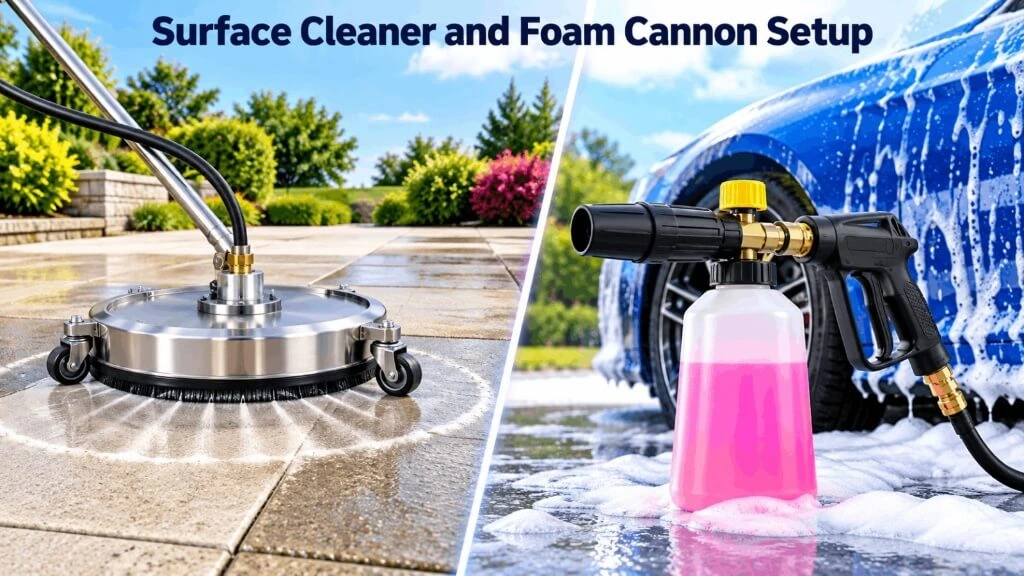
A surface cleaner places rotating jets beneath a housing. On suitable flat concrete, it can make coverage more even than sweeping a wand from side to side.
Match the cleaner to water flow
Check minimum GPM, pressure range, nozzle size, connection, and recommended surface. Diameter is only one part of the choice. A large head can perform poorly on a compact electric washer that cannot supply enough water.
Remove loose stones and inspect cracks, coatings, and weak joints before starting. Keep the cleaner level and moving at a steady pace with slight overlap. Plan a separate rinse to move dirty water away.
Do not assume the attachment is suitable for a wood deck, painted coating, or old pavers. Follow surface guidance and test a small area first.
Edge and detail work
A surface cleaner may not reach steps, corners, wall edges, or narrow strips. Keep a suitable wand nozzle available for those areas. Use lower force and greater distance where the surface changes.
Never lift an operating surface cleaner to inspect its spray bar. Shut down and release pressure first.
Foam Cannon Setup for Cars
A foam cannon mixes water, air, and detergent at the spray gun. It can make shampoo application convenient for regular vehicle washing, but it is not required for every owner.
Check the cannon’s actual requirements
Confirm the pressure range, minimum flow, connector, recommended orifice, bottle capacity, and replacement seals. A cannon can connect and still underperform if the washer does not supply enough water.
Use vehicle shampoo approved for the equipment and finish. Follow the dilution instructions, work on cool panels, and prevent foam from drying. Thick foam is not proof that the dirt has been removed.
Road film may remain after rinsing, so a suitable contact wash may still be needed. Keep brushes and wash media free of grit.
A pressure-washer foam cannon uses the machine’s pressurized outlet, while a garden-hose foam gun uses supply water. Similar bottles do not make them interchangeable.
Spray Guns and Extension Wands
The gun controls the flow and contains the trigger safety. The wand provides reach and holds the nozzle or attachment.
Choose a gun for control
Check pressure and temperature ratings, connections, trigger lock, grip, swivel, and balance with the wand attached. A short gun may help around a vehicle; a conventional wand provides more distance outdoors.
Do not tie the trigger open or ignore a gun that sticks or fails to shut off. If prolonged trigger use is painful, stop and reassess the equipment and work pattern.
Treat extra reach as a handling change
An extension wand increases leverage and recoil. Choose one you can control from stable ground, keep clear of overhead electrical lines, and never use a ladder to compensate for reach.
Avoid directing water into vents, siding gaps, roof edges, or open windows. Use another method or professional help when the work position cannot be made safe.
Water Filters and Basic Protection Accessories
An inlet screen protects the pump from debris. Clean it according to the manual and replace it when damaged.
An additional filter must allow the required water flow. A clogged or restrictive filter can starve the pump and cause poor output; more filtration hardware is not automatically better.
Sediment filtration is different from removing dissolved minerals. If your concern is vehicle spotting, choose a water-treatment method for that purpose and maintain its capacity as instructed.
For high-pressure systems, pressure regulators, unloaders, relief valves, and gauges may be appropriate, especially on professional equipment. These are system components that require correct sizing and installation. Do not alter pressure controls casually to make a machine appear stronger.
Common Mistakes People Make
Buying by accessory count: A ten-piece kit may contain duplicates or fittings for a different connection system. Compare useful pieces, not the headline count.
Choosing PSI alone: Flow, temperature, connection, nozzle size, and surface suitability also decide whether an accessory works.
Using a garden-hose connector after the pump: Supply-side fittings are not high-pressure components. Keep the two paths separate.
Holding the tip too close: Increase distance and begin with a wider suitable pattern before raising cleaning force.
Using unapproved chemicals: Follow the detergent and equipment instructions. Never mix cleaners in a bottle or pump.
Ignoring water supply problems: Kinks, partly closed taps, blocked screens, or low supply can look like an attachment fault.
Safety Before Using Any Attachment
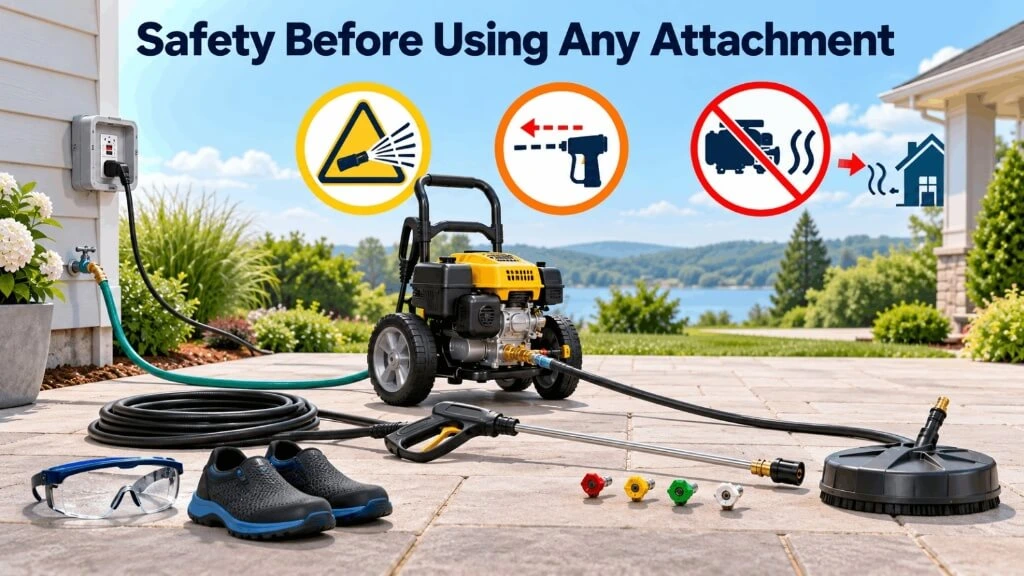
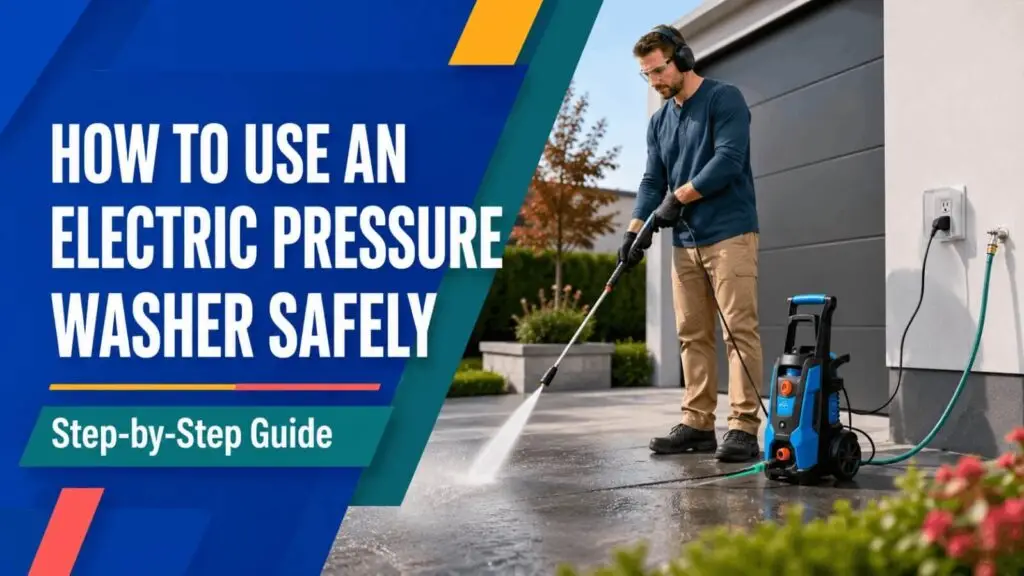
Follow the pressure washer manual, accessory instructions, surface guidance, and detergent label. Wear eye protection and closed-toe, non-slip footwear; use gloves where appropriate and keep bystanders away.
Never point the spray at people, animals, electrical equipment, or your own skin. Do not check a leak with your hand. A small high-pressure wound can cause serious internal damage and needs prompt medical attention.
Turn off and isolate the machine, then release trapped pressure as the manual directs before changing a nozzle, hose, gun, or connector. Keep electric plugs and connections away from runoff. Operate gasoline equipment outdoors and away from doors, windows, and vents.. The CDC explains that fuel-burning engines can produce carbon monoxide and that it can build up indoors so never run a gasoline washer in a garage, shed, or other enclosed or partly enclosed space.
Simple Action Plan
Before buying
Write down the machine model, PSI, GPM, hose-end connections, and the job you want to improve. Check working ratings, temperature, flow requirements, included parts, and return conditions.
Before use
Inspect the hose, seals, gun, nozzle, inlet screen, and work surface. Connect the water supply first and follow the approved startup process. Test the accessory on a small suitable area.
During cleaning
Keep the attachment moving, maintain a safe distance, and watch for leaks, pulsing, recoil, or surface damage. Stop if the machine behaves abnormally.
After cleaning
Flush detergent equipment, depressurize, drain, and store components as instructed. Rinse grit from connectors, coil hoses without sharp bends, and protect water-filled parts from freezing.
Frequently Asked Questions
Which pressure washer accessories should owners buy first?
Start with a safe basic hose, working gun, correct nozzle, and clean inlet screen. Then choose one upgrade that solves your most frequent problem, such as reach, paving coverage, or detergent application.
Can one accessory fit every pressure washer?
No. Connections, pressure, flow, temperature, proprietary systems, and surface requirements vary. Verify the complete specification instead of relying on “universal” wording.
Does a surface cleaner need more GPM than a spray nozzle?
It may. Rotating cleaners often need enough flow to keep their jets moving and cover the area evenly. Check the cleaner’s stated minimum flow against the washer’s actual output.
Can a foam cannon make a car completely touch-free?
Not reliably. Foam can loosen and carry away some dirt, but road film may remain. A suitable contact wash may still be required, using clean media and safe technique.
Are quick-connect fittings worth buying?
They can save setup time for frequent users. Buy them only when the plug, socket, sealing method, and working rating match the exact connection point.
Why does my accessory reduce pressure?
Possible causes include an undersized orifice, restricted connector, kinked hose, blocked screen, inadequate water supply, or an attachment requiring more flow. Check basic supply and setup conditions before changing the pump.
Do I need a hose reel?
A reel can help with organized storage and repeated work, but it adds cost and may require a rated swivel or mounting space. Occasional users may find careful coiling simpler.
Conclusion: Build Around the Job You Actually Do
The right accessories pressure washer owners choose should make a real task easier, safer, or more consistent. A hose improves movement, a surface cleaner changes driveway coverage, and a foam cannon supports a regular car-washing routine. None of them should be chosen without checking the machine’s connections, PSI, GPM, temperature limits, and surface guidance.
Start with a reliable basic setup, solve one repeat problem, and add task-specific tools in stages. That approach keeps your equipment easier to understand and your accessory budget focused on work you will actually perform.