Editorial note: This educational comparison explains common differences between electric and gas pressure washers; it is not a hands-on test of specific models. Safety information was checked against current CDC guidance. Always follow the manual for your machine and the care instructions for the surface.
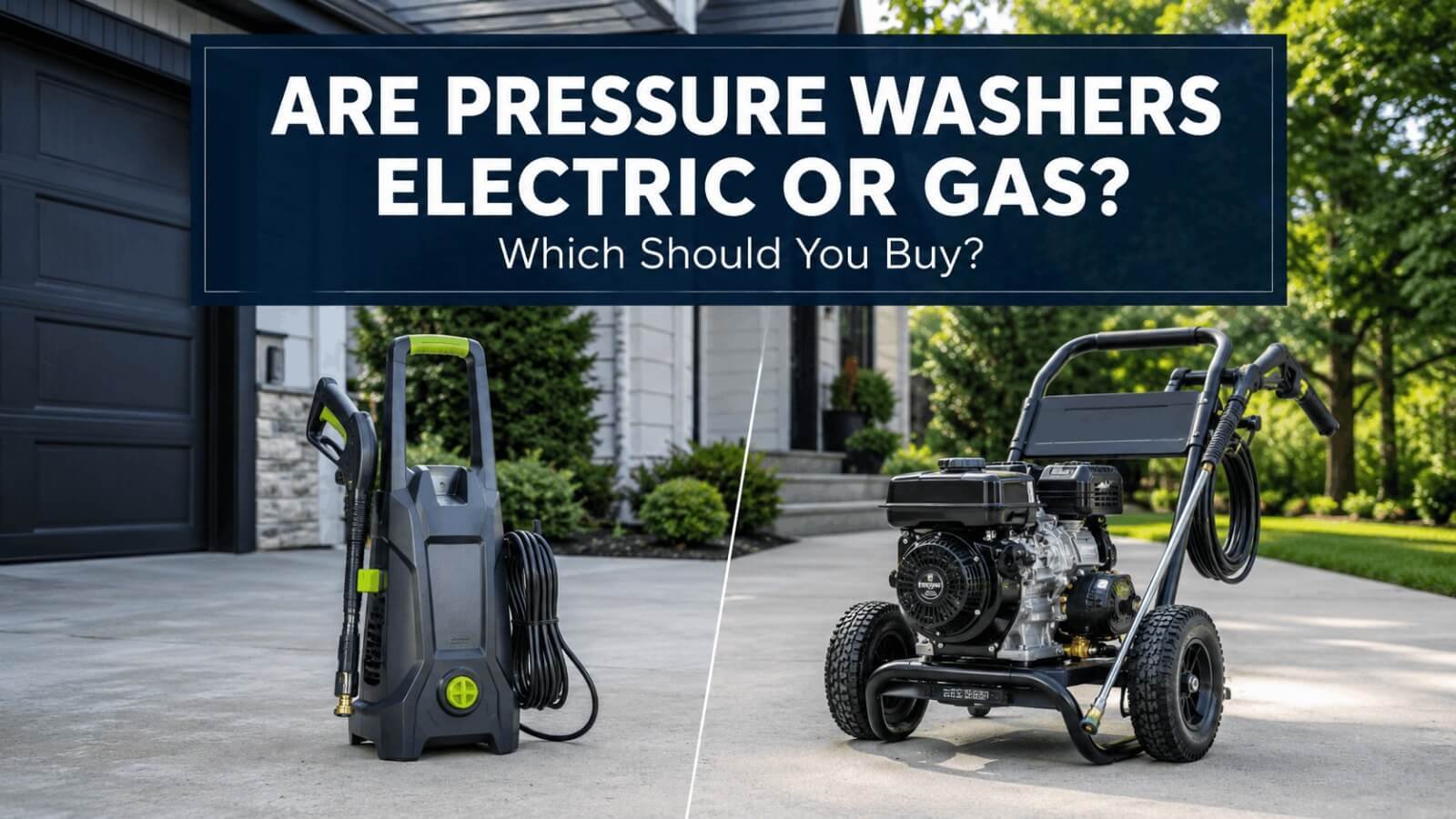
Two pressure washers can look almost identical in a product photo yet behave very differently on a driveway. One plugs into an outdoor outlet, starts with a switch, and stores easily in a garage. The other has a gasoline engine, makes more noise, and may clean a large concrete area much faster.
Are Pressure Washers Electric or Gas?
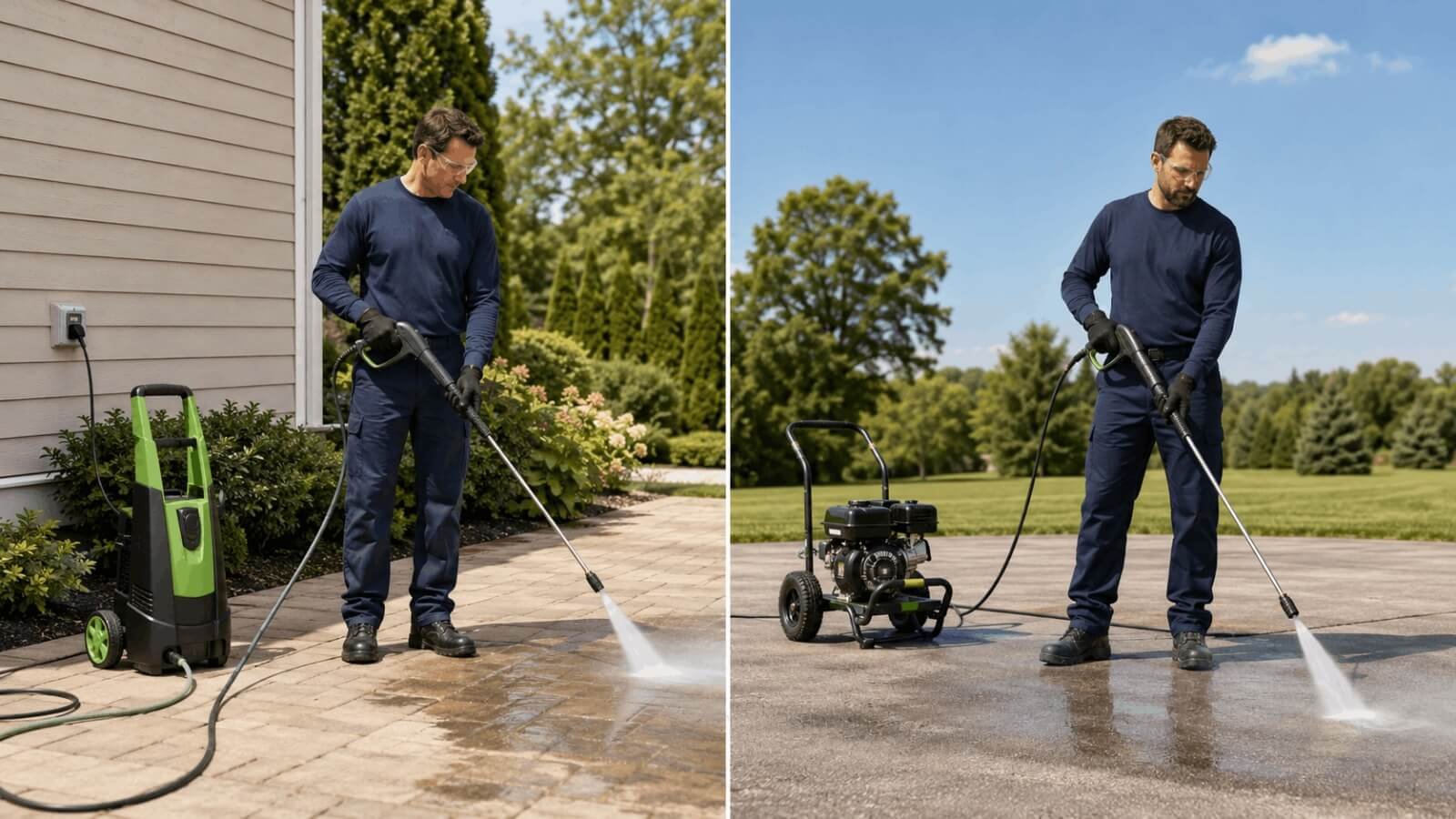
They can be either. Electric pressure washers use a motor powered by a cord, battery, or dedicated electrical supply. Gas pressure washers use a small combustion engine. Both drive a pump that increases water pressure, but their power, water flow, mobility, maintenance, noise, and best uses are different.
Electric is usually simpler for cars, furniture, siding, and small patios. Gas suits large driveways, heavy equipment, big properties, and repeated demanding work. Choose according to the job, not the biggest number on the box.
Pressure washers are available in both electric and gas-powered designs. Corded electric machines are common for light and medium home cleaning. Gas models are popular when higher flow, stronger output, and freedom from a power cord are needed. Battery-powered cleaners also exist, but most are designed for portable rinsing and smaller jobs.
The power source does not clean the surface directly. It turns the pump. Water enters through a garden hose, the pump raises its pressure, and a high-pressure hose carries it to the spray gun and nozzle. The nozzle then controls the shape and intensity of the spray.
Both types can clean effectively. The real question is which provides the right pressure, water flow, reach, control, and durability for your regular jobs.
Electric vs Gas Pressure Washer: Quick Comparison
| Factor | Electric Pressure Washer | Gas Pressure Washer |
| Power source | Corded motor, battery, or dedicated electrical supply | Gasoline engine |
| Best for | Cars, furniture, small patios, routine siding and light home cleaning | Large driveways, long fences, equipment and repeated heavy work |
| Output pattern | Usually lower GPM and easier to control | Usually higher PSI and GPM for faster heavy cleaning |
| Mobility | Limited by cord and outlet on corded models | Not tied to an outlet, but still needs a water supply |
| Noise | Generally quieter | Louder; hearing protection may be needed |
| Maintenance | Lower; no fuel, engine oil or spark plug | Engine oil, fuel system, air filter and spark plug need attention |
| Weight and storage | Usually lighter and more compact | Usually heavier and requires fuel-safe storage |
| Exhaust | No engine exhaust at the machine | Produces carbon monoxide and must remain outdoors |
| Starting | Switch or trigger-controlled system | Recoil or electric start, depending on model |
| Typical buyer | Homeowner or occasional user | Large-property owner, contractor or frequent heavy-duty user |
These are common patterns, not strict rules. Commercial electric and compact gas machines may differ, so compare exact specifications and the manual.
How Electric Pressure Washers Work
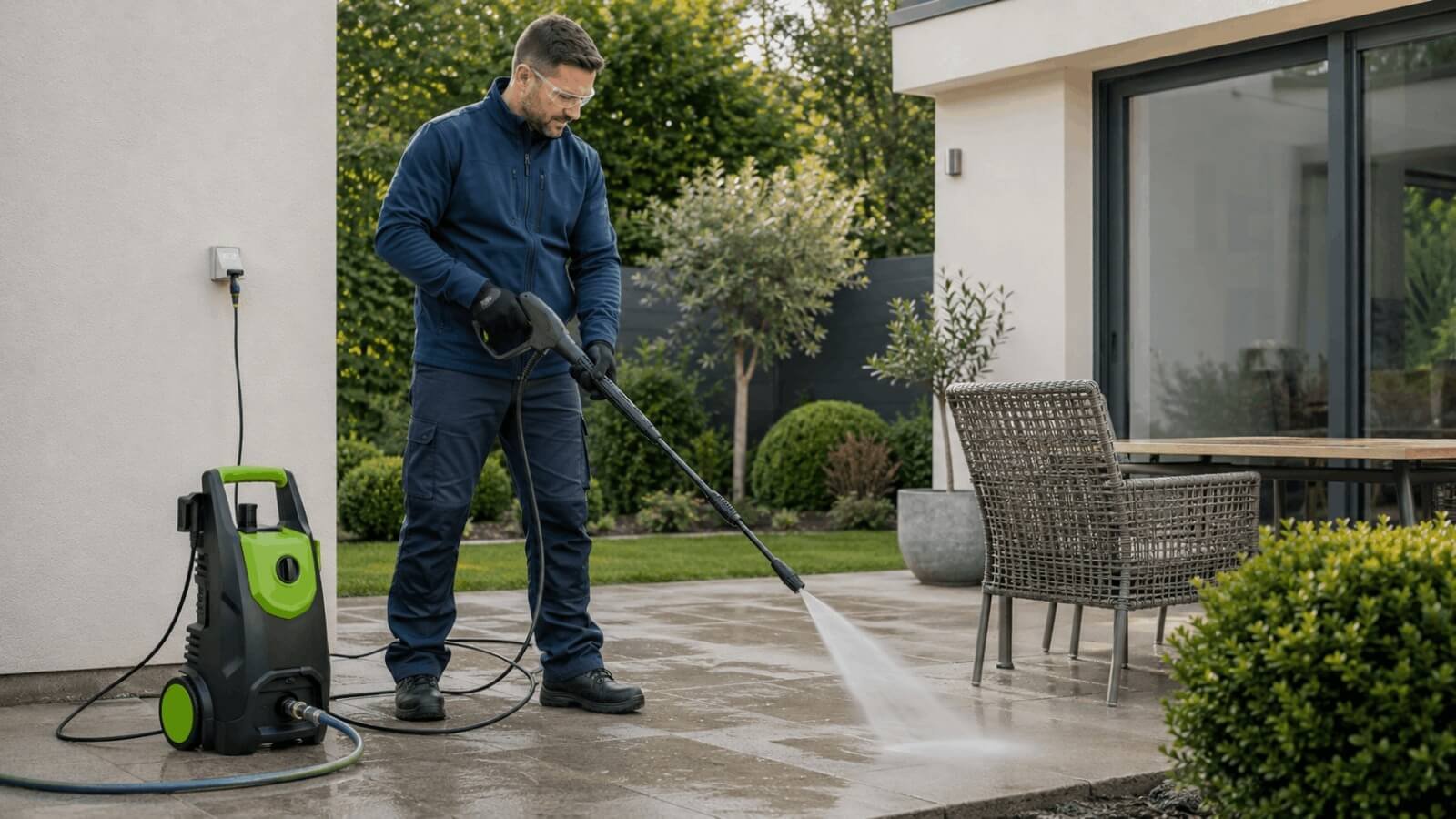
An electric motor drives the pump. Most residential units use a standard household outdoor circuit, while commercial machines may require higher-voltage service.
Main Advantages of Electric Models
Easy starting: Connect the water, purge air, plug into a suitable protected outlet, and follow the start procedure.
Lower maintenance: No gasoline, engine oil, air filter, carburetor, or spark plug is required.
Quieter and lighter: Electric machines are generally easier to use, move, and store.
No engine exhaust: There are no combustion fumes at the machine.
Useful control: Their output often suits cars, furniture, small decks, and other delicate work.
Main Limitations of Electric Models
The cord limits range and must be managed around hoses and runoff. Use an extension cord only when the manufacturer permits it and specifies the outdoor rating, gauge, and length. Many electric models also move less water than gas machines, so a large driveway may take longer. Budget units may have short hoses, proprietary fittings, or non-serviceable pumps.
Who Should Choose Electric?
Choose electric for vehicles, furniture, bins, small patios, short fences, and occasional low-pressure siding washing near a suitable outlet. It is also the easier choice when storage space is limited or you want to avoid fuel and engine maintenance.
An electric pressure washer may not be the best choice if the farthest cleaning point is beyond safe cord reach or if you regularly clean large, heavily soiled concrete areas.
How Gas Pressure Washers Work
A gasoline engine turns the pump. It can move around a large property without an outlet, but it still needs an adequate water supply.
Main Advantages of Gas Models
Higher output: Gas machines commonly combine stronger pressure with more water flow.
Faster large-area work: Higher GPM clears loosened dirt from concrete and equipment more quickly.
Outlet-free mobility: Useful on farms, jobsites, and large properties.
Heavy-duty options: Strong frames, long hoses, and serviceable triplex pumps are available.
Accessory support: Higher flow can run larger compatible surface cleaners effectively.
Main Limitations of Gas Models
Gas units are louder, heavier, and harder to maintain. Fuel can degrade in storage, while engine oil, filters, and spark plugs need service.
Exhaust is the most important limitation. A gasoline engine produces carbon monoxide, an invisible and potentially deadly gas. Never run a gas pressure washer inside a home, garage, basement, shed, warehouse, or partly enclosed space.
The CDC advises keeping gasoline-powered pressure washers outdoors and at least 20 feet from doors, windows, and vents.
Who Should Choose Gas?
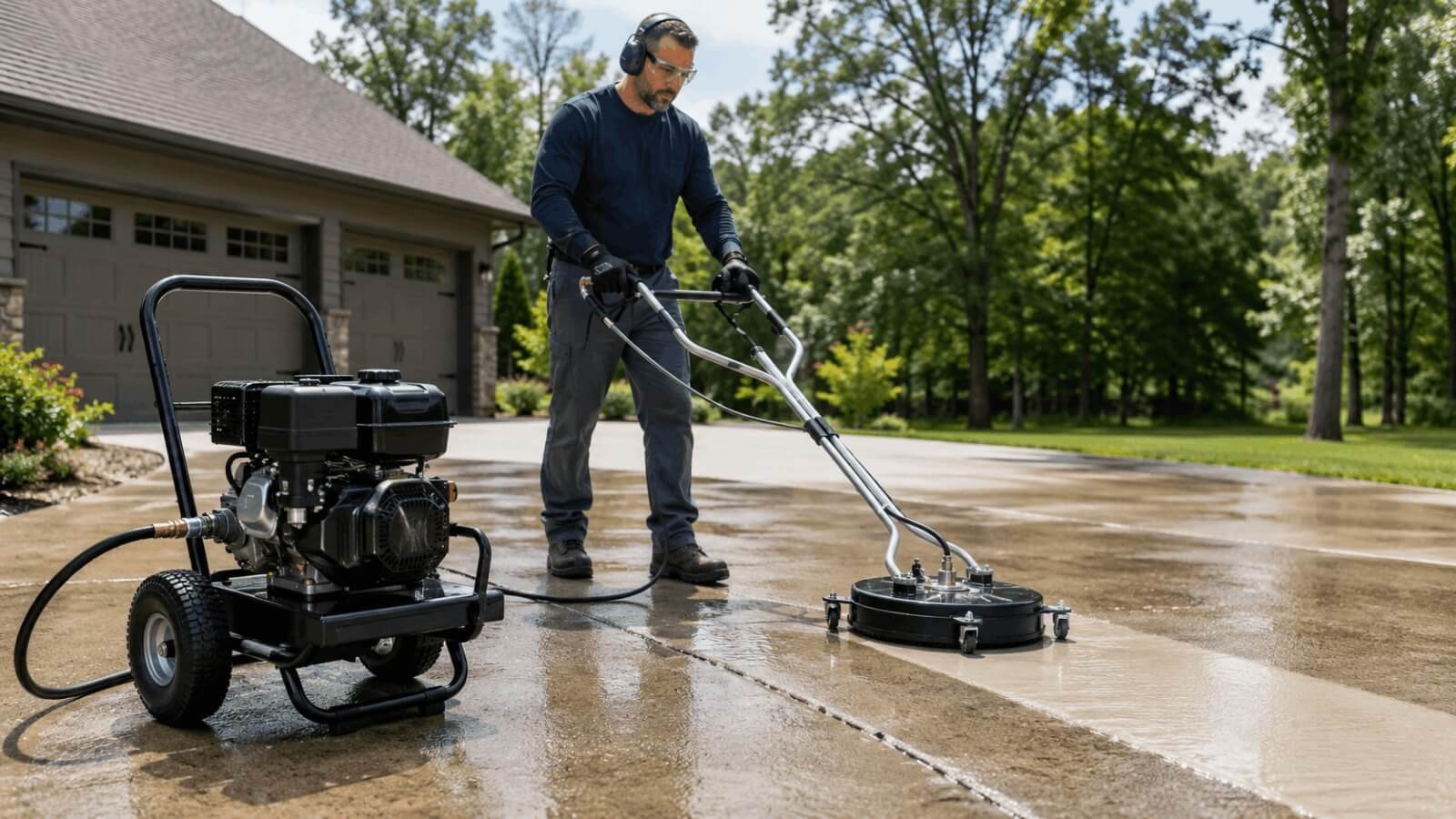
Choose gas for large driveways, long walkways, equipment, broad hardscapes, properties without suitable outlets, and commercial work that demands higher flow.
Before buying, compare pump type, service access, hose length, nozzle set, frame construction, and engine support.
. Our gas pressure washer guide explains these factors in more detail.
PSI and GPM: Which Type Has More Cleaning Power?
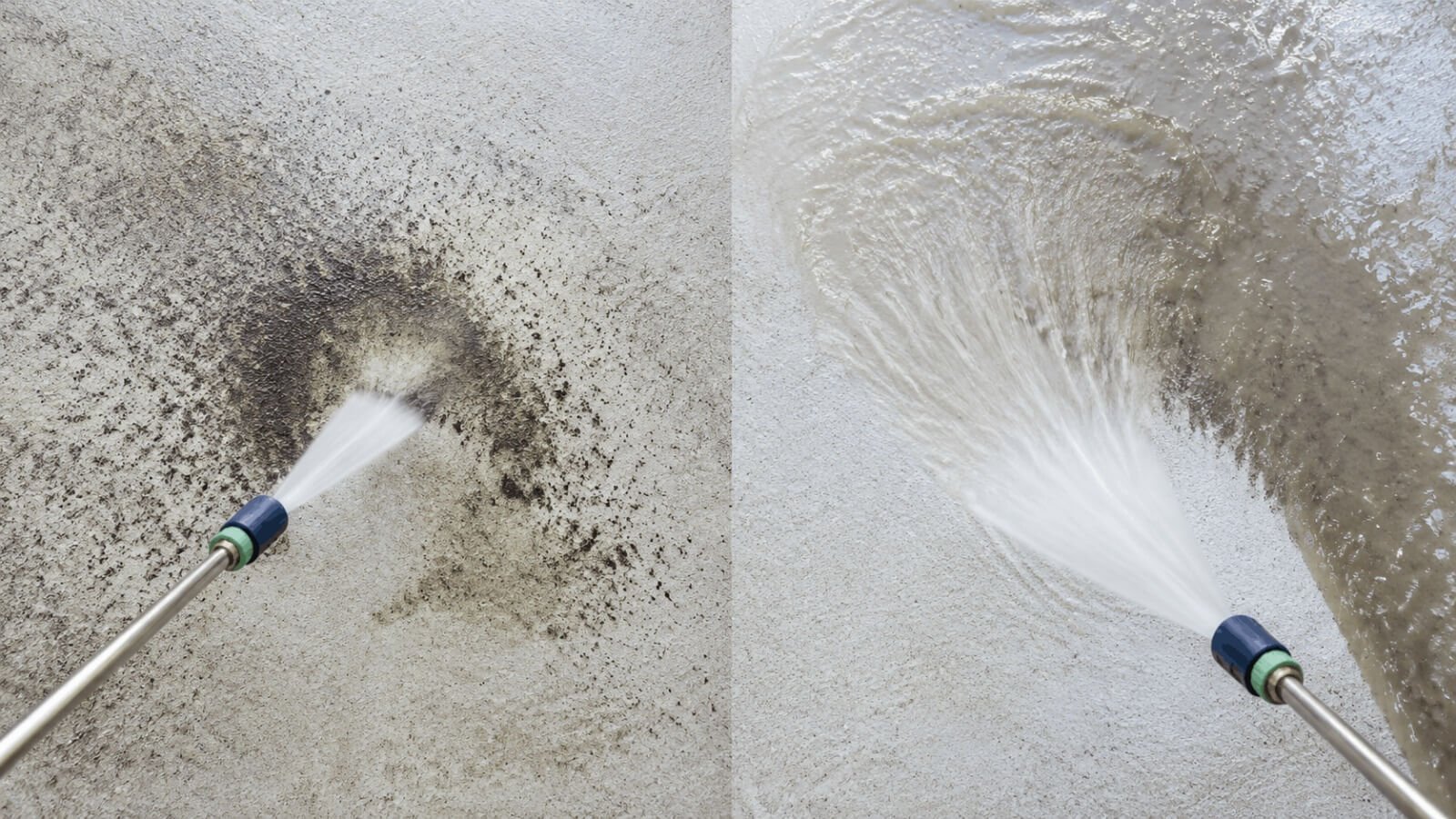
Gas pressure washers generally provide higher pressure and water flow in the residential market, but the numbers need context.
PSI describes cleaning force, while GPM describes water flow. PSI loosens dirt; GPM carries it away and affects how quickly a large area can be rinsed.
A homeowner might compare an electric model around 2,300 PSI and 1.2 GPM with a gas model around 3,200 PSI and 2.5 GPM. These are illustrative ratings, not fixed limits. Some electric products advertise higher peak pressure, and commercial electric equipment can deliver substantial flow.
Do Not Compare Maximum Numbers Blindly
Check whether advertised PSI and GPM occur at the same operating point. Maximum pressure and maximum flow may be measured under different conditions. Rated performance, pump quality, and water supply matter more than one large claim.
If you are unsure what output fits each surface, review how much PSI is needed for different cleaning jobs before choosing a machine.
Which Type Is Better for Common Cleaning Jobs?
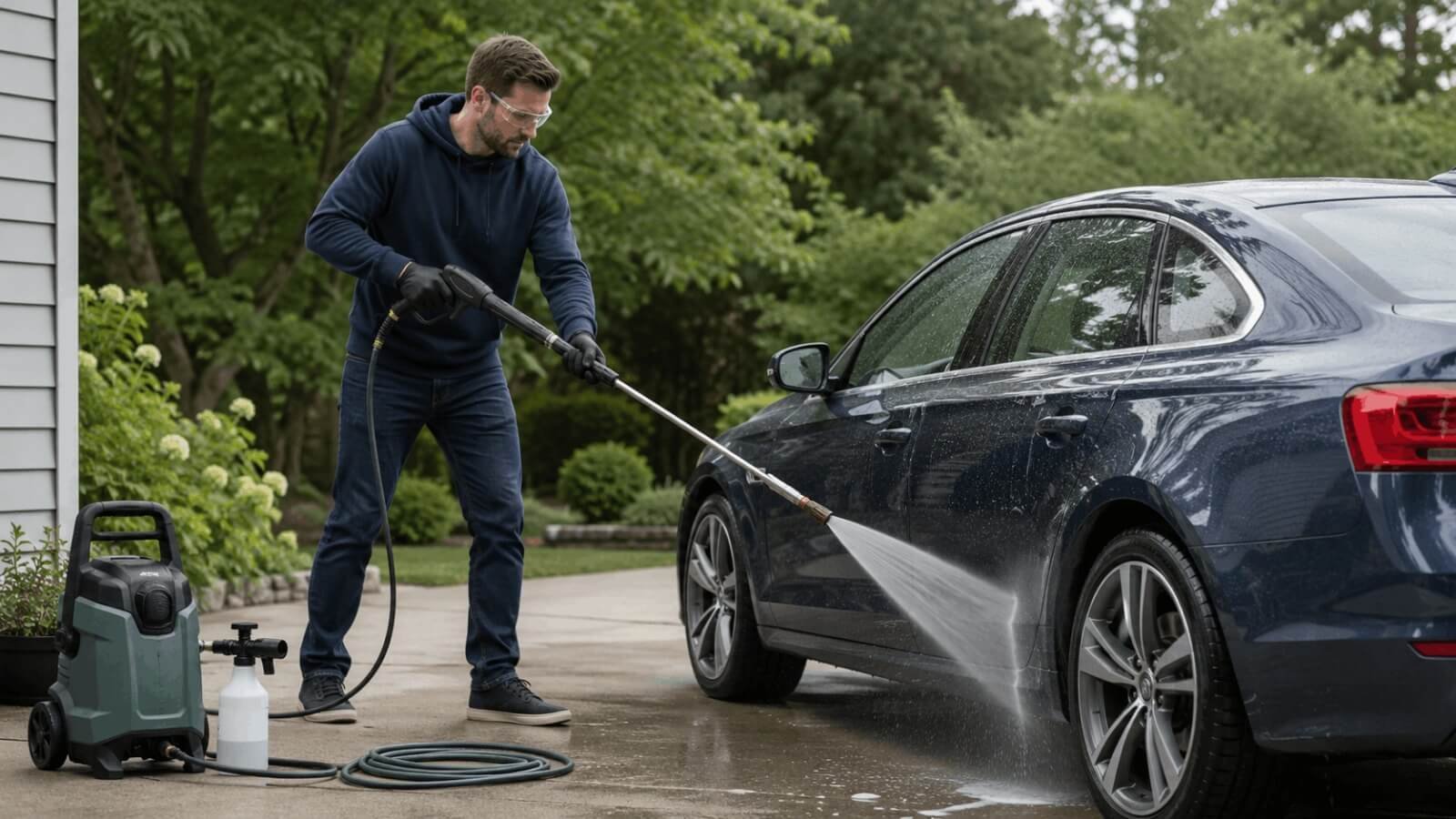
Car Detailing (Electric Usually Makes More Sense): Cars need control, not maximum force. A modest electric unit with a wide nozzle and suitable soap is convenient for home detailing. Keep a safe distance from damaged paint, seals, sensors, cameras, electrical parts, and tires.
Driveway Cleaning (Size and Condition Decide): Electric can handle a small driveway with light dirt, especially with a compatible surface cleaner. A large or heavily soiled driveway favors higher-GPM gas equipment. Pre-treatment may still be needed for oil or rust.
Patios and Decks (Control Matters Most): Both types can clean patios, but wood and weak masonry are easy to damage. Start with a wide spray, low pressure, and a hidden test. Select the nozzle and distance for the surface.
House Siding (Electric Is Often Convenient): Siding usually benefits from detergent and gentle rinsing rather than aggressive pressure. Electric units are convenient around the home. Do not force water behind panels or into vents and electrical fixtures.
Equipment and Commercial Work (Gas Often Wins): Muddy equipment, broad concrete, and repeated work benefit from higher flow, durable frames, and serviceable pumps. Gas is common, although commercial electric systems suit locations where exhaust or noise must be controlled.
Cost, Maintenance, and Long-Term Ownership
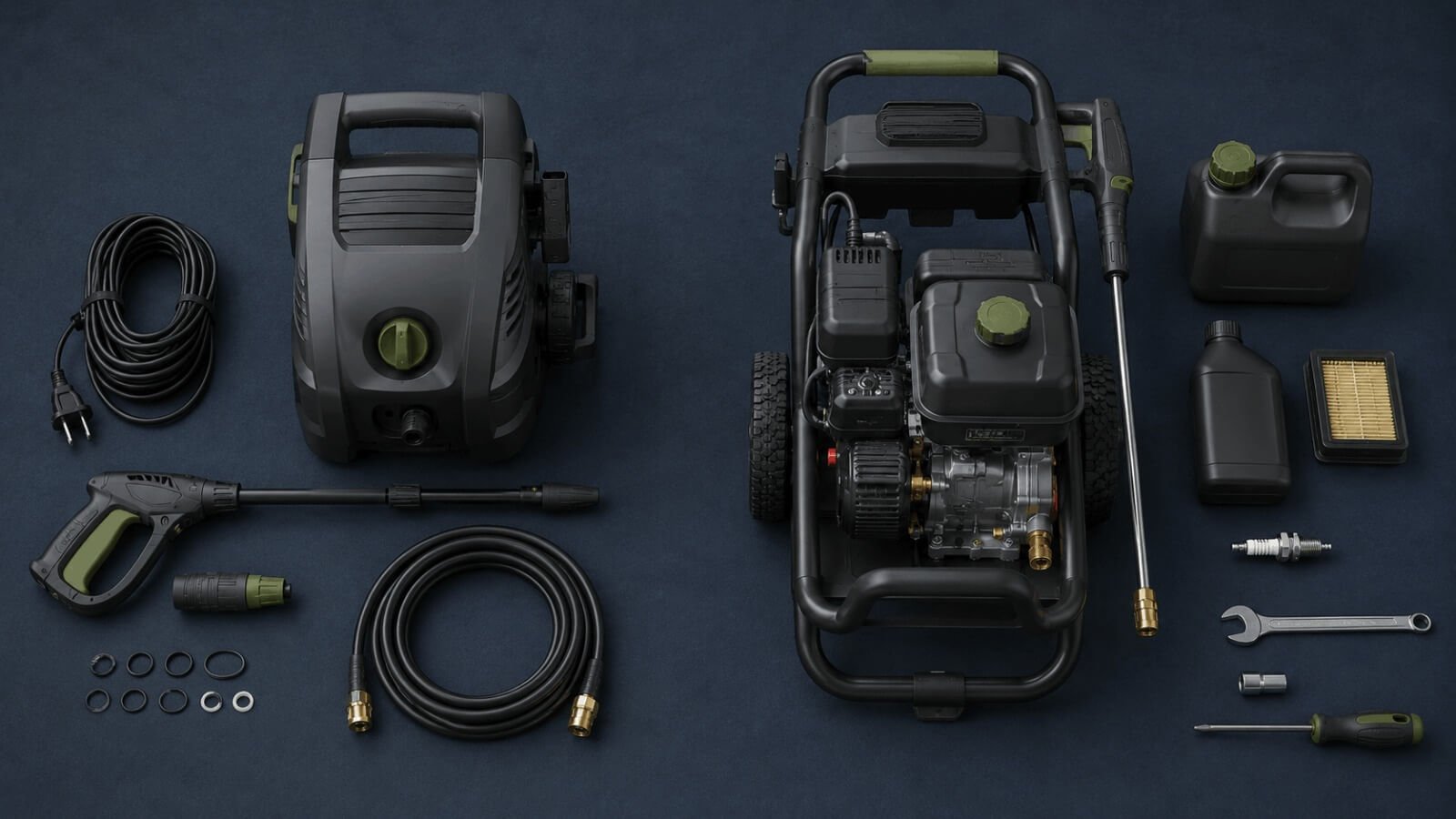
Electric machines usually cost less upfront and need fewer service items. Gas units add fuel, engine oil, filters, spark plugs, and seasonal fuel care. Serviceable professional pumps may be repaired, while some low-cost pumps are replaced as assemblies. Build quality and parts availability matter more than power source alone.
Prices and availability change, so compare warranty terms, local service, replacement hose and gun availability, and the cost of required accessories before buying.
Safety Differences Between Electric and Gas
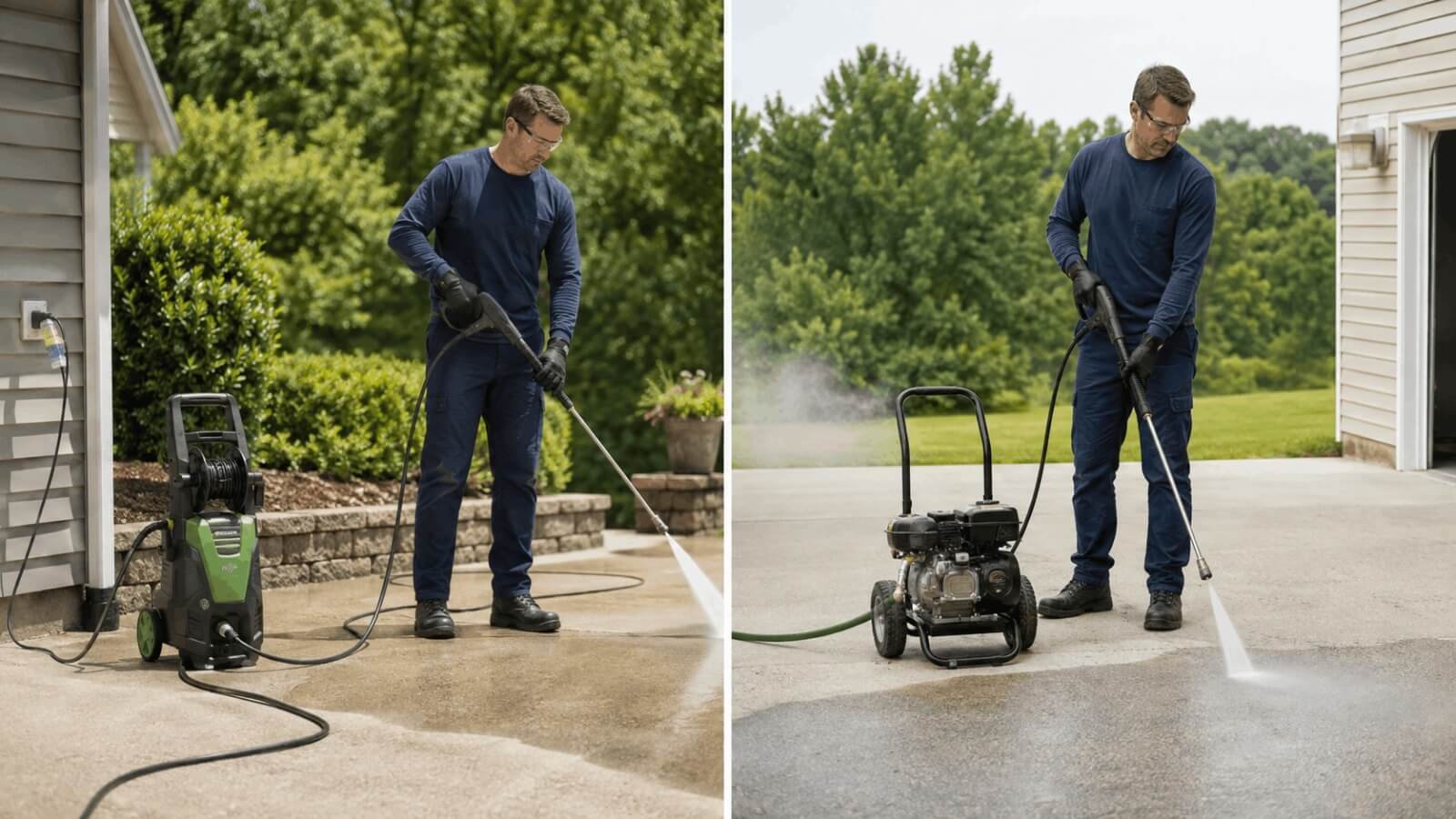
Both types can cause serious high-pressure injuries. Never point the spray at a person or animal. Wear eye protection and slip-resistant footwear, keep bystanders away, and release trapped pressure before changing accessories.
For electric models:
Use a grounded outdoor outlet with suitable ground-fault protection.
Keep plugs and connections away from standing water and runoff.
Never alter a cord or use damaged electrical or pressure components.
For gas models:
Operate outdoors and direct exhaust away from buildings.
Let hot parts cool before refueling.
Store fuel safely and use hearing protection when required.
Always follow the pressure washer manual, detergent instructions, and surface manufacturer’s care guidance.
Common Mistakes People Make
Buying More Power Than the Job Needs: High output speeds concrete work but makes delicate cleaning less forgiving. Buy for your largest regular job, not a rare extreme task.
Looking at PSI and Ignoring GPM: PSI loosens dirt, while GPM helps rinse it away. A large driveway often benefits more from added flow than from a higher pressure number alone.
Assuming Electric Means Harmless: Electric models can still cut skin, damage paint, and create shock hazards. Treat them as serious power tools.
Running a Gas Machine Near an Open Garage: An open door does not make a garage safe. Keep the engine outdoors and away from openings.
Forgetting the Water Supply: The tap must deliver enough water for the machine. A restricted hose, clogged inlet screen, or weak supply can reduce performance and harm the pump.
Ignoring Hose and Accessory Compatibility: Accessories must match the machine’s pressure, flow, temperature, and fittings. Never exceed the lowest-rated component.
Frequently Asked Questions
Are all pressure washers either electric or gas?
Most full-size residential models use corded electricity or gasoline. Battery-powered electric cleaners, hydraulic machines, diesel equipment, and power-take-off systems also exist for particular uses.
Is an electric pressure washer powerful enough for a driveway?
It can be suitable for a small driveway with light or moderate dirt. A compatible surface cleaner may improve consistency. For a large or heavily soiled driveway, higher-GPM gas equipment usually works faster.
Which is better for washing a car?
Electric is usually more convenient for home car washing because it is quieter, easy to start, and often provides manageable output. Safe distance, a wide nozzle, suitable soap, and careful technique remain essential.
Can a gas pressure washer be used inside a garage?
No. A gasoline engine can produce deadly carbon monoxide. Use it outdoors and away from doors, windows, vents, and air intakes, following the manual’s clearance instructions.
Do electric pressure washers need oil?
They do not need engine oil, but pump designs vary. Some pumps are sealed while others have service requirements. Check the exact manual rather than adding oil based on another model’s instructions.
Which type lasts longer?
Power source alone does not determine lifespan. Usage hours, pump design, motor or engine quality, water supply, maintenance, winter protection, and parts availability all matter. Commercial equipment is usually more serviceable than entry-level homeowner equipment.
Which pressure washer is cheaper to operate?
Electric models often have lower routine operating and maintenance costs because they do not need gasoline or engine service. Actual cost depends on local electricity and fuel prices, usage time, and repair needs.
Conclusion
Pressure washers can be electric or gas, and neither type is automatically better. Electric models are generally the practical choice for cars, furniture, siding, small patios, and occasional home cleaning. They are easier to start, quieter, lighter, and simpler to maintain.
Gas models earn their place when higher water flow, faster large-area cleaning, and outlet-free mobility matter. They suit large driveways, equipment, big properties, and demanding work, but they also bring more noise, maintenance, weight, and strict exhaust-safety requirements.
Start with the jobs you perform most often. Then compare PSI and GPM together, check working reach and water supply, and choose the lowest practical output that completes those jobs safely. That approach leads to a better purchase than choosing by power source or maximum PSI alone.
Helpful Resources
- CDC Pressure Washer Safety Guidance — Safety advice covering high-pressure injuries, electrical hazards, carbon monoxide, and safe operation.