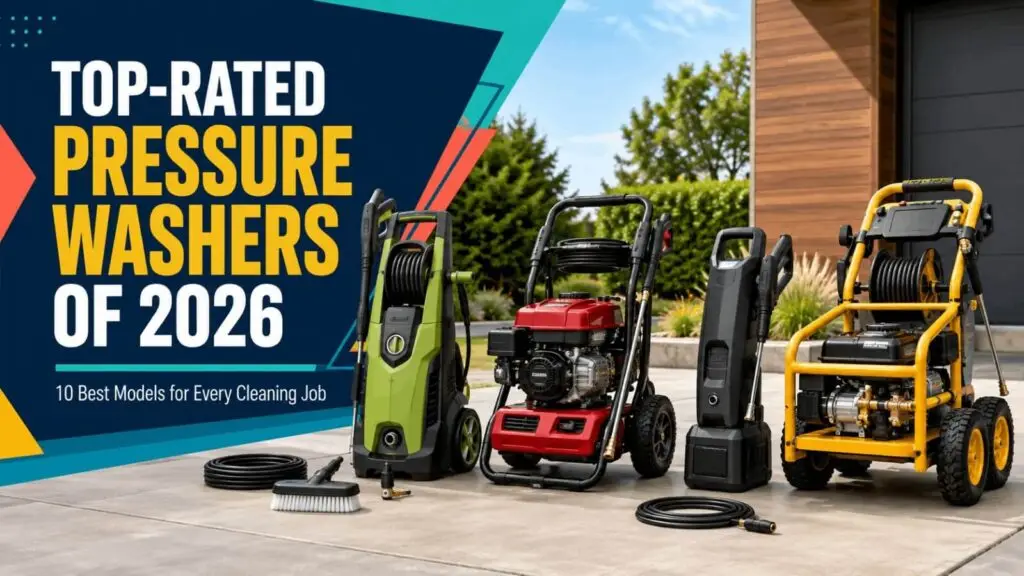
Top Rated Pressure Washers of 2026: 10 Models Compared
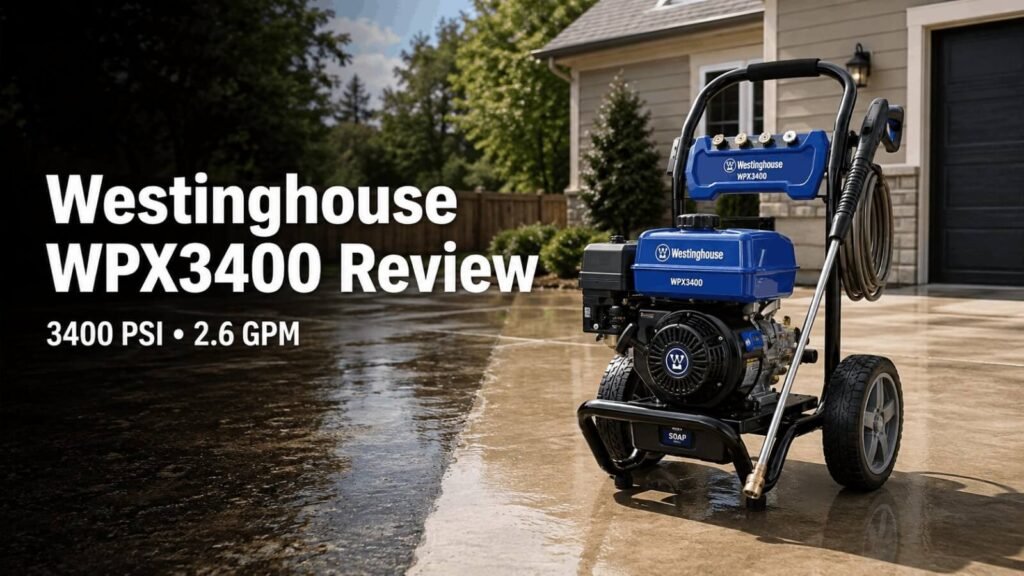
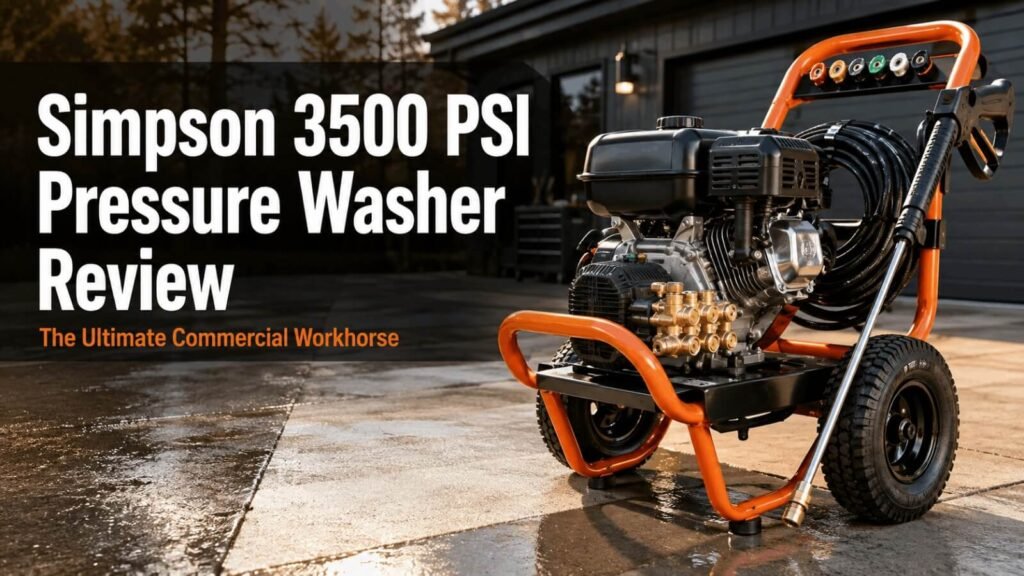
The top-rated pressure washers are not simply the machines with the highest PSI. A powerful gas washer may be ideal for a long concrete driveway but inconvenient for washing one car. A compact electric model is easier to start and store, while a cordless washer offers freedom from a power outlet at a higher purchase price. This guide compares ten pressure washers for different buyers and cleaning jobs. Our selections include corded electric, battery-powered and gas machines, from entry-level homeowner units to professional models with triplex pumps. Quick recommendation: Based on published specifications and task suitability, the Greenworks Pro GPW3002A is our best overall choice for most homeowners. Choose the Westinghouse WPX3400 when you need residential gas power, or the SIMPSON PowerShot PS3228 for frequent professional work. Top Rated Pressure Washers briefly Category Model Power source Published output Best use Best overall Greenworks Pro GPW3002A Corded electric 3,000 max PSI at 1.1 GPM Regular home cleaning Best residential gas Westinghouse WPX3400 Gas 3,400 PSI, 2.6 GPM Driveways and heavy dirt Best professional SIMPSON PowerShot PS3228 Gas 3,300 PSI, 2.5 GPM Contractors and frequent use Best cordless EGO HPW3204-2 Dual-battery 3,200 PSI at 1.2 GPM Portable cleaning Best easy-to-use electric RYOBI RY142500 Corded electric 2,500 PSI, 1.2 GPM General residential work Best high-flow electric Kärcher K5 FC Corded electric 2,000 max PSI; up to 2.0 GPM Large home-cleaning areas Best compact DEWALT DWPW2100 Corded electric 2,100 PSI, 1.2 GPM Small homes and storage spaces Best entry-level Sun Joe SPX3000 Corded electric 2,030 rated PSI, 1.2 rated GPM Cars, furniture and patios Best accessory system Generac Speed Wash 3200 Gas 3,200 PSI, 2.7 GPM Versatile outdoor cleaning Best heavy-duty Generac G0088730 Gas 4,200 PSI, 4.0 GPM Large and commercial jobs Published output figures come from the manufacturers. “Maximum” PSI and GPM may be measured under different operating conditions and may not occur together. How We Selected the Top-Rated Pressure Washers This is a research-based buying guide; we did not perform hands-on testing. We compared manufacturer specifications, pressure and flow, pump and motor design, hose length, nozzle selection, detergent delivery, portability, maintenance needs, warranty coverage and suitability for common cleaning jobs. Manufacturer product pages were verified on August 20, 2026. Category winners are editorial recommendations based on their intended use, not laboratory rankings. Prices, stock, specifications and included accessories can change, so confirm the exact model, package and warranty before ordering. 1. Greenworks Pro GPW3002A — Best Overall Pressure Washer The Greenworks Pro GPW3002A is our best overall choice for homeowners who want strong cleaning without gasoline maintenance. Its brushless motor supplies up to 3,000 PSI at 1.1 GPM, while its high-flow mode reaches 2.0 GPM at 100 PSI. Those figures should not be combined as one operating point. The package includes a 25-foot kink-resistant hose, 35-foot GFCI power cord and five nozzles: 15°, 25°, 40°, soap and turbo. Ten-inch wheels make the open-frame machine easier to move, and vertical storage reduces its garage footprint. Pros Strong performance for a residential electric washer Brushless motor with automatic pressure and flow adjustment Five useful nozzles and long power cord Ten-year motor and three-year tool warranty stated by Greenworks Cons Bulkier than compact electric machines Maximum PSI and maximum flow do not occur together 2. Westinghouse WPX3400 — Best Residential Gas Pressure Washer The Westinghouse WPX3400 delivers 3,400 PSI and 2.6 GPM from a 212cc four-stroke engine. That output is well suited to concrete, brick, fences, siding and other demanding residential jobs. It includes a 25-foot hose, five quick-connect tips and a 0.5-gallon detergent tank. The steel frame and 12-inch never-flat wheels are practical for uneven outdoor surfaces. Its axial-cam pump needs less attention than a serviceable triplex design, although it is aimed more at homeowner use than daily contracting. Pros High cleaning output at a competitive gas-machine level Five nozzle tips and large onboard soap tank Strong wheels and steel frame Cons Recoil starting and normal gas-engine maintenance Manufacturer lists this version as not CARB compliant 3. SIMPSON PowerShot PS3228 — Best for Professionals The SIMPSON PowerShot PS3228 is designed for contractors and serious users. Its Honda GX200 engine powers an AAA triplex pump at 3,300 PSI and 2.5 GPM. Unlike a basic residential axial pump, the triplex design is intended for more demanding and frequent work. The package provides a 25-foot MorFlex hose, five nozzles, welded steel frame and 10-inch pneumatic tires. At 77 pounds, it is not lightweight, but its build is better matched to deck restoration, paint preparation and repeated property cleaning. Pros Honda GX200 engine and serviceable triplex pump Flexible, abrasion-resistant MorFlex hose Commercial warranty coverage on engine, pump and frame Cons Heavy and more expensive than homeowner models This PS3228 version is not sold in California 4. EGO HPW3204-2 — Best Cordless Pressure Washer The EGO POWER+ HPW3204-2 removes the need for both fuel and a wall outlet. Two included 56V 6.0Ah batteries provide up to 3,200 PSI at 1.2 GPM, with a maximum-flow mode of up to 2.0 GPM. EGO states a runtime of up to 60 minutes, although actual runtime depends on the selected mode and workload. The washer can use a garden hose or draw clean water through its included siphon hose. ECO, High and Turbo modes are selected through the wand display. A foam cannon, five nozzles and 25-foot hose are included. Pros True cordless operation with strong peak pressure Can draw from a clean portable water source Good accessory package and five-year tool warranty Cons Much more expensive than most corded machines Runtime and maximum output depend on battery charge 5. RYOBI RY142500 — Best Easy-to-Use Electric Model The RYOBI RY142500 is a sensible middle-ground choice for decks, fences, siding, sidewalks and small driveways. Its brushless electric motor produces 2,500 PSI at 1.2 GPM without the starting, fuel and oil requirements of a gas engine. It has a 25-foot hose, metal wand, onboard soap tank and 12-inch flat-free wheels. The machine stores its hose, wand, cord and nozzles onboard, which helps reduce setup