Finding the best cordless pressure washer is not just a matter of choosing the highest PSI number. The right model must match your cleaning job, water source, battery plan, spray control, runtime, and expectations.
A compact battery pressure washer may be excellent for rinsing a car, bicycle, patio furniture, bins, or muddy tools. It may be frustrating on a large driveway or a long commercial cleaning session. This buyer guide explains what to compare before you order, including cordless pressure washer PSI, GPM, battery runtime, self-priming water intake, nozzles, safety, and total cost.
Quick Answer: What Is the Best Cordless Pressure Washer?
For most homeowners, the best cordless pressure washer is a model with:
honest working-pressure and rated-flow information;
adjustable spray control or useful nozzle choices;
a battery and charger that are included or affordable on your existing platform;
a hose, filter, and water inlet that suit your cleaning location;
enough runtime for the largest job you actually plan to do;
available replacement batteries, fittings, and pump-related support; and
clear safety instructions and a useful warranty.
Choose cordless when portability and quick setup solve a real problem. Choose a corded electric or gas machine when the main job requires longer continuous operation, higher flow, or large-area cleaning.
This is a practical buyer guide, not a permanent ranking of specific models. Product packages, prices, batteries, and specifications change. Check the current manufacturer page and instruction manual before purchase.
What Is a Cordless Pressure Washer?
A cordless pressure washer uses a rechargeable battery to power its motor or pump. Some models connect to a normal garden hose. Others can draw clean water from a bucket, tank, or open container through a supplied suction hose. A few support both options.
The main benefit is freedom from a wall outlet during use. You can rinse a bicycle at the end of a driveway, clean outdoor furniture on a balcony, wash muddy boots near a trail, or tidy a vehicle in a parking area without dragging a power cable across wet ground.
The trade-off is limited stored energy and, on many compact models, lower water flow than a full-size machine. A cordless washer is best understood as a portable light- or medium-duty cleaning tool. Its advantage is access, speed, and control—not maximum force in every situation.
Best Cordless Pressure Washer by Cleaning Job
Match the tool to the job before comparing brands or battery voltage.
| Cleaning job | Features to prioritize | Main limitation to expect |
| Car, bicycle, or motorcycle rinsing | Wide spray, adjustable pressure, clean water filter, soap option, easy handling | May be slow on thick mud or large vehicles |
| Patio furniture, bins, and garden tools | Gentle spray control, compact body, washable inlet filter, simple storage | Battery may run down during a large batch of items |
| Steps and small walkways | Better rated flow, longer hose, spare battery, stable grip | Embedded dirt may require repeated passes |
| Remote or off-grid cleaning | Self-priming inlet, suction hose, filter, tank compatibility, spare battery | Depends on clean water and container size |
| Small business spot cleaning | Durable fittings, service support, battery-platform availability, predictable runtime | Not a substitute for a high-flow commercial washer |
| Large driveway or patio | Higher sustained flow, longer runtime, efficient surface-cleaning attachment | A cordless machine may take too long or require several batteries |
For a cordless pressure washer for a car, spray control and safe technique usually matter more than the highest advertised pressure. For a best portable pressure washer for home use, water access and battery availability may matter more than a small difference in PSI.
PSI, GPM, and Cleaning Power
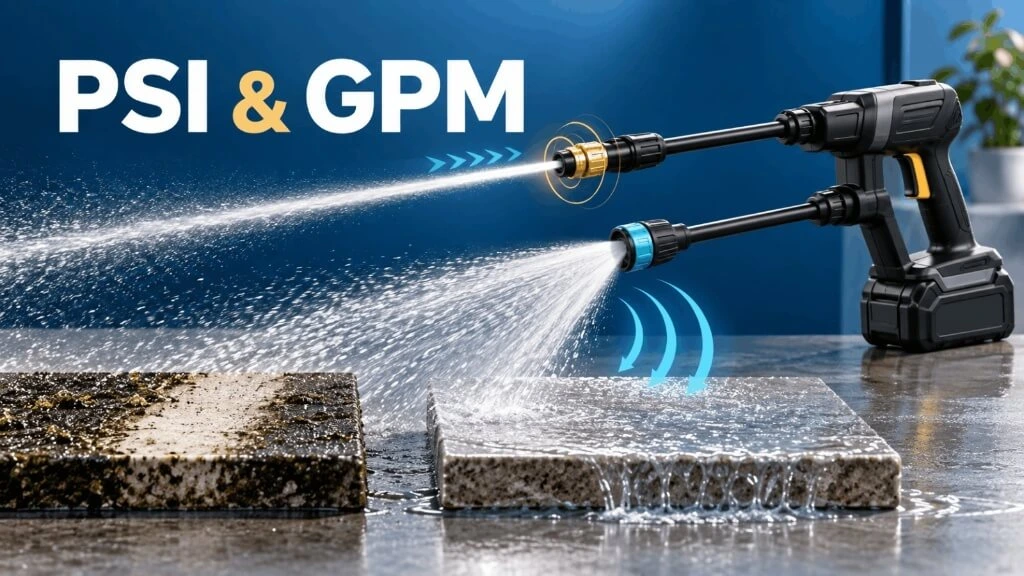
PSI means pounds per square inch and describes water pressure. GPM means gallons per minute and describes water volume. Pressure helps loosen dirt; water flow helps rinse that dirt away.
A machine with a high PSI figure but very low flow may feel forceful while taking a long time to clear a surface. A model with better flow may rinse more efficiently even if its peak PSI looks less impressive. Cleaning performance also changes with the nozzle, spray angle, hose, water supply, and trigger setting.
Do not compare peak PSI alone
Many product pages show a maximum or “MAX PSI” figure. That number may be measured with a particular nozzle, setting, or test condition. Manufacturer specifications can also list GPM under a different attachment. Read the footnotes and look for working or rated pressure and rated flow where available.
An official cordless pressure-cleaner listing, for example, separates maximum PSI from GPM and identifies the nozzle used for those figures. That is why two products should not be compared from headline numbers alone. Review the manufacturer’s cordless pressure-cleaner specifications as an example of the details to check.
Match power to the surface
Vehicles and bicycles: Start with a wide spray and safe distance. Avoid forcing water into seals, sensors, bearings, and electrical connectors.
Plastic furniture and bins: Use controlled pressure and test a hidden area before cleaning the full surface.
Wood and painted surfaces: A narrow, close spray can remove paint, fibers, or protective coating.
Concrete and pavers: Stubborn dirt needs more sustained flow, so a compact battery unit may be slower than a full-size washer.
For a simple surface-by-surface explanation, see this pressure washer PSI guide for different cleaning jobs. Start gently and increase cleaning power only when the surface can tolerate it.
Battery Voltage, Capacity, and Runtime
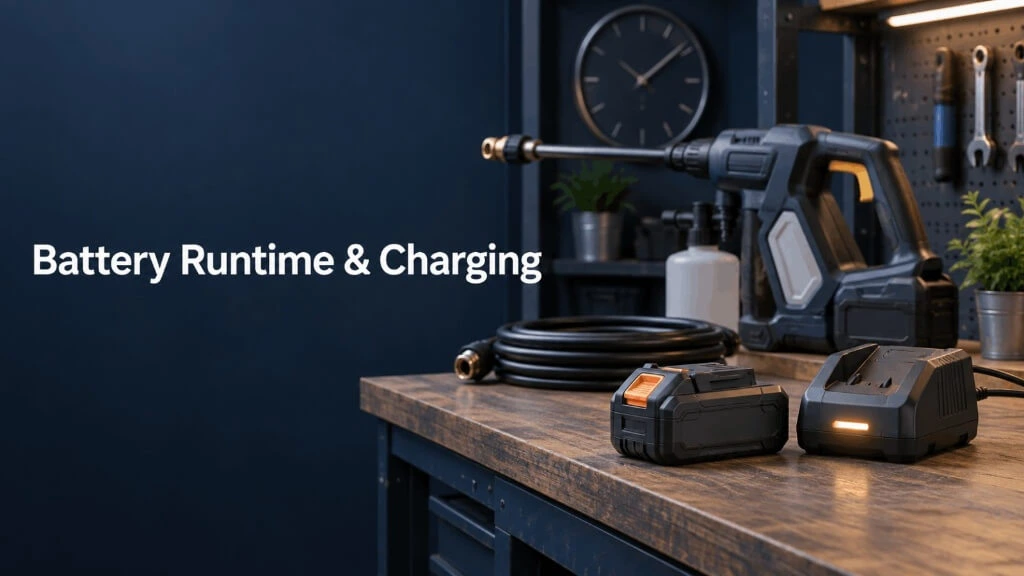
Battery voltage is not a complete measure of cleaning performance. Pump design, battery capacity, flow rate, nozzle choice, trigger use, temperature, and battery age all affect the result. Two models with similar voltage can provide very different cleaning experiences.
Runtime is also difficult to compare unless the test conditions are clear. Short bursts may cover several small jobs, while continuous spraying uses power much faster. Before buying, check:
whether the battery and charger are included;
the battery capacity and compatible platform;
the stated runtime and how it was measured;
charging time and the cost of a spare battery;
whether replacement batteries remain available; and
the complete working weight with the battery installed.
A bare-tool price can look attractive if you already own compatible batteries. It can be poor value if you need to buy the battery, charger, hose, filter, and attachments separately. Compare the complete setup, not only the machine body.
Store lithium-ion batteries in a dry, moderate-temperature place and follow the manufacturer’s charging instructions. Do not charge or use a damaged, swollen, wet, or overheated battery.
Water Supply: Garden Hose, Bucket, or Tank?
Water-source flexibility is one of the most important differences between cordless models.
Garden-hose connection
A hose-connected model is simple when a working tap is nearby. Check the inlet fitting, hose length, filter, and whether the connection is included or sold separately.
Bucket or open-container intake
Some models are self-priming and can draw clean water from a bucket or tank. Others cannot. Never assume that every battery pressure washer supports this setup.
If you use a bucket or tank, confirm that the product is designed for open-container intake, use the recommended suction hose and filter, and keep the suction end away from sediment. A bucket may be enough for a bicycle rinse but may run out during a vehicle or patio job.
Tank portability
A tank improves mobility but adds weight. Include the water weight when deciding whether the setup is practical to carry. A portable tool is less convenient if the water container is difficult to move or refill.
Nozzles, Soap, and Useful Attachments
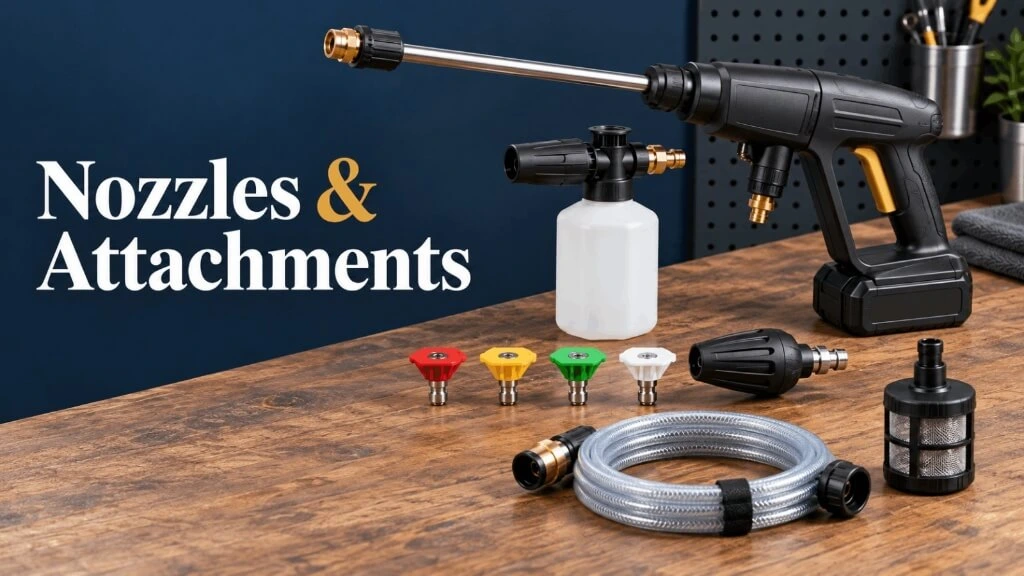
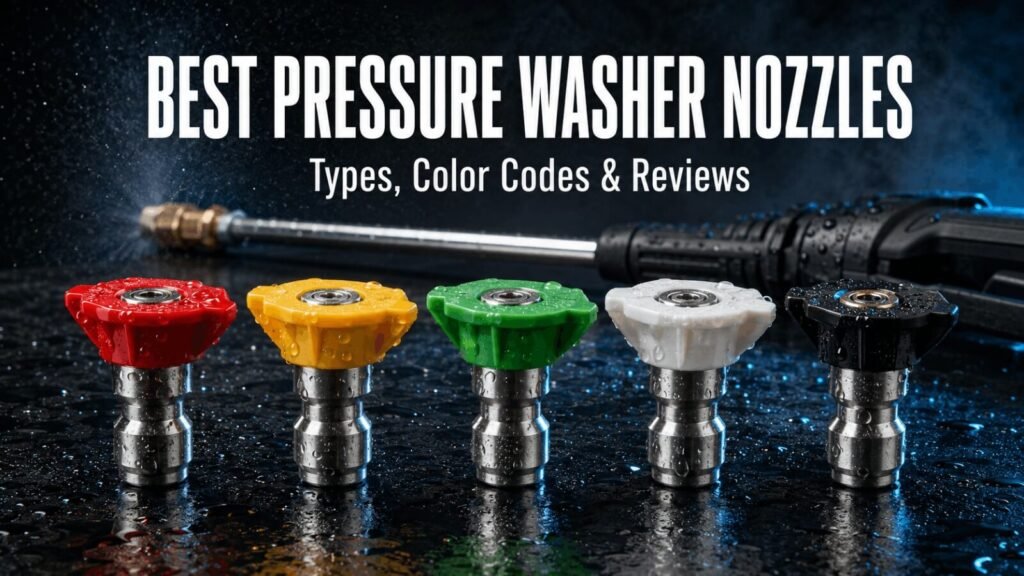
The nozzle controls how concentrated the spray is. A narrow spray can remove dirt quickly but is more likely to damage paint, soft wood, caulk, or delicate trim. A wider spray spreads the force and is safer for starting a job.
For vehicle cleaning, a wide fan pattern and compatible soap attachment are often more useful than a pinpoint nozzle. For furniture, begin wide and test an unseen area. On concrete, keep a concentrated spray moving to reduce stripes or marks.
Foam can help loosen traffic film before rinsing, but it is not a substitute for safe contact-washing technique. Use only detergents approved for the machine and surface. If you prefer a product screened through a recognized ingredient standard, the EPA Safer Choice product search is a useful starting point; always follow the pressure washer and detergent labels.
Check whether the machine uses proprietary connections or common quick-connect accessories. Confirm compatibility before ordering an extra hose, spray gun, foam bottle, filter, or nozzle.
Weight, Balance, Storage, and Maintenance
A product may look light online, but the battery, hose, spray gun, water, and attachments add to the working load. Check:
handle comfort and trigger effort;
battery position and balance;
hose length and storage;
nozzle access and on-board storage;
filter cleaning and replacement; and
how the pump and hose drain after use.
Release pressure and drain the hose and pump according to the manual. Store the machine dry and protect it from freezing temperatures, mineral buildup, and prolonged dampness. A washer that is easy to clean and store is more likely to be used regularly.
Cordless vs. Corded Electric vs. Gas Pressure Washers
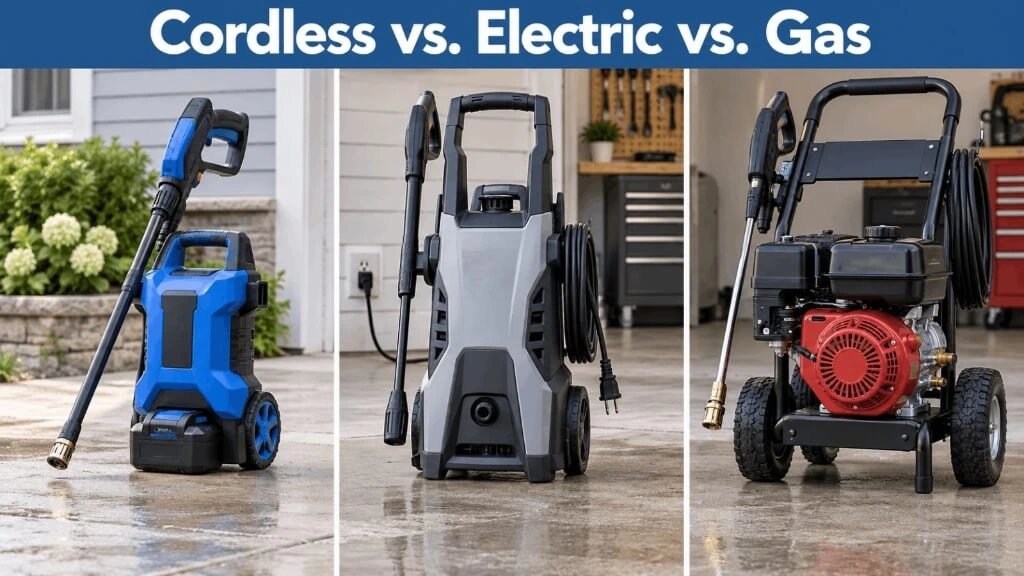
| Machine type | Best fit | Main trade-off |
| Cordless | Remote work, quick rinses, vehicles, furniture, spot cleaning | Battery runtime and flow are limited compared with larger machines |
| Corded electric | Home jobs near an outlet and longer sessions | Requires a safe electrical setup and limits movement |
| Gas | Large areas, heavy dirt, and sustained high-output work | Louder, heavier, requires fuel and more maintenance |
Cordless washers win on portability and quick setup. Full-size corded electric machines generally support longer operation, while gas machines are designed for jobs where sustained output is more important. The best choice depends on the surface, water access, cleaning time, noise tolerance, storage space, and safety requirements.
If your main job is heavy concrete cleaning every weekend
, read this electric versus gas pressure washer comparison before choosing a cordless model.
What to Check Before You Order
Use this checklist on the product page and in the manual:
Working PSI and rated GPM: Do not rely on an unexplained peak number.
Battery and charger: Confirm whether both are included.
Runtime conditions: Look for the setting, battery size, and test method.
Water source: Check for hose-only, self-priming, bucket, or tank support.
Inlet filter: Confirm that it is included and replaceable.
Hose and gun connections: Do not assume that every quick-connect fitting is universal.
Nozzles and soap options: Confirm that they match your cleaning jobs.
Complete working weight: Include the battery, hose, and spray gun.
Parts and warranty: Check support for batteries, filters, fittings, and pump components.
Storage and maintenance: Look for clear draining, cleaning, and winter-storage instructions.
Safety features: Follow the manual for battery charging, electrical connections, and operating distance.
Total price: Add batteries, charger, hose, filter, detergent, and useful attachments.
Prices, packages, and availability change. Compare the complete setup you need instead of selecting a machine because its bare-tool price is low.
Advantages and Limitations of Cordless Models
Advantages
Portable operation away from wall outlets
Fast setup for cars, bicycles, furniture, bins, and spot cleaning
No gasoline storage, fuel mixing, or engine fumes during use
Often quieter and easier to store than a gas machine
Useful for users who already own a compatible battery platform
Limitations
Runtime and water flow are limited on many compact models
Battery and charger may cost extra
Large driveways, walls, and commercial jobs may take too long
Replacement batteries and proprietary accessories can be expensive
A bucket or tank adds weight and may need frequent refilling
These limits do not make cordless equipment a poor choice. They show why the best model is the one that fits the job rather than the one with the most impressive number on the box.
Safety Before Using a Cordless Pressure Washer
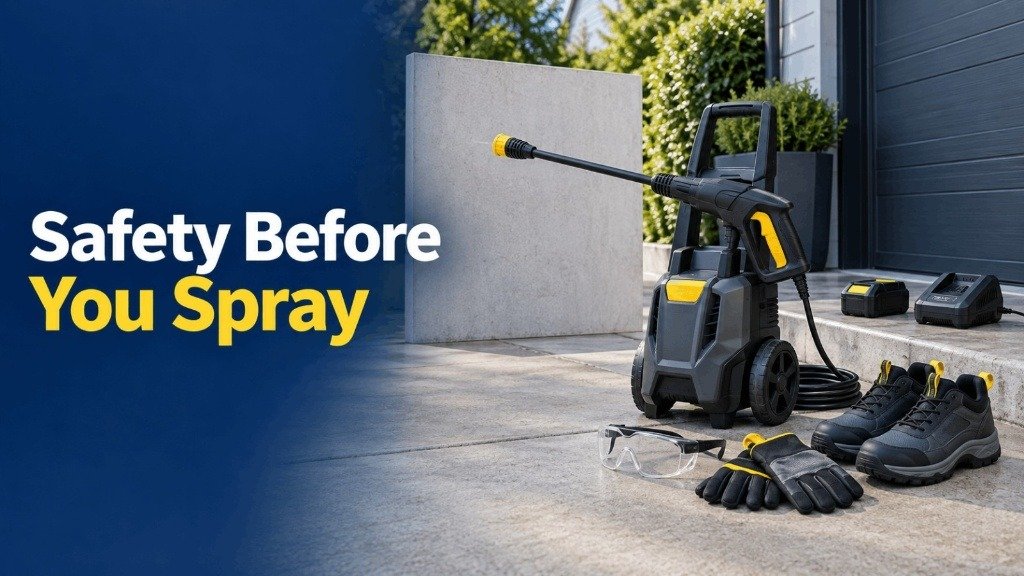
Read the pressure washer manual, battery instructions, detergent label, and surface guidance before starting. Wear eye protection and closed shoes. Keep children and pets away, and never point the wand at a person, animal, electrical connection, or fragile glass.
Start with the widest practical spray pattern and hold the tip farther from the surface than you think you need. Test painted surfaces, wood, masonry joints, and vehicle trim in a hidden area. A high-pressure water stream can injure skin and eyes; OSHA’s eye-protection standard explains the need for suitable eye and face protection where eye hazards exist. You can
also review current pressure washer recalls and safety alerts from the U.S. CPSC.
Keep batteries and chargers dry. Do not spray the charger or battery, charge a wet battery, modify electrical parts, or use damaged equipment. If a corded machine or charger is used, follow the manufacturer’s electrical and GFCI requirements. Do not assume a cordless battery makes every part of the setup safe around water.
Avoid ladders when using a spray wand. If access requires height, use a safer method recommended by the manufacturer or a trained professional. Stop if the washer, battery, hose, fitting, or charger becomes hot, leaks, swells, or behaves unpredictably.
Common Buying and Operating Mistakes
Choosing PSI alone
A high number does not guarantee fast cleaning. Better approach: compare working PSI, rated GPM, nozzle control, battery capacity, and the surface you need to clean.
Expecting a compact washer to clean a large driveway
Small battery pumps may take too long on broad concrete. Better approach: use the cordless unit for edges, steps, and spot cleaning, or choose a higher-flow machine for regular driveway work.
Holding the nozzle too close
Close spraying can strip paint, damage soft wood, or mark concrete. Better approach: begin farther away, use a wider pattern, and move steadily.
Forgetting the complete package cost
The bare tool may not include the battery, charger, filter, or useful hose. Better approach: calculate the full setup before comparing deals.
Assuming every accessory fits
A similar-looking fitting may leak or fail under pressure. Better approach: confirm the connection size and pressure rating in the manual.
Storing the washer wet
Water trapped in the pump or hose can cause odor, freezing damage, or corrosion. Better approach: release pressure, drain the lines, clean the filter, and store the unit dry.
A Simple Decision Path
Step 1: List your real cleaning jobs
Write down whether you need the machine for a car, bicycle, patio furniture, steps, bins, or occasional spot cleaning. Add the largest surface you expect to clean.
Step 2: Confirm water and power access
Decide whether you will use a garden tap, bucket, or tank. Then check whether you already own compatible batteries or need a complete kit.
Step 3: Compare working specifications
Review rated PSI, GPM, runtime, inlet filter, hose length, nozzles, soap option, and total working weight. Do not select a machine from PSI alone.
Step 4: Plan safe operation and storage
Choose eye protection, a dry charging area, approved detergent, and a place where the washer can drain fully after use. Start every job with a gentle spray and a test patch.
Step 5: Decide whether cordless is enough
If the job is large, frequent, or far beyond the stated runtime, compare a corded electric or gas model before buying. A different machine type may save time and money.
Frequently Asked Questions
Is a cordless pressure washer powerful enough for a car?
Many are suitable for rinsing and light vehicle washing when used with a wide spray, safe distance, and compatible soap. They may be slow when removing thick mud or heavy traffic film.
Can a cordless pressure washer use water from a bucket?
Some models can, but not all. The product must support self-priming or open-container water intake, and you should use the recommended suction hose and filter.
What PSI is best for a cordless pressure washer?
The best PSI depends on the surface, nozzle, and water flow. Controlled pressure is useful for vehicles and furniture, while concrete needs more sustained flow. Follow the surface and machine instructions instead of choosing by PSI alone.
Can I use a cordless pressure washer for a driveway?
It can handle small stains, edges, steps, and spot cleaning. For a large driveway, lower flow and battery runtime may make the job slow compared with a full-size machine.
Are cordless pressure washers safe for car paint?
They can be when you use the correct nozzle, safe distance, and car-safe soap. Never aim directly at loose trim, badges, seals, or electrical openings, and test an inconspicuous area first.
Is a battery pressure washer worth buying?
It can be worth it when portability, quick setup, or remote cleaning matters. It is less attractive when your main goal is high-flow cleaning over large surfaces. Compare the complete battery package and the time required for your largest job.
Final Thoughts
The best cordless pressure washer is the one that matches your cleaning area, water source, battery plan, and expectations. For quick car rinses, bicycles, furniture, bins, and remote spot cleaning, portability can be more valuable than maximum power. For large concrete areas or long commercial sessions, a higher-flow corded or gas machine may be more practical.
Before ordering, check working PSI, rated GPM, the complete battery package, self-priming details, filter, fittings, attachments, warranty, safety instructions, and total working weight. Start every job gently, follow the manual, and store the machine dry. That approach will help you choose a cordless washer you can use regularly—not merely one with an impressive number on the box.