A cordless pressure washer is convenient until an accessory demands more water or power than the small pump and battery can provide. The tool may start normally, but the spray can pulse, the foam can stay thin, or the battery can drain before one job is finished. The best cordless pressure washer accessories are therefore the ones matched to the machine’s limits—not simply the largest kit.
This guide explains how battery-powered washers differ from corded and gas machines, which accessories are useful for common jobs, and what to check before connecting anything. It is based on equipment specifications and practical cleaning situations, not invented product tests or brand claims. Quick answer: Start with an approved hose, correctly sized nozzle, spare seals, and a clean inlet screen. Add a foam cannon, short gun, extension wand, or surface cleaner only after checking its connector, working PSI, minimum flow, temperature limit, water-source requirements, and battery impact.
What Makes Cordless Pressure Washer Accessories Different?
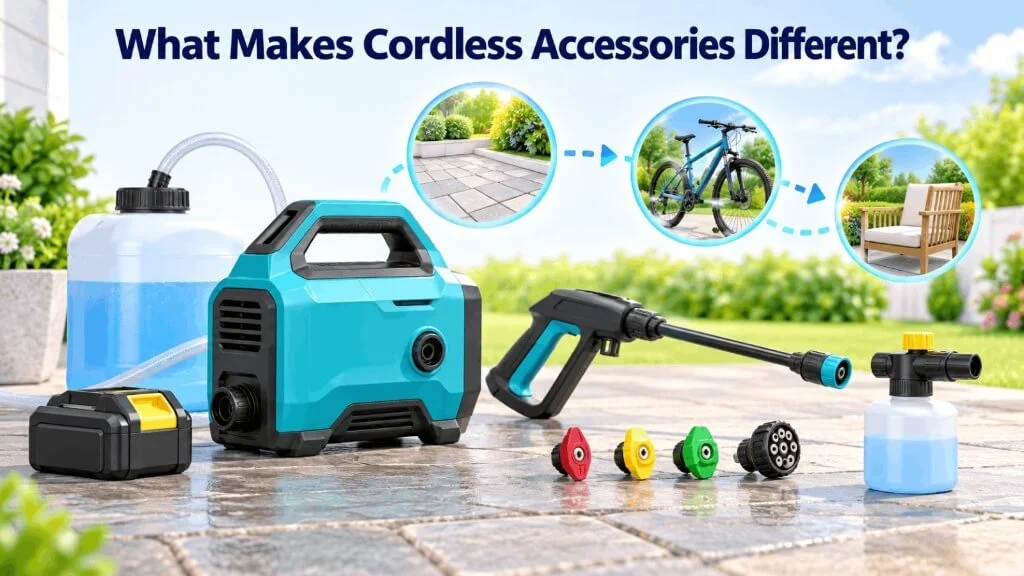
Cordless units are designed for mobility. Many use a small onboard tank, a suction hose, or a garden-hose connection instead of a high-volume outdoor tap. Their pump normally produces less flow than a full-size electric or gas washer. That changes the accessory decision.
An attachment can be physically compatible and still be a poor match. A large surface cleaner may need more GPM than the battery washer supplies. A long, narrow hose may increase pressure loss. A foam cannon may connect to the gun but fail to draw detergent correctly at a low flow rate. In practical cleaning situations, the most useful accessory is the one that works within the machine’s limits.
Start with the jobs you actually perform. Car rinsing, bicycle cleaning, muddy boots, patio furniture, and small balcony areas usually suit cordless equipment. Large driveways, heavily stained concrete, and long daily work sessions usually call for a higher-flow machine and accessories designed for it.
| Job | Useful first accessory | Main check |
| Car or bicycle rinsing | Wide fan nozzle and flexible hose | Surface-safe pressure, connector, and hose length |
| Muddy boots or tools | Rinse nozzle and inlet filter | Water-source cleanliness and easy flushing |
| Patio furniture | Wide fan nozzle or approved detergent tool | Material guidance and detergent compatibility |
| Small balcony or steps | Short gun or compact wand | Reach, recoil, and safe footing |
| Driveway spot cleaning | Small approved surface cleaner | Minimum GPM, pressure range, and surface condition |
Cordless Pressure Washer Specifications to Check First
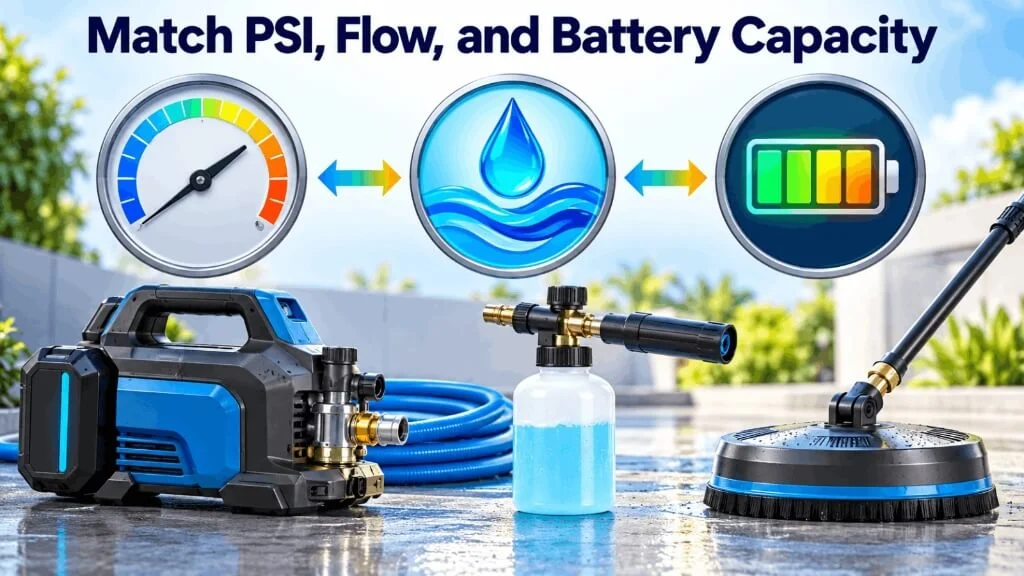
Before shopping, record four details from the manual or rating plate: working PSI, water flow in GPM or L/min, maximum water temperature, and the approved connector system. Also note whether the machine uses a battery platform, a removable tank, or a suction hose.
PSI and flow determine accessory performance
PSI describes pressure; GPM describes the amount of water delivered. A cordless washer may advertise a high peak PSI while providing modest working flow. Accessories such as rotating cleaners and foam cannons respond more to usable flow than to a peak number printed on a box.
Cleaning units, calculated by multiplying PSI by GPM, are useful for rough comparisons only. They do not prove that a nozzle is safe on paint or that an attachment will fit. Use the accessory’s working range and the washer’s actual output, not a maximum or burst rating.
Battery capacity affects more than runtime
The battery must power the pump and sometimes a detergent feature. A larger-capacity battery can extend runtime, but it does not turn a low-flow washer into a commercial machine. Cold temperatures, an old battery, restricted water supply, and repeated trigger use can reduce working time.
Keep a charged spare battery if the manufacturer offers one, but do not store or charge batteries in a wet area. Follow the battery maker’s temperature, charging, and storage instructions.
Water source changes the accessory plan
A bucket or tank makes a cordless washer portable, but every filter and hose in the suction path adds resistance. The container must be clean, stable, and large enough for the planned rinse. If the manual requires a minimum water depth or a particular suction hose, follow that instruction exactly.
When using a tap, make sure the garden hose supplies water continuously. A partly closed tap or kink can make the machine appear weak and can cause an accessory to pulse.
Cordless Pressure Washer Hose and Fittings
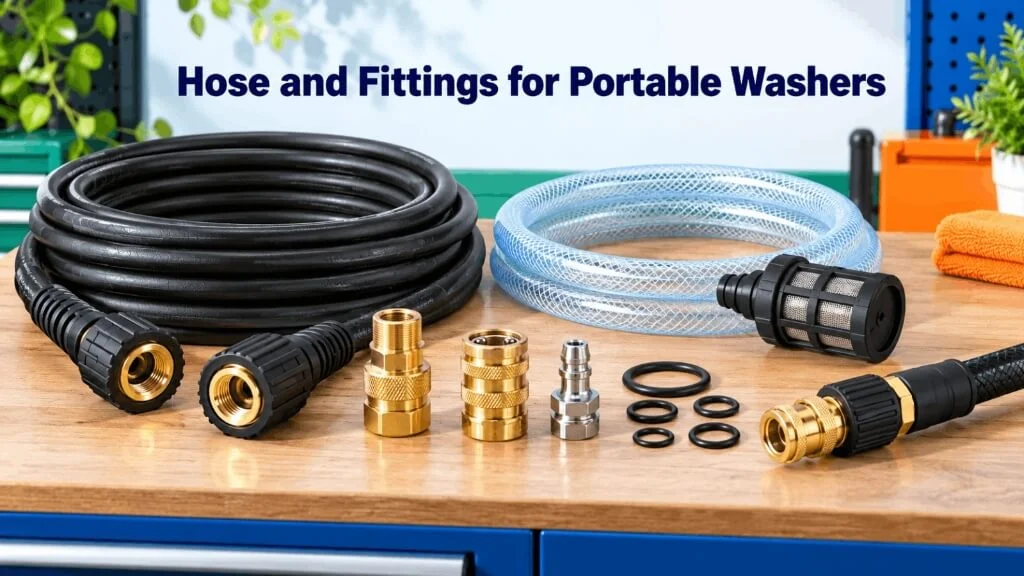
The hose is often the most important upgrade for a portable unit because it determines how freely you can move around a car, balcony, or garden item.
Choose hose length for the route
Measure the route around the object rather than in a straight line. A very long hose adds weight and can reduce flow, while a very short hose forces repositioning. For a small cordless washer, a flexible manufacturer-approved hose is easier to handle than a heavy professional hose.
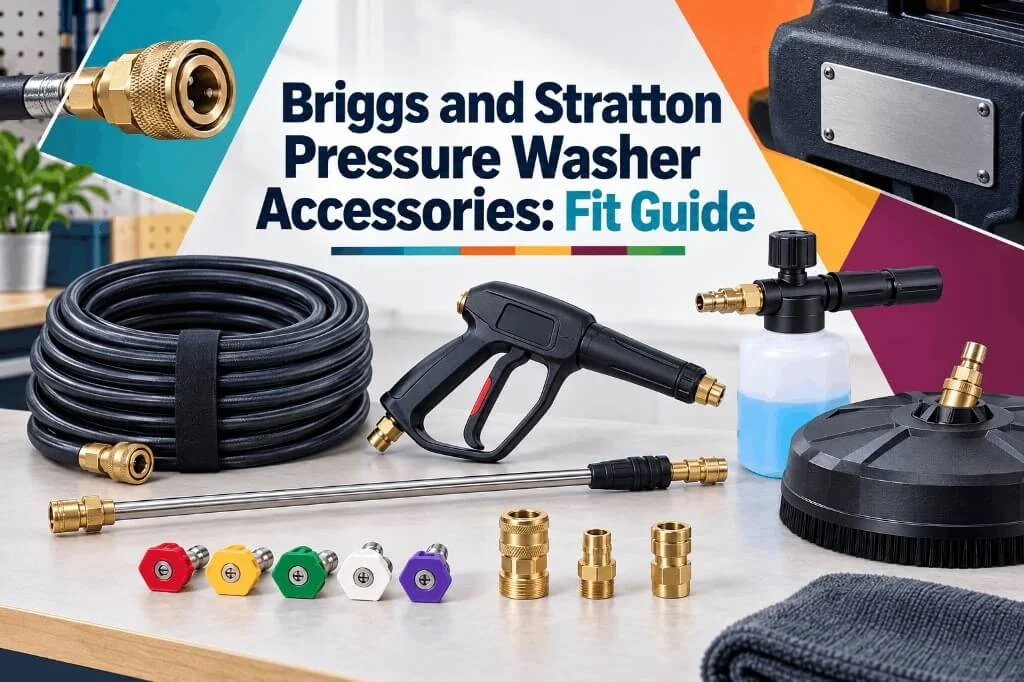
Check the hose’s working pressure, temperature rating, internal diameter, and connector type. “Universal” wording does not confirm that the end fitting seals correctly. M22 fittings can have different insert sizes, and a quick-connect plug can look similar while using a different profile.
Keep supply and high-pressure sides separate
The garden hose or suction hose belongs before the pump. The high-pressure hose belongs after the pump and must be rated for that pressure. Do not attach a low-pressure garden-hose coupler to the discharge side simply because the threads engage.
Use one correctly specified adapter for a known mismatch. Stacking several adapters adds leak points, weight, and restriction. Turn the machine off and release trapped pressure before changing a hose or fitting.
Battery Pressure Washer Nozzle Selection by Surface
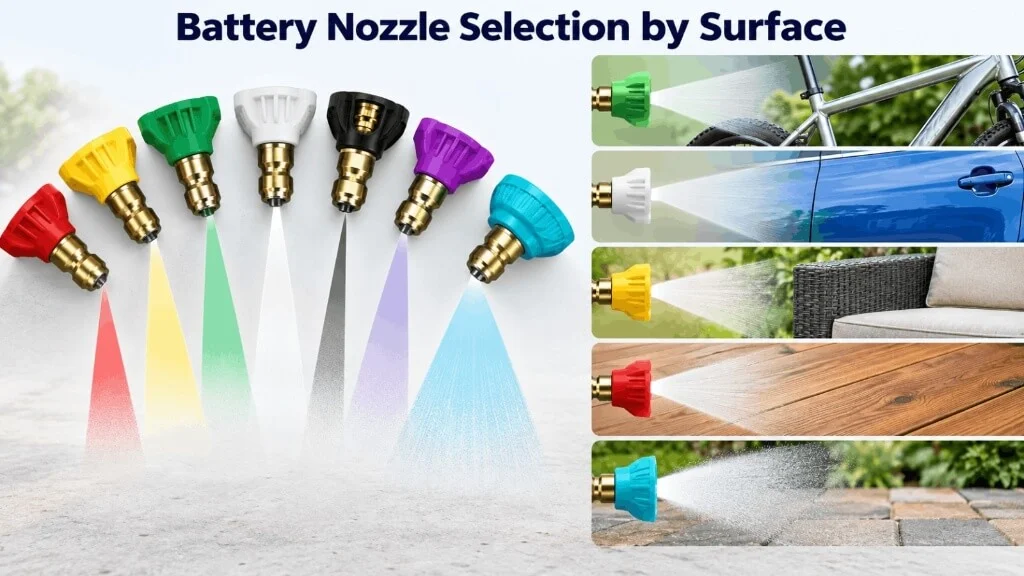
Nozzles control spray shape and coverage. They do not increase the pump’s capacity, and a narrower spray is not automatically a better cleaning choice.
Match the nozzle orifice to the washer
The orifice is the small opening inside the tip. If it is too small, the pump can be overloaded or the spray can become harsh. If it is too large, the output may feel weak. Use the nozzle size listed in the manual or an approved chart rather than choosing only by color.
For a car, start with the widest suitable fan and keep the tip moving. Test a hidden area of trim or painted metal, especially if the surface is old, repaired, or loose. A cordless unit’s lower flow does not make close-range spraying safe.
Specialty tips have narrow use cases
A turbo nozzle concentrates the stream while rotating it. It may help with a small, durable masonry spot, but it is a poor starting choice for vehicle paint, soft wood, siding, plastic, or damaged coatings. A low-pressure soap tip may be necessary for detergent pickup on some models; changing to a high-pressure tip can stop the injector from drawing.
Cordless Foam Cannon Setup
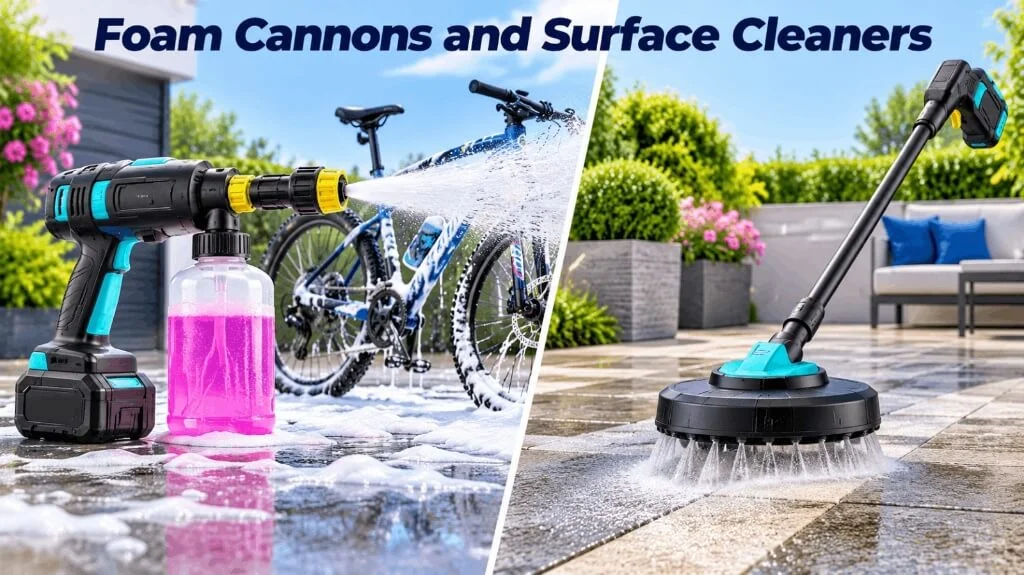
A foam cannon can make pre-washing a vehicle easier, but battery-powered washers vary widely in their ability to produce thick foam. The bottle and connector are only part of the system.
Check the actual flow requirement
Confirm the cannon’s minimum PSI, minimum flow, connector, orifice, and detergent adjustment. A cannon that fits the gun may still produce watery foam if the washer cannot supply enough water or if the soap pickup system needs a particular mode.
Use a vehicle shampoo approved for the equipment and follow its dilution instructions. Work on cool panels and rinse before the foam dries. Foam helps loosen some dirt; it does not guarantee a touch-free wash. Road film may remain, so use clean wash media when a contact wash is needed.
Do not confuse a pressure-washer foam cannon with a garden-hose foam gun. They use different water pressures and are not interchangeable merely because both have a bottle.
Cordless Surface Cleaner Setup: When It Makes Sense
Surface cleaners use rotating jets beneath a housing to cover flat areas evenly. They are useful on suitable concrete, but they are often a poor match for a compact battery washer.
Confirm minimum flow before buying
Check the cleaner’s minimum GPM, pressure range, nozzle size, diameter, and connection. A large head can move slowly or leave stripes when the cordless washer cannot keep the bar spinning at the intended speed. A smaller, manufacturer-approved cleaner may be more realistic for a portable unit.
Remove loose gravel and inspect cracks, coatings, and weak joints. Keep the cleaner level and moving at a steady pace. Use a fan nozzle for edges and steps, where the round housing cannot reach. Never lift an operating cleaner to inspect the spray bar; shut down and release pressure first.
Extension Wands, Spray Guns, and Small Job Tools
An extension wand can help clean a high window, trailer side, or roof edge from the ground, but cordless equipment has limited reach and flow. Extra length increases leverage and recoil.
Choose a wand with a working rating that meets the machine’s pressure and temperature. Check the connector, trigger control, grip, and balance with the nozzle installed. Avoid ladders while holding a pressure washer. If safe reach is impossible from the ground, use another method or a qualified professional.
Cordless Pressure Washer Water Filter and Care Items
Portable washers often draw water from containers, so a clean inlet screen and suitable filter matter. Rinse the screen as directed and replace it if damaged. A clogged filter can starve the pump and make the motor sound unusual.
An extra filter must pass the washer’s required flow. More filtration is not always better; a restrictive cartridge can create the same problem as a blocked screen. If you are trying to reduce water spots on a car, sediment filtration is not the same as removing dissolved minerals. Choose a treatment method designed for that purpose and maintain it as directed.
Keep spare O-rings, nozzle tips, and the correct connector seal in a dry storage box. After using detergent, flush the chemical path with clean water. Drain tanks and hoses before storage, and protect the battery from heat, moisture, and freezing conditions.
Electric, Gas, and Cordless Accessory Differences
Corded electric washers normally provide steadier household cleaning flow, while gas machines can support larger hoses and surface cleaners. Cordless units win on mobility and quick setup. These differences affect accessory choice more than the brand name on the tool.
If you are still deciding between power types, our guide to electric and gas pressure washer ownership explains the broader trade-offs. For a battery model, give extra attention to water-source limits and battery runtime before buying an attachment made for a full-size machine.
If you also use a gas-powered washer, review the CDC’s carbon monoxide guidance and keep fuel-burning equipment outdoors, away from doors, windows, vents, and enclosed spaces.
Common Mistakes People Make
Buying a large accessory kit: A kit can contain duplicate tips or fittings that do not match the cordless washer. Buy the one tool that solves your most frequent problem first.
Choosing PSI only: Flow, nozzle orifice, battery capacity, and water supply decide whether an attachment performs well.
Assuming lower power removes risk: A close narrow spray can still damage paint, wood, seals, and skin.
Using the wrong hose side: Supply fittings and high-pressure fittings have different jobs and ratings.
Ignoring suction resistance: A dirty screen, long narrow hose, or low water level can cause pulsing and poor output.
Using thick household chemicals: Follow the detergent label and equipment manual. Never mix cleaners in a bottle or pump.
Leaving a battery in a wet or hot place: Remove it, dry the equipment, and store the battery as instructed.
Forcing a universal connector: If the plug does not seat and lock cleanly, stop and verify the profile and seal.
Safety Before Using Any Cordless Attachment
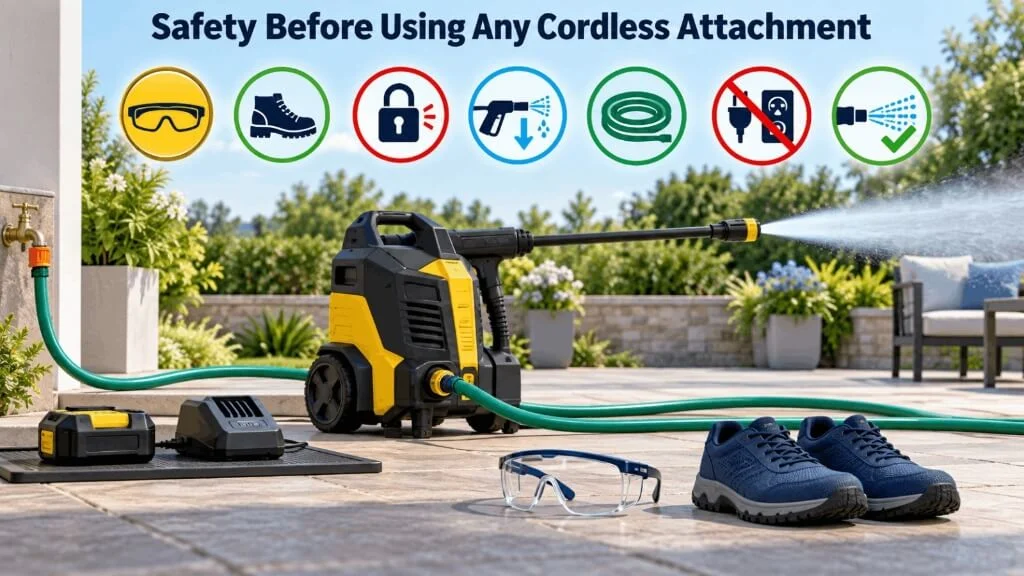
Read the pressure washer manual, accessory instructions, surface guidance, and detergent label. Wear eye protection and closed-toe non-slip footwear, use gloves when appropriate, and keep bystanders away.
Never aim high-pressure water at people, animals, electrical equipment, or your own skin. Do not test a leak with your hand. A small injection injury can be serious even when the entry mark looks minor; seek urgent medical attention if one occurs.
Turn the machine off, remove the battery where the manual directs, and release trapped pressure before changing a nozzle, hose, gun, or adapter. Keep the battery and charger away from runoff. Do not use a damaged hose, cracked connector, swollen battery, or trigger that fails to shut off.
Simple Action Plan
Before buying
Write down the cordless washer model, working PSI, flow, water-source type, battery platform, and connector profile. Select an accessory whose minimum flow and working rating fit those details. Decide whether the job is small enough for portable equipment.
Before use
Inspect the hose, seals, inlet screen, battery, nozzle, and surface. Connect the water source first and follow the approved startup sequence. Test the spray on an inconspicuous area at a safe distance.
During cleaning
Keep the nozzle moving, watch for pulsing or leaks, and monitor battery level. Use the widest suitable pattern first. Stop if the pump sounds abnormal, the battery becomes unusually hot, or the surface begins to etch.
After cleaning
Flush detergent equipment, depressurize the system, drain hoses and tanks, and rinse grit from fittings. Coil hoses without sharp bends. Remove and store the battery and charger in a clean, dry place.
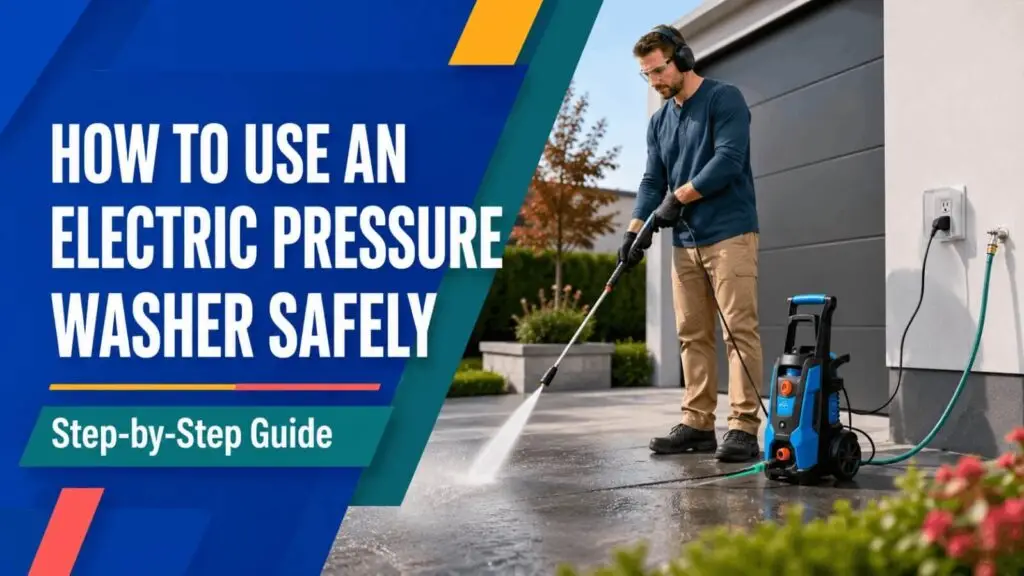
For a general startup refresher, follow this electric pressure washer setup guide and then apply the battery model’s own manual instructions.
Frequently Asked Questions
What cordless pressure washer accessories should I buy first?
Start with the correct replacement nozzle, a flexible approved hose, spare seals, and a clean inlet screen. Add a foam cannon, short gun, or small surface cleaner only when its requirements match your washer.
Can I use any pressure washer hose with a cordless model?
No. Check the working pressure, internal diameter, connector profile, length limit, and whether the washer uses a suction hose or a pressurized garden-hose inlet.
Will a cordless foam cannon make thick foam?
It may, but performance depends on flow, pressure, soap concentration, and the cannon’s orifice. A compatible bottle alone does not guarantee thick foam.
Is a surface cleaner suitable for a battery pressure washer?
Only when the cleaner’s minimum flow and pressure match the washer. Compact models may handle a small, approved cleaner, while large heads can move poorly or leave uneven lines.
How long will a cordless pressure washer battery last with accessories?
There is no single runtime. Battery capacity, trigger time, temperature, pump load, and the accessory all matter. Treat the manufacturer’s runtime guidance as a range, not a promise.
Why does my cordless washer pulse after I add an accessory?
Check the water level, tap opening, hose kinks, inlet screen, filter, connector seal, and accessory flow requirement. A restriction before the pump is common; continued pulsing may require manufacturer support.
Can I use a turbo nozzle on a car with a cordless washer?
It is safer to avoid a turbo nozzle on vehicle paint and trim. Use a wide fan pattern, greater distance, and a test area instead.
Conclusion: Build a Light, Matched Setup
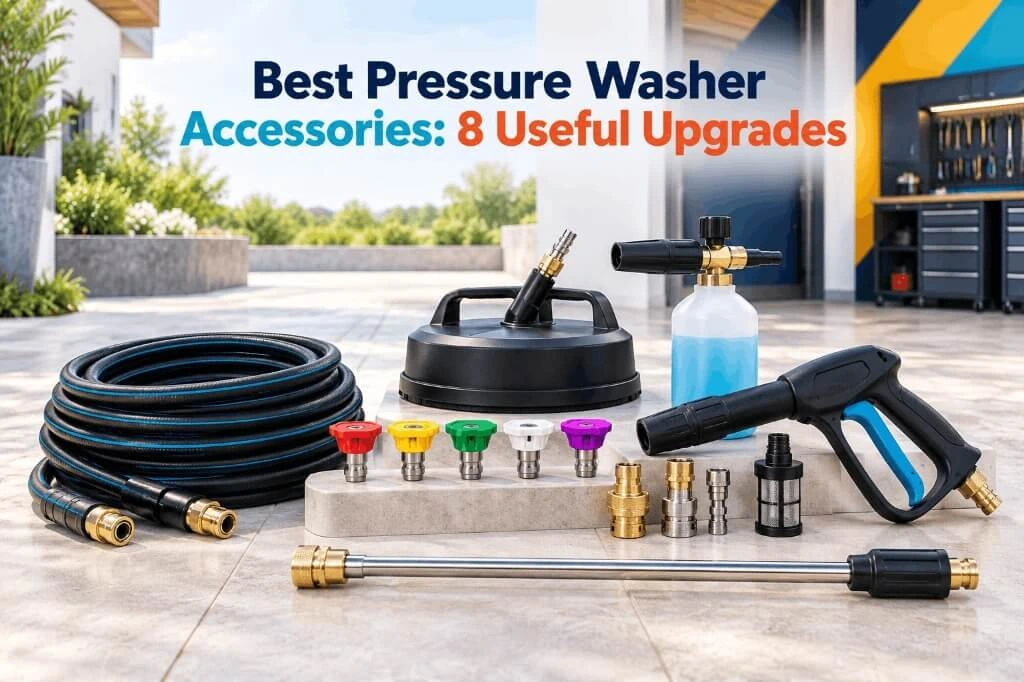
The best cordless pressure washer accessories are not necessarily the most powerful or the most numerous. They are the pieces that match the washer’s flow, battery limits, fittings, water source, and cleaning surface. A suitable hose can improve mobility, a correctly sized nozzle can improve control, and a compatible foam cannon can simplify a car-washing routine.
Choose one accessory for one repeat problem, verify its complete specifications, and test it gently before committing to a full job. That measured approach protects the machine, the battery, the surface, and your budget.