The phrase “electric pressure washer” includes both cordless and corded machines. In this guide, cordless vs electric pressure washer means a battery-powered pressure washer versus a corded electric pressure washer that plugs into an outdoor outlet.
Both types can clean cars, patios, outdoor furniture, bins, steps, bicycles, decks, and some concrete surfaces. The better choice depends on where you clean, how long the job takes, whether a water tap is available, and how much you value continuous power.
Cordless models are convenient when you need to move away from an outlet. Corded electric models are usually more practical for longer jobs near a safe electrical connection and a garden hose. Neither category wins every comparison, and the exact model matters more than the label on the box.
This article explains the differences using published category information, manufacturer instructions, and official safety guidance. It does not claim laboratory testing, field testing, or a universal performance ranking.
Cordless vs Electric Pressure Washer at a Glance
| Decision Area | Cordless Pressure Washer | Corded Electric Pressure Washer |
| Power source | Rechargeable battery | Outdoor electrical outlet |
| Main advantage | Mobility and quick setup | Continuous operation |
| Good fit | Cars, bicycles, bins, furniture, and remote spot cleaning | Patios, decks, siding, steps, and longer home jobs |
| Main limitation | Battery runtime and model-dependent water flow | Needs safe power access and cable management |
| Water options | Some models draw from a bucket or tank; confirm in the manual | Usually uses a garden hose; alternatives vary by model |
| Ownership concern | Charging, battery replacement, and platform compatibility | Cord, GFCI protection, hose care, and storage |
This table is a category guide, not a promise about every product. A strong cordless machine may outperform a small corded unit, while a compact corded model may be designed only for light cleaning.
What Is the Difference Between Cordless and Corded Electric?
A cordless pressure washer uses a rechargeable battery to run its motor and pump. You can carry it to a vehicle, garden, boat, bicycle, or other location without routing a power cable from an outlet. Some models include a suction hose and allow water to be drawn from a bucket or tank. That feature is not universal, so the product manual must confirm it.
A corded electric pressure washer uses mains electricity through a power cord. It normally connects to a garden hose and can continue operating while the outlet, water source, and machine remain suitable. Its cable must be protected from damage, and electrical connections must be kept away from standing water.
The practical difference is simple: cordless removes the outlet from the setup, while corded electric removes battery runtime from the main limitation. Both still need a suitable water supply, safe handling, and correct maintenance.
PSI and GPM: Which Type Cleans Better?
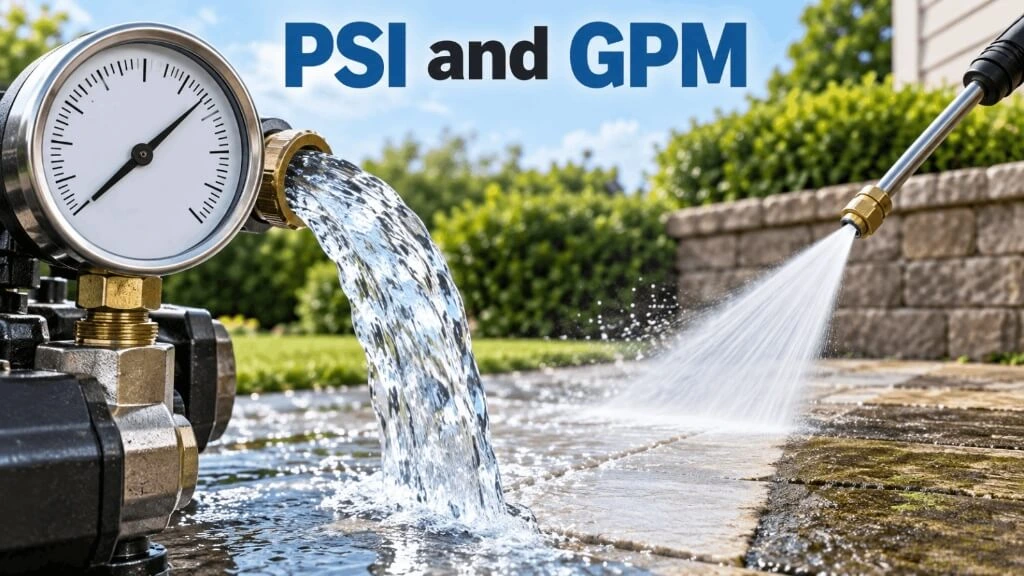
PSI means pounds per square inch and describes water pressure. GPM means gallons per minute and describes water flow. Pressure helps loosen dirt; flow helps carry that loosened dirt away. Looking at PSI alone can give an incomplete view of cleaning performance.
Cordless models often focus on portability and may provide lower sustained flow than a larger corded machine. That can be suitable for rinsing a car, bicycle, bin, or outdoor chair. It may take longer on a large driveway or heavily soiled patio because the cleaning path and rinsing speed are affected by flow.
Corded electric models can draw power continuously, but that does not make every corded unit powerful. Pump design, motor size, nozzle choice, water supply, and the manufacturer’s rated specifications still control the result.
When comparing products, record both the stated pressure and flow. Also check whether the figures are working, rated, or maximum values. Use this pressure washer PSI guide for different cleaning jobs to match output to the surface rather than choosing the biggest number.
A Practical Rule
For small, mobile jobs, usable handling and adequate flow may matter more than maximum PSI. For larger surfaces, look closely at GPM, hose reach, surface-cleaner compatibility, and the time the machine can operate without interruption.
Battery Runtime vs Continuous Electricity
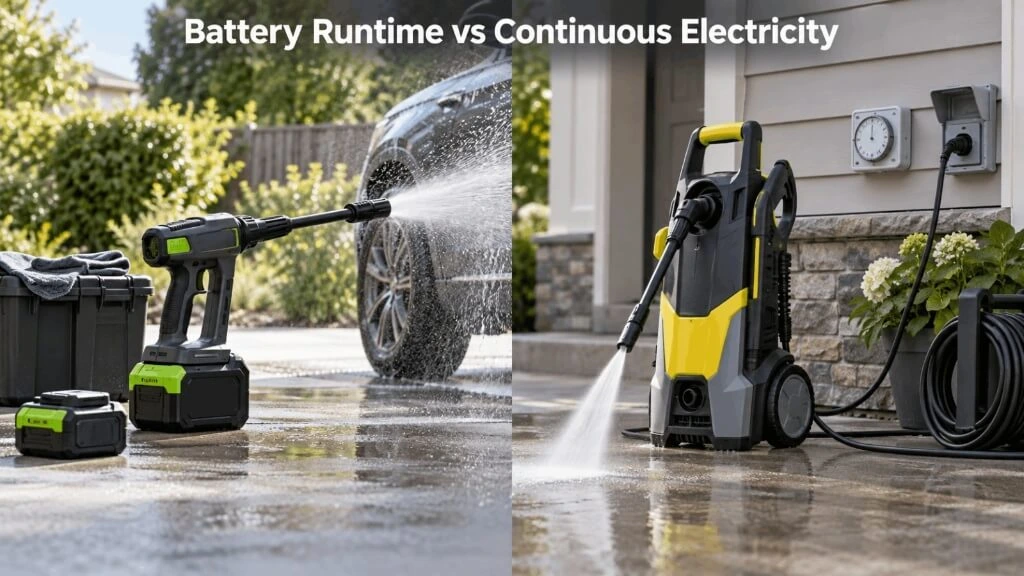
Runtime is the main limit in a cordless pressure washer comparison. Actual battery life depends on battery capacity, spray pressure, water flow, temperature, battery age, and how often the trigger is held. Short bursts and pauses can cover more area than continuous spraying.
Before buying, check whether the package includes the battery and charger. Some products are sold as bare tools for people who already own a compatible battery platform. A second battery may be more useful for a longer job than a small increase in advertised pressure.
Corded electric models avoid charging pauses. They can be useful for repeated patio, driveway, or vehicle cleaning when a safe outlet and water tap are nearby. They are not automatically easier, however. A distant outlet may require careful planning, and unsuitable extension-cord use can create electrical hazards.
How to Estimate Your Real Runtime Need
Write down the largest job you normally complete. A quick car rinse may need only short bursts. A full vehicle wash, long patio, or driveway requires more continuous operation. If the job is likely to exceed one battery’s practical runtime, include the cost of a second approved battery or choose a corded model.
Mobility and Setup Time
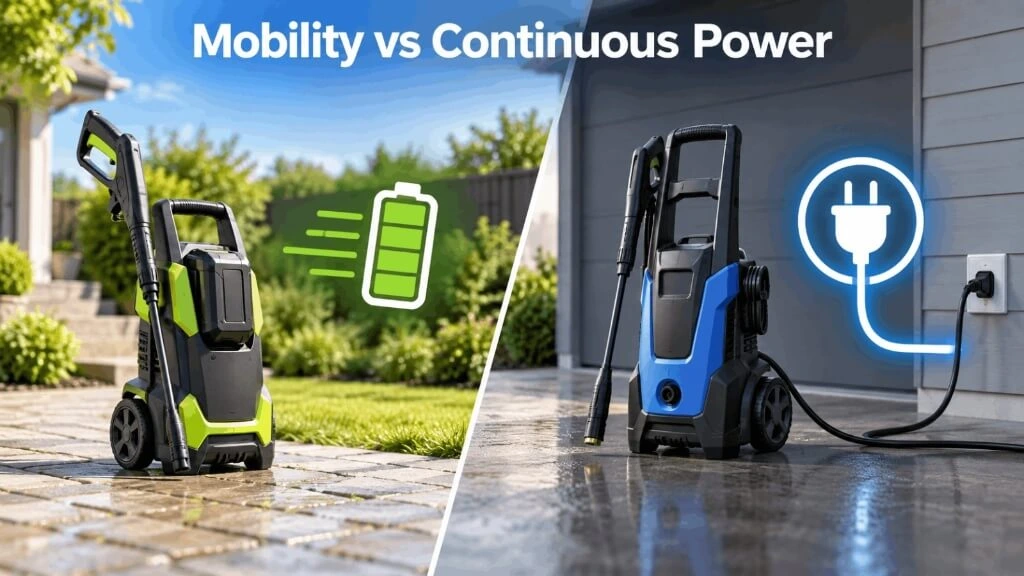
Cordless equipment is strongest when access is difficult. You can move around a parked vehicle, garden, side path, or remote area without dragging a cable. A bucket-compatible machine may also work where a tap is unavailable, provided the pump supports that water source and the water is clean.
Corded electric machines require an outlet and usually a hose connection. You must position the washer, route the cord safely, and keep plugs and connectors away from wet areas. Once connected, a corded model may need fewer pauses than a battery machine.
Compare the complete setup weight, not just the bare tool. A cordless package may include a battery, suction hose, filter, spray gun, and water container. A corded machine may be heavier to roll but easier to use for a long session beside a tap.
Which Is Better for Car Washing?
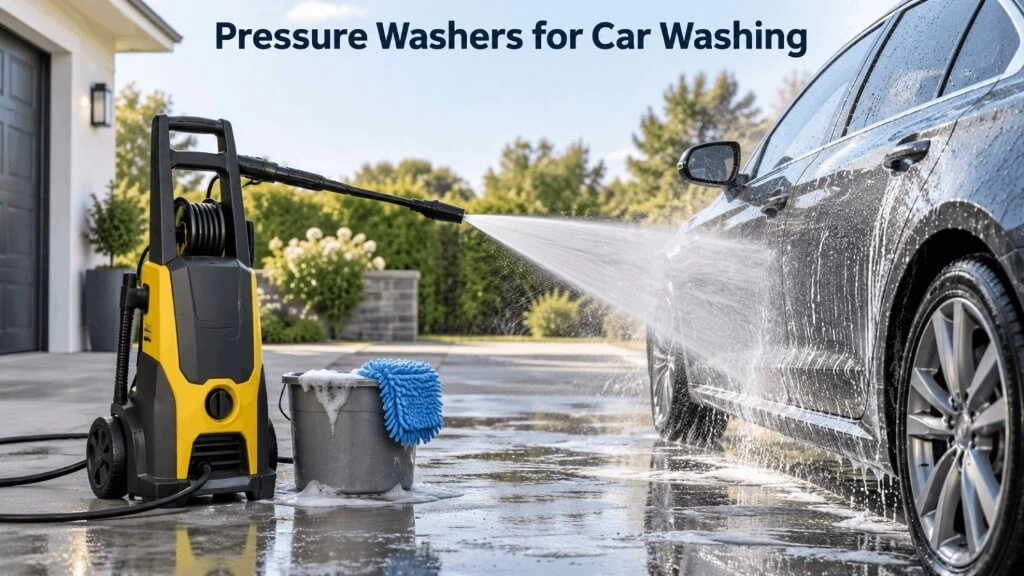
Both cordless and corded electric pressure washers can work for car washing when used with a wide spray, safe distance, and vehicle-safe detergent. The aim is to loosen and rinse dirt, not to force water behind trim, badges, seals, or electrical openings.
Cordless is useful for quick maintenance washing away from an outlet. It is also convenient for bicycles, motorcycles, muddy tools, and equipment. A large vehicle may require a spare battery or several water containers, depending on the model.
Corded electric is convenient for a regular driveway wash when the outlet and water tap are close. Continuous operation makes it easier to rinse the whole vehicle without monitoring battery capacity.
For car cleaning, compare soap delivery, hose reach, storage, noise, and spray control—not only PSI. Start farther from the surface, use a wide pattern, and test an inconspicuous area before cleaning the entire vehicle.
Which Is Better for Driveways, Patios, and Decks?
Cordless equipment can handle steps, edges, small stains, patio furniture, and short sections of a walkway. It may be slower on a broad driveway because battery runtime and water flow limit how much area can be cleaned continuously.
Corded electric is normally the more convenient format for larger home surfaces near a safe outlet and tap. It can keep running while you move a suitable surface cleaner across a patio or driveway. Check the machine’s flow and the attachment requirements before connecting any surface cleaner.
Decks, siding, painted surfaces, and soft wood need extra care with either format. A narrow nozzle or close spray can remove paint, mark wood, damage coatings, or force water behind siding. Begin with a wider spray at a greater distance and increase cleaning force only when the surface allows it.
Water Supply: Tap, Bucket, or Tank?
Most corded electric pressure washers are designed to use a garden hose connected to a suitable tap. A stable supply helps the pump maintain output and reduces pulsing. Weak household flow can limit performance even when the pressure washer’s published figures look strong.
Some cordless models can draw water from a bucket or tank. This improves portability but adds important checks. The suction hose must remain submerged, the inlet filter must be fitted, and the container must hold enough clean water for the job.
Do not assume that every cordless washer is self-priming or that every pressure washer can use a bucket. Do not run a pump dry. Sediment in dirty water can damage the pump or block the filter. Follow the model-specific manual before using an alternative water source.
Noise, Maintenance, and Everyday Ownership
Both formats are generally quieter than gas pressure washers because they do not use a gasoline engine. A cordless machine may feel less disruptive during a short job, while a corded unit can operate longer without fuel or battery changes.
Cordless ownership includes charging, battery storage, battery replacement, and checking whether the battery platform will remain useful. Keep batteries and chargers dry and protected from impact. Stop using a battery that is swollen, cracked, wet, unusually hot, or otherwise damaged. CPSC notes that battery hazards can include overheating, fire, electric shock from chargers, and thermal burns. See the CPSC battery safety information
Corded ownership includes inspecting the power cord, plug, GFCI protection, hose, gun, fittings, and inlet filter. For either format, flush detergent, release pressure, drain the pump and hose, and store the machine away from freezing temperatures and direct weather.
For broader power-type context, see this electric versus gas pressure washer comparison. Cordless and corded machines are both electric, but their operating limits and setup requirements differ.
Running Cost and Overall Value
Cordless may appear inexpensive when you already own compatible batteries and a charger. If those items must be purchased separately, the complete system can cost more than the base tool suggests. Future battery replacement should also be included in the ownership calculation.
Corded electric avoids battery replacement, but you may need a longer hose, approved electrical accessories, or improved outlet access. Electricity use is usually easier to plan than battery replacement, but the machine still needs regular care.
The best value depends on cleaning frequency. Paying extra for cordless mobility makes sense when it solves a real access problem. Paying for corded flow makes sense when it reduces time on repeated patios, driveways, or vehicle washes.
Pros and Cons of Cordless Pressure Washers
Advantages
Easy to carry away from outlets
Fast setup for short cleaning jobs
Useful for cars, bicycles, furniture, bins, and remote areas
No power cable across wet grass or a driveway
Some models can draw from a bucket or tank
Limitations
Runtime depends on battery capacity and trigger use
Flow and pressure vary widely by model
Battery and charger may be sold separately
Longer jobs may require spare batteries or breaks
Battery platforms and accessories may be brand-specific
Pros and Cons of Corded Electric Pressure Washers
Advantages
Continuous operation without charging pauses
Often a better fit for patios, decks, siding, and larger concrete areas
No fuel storage or battery replacement cost
Practical when a safe outlet and tap are close
Many models support hoses, surface cleaners, and foam attachments
Limitations
Requires safe outdoor electrical access
Cable management adds setup work
Extension-cord mistakes can create electrical problems
Less convenient at remote locations
Still depends on adequate water flow and maintenance
Buyer’s Checklist Before Choosing
Define the largest job: A car, patio, and full driveway need different endurance.
Check water access: Confirm whether you have a tap, bucket option, or tank.
Compare working PSI and GPM: Do not rely on peak PSI alone.
Calculate the complete price: Include the battery, charger, hose, filter, fittings, and attachments.
Measure reach: Check the power cord, pressure hose, and distance to the outlet.
Review attachment requirements: Surface cleaners and foam tools need compatible fittings and enough flow.
Check weight and storage: Include the battery, hose, spray gun, and accessories.
Read warranty and parts terms: Check registration, commercial-use limits, and replacement-part access.
Prices, bundles, model names, and availability change. Compare the complete usable package rather than the advertised base price.
Common Mistakes to Avoid
1. Choosing PSI Alone
A large PSI number does not guarantee fast cleaning. Compare working pressure, GPM, nozzle control, and the surface.
2. Assuming Cordless Always Means Weaker
Some cordless models are suitable for light and medium tasks, while some corded models are compact and limited. Compare the exact specifications and intended use.
3. Ignoring the Water Supply
A pump can pulse or fail to reach its expected output when the tap or container cannot provide enough water. Check inlet requirements and use clean, filtered water where the manual requires it.
4. Using Unsuitable Extension Equipment
Do not treat any household extension cord as suitable for outdoor pressure-washer use. Follow the manufacturer’s electrical instructions and local requirements. OSHA advises inspecting portable cord-and-plug equipment and extension cords for visible defects before use; its GFCI guidance explains the role of ground-fault protection in outdoor environments.
5. Holding the Nozzle Too Close
Close spraying can strip paint, damage wood, mark concrete, and force water into vulnerable openings. Begin farther away with a wide fan pattern.
Safety Before Using Either Type
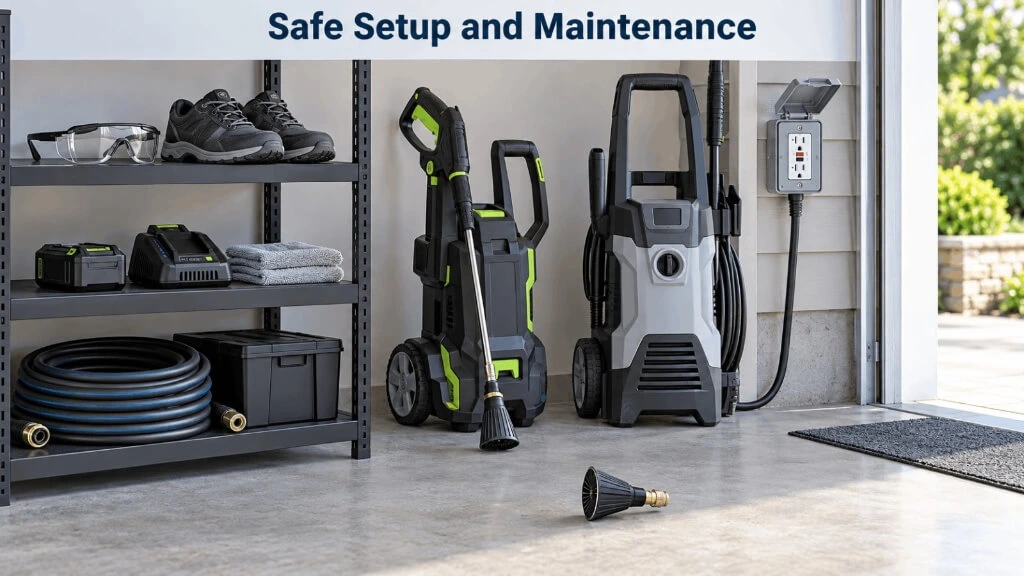
Read the pressure-washer manual, surface guidance, detergent instructions, and battery instructions before use. Wear eye protection and closed shoes. Keep children and pets away, and never aim the wand at people, animals, electrical connections, glass, or loose materials.
For corded machines, use the required ground-fault protection and keep plugs, sockets, and connections away from standing water. OSHA explains that a GFCI is designed to interrupt power when it detects a ground fault. Inspect cords and plugs before use, and do not use damaged electrical equipment. The OSHA GFCI guidance provides additional background.
For cordless machines, keep batteries and chargers dry. Do not charge or use a damaged, swollen, leaking, or overheated battery. Use only approved batteries and chargers for the specific platform.
Start with the widest practical nozzle and test a hidden area. Release pressure before changing fittings. Do not use a ladder while holding a pressurized spray gun. Stop immediately if the hose, gun, pump, battery, cord, or fitting leaks or behaves unusually.
Check the U.S. Consumer Product Safety Commission pressure-washer recall information before using an older, imported, or second-hand machine.
A Simple Buying Process
Step 1: Describe the real job — Write down whether you will clean cars, bikes, furniture, steps, patios, decks, siding, or driveways. Note the largest area and how often you will clean it.
Step 2: Check access — Measure the distance to your water source and outlet. If there is no practical outlet, cordless may solve the problem. If the outlet and tap are close, corded electric may be simpler.
Step 3: Compare complete specifications — Record rated PSI, GPM, runtime, battery package, hose length, cord length, water-source options, nozzles, warranty, and total weight.
Step 4: Confirm the full cost — Add batteries, chargers, hoses, filters, fittings, detergent, surface cleaners, and replacement parts. This prevents a low base price from hiding the real cost.
Step 5: Plan storage and maintenance — Make sure you can store the machine, battery, charger, hose, and gun in a dry place. A product that is difficult to store may be used less often.
Frequently Asked Questions
Is cordless better than electric for pressure washing?
Cordless is better for mobility and short remote jobs. Corded electric is usually better for longer work near a safe outlet and water tap. The better type depends on access, job size, and cleaning time.
Which type has more power?
Many corded electric models provide steadier output because they are not limited by battery runtime. Exact PSI and GPM vary widely, so compare the model specifications rather than the power source alone.
Can a cordless pressure washer clean a driveway?
It can handle edges, steps, spots, and small sections. A large driveway may take longer because battery runtime and water flow can limit continuous cleaning.
Can a corded electric washer run from a bucket?
It depends on the model. Many expect a garden hose, while some support an alternative water source. Check the manual before using a bucket or tank; never assume the pump is self-priming.
Which is better for car washing?
Both can work. Cordless is convenient away from an outlet, while corded electric is useful for a full wash without charging pauses. Nozzle choice, distance, soap, and technique matter more than the category name.
Final Recommendation
Choose cordless when portability is the problem you need to solve. It is a practical format for cars, bicycles, outdoor furniture, bins, steps, and remote spot cleaning where carrying a cable or finding an outlet would be frustrating.
Choose corded electric when continuous cleaning matters more than mobility. It is usually the better fit for longer car washes, patios, decks, siding, larger furniture sets, and repeated driveway work near a safe outlet and tap.
The best answer in a cordless vs electric pressure washer comparison is the machine that matches your real routine. Compare PSI and GPM together, confirm water and power access, price the complete setup, and choose a model you can safely store and maintain.