
Outdoor Cleaning

Electric pressure washer and gas pressure washer
Comparisons

Are Pressure Washers Electric or Gas? Which Should You Buy?

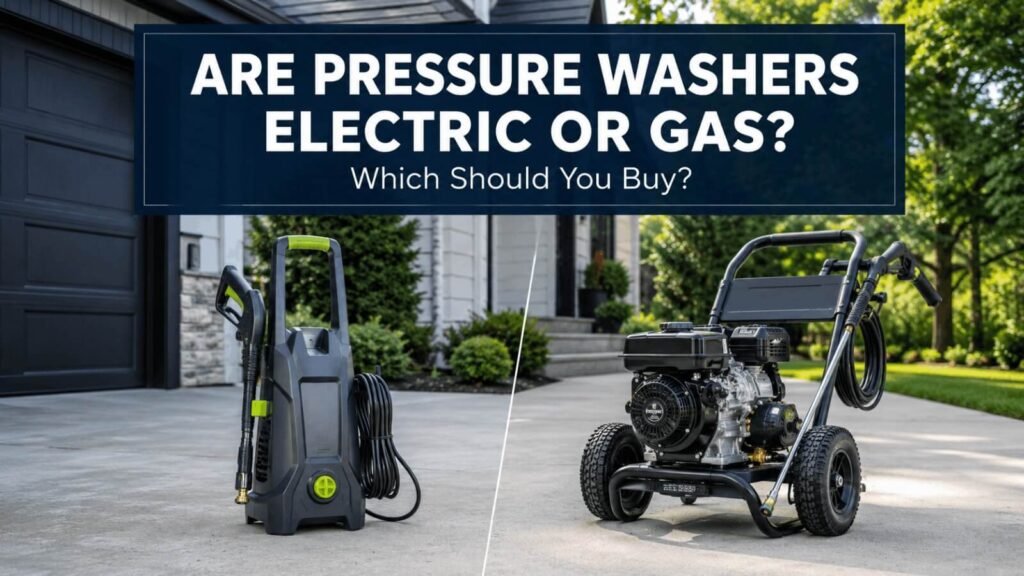
Editorial note: This educational comparison explains common differences between electric and gas pressure washers; it is not a hands-on test of specific models. Safety information was checked against current CDC guidance. Always follow the manual for your machine and the care instructions for the surface. Two pressure washers can look almost identical in a product photo yet behave very differently on a driveway. One plugs into an outdoor outlet, starts with a switch, and stores easily in a garage. The other has a gasoline engine, makes more noise, and may clean a large concrete area much faster. Are Pressure Washers Electric or Gas? They can be either. Electric pressure washers use a motor powered by a cord, battery, or dedicated electrical supply. Gas pressure washers use a small combustion engine. Both drive a pump that increases water pressure, but their power, water flow, mobility, maintenance, noise, and best uses are different. Electric is usually simpler for cars, furniture, siding, and small patios. Gas suits large driveways, heavy equipment, big properties, and repeated demanding work. Choose according to the job, not the biggest number on the box. Pressure washers are available in both electric and gas-powered designs. Corded electric machines are common for light and medium home cleaning. Gas models are popular when higher flow, stronger output, and freedom from a power cord are needed. Battery-powered cleaners also exist, but most are designed for portable rinsing and smaller jobs. The power source does not clean the surface directly. It turns the pump. Water enters through a garden hose, the pump raises its pressure, and a high-pressure hose carries it to the spray gun and nozzle. The nozzle then controls the shape and intensity of the spray. Both types can clean effectively. The real question is which provides the right pressure, water flow, reach, control, and durability for your regular jobs. Electric vs Gas Pressure Washer: Quick Comparison Factor Electric Pressure Washer Gas Pressure Washer Power source Corded motor, battery, or dedicated electrical supply Gasoline engine Best for Cars, furniture, small patios, routine siding and light home cleaning Large driveways, long fences, equipment and repeated heavy work Output pattern Usually lower GPM and easier to control Usually higher PSI and GPM for faster heavy cleaning Mobility Limited by cord and outlet on corded models Not tied to an outlet, but still needs a water supply Noise Generally quieter Louder; hearing protection may be needed Maintenance Lower; no fuel, engine oil or spark plug Engine oil, fuel system, air filter and spark plug need attention Weight and storage Usually lighter and more compact Usually heavier and requires fuel-safe storage Exhaust No engine exhaust at the machine Produces carbon monoxide and must remain outdoors Starting Switch or trigger-controlled system Recoil or electric start, depending on model Typical buyer Homeowner or occasional user Large-property owner, contractor or frequent heavy-duty user These are common patterns, not strict rules. Commercial electric and compact gas machines may differ, so compare exact specifications and the manual. How Electric Pressure Washers Work An electric motor drives the pump. Most residential units use a standard household outdoor circuit, while commercial machines may require higher-voltage service. Main Advantages of Electric Models Easy starting: Connect the water, purge air, plug into a suitable protected outlet, and follow the start procedure. Lower maintenance: No gasoline, engine oil, air filter, carburetor, or spark plug is required. Quieter and lighter: Electric machines are generally easier to use, move, and store. No engine exhaust: There are no combustion fumes at the machine. Useful control: Their output often suits cars, furniture, small decks, and other delicate work. Main Limitations of Electric Models The cord limits range and must be managed around hoses and runoff. Use an extension cord only when the manufacturer permits it and specifies the outdoor rating, gauge, and length. Many electric models also move less water than gas machines, so a large driveway may take longer. Budget units may have short hoses, proprietary fittings, or non-serviceable pumps. Who Should Choose Electric? Choose electric for vehicles, furniture, bins, small patios, short fences, and occasional low-pressure siding washing near a suitable outlet. It is also the easier choice when storage space is limited or you want to avoid fuel and engine maintenance. An electric pressure washer may not be the best choice if the farthest cleaning point is beyond safe cord reach or if you regularly clean large, heavily soiled concrete areas. How Gas Pressure Washers Work A gasoline engine turns the pump. It can move around a large property without an outlet, but it still needs an adequate water supply. Main Advantages of Gas Models Higher output: Gas machines commonly combine stronger pressure with more water flow. Faster large-area work: Higher GPM clears loosened dirt from concrete and equipment more quickly. Outlet-free mobility: Useful on farms, jobsites, and large properties. Heavy-duty options: Strong frames, long hoses, and serviceable triplex pumps are available. Accessory support: Higher flow can run larger compatible surface cleaners effectively. Main Limitations of Gas Models Gas units are louder, heavier, and harder to maintain. Fuel can degrade in storage, while engine oil, filters, and spark plugs need service. Exhaust is the most important limitation. A gasoline engine produces carbon monoxide, an invisible and potentially deadly gas. Never run a gas pressure washer inside a home, garage, basement, shed, warehouse, or partly enclosed space. The CDC advises keeping gasoline-powered pressure washers outdoors and at least 20 feet from doors, windows, and vents. Who Should Choose Gas? Choose gas for large driveways, long walkways, equipment, broad hardscapes, properties without suitable outlets, and commercial work that demands higher flow. Before buying, compare pump type, service access, hose length, nozzle set, frame construction, and engine support. . Our gas pressure washer guide explains these factors in more detail. PSI and GPM: Which Type Has More Cleaning Power? Gas pressure washers generally provide higher pressure and water flow in the residential market, but the numbers need context. PSI describes cleaning force, while GPM describes water flow. PSI
RYOBI 2500 PSI 1.2 GPM electric pressure washer review cover image on outdoor driveway
Buying Guides, Safety Tips

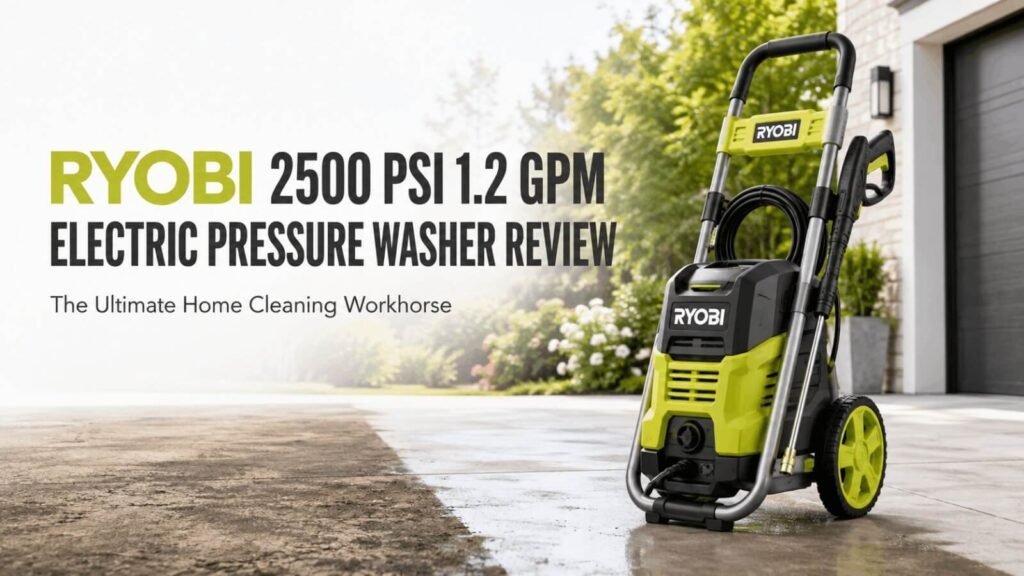
RYOBI 2500 PSI 1.2 GPM Electric Pressure Washer Review: The Ultimate Home Cleaning Workhorse

Maintaining a clean, spotless home exterior often feels like an endless battle against stubborn dirt, grime, mildew, oil leaks, and seasonal weathering. While residential garden hoses lack the force needed to dislodge deeply set contaminants, commercial gas pressure washers can be overly loud, cumbersome, fume-heavy, and aggressive enough to damage delicate finishes. Enter the RYOBI 2500 PSI 1.2 GPM Electric Pressure Washer. Engineered to bridge the gap between lightweight domestic sprayers and heavy industrial machines, this high-performance unit promises professional-grade electric cleaning power without the maintenance headaches of gas engines. In this comprehensive review, we will break down its technical specifications, core features, practical real-world applications, maintenance needs, and how it stacks up against top competitors. Technical Specifications Overview Feature / Specification Details Brand & Model RYOBI 2500 PSI Electric Pressure Washer Max Pressure Output 2500 PSI (Pounds per Square Inch) Water Flow Rate 1.2 GPM (Gallons per Minute) Cleaning Power Index 3,000 Cleaning Units (PSI × GPM) Onboard Soap Tank Volume 1 Gallon High-Pressure Hose 25 ft. Reach Hose Power Source Corded Electric Standards Met EPA Compliant Item Weight 40 lbs Included Accessories 15° Nozzle, Soap Nozzle, Turbo Nozzle Why Choose the RYOBI 2500 PSI Electric Pressure Washer? The electric pressure washer segment is crowded with entry-level machines delivering lower pressure. The RYOBI 2500 PSI 1.2 GPM model stands out by offering genuine medium-to-heavy residential cleaning capability powered purely by electricity. It eliminates common pain points associated with gas equipment: Instant Push-Button Start: No pull cords, chokes, or stubborn cold-weather engine starts. Zero Emissions & Quiet Operation: Ideal for enclosed patios, townhomes, and garages without exhaust fumes or excessive noise. Minimal Maintenance: No oil changes, spark plug replacements, fuel stabilizers, or carburetor rebuilds required. Key Features & Product Performance 1. 2500 PSI Output with 1.2 GPM Flow Rate Cleaning effectiveness relies on the combination of pressure (PSI) and water volume (GPM). Generating 3,000 Total Cleaning Units, this machine delivers ample impact force to dislodge compacted grime while remaining far more water-efficient than a standard outdoor spigot. 2. Integrated 1-Gallon Soap Tank The built-in 1-gallon detergent tank lets you quickly apply foam cleaners, vehicle soaps, and surface degreasers without hauling external buckets around the yard. 3. Quick-Connect Pro-Grade Nozzles The included quick-connect nozzle set covers a variety of cleaning tasks: Turbo Nozzle: Employs an oscillating pinpoint stream for maximum circular cleaning impact—ideal for deep concrete stains and weathered brick. 15° Fan Nozzle: Provides a balanced spray pattern ideal for general surface stripping and house siding cleanup. Soap Applicator Nozzle: Siphons detergent directly from the onboard 1-gallon tank at low pressure. Practical Applications: What Can You Clean? Automotive Care & Car Detailing Electric pressure washers offer smooth, consistent pressure delivery. Paired with the low-pressure soap nozzle or an optional 40° wide-angle nozzle (sold separately), it applies cleaning foam evenly across paintwork. Safety Tip: Maintain a distance of at least 2 to 3 feet from painted automotive panels and avoid targeting delicate trim pieces with narrow spray angles. Concrete Driveways, Sidewalks, & Slabs Porous concrete easily absorbs motor fluids, dirt, and algae. Utilizing the included Turbo Nozzle allows you to lift deep-seated grime and restore discolored walkways quickly. Wood Decks, Fences, & Composite Surfaces Softwoods can splinter easily under direct pressure. Always test an inconspicuous area first, starting at a conservative distance and moving closer only as needed to clean without damaging delicate wood grain. House Siding & Soffits With its combined cord-and-hose reach, this unit lets you easily maneuver around the property perimeter to strip pollen, bug nests, and mildew from vinyl siding and brick foundations. RYOBI 2500 PSI vs. Market Competitors Feature RYOBI 2500 PSI Greenworks Pro 2300–2500 Typical Gas 2500 PSI Power Source Electric Electric Gas Engine (4-Stroke) Max Pressure 2500 PSI 2300–2500 PSI 2500 PSI Flow Rate 1.2 GPM 1.2 GPM 2.3 GPM Maintenance Minimal Minimal Oil, Filters, Fuel Prep Total Weight 40 lbs ~45 lbs 65–75 lbs Best Used For Home & Auto Care Residential DIY Heavy Commercial Work Operating Instructions & Winterization Guide 1.Connect Water Source:Check for leak-free connections. Attach a standard 5/8-inch garden hose securely to the water inlet on the unit and turn on the water spigot fully. 2.Purge Trapped Air:Prevents pump cavitation. Before connecting to electrical power, squeeze the spray gun trigger for 30–45 seconds until a steady, continuous stream of water flows out of the wand. 3.Power On:Direct wall outlet recommended. Plug the power cord directly into a grounded outdoor receptacle and turn the power dial to the ON position. 4.Winterization & Storage:Protect internal seals from freezing. Flush the detergent system with fresh water for 60 seconds after using soap. Disconnect hoses, squeeze the trigger to drain remaining internal water, and apply an aerosol pump protector before cold-weather storage. Pros and Cons Pros: Zero Gas Maintenance: No fuel mixing, oil checks, or spark plug replacements. Lightweight Frame: At only 40 lbs, it is easy to transport around yards and up deck stairs. Versatile Soap System: Integrated 1-gallon onboard tank streamlines foam application. Included Turbo Tip: Accelerates deep cleaning on hard concrete surfaces. Cons: 1.2 GPM Flow Rate: Slower rinsing speed compared to high-volume commercial gas models. Electrical Outlet Bound: Requires proximity to a functional outdoor power source. Frequently Asked Questions (FAQs) Q1. Can I use an extension cord with the RYOBI 2500 PSI pressure washer? The official manual recommends plugging the power cord directly into a wall outlet. If an extension cord is strictly unavoidable, use only a heavy-duty 12-AWG outdoor-rated cord no longer than 25 feet. Extension cords measuring 50 feet or longer are not permitted due to severe risk of voltage drop and motor damage. Q2. Is 2500 PSI safe for washing cars? Yes, when used with the low-pressure soap nozzle or an optional compatible 40° wide fan nozzle at a safe distance (2–3 feet). Never use the 0° red tip or Turbo Nozzle on vehicle paint or glass. Q3. Can I feed hot water into this unit? No. The RYOBI 2500 PSI pressure washer is designed strictly for

Scroll to Top