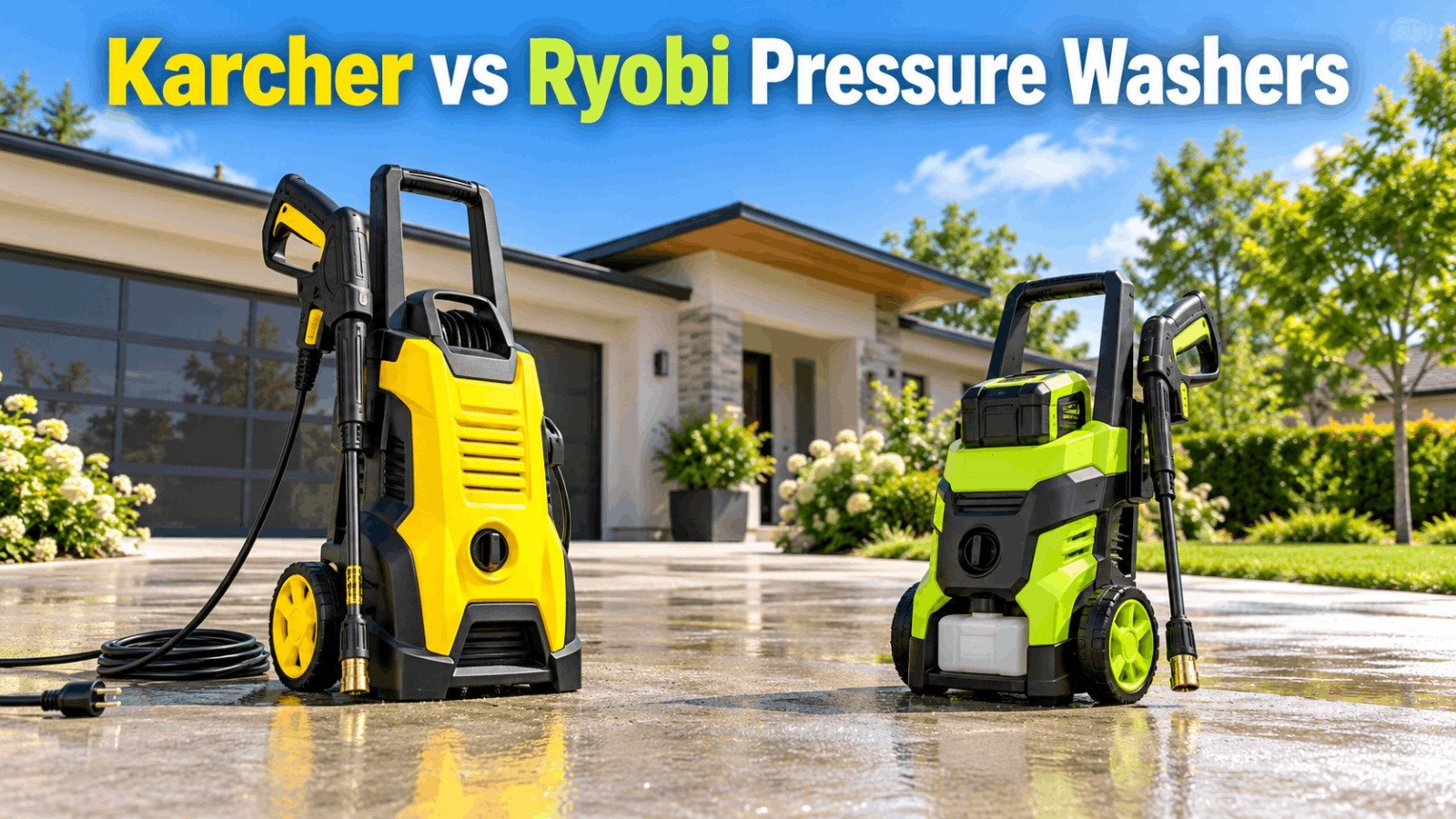
Choosing between a corded washer and a battery-powered model comes down to the job, power access, water supply, and how long you need to work. In this Karcher vs Ryobi comparison, we use two specific U.S. models—the Kärcher K 5 FC and Ryobi RY40PW15—to show how their published specifications and included features differ.
This is a specification-based comparison, not a hands-on head-to-head test. Manufacturer listings and warranty terms can change, and product versions vary by country. Confirm the exact model number and local specifications before buying. Do not assume a U.S. 120V product is suitable for a 220–240V outlet.
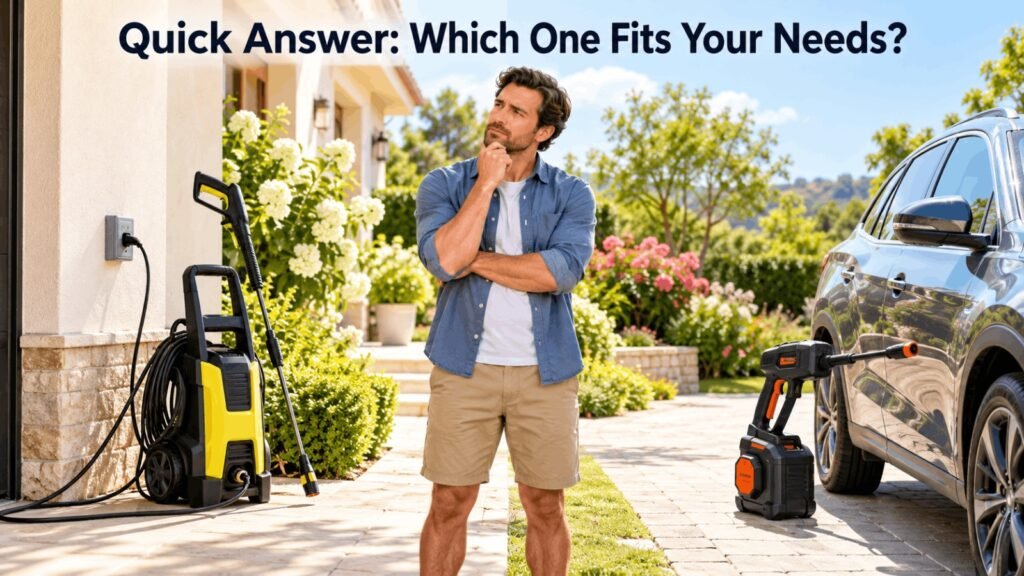
Quick answer: Karcher vs Ryobi
The Kärcher K 5 FC is a corded electric model listed at up to 2,000 PSI and 1.2 GPM, with a 25-foot hose. It can suit longer home sessions when a compatible outlet is nearby. The Ryobi RY40PW15 is a 40V cordless model listed at up to 1,500 PSI and 1.2 GPM; Ryobi states up to 25 minutes of runtime with two 6Ah batteries. It can suit shorter jobs where mobility matters. That is the core of the Karcher vs Ryobi decision.
Neither is best for every task. The K 5 FC has a higher listed maximum pressure; that alone does not prove it will clean every surface faster. The Ryobi’s battery operation removes the power cord, but it still needs a water connection and its runtime is finite. Keep this in mind when reading any Karcher vs Ryobi comparison.
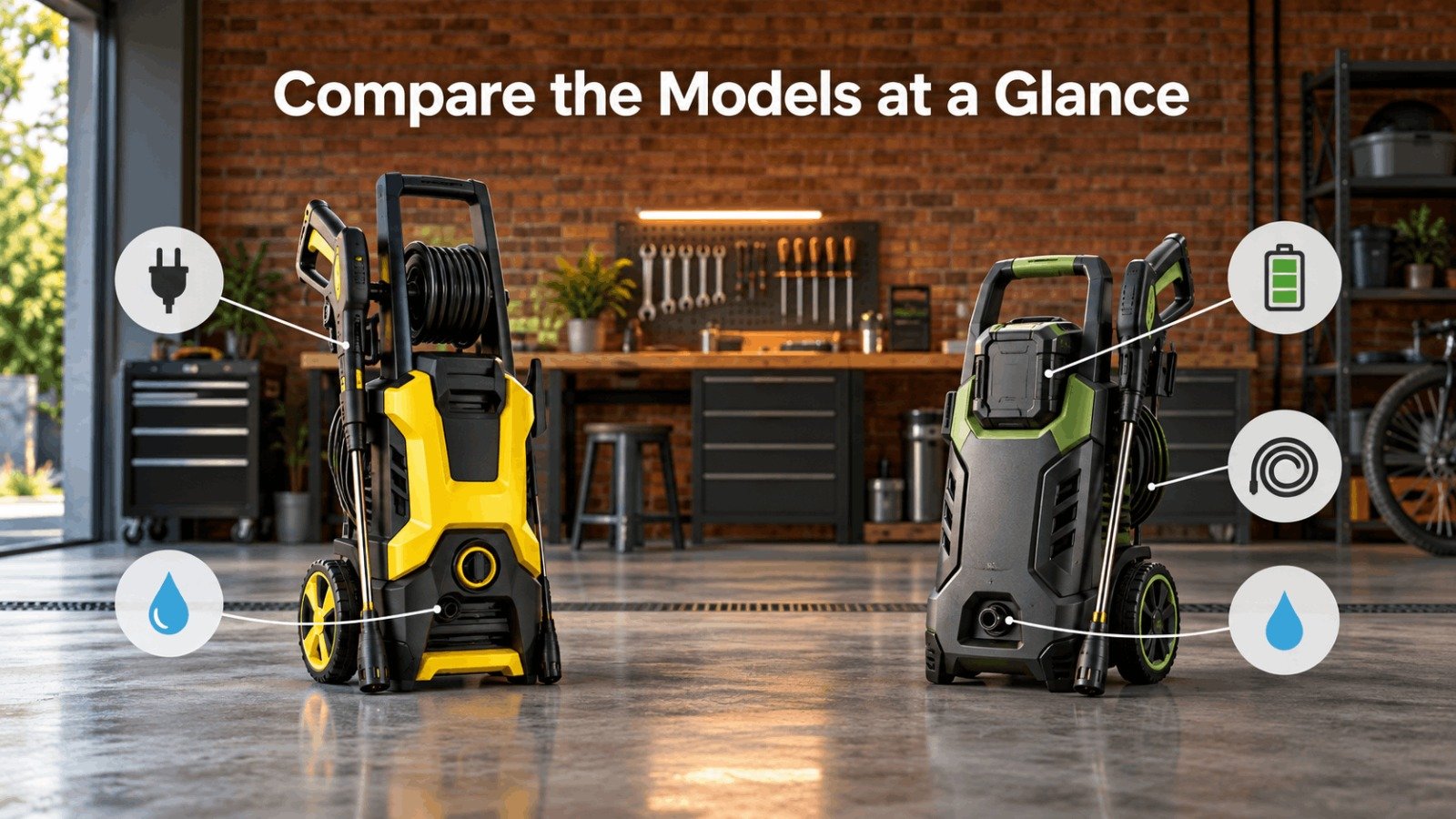
Model comparison at a glance
| Factor | Kärcher K 5 FC (U.S. example) | Ryobi RY40PW15 (U.S. example) |
| Power | Corded electric, 120V | Cordless, 40V battery |
| Published pressure and flow | Up to 2,000 PSI; 1.2 GPM | Up to 1,500 PSI; 1.2 GPM |
| Runtime | Continuous while power and water are available | Up to 25 minutes with two 6Ah batteries; actual runtime varies |
| Notable package details | 25-foot hose, foam jet, quick-connect nozzles | Package contents vary; confirm batteries and charger are included |
| U.S. warranty example | Kärcher lists 2 years for electric pressure washers sold from 2023 onward | Ryobi lists 5 years for the tool and 3 years for included batteries; verify the exact SKU |
| Better fit when… | You want corded operation near a suitable outlet | You need cordless mobility for shorter jobs |
These figures describe the named models, not every Kärcher or Ryobi washer. Pressure and flow ratings may be stated under different test conditions; review the owner’s manual and product listing for the exact version you plan to buy. In a Karcher vs Ryobi match-up, the job and power source usually decide the winner.
Kärcher K 5 FC: corded cleaning for home jobs
The U.S. Kärcher K 5 FC listing specifies 120V, up to 2,000 PSI, and 1.2 GPM. Its listed package includes a 25-foot high-pressure hose, foam jet, and quick-connect nozzles. The corded design can support a longer session without waiting for batteries to recharge, provided the washer has the power and water supply its manual requires. This detail matters most when you weigh Karcher vs Ryobi for your own home.
A foam jet can help apply detergent, but it does not replace safe washing technique. Rinse loose grit from a vehicle first, use a suitable detergent, and keep the spray away from seals, sensors, and damaged paint. For home surfaces, use a nozzle and distance that the surface can tolerate. Buyers comparing Karcher vs Ryobi should check the exact model listing first.
The product page identifies the electrical rating and included parts for that U.S. listing. Kärcher’s product range and connector designs vary by model and year. Before buying an accessory, confirm that its fitting and pressure and flow requirements match your exact washer; do not assume that every K-series part shares one connector standard. Our Karcher vs Ryobi comparison focuses on published specifications.
Ryobi RY40PW15: cordless portability with a time limit
Ryobi’s RY40PW15 is a 40V cordless pressure washer listed at 1,500 PSI and 1.2 GPM. Ryobi describes three pressure modes from 1,000 to 1,500 PSI and states up to 25 minutes of runtime with two 40V 6Ah batteries. Actual runtime changes with the selected mode, battery condition, temperature, and trigger use. For Karcher vs Ryobi shoppers, runtime and outlet access are the practical limits.
Cordless operation makes it easier to move around a vehicle or reach an area where managing a power cord is inconvenient. It does not make the unit independent of a water source: connect it as instructed and maintain the required water flow. For a large driveway or several long jobs, consider whether spare batteries, charging time, or a corded washer better fits the workload. Check the retailer’s package details because battery and charger inclusion can differ. Use this as a checklist for any Karcher vs Ryobi purchase.
Ryobi also sells corded pressure washers and other cleaning tools. Compare model numbers instead of treating one product’s pressure, flow, or runtime as representative of the whole brand. Specs like these are why a Karcher vs Ryobi choice is rarely one-size-fits-all.
What PSI and GPM tell you
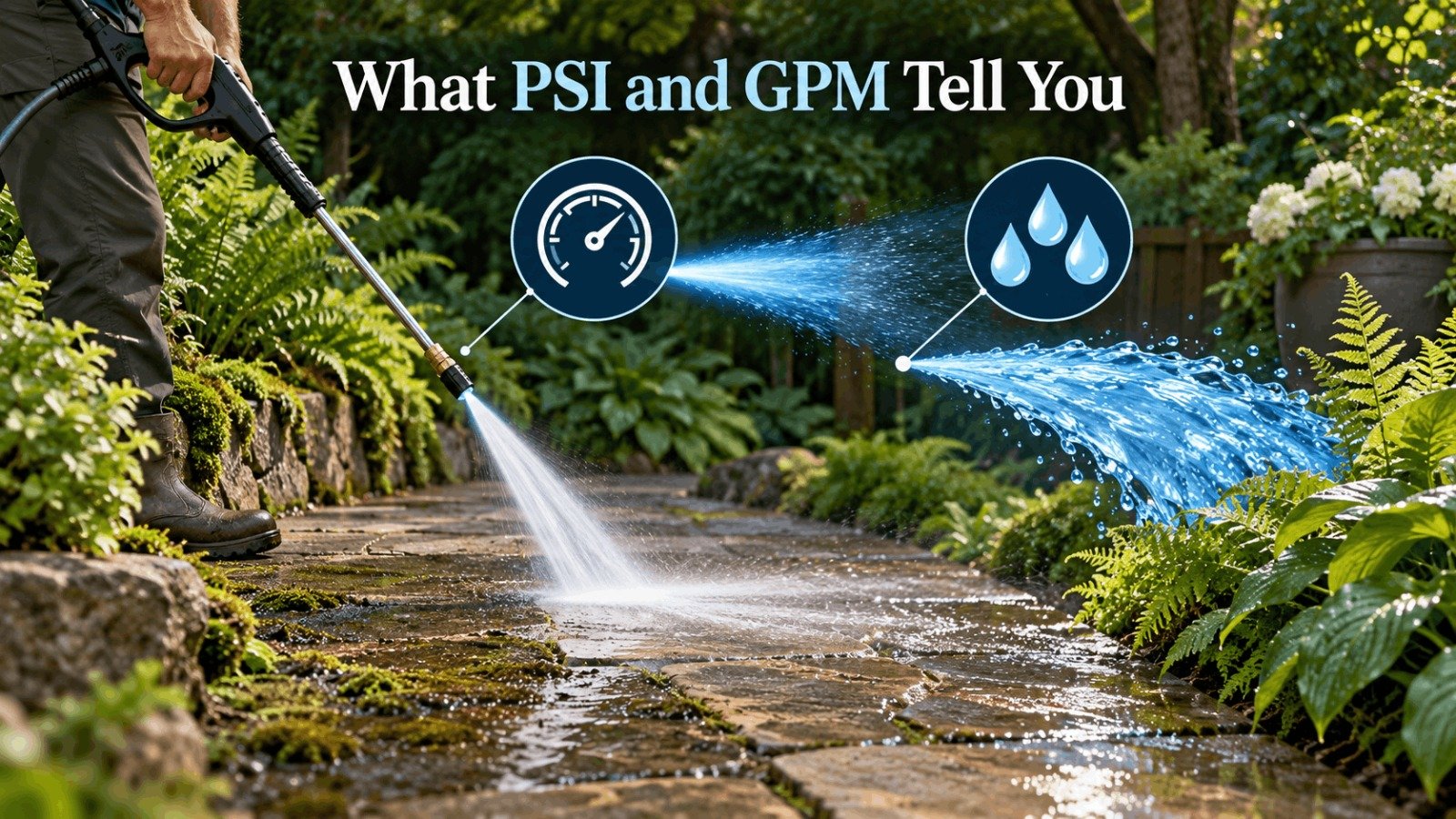
PSI describes pressure; GPM describes water flow. Pressure helps loosen soil, while flow helps carry it away. A higher maximum PSI does not automatically mean a washer is faster or better for every surface. Nozzle choice, distance, detergent, water supply, and the surface itself affect results. A rough PSI-times-GPM calculation is not a substitute for a manufacturer’s cleaning performance test or safe operating guidance. Weigh this point carefully before settling the Karcher vs Ryobi question.
For a plain-language explanation, see our guide to how pressure washers work. When comparing product pages, check whether the listed pressure and flow are maximum or rated values and read the model’s manual. It is one more factor in the Karcher vs Ryobi trade-off.
Which washer fits your cleaning job?
- Cars: Either model can be used with a wide spray pattern, adequate distance, and a surface-safe detergent. Rinse grit first; avoid directing high-pressure spray at seals, sensors, tires at close range, or chipped paint. The Kärcher package includes a foam jet, while the Ryobi has no power cord to manage.
- Patios and outdoor furniture: Start with a broad spray and test a hidden spot. Concentrated pressure can mark painted surfaces, plastic, and softer wood.
- Driveways: A compatible surface cleaner can cover concrete more evenly than a narrow spray. The two example models both list 1.2 GPM, so cleaning a large or heavily stained area may take time; choose equipment based on the area and frequency of use.
- Siding and fences: Follow the material maker’s advice. Avoid spraying upward beneath siding, toward vents, or at electrical equipment.
Nozzle and distance matter
Start with a wide fan, keep the wand moving in overlapping passes, and test an inconspicuous area before moving closer. A narrow jet concentrates force and can strip paint, raise wood grain, or damage mortar. On concrete, use only a surface cleaner approved for the washer’s connector, pressure, and flow. Do not hold the spray on one spot while testing. That helps explain how Karcher vs Ryobi models differ in everyday use.

Corded vs cordless: practical trade-offs
A corded electric washer provides power as long as a suitable outlet and water supply are available. It also means routing the hose and electrical cord safely. Use an outdoor setup permitted by the product manual and local electrical rules, keep plugs and connections dry, and avoid standing water. Remember this when narrowing down Karcher vs Ryobi options.
A cordless washer reduces cord management and can be convenient around a car or in a remote part of a yard. Battery capacity limits working time, and charging adds time between sessions. For frequent or extended heavy-duty work, compare models designed for that duty and check parts and service availability rather than relying only on a consumer model’s maximum PSI. It is a useful reference point for Karcher vs Ryobi readers.
Gas-powered washers bring fuel, exhaust, noise, and engine maintenance into the decision. Use them outdoors and follow the manual’s clearance guidance around doors, windows, and vents. The two models compared in this article are electric; this is not a direct comparison with a gas washer. Treat this as one input in your Karcher vs Ryobi research.

Accessories, maintenance, and compatibility
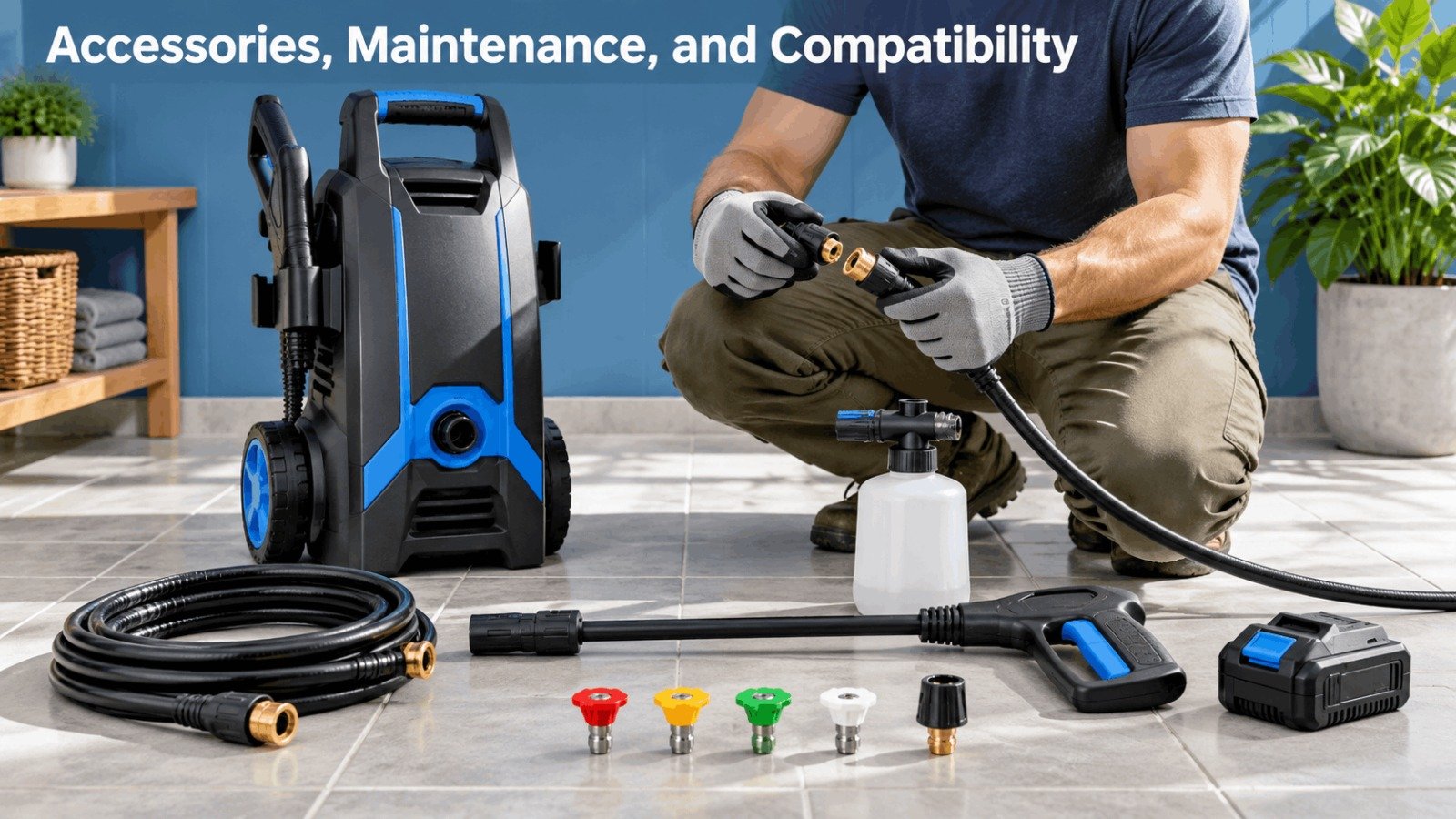
Compare the hose length, nozzle set, detergent attachment, fittings, and replacement-part availability as part of the total purchase. Kärcher and Ryobi accessories are not automatically interchangeable, and connector formats can vary within a brand. Check the exact connector and the accessory’s approved pressure and flow range before ordering a hose, wand, foam attachment, or surface cleaner. Many people overlook this when deciding between Karcher vs Ryobi.
After use, follow the manual to release pressure and flush detergent if required. Check the inlet filter, hose, and seals for debris, cracks, or leaks. Drain and protect the unit from freezing temperatures as directed. Store batteries according to Ryobi’s instructions. Do not open a sealed pump for routine maintenance. This is where the Karcher vs Ryobi differences become clearest.
Warranty and total cost
Warranty coverage depends on model, purchase date, region, and the applicable terms. Kärcher’s U.S. warranty page lists two years for electric pressure washers sold from 2023 onward, subject to its terms. Ryobi’s U.S. information lists five years for the RY40PW15 tool and three years for included batteries. Check the current warranty for your exact product and country, and keep proof of purchase. Factor it in before you commit to either side of Karcher vs Ryobi.
Compare the complete package price rather than the tool-only price. Batteries, charger, hose, detergent attachment, or surface cleaner may be included or sold separately depending on model and retailer. Also consider local service, replacement parts, and the cost of batteries if you expect frequent use. Prices and stock change over time. Overall, Karcher vs Ryobi comes down to matching the washer to your tasks.
How to choose: buyer’s checklist
Before ordering, write down the largest job you expect to do and how often you will use the washer. Then confirm:
- Exact model number, power type, voltage, PSI, and GPM.
- Whether pressure and flow are maximum or rated figures.
- Included hose, nozzles, detergent attachment, batteries, and charger.
- Accessory connector and any surface-cleaner flow requirements.
- Warranty terms and authorized service options in your country.
- Safe access to an outlet, steady water supply, storage space, and winter protection.
This simple check can prevent mismatches such as buying a short-runtime battery model for hours of concrete cleaning or importing a washer with the wrong voltage.
Safety before you wash
High-pressure water can cause serious injuries. Never point the spray at a person or pet, and never test it on your hand. Wear eye protection and closed-toe footwear. Keep electrical connections dry, use the protective equipment required by the manual and local code, and do not operate a washer while standing in water. Avoid ladders because recoil and hose movement can affect balance. Use detergents according to their labels and the manufacturer’s directions.
If a high-pressure jet breaks the skin, seek medical care promptly; these wounds can be more serious than they first appear. Follow the owner’s manual for setup and shutdown. Our Kärcher setup and safety guide covers startup steps.
Frequently asked questions
Is Kärcher or Ryobi better for home use?
It depends on the job and access to power. The corded Kärcher K 5 FC can suit longer home sessions near a compatible outlet. Ryobi’s RY40PW15 can suit shorter jobs where cordless movement is useful. Compare the exact local model and package before deciding.
Is the Kärcher K 5 FC more powerful than the Ryobi 40V washer?
The U.S. K 5 FC listing gives up to 2,000 PSI; Ryobi’s RY40PW15 listing gives up to 1,500 PSI. Both list 1.2 GPM. These are model-specific maximum figures and do not guarantee a particular cleaning result or mean one is appropriate for every surface.
Can I use a Ryobi battery on a Kärcher washer?
No. Do not assume batteries or chargers work across brands. Use only the battery and charger specified for the exact model.
Can I wash a car with the 1,500 PSI Ryobi washer?
Yes, with a suitable wide spray, safe distance, and careful technique. Rinse loose grit first, start on a lower setting, and avoid directing the jet at seals, sensors, or damaged paint. Follow the car and washer manufacturers’ care guidance.
Does the U.S. Kärcher K 5 FC work with a 220V outlet?
The U.S. listing specifies 120V. Do not connect it to a different supply unless the manual for that exact unit explicitly allows it. Choose a product intended for your region and local electrical supply.
Are Kärcher and Ryobi accessories interchangeable?
Not automatically. Check the fitting, pressure rating, and flow requirements for both the washer and accessory. Product generations and regional versions may use different connections.
Which brand has cheaper accessories?
There is no fixed answer because prices, bundles, and availability vary by retailer and country. Compare the full package—including batteries, charger, hose, nozzles, and detergent attachment—at the time you buy.
Conclusion
For this model comparison, the Kärcher K 5 FC offers corded operation, a higher listed maximum PSI, and a package that includes a foam jet. The Ryobi RY40PW15 offers cordless mobility with a published runtime limit. Choose based on the surfaces you clean, time per session, power and water access, accessory compatibility, and local warranty support. Use the lowest pressure and broadest spray that safely cleans the surface.
Sources and verification
Product and warranty details checked against the manufacturers’ U.S. pages on September 30, 2026. Verify current listings before publication or purchase because specifications and terms can change.