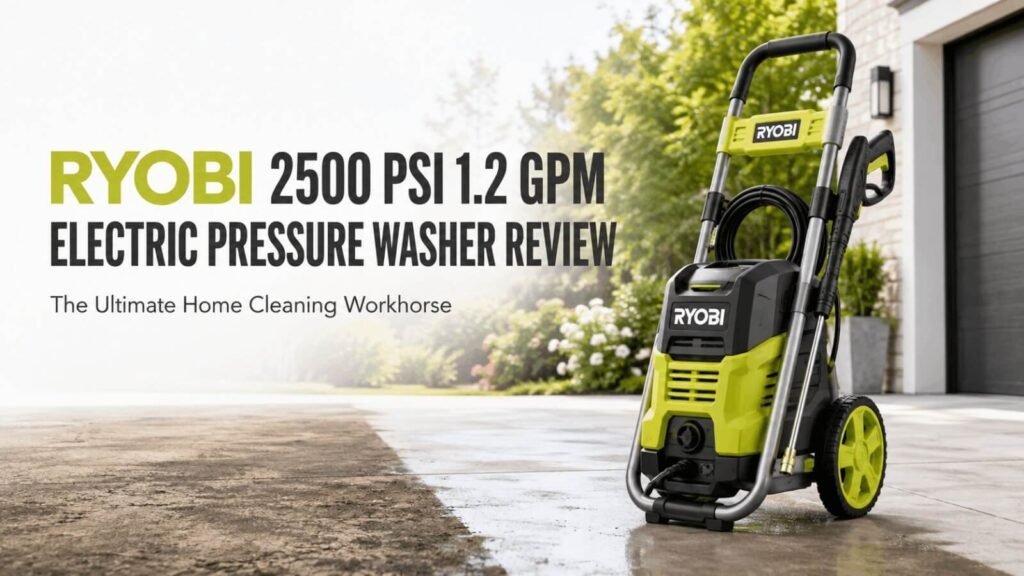
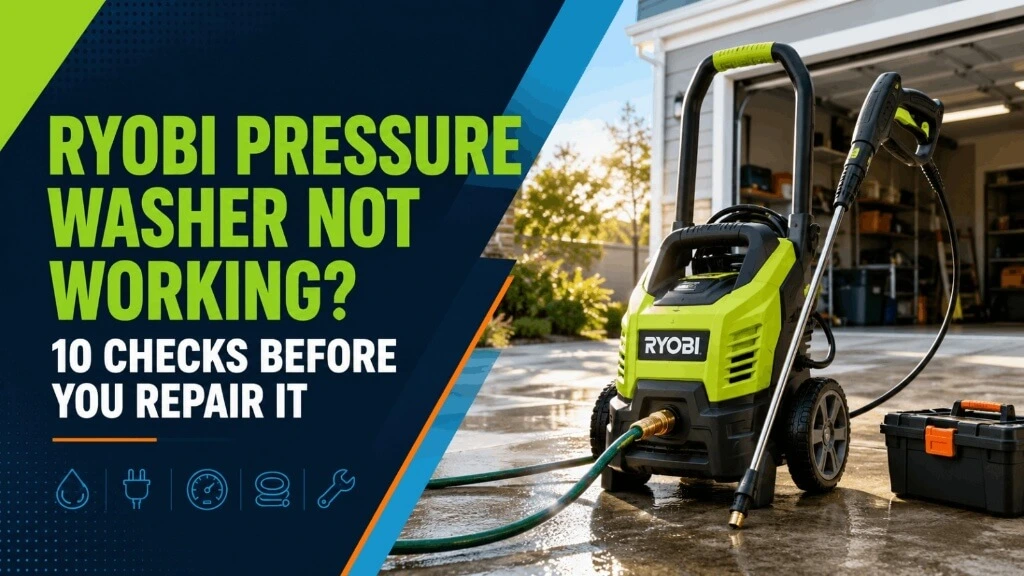
Ryobi Pressure Washer Not Working? 10 Checks Before You Repair It
When a Ryobi pressure washer is not working, the cause may be as simple as a closed tap, trapped air, clogged nozzle, tripped GFCI, flat battery, or stale fuel. Ordering a pump, switch, carburetor, or spray gun before identifying the symptom can waste money. If your Ryobi pressure washer is not working, identifying the root cause before buying replacement parts is essential. Ryobi sells corded, battery-powered, and gasoline pressure washers. Their starting systems differ, but they share many water-supply, hose, nozzle, detergent, and storage problems. These ten checks help you identify the likely system before opening the machine or replacing parts. How this guide was prepared: The troubleshooting sequence is based on manufacturer support guidance, common instructions found in model-specific manuals, the current Ryobi recall notice, and pressure-washer safety guidance. Always use the manual for your exact model because electrical limits, fuel controls, water requirements, and service procedures vary. Diagnose Why Your Ryobi Pressure Washer Is Not Working Start with what the machine actually does rather than guessing which part failed when a Ryobi pressure washer is not working properly. Stop immediately if the washer smells burnt, repeatedly trips protection, leaks fuel, produces heavy smoke, vibrates severely, or has a damaged high-pressure hose. Ryobi Pressure Washer Not Working: 10 Checks in Order Check 1: Identify the Exact Ryobi Model and Power Type Find the product label and record the model, manufacturing, and serial numbers. Similar-looking Ryobi machines may have different motors, pumps, hoses, switches, engines, and starting instructions. Identify whether the washer is corded, battery-powered, or gasoline. For instance, if you are using a popular unit like the Ryobi 1900 PSI electric pressure washer, check its specific manual and specs. Use the exact model number in the official Ryobi support search to find the correct manual, parts information, warranty, and service options. A listing that says “fits Ryobi pressure washers” is not enough.Check 2: Check the Ryobi Pressure Washer Recall Before powering the machine, compare its model and serial number with current recall information. An August 2025 U.S. recall covers specified serial-number ranges of models RY142300, RY142300VNM, and RY142711VNM because a capacitor may overheat and burst. If your washer may be affected, stop using it and follow the official CPSC recall instructions Do not open the electrical housing or continue normal troubleshooting until the model and serial number are checked. Check 3: Inspect the Water Supply and Inlet Screen Turn the machine off. Open the tap fully, straighten the garden hose, and inspect it for kinks, leaks, collapsed areas, restrictive connectors, or a partly closed valve. Disconnect the garden hose and check the small filter screen at the washer inlet. Clean it gently and replace it if damaged. Some manuals recommend a 3/4-inch garden hose when a washer cannot reach full pressure, but follow the requirement for your model. Most full-size units require a pressurized cold-water main. Do not draw from a bucket, pool, or lake unless the manual specifically allows it. Check 4: Purge Air Before Starting Connect the water, open the tap, and squeeze the trigger while the motor or engine remains off. Hold it until the water stream is steady and no longer coughs or spits. Air inside the hose, pump, or gun can cause pulsing and rough operation. On a gas model, stored pump pressure can also make the starter rope difficult to pull. Releasing trigger pressure before another start attempt may solve that problem. Check 5: Inspect and Clean the Nozzle Turn off the washer, close the water, disconnect the power source as directed by the manual, and squeeze the trigger to release pressure. Engage the trigger lock before removing the nozzle. A partly blocked nozzle can cause pulsing or unusual pressure at the gun. Clean it using the method in the manual and back-flush it with fresh water. Replace a damaged, worn, or incorrect nozzle rather than enlarging its opening. Confirm that the quick-connect tip is fully seated. A soap nozzle is designed for low pressure and can make a healthy washer appear faulty during a pressure test. Check 6: Examine the High-Pressure Hose, Gun, and Fittings Uncoil the pressure hose completely. Look for kinks, cuts, crushed sections, bubbles, exposed reinforcement, damaged collars, and leaks. Inspect the gun, wand, quick-connect coupler, and O-rings. Start threaded fittings by hand to avoid cross-threading. A correct O-ring may fix a small connection leak, but a damaged high-pressure hose must be replaced with a compatible, correctly rated hose. Never patch it or search for a leak with your hand; high-pressure water can penetrate skin. Check 7: Ryobi Electric Pressure Washer Not Turning On For a corded model, keep the plug and connection dry and off the ground. Confirm that the switch is on, the outlet works, the GFCI plug is reset, and the household breaker has not tripped. Release stored hose pressure before trying again when your Ryobi pressure washer is not working. If you are new to these machines, review how to use an electric pressure washer to ensure proper setup and startup steps. An undersized extension cord can cause voltage drop, overheating, weak performance, or breaker trips. Some Ryobi manuals discourage extension cords and specify exact wire gauges and maximum lengths. Never use a light indoor cord. For a battery model, charge the approved battery, allow a hot pack to cool, seat it fully, and inspect the contacts. Never bridge a safety switch, open a battery pack, or probe live parts. Repeated trips, burnt smells, damaged cables, or electrical noise require professional service. Check 8: Ryobi Gas Pressure Washer Won’t Start Move the washer outdoors, at least 20 feet from doors, windows, and vents. Confirm that the engine switch is on, the fuel valve is open if fitted, oil is at the correct level, and the tank contains fresh fuel permitted by the engine manual. Follow the correct choke or automatic-start procedure. Inspect the air filter and spark-plug lead. Stale fuel, carburetor deposits, incorrect choke use, low-oil protection, or a fouled spark plug can prevent