When a Ryobi pressure washer is not working, the cause may be as simple as a closed tap, trapped air, clogged nozzle, tripped GFCI, flat battery, or stale fuel. Ordering a pump, switch, carburetor, or spray gun before identifying the symptom can waste money.
If your Ryobi pressure washer is not working, identifying the root cause before buying replacement parts is essential.
Ryobi sells corded, battery-powered, and gasoline pressure washers. Their starting systems differ, but they share many water-supply, hose, nozzle, detergent, and storage problems. These ten checks help you identify the likely system before opening the machine or replacing parts.
How this guide was prepared: The troubleshooting sequence is based on manufacturer support guidance, common instructions found in model-specific manuals, the current Ryobi recall notice, and pressure-washer safety guidance. Always use the manual for your exact model because electrical limits, fuel controls, water requirements, and service procedures vary.
Diagnose Why Your Ryobi Pressure Washer Is Not Working
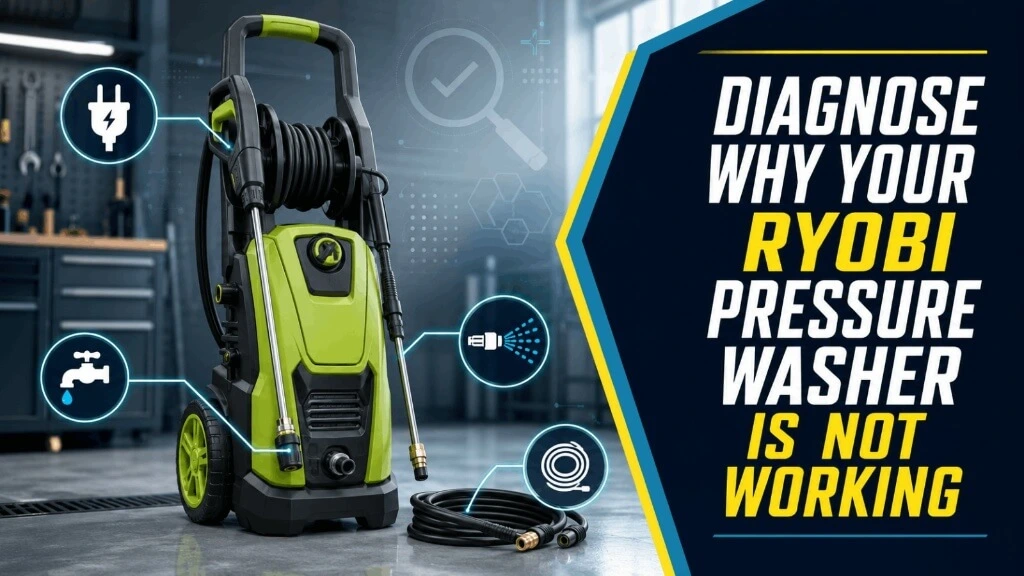
Start with what the machine actually does rather than guessing which part failed when a Ryobi pressure washer is not working properly.
Stop immediately if the washer smells burnt, repeatedly trips protection, leaks fuel, produces heavy smoke, vibrates severely, or has a damaged high-pressure hose.
Ryobi Pressure Washer Not Working: 10 Checks in Order
Check 1: Identify the Exact Ryobi Model and Power Type
Find the product label and record the model, manufacturing, and serial numbers. Similar-looking Ryobi machines may have different motors, pumps, hoses, switches, engines, and starting instructions.
Identify whether the washer is corded, battery-powered, or gasoline. For instance, if you are using a popular unit like the Ryobi 1900 PSI electric pressure washer, check its specific manual and specs. Use the exact model number in the official Ryobi support search to find the correct manual, parts information, warranty, and service options. A listing that says “fits Ryobi pressure washers” is not enough.Check 2: Check the Ryobi Pressure Washer Recall
Before powering the machine, compare its model and serial number with current recall information. An August 2025 U.S. recall covers specified serial-number ranges of models RY142300, RY142300VNM, and RY142711VNM because a capacitor may overheat and burst.
If your washer may be affected, stop using it and follow the official CPSC recall instructions Do not open the electrical housing or continue normal troubleshooting until the model and serial number are checked.
Check 3: Inspect the Water Supply and Inlet Screen
Turn the machine off. Open the tap fully, straighten the garden hose, and inspect it for kinks, leaks, collapsed areas, restrictive connectors, or a partly closed valve.
Disconnect the garden hose and check the small filter screen at the washer inlet. Clean it gently and replace it if damaged. Some manuals recommend a 3/4-inch garden hose when a washer cannot reach full pressure, but follow the requirement for your model.
Most full-size units require a pressurized cold-water main. Do not draw from a bucket, pool, or lake unless the manual specifically allows it.
Check 4: Purge Air Before Starting
Connect the water, open the tap, and squeeze the trigger while the motor or engine remains off. Hold it until the water stream is steady and no longer coughs or spits.
Air inside the hose, pump, or gun can cause pulsing and rough operation. On a gas model, stored pump pressure can also make the starter rope difficult to pull. Releasing trigger pressure before another start attempt may solve that problem.
Check 5: Inspect and Clean the Nozzle
Turn off the washer, close the water, disconnect the power source as directed by the manual, and squeeze the trigger to release pressure. Engage the trigger lock before removing the nozzle.
A partly blocked nozzle can cause pulsing or unusual pressure at the gun. Clean it using the method in the manual and back-flush it with fresh water. Replace a damaged, worn, or incorrect nozzle rather than enlarging its opening.
Confirm that the quick-connect tip is fully seated. A soap nozzle is designed for low pressure and can make a healthy washer appear faulty during a pressure test.
Check 6: Examine the High-Pressure Hose, Gun, and Fittings
Uncoil the pressure hose completely. Look for kinks, cuts, crushed sections, bubbles, exposed reinforcement, damaged collars, and leaks.
Inspect the gun, wand, quick-connect coupler, and O-rings. Start threaded fittings by hand to avoid cross-threading. A correct O-ring may fix a small connection leak, but a damaged high-pressure hose must be replaced with a compatible, correctly rated hose. Never patch it or search for a leak with your hand; high-pressure water can penetrate skin.
Check 7: Ryobi Electric Pressure Washer Not Turning On
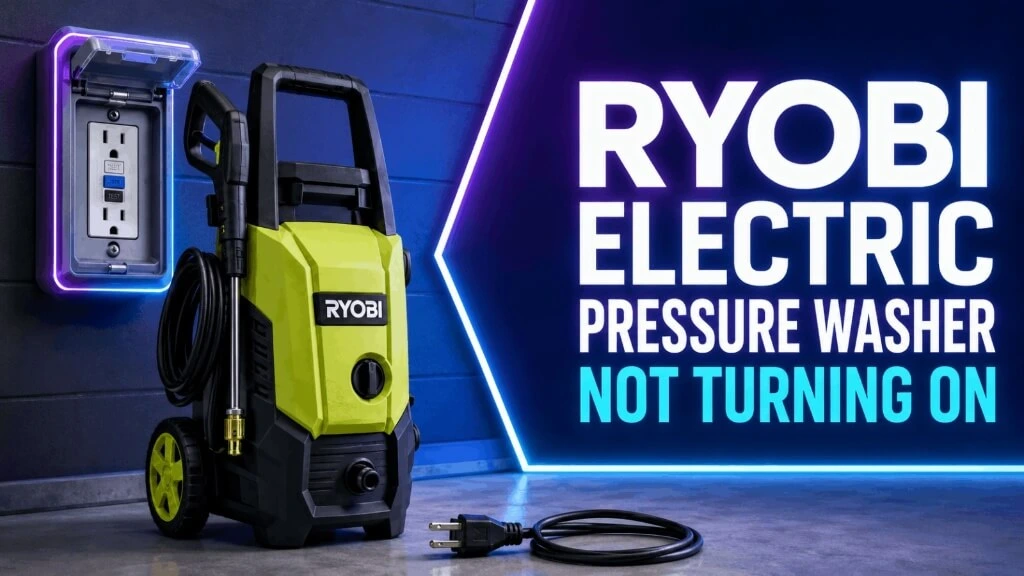
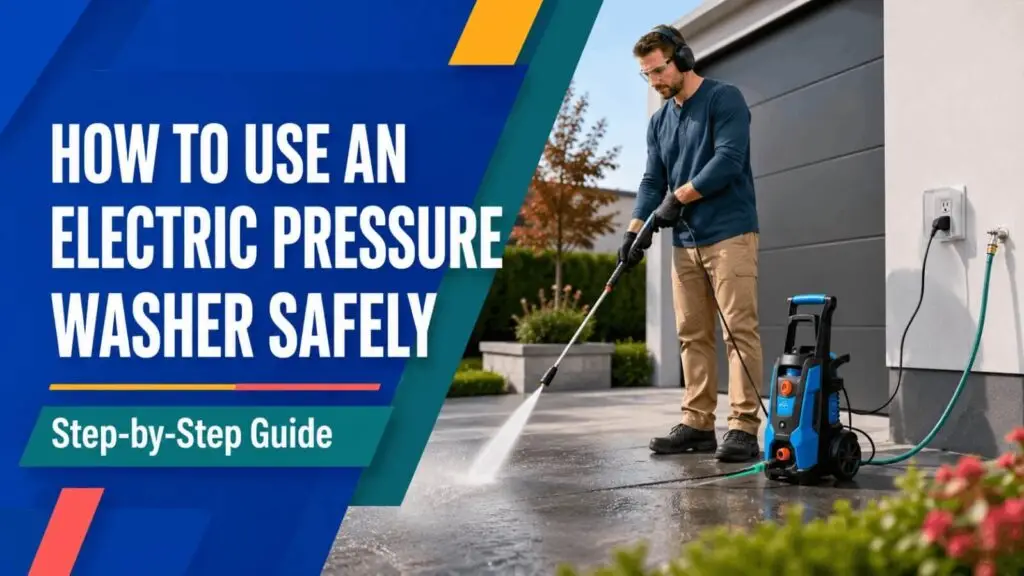
For a corded model, keep the plug and connection dry and off the ground. Confirm that the switch is on, the outlet works, the GFCI plug is reset, and the household breaker has not tripped. Release stored hose pressure before trying again when your Ryobi pressure washer is not working. If you are new to these machines, review how to use an electric pressure washer to ensure proper setup and startup steps.
An undersized extension cord can cause voltage drop, overheating, weak performance, or breaker trips. Some Ryobi manuals discourage extension cords and specify exact wire gauges and maximum lengths. Never use a light indoor cord.
For a battery model, charge the approved battery, allow a hot pack to cool, seat it fully, and inspect the contacts. Never bridge a safety switch, open a battery pack, or probe live parts. Repeated trips, burnt smells, damaged cables, or electrical noise require professional service.
Check 8: Ryobi Gas Pressure Washer Won’t Start
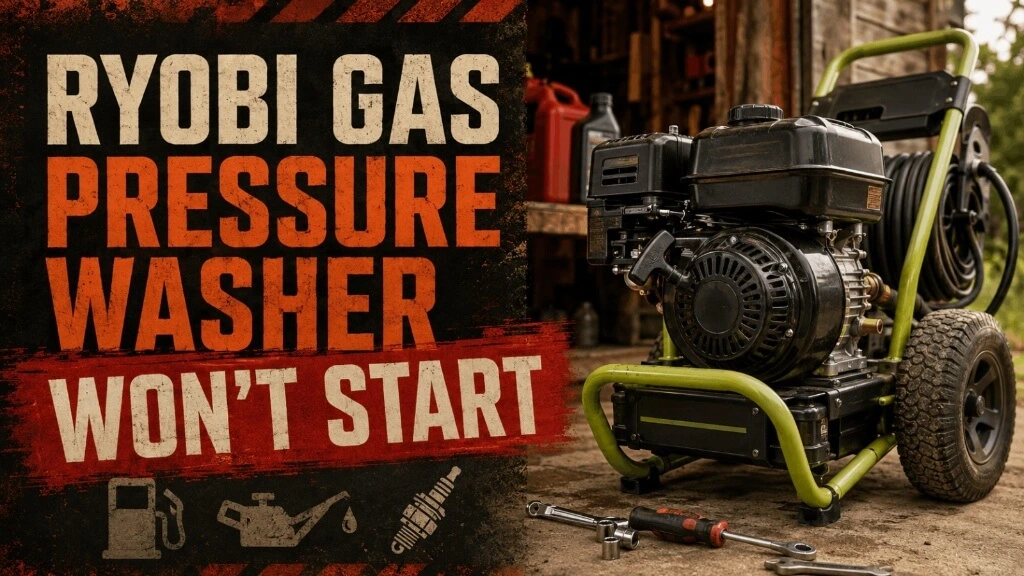
Move the washer outdoors, at least 20 feet from doors, windows, and vents. Confirm that the engine switch is on, the fuel valve is open if fitted, oil is at the correct level, and the tank contains fresh fuel permitted by the engine manual. Follow the correct choke or automatic-start procedure.
Inspect the air filter and spark-plug lead. Stale fuel, carburetor deposits, incorrect choke use, low-oil protection, or a fouled spark plug can prevent starting. Engine parts may require a separate engine model, type, and code.
If the engine starts but stalls when pressure builds, recheck water flow, the nozzle, and trapped air. Stop if the engine knocks, leaks fuel, smokes heavily, or struggles badly.
Check 9: Ryobi Pressure Washer Soap Not Working
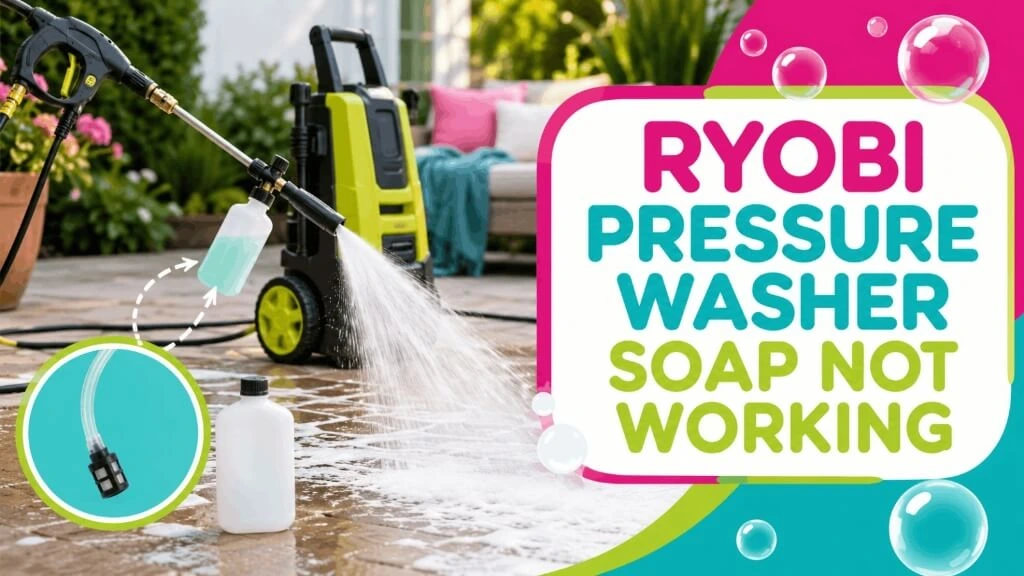
Detergent normally draws only at low pressure. Install the soap nozzle or select the soap setting. Check the detergent level, dilution, chemical hose, injector path, and any model-specific valve. Allow time for solution to travel through the system.
High-pressure tips usually stop detergent suction. Thick, dried, or incorrectly diluted cleaner can also block the system. Use only pressure-washer-approved detergent and flush the soap path with clean water afterward. Never add bleach, acids, solvents, flammable liquids, or unapproved industrial chemicals.
Check 10: Look for Storage or Internal Damage
If the problem appeared after winter, inspect the pump and fittings for cracks or leaks. Trapped water can freeze and split components. Stale gasoline may block a carburetor, while moisture can damage electrical contacts.
Pump valves, seals, unloaders, capacitors, switches, batteries, and engine internals need model-specific diagnosis. If the external checks fail, compare warranty coverage, authorized diagnosis, parts cost, and the machine’s value before approving repair.
Ryobi Pressure Washer No Pressure: Symptom Guide
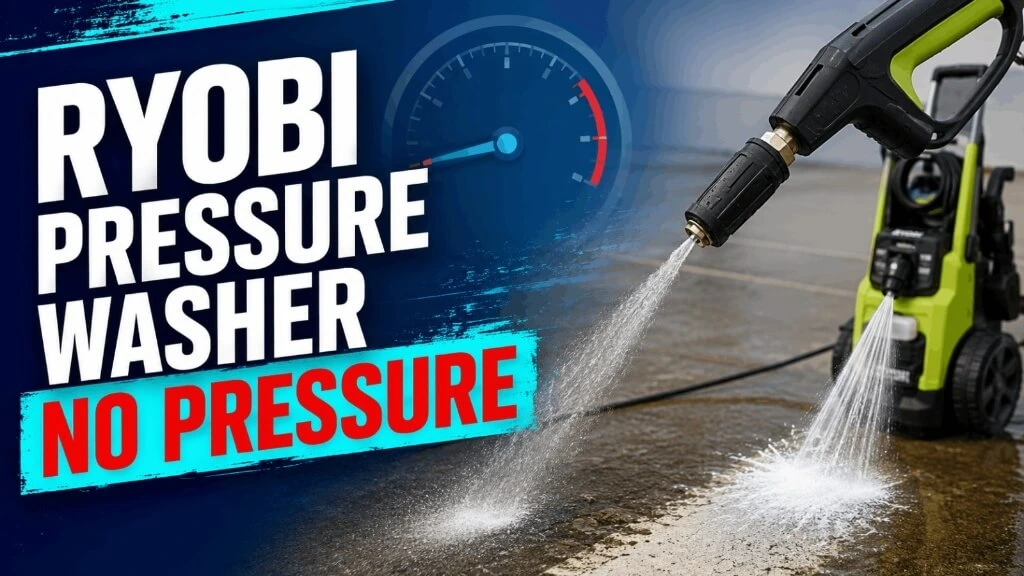
A Ryobi pressure washer no pressure complaint can describe several different conditions.
If the motor or engine runs normally and every supply, air, nozzle, hose, and gun check passes, internal pump diagnosis becomes reasonable. Do not adjust the unloader at random. A wrong setting can create unsafe pressure or hide the real fault.
Beginner Checks Versus Ryobi Pressure Washer Repair
Recall and warranty repairs should follow official procedures. Unauthorized modifications may create danger and affect coverage.
Preventing Ryobi Pressure Washer Problems
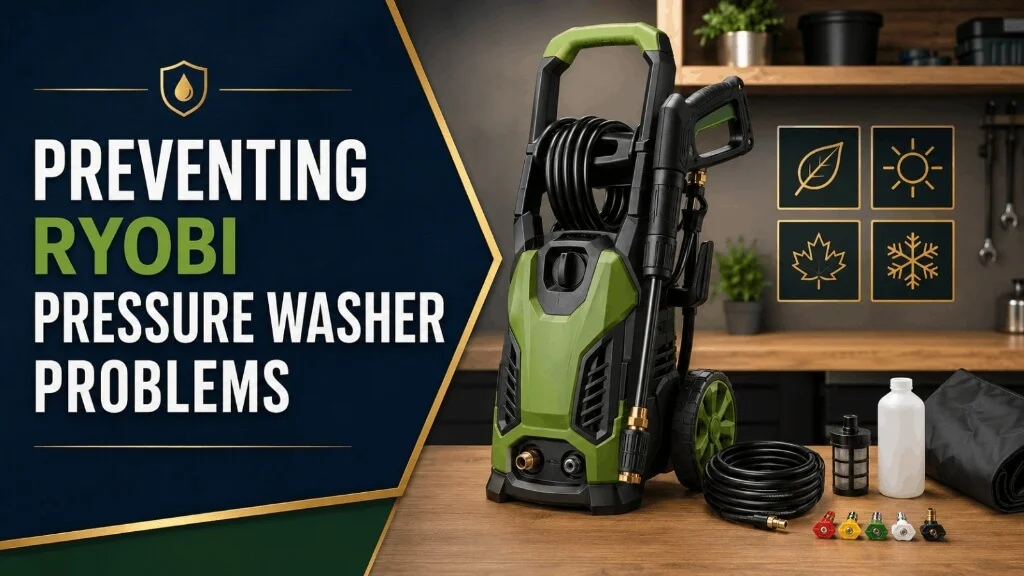
After cleaning, flush detergent with clean water, switch off, close the tap, and squeeze the trigger to release stored pressure. Drain hoses and protect the pump according to the manual before long or freezing storage.
For gas models, follow the engine instructions for fuel treatment, oil, air-filter, and spark-plug care. Coil an electric cord loosely and keep its plug and GFCI dry. Remove a battery and store it within the temperature range specified by its manufacturer.
Before every job, inspect the inlet screen, nozzle, pressure hose, gun, fittings, and O-rings.
Pressure Washer Safety
High-pressure water can cause injection injury. Never aim the spray at people, pets, electrical equipment, the washer, or a leaking hose. Wear eye protection and closed, nonslip footwear, hold the gun securely, and keep children away.
The CDC’s pressure-washer safety guidance says gasoline-powered washers should never be used in enclosed spaces or within 20 feet of a window, door, or vent. Let the engine cool before refuelling. Keep electrical connections dry and never pressure wash from a ladder.
Before inspection, stop the machine, close the water, release trigger pressure, and engage the trigger lock.
Ryobi Pressure Washer Troubleshooting FAQs
Why is my Ryobi pressure washer pulsing?
Common causes include inadequate water flow, trapped air, a kinked hose, dirty inlet screen, clogged nozzle, or an air leak at the supply side. Correct these before opening the pump.
Why does my Ryobi pressure washer run but have no pressure?
Check the water supply, inlet screen, trapped air, nozzle selection, hose, gun, and fittings. If all external checks pass, the pump or its controls may need professional diagnosis.
Why is the starter rope hard to pull?
Stored pump pressure may resist the engine. Switch off and squeeze the trigger to release pressure before another attempt. Stop if the rope remains unusually tight.
Can I repair a leaking pressure-washer hose?
No. Replace a cut, bulging, abraded, or leaking high-pressure hose with a compatible, correctly rated part. A patch can fail suddenly.
Should I replace the pump if these checks fail?
Not automatically. Confirm the model, warranty, pump availability, motor or engine condition, and total repair cost. Authorized diagnosis may cost less than buying the wrong pump.
Final Thoughts: Fixing a Ryobi Pressure Washer Not Working
When a Ryobi pressure washer is not working, diagnose the symptom before buying parts. Confirm the model and recall status, then check water supply, trapped air, nozzle, hose, power source, fuel system, and detergent setup before blaming the pump.
Most owners can safely complete these external checks. Internal electrical, battery, pump, unloader, carburetor, and engine work should wait until simple causes have been ruled out and the correct manual is available.