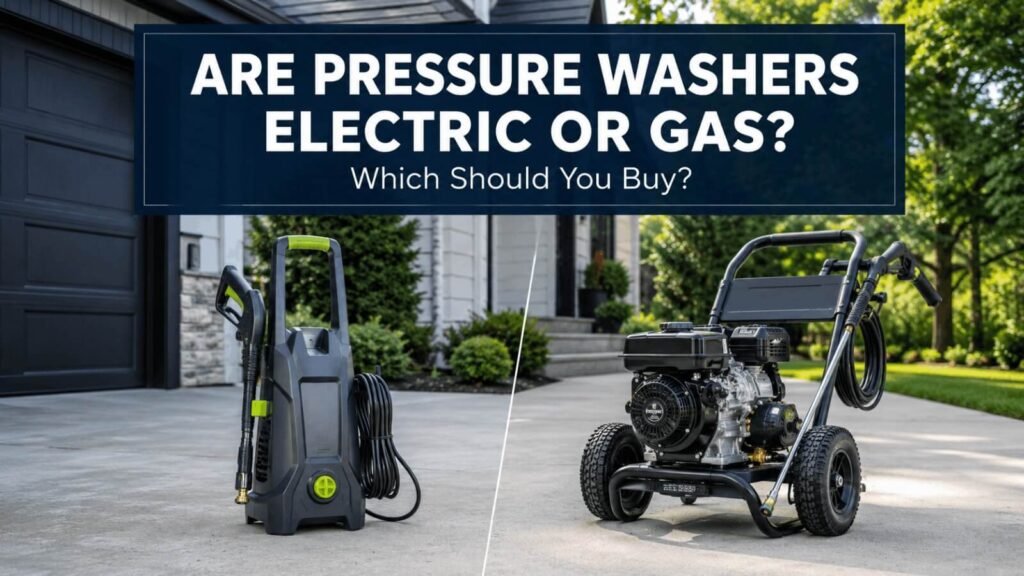
The Sun Joe vs Greenworks pressure washer decision depends less on the brand name and more on the exact model, pressure rating, water flow, hose reach, nozzle package, warranty, and cleaning job.
Sun Joe’s SPX3000 is a familiar corded electric option for cars, patios, decks, sidewalks, and routine home maintenance. Greenworks offers a broader range, including compact electric models and Pro machines such as the GPW3001. That range can give Greenworks more flexibility, but it also makes model-by-model comparison essential.
This guide compares the Sun Joe SPX3000 and Greenworks Pro GPW3001 as representative electric pressure washers. It explains which may fit car washing, driveway cleaning, and everyday home use. It does not present a lab test, current price ranking, or permanent winner.
Quick Verdict: Sun Joe or Greenworks?
Choose Sun Joe when you want a straightforward corded electric pressure washer for routine home jobs, useful included nozzles, dual detergent tanks, and a compact setup.
Choose Greenworks when you want the higher-output Pro GPW3001, a brushless motor, a longer high-pressure hose, a broader nozzle package, and stronger published warranty coverage for that model.
For a car, either can work when used with a wide spray and safe distance. For larger concrete areas, the Greenworks Pro model has the stronger published output position, but the right choice still depends on budget, storage, hose reach, and how often you clean.
The practical winner is the model that fits your largest regular job—not the one with the biggest number on the box.
Sun Joe vs Greenworks at a Glance
| Decision area | Sun Joe SPX3000 | Greenworks Pro GPW3001 |
| Product type | Corded electric pressure washer | Corded electric brushless pressure washer |
| Best fit | Cars, patios, decks, sidewalks, outdoor equipment, and routine home cleaning | Larger residential cleaning jobs, concrete, decks, vehicles, and buyers wanting higher published output |
| Published pressure | 2,030 PSI certified rated pressure | 3,000 PSI maximum at 1.1 GPM |
| Published flow | 1.2 GPM certified rated flow | 2.0 GPM at 100 PSI; 1.1 GPM at 3,000 PSI |
| High-pressure hose | 20 feet | 25 feet |
| Power cord | 35 feet with GFCI protection | 35 feet with waterproof plug and inline GFCI |
| Motor | 13-amp electric motor | Brushless electric motor |
| Spray options | 0°, 15°, 25°, 40°, and soap tips | 15°, 25°, 40°, soap, and turbo nozzles |
| Detergent setup | Two removable 0.9-liter onboard tanks | One large onboard soap tank on the referenced model |
| Published warranty | Two years | Three-year tool warranty and ten-year brushless-motor warranty |
This table compares specific models, not every Sun Joe or Greenworks pressure washer. Retail packages, model numbers, included accessories, and warranty terms can vary by seller and market.
What Is the Main Difference Between Sun Joe and Greenworks?
Sun Joe is strongly associated with simple corded electric pressure washers for home use. The SPX line often emphasizes practical features such as wheels, quick-connect tips, detergent systems, and Total Stop System controls.
Greenworks has a broader outdoor-power-tool range. Its pressure washers include basic corded models, higher-output Pro machines, and battery-powered or hybrid products. That variety helps shoppers who already own Greenworks tools, but the brand name alone does not tell you whether a unit is compact, brushless, high-flow, or battery-powered.
The meaningful difference is the exact machine’s rated pressure, useful water flow, nozzle control, hose reach, detergent system, warranty, parts support, and total ownership cost.
Sun Joe SPX3000 vs Greenworks GPW3001: Model Comparison
Sun Joe SPX3000
Sun Joe’s current product page lists the SPX3000 with 2,030 PSI of certified rated pressure and 1.2 GPM of certified rated flow. It also lists a 13-amp motor, 20-foot high-pressure hose, 35-foot GFCI-protected power cord, five quick-connect spray tips, two removable 0.9-liter detergent tanks, a garden-hose adapter, and a two-year warranty.
The SPX3000 is aimed at ordinary residential cleaning. Its package is practical for washing cars, rinsing outdoor equipment, cleaning patios, and handling small or moderate areas. The dual detergent tanks may be useful when a homeowner wants to keep two approved cleaning solutions available, but users should never mix chemicals unless the labels and manual allow it.
Read the official Sun Joe SPX3000 product page for the current package and specifications.
Greenworks Pro GPW3001
Greenworks lists the GPW3001 at 3,000 PSI maximum pressure at 1.1 GPM, with 2.0 GPM at 100 PSI. The current product page also identifies a brushless motor, 25-foot kink-resistant hose, 35-foot power cord with an inline GFCI and waterproof plug, five nozzle options, and a three-year tool warranty with ten-year brushless-motor coverage.
The GPW3001 is positioned for heavier residential work. Its stronger published output, brushless motor, longer hose, larger wheels, and turbo nozzle may appeal to homeowners who clean concrete, decks, vehicles, or larger outdoor areas more often.
The 3,000 PSI figure should still be read with the 1.1 GPM condition. The product does not deliver 3,000 PSI and 2.0 GPM at the same time. See the official Greenworks GPW3001 product page for the current figures and included equipment.
Side-by-side specifications
| Feature | Sun Joe SPX3000 | Greenworks Pro GPW3001 |
| Pressure figure | 2,030 PSI certified rated | 3,000 PSI maximum |
| Flow figure | 1.2 GPM certified rated | 1.1 GPM at 3,000 PSI; 2.0 GPM at 100 PSI |
| Motor | 13-amp electric | Brushless electric |
| High-pressure hose | 20 feet | 25 feet |
| Power cord | 35 feet with GFCI protection | 35 feet with inline GFCI and waterproof plug |
| Nozzle package | Five tips: 0°, 15°, 25°, 40°, soap | Five: 15°, 25°, 40°, soap, turbo |
| Detergent | Two removable onboard tanks | One large onboard soap tank |
| Warranty | Two years | Three-year tool; ten-year brushless motor |
The figures above are published specifications, not independent performance results. They should not be treated as a laboratory test.
PSI and GPM: Why the Numbers Need Context
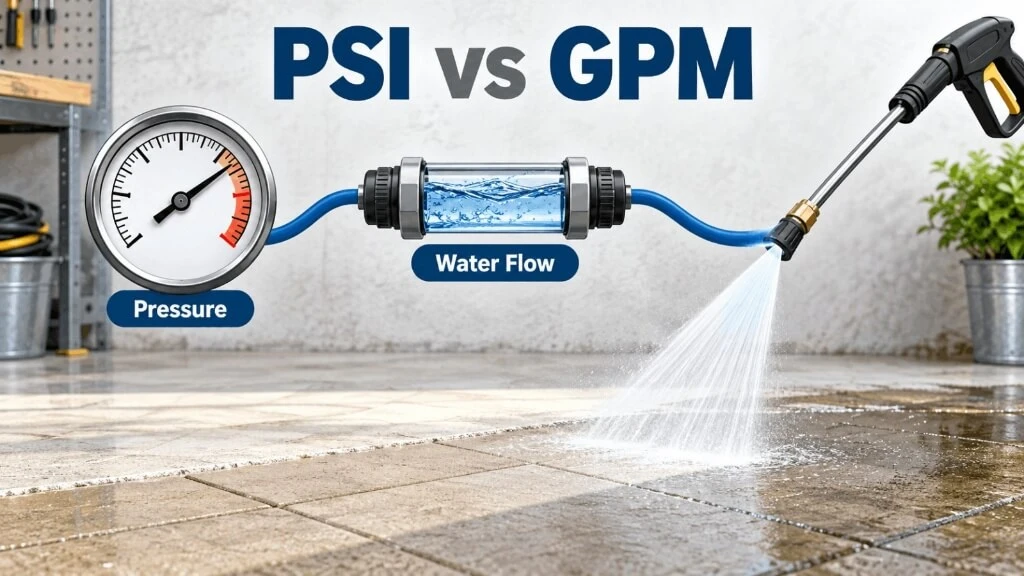
PSI means pounds per square inch and describes pressure. GPM means gallons per minute and describes water volume. Pressure helps loosen dirt, while water flow helps carry that dirt away.
The mistake is comparing one brand’s maximum PSI with another brand’s certified rated pressure as if both were measured under identical conditions. The GPW3001 example makes the issue clear: its 3,000 PSI maximum is listed at 1.1 GPM, while its 2.0 GPM figure is listed at 100 PSI. Those are different operating points.
For cars and delicate painted surfaces, controlled pressure, a wide spray, and safe distance matter more than the biggest number. For concrete, brick, and large walkways, useful flow, nozzle choice, and hose reach become more important.
Before choosing between the brands, read this PSI guide for different pressure-washer jobs. Match the machine to the surface rather than treating PSI as a complete performance score.
Which Brand Is Better for Car Washing?
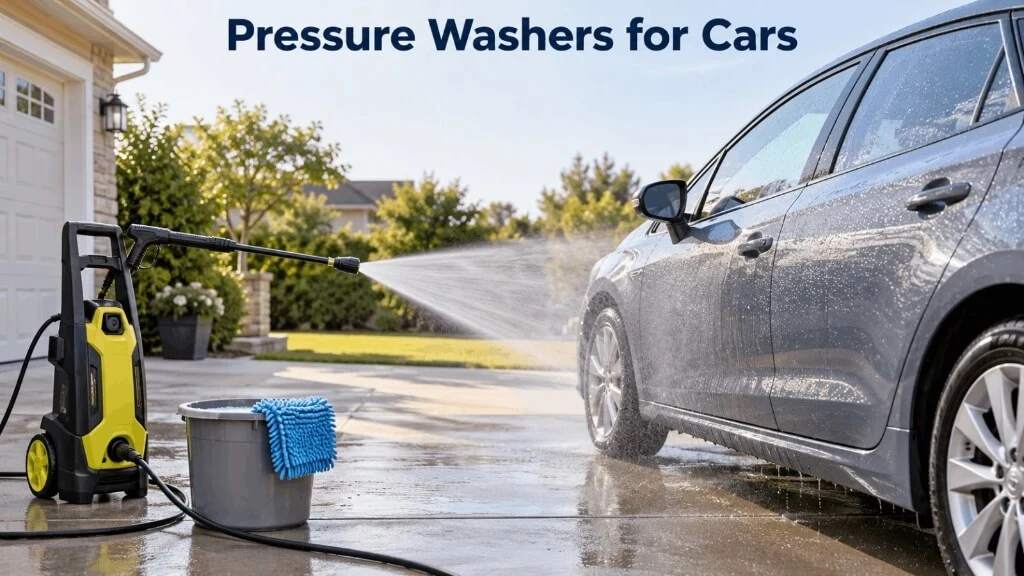
Both brands can work for home car washing when the correct nozzle, distance, and detergent are used. A wide fan spray is safer for paint than a narrow jet. Use the pressure washer to loosen and rinse dirt, then follow a safe contact-washing process where appropriate.
Why Sun Joe may suit car owners
The SPX3000 may appeal to a car owner who wants a simple corded setup, several included spray tips, a soap nozzle, and dual detergent tanks. Its certified rated flow and manageable size suit routine rinsing and light-to-moderate vehicle cleaning.
Why Greenworks may suit car owners
The GPW3001 may suit a buyer who wants a longer hose, brushless motor, stronger published output, and more room to handle larger outdoor jobs. Its turbo nozzle is useful for some hard surfaces, but it should not be used casually on vehicle paint, soft trim, emblems, seals, or fragile coatings.
Best choice for a car
Choose the model with the easiest pressure control, suitable wide-angle nozzle, manageable hose, and storage system. For car washing, a safer spray pattern and careful technique matter more than a small difference in brand reputation.
Which Brand Is Better for Driveways and Concrete?
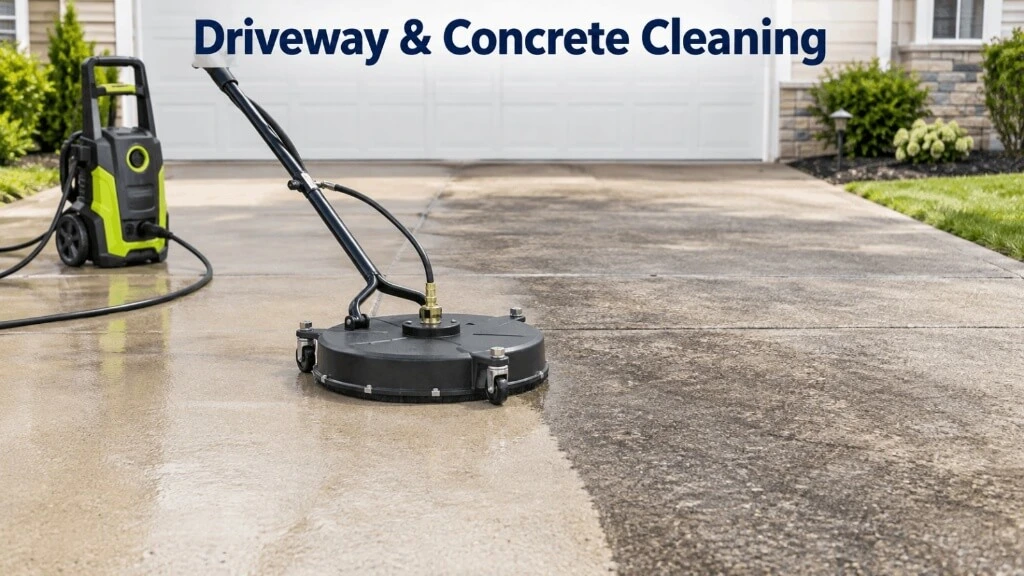
Concrete cleaning makes the difference between a compact home washer and a stronger Pro-style machine more noticeable. Large areas need steady flow, enough hose reach, and ideally a compatible surface-cleaner attachment.
The Sun Joe SPX3000 can be practical for steps, edges, small patios, bins, and spot stains. Its certified rated flow may be enough for routine maintenance, but a compact electric washer should not be expected to behave like a commercial machine on a broad, deeply stained driveway.
The Greenworks Pro GPW3001 has the stronger published output position of these two representative models. Its brushless motor, 25-foot hose, turbo nozzle, and higher maximum pressure may make it more suitable for larger residential concrete work. It can still be slower than a high-flow gas or commercial machine, and it may cost more and need more storage space.
Best choice for a driveway
For an occasional small driveway or a few steps, either model may be enough. For larger or more frequent concrete cleaning, Greenworks is the more suitable starting point between these two models—but confirm the surface-cleaner’s compatibility and the time required for the job.
Nozzles, Hoses, and Detergent Systems
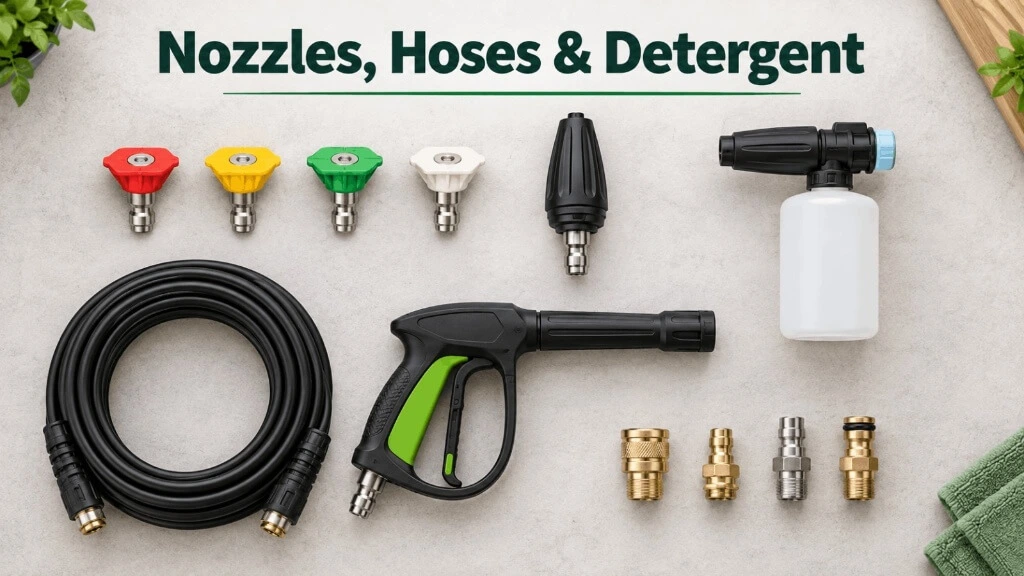
Sun Joe accessories
The SPX3000 includes five quick-connect tips: 0°, 15°, 25°, 40°, and soap. The range lets a homeowner change spray patterns without immediately buying extra accessories. The 0-degree tip is highly concentrated and should not be treated as a general setting for cars, painted surfaces, glass, or soft wood.
Greenworks accessories
The GPW3001 includes 15°, 25°, 40°, soap, and turbo nozzles. A turbo nozzle can help on hard surfaces, but it should be used carefully and only on surfaces approved by the manual. Keep the spray moving to reduce marks.
Hose reach
The Greenworks model has a five-foot longer high-pressure hose, which may reduce the need to move the machine around a vehicle or patio. Sun Joe’s 20-foot hose may be easier to store and sufficient for smaller areas. Compare the high-pressure hose separately from the power cord; both affect working reach.
Detergent setup
Sun Joe’s two removable tanks are convenient, while Greenworks’ large soap tank suits longer jobs with one detergent. Neither setup makes every cleaning chemical safe. Use only approved products, follow dilution instructions, and never add bleach or harsh solvents unless the manufacturer explicitly permits them.
Portability, Noise, and Storage
Both models are corded electric pressure washers, so both require a safe outdoor power connection. Their advantages over gas equipment include no fuel storage, no engine exhaust during use, and generally quieter operation.
Sun Joe’s compact design may be easier to move and store for occasional work. Greenworks’ Pro frame, larger wheels, longer hose, and upright storage design may be useful for heavier jobs but can require more garage space.
Measure the distance from your outlet and water tap to the work area. Check both cord length and high-pressure hose length. Store the unit dry, release pressure, drain the hose and pump, and protect connectors from freezing temperatures and mineral buildup.
For broader power-type context, read this electric versus gas pressure washer comparison.
Warranty, Parts, and Long-Term Ownership
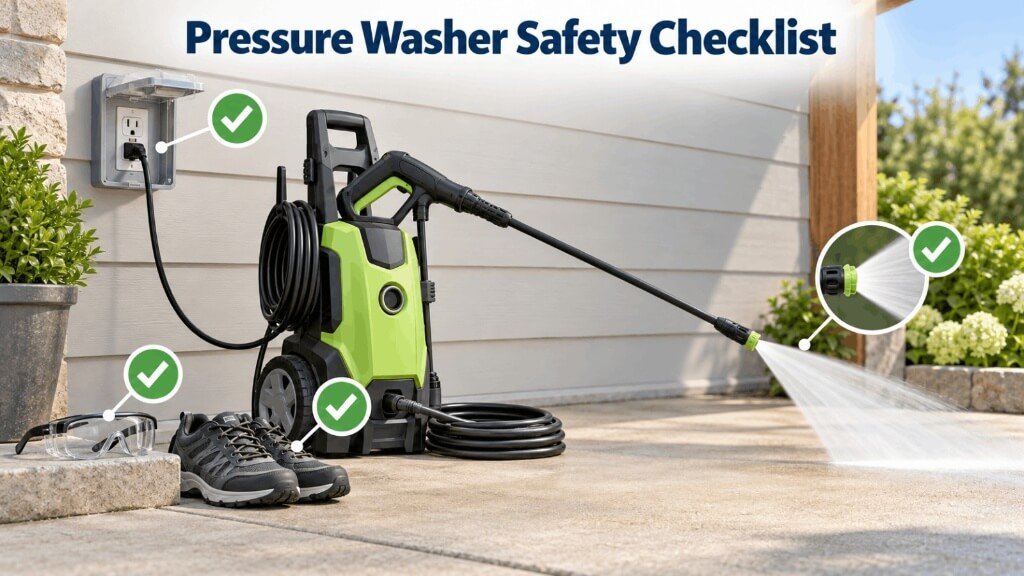
Warranty length is helpful, but it is not the entire ownership picture. Read what is covered, whether registration or proof of purchase is required, how commercial use is treated, and who pays for shipping or service.
The current Sun Joe customer policy states that new Sun Joe products used for ordinary household use are covered for two years, subject to the written terms. Greenworks states that its Pro brushless AC pressure washers receive three years of tool coverage and ten years for the brushless motor, while other Greenworks products can have different terms.
Check the official warranty before publishing a recommendation or placing an order:
Parts access matters too. Look for inlet filters, spray guns, hoses, nozzles, O-rings, detergent fittings, and pump-related support. A low purchase price can become less attractive if a small failed fitting requires replacing the entire machine.
Brand Strengths and Trade-Offs
Sun Joe strengths
Straightforward corded-electric setup for common home tasks
Useful five-tip package on the SPX3000
Dual onboard detergent tanks
Compact design for garages and occasional users
Clear fit for cars, patios, decks, steps, and light driveway maintenance
Sun Joe limitations
The SPX3000 is not the highest-output choice for large concrete areas
The brand range includes different pumps, hoses, and features, so model numbers must be checked carefully
Corded operation still requires a safe outdoor electrical connection
The highest number on a retailer page may not represent the certified rated figure
Greenworks strengths
Broader range of corded, brushless, battery, and hybrid equipment
Stronger published position for the Pro GPW3001
Longer hose and five-nozzle package on the referenced model
Brushless motor and long motor-warranty coverage on the GPW3001
Useful choice for buyers already invested in Greenworks equipment
Greenworks limitations
The brand range varies considerably by model
Pro machines can cost more and require more storage space
Maximum PSI and flow figures must be read together
Battery and hybrid models require separate checks for runtime, charging, and output
Common Mistakes to Avoid
Treating maximum PSI as a complete performance score
Better approach: Compare pressure, GPM, nozzle options, hose reach, and the actual surface you will clean.
Comparing different measurement categories
Better approach: Check whether each number is maximum, working, certified rated, or measured at a different flow condition.
Assuming every accessory fits both brands
Better approach: Confirm the fitting type, pressure rating, and manual-approved accessories before using cross-brand parts.
Using a narrow nozzle on a car or soft surface
Better approach: Start with a wide fan spray, keep the wand moving, and test an inconspicuous area.
Buying the larger model for occasional light work
Better approach: Consider price, storage, noise, setup time, and actual cleaning frequency before paying for output you may not use.
Ignoring warranty conditions
Better approach: Check registration, commercial-use limits, proof-of-purchase rules, exclusions, and service arrangements.
Safety Before Using Either Brand
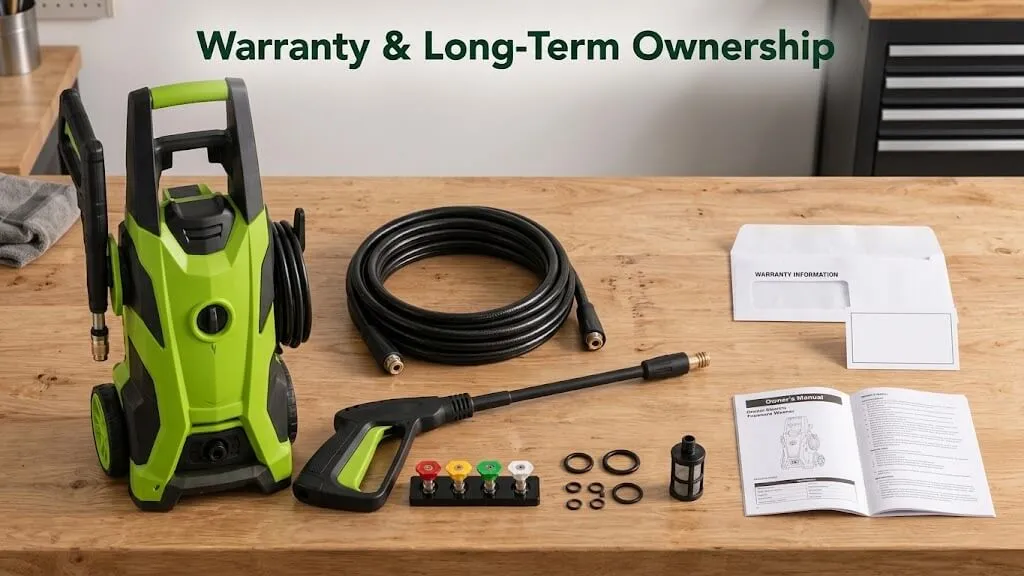
Follow the pressure washer manual, surface guidance, detergent instructions, and basic safety precautions. Wear eye protection and closed shoes. Keep children and pets away, and never aim the wand at people, animals, electrical connections, glass, or loose materials.
Use a ground-fault-protected outdoor outlet and keep electrical connections away from standing water. Do not use damaged cords, hoses, spray guns, or fittings. Start with a wide nozzle and greater distance; pressure can remove paint, damage wood, and injure skin.
Confirm that turbo nozzles, extension wands, foam cannons, surface cleaners, and replacement hoses are rated for the washer. Release pressure before changing fittings and drain the machine before storage. Review the CPSC pressure-washer recall database before using an older or second-hand machine.
Simple Action Plan
Step 1: Define the main job
Choose your largest regular task: car washing, patio furniture, siding, decks, steps, or driveway cleaning. Let that task guide the model choice.
Step 2: Measure your working area
Check the distance from the outlet and water tap to the cleaning area. Compare both the power-cord length and high-pressure-hose length.
Step 3: Compare exact models
Write down PSI, GPM, motor type, nozzles, detergent system, hose length, weight, warranty, and included accessories. Do not compare only the brand names.
Step 4: Choose the safer setup
Use an appropriate outdoor outlet, approved detergent, eye protection, and a compatible surface cleaner if needed. Test a small area before completing the full job.
Step 5: Maintain after cleaning
Release pressure, flush detergent, disconnect the water supply, drain the hose and pump, rinse the inlet filter, and store the washer in a dry place.
Frequently Asked Questions
Is Sun Joe better than Greenworks?
Neither brand is best for every buyer. Sun Joe may suit simple home cleaning and compact corded setups, while Greenworks offers more variety and stronger Pro options. Compare the exact model.
Is Greenworks more powerful than Sun Joe?
The Greenworks Pro GPW3001 publishes a higher maximum pressure and higher flow at its lower-pressure operating point than the Sun Joe SPX3000. That does not mean every Greenworks model is stronger than every Sun Joe model.
Which is better for washing a car?
Choose the model with a controllable wide spray, compatible soap option, manageable hose, and easy handling. Both brands can work for car washing when used at a safe distance.
Which is better for driveway cleaning?
For occasional small areas, either representative model may work. For larger or more frequent concrete cleaning, Greenworks’ Pro GPW3001 is the stronger starting point between these two, but a higher-flow machine may be better for very large jobs.
Do Sun Joe and Greenworks accessories interchange?
Some fittings may look similar, but compatibility is not guaranteed. Check the exact connection, pressure rating, and manufacturer guidance before using an accessory from another brand.
Which brand has the better warranty?
For the specific models compared here, Greenworks lists three-year tool and ten-year brushless-motor coverage, while Sun Joe lists a two-year warranty for the SPX3000. Read the full terms because coverage, registration, commercial-use rules, and market conditions can differ.
Final Recommendation
Choose Sun Joe when your priority is a straightforward corded machine for cars, patios, outdoor furniture, decks, steps, and occasional home maintenance. The SPX3000 is appealing when included nozzles, dual detergent tanks, and simple controls matter more than maximum output.
Choose Greenworks when you want the GPW3001’s brushless motor, longer hose, turbo nozzle, stronger published output, and longer warranty coverage. It may make more sense for larger residential surfaces, although it can cost more and need more storage space.
The best choice is the model whose flow, hose reach, accessories, warranty, and maintenance support match your work. Compare the exact model and current written warranty before buying—not just the brand name or the largest PSI figure.
Helpful Resources
- Sun Joe SPX3000 Official Product Page
- Greenworks Pro GPW3001 Official Product Page
- Sun Joe Warranty Information
- Greenworks Warranty Information
- Product Warranties — Federal Trade Commission
- Pressure Washer Recalls — U.S. Consumer Product Safety Commission
- Pressure Washer PSI Guide — PressureWasherWise
- Electric vs. Gas Pressure Washers — PressureWasherWise