A cordless car wash gun can seem like an easy way to rinse a vehicle without dragging a large pressure washer and power cord across the driveway. But a listing that leads with “500W” still leaves the main buying questions unanswered: how much pressure and water flow does it deliver, how long will the battery last, and can it draw water from a bucket?
The phrase 500W cordless car wash gun describes a product class, not one standardized machine; models can have different pumps, batteries, hoses, nozzles, and pressure claims. This is a buying guide 500W cordless car wash gun, not a hands-on test of an unidentified product. It explains which specifications to verify, what jobs suit a compact cleaner, and how car owners and DIY users can wash safely.
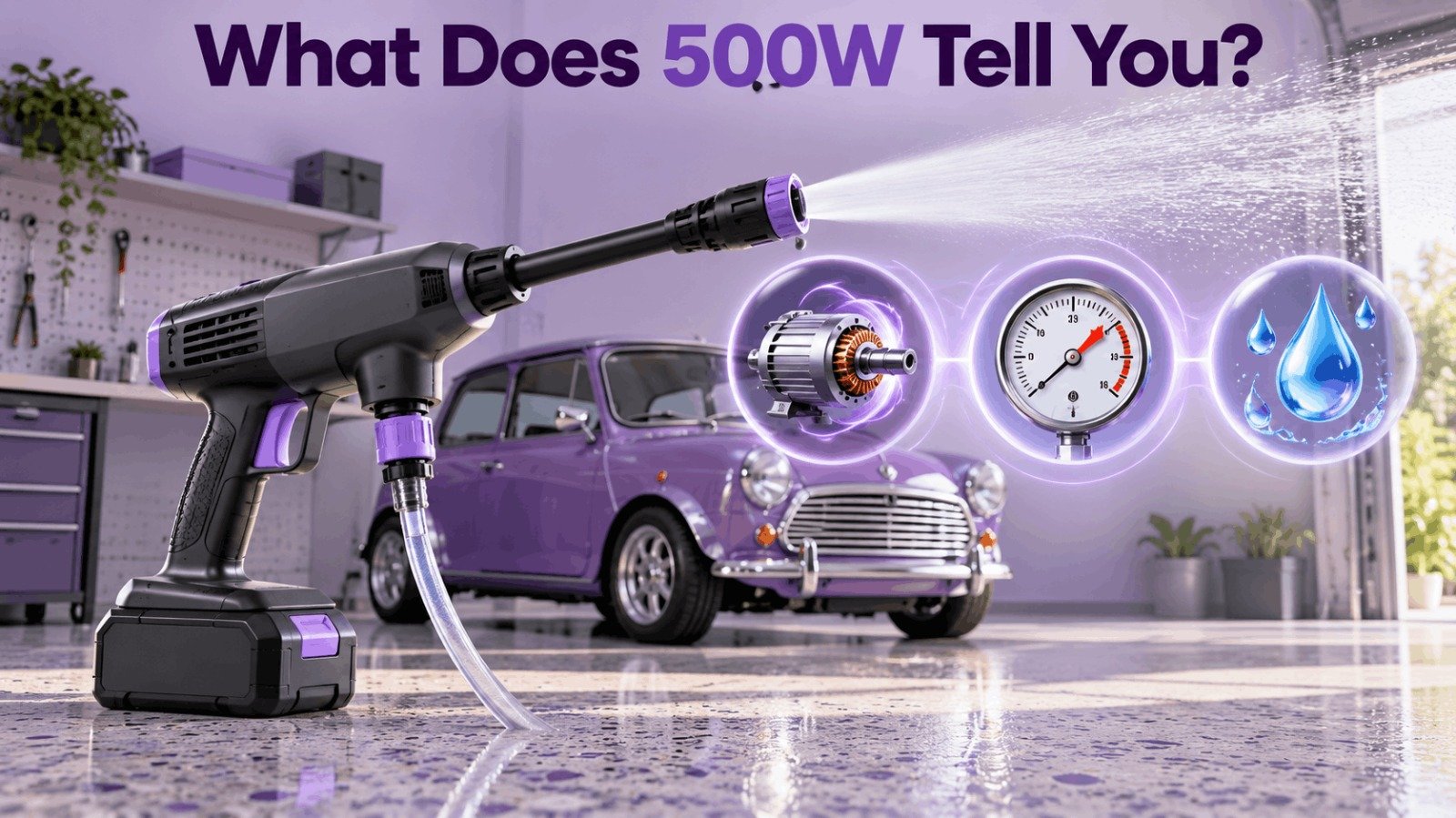
500W cordless car wash gun: What Does 500W Tell You?
Watts describe power. They do not tell you the pressure at the nozzle or the amount of water flowing through it. A pressure rating is usually given in PSI or bar, while flow is shown in GPM or liters per minute. Those measurements describe different parts of cleaning: pressure helps loosen dirt, and flow carries loosened grit away.
A 500W label also needs context. It may refer to the motor’s rated electrical input, output, or a peak figure. Those values are not interchangeable, and sellers may describe them differently. There is no dependable conversion from “500W” to one PSI or GPM number.
A manufacturer-listed cordless cleaner shows why separate ratings matter: the WORX Hydroshot WG620 lists 415 maximum PSI, 320 rated PSI, and 0.53 GPM. Those figures do not predict an unidentified 500W gun. Compare maximum and working pressure, plus stated flow. For a plain explanation of those terms, read our beginner guide to pressure, flow, and cleaning units.
If a seller gives only wattage or voltage, ask for the model number and manual. A peak PSI claim without working pressure or flow is not enough for a fair comparison.
How a Cordless Car Wash Gun Works
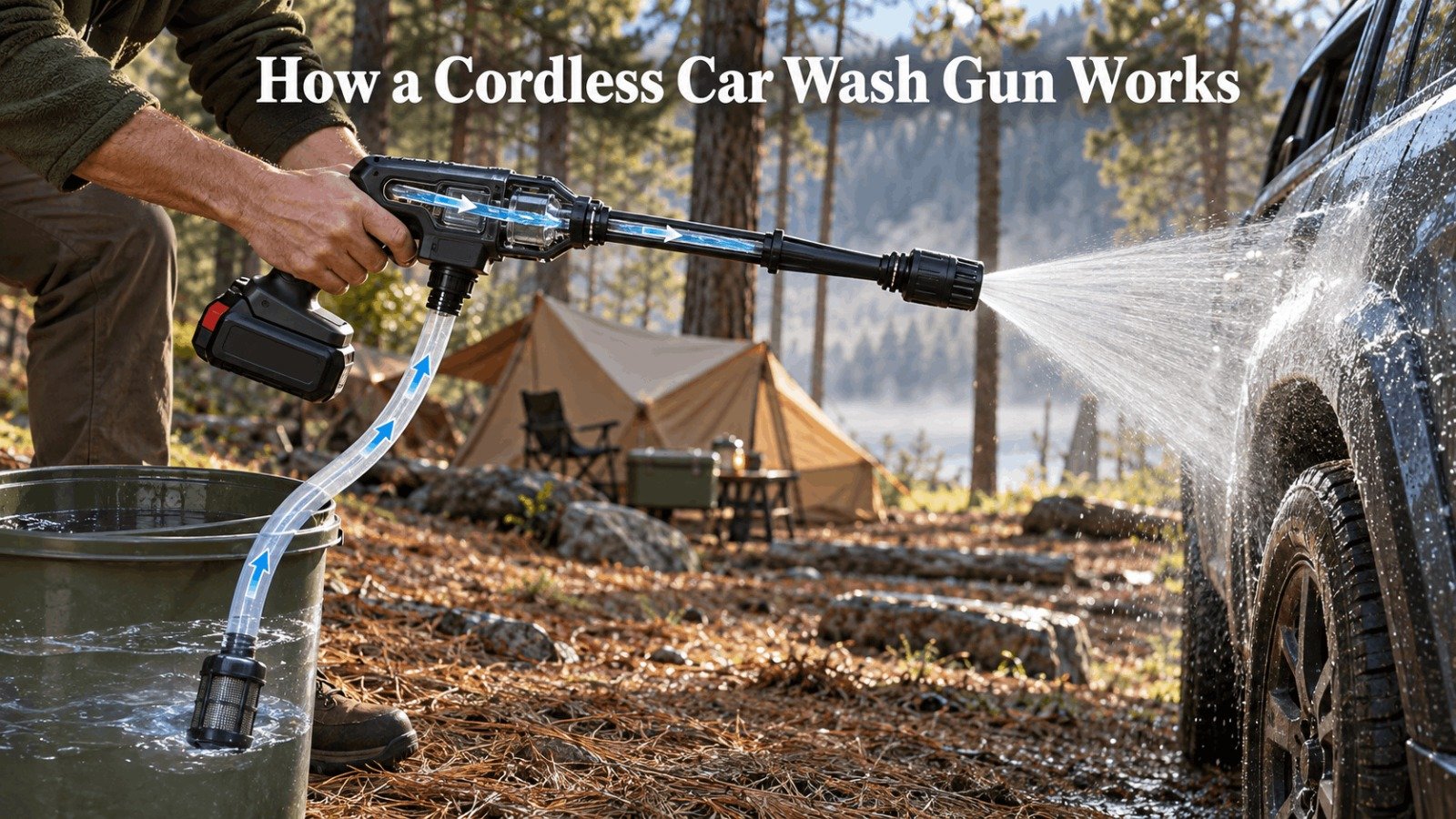
Most handheld cordless washers draw water through an inlet hose, pass it through a small pump, and send it through a trigger gun and nozzle. The battery powers the motor and pump. Some models connect to a garden hose; others can siphon from a bucket, tank, or other freshwater source. Some offer both options.
Water pickup matters. A bucket-fed unit is handy where no tap is nearby, but the pump has limits on lift height and hose distance. A kink, clogged filter, low water level, or air leak can stop suction. Follow the manual’s priming steps and keep the intake filter submerged.
A wide fan is generally easier to control on a vehicle than a narrow stream. A “foam bottle” applies detergent but does not guarantee thick foam; results depend on the bottle, dilution, flow, and soap.
Is a Portable Cordless Pressure Washer for Car Washing Enough?
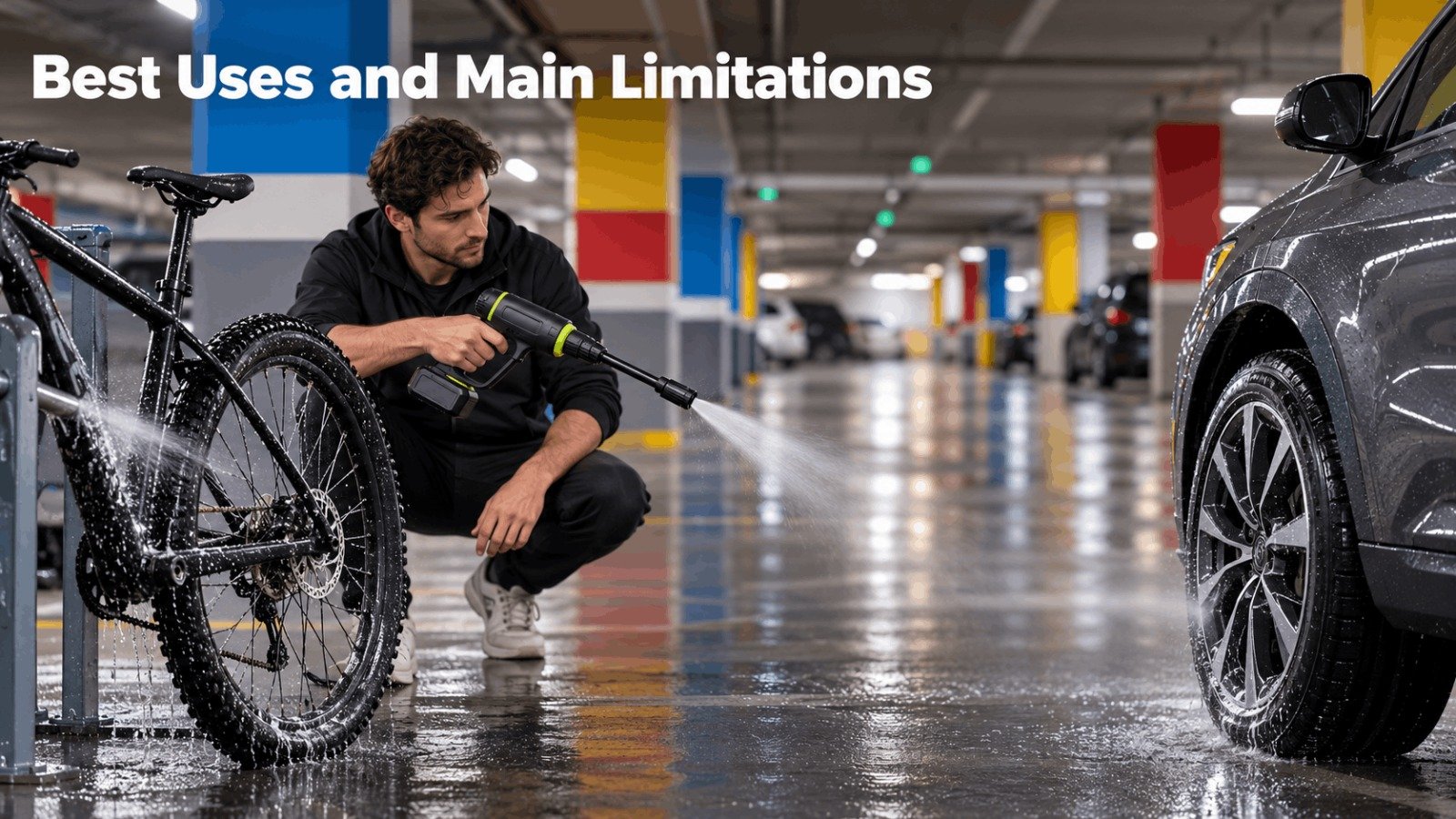
For a light rinse, loose dust, pollen, or fresh road grime, a compact cleaner can be convenient. It can also rinse floor mats, bicycle frames, wheel wells, patio furniture, and outdoor gear when the manual permits those uses. It is especially useful when the main need is portability or access to water without a wall outlet.
It is not a substitute for every full-size pressure washer. A low-flow portable tool may take longer to rinse soap from a whole SUV, and it may struggle with baked-on mud or heavy traffic film. It is not the right tool for quickly cleaning a large driveway or completing repeated paid detailing jobs unless its verified flow and duty limits fit that work. See our guide to the portable cordless pressure washer for how these compact tools differ from larger units.
For car care, soap and safe contact washing often do more than raising pressure. Pre-rinse loose grit, apply a vehicle-safe wash product, use a clean mitt, rinse thoroughly, and dry with a clean towel. A compact gun can help with the rinse stages, but it cannot replace dirt removal by the mitt when bonded film remains.
What to Check Before Buying a 500W Car Washer
500W Car Washer PSI and GPM
Ask for the working PSI or bar rating, not only the “maximum” number. Maximum pressure may describe a brief peak under ideal conditions. Check GPM or liters per minute as well. A weak flow rate can make rinsing slow even when the headline pressure looks impressive. If the seller gives only a pressure range with no test method, treat it as incomplete information.
Cordless Car Washer Battery Life and Runtime
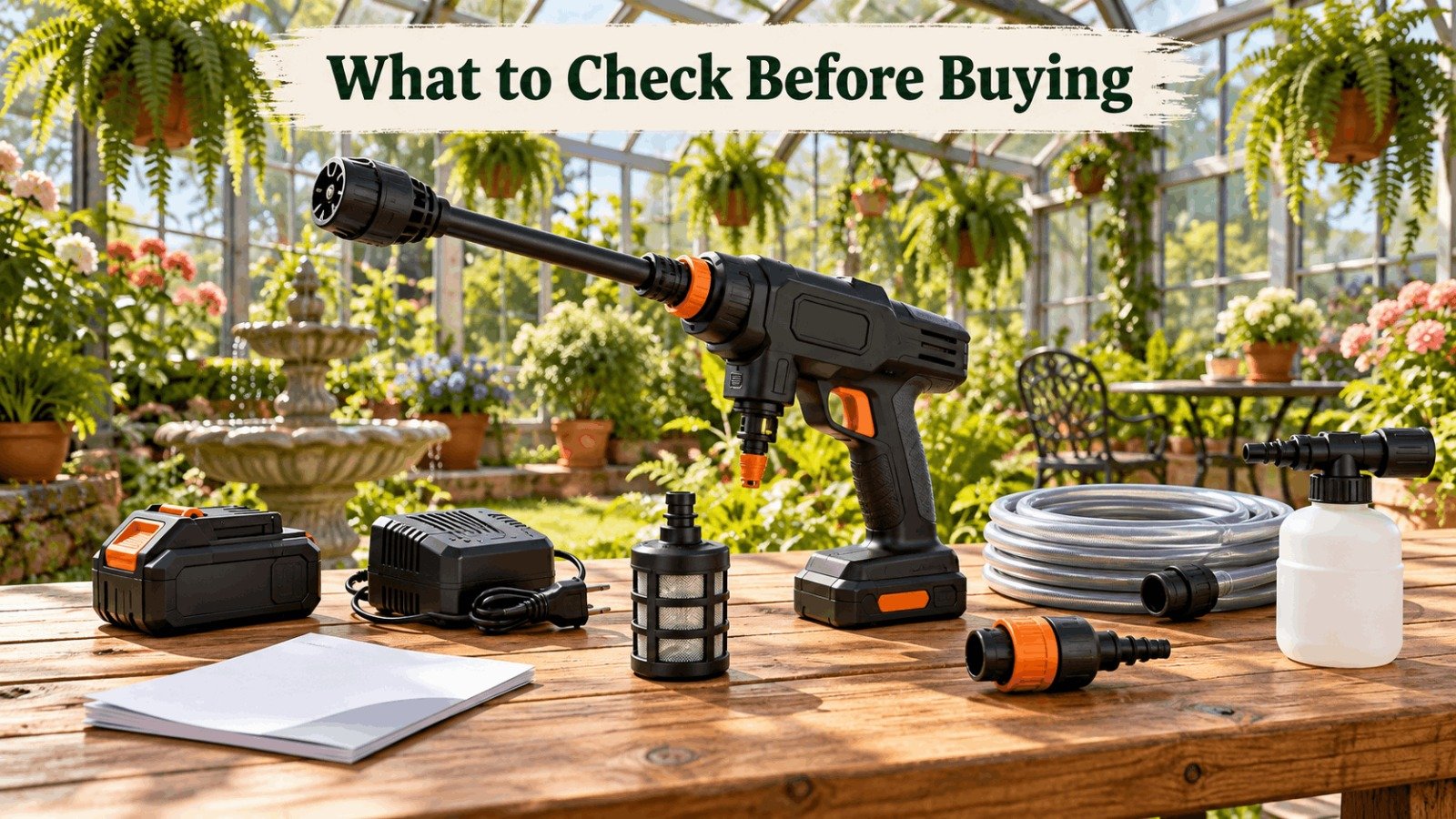
Check whether the battery and charger are included, how many batteries come in the box, and whether the battery can be replaced. Capacity is shown in amp-hours (Ah) or watt-hours (Wh). More capacity can extend work time, but pressure setting, trigger use, load, battery age, and temperature also matter.
Check runtime at your intended setting and whether the figure means trigger-on time or elapsed time with breaks. A spare battery may matter more than a higher wattage claim. Batteries with the same voltage do not necessarily fit; platforms and connectors are brand-specific.
Water Source and Inlet Setup
Confirm whether the device connects directly to a tap, draws from a bucket, or supports both. Check the included intake-hose length, filter, bottle adapter, and any height or distance limits. If you rely on a bucket, a small container may run dry before the car is rinsed; plan how you will refill it without sucking up sand or debris from the bottom.
Hose, Nozzle, and Controls
A longer hose gives more reach, but it can be awkward to carry or store. Check the high-pressure hose length separately from the water-draw hose; product photos can make them easy to confuse. See whether the spray pattern adjusts at the nozzle or through a power setting, and whether replacement tips are available.
A narrow jet may concentrate force on a small area. For vehicle panels, prefer a broad, controllable fan and keep a safe distance. If the listing includes a foam bottle, verify that the bottle is meant for that tool and detergent. Do not assume that a standard pressure washer foam cannon will fit or work well with a low-flow cordless gun.
Build, Support, and Package Details
Check weight with the battery installed, grip, trigger lock, filter, and hose connection. Look for a model number, manual, warranty, and replacement parts; avoid listings without operating instructions or support.
Prices and availability vary by seller and region. Compare the complete kit, including battery, charger, hose, filters, soap bottle, nozzle, and warranty—not just the body of the tool.
Best Uses and Main Limitations
| Use case | Suitability | What to expect |
| Quick car pre-rinse | Often a good fit | Clears loose dust and grit; use a wide spray and enough distance |
| Full car wash | Depends on flow and battery | May need refills, a second battery, and hand washing for stuck film |
| Wheels and floor mats | Useful with care | Use a suitable spray pattern; avoid forcing water into bearings, seals, or electrical parts |
| Bikes, camping gear, and patio furniture | Often convenient | Check material guidance and do not blast delicate fabric or bearings |
| Large driveway or concrete | Usually a poor fit | Low flow and battery runtime can make broad surface work slow |
| Daily commercial detailing | Only if specifications and support fit | Confirm runtime, replacement batteries, duty limits, and service access first |
Advantages
- No mains power cord is needed at the wash location.
- Many portable cleaners can draw from a bucket or other approved freshwater source.
- The unit is usually easier to carry and store than a full-size pressure washer.
Limitations
- “500W” alone does not confirm usable pressure, flow, or cleaning speed.
- Battery runtime may be short at the highest setting, and a spare battery adds cost.
- A small tank, bucket, or intake hose can interrupt a long rinse.
- Low flow may make foaming and large-area rinsing less effective.
- Generic attachments may not fit or may perform poorly with the machine’s flow rate.
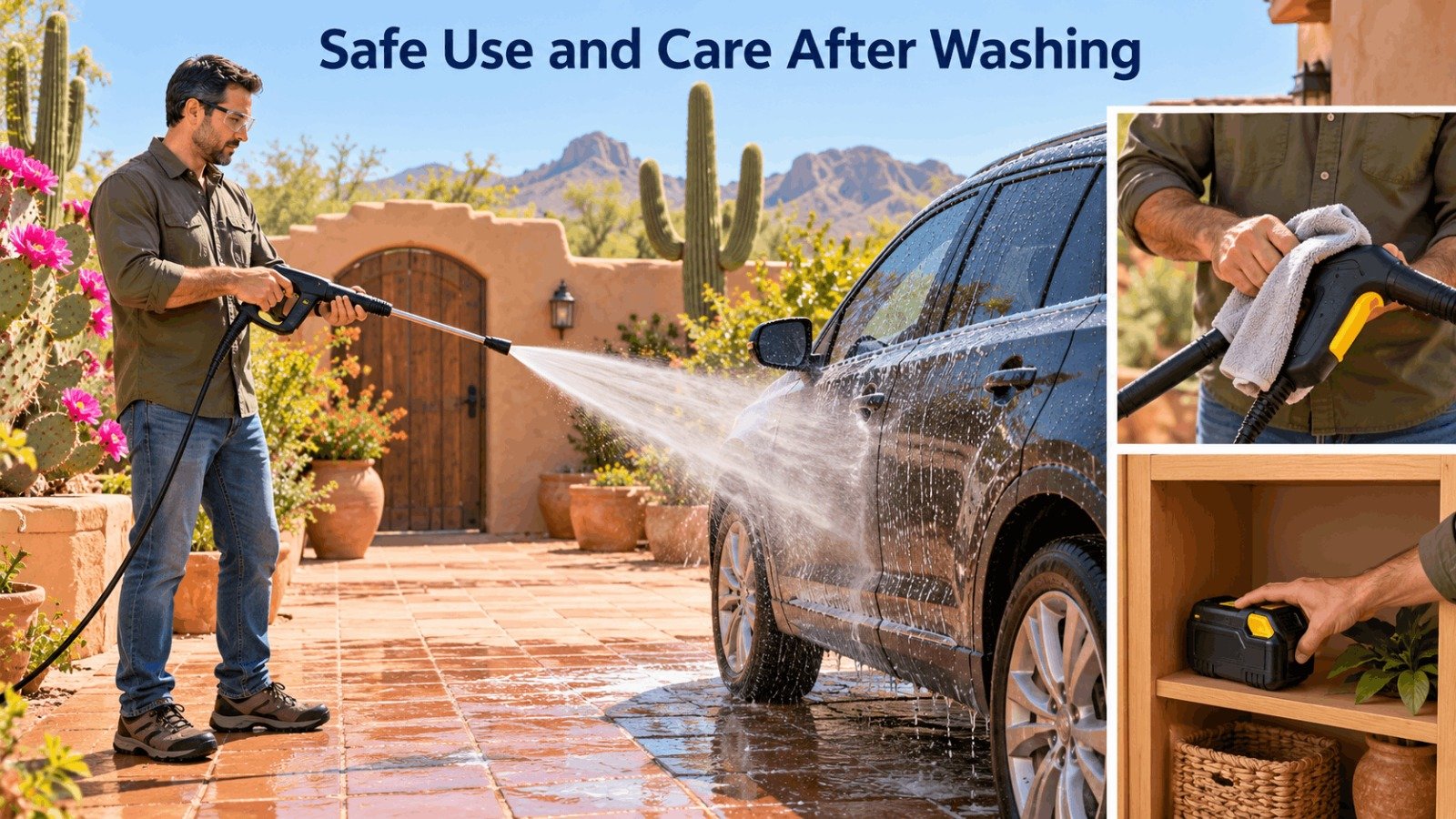
Safe Use When Washing a Car
Read the pressure washer manual, vehicle or surface manufacturer guidance, and detergent label before use. Wear eye protection and closed-toe shoes, keep the spray away from people and pets, and never point the gun at skin. High-pressure water can injure even when the wound looks small. If water penetrates the skin, seek urgent medical care and explain that it may be a pressure-injection injury.
Use a broad spray and keep the nozzle away from paint, rubber seals, lights, sensors, cameras, and electrical connectors. Avoid directing water under the hood, into wheel bearings, or into damaged paint. Do not assume “low pressure” means harmless at close range. Begin at a safe distance, test an inconspicuous area, and follow the vehicle maker’s instructions.
Use fresh water unless the manufacturer permits another source. Do not draw salt water, dirty water, or detergent through the intake unless the manual allows it. Keep the battery and charger dry, and follow the manual for charging and storage.
Care and Troubleshooting After Use
Flush detergent, drain the gun and hoses, and clean the intake filter. Store the unit and battery dry within the manual’s temperature range, away from direct sun or a hot vehicle.
If the tool pulses, check water supply, filter, hose kinks, air in the line, and suction height. If pressure stays weak, disconnect the battery and release pressure before checking the nozzle. Stop using damaged, leaking, swollen, or unusually hot parts; contact support instead of opening the pump or battery.
Frequently Asked Questions
Can a 500W cordless car wash gun damage car paint?
It can if used too close, with a narrow jet, or on already damaged paint. Begin with a wide spray at a distance, test an inconspicuous area, and follow the car maker’s care guidance. Do not use the jet to remove stuck-on dirt from paint.
Is 500W enough power for a car wash?
It may be enough for portable rinsing, but wattage alone cannot answer that. Check working pressure and flow, then compare battery runtime and water supply with the size of your vehicle and the cleaning you expect to do.
Can it wash a car from a bucket?
Only if the specific model supports water pickup from a bucket. Check its manual for hose, filter, priming, and suction-height limits. Use clean water and keep the intake away from grit at the bottom.
Will a cordless car wash gun make thick foam?
Not necessarily. Foam depends on the bottle, detergent, dilution, and available water flow. Use a compatible soap attachment and vehicle-safe wash product, and do not judge cleaning ability by foam thickness alone.
How long does the battery last?
There is no single runtime for all 500W tools. Battery capacity, selected pressure, temperature, trigger time, pump load, and battery condition all affect use time. Look for a model-specific runtime and check how it was measured.
Can I use it to clean a driveway?
It can rinse a small spot or lift loose surface dirt, but it may be slow on a large driveway because a handheld cordless unit typically has limited water flow and battery capacity. For broad concrete cleaning, compare a full-size washer and a compatible surface cleaner.
Are replacement batteries and nozzles universal?
No. Batteries, chargers, hoses, and fittings often use brand- or model-specific connections. Check the exact model manual and part numbers before buying replacements or attachments.
Conclusion
A 500W label can help identify a motor’s power class, but it cannot tell you whether a cordless car wash gun will rinse quickly, run long enough, or protect your paint. Those answers depend on working PSI, flow rate, battery capacity, water pickup, nozzle control, and the maker’s instructions.
For occasional rinsing, bikes, and light car care, a well-documented portable cleaner can be convenient. For full detailing, heavy grime, or repeated commercial work, compare measured specifications and support before buying; a larger washer may be more practical. Check the manual, battery and charger bundle, warranty, and accessory fit, then choose the tool that matches your real wash routine rather than a wattage headline.
Sources and verification
The example specifications and water-source details below were checked against the manufacturer’s U.S. product listing on September 30, 2026. Specifications, bundles, and availability vary by model and region. This article does not test or endorse every product advertised as a 500W car wash gun; verify the exact model manual and warranty before buying.