A Pressure Washer With Water Tank sounds like the easiest way to wash anywhere. Fill the tank, load the washer, and skip the garden hose. That can work well for a muddy bike, outdoor gear, or a small job away from a water connection. For a driveway or regular home cleaning, however, a small tank may run out much sooner than expected.
The phrase also covers different products. Some have a built-in reservoir, some connect to a separate container through a suction hose, and others are full trailer systems for commercial crews. These options do not deliver the same pressure, flow, or cleaning time.
This guide compares five representative setups, explains what a water tank does and does not change, and helps match the tank to the job. The comparison uses manufacturer-published specifications and product information; these models were not hands-on tested for this article. Availability and specifications can vary by region, so confirm the exact model and manual before buying.
What Does a Pressure Washer With Water Tank Mean?
A water tank supplies water to the pump. It is different from a detergent reservoir, which holds soap. Check the product description: “built-in tank” can refer to either one.
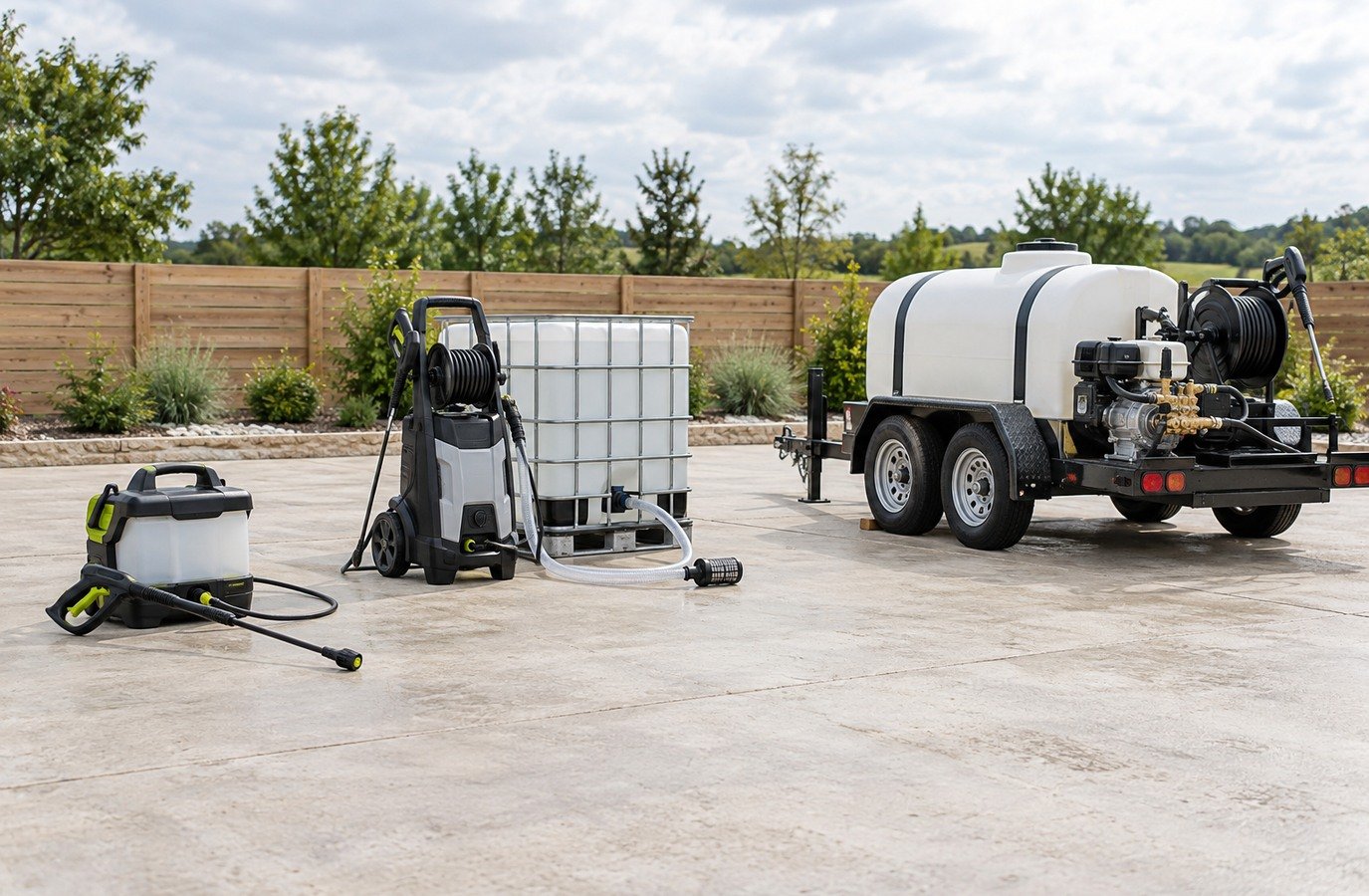
Common setups include:
- Built-in reservoir: Part of a compact washer; convenient but limited in capacity.
- Separate tank and suction hose: A compatible washer draws from a bucket, tote, or tank; these parts may be sold separately.
- Tank trailer: A washer, reservoir, hose reels, and sometimes water-recovery equipment share a towable platform for commercial work.
A tank does not increase PSI or GPM. PSI is spray pressure; GPM is water flow. A larger tank only supplies water longer. Full-size washers can clean more aggressively, but may empty a small tank quickly. That is the key point when comparing any pressure washer with water tank.
Built-in reservoirs, separate feed tanks, and trailer systems solve different water-supply problems.
Is a Pressure Washer With Water Tank Worth It?
A tank is useful when a tap is unavailable, the work area is far from the house, or you need a portable rinse for bikes, tools, boots, or outdoor equipment. A built-in reservoir saves repeated trips with a bucket. A trailer tank supports longer jobs away from a water connection. Keep this in mind while you shop for a pressure washer with water tank.
It is less useful when a garden tap is nearby. A hose gives a continuous supply without tank weight, refills, or extra storage. Large flat surfaces also use much more water than a quick spot rinse, so a compact battery unit may be too slow for a long driveway. It is one more reason to check the manual for any pressure washer with water tank.
Plan what happens after the first tank empties. You may need a refill point, a larger supply, or a washer that can also connect to a pressurized source. If your main concern is choosing a machine for routine house and yard jobs, our home pressure washer buying guide covers the wider choices. This matters whenever you plan to use a pressure washer with water tank.
A portable tank suits short rinses away from home, but does not replace an unlimited water supply.
Best Pressure Washer With Water Tank Options Compared
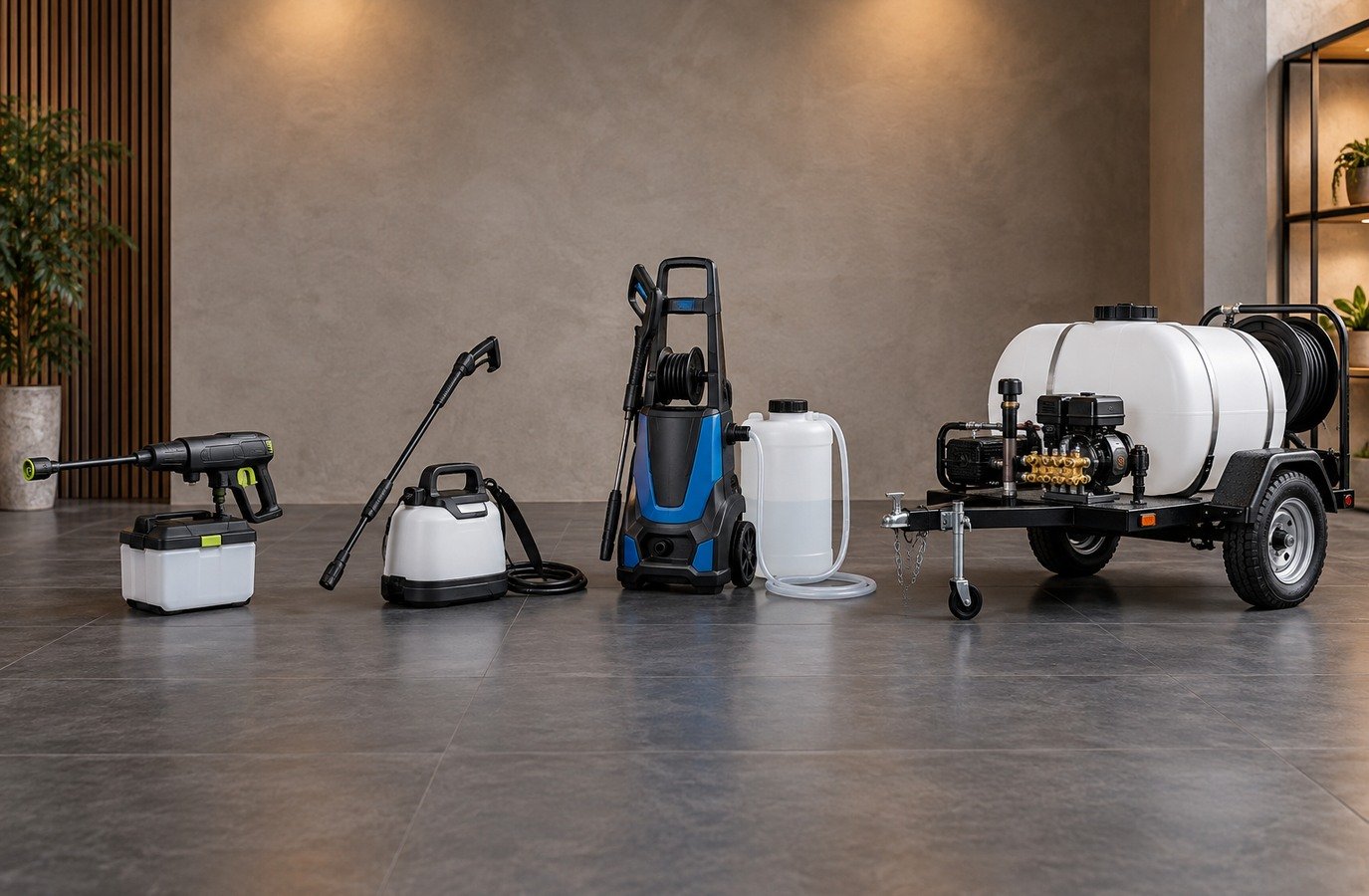
These products are not direct substitutes. The comparison shows what each setup is designed to do and where it may fall short.
| Option | Water supply | Published details | Best fit |
|---|---|---|---|
| Muc-Off Mobile Pressure Washer Explorer Bundle | 20 L built-in tank; extra 20 L tank available in selected bundles | 40 V battery, 500 W motor; up to 942 PSI maximum, 652 PSI Boost / 507 PSI Eco; runtime up to 15 / 24 minutes | Bike and motorcycle cleaning away from a tap |
| Kärcher OC 3 Plus | 7 L built-in tank | Low-pressure outdoor cleaner with battery power | Shoes, bikes, pets, and small items |
| Kärcher K5 with approved suction hose | Separate tank or standing source; tank not included | 2,000 PSI pressure rating; use a filtered suction hose and follow the exact manual | Homeowners wanting a full-size electric washer |
| Simpson Mobile Trailer 95001 49-State | 150-gallon trailer tank | 3,800 PSI at 3.5 GPM; 100 ft high-pressure hose; 900 lb unit weight | Mobile professional cold-water cleaning |
| Mi-T-M PWR Series trailer package | 200-gallon tank | Hot-water configuration listed at 3,500 PSI and 4.2 GPM; water recovery equipment | Commercial sites needing a large supply and water recovery |
Muc-Off Mobile Pressure Washer Explorer Bundle
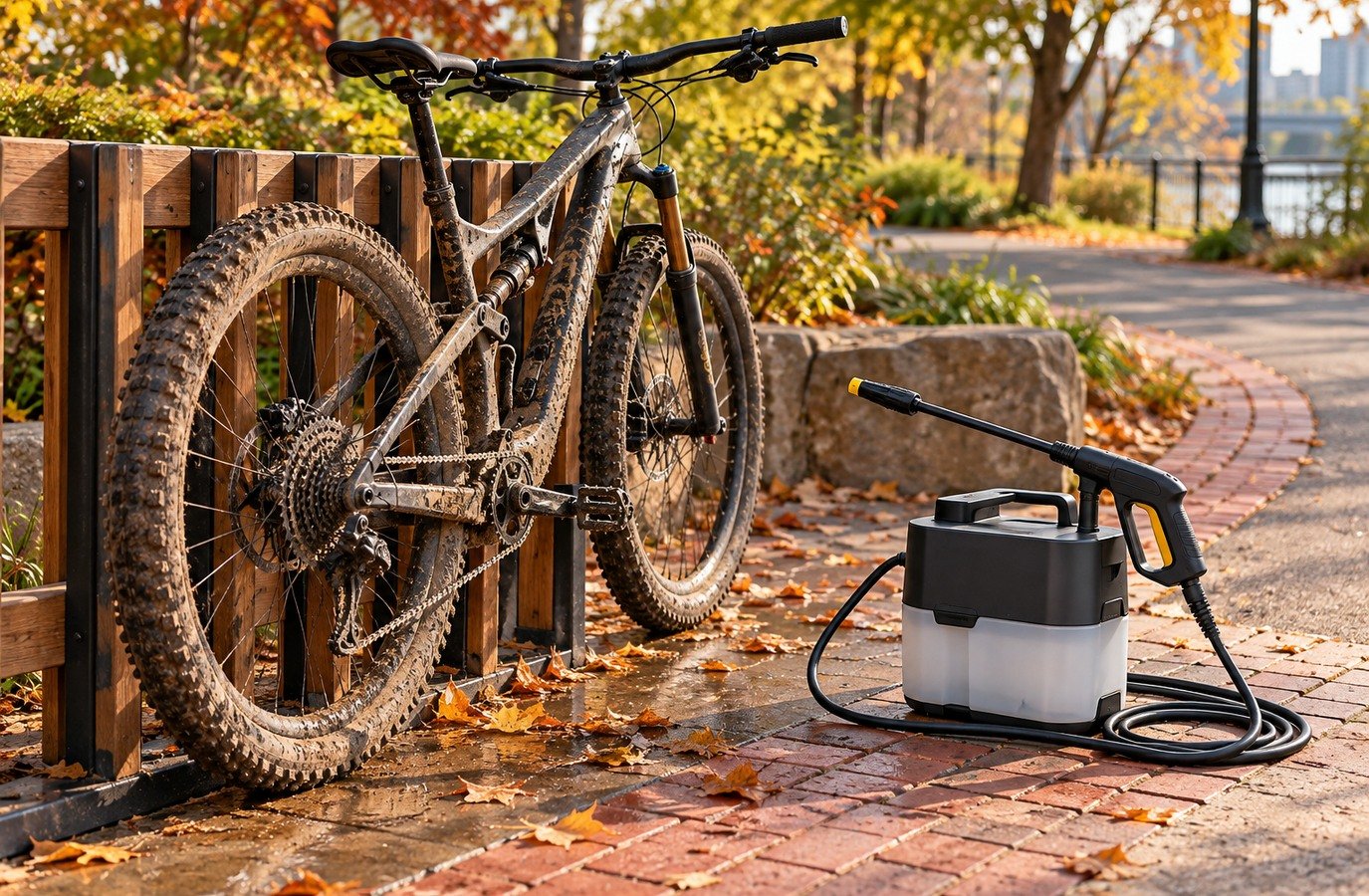
Best for: Riders washing bikes or motorcycles away from a tap. The 40-volt, 500-watt unit has a 20-liter reservoir. The manufacturer lists up to 15 minutes in Boost mode or 24 minutes in Eco mode; an extra 20-liter tank is available separately or in selected bundles. Muc-Off lists up to 942 PSI maximum and mode figures of 652 PSI in Boost and 507 PSI in Eco; it does not publish a GPM figure on the product page. It is not a direct substitute for a driveway washer.
Pros: Portable, self-contained, and supplied with lances intended for bike and motorcycle cleaning.
Cons: Its tank is small for large surfaces, battery time is limited, and published PSI/GPM data is absent. It is a specialty mobile washer, not a full-size home replacement.
Kärcher OC 3 Plus Mobile Outdoor Cleaner
Best for: Light rinsing of shoes, bikes, pets, and small outdoor items. The OC 3 Plus has a 7-liter tank and integrated battery. It is a low-pressure mobile cleaner, not a conventional washer for stripping dirt from concrete.
Pros: Self-contained, easy to move, and suited to gentle on-the-go rinsing.
Cons: Low pressure and limited water capacity rule out patios, siding, and heavy grime. Check the product type before expecting full-size washer performance.
Kärcher K5 With a Separate Tank and Suction Hose
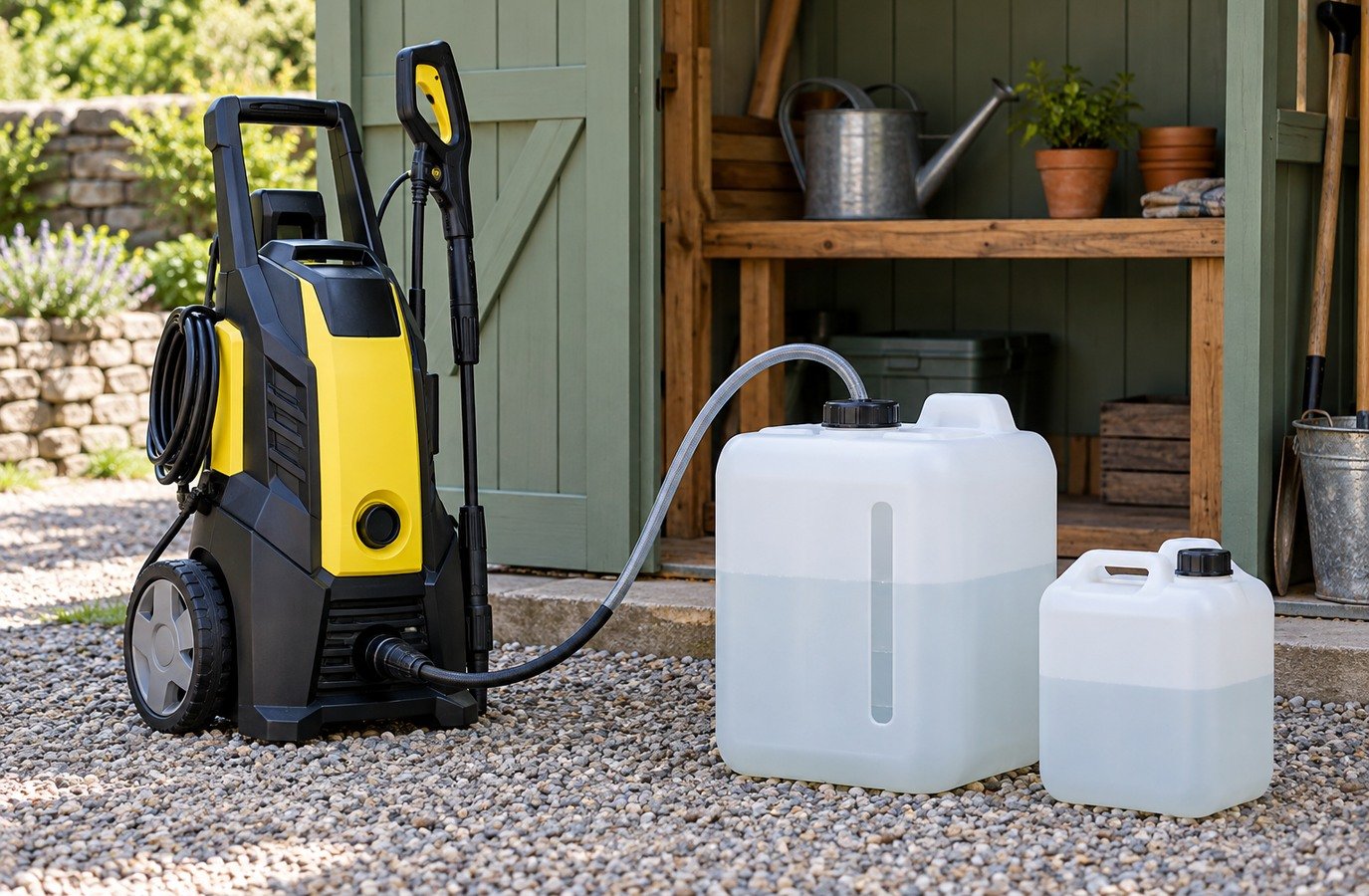
Best for: Homeowners who need an alternate water source for occasional full-size cleaning. The corded K5 family lists a 2,000 PSI pressure rating; it does not include a large supply tank. The manufacturer says K4 and K5 models can draw from standing water with a filtered suction hose, subject to the exact model manual.
Pros: Use the washer for home jobs, then connect an approved hose and separate tank when needed.
Cons: The tank and suction kit are separate, and not every washer can self-prime. For cordless models, our cordless pressure washer accessories guide explains why hoses, filters, and machine limits need to match.
Simpson Mobile Trailer 95001 49-State
Best for: Contractors and mobile cleaners needing a large cold-water supply. The manufacturer lists a 150-gallon tank, 3,800 PSI at 3.5 GPM, a 100-foot high-pressure hose, and a 900-pound unit weight. This is heavy towable equipment; its 49-state version is not sold in California.
Pros: A large reservoir and long hose support work away from a building’s water connection.
Cons: It requires a suitable tow vehicle, storage, and loading plan. It is excessive for occasional home cleaning; confirm current availability and towing requirements.
Mi-T-M PWR Series Trailer Package
Best for: Commercial crews needing hot water and wash-water recovery. The listed PWR package combines a dual-axle trailer, 200-gallon tank, recovery equipment, and a hot-water washer configuration rated at 3,500 PSI and 4.2 GPM.
Pros: Large mobile supply with filtration and water-recovery components, depending on configuration.
Cons: It is specialized commercial equipment with more setup and operating demands than a homeowner needs. Confirm the washer, heater, recovery system, and local wastewater rules with the dealer.
Choose by workload: a compact unit, a tank-fed home washer, or a commercial trailer.
How to Choose a Portable Pressure Washer With Water Tank
Estimate the water needed for the job and make sure refilling is practical.
Start with the job, then choose the tank and washer together. A reservoir that looks large in a product photo can still run out quickly when the pump operates continuously.
Estimate Pressure Washer Tank Capacity and Water Use
Use this estimate: tank capacity in US gallons ÷ washer GPM = approximate trigger-on minutes. A five-gallon tank with a two-GPM washer gives about two and a half minutes of continuous spray. Releasing the trigger between passes stretches elapsed time, but not the total water supply. Use the manual’s flow rate, not maximum PSI, for planning. Use it as a checkpoint before buying a pressure washer with water tank.
Match the water source to the pump
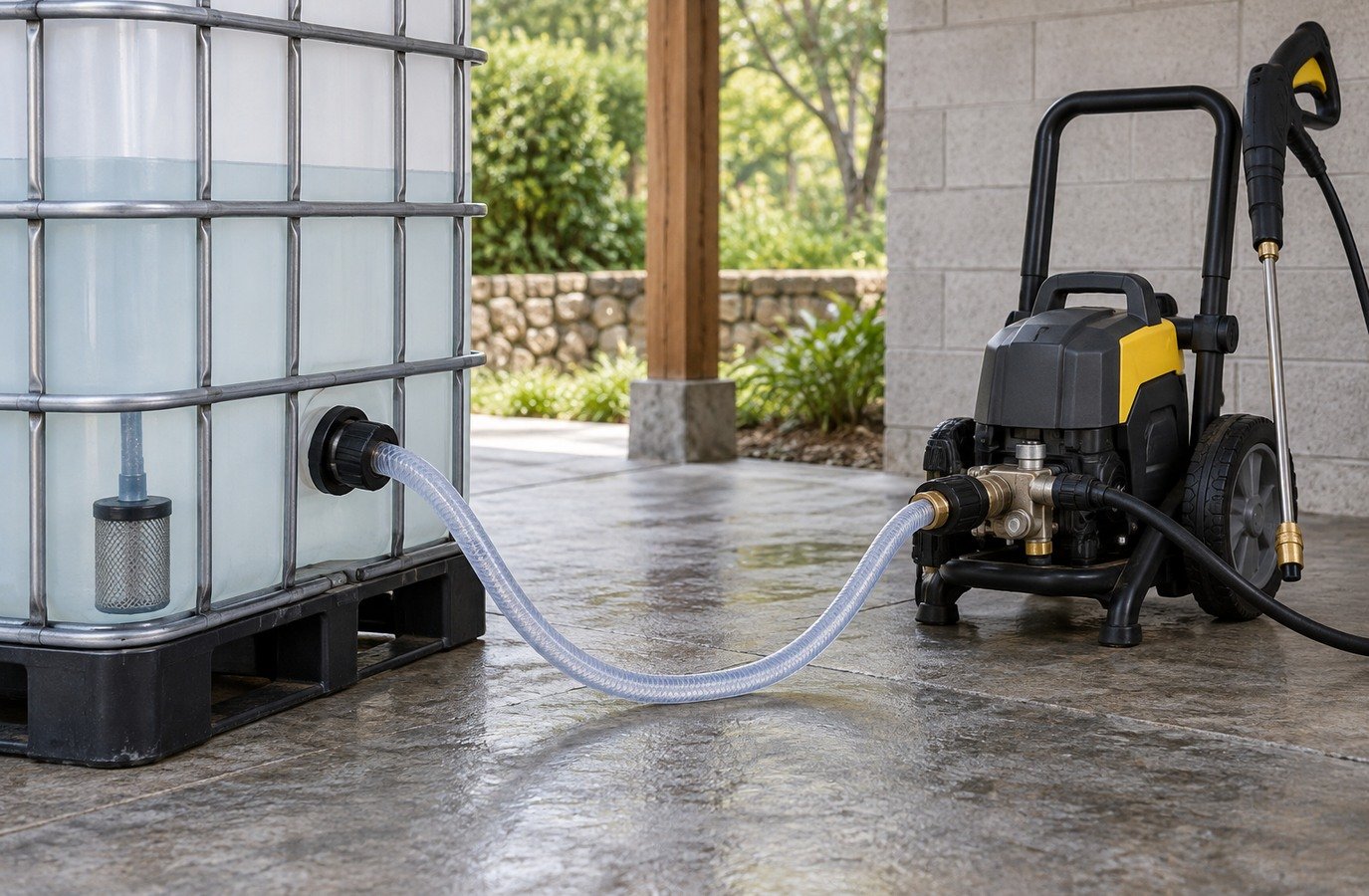
Check that the model accepts tank feed and note any required suction hose, filter, minimum water level, or maximum lift. A full container can still fail to feed the pump if a hose leaks air, a filter clogs, or water sits outside the machine’s limits. It helps explain why a pressure washer with water tank suits some jobs and not others.
Compare output with the cleaning surface
More PSI does not make a small tank last longer. Compact units suit bikes and tools; larger flat areas need suitable flow, nozzle, and surface-cleaner compatibility. Use a wide spray and safe distance on paint, wood, and siding. Remember it when judging a pressure washer with water tank.
Plan the weight and refill point
Water makes even a small container heavy. A 20-liter tank is a substantial carry; a 150- or 200-gallon trailer requires rated towing capacity, secure mounting, and a place to park. Check full-load weight and refilling access before buying. This detail separates a useful pressure washer with water tank from a poor fit.
Check filtration
Use clean water and the inlet filter specified by the maker. A filter reduces debris reaching the pump; it does not make contaminated water safe for equipment. Keep the intake clear of sediment.
Buyer’s Checklist
- Manual confirms tank feed or self-priming.
- Tank capacity and GPM fit the job.
- Filter, hose, and fittings are compatible.
- Full weight, refill access, storage, and warranty are checked.
Tank-Fed Pressure Washer Setup: Water Source and Suction Hose
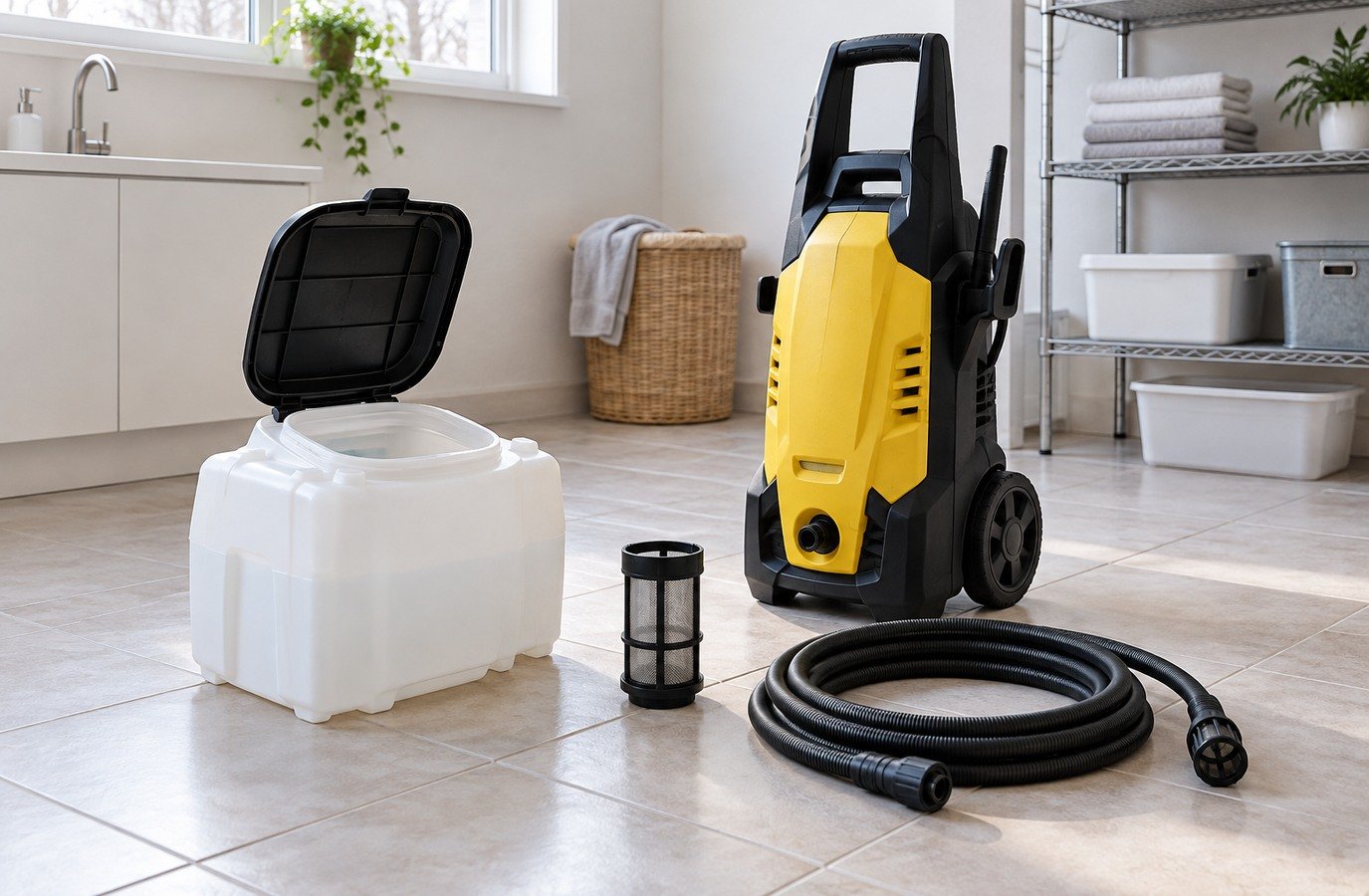
A tank-fed washer needs a steady, clean supply. Confirm the exact model allows suction and that the hose, filter, and fittings match its manual. Some machines require a pressurized garden hose and cannot draw from an open container. Think about it before you choose a pressure washer with water tank.
Set the tank on a stable, level surface. Secure it for transport; keep the suction hose unkinked and its filter away from the tank bottom. Prime the pump as directed, before starting the motor. Do not run a pump dry to see if it will draw. If the spray pulses or the pump sounds strained, stop and check the water level, filter, and connections. That is why any pressure washer with water tank should be matched to the job.
Use a clean filtered inlet and prime the machine as its manual instructs.
Pressure Washer With Water Tank Safety
High-pressure spray can injure skin and eyes. Wear eye protection and closed-toe shoes, keep bystanders away, and never point the gun at a person or animal. Do not use a narrow jet on paint, tires, wood, or delicate fittings unless the manual and surface guidance allow it. Apply this when reading a pressure washer with water tank listing.
Secure the tank before transport and keep it stable during use. A shifting container can tip or pull on the suction hose. For trailers, check the hitch, tires, lights, load rating, and route. The Simpson and Mi-T-M examples use gasoline engines: operate them outdoors only, away from doors, windows, and air intakes, never inside or in a partly enclosed area. Keep electrical connections dry and use the protection specified by the washer manual. Factor it in when weighing a pressure washer with water tank against alternatives.
Follow the machine manual, surface maker’s guidance, and detergent instructions. If water feed stops, switch off before troubleshooting; do not keep spraying with a dry or starved pump.
Water Tank Maintenance
After use, empty or store the tank as the manufacturer directs. Rinse removable tanks and filters, clear sediment from the inlet screen, and drain the washer and suction hose before freezing weather. Let parts dry before storage to limit residue and odor. Inspect lids, hoses, seals, and tank straps for cracks or leaks; replace damaged parts with approved components. A pressure washer with water tank should always be matched to the surface and the refill plan.
Clean and drain the tank, filter, and hose before storing the washer.
Frequently Asked Questions
Can any pressure washer draw water from a tank?
No. Some models can self-prime with a compatible suction hose, while others need a pressurized water connection. Check the manual for the exact model before connecting a tank.
How long will a 20-liter tank last?
It depends on the washer’s water flow and how long the trigger is held. Use the tank’s gallon capacity divided by the machine’s GPM for an approximate continuous-spray estimate; battery runtime and tank runtime are separate limits. Check the manual before connecting any pressure washer with water tank to a separate supply.
Is a built-in tank washer strong enough to wash a car?
Some compact units can rinse mud from a car, but cleaning power varies. Use a vehicle-safe setting, a wide spray, and the vehicle maker’s care guidance. A low-pressure outdoor cleaner is mainly for light rinsing. Weigh the full tank before choosing a pressure washer with water tank for regular use.
Can I use rain-barrel water?
Only if the pressure washer maker permits it. Use a clean source and the correct inlet filter; leaves, grit, algae, or other debris can clog the supply path.
Does a larger water tank make the washer more powerful?
No. Tank size changes how long the water supply lasts. The washer’s pressure, flow, motor, pump, and nozzle determine its output.
Can I use a detergent tank as the water supply?
Usually not. A detergent reservoir is designed to hold soap that mixes into the water stream. It does not replace the washer’s required water inlet.
What is a good tank size for a mobile cleaning business?
There is no single best size. Estimate water use from the washer’s GPM and trigger-on time, then account for refill access, towing capacity, job length, and any water recovery requirements.
Conclusion
A Pressure Washer With Water Tank is useful when mobility solves a real water-access problem. Small built-in tanks suit short rinses; a compatible full-size washer with a separate supply suits some home jobs; trailers are for commercial workloads. Compare tank size and GPM for each pressure washer with water tank on your shortlist.
Choose for the work you do, check the manual’s suction limits, estimate water use from GPM, and plan for the full tank weight. If a tap is nearby, a standard washer and garden hose may be simpler.
Sources and Verification
Manufacturer specifications and compatibility information were checked on October 13, 2026. Product details can change; check the exact model and current manual before purchase.