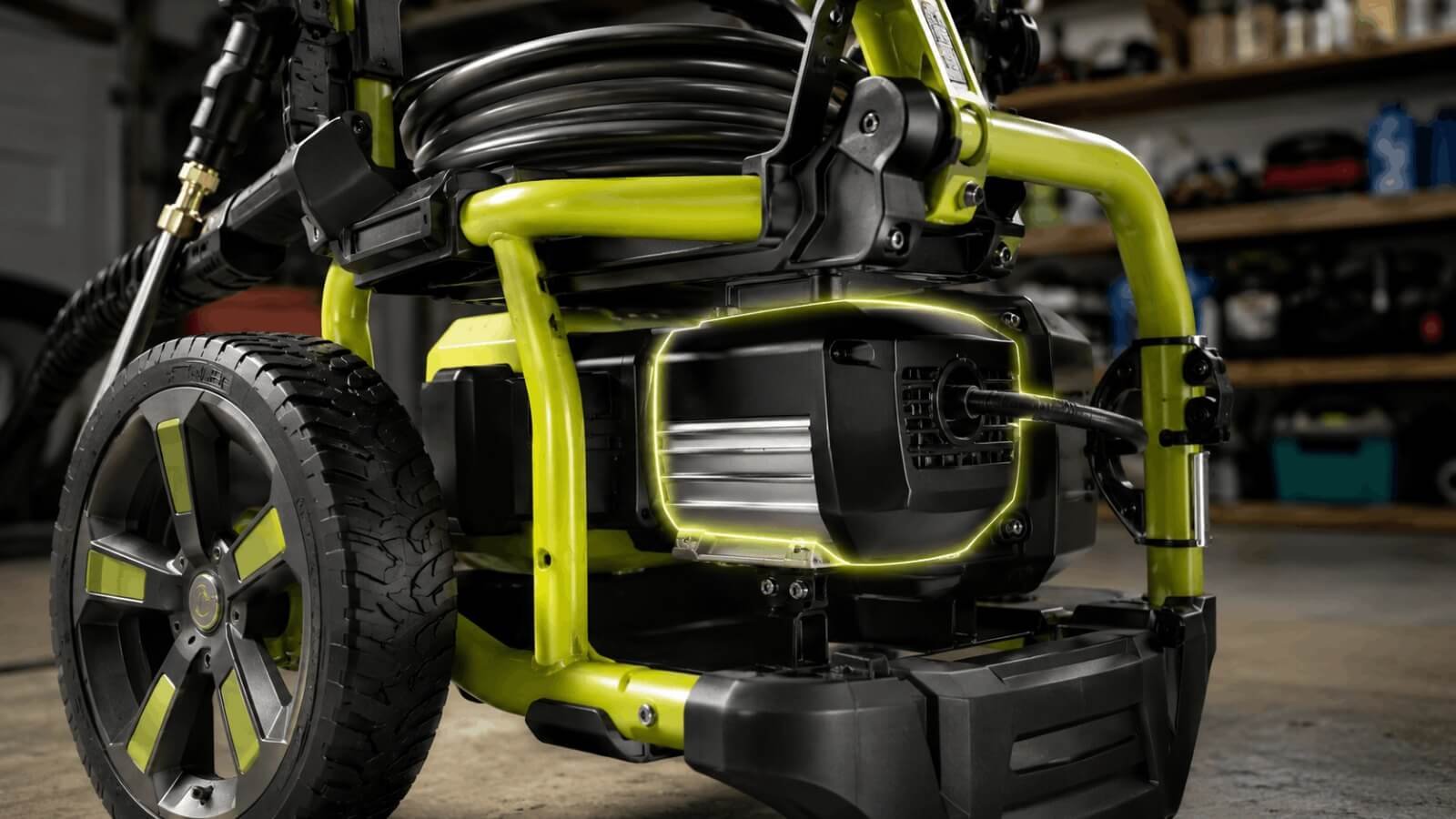
The RYOBI 2500 PSI 1.2 GPM electric pressure washer (model RY142500) is a sensible pick for a typical house and yard: decks, fences, siding, patio furniture, the odd car. It plugs into a normal 120-volt outlet, weighs about 43 pounds, and costs $329 at Ryobi’s own store. What it is not is a fast machine for big concrete jobs. Its flow rate of 1.2 gallons per minute is on the low side, and that matters more than the 2,500 PSI number on the box.
A quick note on how this review was put together. We have not spent our own hours on this unit, so you will not find “I tested it for a month” claims here. The page is built from Ryobi’s published specifications, retailer listings and what owners say in public reviews. Where those disagree, I say so.
RYOBI 2500 PSI 1.2 GPM specs at a glance
Most of these figures come from Ryobi’s product page and a spec sheet on Toolstash. Where sources disagree, the next sections say so.
| Spec | RY142500 |
|---|---|
| Pressure / flow | 2,500 PSI / 1.2 GPM |
| Motor | Brushless, 120 V, 60 Hz, 13 A |
| Pump | Aluminum axial cam |
| Power cord | 35 ft, with GFCI protection |
| High-pressure hose | 25 ft, non-marring |
| Wheels | 12-inch flat-free |
| Weight | 43.36 lb (per Toolstash’s spec sheet) |
| Nozzles | 15-degree, turbo, soap |
| Soap system | On-board tank |
| Warranty | 3-year limited |
| Listed price | $329 on ryobitools.com |
What comes in the box
You get the washer, a trigger gun, a metal wand with a quick-connect coupler, the 25-foot hose and three nozzles. There’s a built-in tank for detergent, and the frame has places to hang the wand, hose, cord and nozzles when you’re done.
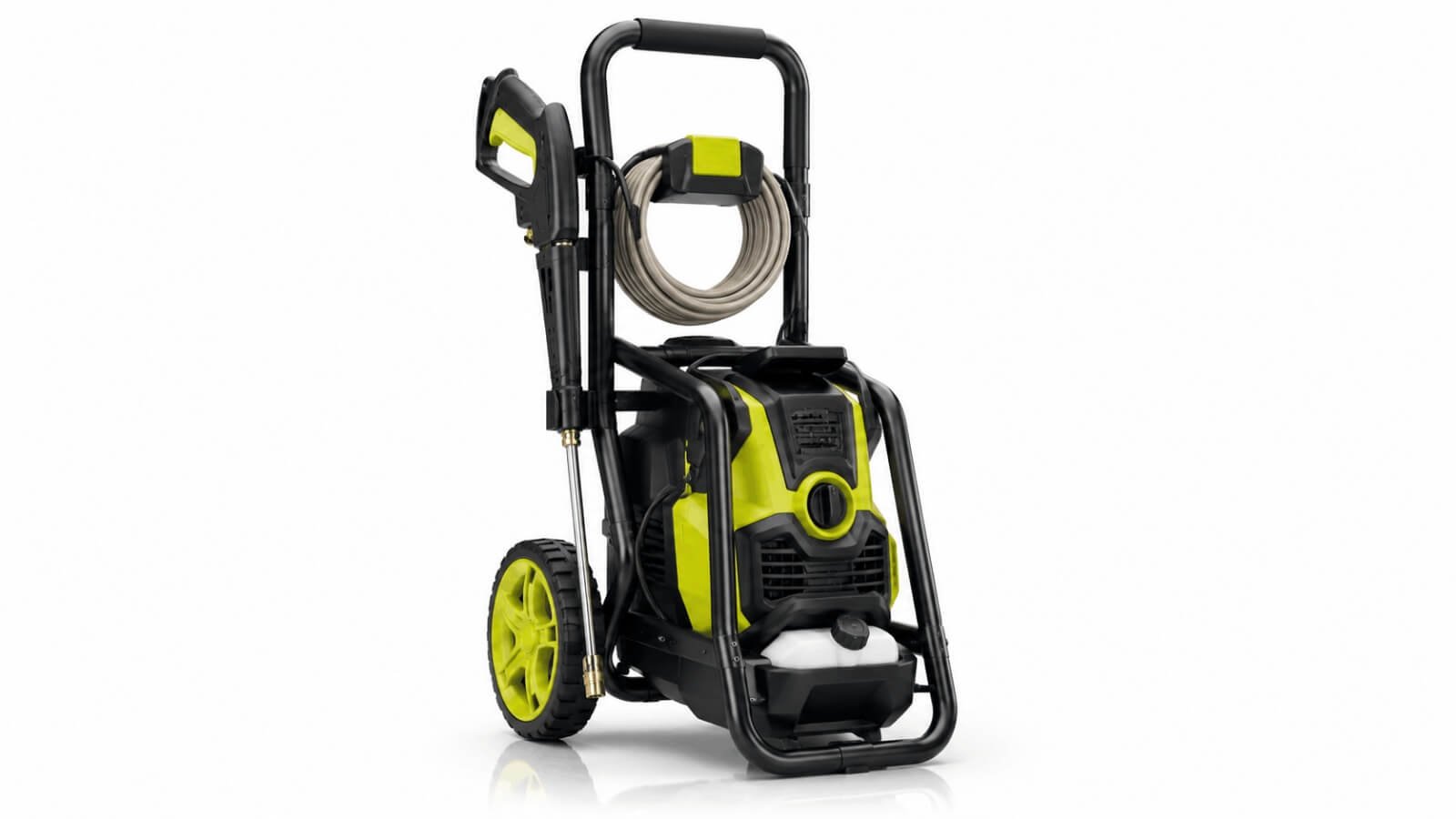
Two things are not included. A foam cannon is sold separately; Ryobi lists its Foam Blaster at $38.47. A surface cleaner is also extra, although Home Depot sells a bundle that pairs this washer with a 12-inch surface cleaner. If you plan to clean a driveway or a patio, price that bundle against buying the parts one by one.
Is the RYOBI 2500 PSI 1.2 GPM powerful enough?
PSI tells you how hard the water hits. GPM tells you how much water arrives to carry the dirt away. Pressure washer makers often multiply the two into “cleaning units”: 2,500 × 1.2 gives this washer 3,000. A Westinghouse ePX3500 listed beside it on Toolstash is rated 2,500 max PSI and 1.76 max GPM, which works out to about 4,400. The PSI figures match; the flow doesn’t. On a wide, flat surface the higher-flow machine should finish sooner.
That’s the main trade-off here. For jobs where you work a small area at a time, such as a fence panel, a set of steps or a chair, 1.2 GPM is fine. For a 600-square-foot driveway, expect to spend longer than you would with a gas washer or a stronger electric one.
One more thing about the numbers. Ryobi’s manual references the PWMA PW101 standard for its pressure rating, and these are maximum ratings at the pump. The spray that reaches the surface changes with the nozzle, the length of hose and how close you hold the wand. Another published review quotes a measured flow near 1.8 GPM, well above Ryobi’s rating, and a Canadian Home Depot listing shows 1.1 GPM for the same model number. Neither figure is the official one, and the manufacturer says 1.2. If flow matters for your job, check the label on the machine you actually receive.
What it cleans well at home
Ryobi positions the washer for fencing, decking, siding, sidewalks and patio furniture, and that matches what the spec supports. Wood decks and fences are where the turbo and 15-degree tips earn their keep, as long as you don’t hold them close to soft wood. Vinyl siding does well with the soap nozzle and a rinse from top to bottom. Patio furniture and grills are quick work.
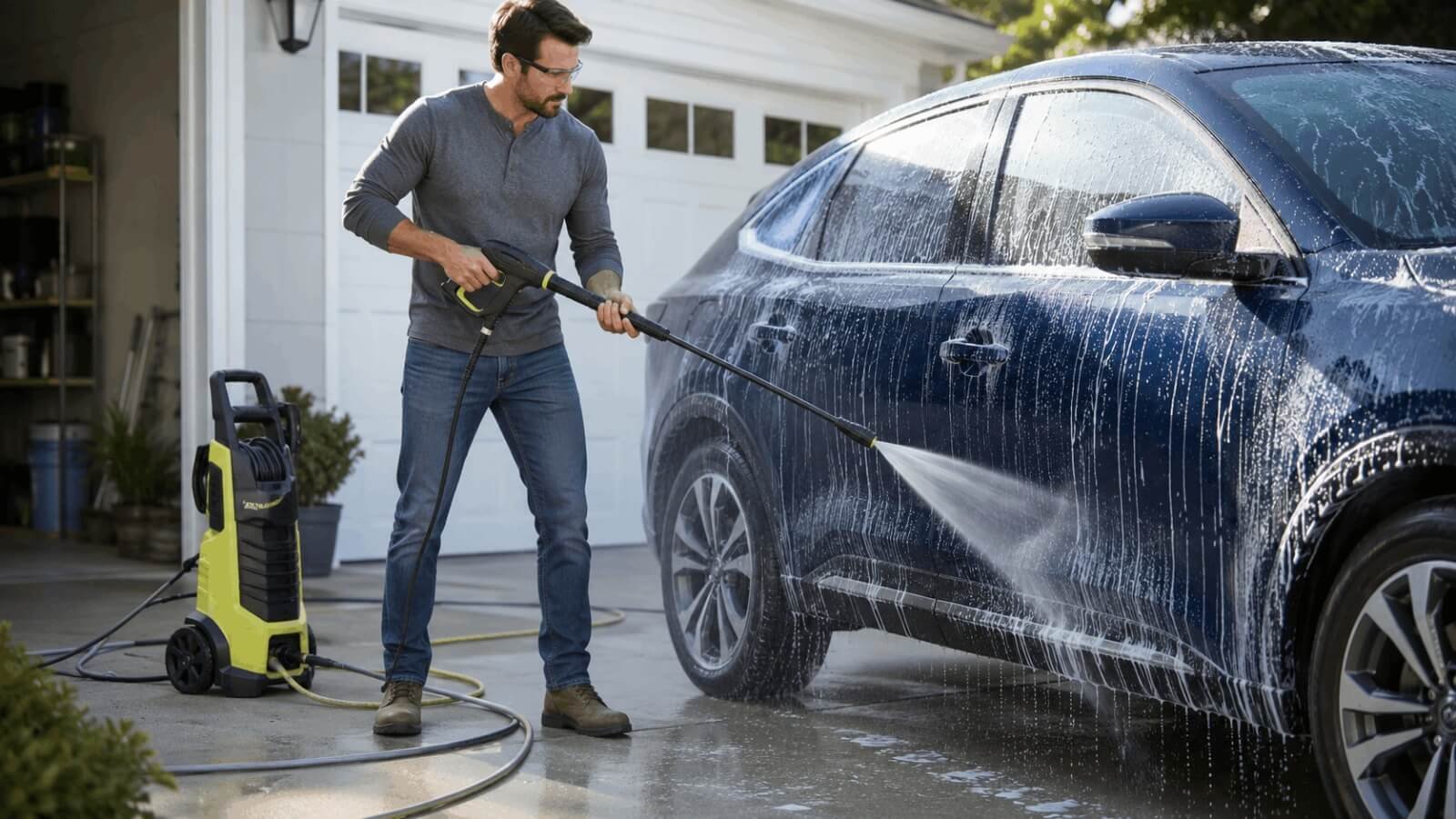
Cars are fine with the wide fan tip and the soap nozzle, kept at a distance. Never use the turbo tip on paint, glass seals or plastic trim.
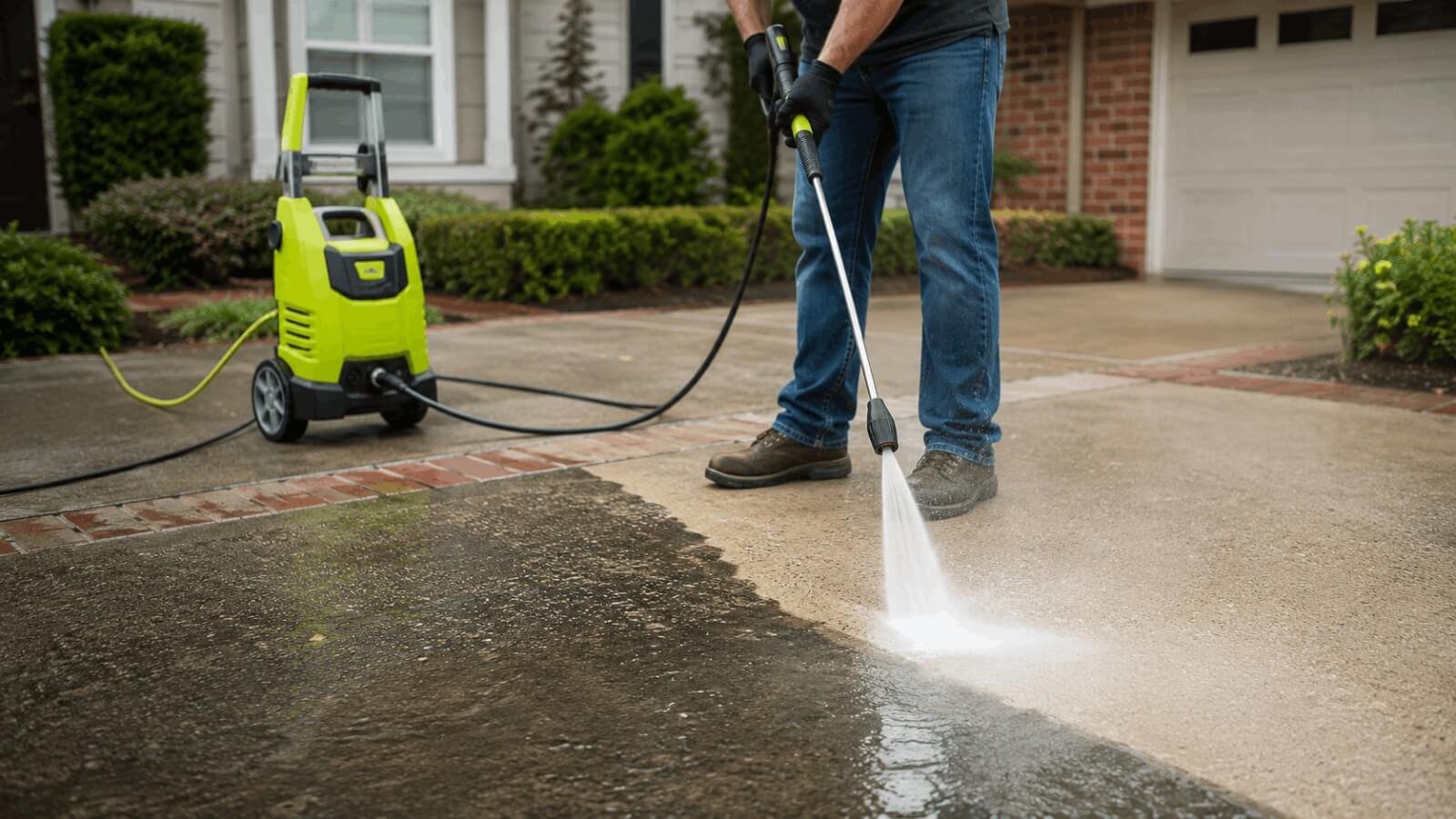
Concrete is the weak spot. It works, but slowly, and a surface cleaner attachment helps more than any nozzle swap. Heavy oil stains and ground-in rust will need a degreaser and patience.
Weight, cart and reach
At roughly 43 pounds, the washer is easy enough to tip onto its wheels and roll. The 12-inch flat-free wheels are a good detail, since you can’t get a flat from a nail in the driveway. Weight figures vary by source: Product Review Crew lists 57 pounds, which is probably the shipping weight with packaging, while Ryobi-linked specs and Toolstash show 43.36 pounds.
Your working reach is the 25-foot high-pressure hose plus however far your garden hose stretches, and the 35-foot cord lets you place the washer near an outlet. The cord has a GFCI plug, so you can use it outdoors, but you should avoid adding long extension cords. If you must, use a heavy-gauge outdoor-rated cord and keep the connection off wet ground. Those numbers make the RYOBI 2500 PSI 1.2 GPM one of the easier electric washers to move around a yard.
Check your water supply first
An electric pressure washer can only spray as much water as your hose delivers. The RY142500 is rated at 1.2 GPM, so your outdoor tap needs to supply at least that much. There’s an easy way to find out. Turn the tap on fully with nothing attached but the garden hose, and time how long it takes to fill a 5-gallon bucket. Anything under about four minutes means you’re delivering 1.25 GPM or more. If it takes longer, the pump may starve for water, which causes pulsing spray and extra wear.
Use a standard 5/8-inch garden hose, keep it straight, and don’t use a long, thin or kinked hose between the tap and the washer. Flush the hose for a few seconds before you connect it so that grit doesn’t end up in the inlet screen. A weak tap is the most common reason the RYOBI 2500 PSI 1.2 GPM pulses or loses pressure.
Nozzles and the soap tank
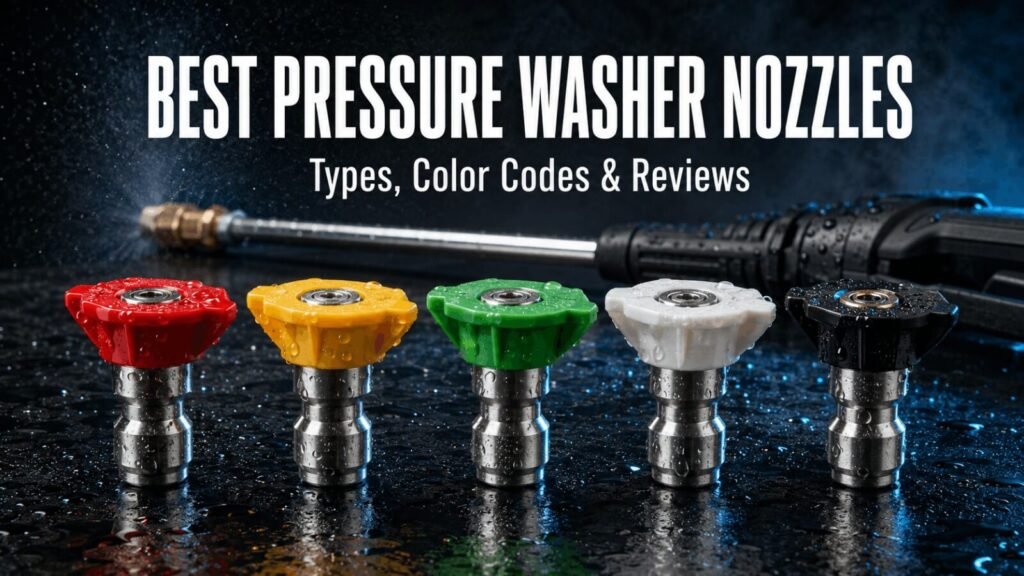
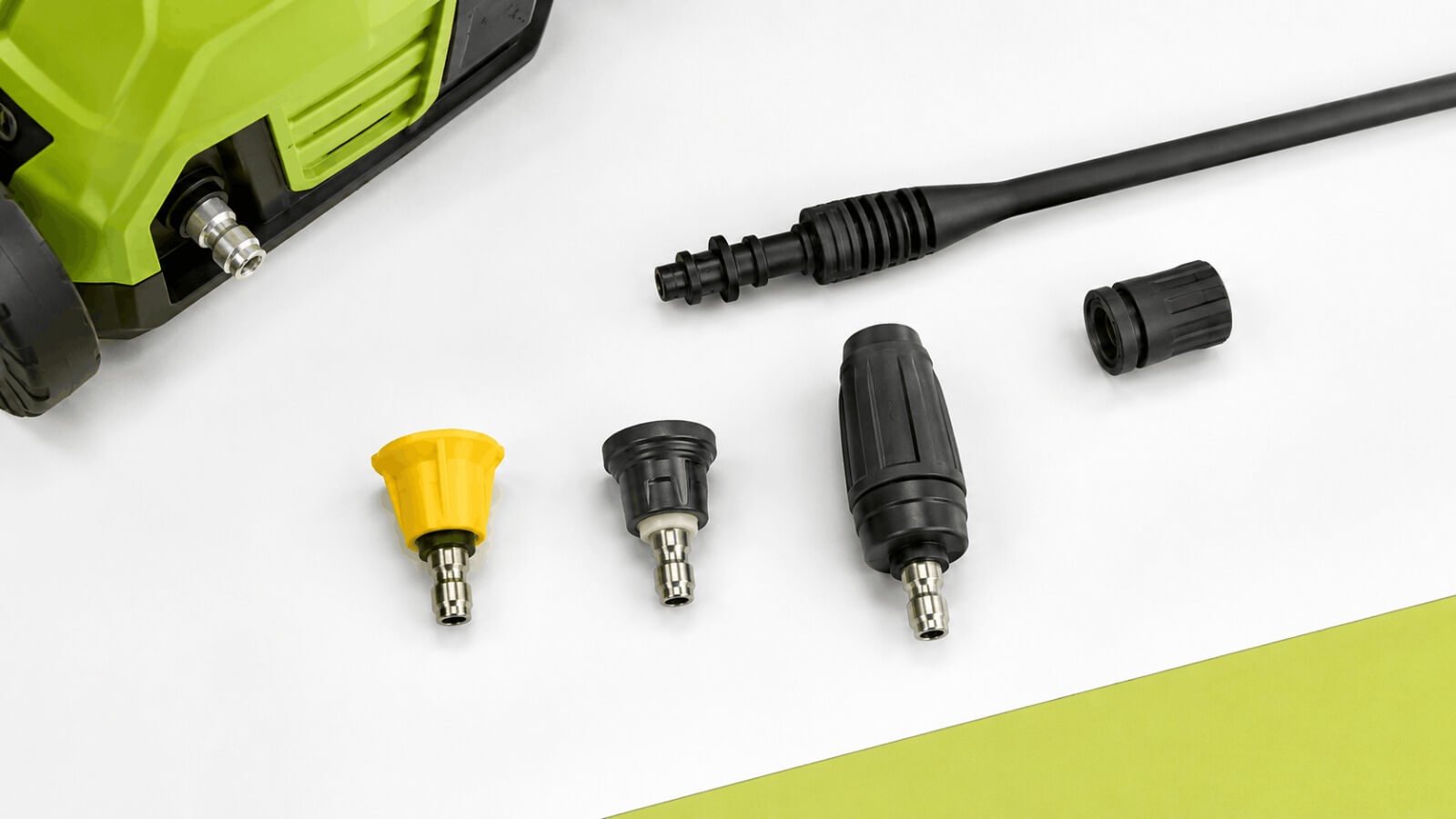
The kit has three tips. The 15-degree tip is the all-rounder, and it can mark soft wood if you hold it close. The turbo tip spins a narrow jet in a circle, which is good for stubborn spots on concrete and not for painted or delicate surfaces. The soap nozzle opens up the orifice so the washer can draw detergent from the on-board tank at low pressure.
Reviewers have called out two small annoyances: the soap tank is hard to read, and the nozzle storage is limited. Neither is a deal breaker. Many owners end up buying a foam cannon, which clings to surfaces longer than the soap nozzle’s thin spray.
Working with only three nozzles on the RYOBI 2500 PSI 1.2 GPM
The kit has a 15-degree tip, a turbo tip and a soap tip. It doesn’t have the 25-degree or 40-degree tips that many washers include for wide, gentle spray. That shapes how you’ll use it. For wood, siding and cars, you’ll be using the 15-degree tip from farther away and moving quickly, because there’s no gentler fan to switch to. The wand takes standard quick-connect tips, so you can buy a 25- or 40-degree tip separately if you do a lot of this work.
| Job | Tip from the box | How to handle it |
|---|---|---|
| Wood fence or deck | 15-degree | Start at 12 inches or more and follow the grain; a close pass leaves gouges in soft wood |
| Vinyl siding | Soap, then 15-degree | Wash from the bottom up so streaks don’t set, then rinse from the top down |
| Concrete steps, pavers | 15-degree, turbo for spots | Keep the turbo tip moving; held still it etches the surface |
| Car | Soap, then 15-degree | Stay well back from paint and trim, and don’t use the turbo tip at all |
| Windows and screens | None recommended | The 15-degree tip is too harsh for seals and mesh |
What owners report
The Home Depot listing showed an average of about 4.1 out of 5 from more than 1,100 reviews when we looked. Positive reviews mention cleaning power for the price, quick setup and the included accessories. Product Review Crew named it a best overall electric pick, praising the wheels, cord and hose.
The negative reviews follow a pattern. Some owners describe losing pressure, others a leak from the pump after the warranty period, and a few say the motor stopped working after a handful of uses. Some of the positive reviews are marked as having been collected through a promotion, so give them a little less weight. A rating of 4.1 means most buyers were satisfied, but it also means a real minority weren’t. The 3-year warranty is what protects you from that outcome, so register the purchase and keep the receipt. Taken together, the feedback on the RYOBI 2500 PSI 1.2 GPM is positive but not spotless.
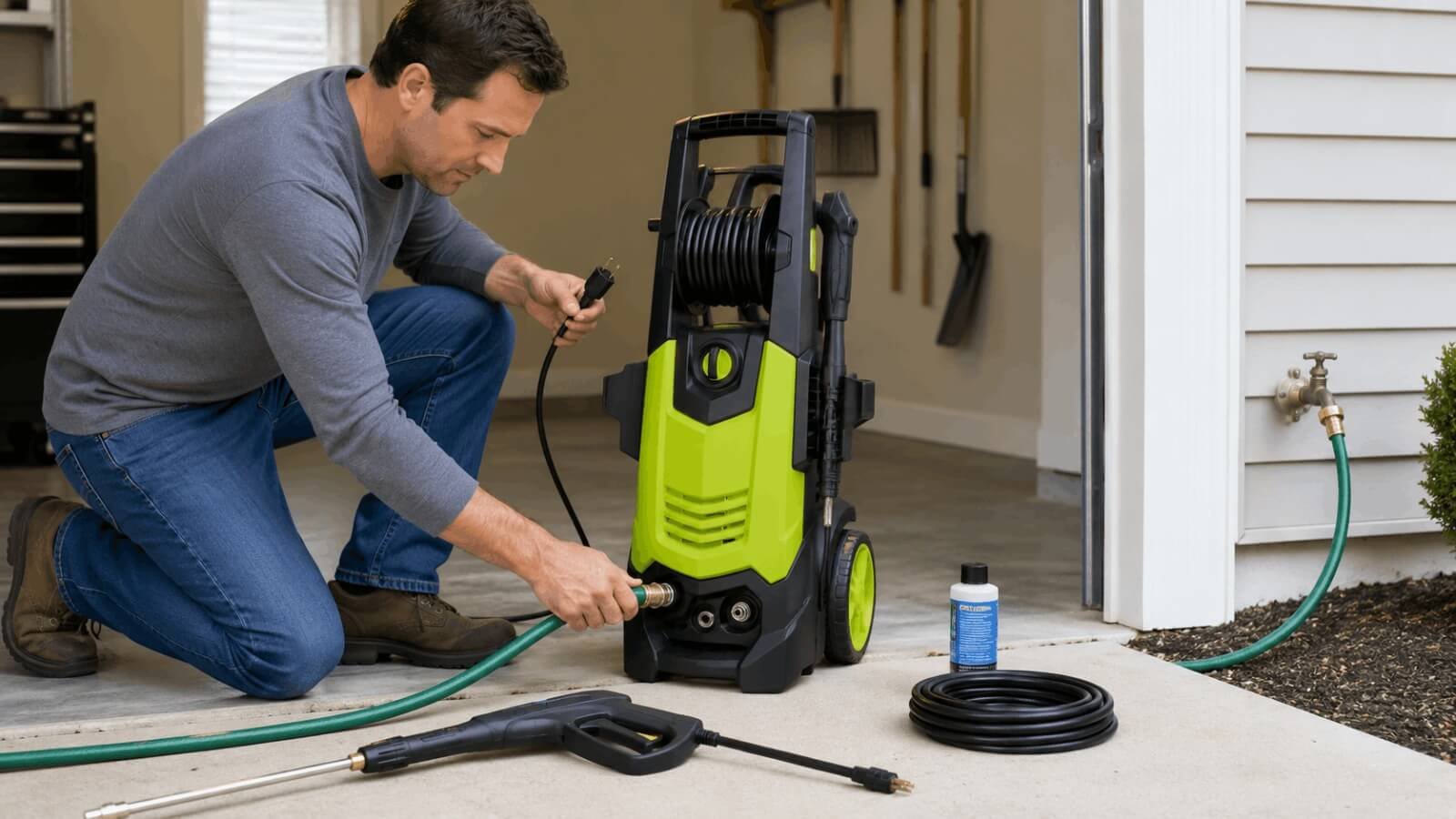
Setting it up, step by step
- With the plug out of the outlet, attach the handle, wheels and wand according to the manual.
- Check that the hoses and the inlet screen are clean and the O-rings are in place.
- Connect the garden hose and turn the water on fully.
- Squeeze the trigger until the water flows steadily with no air bubbles.
- Plug in, reset the GFCI as the manual directs, and test the spray on a spot no one will see.
Running the pump without water is the quickest way to damage it. If the spray sputters, shut the machine down and look for a kinked hose or a blocked inlet screen before you try again.
Care, storage and warranty
The washer has an aluminum axial cam pump, and as with any pump, clean water and no freezing are the two big rules. Rinse the detergent out of the system when you finish. Drain the hose, wand and gun, then store the washer indoors in a space that stays above freezing. Our pressure washer maintenance checklist lists what to inspect before each use, and the winterizing guide covers cold-weather storage.
Ryobi backs the washer with a 3-year limited warranty. Limited means it covers defects, not wear, misuse or freezing damage, so read the terms for what you’d have to prove in a claim. Treat the RYOBI 2500 PSI 1.2 GPM like any pump machine: clean water in, no freezing, and rinse out the detergent.
What it costs to run and equip
The motor is rated at 13 amps on 120 volts, which is about 1,560 watts while it’s running. That works out to roughly 1.56 kilowatt-hours for each hour of trigger time. At an example rate of 17 cents per kWh, that’s around 27 cents an hour, so electricity is not a real expense. Your tap water usage is bigger: at 1.2 gallons per minute, you’ll use about 72 gallons in an hour of spraying.
The bigger costs are the add-ons. A foam cannon from Ryobi is $38.47. A surface cleaner for flat areas is extra, unless you buy a bundle that includes one. If you already know you’ll wash a patio or driveway, the bundle may save money. If you’ll mainly clean a fence and the siding, skip the surface cleaner and spend on the foam cannon instead. Running costs for the RYOBI 2500 PSI 1.2 GPM are small; accessories are where the budget goes.
How it compares
These two machines are close on price and pressure, and different on flow and accessories. Values below come from the Ryobi and Toolstash listings; check current pricing before you buy.
- Max PSI: 2,500 | 2,500
- Max GPM: 1.2 | 1.76
- Cleaning units (PSI × GPM): 3,000 | about 4,400
- Nozzles: 3 | 5-nozzle set
- Motor: Brushless | Not stated in the listing
- Soap tank: On-board | On-board
The cleaning-unit figures are a rough yardstick calculated from maximum ratings, not a measured result. If you want a closer look at rival brands, our Ryobi vs Greenworks comparison goes through the differences, and the Ryobi 1900 PSI review covers the cheaper option in the same brand.
Should you buy the RYOBI 2500 PSI 1.2 GPM?
Buy it if you clean a house, fence, deck and furniture a few times a year, you have an outdoor outlet and a hose, and you’d like a machine that rolls on flat-free wheels and stores its own accessories. The brushless motor is also a good fit for people who don’t want to deal with gas and oil.
Look elsewhere if you mainly clean large driveways, run a small cleaning business, or want a higher-flow machine for faster work. In that case, compare units with 1.5 to 2 GPM, and don’t judge only by PSI. For the right yard, the RYOBI 2500 PSI 1.2 GPM is good value; for a very large driveway it is not.
Common questions
Is the RYOBI RY142500 good for concrete driveways?
It can clean them, but slowly. The 1.2 GPM flow limits how fast you can clear a wide, flat surface. A surface cleaner attachment makes the job quicker and more even.
Does it come with a foam cannon?
No. It has an on-board soap tank and a soap nozzle. A foam cannon is a separate purchase.
Can it run on an extension cord?
The cord is 35 feet and has a GFCI plug. If you need more length, use a heavy-gauge, outdoor-rated cord and follow the manual.
How long is the warranty?
Ryobi lists a 3-year limited warranty on the RYOBI 2500 PSI 1.2 GPM. The terms are on Ryobi’s warranty page.
What does it cost?
Ryobi’s own store lists $329. Resellers vary and can be lower or higher, so compare prices before you buy.
Before you buy, check the maker’s own page for exact specs: Ryobi RY142500 product page.
Where the sources disagree on the RYOBI 2500 PSI 1.2 GPM
Public numbers for the RY142500 do not match perfectly, so check the label on your own box. Ryobi lists the 2,500 PSI and 1.2 GPM ratings and a $329 price on its own site. Consumer Reports gives the weight as 44 pounds, while Toolstash’s sheet says 43.36. A Home Depot Canada listing shows 1.1 GPM for a 2,500 PSI model under the same part number, so flow may differ by region or retailer. None of these gaps is large, but they matter if you plan to match accessories or compare cleaning power.
RYOBI 2500 PSI 1.2 GPM vs the 1,900 PSI model
If you are choosing between Ryobi’s two electric washers, the useful number is cleaning units, PSI multiplied by GPM. The 2,500 PSI model works out to 3,000. The Ryobi 1,900 PSI washer at 1.2 GPM is 2,280. That is about 30 percent more, but the flow is the same, so a large patio will still take time on either machine. Read the PSI by job guide before you pay extra for pressure you may not use, and see Kärcher vs Ryobi if you are cross-shopping brands.
Who should skip it
- You clean large driveways or long fences every week. A higher-flow gas or commercial washer will finish much faster.
- You need hot water for grease. This is a cold-water unit only.
- You have no outdoor GFCI outlet. The unit draws about 13 amps, so plan the circuit first.
If your washer stops starting or loses pressure, our Ryobi pressure washer not working guide covers the common fixes.
Why you can trust this guide
- We did not test this washer. The figures come from Ryobi’s product page, Consumer Reports, retailer listings and public owner reviews, and I show where they differ.
- Source order: Ryobi first, then Consumer Reports, then retailers and owners.
- Corrections: I removed the sources list, added the spec conflicts above and kept price and warranty as listed by Ryobi.
- Limits: prices change, and GPM and weight differ between listings. Check the box label before you buy.
- Last checked: 3 November 2026.