
How to wash a deck without a pressure washer
You can wash a deck without a pressure washer by sweeping it clean, wetting the boards, applying an oxygen bleach cleaner, scrubbing with the grain with a stiff deck brush, and rinsing with a garden hose. A small deck takes about 2 to 3 hours of work, and a large deck takes about 4 to 5 hours. Hand washing is slower than pressure washing, but it is the safe choice for old boards, painted boards, and composite lines whose maker page says not to use a pressure washer.
This guide covers how to wash a deck without a pressure washer: the cleaners that work and the ones to avoid, the step by step method, and drying time before sanding or sealing. If your deck is sound and you want the faster method, the pressure washer guide is the companion to this one.
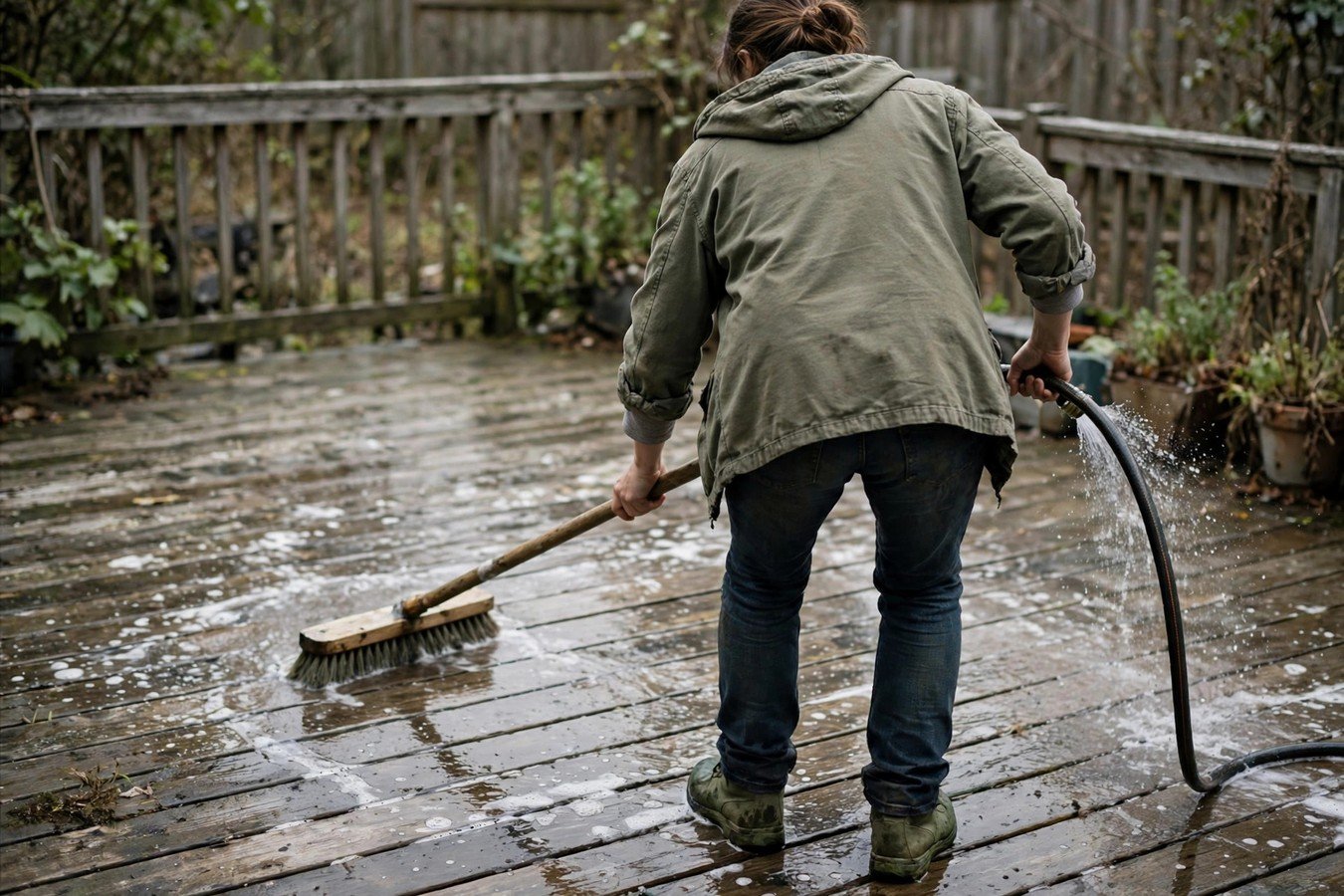
When hand washing beats pressure washing
Pressure washing is fast, but it is not right for every deck. Hand washing is better when any of these apply.
- The boards are old, grey, and already splintering. A pressure jet lifts more splinters, while a brush lifts dirt and leaves the fibers in place.
- The deck is painted and the paint is peeling. A washer strips loose paint and leaves a patchy surface.
- The maker page for your composite line says not to pressure wash it. Trex does not recommend pressure washing its early generation boards at all.
- The boards feel soft or spongy underfoot. That is rot, and a pressure jet will tear rotted wood apart.
- The deck is new pressure-treated lumber that is still wet from the yard. Let it dry for a few months first, then wash it by hand.
- You have no washer and no wish to buy or rent one for a single job. A brush, a bucket, and a hose cost far less than a day of hire.
Hand washing also suits small decks, decks with tight gaps, and railings that fur easily under a jet. The trade off is time. Scrubbing a 300 square foot deck by hand is slower work: as a rough estimate, it can take around twice as long as washing it with a pressure washer, depending on the size of the deck and how dirty it is, and stubborn black spots need a second pass.
What you need before you start
Gather the gear first so you are not hunting for it with a wet deck half done.
- A stiff deck brush with a long handle, plus a smaller hand brush for gaps, edges, and spindles
- A garden hose with a spray nozzle, and a bucket
- An oxygen bleach deck cleaner, or a deck cleaner made for hand washing, mixed to the label ratio
- A pump sprayer for applying the cleaner over a large deck, or a watering can for a small deck
- Safety glasses, closed shoes, gloves, and long sleeves
- Plastic sheeting for plants, outdoor furniture, and the house wall near the deck
- A screwdriver or drill for popped fasteners, and spare screws
- A pole sander and 80 grit paper, for after the deck dries, if you plan to seal it
Pick a mild, dry day with no wind if you can. Avoid washing in strong sun, which dries the cleaner before it has time to work. Clear the deck of furniture, planters, grills, and toys. Cover plants and the house wall next to the deck, wet the plants with a hose before you start, and rinse them again after you finish.
Check the deck for damage before you wash it. Look for loose boards, popped nails or screws, cracked boards, and soft spots that sink under your foot. A soft spot means rot. Fix loose fasteners first and replace any board that feels soft.
Which cleaner should you use?
The cleaner does most of the work in a hand wash, because there is no pressure jet to lift the dirt. Pick the cleaner for the dirt you have. The table below gives the common choices.
| Cleaner | Best for | How to use it | Caution |
|---|---|---|---|
| Oxygen bleach (sodium percarbonate) | Mildew, algae, grey weathered wood, general grime | Mix to the label ratio in warm water, apply, leave 10 to 15 minutes, scrub, rinse | Rinse well. Do not mix with other cleaners. |
| Deck cleaner made for wood | Mildew, grease, tannin marks | Follow the label for dilution and dwell time, usually 5 to 10 minutes | Use one made for decks, not a general house wash. |
| Mild dish soap and warm water | Light dirt on a deck that was cleaned last year | A few drops per bucket, scrub, rinse well | Rinse until no foam sits in the gaps. It will not lift deep mildew. |
| Composite deck cleaner | Composite boards, mildew, food and grease marks | Follow the maker label, scrub with a soft brush, rinse | Check the maker care page first. Some lines ban harsh cleaners. |
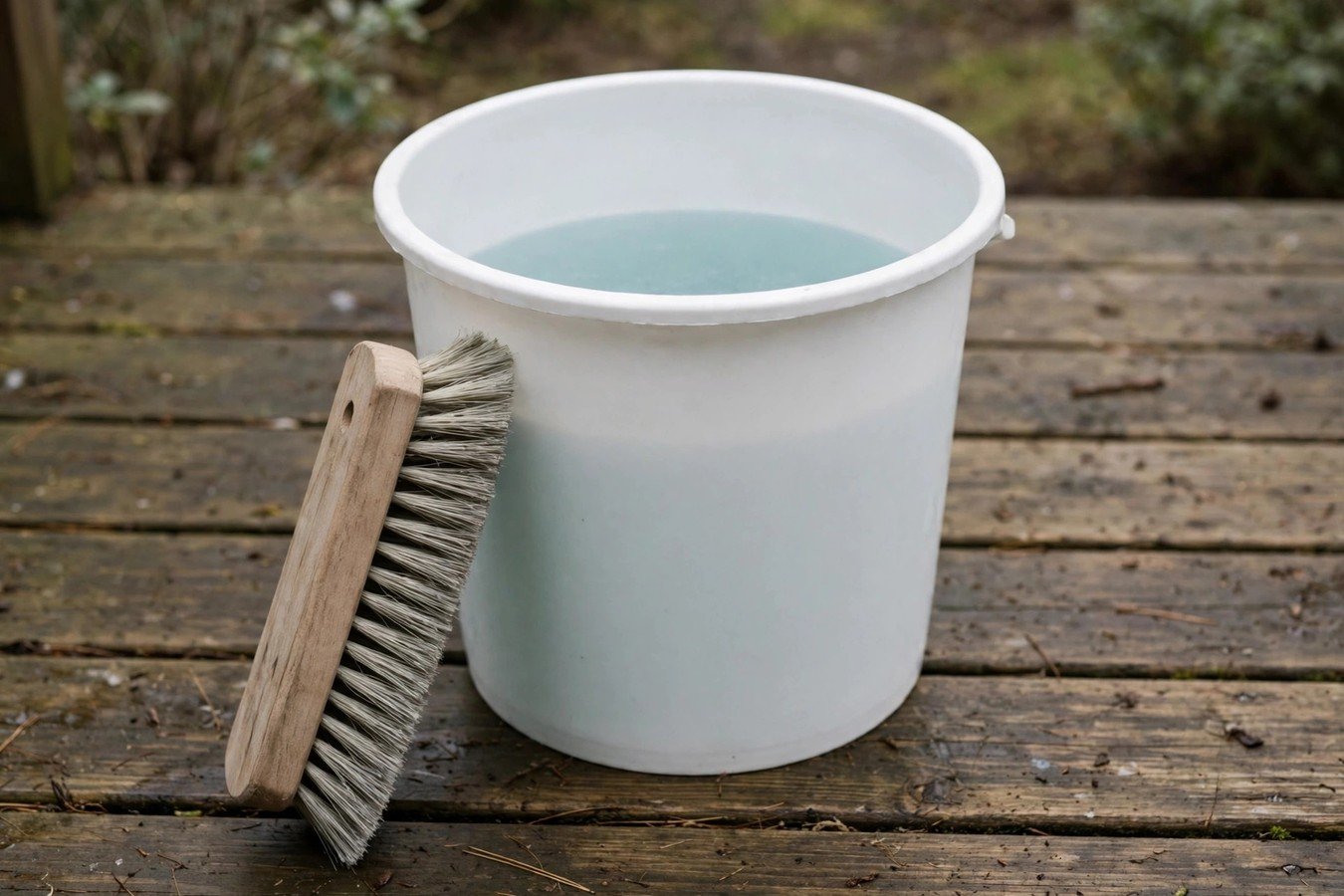
Do not use chlorine bleach on a wood deck. It can harm wood fibers, lighten the boards in patches, and kill plants below the deck, and it does not clean better than oxygen bleach for mildew and algae. Do not mix bleach with any other cleaner. Mixing bleach with other cleaners can make harmful fumes. Vinegar is not a deck cleaner either. It is too weak for mildew and algae.
For composite decks, the maker page is the authority. TimberTech and Trex both allow a mild soap and water wash with a soft brush, and both name cleaners to avoid. Check the care page for your line before you pick a cleaner, and test any new cleaner on a hidden corner first.
How to wash a deck without a pressure washer, step by step
Step 1: Inspect the deck and fix fasteners
Walk every board. Mark soft spots with chalk. Tighten or replace popped screws and nails. If a board moves when you step on it, fix it now. Do not scrub a rotted board hard. It will break apart under the brush.
Step 2: Sweep and pre-wet the boards
Sweep the whole deck, including the gaps between boards. Then wet the boards with a garden hose. Pre-wetting stops the wood from drinking the cleaner unevenly. Work in sections you can finish in about 15 minutes, so nothing dries out mid-wash.
Step 3: Apply the cleaner and let it sit
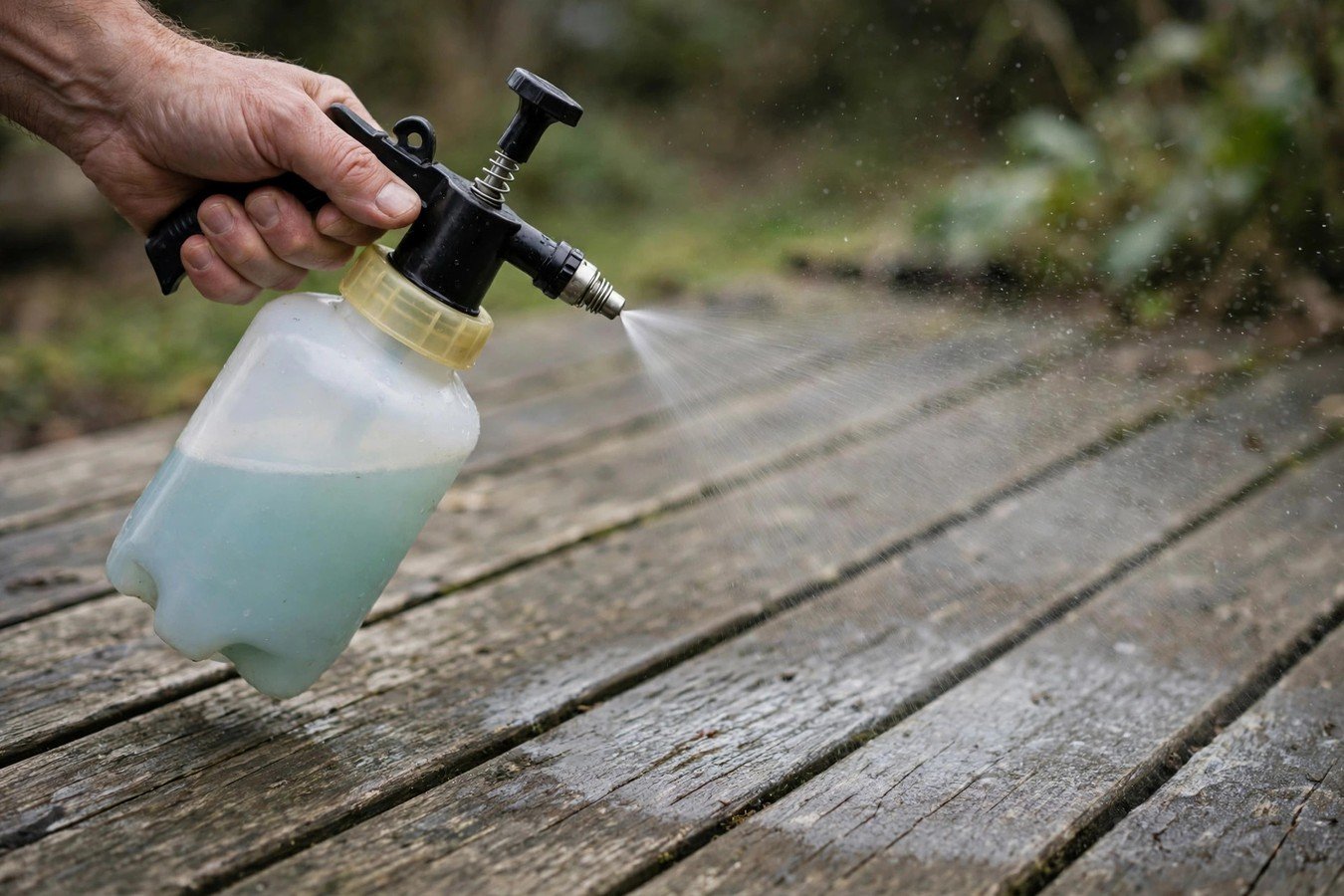
Apply the cleaner with a pump sprayer or a watering can, following the label for dilution. Work one section at a time, starting at the far end of the deck and moving toward the steps. Give it the dwell time on the label, usually 10 to 15 minutes for oxygen bleach and 5 to 10 minutes for a deck cleaner. Do not let it dry on the boards. If a section starts to dry, mist it with the hose. Dwell time is when the cleaner breaks down mildew, grease, and tannin marks.
Step 4: Scrub with the grain, one board at a time
Scrub with the grain, board by board, using the long handled deck brush. Scrubbing with the grain lifts dirt without raising the fibers. Scrubbing across the grain roughs the surface and leaves a fuzzy texture that needs sanding. Use firm, even strokes, and overlap each pass a little so you do not leave stripes. For black spots, scrub the spot with the smaller hand brush, then go over the whole board again so the spot does not stand out as a clean patch.
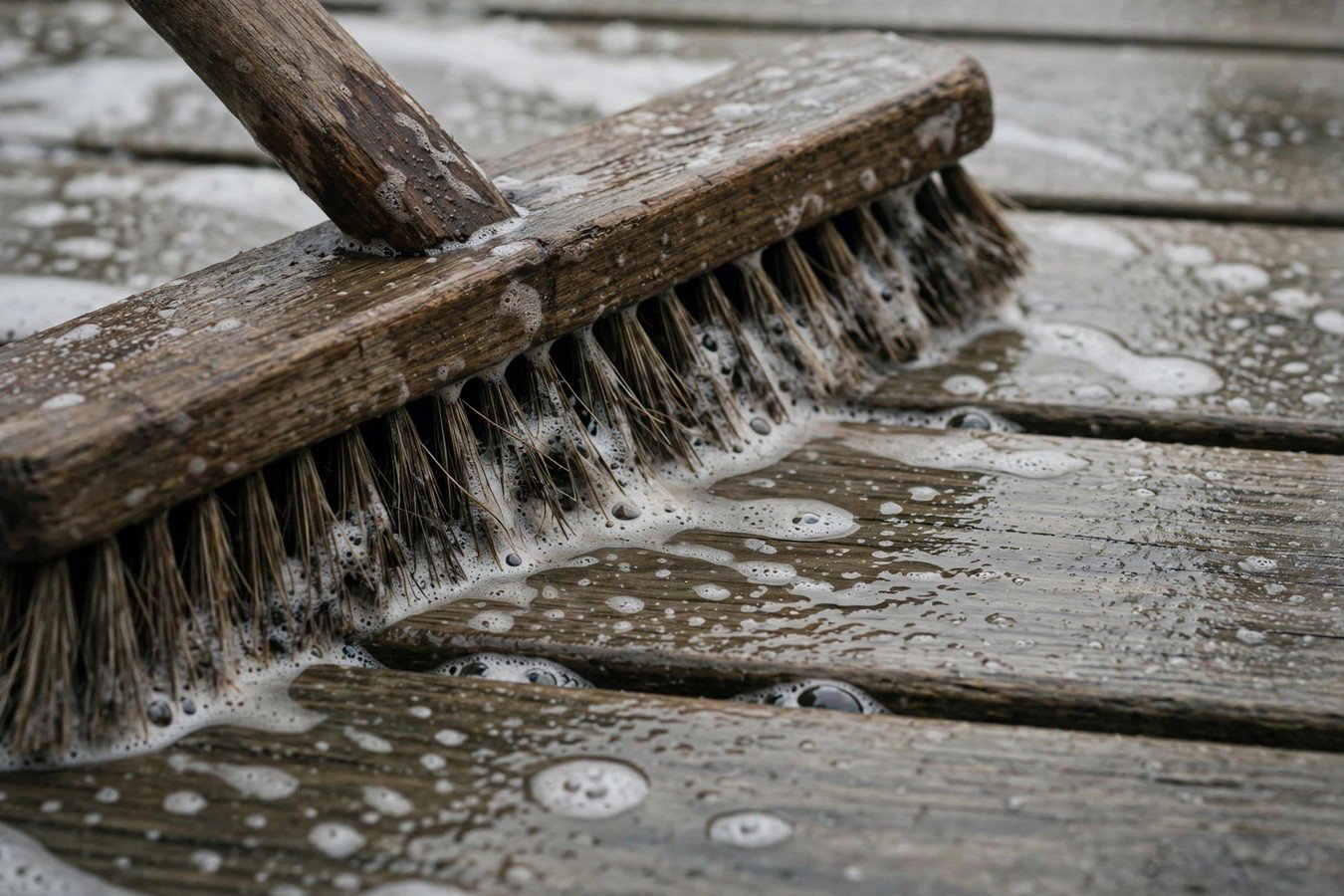
Keep the boards wet while you scrub. On railings and spindles, use the hand brush and a lighter touch. They are thinner than the floor boards and they fur faster. On composite boards, use a soft brush, not a stiff wire brush. A wire brush can scratch the cap layer and leave a permanent mark.
Step 5: Rinse with a garden hose
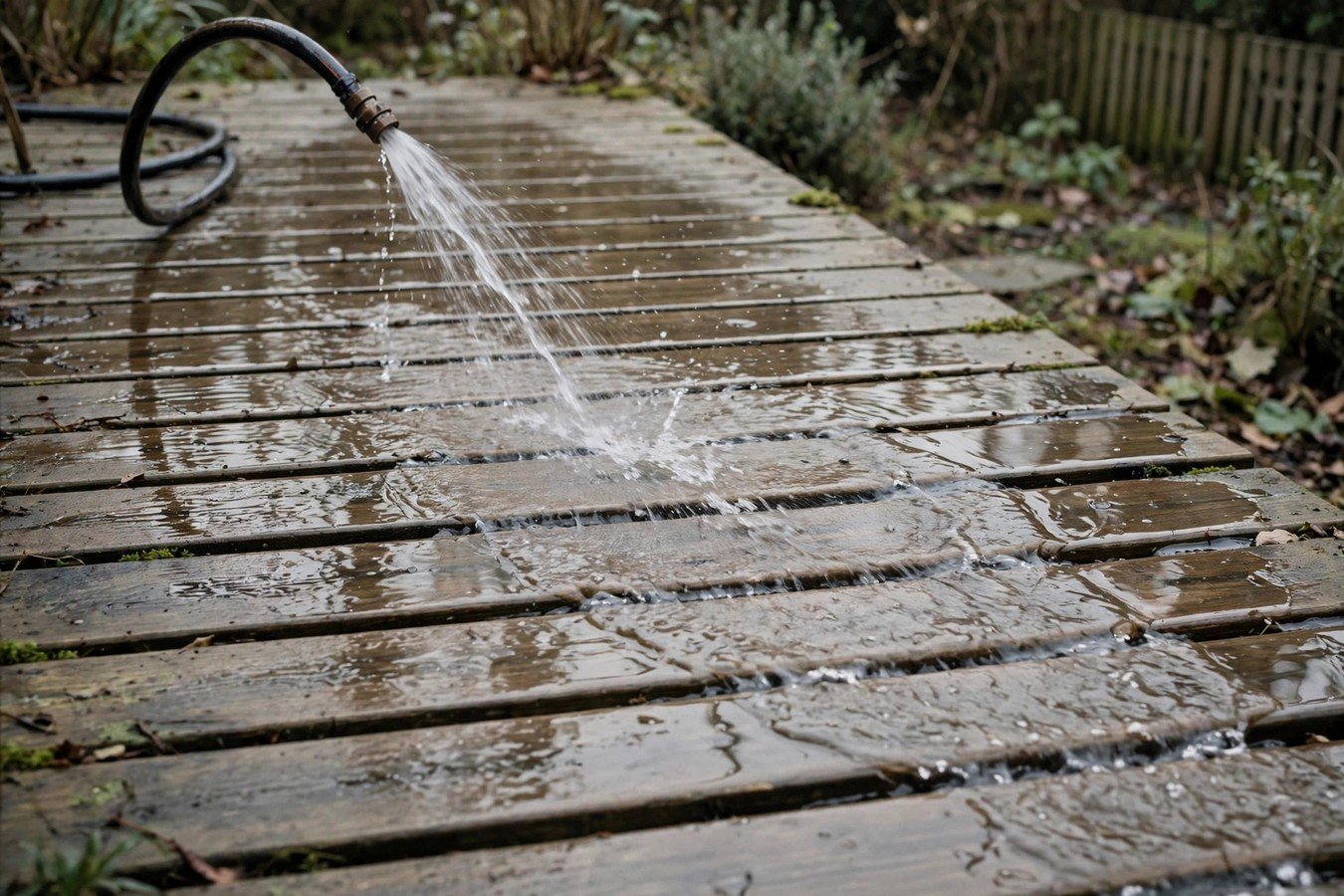
Rinse the whole deck with the garden hose, board by board, using the spray nozzle on a firm setting. Rinse until the water runs clear and no cleaner foam sits in the gaps. Leftover cleaner dries into a white film and can stop stain or sealer from sticking later. Rinse the house wall, plants, and furniture you covered as well.
Step 6: Let the deck dry, then sand and seal
Hand washing raises the wood fibers far less than pressure washing, but the deck still needs time to dry. Give it at least 48 hours. In damp or shaded spots, wait longer. Test dryness by sprinkling a few drops of water on a board. If the water soaks in within a few minutes, the wood is dry enough to sand and seal. If it beads or sits on top, wait another day.
Sand the dry deck lightly with 80 grit paper to smooth any raised fibers. Sweep the dust off after sanding. Then seal or stain the deck within 2 to 4 weeks of washing. An unsealed deck after cleaning absorbs water and rots faster than a deck that was never washed at all. For composite decks, skip the sanding and the sealing.
How to clean a deck without a pressure washer on wood and composite
For wood, start with oxygen bleach for mildew and grey boards, and a deck cleaner for grease and tannin marks. Scrub with a stiff brush, with the grain, and rinse well. Cedar, pine, and redwood are soft, so keep the strokes even. Hardwood boards such as ipe are dense and dry slowly, so give them extra drying time.
For composite, use a mild soap and water wash or a cleaner made for composite, with a soft brush. Never use a wire brush or a harsh solvent cleaner on composite. The cap layer scratches easily. Check the maker page for your line before you pick a cleaner.
How long does it take, and how much does it cost?
Hand washing takes longer than pressure washing, and the time depends on the deck size and how dirty it is. The table below gives the work time, not including drying.
| Deck size | Scrub and rinse time | Cleaner cost | Notes |
|---|---|---|---|
| About 200 square feet | About 2 to 3 hours | About 10 to 20 dollars | One bucket of cleaner, one brush |
| About 300 square feet | About 3 to 4 hours | About 15 to 30 dollars | The most common deck size |
| About 400 to 500 square feet | About 4 to 5 hours | About 20 to 40 dollars | Work in sections, take a break between them |
Drying adds at least 48 hours before sanding and sealing. The whole job, wash to sealed deck, spans about 3 to 4 days with drying time in the middle, the same as the pressure washer method.
Doing it yourself costs the cleaner, about 10 to 40 dollars for most decks, plus a deck brush at about 15 to 30 dollars if you do not own one. Hiring a pro to wash a deck by hand costs about 0.50 to 1.50 dollars per square foot in most United States markets, so a 300 square foot deck runs about 150 to 450 dollars, the same range as a pressure wash job, because the labour is the main cost either way.
Mistakes that leave a deck dirty or damaged
Most hand wash problems come from a few mistakes.
Letting the cleaner dry on the boards. Dried cleaner leaves a white film and sets the dirt again. Work in sections and rinse before the cleaner dries.
Scrubbing across the grain. Water and brush strokes driven across the grain lift fibers and leave a fuzzy surface that needs sanding. Always move with the grain.
Using chlorine bleach. It harms wood fibers, lightens boards in patches, and kills plants. Oxygen bleach cleans mildew and algae without those risks.
Scrubbing a rotted board hard. A soft board will break apart under the brush. Mark soft spots, clean them lightly, and replace the board before you seal the deck.
Questions people ask
Can I clean a deck without a pressure washer?
Yes. That is exactly how to wash a deck without a pressure washer: sweep it, wet it, apply an oxygen bleach cleaner, scrub with the grain with a stiff deck brush, and rinse with a garden hose. It takes longer than pressure washing, but it is safer for old, painted, and composite boards.
What is the best cleaner for a deck without a pressure washer?
Oxygen bleach is the best all round choice for wood decks, because it lifts mildew, algae, and grey weathering without harming the fibers. For light dirt, a mild dish soap and warm water is enough. For composite, use a mild soap and water wash or a cleaner made for composite, and check the maker care page first.
How do you clean a deck without a pressure washer and without bleach?
Use oxygen bleach, which is not the same as chlorine bleach. Mix it to the label ratio in warm water, apply it, leave it for 10 to 15 minutes, scrub with the grain, and rinse with a hose.
How long should a deck dry before sealing after a hand wash?
Wait at least 48 hours after washing, longer in shade or damp weather. Sprinkle water on a board to test. If it soaks in within a few minutes, the deck is dry enough to sand and seal. Seal within 2 to 4 weeks of washing so the clean wood does not soak up rain.
Is hand washing better than pressure washing a deck?
Hand washing is better for old, soft, painted, and composite decks, and for any deck whose maker page says not to use a pressure washer. Pressure washing is faster for a sound wood deck with heavy grime. Pick the one that fits your boards.
This guide was built from deck maker care pages and contractor guides first, then from cleaner maker labels. Trex and TimberTech care pages were checked for composite cleaning limits, and oxygen bleach labels were checked for mix ratios and rinse times. Where sources disagree on a number, this guide shows both numbers and says which one to trust. We did not test these cleaners or brushes on a deck for this guide, and we did not test the products named here. Last checked: 20 November 2026.