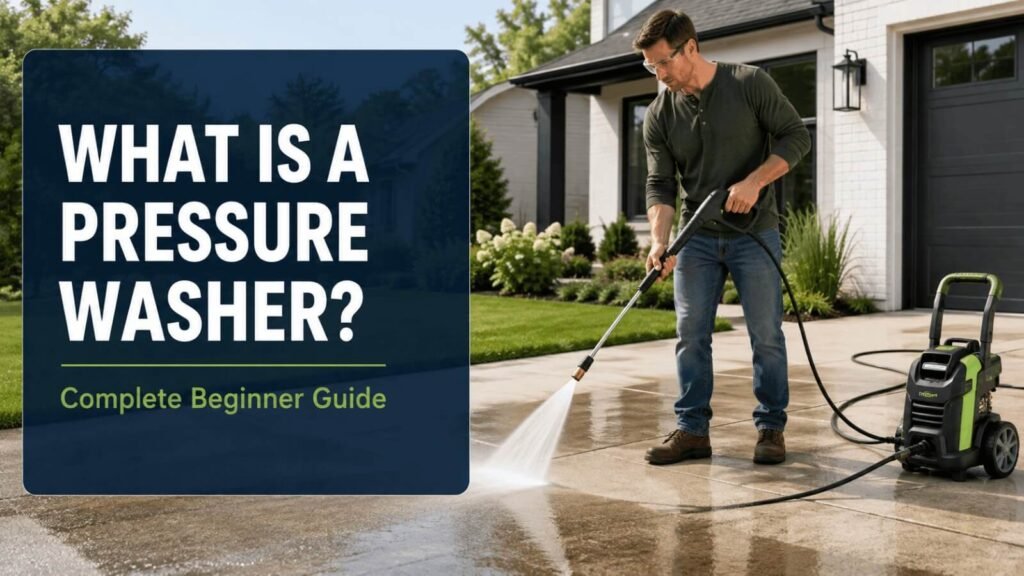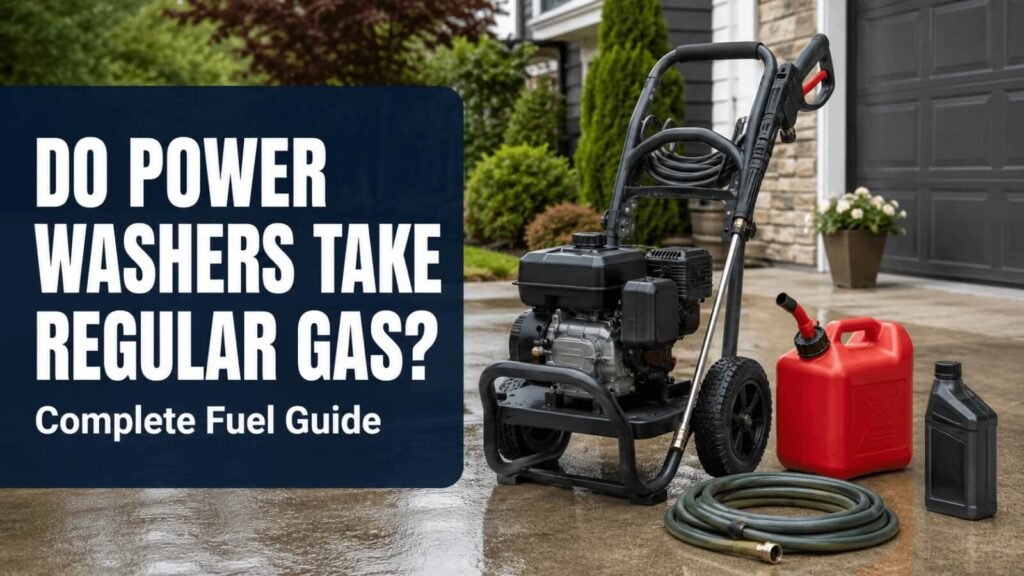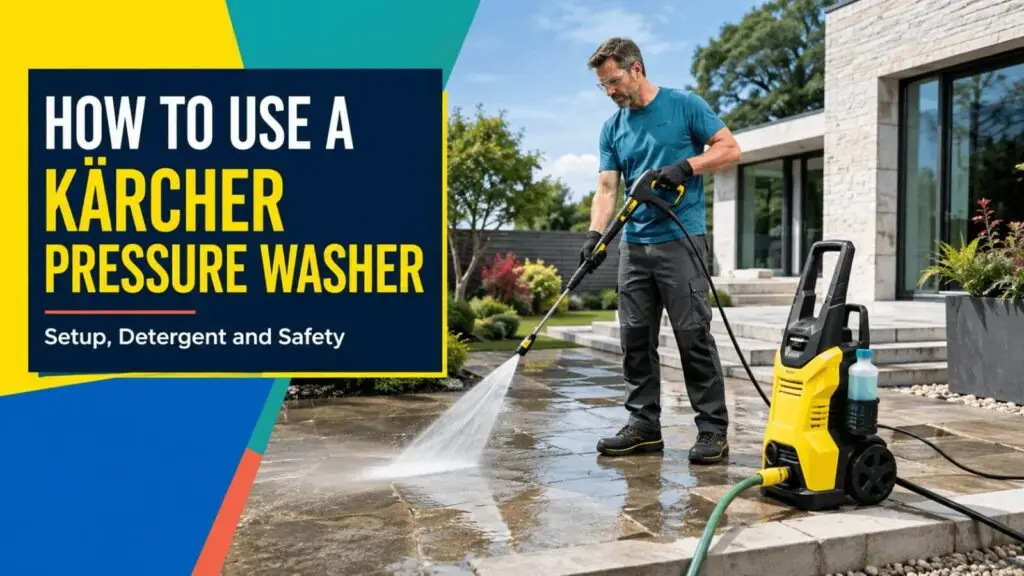
Editorial note: This educational guide explains common power and fuel requirements; it is not a substitute for the manual, rating plate, local electrical rules, or advice from a qualified electrician. Safety information was checked against CDC and CPSC guidance. Fuel requirements must always come from the exact engine manual. A pressure washer can have enough PSI for a driveway yet still perform poorly because its power supply is wrong. An electric model may trip the breaker when connected to an overloaded circuit. A gas machine may surge or refuse to start after sitting with old fuel. In both cases, the pump may be fine—the problem begins before water is pressurized.
Understanding pressure washer power requirements means checking more than whether a machine is electric or gas. Electric units need the correct voltage, amperage, grounding, and circuit protection. Gas machines need the fuel and engine oil specified in their manuals. Cordless units need compatible charged batteries, and every pressure washer needs an adequate water supply.
This guide explains those requirements in simple terms so homeowners, DIY users, and cleaning professionals can choose, set up, and store their equipment safely.
Pressure Washer Power Requirements at a Glance
Residential corded electric: Commonly a grounded 120V outdoor circuit in the U.S. Needs nameplate amps, GFCI, cord condition, and circuit capacity checks. Main limitation is outlet and cord reach.
Commercial electric: Model-specific 120V, 208V, 230V, 460V, single- or three-phase supply. Requires checking voltage, phase, amperage, plug, breaker, and professional installation. Wrong supply can prevent operation or damage equipment.
Gas: Fresh approved gasoline plus correct engine oil. Must check fuel grade, ethanol limit, oil level, and safe storage. Main limitations are exhaust, noise, and fuel maintenance.
Battery-powered: Compatible charged battery and charger. Check voltage platform, amp-hours, and charging conditions. Limited by runtime and generally lower output.
These are general patterns. The rating plate and owner’s manual for the exact model always take priority.
Electricity Requirements for Electric Pressure Washers
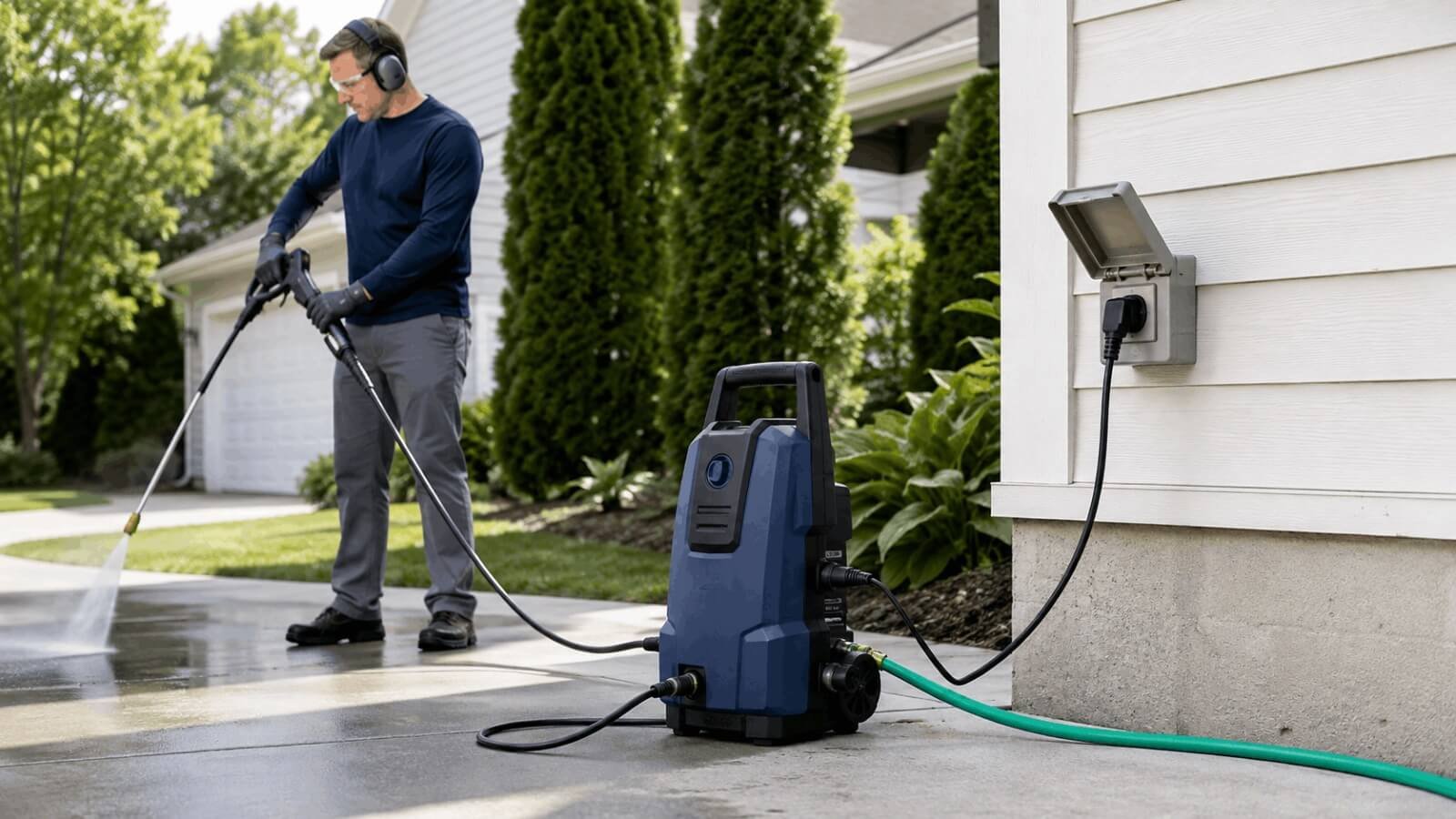
Most U.S. homeowner electric pressure washers use a 120-volt, 60-hertz supply and draw about 13 to 15 amps. This is a substantial household load, so avoid sharing the circuit with another heavy appliance or tool.
Do not assume an outlet is suitable because the plug fits. Before use, confirm voltage, frequency, rated amperage, grounding, GFCI protection, circuit capacity, and cord restrictions.
Voltage Must Match the Machine
Voltage is the electrical pressure supplied to the motor. Larger commercial machines may require 208V, 230V, or 460V and single- or three-phase power. Changing only the plug does not make an incompatible supply safe.
If voltage, phase, breaker, or receptacle compatibility is unclear, consult the manufacturer or a qualified electrician. Commercial equipment may need a dedicated circuit, starter, or disconnect. Readers considering larger fixed or mobile equipment can review our commercial electric pressure washer guide for practical information about voltage, flow, and use cases.
Amps Tell You the Circuit Load
Amperage is the current drawn by the motor. A 14-amp machine on a 15-amp circuit leaves little room for another load. Repeated breaker trips are a warning.
Never install a larger breaker simply to stop tripping. First disconnect other loads, inspect the equipment, and follow the manual. Use qualified service if the problem continues.
Watts Help With Generator Planning
Electrical input can be estimated with a simple formula: Watts = Volts × Amps.
For example, 120 Volts × 14 Amps equals 1,680 watts of input at full rated current. This calculation is useful, but it does not include every real operating condition. Electric motors can demand extra current while starting, and generator output quality also matters.
Do Electric Pressure Washers Need a Dedicated Circuit?
A dedicated circuit can reduce overload risk for a high-draw machine, but whether one is required depends on the model, existing circuit, and local electrical rules.
If lights dim, a breaker trips, the motor sounds weak, or a cord becomes warm, stop. Possible causes include overload, voltage drop, damaged wiring, an undersized cord, or equipment failure. Never bypass the breaker or GFCI. These protective devices are there to interrupt dangerous conditions.
GFCI and Outdoor Electrical Safety
A ground-fault circuit interrupter, or GFCI, cuts power when it detects current flowing through an unintended path. Many machines include an inline GFCI, but the complete setup must still meet the manual and local rules. The CPSC recommends GFCI protection and outdoor-rated cords when using electrical tools outdoors.
Before starting, test the GFCI as instructed, keep plugs and connections dry and away from runoff, use a grounded outdoor receptacle, and never alter a cord or remove its grounding pin. Stop using damaged equipment or a machine that repeatedly trips protection.
Can You Use an Extension Cord With a Pressure Washer?
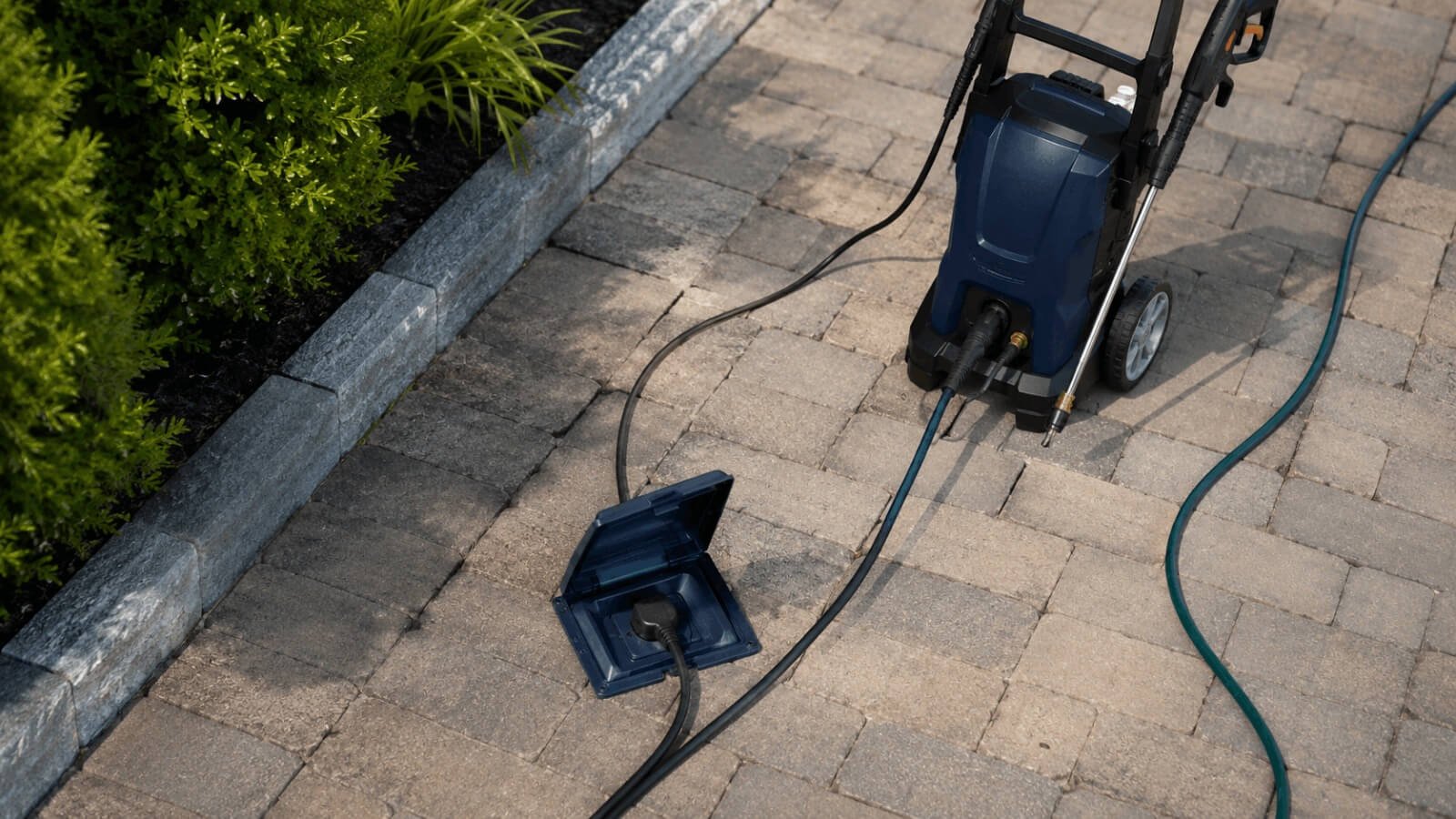
Follow the exact manual. Some manufacturers prohibit extension cords; others specify a maximum length and minimum wire gauge.
When an extension cord is permitted, it should be outdoor and wet-location rated, grounded, undamaged, and heavy enough for the amperage and length. Keep it short, fully uncoiled, and connected in a dry elevated location.
American Wire Gauge numbers work in reverse: a lower AWG number means thicker wire. Longer runs need thicker conductors because voltage drop can cause poor starting, overheating, or motor damage. Do not guess the gauge from the cord’s appearance; read its printed rating and compare it with the pressure washer manual.
Can You Run an Electric Pressure Washer on a Generator?
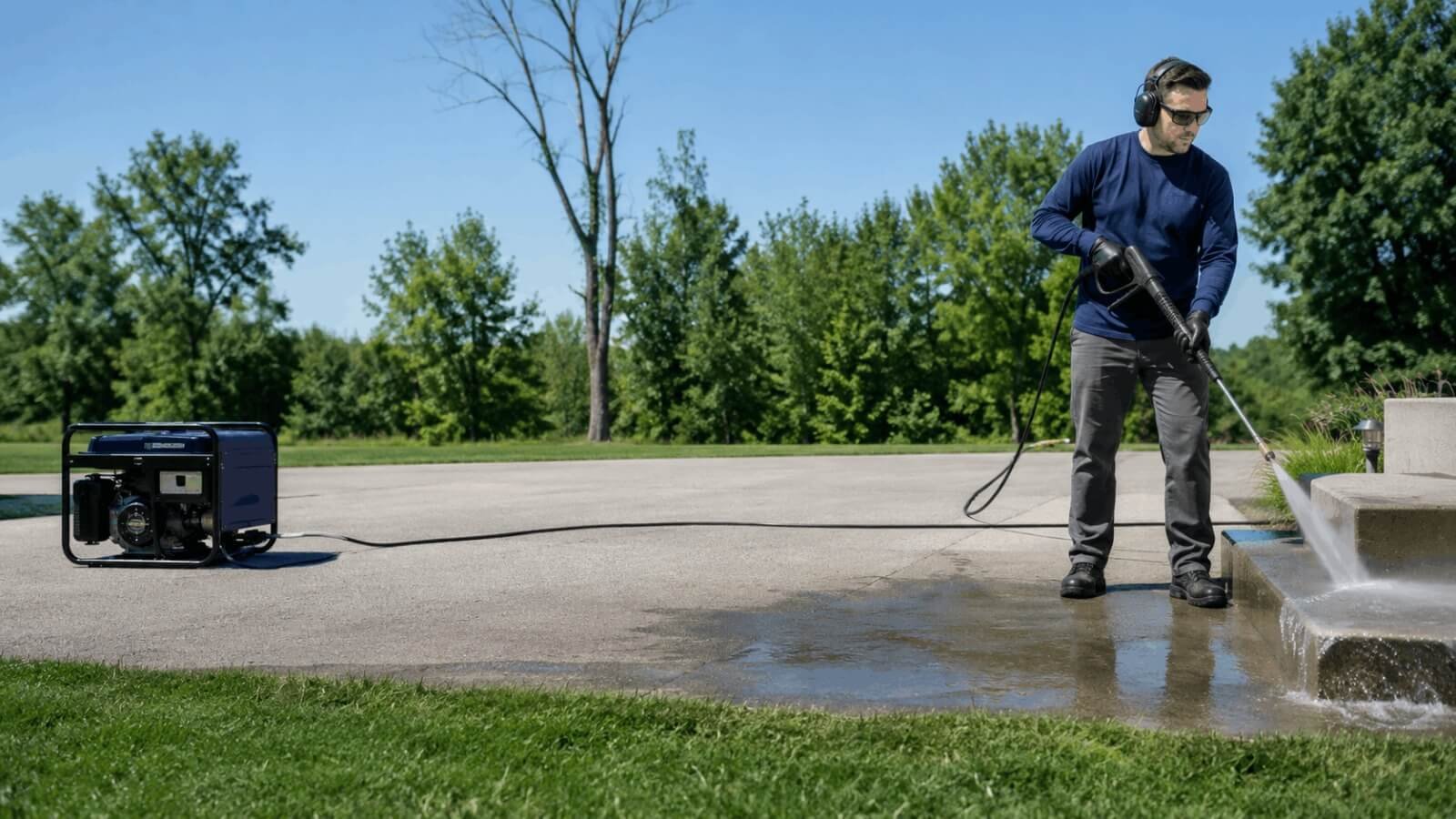
Both manufacturers must allow the setup. The generator needs correct voltage and frequency, sufficient continuous and starting wattage, the right receptacle, and the required grounding or bonding arrangement.
Calculate running watts from the pressure washer nameplate, then confirm starting demand instead of relying on a generic multiplier. A generator near maximum load may produce unstable voltage.
Keep the generator outdoors and at least 20 feet from doors, windows, and vents, following CDC generator safety guidance. Never place it in a garage or enclosed work area simply to keep it dry. Follow both manuals, and ask a qualified electrician when grounding or GFCI requirements are unclear.
Fuel Requirements for Gas Pressure Washers
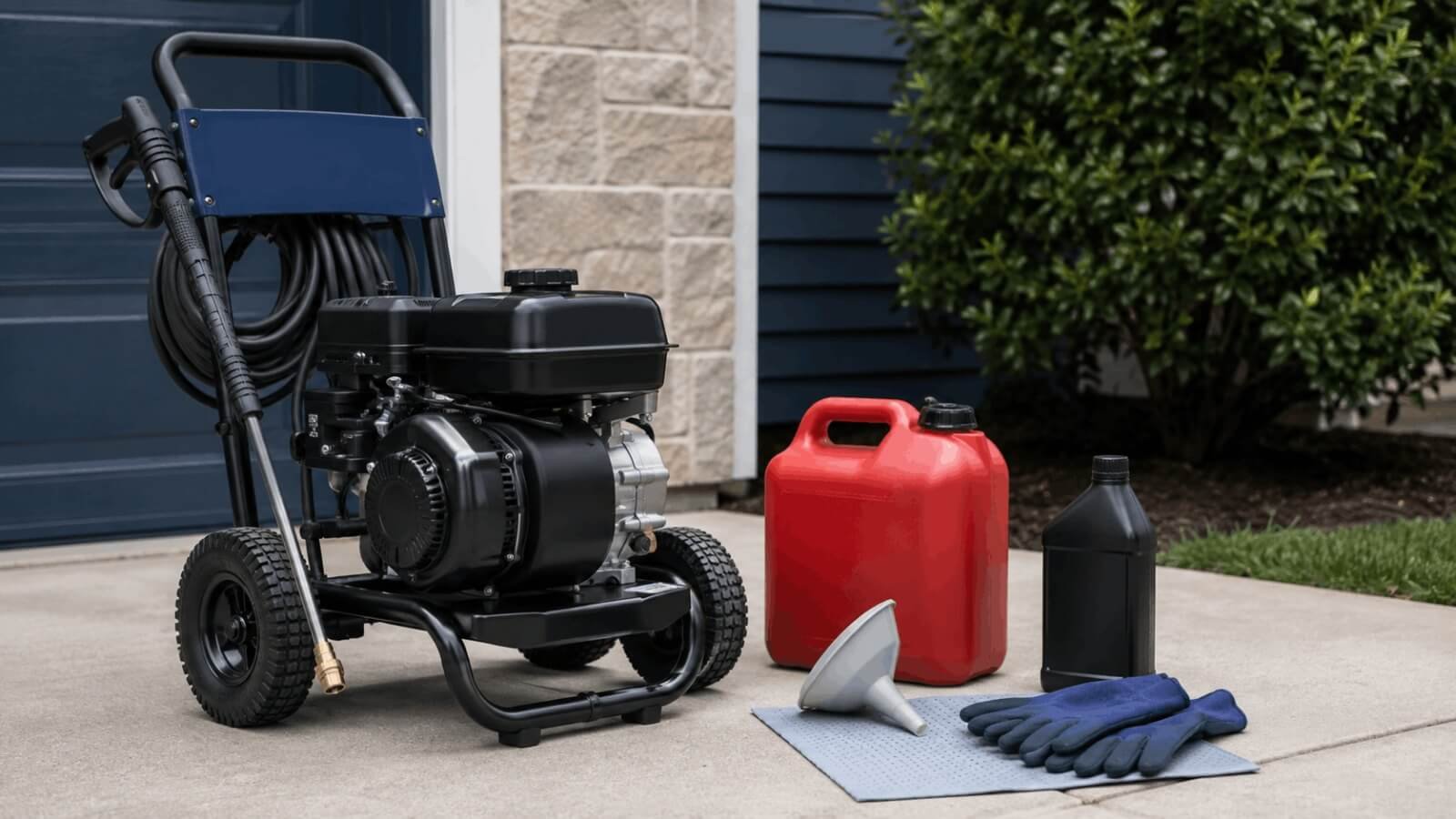
Fuel specifications differ, so check both the engine and pressure washer manuals before filling the tank.
Many four-stroke engines call for fresh unleaded gasoline and allow no more than 10 percent ethanol. Minimum octane remains model-specific; never copy another machine’s recommendation.
Avoid E15, E85, diesel, kerosene, stale fuel, and unapproved additives unless explicitly permitted. Wrong fuel can cause surging, deposits, corrosion, or damage. For buyers evaluating engines, pumps, and output together, our gas pressure washer guide explains the main residential and heavy-duty choices.
Do You Mix Oil With Pressure Washer Gas?
Most modern gas pressure washers use four-stroke engines. Their gasoline and engine oil are kept in separate systems, so oil is not mixed into the fuel. Adding oil to the gasoline of a four-stroke engine can cause smoke, deposits, and running problems.
A rare machine with a two-stroke engine would require the exact fuel-oil ratio specified by its manufacturer. Never assume; check the engine type and manual first.
Engine Oil Is a Separate Requirement
Some engines ship without oil and must be filled before starting. Even prefilled engines need a level check.
Use the specified oil grade and viscosity. Engine oil is separate from pump oil; sealed pumps must not be filled, while serviceable pumps follow their own schedule.
Gasoline Storage and Refueling Safety
Stored gasoline can lose volatility and leave deposits that cause difficult starting or poor running. Store gasoline in an approved, sealed fuel container away from heat, flames, sparks, and direct sun.
Turn the engine off and let hot parts cool before refueling outdoors on a stable surface. Do not overfill the tank. Wipe up spills, move away from the fueling point before starting, and follow the manual’s stabilizer, draining, or seasonal-storage procedure.
Fuel stabilizer can slow deterioration but cannot restore stale gasoline. For example, Honda’s official small-engine fuel guidance permits up to E10 in Honda engines while still directing owners to check the exact manual.
How Much Fuel Does a Gas Pressure Washer Use?
There is no reliable universal hourly figure. Consumption changes with engine size, cleaning load, operating speed, pump demand, and idle time. Tank capacity also varies, so two machines with similar PSI may have different runtime.
For job planning, use the manufacturer’s tank capacity and any published runtime information. Carry fuel only in an approved container, and never refuel a hot or running engine. Contractors should plan safe refueling breaks instead of assuming a machine will operate all day on one tank.
Battery-Powered Pressure Washer Requirements
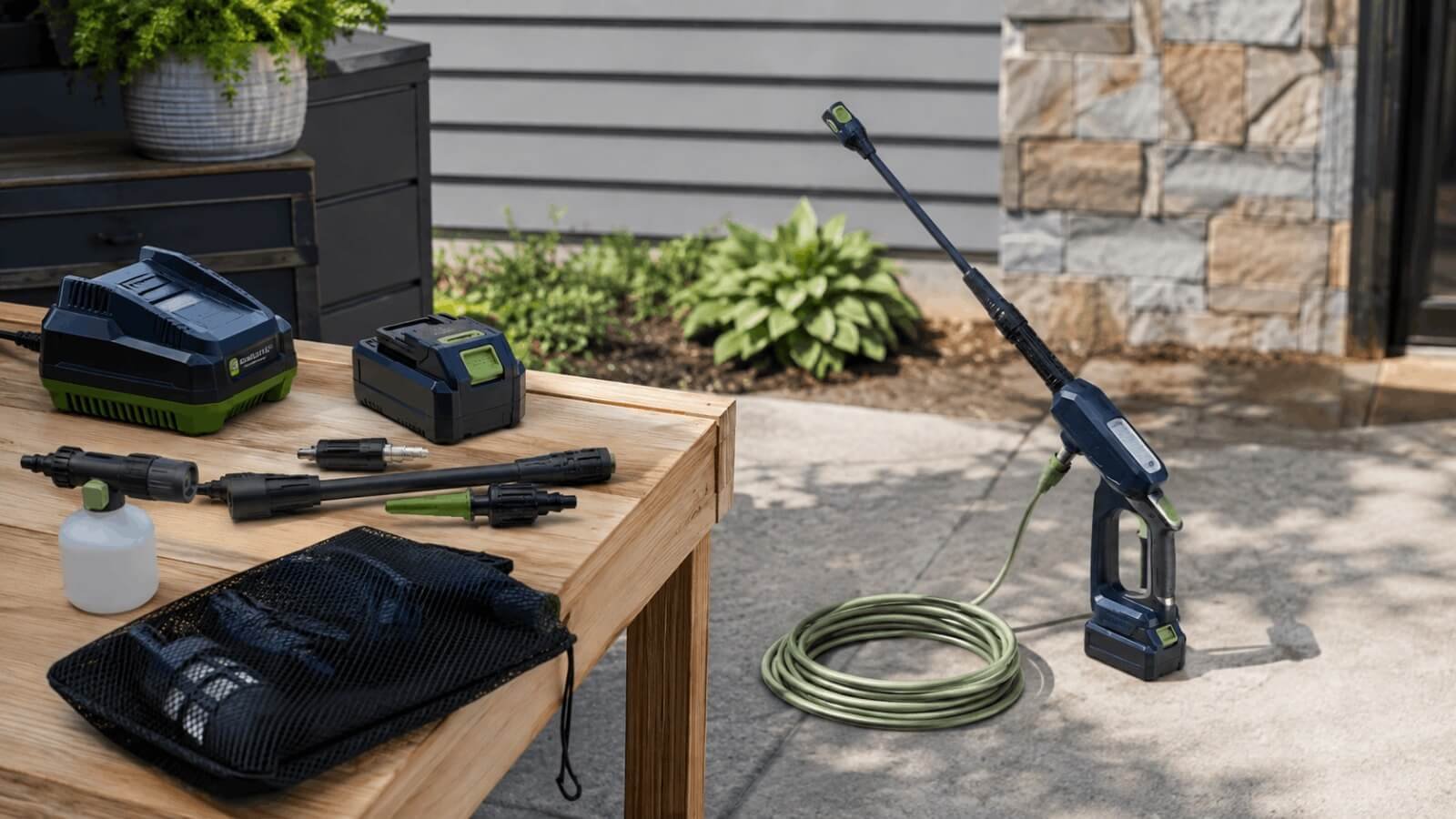
Cordless cleaners need the specified battery platform and charger. Amp-hours indicate capacity, not cleaning pressure; a larger compatible pack may extend runtime without increasing PSI or GPM.
Charge in a dry location within the stated temperature range. Never use a cracked, swollen, wet, or overheated pack, and keep chargers away from the washing area.
Do Not Forget the Water-Supply Requirement
Fuel or electricity turns the pump, but water feeds it. The supply must deliver at least the flow required by the pressure washer, with enough inlet pressure and a suitable garden hose.
Check tap flow by timing a container of known volume. Clean the inlet screen, open the tap fully, remove kinks, and purge air before starting.
Never run a pressure washer dry. Do not feed it hot water unless the manual specifically allows that temperature. A weak supply can cause pulsing, loss of pressure, cavitation, and pump damage.
Common Mistakes People Make
Using Any Outlet That Fits the Plug: A matching plug does not confirm voltage, grounding, GFCI protection, or available circuit capacity. Check all of them.
Choosing an Undersized Extension Cord: A thin or overly long cord can cause voltage drop and overheating. Avoid an extension cord when possible and follow the exact manual when one is allowed.
Guessing Generator Size From Running Watts Alone: Motor starting demand can exceed normal running input. Confirm surge capacity and electrical compatibility with both manufacturers.
Using Old or Incorrect Gasoline: Stale fuel and unapproved ethanol blends can cause starting and fuel-system problems. Use fresh approved fuel and follow the storage procedure.
Mixing Oil Into a Four-Stroke Fuel Tank: Most gas pressure washers keep engine oil separate. Confirm the engine type before adding either fluid.
Forgetting the Water Supply: Correct electricity or fuel cannot compensate for restricted water. Check supply flow, hose condition, and inlet filter before blaming the pump.
Frequently Asked Questions
What voltage does an electric pressure washer use?
Many U.S. homeowner models use 120V, while commercial machines may require 208V, 230V, 460V, single-phase, or three-phase power. Check the rating plate and manual.
How many amps does a pressure washer need?
Residential electric models commonly draw about 13 to 15 amps, but the exact value varies. The circuit must safely supply the nameplate load without other heavy devices overloading it.
Can I plug a pressure washer into a normal outlet?
Only if the outlet supplies the required voltage and amperage and has proper grounding and GFCI protection. Outdoor location and cord condition also matter.
Can I use a pressure washer with a generator?
Yes, when both manuals permit it and the generator provides correct voltage, frequency, running wattage, starting capacity, receptacle, and safety protection.
What gasoline should I use in a pressure washer?
Use the fresh unleaded gasoline grade and ethanol limit stated in the engine manual. Do not assume all engines accept the same octane or blend.
Does a gas pressure washer need electricity?
Most recoil-start gas models do not need an outlet to run. Models with electric start may use a battery or external starting supply, depending on design.
Can I leave gasoline in the pressure washer during storage?
Follow the engine manual. Depending on storage length, it may direct you to use stabilized fuel, drain the carburetor, empty the system, or follow another model-specific procedure.
Conclusion
Pressure washer power requirements are straightforward once you separate them by machine type. Residential electric units need the correct voltage, enough circuit capacity, grounding, GFCI protection, and careful cord management. Commercial electric machines may require dedicated higher-voltage or three-phase service.
Gas pressure washers need fresh approved gasoline, the correct separate engine oil, safe refueling, and a sensible storage plan. Battery units need compatible packs and chargers. Every type also depends on an adequate water supply.
Before starting, read both the pressure washer and engine manuals, inspect the complete setup, and never bypass a protective device. Matching the machine to the available power and water prevents many starting, performance, safety, and maintenance problems before they occur.
Helpful Resources
CDC Pressure Washer Safety Guidance: Electrical, injury, and carbon-monoxide precautions.
CPSC Outdoor Electrical Safety Checklist: GFCI and extension-cord guidance.
Honda Small-Engine Fuel Recommendations: Fuel, ethanol, and manual-checking guidance for Honda engines.