Pressure washers come in both electric and gas versions, and the choice changes how much cleaning power you get. Gas washers deliver far more flow and pressure. Electric washers are lighter, quieter and need almost no upkeep.
This guide compares the two using real model numbers from maker pages, so you can see the gap in numbers. It also covers power needs, running care, safety and the jobs each type suits best. We did not test these machines. Every figure comes from a maker spec or a named listing.
Are Pressure Washers Electric or Gas? The Short Answer
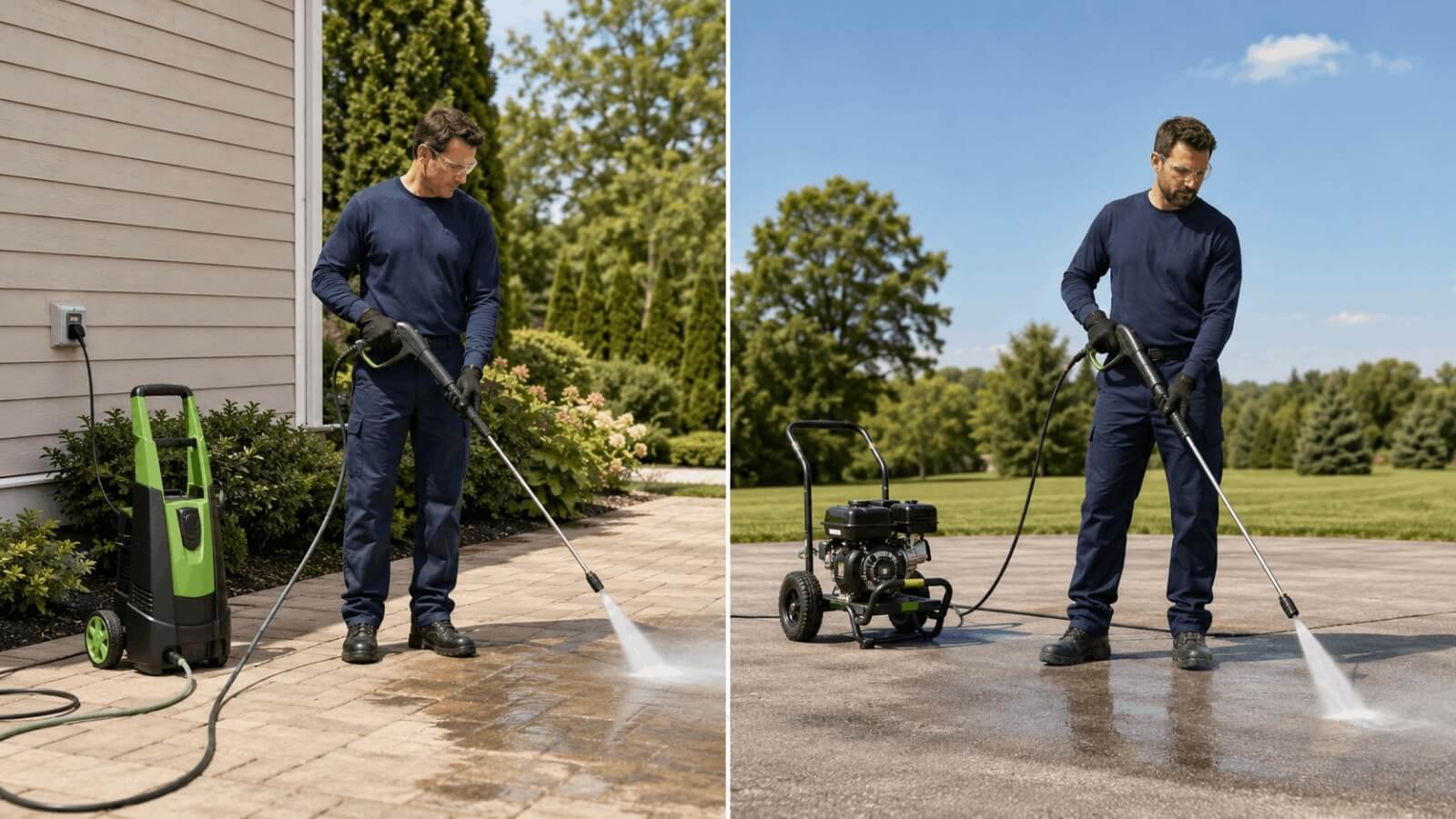
Both. The right one depends on what you clean and how often.
- Choose electric for cars, patios, small decks, grills and light weekly jobs. It plugs in, starts instantly and needs no fuel.
- Choose gas for large driveways, fences, siding on big houses and heavy stains. It has far more flow and works away from an outlet.
- Think about storage and care. Gas needs fuel, oil and a spark plug. Electric mostly needs a dry place and a good cord.
If you only clean a few times a year and your jobs are small, an electric model is usually the better value. If you have a lot of concrete to do, gas saves hours.
Electric vs Gas Pressure Washer: Quick Comparison
The table uses figures from the maker models we have covered. Electric examples are the Greenworks GPW2003. Gas examples are the Generac 2900 PSI, Simpson MS61039 and Westinghouse WPX3400.
| Factor | Electric | Gas |
|---|---|---|
| Typical pressure | About 2,000 PSI max (Greenworks GPW2003) | 2,900 to 3,400 PSI (Generac, Simpson, Westinghouse) |
| Typical flow | 1.2 GPM max (Greenworks GPW2003) | 2.4 to 2.6 GPM |
| Power source | Outlet, 14-amp motor on the GPW2003 | Gas engine, 196cc to 212cc |
| Mobility | Limited by a 35 ft cord | Go anywhere you can roll it |
| Weight | Lighter, check the box label | 52.1 lb (Simpson), 57 lb (Generac) |
| Upkeep | Cord and pump care, no fuel | Oil, fuel, spark plug, carburetor |
| Safety extras | GFCI in the plug | Carbon monoxide risk, outdoors only |
Sources: Greenworks, Generac, Simpson and Westinghouse listings as cited in our model reviews. Always check your own model’s label, since many models vary by number.
How Electric Pressure Washers Work
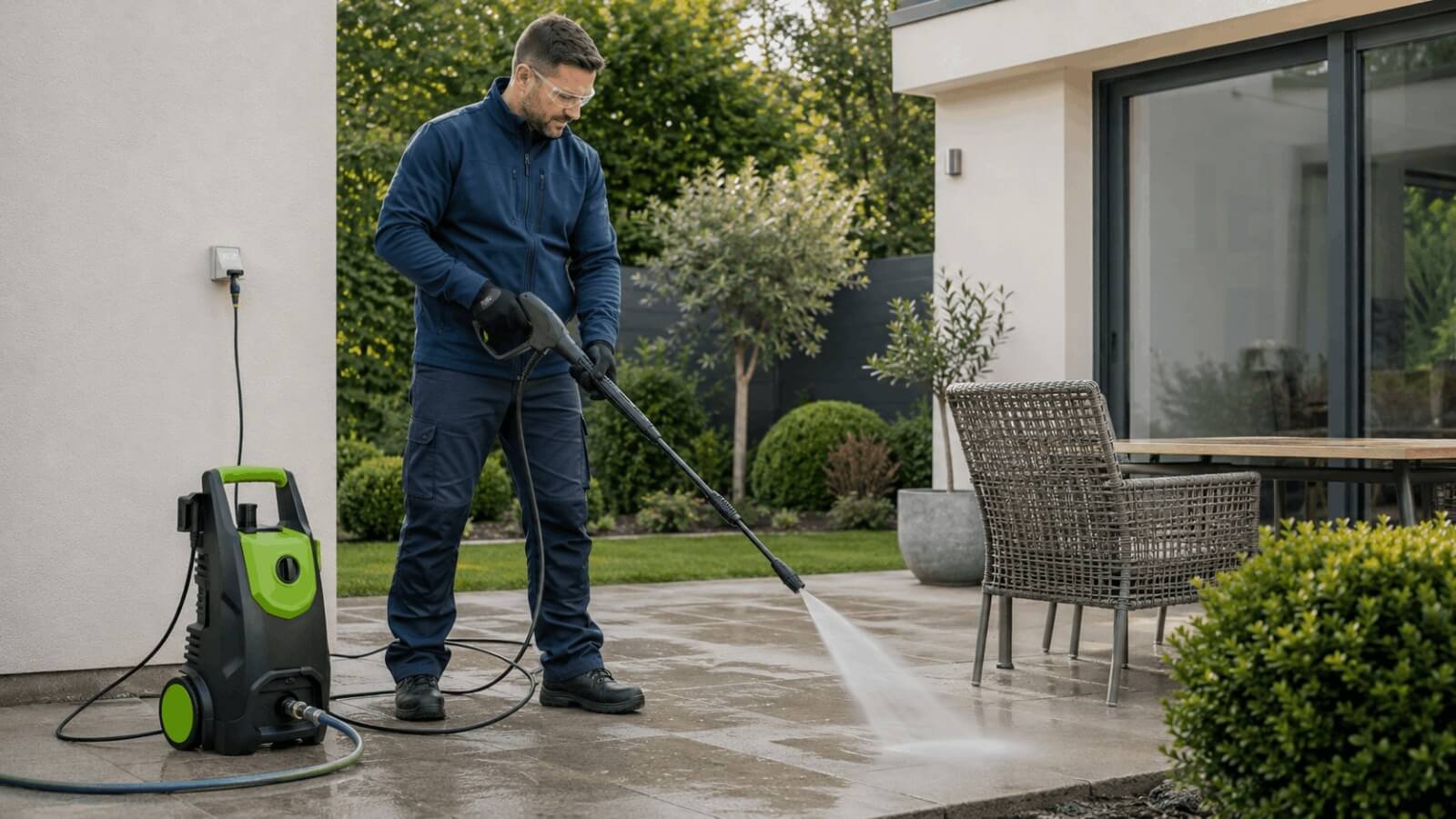
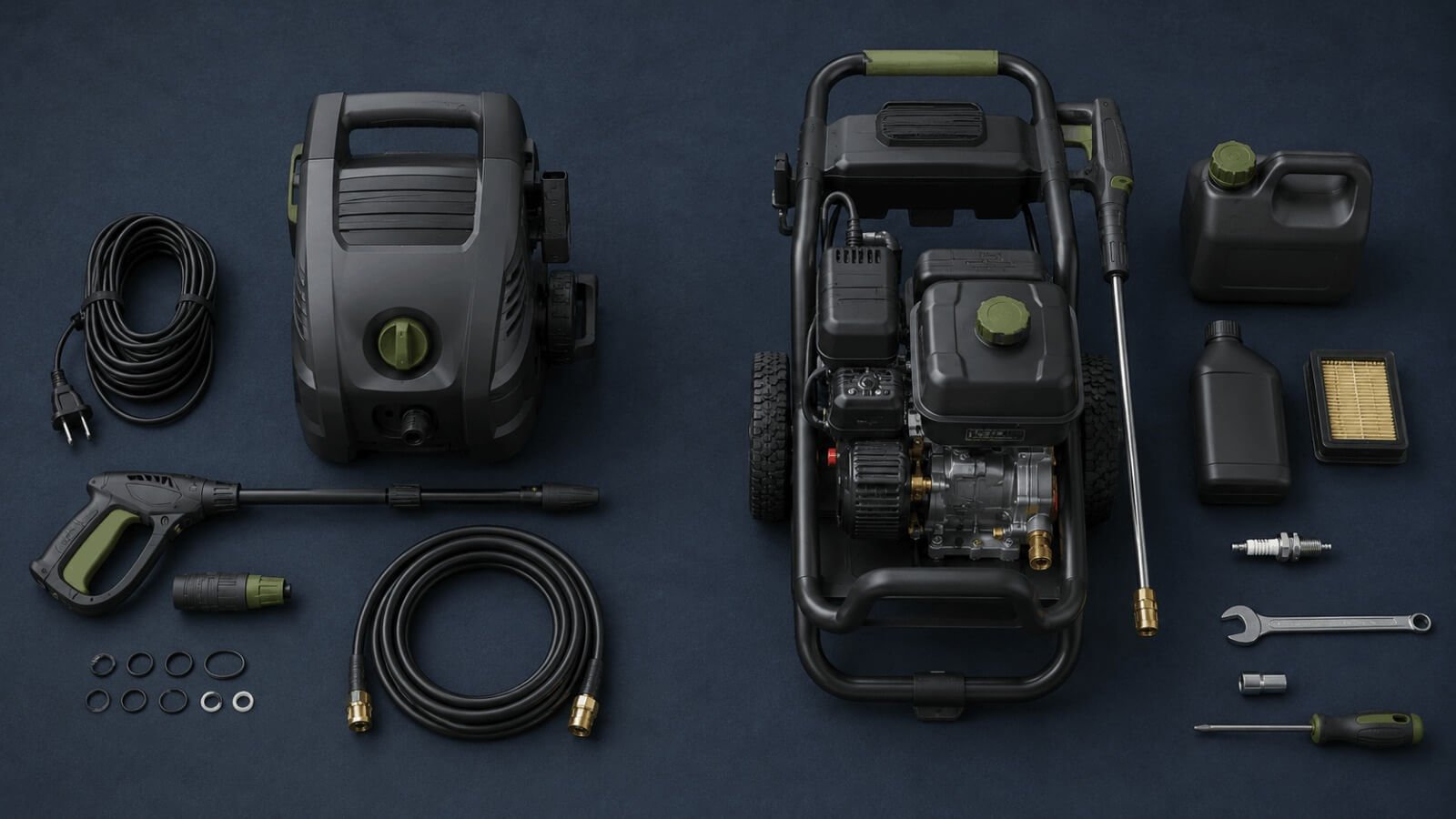
An electric washer uses a motor to drive a pump. You plug it into a wall outlet and turn it on. There is no engine, so it starts at once and runs quietly compared with gas.
The Greenworks GPW2003 is a good example. It has a 14-amp universal motor, a 25 ft hose and a 35 ft power cord with an inline GFCI plug. The GFCI cuts power quickly if it detects a fault, which matters when water and electricity share a work area.
Extension cords are the usual weak point. A thin or long cord drops voltage, makes the motor hot and can trip its thermal protector. Karcher’s manuals list 25 ft of 12/2 cord or 50 ft of 10/2 cord for one model, and other makers give different limits, so follow your manual. Our guide on why a pressure washer won’t start covers cord and GFCI checks.
How Gas Pressure Washers Work
A gas washer uses a small engine to drive the pump. The engine runs on gasoline and needs oil, just like a lawn mower. Because it makes its own power, it can run strong pumps and high flow.
The Generac 2900 PSI uses a 196cc OHV engine and delivers 2.4 GPM. The Westinghouse WPX3400 uses a 212cc engine for 3400 PSI and 2.6 GPM. These machines are heavier, louder and need regular care, but they clean much faster.
Check the oil before each use, use fresh fuel and run water before you start. Some models, like the Generac we reviewed, have no low-oil shutoff, so you have to watch the dipstick yourself. See our Generac 2900 PSI review for details.
PSI and GPM: Which Type Has More Cleaning Power?
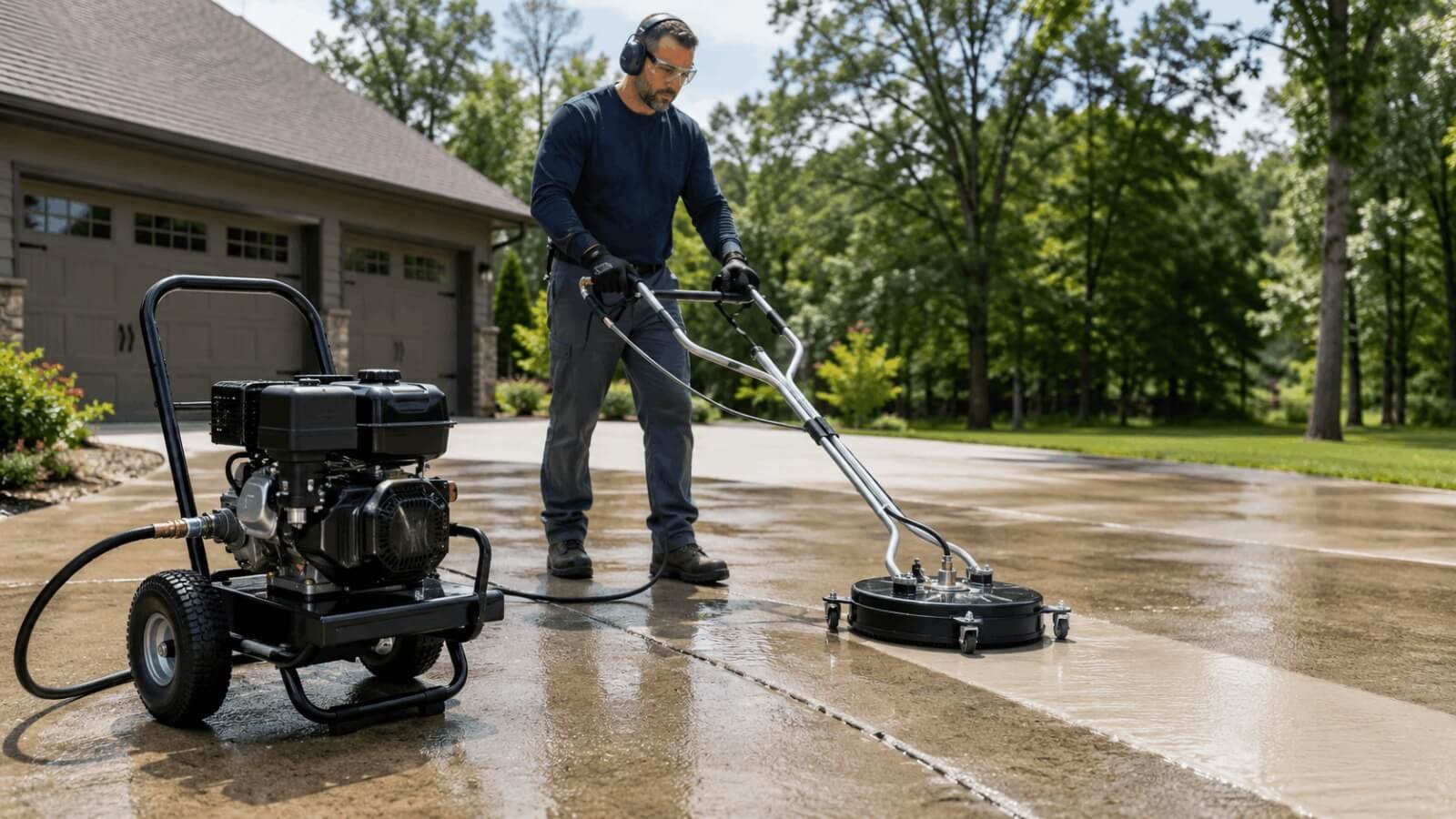
PSI is force and GPM is volume. Multiply them for cleaning units, a simple way to compare machines. The table shows models we have already checked against maker pages.
| Model | Type | PSI x GPM | Cleaning units |
|---|---|---|---|
| Greenworks GPW2003 | Electric | 2,000 x 1.2 | 2,400 |
| Westinghouse WPX3400e | Electric | 3,000 x 1.1 (rated) | 3,300 |
| Generac 2900 PSI | Gas | 2,900 x 2.4 | 6,960 |
| Simpson MS61039 | Gas | 3,000 x 2.4 | 7,200 |
| Westinghouse WPX3400 | Gas | 3,400 x 2.6 | 8,840 |
The pattern is clear. The gas examples deliver roughly three times the cleaning units of the Greenworks electric. The Westinghouse electric WPX3400e shows that some electric units are closer, but it still falls well below the gas models.
Note that the Greenworks listing gives 1.2 GPM measured at 100 PSI, so you should not assume the maximum PSI and flow occur together. Treat these as comparison figures, not guaranteed results on the surface.
Which Type Is Better for Common Cleaning Jobs?
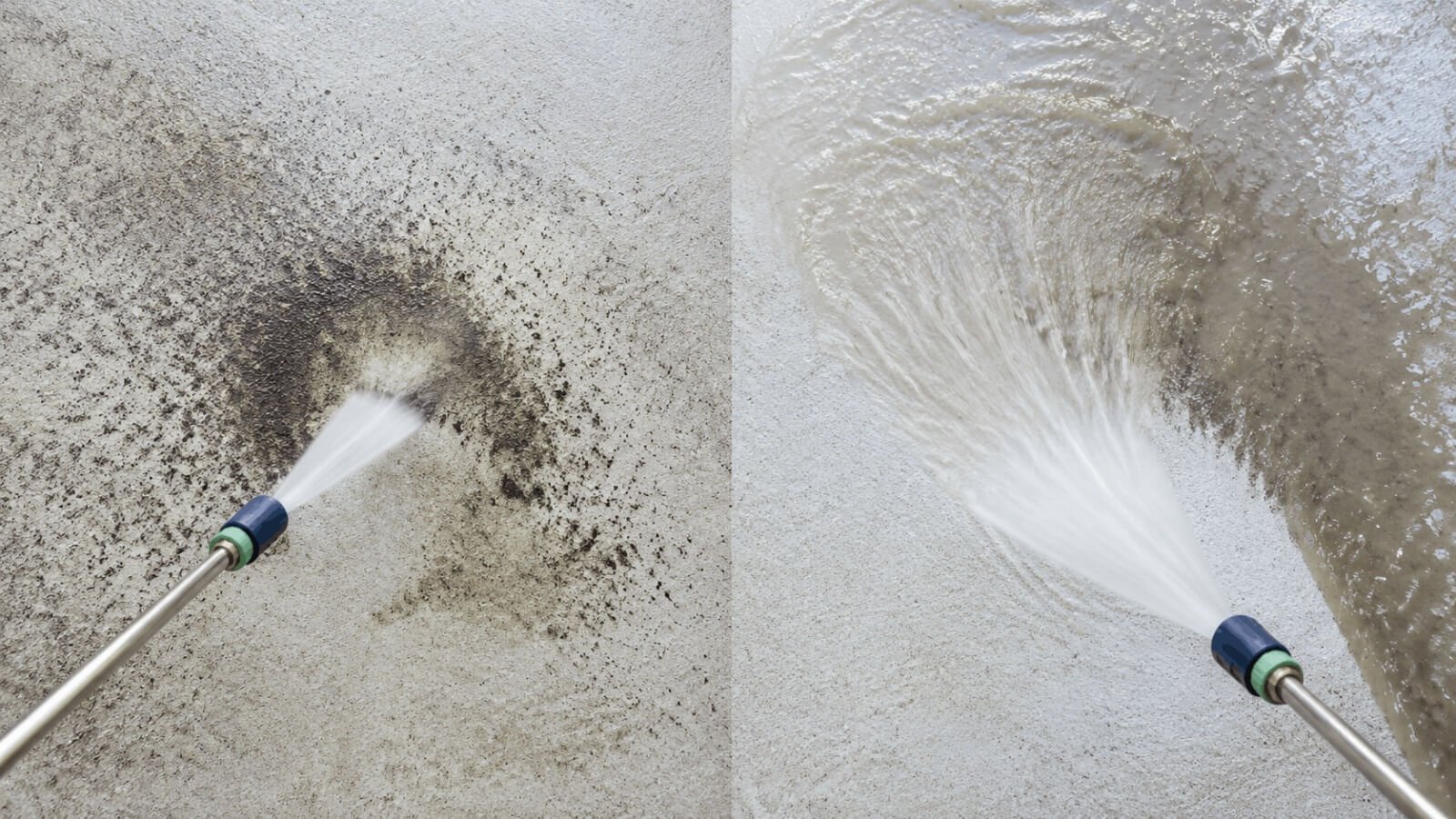
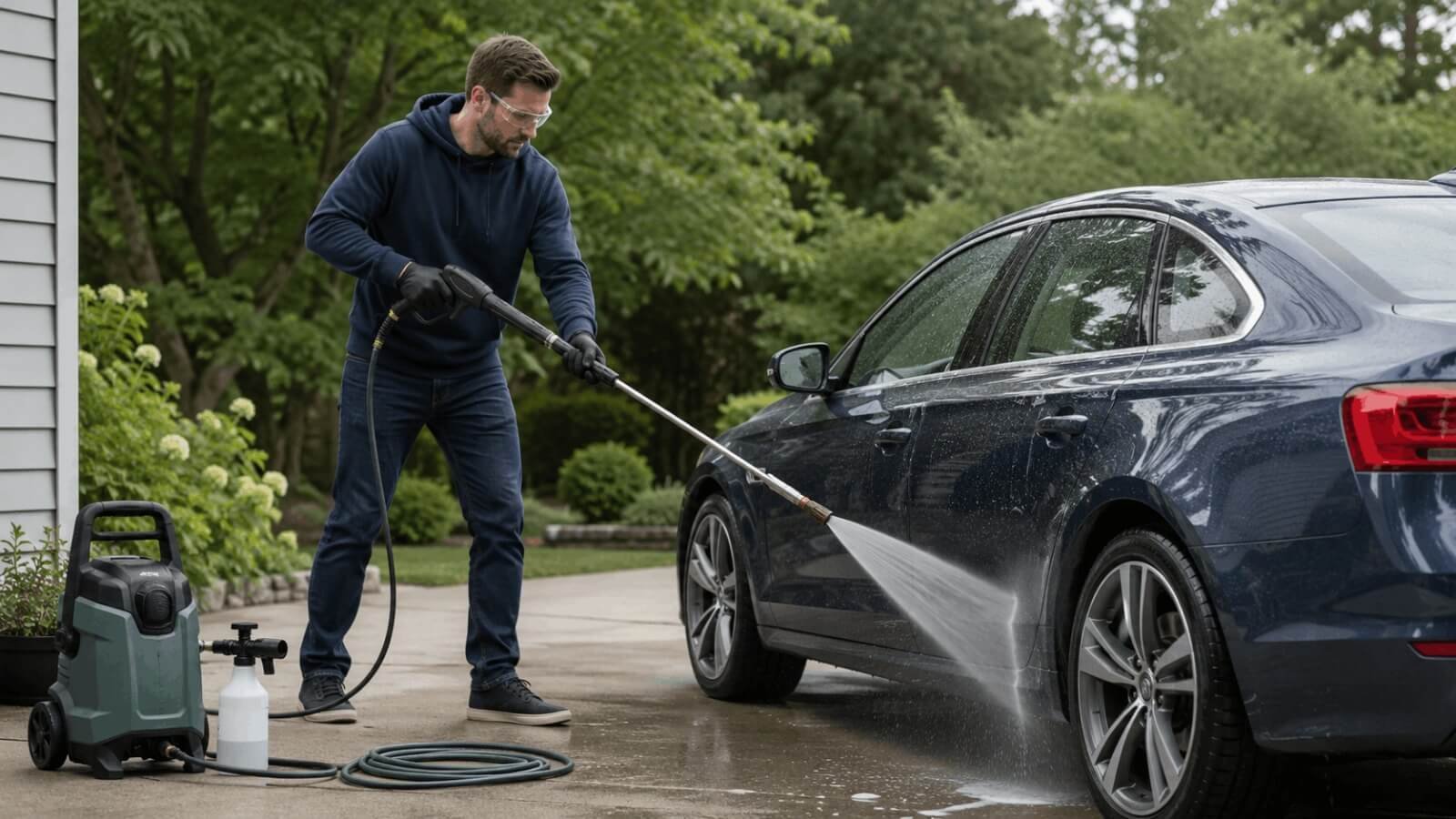
- Cars and trucks: electric. You do not need much power, and a gentler washer is safer for paint.
- Patios and small decks: electric works, but gas finishes faster on big areas.
- Large driveways: gas. More flow means wider strips and faster rinsing.
- Fences and wood: either, with a wide tip and distance. Too much power can splinter soft wood.
- Siding: electric for small homes, gas for large ones, with a wide tip and a gentle approach.
- Grills, bikes and tools: electric. It is simple and quick to set up.
Whichever you choose, test a hidden spot first, and keep the wand moving. For a pick of models by use, see our home-use buying guide.
Power and Space Needs
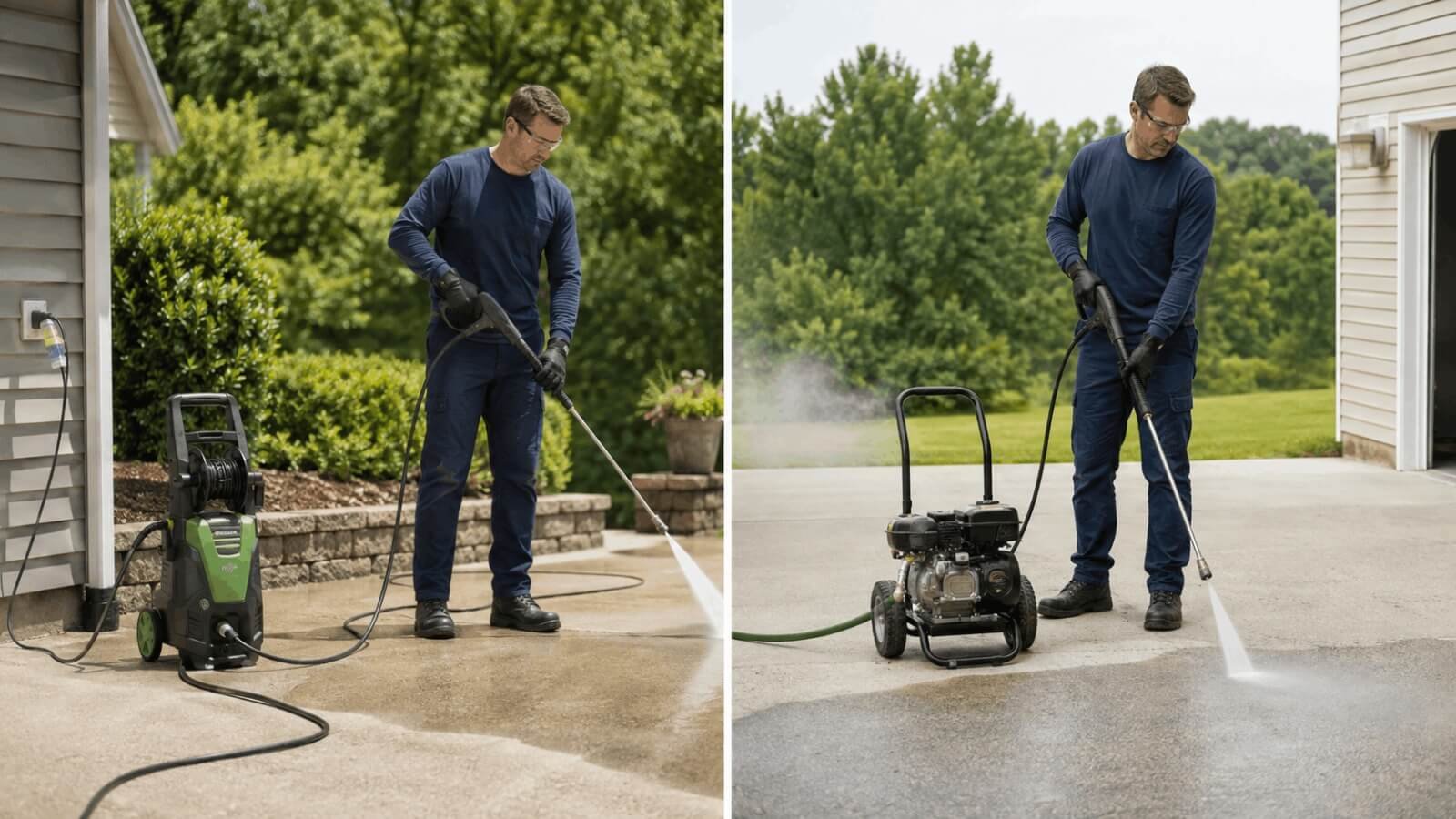
Electric washers need an outlet within reach. A 14-amp motor draws most of a standard 15-amp household circuit, so avoid sharing the circuit with other heavy tools. Common electrical guidance is to keep continuous loads below about 80% of a circuit’s rating, which leaves roughly 12 amps on a 15-amp circuit. Read your manual for the exact requirement.
Gas washers need open air. You have to run them outdoors, away from windows, doors and vents. They also need a place to store fuel safely. See our power requirements guide for fuel and electrical details.
Running Care and Upkeep
Electric washers are simpler. Inspect the cord, GFCI and hose, rinse the inlet screen, and drain the pump before freezing weather. Gas washers need more.
- Check oil before each use.
- Use fresh fuel. Untreated ethanol blends are often quoted as fresh for roughly a month, so add stabilizer for storage.
- Replace the spark plug and air filter on schedule.
- Winterize the pump if it will see freezing weather.
Our maintenance checklist and winterizing guide cover both types.
What About Cordless Pressure Washers?
A third option sits below electric in power. Cordless washers run on batteries, so there is no cord and no fuel. They are handy for quick jobs like bikes, patio furniture and cars, but their runtime and pressure are limited.
If you are weighing that route, our guides on portable cordless pressure washers and cordless vs electric pressure washers go through the trade-offs. For heavy concrete work, gas is still the faster tool.
Safety Differences Between Electric and Gas
- Electric: keep the GFCI in the circuit and never bypass it. Inspect the cord for damage. Keep connections off wet ground.
- Gas: carbon monoxide has no smell. Run it outdoors only. Let the engine cool before you refuel.
- Both: high-pressure water can cut skin, so never point the wand at people, pets or your feet. Wear eye protection and keep the trigger lock on when not spraying.
A Worked Example: Amps and Outlets
Here is the math behind the 14-amp figure. A 14-amp motor on a 120-volt supply draws about 1,680 watts (14 x 120). A standard household circuit rated 15 amps can handle 1,800 watts at its limit.
The common 80% guideline for continuous loads leaves about 12 amps, or 1,440 watts, on a 15-amp circuit. That is below what a 14-amp washer can pull at full load. In practice, many washers run fine because they do not draw their peak all the time. Still, it explains why the circuit can trip when other tools share it. Plug the washer into its own circuit when you can, and follow your manual.
A Worked Example: How Much Faster Is Gas?
Cleaning units give a rough way to compare speed. The Greenworks GPW2003 has 2,400 cleaning units. The Generac 2900 PSI has 6,960.
The ratio is about 2.9 (6,960 divided by 2,400). If a job took one hour on the electric washer and cleaning units were the only factor, the gas machine would take about 21 minutes. That is a simplification, because surface type, nozzle and technique matter. But it shows why large driveways feel slow with a small electric washer.
The Limits of Electric Washers
Low flow is the main limit. At 1.2 GPM, an electric washer cannot rinse as quickly as a 2.4 GPM gas machine, and it may not suit larger surface cleaner attachments, which list a minimum flow. The cord also limits where you can work, and a long extension cord can cause trouble.
These limits do not matter for cars, grills and small patios. They matter when you have hundreds of square feet of concrete to clean.
Warranty Terms From the Models We Checked
Warranty differs by model and by source, so read the label on your own unit.
- Greenworks GPW2003 (electric): three-year limited warranty, subject to terms.
- Generac 2900 PSI (gas): 2 years limited on the current page, and 3 years on the 2017 SpeedWash sheet.
- Simpson MS61039 (gas): engine 2 years, pump 1 year, frame 5 years, accessories 90 days.
- Westinghouse WPX3400 (gas): 3 years limited on a retailer listing, with no component breakdown found.
Look at which parts the warranty covers. For gas washers, the engine and pump are covered separately on some models.
What to Check Before You Buy
- Exact model number. Several machines share a name, so confirm the number and suffix.
- Rated vs max PSI. A max figure is not what you get while working.
- GPM next to PSI. Two washers with the same PSI can clean at different speeds.
- Hose and cord length. Electric washers list the cord, and gas washers list the hose. Longer is easier to use.
- Warranty by component. Pump and engine cover can differ.
- Where you will store it. Gas needs space for fuel, and electric needs a dry spot.
Which Should You Buy?
Use this quick checklist.
- Small jobs, apartment or townhouse, limited storage: electric.
- Large driveway, big house, frequent heavy jobs: gas.
- No outdoor outlet nearby: gas.
- You dislike engine care: electric.
- You want maximum speed on concrete: gas.
If you are torn, think about the biggest job you do. Pick a machine that handles that, not just the average one.
Why you can trust this guide
How we built it. We did not test these machines. The numbers come from the Greenworks, Generac, Simpson and Westinghouse listings used in our own model reviews.
Corrections. An earlier version of this page was general and had few figures. We replaced it with maker-based numbers and a cleaning-units comparison.
Limits. Model specs vary by number and retailer. Electric weight was not confirmed, so we do not list it. Last checked: November 2026.
Questions people ask
Is an electric or gas pressure washer better?
Gas is stronger and faster on big jobs. Electric is lighter, quieter and easier to own. Pick by the size of your jobs.
How much more powerful is gas?
In our examples, the gas models have roughly three times the cleaning units of the Greenworks GPW2003 electric.
Can I use a pressure washer indoors?
Never run a gas washer indoors. An electric one can be used in a well-ventilated space, but follow the manual and keep the GFCI in place.
Do electric pressure washers need an extension cord?
Many makers advise against it. If you must, use a short, heavy-gauge outdoor cord that matches your manual.
Which lasts longer?
It depends on care and pump quality. Both types last longer with clean water, dry storage and routine checks.
Related guides
- Generac 2900 PSI Pressure Washer Review
- Simpson vs Westinghouse: Which Pressure Washer Is Right for You?
- Greenworks Electric Pressure Washer 2000 PSI Review
- Pressure Washer Power Requirements: Fuel, Electricity, and Safety Guide
- Best Pressure Washer for Home Use: 2026 Picks and Practical Buying Guide