If you could improve one part of your pressure-washing routine, what would it be? You might want to reach around a car without moving the machine, clean a driveway with fewer uneven passes, or connect the hose faster.
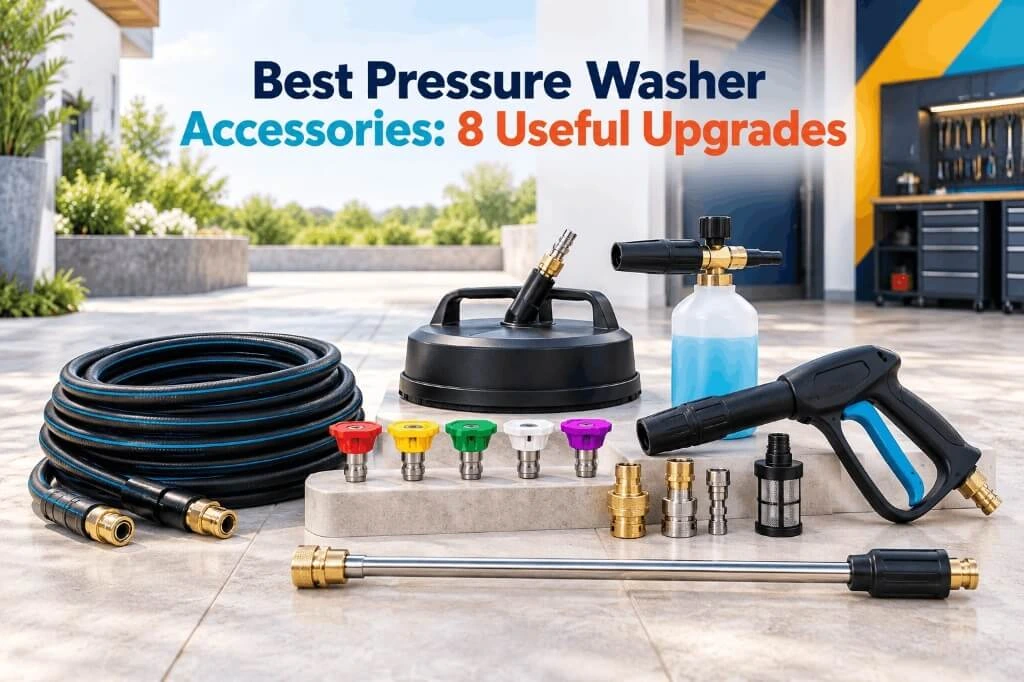
Quick answer: The best pressure washer accessories are the ones that solve a frequent problem and match your machine. A flexible high-pressure hose is a useful general upgrade, a properly matched surface cleaner
suits repeated driveway work, and a foam cannon is mainly valuable for regular vehicle washing. Always verify the connection, working PSI, required GPM, temperature rating, and intended surface before buying.
This guide compares eight accessory types for homeowners, car owners, DIY cleaners, and small cleaning businesses. It explains who each upgrade suits, when to skip it, and what to check before purchase. The recommendations are based on use cases and documented equipment principles—not unsupported star ratings, hands-on testing claims, or paid product rankings.
Best Pressure Washer Accessories at a Glance
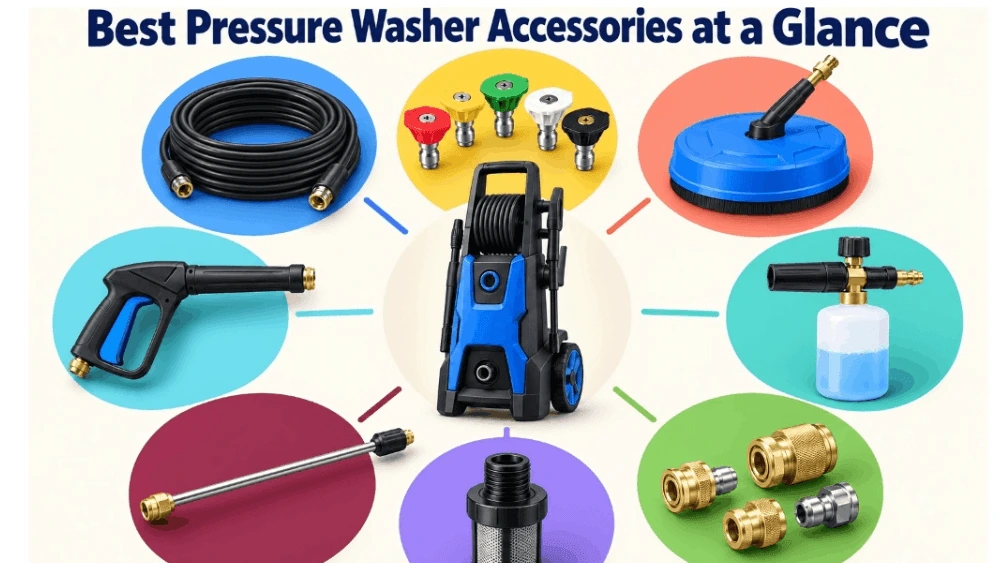
For an otherwise sound setup, our first upgrade to consider is a more manageable hose if the supplied one restricts movement. For repeated driveway work, a correctly matched surface cleaner may offer more value. If your equipment already meets your needs, buying nothing is a reasonable choice.
| Accessory type | Best for | Main benefit | Reason to skip or delay |
| Flexible high-pressure hose | Awkward reach and frequent repositioning | Easier movement around the job | Existing hose already reaches comfortably |
| Correctly sized nozzle set | Missing or unsuitable spray options | More appropriate spray patterns | Supplied tips already cover your work |
| Matched surface cleaner | Broad, suitable flat paving | More consistent coverage | Washer cannot meet its operating requirements |
| Compatible foam cannon | Regular vehicle washing | Controlled shampoo application | Vehicle washing is only occasional |
| Quick-connect fittings | Frequent setup and pack-down | Faster compatible connections | Fit or pressure ratings are unclear |
| Comfortable spray gun | Long sessions or awkward handling | Better grip and control | Original gun is comfortable and sound |
| Approved extension wand | Limited extra reach from ground level | Access without moving closer | Recoil or overhead hazards make use unsafe |
| Correct inlet filter or screen | Protecting the water-supply path | Catches debris before the pump | An added filter would restrict flow unnecessarily |
The order is a practical starting point, not a universal ranking. Replace unsafe or failed components before spending on optional improvements.
How We Choose Useful Upgrades
A worthwhile accessory should solve a repeated problem, suit the cleaning surface, and remain practical to handle, store, and maintain. We also consider replacement-part support, warranty terms, and the complete installed cost—including required adapters.
This guide recommends accessory categories rather than declaring one product the winner for every washer. A compact electric model and a higher-flow gas machine may need very different versions of the same attachment. Detailed compatibility checks are provided in the buyer’s checklist below.
If you are choosing the machine too, read our comparison of electric and gas pressure washers before building an accessory setup around it.
1. Pressure Washer Hose Upgrade: Best for Easier Movement
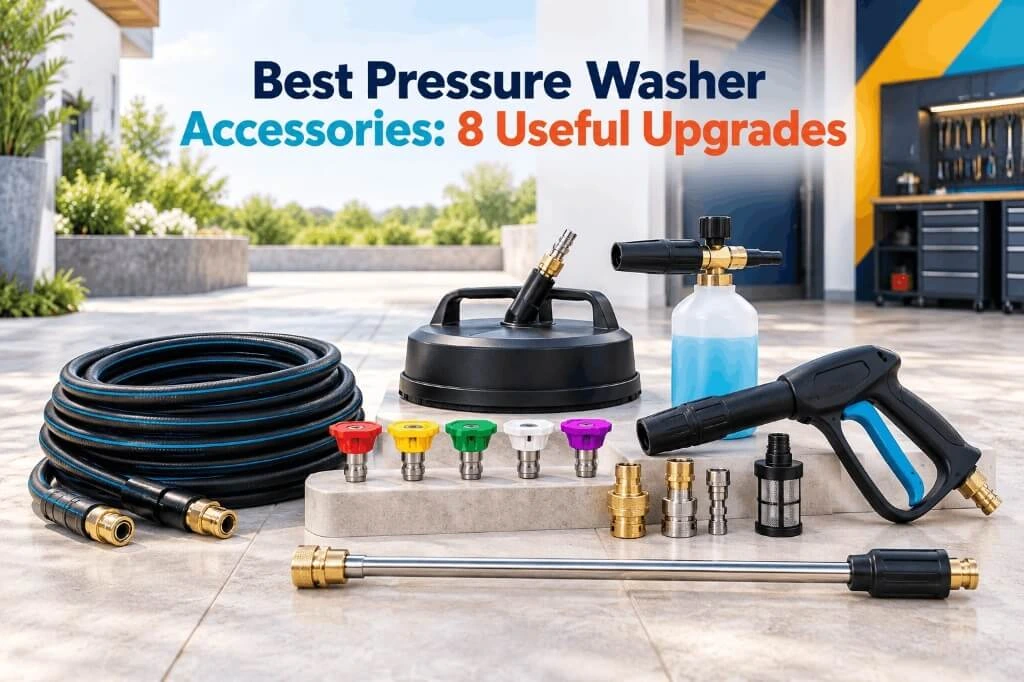
A hose that keeps catching under tires or pulling against your wrist can interrupt every stage of a wash. Replacing it with a suitable, more flexible assembly may improve the whole routine.
What to look for
Choose a hose with the correct working-pressure and temperature ratings, compatible ends, and enough usable length for your cleaning area. Measure the route around obstacles rather than only the distance from the washer.
Compare flexibility, abrasion resistance, connector strain relief, and storage requirements. “Heavy duty” does not tell you how comfortably the hose handles.
A longer hose can reduce repositioning, but it also adds weight and friction loss. Follow the washer manufacturer’s limits for length and internal diameter.
Benefits and limitations
The main benefit is convenience across several jobs, from washing a vehicle to moving around patio furniture. The limitation is that a longer or heavier hose can become harder to carry and coil.
Keep the assembly away from hot exhaust parts, sharp edges, and vehicle traffic. Buy a handling upgrade when reach is the problem; do not expect it to increase the pump’s rated output.
2. Pressure Washer Nozzle Set: Best for Spray Control
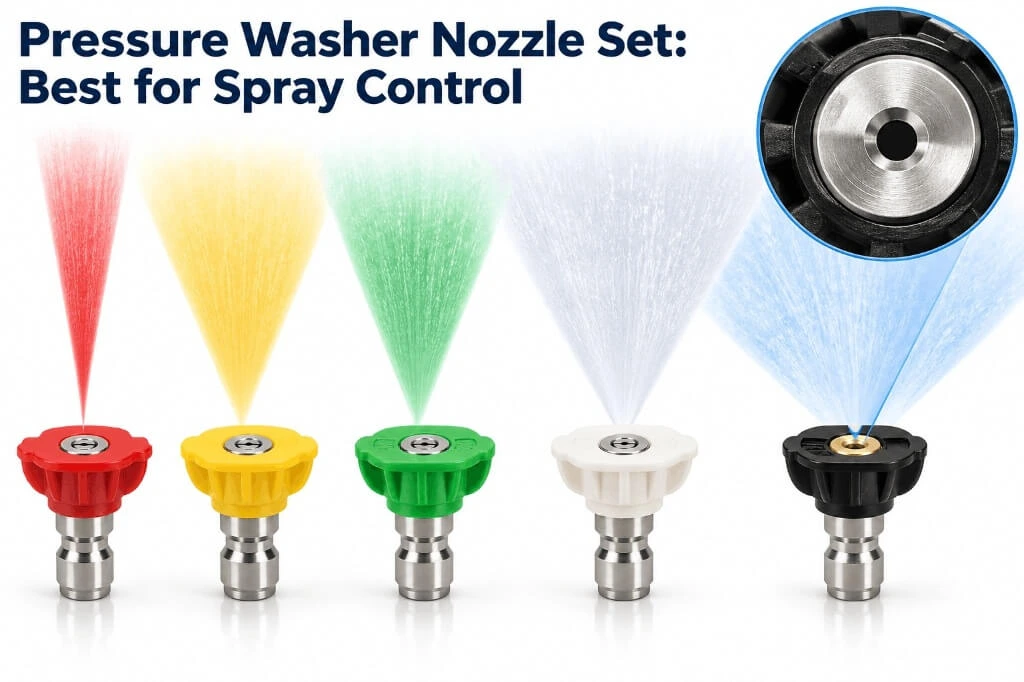
A suitable nozzle set gives you options for approved rinsing, washing, and detergent application. It is especially useful when the original tips are missing or worn.
Check more than nozzle colors
The spray angle determines how widely the stream spreads. The orifice—the small opening inside the tip—must suit the intended pressure and flow.
Color coding commonly identifies the spray pattern, but it does not establish the correct opening size. Buy the specified tips or use a manufacturer-approved sizing chart.
A wide fan still needs sensible distance and a surface test. It can damage loose paint or weathered timber when used incorrectly.
When a turbo nozzle belongs in the kit
A turbo nozzle rotates a concentrated stream and may help on compatible durable masonry. It is not a gentle general-purpose attachment. Avoid using it on car paint, delicate trim, or decking unless the relevant surface guidance specifically allows the method.
When to skip the upgrade
If your supplied nozzle set already covers the approved tasks, another set may duplicate what you own. Spend first on replacing a missing or damaged tip with the correct specification.
3. Surface Cleaner for Driveways: Best for Broad Flat Areas
A surface cleaner holds rotating spray jets beneath a housing. On suitable paving, it can make coverage more consistent than repeated narrow passes with a wand.
Match operating requirements, not just diameter
Check minimum flow, pressure range, nozzle sizing, connection, and surface suitability. A large head will not automatically clean faster on a small washer.
If the pump cannot supply enough water, the attachment may require slow movement or leave uneven results. Choose a cleaner explicitly suited to the machine’s output rather than relying on diameter alone.
For example, a homeowner cleaning a small concrete parking area may be better served by a compact compatible head than a wide contractor-style unit.
What it does not solve
You still need to remove loose stones, inspect weak areas, and rinse dirty water away afterward. Oil stains may require a suitable pretreatment, and the attachment can damage coatings or loose paver joints.
Keep the head level and moving steadily. Do not lift it while the spray bar is operating. Its housing helps contain splash but does not make every surface safe to clean.
4. Foam Cannon for Car Washing: Best for Shampoo Application
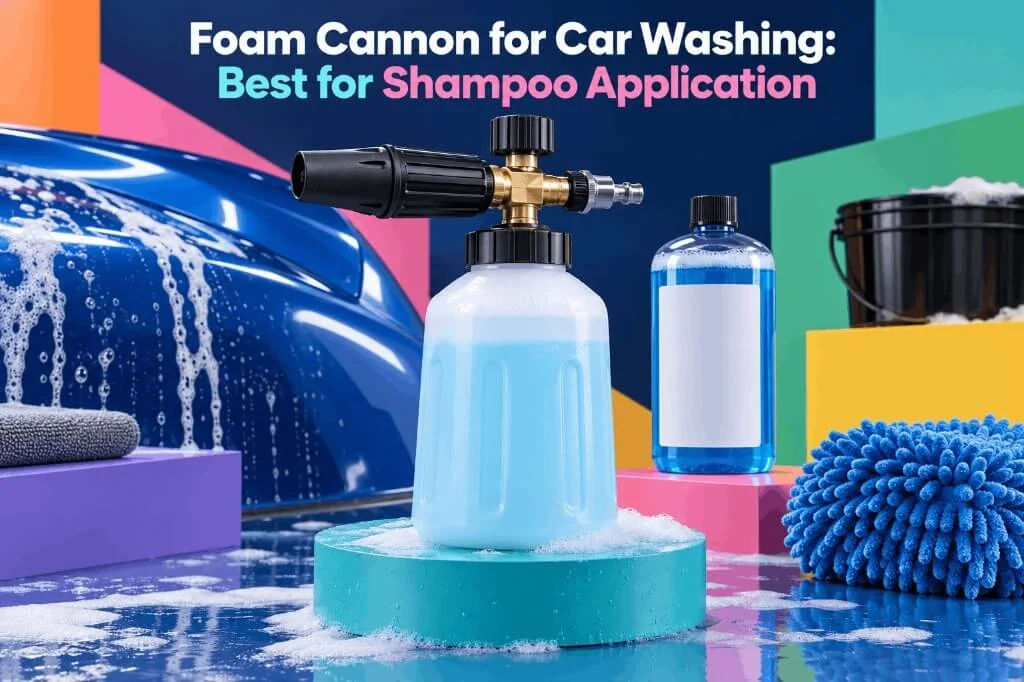
A foam cannon mixes a detergent solution with water and air at the gun. It can make shampoo application convenient for someone who washes vehicles regularly.
Useful features to compare
Check the operating pressure and flow range, connector, recommended orifice, bottle stability, and availability of replacement parts. A bottle that is awkward to support becomes more noticeable when full.
Use shampoo approved for the finish and equipment. Follow dilution instructions, work on cool panels, and prevent the solution from drying.
Thick foam is not proof of stronger cleaning. The right detergent, dwell time, and careful washing method matter more than appearance. Remaining road film may still need a suitable contact wash.
Cannon or garden-hose foam gun?
A foam gun connects to a garden hose and does not need a pressure washer. A foam cannon operates from the pressure-washer setup. Similar bottles do not make them interchangeable.
Skip the cannon if most of your work involves paving or outdoor furniture and the existing detergent system already does the job.
5. Pressure Washer Quick-Connect Fittings: Best for Faster Setup
Quick connectors can reduce repeated threading when connecting compatible hoses, guns, or attachments. Their value is greatest when you set up and pack down frequently.
Map the connection points first
Write down what connects at the tap, pump inlet, pump outlet, gun inlet, and wand outlet. Those positions may use different sizes and pressure ratings.
Garden-hose couplers belong on the water-supply side. High-pressure fittings belong between the pump outlet and spray equipment. Never substitute one for the other based on appearance.
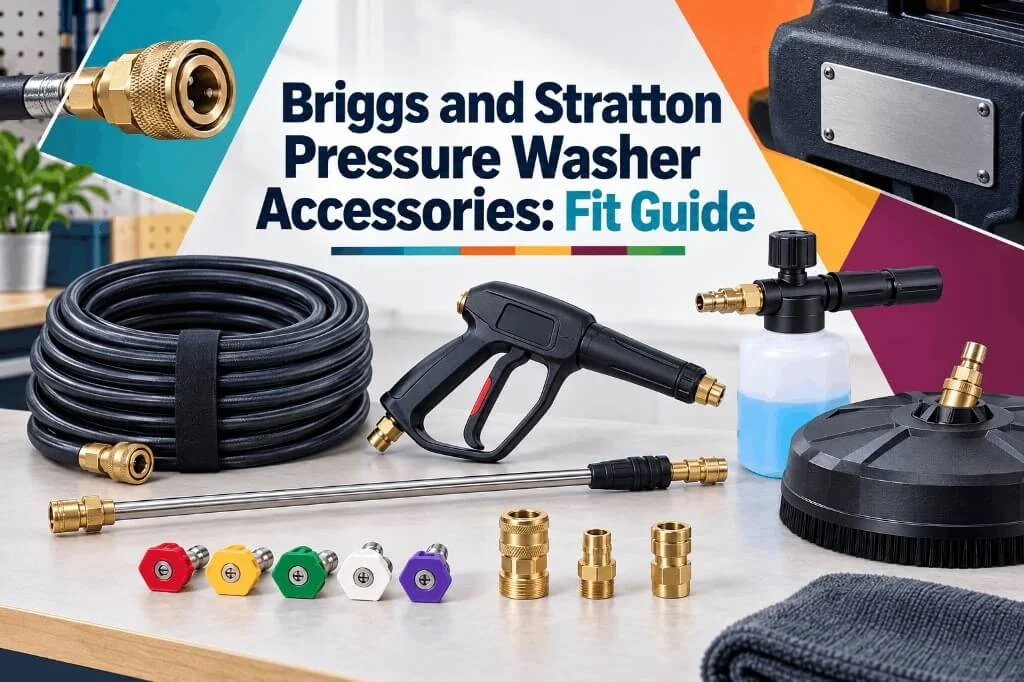
For M22 fittings, check the internal insert and sealing dimensions as well as the outer thread. Similar-looking M22 connections can use different internal dimensions. A connector that starts threading is not necessarily a correct or leak-free match.
Benefits and tradeoffs
Convenient connections come with additional seals to inspect and keep clean. Mixed kits may include duplicate pieces or components you cannot use.
Choose the few fittings your setup needs. With the system depressurized, confirm each quick connector locks fully before operation. Avoid long adapter stacks that add weight and strain.
6. Comfortable Spray Gun: Best for Frequent Cleaning
A replacement gun can be worthwhile when the original grip is awkward or prolonged trigger use becomes tiring. It must still provide safe control of the water flow.
Compare trigger feel, grip size, balance with the wand attached, inlet and outlet fit, and working ratings. Check whether an advertised swivel functions as intended for your operating conditions and whether seals are replaceable.
A short gun may suit detailing around a vehicle. A conventional gun-and-wand combination provides more distance and reach for other tasks. Neither shape is automatically best for everyone.
Do not secure the trigger open to reduce hand effort. Take breaks and reassess the workload if the setup becomes uncomfortable. A gun that leaks internally, sticks, or does not shut off correctly needs attention before further cleaning.
7. Pressure Washer Extension Wand: Best for Controlled Extra Reach
An approved extension can reach areas that are inconvenient with a standard wand, provided you can work from a stable position on the ground.
Length increases leverage. A setup that feels light while dry may be difficult to control under pressure, especially when working at an angle.
Check the assembled weight, connection strength, pressure rating, and handling instructions. Keep well clear of overhead electrical lines. Do not spray upward into siding joints, vents, or roof edges where water can enter.
For low furniture or ordinary car washing, extra length may make the job more awkward. For high areas beyond safe ground-based reach, use another method or a professional service rather than a ladder.
8. Inlet Filter or Screen: Best for Protecting the Water Path
An inlet screen catches debris before it reaches the pump. Maintaining the correct one is an essential baseline, even if it is less exciting than a new cleaning attachment.
Inspect the existing screen first. Replace a missing or damaged screen with the specified part and clean it according to the manual.
An additional filter must suit the supply pressure and flow requirements. Overly restrictive or clogged filtration can starve the pump. More filtration hardware is not automatically better.
Also distinguish sediment removal from water treatment. A simple debris filter does not necessarily remove dissolved minerals or prevent water spots on a vehicle. That requires a separate, properly selected approach.
Buyer’s Checklist: Will the Accessory Work With Your Washer?
Before paying, confirm these points:
Model and connections: Record the exact machine model and the relevant fittings, including sealing dimensions.
Working pressure: Every high-pressure component must be appropriately rated for the machine, not merely have an impressive burst rating.
Flow: Match GPM requirements, especially for foam cannons and rotating cleaners.
Temperature: Cold-water components are not automatically suitable for hot-water equipment.
Surface: Check whether the material or finish allows the cleaning method.
Support: Look for instructions, spare seals, warranty terms, and a workable return policy.
Prices and availability can change. Compare the full cost, including adapters, detergent, replacement parts, and storage needs.
Build a Small Kit Around Your Main Job
For a regular car wash
Start with an appropriate rinse tip, manageable hose, and suitable shampoo. Add a foam cannon when repeated shampoo application makes it useful. Keep any contact-washing tools clean so trapped grit does not scratch the finish.
For a driveway and patio
Prioritize a compatible surface cleaner only if the materials and washer output suit it. Keep an appropriate wand tip for edges and rinsing. Delicate patio furniture or damaged paving may need a different method.
For occasional household use
Use the supplied equipment first. Note what causes delays during actual cleaning, then choose one upgrade. Buying around observed difficulties gives you a clearer reason for spending than collecting every attachment at once.
Common Pressure Washer Accessory Buying Mistakes
Buying the largest attachment: Match capacity to the pump instead of assuming more width means faster cleaning.
Using accessories to hide a fault: Weak supply, blocked screens, or damaged equipment need diagnosis before upgrades.
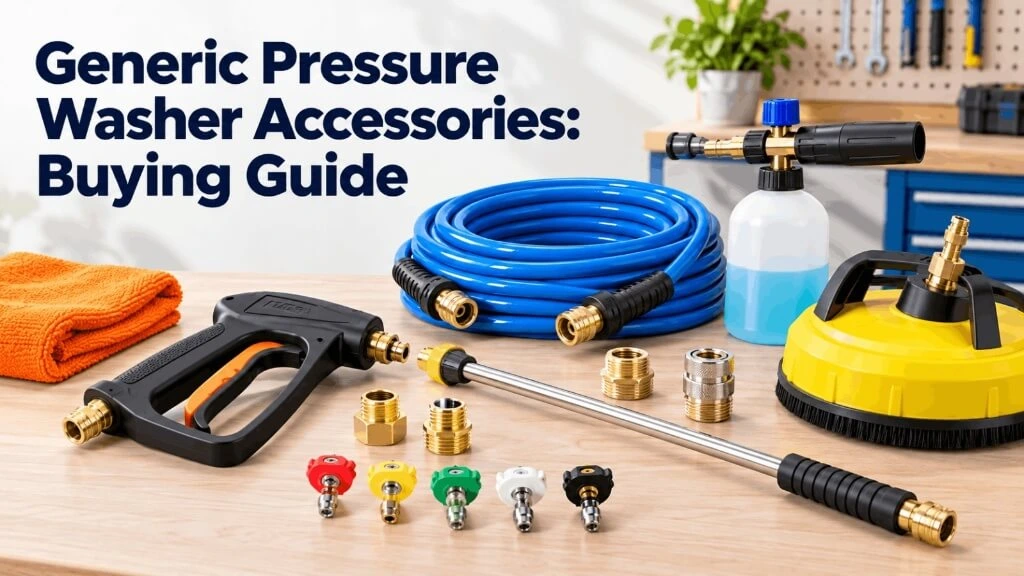
Choosing a kit by piece count: Count the useful compatible components, not the total pieces in the box.
Using the wrong detergent: Follow equipment and surface requirements; do not mix cleaners or feed unapproved chemicals through the pump.
Testing on the most visible area: Begin in a small hidden location and inspect the result before covering the whole surface.
Safety Comes Before Convenience
Follow the washer manual, accessory instructions, surface guidance, and detergent label. Shut down, isolate power, and release trapped pressure as instructed before changing attachments.
Wear eye protection and sturdy non-slip footwear. Keep other people and pets clear. Never feel for leaks with your hand or point the spray at anyone. Seek prompt medical care for a high-pressure spray wound, even if it looks minor.
Run gasoline-powered equipment outdoors and keep engine exhaust away from doors, windows, vents, and enclosed or partly enclosed spaces. . The CDC has documented carbon monoxide poisoning caused by indoor use of gasoline-powered pressure washers. Keep electrical connections dry and use the ground-fault protection required by the manufacturer.
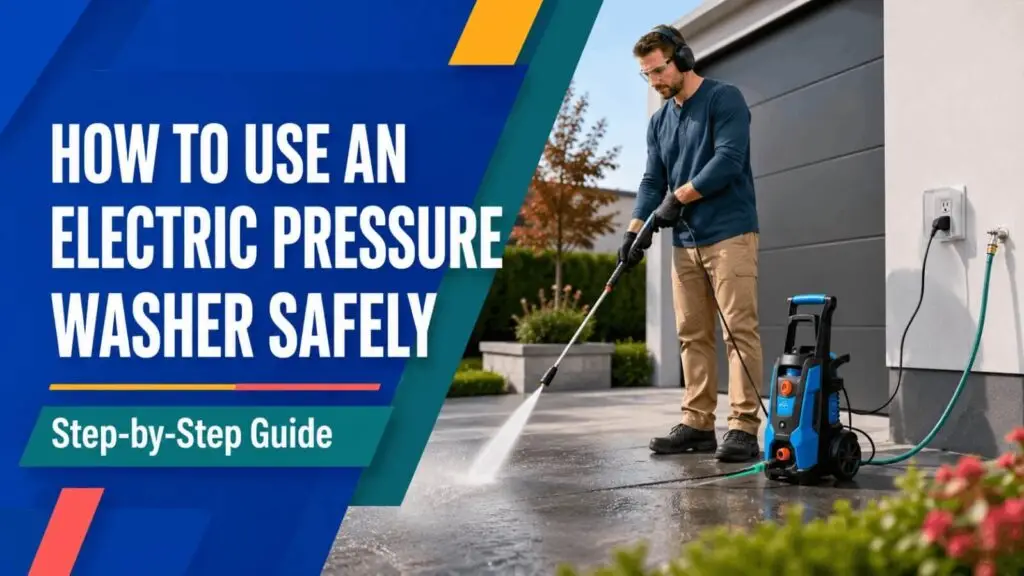
Our electric pressure washer setup guide explains the startup sequence in more detail.
Simple Action Plan
Before you buy
Choose one repeat cleaning problem. Check your machine’s specifications, measure the connection or reach requirement, and compare suitable options. Replace unsafe components first.
During the first use
Follow the approved setup procedure and test on an appropriate small area. Evaluate control, handling, and the cleaning result. Stop if the attachment leaks, pulses, or behaves abnormally.
After cleaning
Flush detergent components, shut down, depressurize, and drain as directed. Keep grit out of connectors, coil hoses without sharp bends, and protect water-containing parts from freezing. Save the confirmed part number and any maintenance instructions.
Frequently Asked Questions
What is the best pressure washer accessory to buy first?
Choose the one that fixes your main limitation. A flexible hose helps with awkward movement, while a matched surface cleaner suits repeated paving work. If the original setup works comfortably, no immediate upgrade is necessary.
Do expensive accessories always last longer?
Price alone does not establish durability. Compare working ratings, construction, serviceable parts, warranty, and supplier support. A well-documented compatible product is a stronger choice than an expensive item with unclear specifications.
Can I use accessories from another brand?
Often it is possible, but only when connections, pressure, flow, temperature, and application requirements match. Proprietary systems may need approved adapters. Brand compatibility claims should be supported by actual specifications.
Can accessories make a small electric washer as powerful as a gas model?
No. Attachments change coverage, handling, or detergent application; they do not upgrade pump capacity. Choose attachments that work within the electric washer’s operating range.
Are pressure washer brushes safe for car paint?
Do not assume so. The brush must be suitable for the finish and completely free of grit. Check the vehicle and accessory instructions; a separate clean wash mitt may give better control for careful contact washing.
Should I buy a hose reel?
A reel can be useful for frequent work and organized storage, but confirm hose capacity, mounting, and any pressure-rated swivel requirements. For occasional use, proper loose coiling may be simpler and easier to transport.
Conclusion: Choose the Upgrade You Will Use
The best pressure washer accessories earn their place by making a regular task easier, more controlled, or less awkward. A matched surface cleaner can help a driveway owner, while a comfortable hose may improve nearly every wash.
Check what you already own, identify the main difficulty, and confirm compatibility before buying. Start with one useful upgrade and add another only when the work gives you a clear reason.